Scott L. Pratt is Professor and Department Head of Philosophy at the University of Oregon. His work spans American philosophy, logic, and Indigenous thought, with a focus on decolonial methodologies and educational philosophy. As co-director of the Central European Pragmatist Forum and PLURILOG research project, he bridges interdisciplinary studies of logic and cultural plurality. Beloit College (BA) University of Minnesota (PhD) His research examines how logic shaped colonization and informs anti-colonial efforts, as seen in his forthcoming book Against Critical Reason . Articles highlight intersections of pragmatism, Indigenous agency, and critiques of Eurocentric epistemologies. Academic leadership includes past roles as Vice Provost and Dean of the Graduate School. Scientific Awards: 2024 Joseph L. Blau Prize 2022 Inter-American Philosophy Prize Pratt teaches courses on American philosophy, Native American philosophy, and advanced logic. He co-founded the Josiah Royce Society and served as President of the Society for the Advancement of American Philosophy, contributing to faculty union organizing at the University of Oregon.
Ayşe Zişan FURAT is a Professor of Eurasian Studies at the Research Institute of Turkology, Istanbul University, a position she has held since February 2022. She is affiliated with the Department of Eurasian Studies and previously served in the Faculty of Theology and the Department of Philosophy and Religious Studies. Her institutional base is the Türkiyat Araştırmaları Enstitüsü, located in Beyazıt, Istanbul. Education: B.A. in History of Science, Istanbul University, 2001 M.A. in Religious Education, Department of Philosophy and Religious Studies, Istanbul University, 2004 Ph.D. in Religious Education, same department, 2009 Her research focuses on religious and cultural transformation across Eurasia, with particular attention to the history of science and education in Islamic and Turkic contexts. She investigates the interplay between religious institutions, educational systems, and cultural evolution in Anatolia, the Balkans, Central Asia, and the Ottoman Empire. Her work bridges humanities, religious studies, and historical sociology, emphasizing cross-cultural exchanges and knowledge transmission. The most recent publications reflect a strong thematic continuity in studying religious education, manuscript cultures, scientific traditions, and interfaith dynamics across Eurasia. Her scholarly output spans from the medieval to modern periods, combining historical analysis with cultural theory. Keywords across her articles include Religious Studies, History of Science, Eurasian Studies, and Cultural History, indicating a multidisciplinary approach grounded in the humanities. Scientific Contributions and Recognition: 115 publications indexed in Web of Science H-index of 12 (WoS), 14 (Google Scholar), 31 (TrDizin) Participation in 48 research projects Supervision of 14 theses Active contributor to UN Sustainable Development Goals through humanities research Ayşe Zişan FURAT has made significant contributions to academic advising and collaborative research. She has supervised numerous graduate theses and participated in extensive research projects, reflecting a strong commitment to academic mentorship and interdisciplinary inquiry. While specific grants are not listed, her high project count suggests active engagement in funded research. She is a key figure in advancing Turkic and Eurasian studies within the Turkish academic landscape. She is affiliated with the Research Institute of Turkology, a leading center for Turkish and Eurasian studies at Istanbul University. The institute supports interdisciplinary research on Turkic peoples, languages, religions, and cultures across Eurasia, and she contributes to its mission through her scholarship and academic leadership.
Cynthia Benally is an Assistant Professor in the Department of Educational Leadership and Policies at the University of Utah's College of Education. Her work focuses on Indigenous education, settler colonialism, and educational policy reform. University: University of Utah School: College of Education Department: Educational Leadership and Policies Academic Rank: Assistant Professor Email: u6014666@utah.edu Benally's research examines how settler colonial myths perpetuate systemic inequities in Native education. She explores sovereignty assertions by Indigenous communities, decolonizing curricula, and the impact of landmark cases like Lau on Native language rights. Her scholarship integrates metaphors of frontier forts to analyze colonial logic and advocates for relational methodologies in Indigenous research. Recent publications include critiques of the "two-worlds" narrative in education, analyses of language policy overlaps, and frameworks for anti-colonial futures. Her work emphasizes storywork as data analysis and challenges erasure in predominantly white institutions. Scientific Awards Native Excellence in Higher Education (2024) Beacon of Excellence (2022) College of Education Early Career Service Award (2022) Benally teaches courses on sovereignty, comparative education, and ethnographic research. She engages with Utah's eight tribal nations and participates in professional organizations like AERA. Her contributions reflect a commitment to Indigenous epistemologies and educational justice.
Kat Haynes is an Honorary Fellow at the School of Earth, Atmospheric and Life Sciences (SEALS) at the University of Wollongong. Her research focuses on environmental change, disaster risk reduction, and community resilience through participatory processes. She holds a Ph.D. in Environmental Sciences from the University of East Anglia (2005). Her work emphasizes youth and community-centered initiatives, including post-disaster investigations in Australia and volcano risk communication in Montserrat. Haynes has received significant recognition, including the Australian Academy of Science ASPIRE Award (2015) for contributions to disaster risk reduction and climate adaptation. She leads or collaborates on grants such as the NSW Bushfire Inquiry (2021), Re-walking and Reawakening Country (2021), and Indigenous cultural burning research (2020). She has advised on multiple higher-degree research projects, including geochemistry studies of historical fires. Her research spans natural hazards, environmental management, and human geography, with a focus on wildfire management, flood risk communication, and elderly resilience during disasters. She collaborates with government and NGOs to institutionalize child-centric disaster resilience strategies. Haynes also contributes to global initiatives like the Centre for Environmental Risk Management of Bushfires and has published extensively on disaster preparedness and recovery.
Dr. Arshi Javaid is an Einstein Junior Scholar at the Humboldt-Universität zu Berlin under the Institute for Asian and African Studies. Her research focuses on gender, violence, conflict, and memory in South Asia, particularly Kashmir. She is the founder of the YAADGAR project, a memory archive for Srinagar's old city. Gender and Media Studies (South Asia) Memory Politics Urban Heritage Her work interrogates the erasure of lived heritage in Srinagar through processes like the Smart City plan, Bollywood representation, and gentrification. She employs participatory methods including first-person narratives, digital media, and artistic collaborations. Key awards : Einstein Junior Scholar Fellowship (2023-2025) Academy in Exile Critical Residency Fellow As a researcher funded by the Einstein Foundation Berlin, she bridges academic inquiry with public engagement through the Heritage as Placemaking podcast series and collaborative projects.
Natalie R. Davis is an Assistant Professor in the Department of Critical Studies in Education at the University of Michigan’s Marsal Family School of Education. Her work focuses on sociopolitical development of children from non-dominant communities, particularly Black children in urban environments, emphasizing culturally responsive pedagogies and community-engaged research. She holds a PhD in Educational Foundations from U-M, a B.A. from Columbia University, and an M.A. in Elementary Teaching. Her research explores teaching-learning relationships, cultural ecologies, and methodologies that center youth agency. She collaborates with museums, non-profits, and schools on projects like the Climate Justice Seed Project, integrating environmental justice and place-based learning. Key awards include National Academy of Education/Spencer and SRCD fellowships, NSF funding, and the AERA Division G distinguished dissertation award. Her grants include a 2023–2025 project on justice-oriented elementary teaching and a water literacy initiative along the Mississippi River.
Kathleen Horton is a Senior Lecturer in the School of Design at Queensland University of Technology (QUT), Faculty of Creative Industries, Education & Social Justice. She is co-leader of TextileR, a research group focused on sustainability in the fashion industry, and has held leadership roles including Head of Discipline (Fashion) and Director of The Stitchery Collective. Her work bridges academic research, education, and community engagement in fashion, ethics, and sustainability. Master of Philosophy (Queensland University of Technology) Master of Arts (Research) (Queensland University of Technology) Bachelor of Arts (Honours) Visual Arts (Queensland University of Technology) Kathleen Horton's research is grounded in feminist and critical theory, focusing on the ethical and gendered dimensions of fashion production and consumption. Her work explores sustainable fashion, the cultural economy of independent design, fashion curation, and the role of creative practice in revaluing post-consumer textile waste. She emphasizes material methods and community-based research, often integrating artistic practice with academic inquiry. Her teaching includes DFB102 Fashion Communication, DFB206 Global Fashion Cultures, and DFB305 Critical Fashion Studies. Her recent publications reflect a strong trajectory in critiquing fast fashion, examining digital activism, and reimagining circular economies in textiles. Themes include the feminisation of ethical responsibility, symbolic value in craft, and Indigenous sustainable fashion. Her interdisciplinary approach connects fashion with art, social justice, and environmental sustainability. Kathleen has successfully supervised multiple doctoral and master’s students, with research topics spanning gender representation, fashion curation, and the cultural economy of fashion. She has secured grants from national and state funding bodies to support socially engaged fashion projects. Her leadership extends beyond the university through her role as Chair of The Nest Community, supporting a women-led circular textile economy, and her past service on the advisory board of the National Clothing Product Stewardship Scheme, which contributed to national policy development. Her research is deeply collaborative, often involving partnerships with artists, communities, and industry stakeholders. Through TextileR and The Stitchery Collective, she fosters interdisciplinary and socially responsive design practices. Her work consistently challenges dominant fashion paradigms and advocates for more ethical, inclusive, and sustainable futures in the industry.
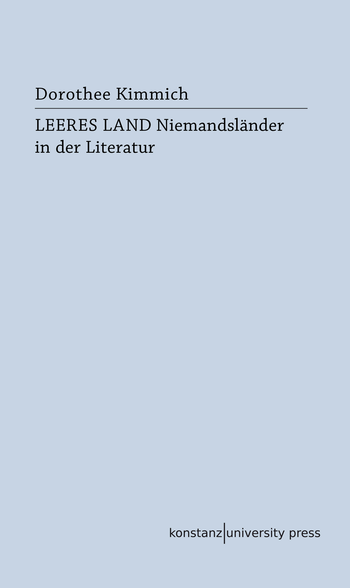
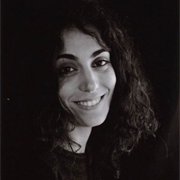
Professor Dorothee Kimmich holds a professorship for Literary Cultural Studies and Cultural Theory at the Department of Modern German Literature, University of Tübingen's Faculty of Humanities. With a distinguished career spanning over three decades, she has established herself as a leading scholar in literary theory, cultural studies, and the philosophy of literature. Her academic journey began at the University of Tübingen, included influential studies in Paris with thinkers like Michel Foucault and Jacques Derrida in the 1980s, and led to her habilitation at Justus Liebig University of Giessen in 1999 before securing her current professorship in 2002. Professor Kimmich's research explores the intersection of literature, philosophy, and cultural history, with particular focus on the role of objects in modern literature and the concept of similarity as a cultural-theoretical paradigm. Her work challenges traditional categorizations between living and non-living, material and spiritual, examining how literature contests these divides. Her influential monographs include Leeres Land: Niemandsländer in der Literatur (2021), Ins Ungefähre: Ähnlichkeit und Moderne (2017), and Lebendige Dinge in der Moderne (2011), which explore no-man's-lands, similarity as a cultural concept, and the agency of objects in literature. Her recent scholarly output demonstrates remarkable breadth and depth, with publications in 2024 examining cultural techniques of borders, proximity as method for coexistence, and family resemblances in cultural contexts. Her work consistently bridges literary analysis with philosophical inquiry and cultural history, addressing topics from Epicurean gardens to terra nullius concepts, from theft as cultural founding myth to the complex narratives of belonging and mobility. This interdisciplinary approach has positioned her at the forefront of contemporary cultural theory. Co-Chair of the CIVIS hub 'Society, Culture, Heritage' (2020-present) Member of the DFG Review Board (2016-present) Head of the Tübingen Poetry Lectureship (2004-present) Member of the IVG Professor Kimmich's research methodology reflects her humanities discipline—often working individually through close reading and writing while maintaining interdisciplinary connections across Tübingen's diverse academic landscape. She values the University of Tübingen's rich disciplinary environment, noting opportunities for collaboration not only within humanities but also with natural sciences and medicine. Her recent podcast interview for the Excellence Strategy at the University of Tübingen reveals her continued engagement with how imagination connects to survival, problem-solving, and our relationship with material objects in contemporary life.
Mandy de Wilde is an Assistant Professor at Leiden University's Institute of Cultural Anthropology and Development Sociology within the Social and Behavioural Sciences faculty. Her research focuses on environmental anthropology, political ecology, and Science and Technology Studies (STS), exploring sustainable farming practices, indigenous crop valuation, and climate resilience in Northwestern Europe. She conducts fieldwork at the PolderLab Vrouwe Venne, studying experimental farming with wet crops like rice and cranberries. Previously, she held postdoctoral positions at the University of Amsterdam, Wageningen University, and the University of Antwerp, and was a visiting fellow at institutions including the University of Edinburgh and Humboldt University Berlin. Her work examines intersections of ecological, economic, and social relations, emphasizing more-than-human agency and gendered normativities in sustainability movements. She teaches courses on economy-ecology linkages, anthropological research methods, and urban belonging. Notable publications include studies on rats as political agents in Amsterdam and gender dynamics in zero-waste living. Her research bridges academic inquiry with practical experiments in sustainable agriculture and urban ecologies.
David Brooks is an Honorary Professor in Australian Literature at the University of Sydney. He holds degrees BA (ANU), MA and PhD (Toronto). His research focuses on Australian poetry, modernist movements, and animal ethics, particularly the ethical implications of kangaroo slaughter. Brooks has authored over 20 books including The Other Side of Daylight (2024), Animal Dreams (2021), and The Sons of Clovis (2011). His work bridges literary analysis with interdisciplinary studies, exploring themes like cultural memory, ecological crisis, and ethical philosophy. Brooks has received the Australia Council Fellowship in Fiction (2015–16) and curates projects such as the Kangaroos — The 100 Days Project . His recent essays critique Australia’s kangaroo culling policies, arguing against their ecological and ethical justifications. He frequently publishes in journals like Southerly , Animal Studies Journal , and Cultural Politics , blending scholarly rigor with creative writing.
Carla Rice is a Professor in the Department of Family Relations & Applied Nutrition at the University of Guelph, and holds a Tier 1 Canada Research Chair in Feminist Studies and Social Practice. Her work bridges critical psychology, equity education, and disability studies, focusing on embodiment, social justice, and arts-based methodologies. She leads Re•Vision: The Centre for Art and Social Justice and the Revisioning Differences Media Arts Laboratory (REDLAB), leveraging digital storytelling and participatory research to challenge marginalization. Rice earned a Ph.D. in Women's Studies from York University (2004) and an M.Ed. in Applied Psychology from OISE (1993). Her research addresses topics like early puberty, body-based harassment, and the sexualization of girls, while centering intersectional and decolonial frameworks. Recent projects include Bodies in Translation (disability arts and technology) and Into the Light (countering eugenic legacies in education). Her awards include the SSHRC Tier 1 CRC, Royal Society of Canada membership, and the Lieutenant Governor’s Ontario Heritage Award. Rice’s work emphasizes community-engaged scholarship, training students in transformative methodologies and fostering inclusive policies in health care, education, and the arts. Key initiatives include Relaxed Performance (accessible theater), Re•Storying Autism (autistic narratives), and Stretching Our Stories (digital storytelling for marginalized groups). She currently supervises graduate students pursuing critical theories and arts-informed research.
Max Schleser is Associate Professor in Film and Television at Swinburne University of Technology, where he also conducts research with the Centre for Transformative Media Technologies (CTMT). He is an Adobe Creative Educator Innovator, Founder of the Mobile Innovation Network & Association (MINA), and Screening Director of the International Mobile Innovation Screening & Festival. His work spans academic, artistic, and community domains, with a focus on innovative screen practices. Max holds a PhD in Creative Arts from the University of Westminster, an MA in Art and Media Practice with Distinction, and a BA Hons. His research centers on immersive media, documentary film, and creative arts 4.0, particularly cinematic VR and interactive filmmaking. He investigates screen production, emerging media, and smartphone filmmaking as tools for community engagement, creative transformation, and transmedia storytelling. His recent publications reveal a strong trend toward integrating Generative AI into documentary and city film genres, exploring the 'AI eye' and computational non-fiction. He also investigates novel immersive production methods in VR, HyFlex pedagogies in film education, and collaborative mobile storytelling through workshops. His work consistently bridges creative practice with theoretical inquiry. Best Cinematography, International Cell Phone Cinema - Cannes (2025) Best Mobile Film, Nitiin International Film Festival (2024) Dean's Award for Teaching and Research, Swinburne University (2023) International Visiting Research Scholar, Auckland University of Technology (2024) Early Career Award - Research, Massey University (2012) Max leads multiple research grants focused on health storytelling, intergenerational connection, AI in screen industries, and sustainability education. He supervises creative projects and has conducted digital storytelling workshops for cultural institutes and government bodies worldwide. As founder of MINA and director of major festivals, he leads international networks in mobile media innovation. He also serves on the editorial board of the Media Practice and Education journal and has co-edited several key volumes on mobile media and storytelling.
Michelle LaFrance is an Associate Professor in the English Department at George Mason University, specializing in Writing and Rhetoric. Her research focuses on feminist methodologies, institutional ethnography, community writing, and writing program administration. She holds a Ph.D. from the University of Washington (2009) and has published extensively on topics like academic labor, e-portfolios, and writing center pedagogy. Her recent work examines discourses of volunteerism and belonging in urban communities. Dr. LaFrance teaches courses on critical pedagogy, feminist research, and public writing. Her major awards include the 2021 College Composition and Communication Research Impact Award for her book Institutional Ethnography: A Theory of Practice for Writing Studies Researchers , which also received an Honorable Mention from the International Writing Across the Curriculum Association. She has supervised numerous graduate students in areas such as queer worldmaking, linguistic justice, and composition pedagogy. Education: Ph.D., University of Washington, 2009 Key Affiliations: Director of Graduate Studies, Writing Program Administrator LaFrance's research emphasizes materialist frameworks and participatory methods. She explores the intersections of writing studies with issues of labor, space, and community engagement. Recent projects include analyzing writing instructors' negotiations of language standards and reimagining equity practices in two-year colleges.
Dr. Elinor Assoulin is a Lecturer in the School of Global Urban & Social Studies at RMIT University, Australia. She holds a PhD in visual methodologies and decolonized research, alongside a Master of Art Therapy and a Bachelor of Education. Her research focuses on integrating visual methodologies with Indigenous knowledges, particularly through her innovative 'Art Yarning' approach. She teaches research design across undergraduate, Honours, and Master’s programs and collaborates with health and justice sectors to address socio-cultural challenges. Education: Bachelor of Education, Master of Art Therapy, PhD in Visual Methodologies and Decolonized Research. Research Interests: Decolonized research, Indigenous methodologies, visual communication, art therapy in research, and ethical frameworks for Indigenous studies. She emphasizes bridging theory and practice through inclusive pedagogical strategies. Her publications span visual methodologies, intercultural communication, and ethical research practices. She is open to supervising postgraduate students and collaborating on interdisciplinary projects. Teaching Contributions: Coordinates Designing Social Science Research and contributes to research-focused subjects. Her teaching portfolio includes Social Work, Youth Work, and Education programs with courses like Indigenous Studies and Program Management & Evaluation. Collaborations: Engages with health and justice sectors, emphasizing practical applications of research. She has held non-academic roles as an Art Psychotherapist and Case Worker, enriching her academic work with real-world insights.
Soile Veijola is a Professor of Cultural Studies of Tourism at the University of Lapland's Faculty of Social Sciences. She holds a PhD in Sociology from the University of Helsinki and has over forty years of academic engagement in tourism studies, gender research, and sustainable development. Her research focuses on ethical tourism practices, multispecies coexistence, and responsible planning in cultural/natural environments. Veijola has held roles including Senior Scientist at the Research Council of Finland (2006-2007) and Researcher positions at Universities of Helsinki and Jyväskylä. She leads projects like 'MAMOMI: Multidisciplinary Measurements of Sustainable Tourism Growth' (2019-2020) and co-edits the anthology Matkailunkestävä Suomi? (2023). Her work integrates modal semiotics, narrative analysis, and slow methodologies to address tourism's impacts on gendered subjectivities, ecological systems, and socio-cultural values. Recent publications include blog posts on sustainable practices and keynote addresses on post-anthropocentric tourism futures. Veijola collaborates internationally, emphasizing interdisciplinary approaches to ethical tourism knowledge production. Education: PhD in Sociology, University of Helsinki (1990s) Key Projects: 9 funded projects since 2001, including EU/FP7 initiatives Public Engagement: Over 80 media contributions since 2018 Veijola's current research explores 'Slow Methods' for co-written nonfiction and ethical epistemologies in tourism studies. She actively participates in global academic networks and policy dialogues.