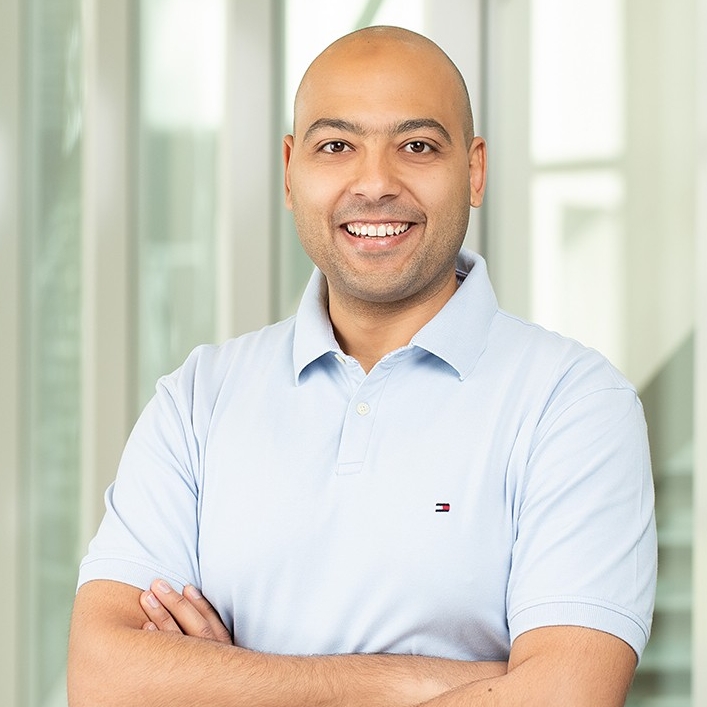
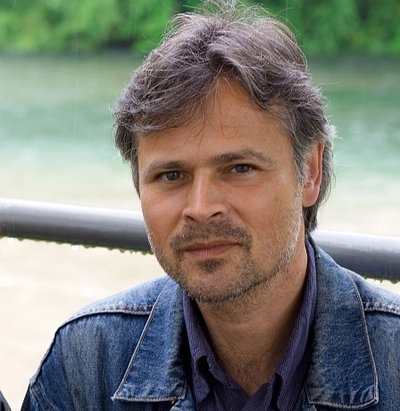
Fabian Fagerholm is an Assistant Professor in the Department of Computer Science at Aalto University. His work bridges software engineering, human-computer interaction, and empirical research methodologies. He actively participates in research groups such as Software and Service Engineering (SSE) and Human-Computer Interaction and Design (HCID). Fagerholm's research explores: Continuous experimentation in software development Developer cognition and mental models Agile methodologies and team dynamics Low-code platforms and end-user programming Software engineering education and pedagogy His publications reflect a strong empirical focus, with recurring themes of human factors in technical systems and educational innovation. He has received notable awards including: Journal of Systems and Software Best Paper Award (2018) EUROMICRO SEAA Distinguished Paper Award (2017) Teacher of the Year (2013) Nokia Foundation Scholarship (2013) Fagerholm contributes to software engineering infrastructure through tools for experimentation and boundary artifacts, enhancing collaboration in distributed teams.
Mia Consalvo is a Professor and Canada Research Chair in Game Studies & Design at Concordia University. She serves as Graduate Program Director in Communication Studies and directs the Concordia Centre for Technoculture, Art and Games. Her research focuses on game studies, qualitative methods, new media, and popular culture. Education: BA in Communications, Lyndon State College MA in Communications, University of Washington PhD in Mass Communications, University of Iowa Her recent work analyzes livestreaming platforms like Twitch, socio-economic class in gaming, feminist approaches to game studies, and the intersection of mental health with game environments. She has published extensively on game design, player culture, and digital labor. Scientific Awards: Canada Research Chair in Game Studies & Design She supervises thesis projects in Media Studies (MA) and Communication (PhD) programs, emphasizing collaborative research and critical analysis of games as cultural artifacts.
Emma Reay is a Lecturer in Media and Communication at the Cambridge School of Creative Industries, Anglia Ruskin University, where she teaches Critical Games Studies, Digital Media Theory, and Youth Culture modules. She also delivers Game Design and Art courses at the University of Southampton, with research bridging games studies, childhood studies, and education. Her academic credentials include: BA in English Literature from the University of Oxford MA in English Literature from the University of Oxford MPhil in Children’s Literature from the University of Cambridge PhD in Education from the University of Cambridge Dr. Reay’s research centers on child representation in digital media , with pioneering work on the silent child trope and toy studies in gaming. Her scholarship examines cuteness as a narrative device , social justice themes in children’s media, and the intersection of literary theory with game design , particularly in how games handle childhood vulnerability and agency. Her publication trajectory reveals a concentrated focus on children’s representation in contemporary video games (2018-2022), with increasing emphasis on ethical dimensions like violence against child characters and social justice applications. Key outlets include Game Studies and Journal of Gaming and Virtual Worlds , demonstrating methodological innovation through large-scale game analysis (e.g., surveying 500+ games for her PhD). Her accolades include: Jaqueline Wilson award Pigott award Vice-Chancellor's award Funded by the Arts and Humanities Research Council, Dr. Reay serves as Game Design consultant for higher education institutions and indie developers. She is a key collaborator on the University of Cambridge’s Good Death project exploring gaming and mortality, while maintaining active conference engagement through invited talks at IRSCL, ChLA, and DiGRA events. Her Twitter presence extends public discourse on games and media.
Olli Sotamaa is a Professor of Game Culture Studies at Tampere University's Faculty of Information Technology and Communication Sciences, Department of Communication Sciences. He leads the Tampere University Game Research Lab alongside Professor Frans Mäyrä and serves as team leader in the Centre of Excellence in Game Culture Studies. Specializes in game cultural phenomena: online communities, fandom, modding, data-driven game development Co-edited Game Production Studies (Amsterdam University Press, 2021) His research focuses on game industry practices, data analytics impact, and player production cultures. Recent work examines game data labor, industry ethics, and digital preservation challenges. Key trends in his 15 most recent articles include: Game data work and algorithmic culture (2023-2025) Game modding and user-generated content (2021-2022) Game development practices (2019-2021) Game preservation and heritage (2020) Industry sustainability and ethics (2021-2025) Scientific awards: ERC-Advanced-Grant project 'Making Sense of Games (MSG)' Labs/teams: Tampere University Game Research Lab Centre of Excellence in Game Culture Studies
Dr. Alison Croasdale serves as a Lecturer in Digital Media: Education at University College London's Institute of Education, specifically within the Culture, Communication & Media department and based at the UCL Knowledge Lab. She teaches across both undergraduate and postgraduate programs, focusing on the intersection of digital media and educational practice. Dr. Croasdale holds an undergraduate degree in English Literature with specialization in Gothic literature, followed by two Master's degrees: Critical Theory from Manchester Metropolitan University (2008) and Digital Media, Culture and Communication from UCL's Institute of Education (2016). Prior to her academic career, she spent ten years as a secondary school middle leader and teacher of English and Media in East London, providing valuable practical experience that informs her research and teaching. Her research interests focus on the intersection of digital media and English teaching methodologies, particularly examining how digital approaches can enhance student engagement with challenging literary texts. She explores the evolution of teaching practices through a postdigital lens and investigates non-professional videogame design as both a creative process and analytical tool for education. Her work bridges traditional literary studies with contemporary digital practices, with particular attention to how game design principles can illuminate classic texts like Shakespeare's Macbeth. Dr. Croasdale has presented numerous conference papers on innovative teaching approaches, including 'Creating and Recreating Game Time' at the University of Exeter (2023), 'Full of sound and fury: Teaching Macbeth through Game Design' for BritGrad (2022), and 'GCSEs to Undergraduate: Managing Student Transition' at the University of Keele (2019). Her recent publications examine postdigital videogame literacies and the application of game design principles to educational contexts. As an educator, she serves as module leader for 'Moving Image Production' (postgraduate) and 'Media Education in Schools' (undergraduate), while also contributing to 'Digital Media: Enquiry' and 'Creativity: from Theory to Practice in English, Media and Drama.' She supervises dissertations and reports on the MA Digital Media: Education program, guiding students in exploring the creative and analytical potentials of digital media in educational contexts.
Karim Ali is an Associate Professor of Computer Science at New York University Abu Dhabi (NYUAD), where he leads research in programming languages, static analysis, security, and compilers. He is affiliated with the Department of Computer Science within the College of Arts and Science. Prior to joining NYUAD, he served as an Associate Professor at the University of Alberta. His academic training includes a BSc from The American University in Cairo, and MMath and PhD degrees from the University of Waterloo, completed in 2014. BSc: The American University in Cairo MMath: University of Waterloo PhD: University of Waterloo (2014) His research focuses on making static analysis tools more practical by enhancing their scalability, precision, and usability. He investigates program analysis techniques applicable to real-world software, with applications in security, just-in-time compilation, and mobile app development. His work spans theoretical foundations and tool development, including the SWAN framework for Swift and contributions to secure cryptographic API usage through CogniCrypt. The recent publications reflect a strong trend in developer-centric static analysis, secure coding, energy efficiency in mobile apps, and compiler optimization. His work combines empirical studies with tool-building, emphasizing usability and integration into developer workflows. Scientific Awards: Dahl-Naygaard Junior Prize (2021) ACM SIGSOFT Distinguished Paper Award ACM SIGPLAN Distinguished Paper Award Distinguished Artifact Award, ECOOP 2014 Karim Ali has mentored numerous students and collaborated extensively with researchers worldwide. His lab has contributed tools adopted by major static analysis frameworks like Soot, WALA, and DOOP. He has secured research recognition through awards and industrial impact, including helping Symantec fix a security vulnerability. He teaches core courses such as Computer Systems Organization and supervises capstone projects, guiding students in original research. His lab conducts research on programming languages and static analysis, with projects including SWAN for Swift analysis, usability studies of static analysis tools, and development of precise pointer analysis techniques. The team works on both academic research and practical tooling for developers.
Roles & Affiliations: Teresa De La Hera is an Assistant Professor of Persuasive Gaming at Erasmus University, affiliated with the Erasmus School of History, Culture and Communication and the Department of Media and Communication. She is a member of the Erasmus Research Centre for Media, Communication and Culture, actively involved in the Gaming Matters research cluster and ERMeCC initiatives like REACT (Responsible Engagement with AI, Culture, and Technology) and VEGAS (Virtual Environments, Games and Society). Education: She holds dual BAs in Journalism (Digital Journalism track) and Audiovisual Communication (Direction and Screenplay track), an MA in Communication and Advertising, and a PhD in Media Studies from Utrecht University (2011–2013). Her PhD thesis, Persuasive Structures in Advergames , won the Best Academic Work award from the Consell de l’Audiovisual de Catalunya (2013). Research: Her work focuses on digital games as tools for communication, persuasion, and intercultural interaction. Key projects include Digital Literacy Games (funded) and an ice-skating game fostering intercultural dialogue. She explores topics like advergames, serious games, and gaming’s role in education and social issues (e.g., racism in sports). Her research bridges media studies, sociology, and educational technology. Awards & Recognition: Her 2013 PhD thesis was honored as the best academic work in media studies by the Consell de l’Audiovisual de Catalunya. She has authored/co-authored over 58 peer-reviewed publications, including books like Digital Gaming and the Advertising Landscape (2019) and Persuasive Gaming in Context (2021, editor). Teaching & Outreach: She teaches in Erasmus’ International Bachelor's in Communication and Media (IBCoM) and the MA Media and Business programs. She actively engages in public discourse, appearing in media like podcasts discussing health-related gaming (e.g., Videojuegos para la salud , 2017) and contributing to policy discussions on digital literacy. Labs & Collaborations: She leads research on digital literacy games and collaborates internationally on projects like Chinese cultural heritage in mobile games. Her work intersects with NWO-funded initiatives and involves partnerships with institutions like the University of Amsterdam and Utrecht University.
Dr Daniel Joseph is a Senior Lecturer at Manchester Metropolitan University , specializing in digital sociology and the political economy of digital culture. His work intersects technology, labor, and cultural production. Education: PhD in Communication and Culture (2017, Toronto Metropolitan & York Universities), MA in Communication and Culture (2012), BA in History & Communication Studies (2009, Wilfrid Laurier University) Research interests include: Political economy of platforms and digital capitalism Gamblification, loot boxes, and monetization in games Platform governance and advertising dependency Cultural policy and digital sovereignty Class struggle in digital labor Teaching involves unit leadership in Digital Society (undergraduate) and Digital Global Society (MSc in Digital Society). Recent publications analyze geopolitical economies of esports, platform capitalism, and digital labor across global and national app store contexts.
Jennifer Whitson is an Associate Professor at the University of Waterloo , affiliated with the Stratford School of Interaction Design and Business and the Department of Sociology and Legal Studies . Her work bridges sociology, game studies, and surveillance studies, focusing on labor conditions, cultural production, and ethical implications of digital technologies. Research Interests include: Digital labor and occupational adaptation Surveillance and privacy in gaming Indie game development networks Identity construction in virtual spaces Equity in creative industries Recent Publications highlight trends in digital labor, surveillance gamification, and indie game economics, with keywords spanning Digital Sociology , Game Studies , Surveillance Capitalism , and Cultural Production . Her work explores subfields like Remote Work Equity , Indie Developer Networks , and Privacy Ethics .
Miralem Helmefalk serves as a Senior Lecturer at the Department of Marketing and Tourism Studies within the School of Business and Economics at Linnaeus University. His academic profile bridges theoretical marketing concepts with practical applications in sustainability, technology, and consumer behavior. Dr. Helmefalk completed his doctoral studies at Linnaeus University in 2017 with his dissertation titled 'Multi-sensory cues in interplay and congruency in a retail store context: Consumer emotions and purchase behaviors,' establishing his foundation in sensory marketing research. His research centers on three interconnected pillars: consumer psychology and sensory marketing , examining how multisensory stimuli influence emotional responses and purchasing decisions; gamification , investigating strategic implementation of game mechanics to enhance user experiences; and service research within the Service-Dominant Logic framework , focusing on service ecosystems and customer engagement dynamics. These streams converge in his applied work on sustainable solutions, where he explores how marketing principles can promote recycling behaviors and environmental consciousness. His recent work demonstrates a clear evolution from traditional sensory studies toward innovative applications of gamification in sustainability contexts. Dr. Helmefalk's publication output shows strong interdisciplinary reach across marketing, sustainability, and technology domains. Recent work spans esports business models, gamified recycling systems, sensory brand congruence frameworks, and machine learning applications in gamification. His research demonstrates practical relevance while maintaining theoretical rigor, with publications in journals such as Journal of Media Business Studies, Circular Economy and Sustainability, and Waste Management. As an educator, Dr. Helmefalk teaches diverse courses including Gamification, Sensory Marketing, Retail Management, Method Courses, E-commerce, Digital Marketing, and New Technology in Marketing. He is recognized for creative teaching approaches that integrate theoretical concepts with real-world applications through experiential learning. Dr. Helmefalk actively leads research projects including 'Collaboration towards a gamified waste sorting house' which investigates whether waste sorting can be made enjoyable through gamification, and 'Social cues for environmental messaging in tourist destinations' which examines how social attention mechanisms can enhance environmental communication in tourism contexts. His collaborative network spans international organizations and researchers across multiple disciplines, reflecting his commitment to interdisciplinary scholarship with practical societal impact.
Dr. Pedro Santoro Zambon serves as a Researcher at Utrecht University's Faculty of Science within the Department of Software Technology for Learning and Teaching, where he leads the Collaborative Technologies Lab's GameDevUp project under a prestigious Marie Sklodowska-Curie Postdoctoral Fellowship. Concurrently, he holds the position of Vice Chairman for the Game Incubation Special Interest Group at the International Game Developers Association (IGDA), bridging academic research with industry practice. His academic credentials include a Ph.D. in Communication from São Paulo State University (UNESP) and specialized training in Evidence-Based Public Policy at the University of Oxford's Blavatnik School of Government. This foundation supports his dual expertise in game development methodologies and policy analysis. Zambon's research centers on human-centered artificial intelligence applications for game developers, with particular emphasis on cultural policy frameworks and innovation ecosystems. His work examines how algorithmic matchmaking systems can optimize team collaboration while analyzing policy implementation challenges in creative industries, especially within Brazil's rapidly evolving digital games sector. Methodologically, he combines qualitative field research with quantitative industry census data to evaluate policy effectiveness. Analysis of his 15 most recent publications reveals consistent thematic focus on Brazilian game industry policy evolution, independent developer challenges, and pandemic impacts. His work demonstrates methodological rigor in policy evaluation while highlighting sector-specific innovation patterns, particularly regarding university-industry knowledge transfer and creative cluster development. Marie Sklodowska-Curie Postdoctoral Fellowship (GameDevUp project) Civil Society Representative, Brazilian National Council for Cultural Policies (2019-2022) Chair, Industry Track of Brazilian Games Symposium (2016-2020) Zambon maintains active advisory roles including Game Jam Plus coordination since 2021 and previously served as Market Intelligence Consultant for Brazil's Game Developers Association (Abragames, 2019-2020). His grant portfolio features commissioned research for WIPO, Procolombia, Sebrae, and the Brazilian Ministry of Culture, with current funding from the European Commission's Marie Curie program supporting his algorithmic collaboration research. He actively contributes to the Collaborative Technologies Lab at Utrecht University while expanding international networks through IGDA's Game Incubation SIG, fostering cross-border knowledge exchange between European and Latin American game development communities.
Dr. Beat Suter is a Senior Lecturer for Game Design at the Zurich University of the Arts (ZHdK) , where he has co-developed educational programs and founded the GameLab ZHdK. He holds a Dr. Phil. from the University of Zurich and has previously taught at the Merz Academy Stuttgart (2006–2014). His interdisciplinary work bridges game design, digital humanities, and electronic literature, with a focus on narrative mechanics, game preservation, and Swiss game culture. Education: Dr. Phil. (2000) – University of Zurich Lic. Phil. I (1987) – University of Zurich PALC Certificate – University of California San Diego Studies in German Literature, Linguistics, and Art History – University of Zurich and University of California His research explores intersections between game studies , digital archiving , and interactive narration , with recent publications analyzing Swiss youth culture in games, historical game packaging, and archiving digital interactive media. He co-authored the Narrative Mechanics (2021) and Games and Rules (2018) anthologies, emphasizing rule-based design and storytelling frameworks. From 2023, his 15 most recent articles (2023–2025) trace trends in game history , Swiss game design , and digital preservation , often published via the Confoederatio Ludens blog. These works highlight his focus on documenting marginalized game practices and cultural contexts. As founder of the art group AND-OR and co-director of the GameZ & RuleZ conference, Suter actively shapes interdisciplinary dialogues. He reviews for national research funds in Austria, Germany, and Switzerland and has curated exhibitions like RuleZ for the Magic Circle and Forgotten Game Mechanics , blending academic rigor with creative practice.
Alex Psomas is an Assistant Professor in the Department of Computer Science at Purdue University, directing research at the intersection of computer science and economics. His work develops algorithmic solutions for fair resource allocation, with applications to food rescue networks and social welfare systems. Funded by NSF and Google, his lab collaborates with non-profits including 412 Food Rescue. Research combines theoretical computer science with practical implementations, particularly in dynamic fair division and mechanism design. Current projects develop AI systems for equitable food distribution through the Indy Hunger Network partnership. Recent publications advance multi-agent resource allocation with work appearing in NeurIPS, EC, and ACM Transactions. The 2024 EAAMO paper received Best Student Paper honors for its impact on food insecurity interventions. Major Recognition: NSF CAREER Award for algorithmic fairness research Google AI for Social Good Award MEGA-ACE grant for blockchain applications The Purdue AI for Social Good Lab develops open-source tools deployed in food banks nationally. PhD students investigate approximation algorithms for combinatorial optimization problems.
Dr. Stephanie Lind is an Associate Professor at Queen's University's DAN School of Drama and Music. Her primary affiliation is within the Department of Music, where she teaches music theory, analysis, and musicology. She holds a B.Mus. (Hon.) from Wilfrid Laurier University, an M.A. and Ph.D. from the University of British Columbia. Her research focuses on video game music, transformational theory, and contemporary Canadian art music, with a particular emphasis on the intersection of musical structures and gameplay narratives. Dr. Lind's research has been supported by a SSHRC Insight Grant and has produced influential works like Authenticity in the Music of Video Games (Lexington Press, 2023). Her articles explore topics such as rogue-lite game sound design, rhythm game mechanics, and the role of music in Assassin's Creed narratives. She is a屡获殊荣的教师, winning multiple DAN School Teaching Awards for her innovative pedagogical approaches, including the integration of technology in classrooms and mentorship of student research projects. Her community involvement includes active participation in Queen’s Music programs and Kingston’s music scene as a woodwind player and ensemble vocalist. Dr. Lind’s work bridges academic research with practical applications, emphasizing both scholarly rigor and creative expression.
Pedro Miguel Alves Fernandes is a PhD Student at the School of Communication, Arts and Information (ECATI) , Lusófona University, Lisbon. His research focuses on Game Design , Cultural Heritage , Neurodiversity , and Game-Based Learning . Education: Master in Game Design and Playful Media (2021-2023) and Bachelor in Videogames (2018-2021), both from Lusófona University. Pedro’s recent publications (2023-2025) explore topics like indie horror game design , playful ethics for neurodiverse groups , educational game engagement , and cultural game jams . His work integrates systematic reviews , co-creation , and accessibility research , particularly for neurodivergent and disabled individuals . His research outputs align with projects such as No Barriers (Erasmus+, 2022-2024) and ClimAID (Creative Europe, 2023-2025), focusing on social inclusion , climate change education , and media literacy . Collaborations span institutions like COFAC and HEI-LAB (Human Environment Interaction Lab).