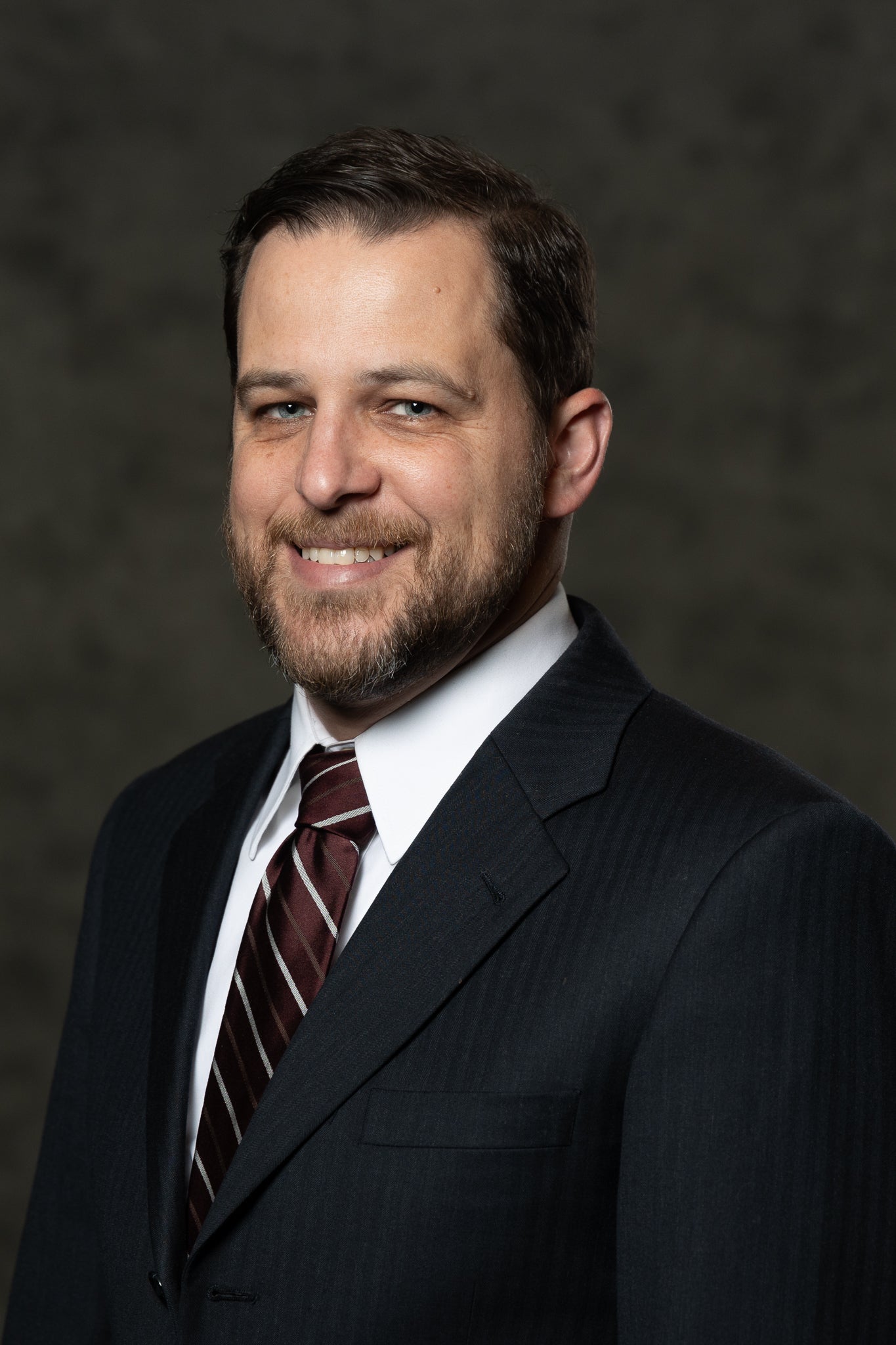
Rob Comber is an Associate Professor at KTH Royal Institute of Technology's School of Electrical Engineering and Computer Science , affiliated with the Media Technology and Interaction Design (MID) department. His research spans Human-Computer Interaction (HCI) , focusing on social and environmental sustainability , social justice , and feminist design . He explores technology's role in civic society , food systems , and social media through equity-driven design and qualitative social science methods. Research interests include: Democratic technology and equity in access Environmental stewardship via digital systems Feminist and decolonial approaches to HCI Community-driven design practices Smart city sustainability His recent publications highlight sustainable design , colonial archive transformations , and AI labor mapping , emphasizing constraint-based innovation and visceral technology ethics . No scientific awards are listed, and no formal advisees are mentioned. He teaches courses including Digitalization and Sustainable Social Transformation and Human-Computer Interaction .
Dr. David Smith is a Reader in the School of Allied Health and Social Care at Anglia Ruskin University, specializing in social and health inequalities, with particular expertise in Gypsy, Roma and Traveller (GRT) communities. His work focuses on understanding social divisions, health beliefs and practices, and the internationalization of the healthcare workforce, especially concerning Filipino nurses migrating to the UK. Education: Post Graduate Certificate in Learning and Teaching (Higher Education), Canterbury Christ Church University, 2010, 2:1 PhD Social Policy, Royal Holloway College, University of London, 2003 BA (Hons) Sociology and Social Policy, Royal Holloway College, 1996, 1st class Certificate in TESOL, Trinity College London, 1996, 2:1 Dr. Smith's research interests span social theory, social and health inequalities, and the experiences of marginalized communities, with a particular focus on Gypsies, Roma and Travellers. His work examines health beliefs and practices, neighborhood dynamics, and the internationalization of the healthcare workforce, particularly focusing on the Philippines. He has extensive expertise in community-based research with working-class communities and GRT populations, especially regarding housing settlement impacts. His research often employs qualitative and ethnographic methods alongside participatory approaches to health development. Dr. Smith's recent publications reveal a strong focus on health inequalities among marginalized populations, particularly Gypsy, Roma and Traveller communities in the UK. His work consistently addresses structural barriers to healthcare access, cultural factors affecting health beliefs and practices, and the experiences of migrant healthcare workers. There's a clear progression from his early work on social exclusion and housing to more recent studies on international nurse migration and end-of-life care for minority communities. His research demonstrates interdisciplinary approaches, bridging sociology, public health, migration studies, and social policy. Scientific Awards: 2006 Social Policy Association Prize for Best New Publication (for "On the Margins of Inclusion") 2018 Emerald Literati Award for Outstanding Paper (with Dr. Zoe James) 2018 Sam Aaronovitch Memorial Prize for Winning Paper Dr. Smith has successfully secured numerous research grants totaling over £300,000 as Principal Investigator or Co-Investigator. His funding comes from diverse sources including the British Academy/Leverhulme Trust, EU Fundamental Rights Agency, Health Education England, and various university internal funds. Current projects include investigating national legislation regarding Gypsy/Traveller accommodation (2024-2026), studying UK/Philippines Migrant Nurse networks, and examining older EU migrants' access to health services post-Brexit. He supervises PhD and Master's students, particularly those researching GRT communities, working-class studies, migration, and qualitative research methods. Dr. Smith actively participates in several research networks and communities, including the European Academic Network on Romani Studies, the Working Class Studies Association, and the Network of Academic Institutions in Romani Studies where he serves as Institutional Representative. He is also Editorial Board Member of Romani Studies and Advisory Board Member of The Traveller Movement. His work extends beyond academia through his role as Trustee of Medway Plus, a registered charity.
David Hedgecoth is a Professor of Music Education and Associate Director/Chair of Undergraduate Studies at The Ohio State University's School of Music. He holds a PhD from OSU and teaches courses in brass pedagogy, instrumental methods, and qualitative research. His administrative roles include curriculum committee work and advising for Phi Mu Alpha and Collegiate NAfME. He directs the Brazilian Experience education abroad program and mentors in the Sophomore Transformational Experience Program (STEP). Education: BME and MA from Florida State University (Tallahassee), PhD in Music Education from The Ohio State University. Research focuses on charter school music programs, educational policy, teacher education, and international music education. Key interests include curriculum design in alternative schools, social impact of music education, and LGBT inclusivity. Over 20 peer-reviewed and editor-reviewed publications address topics like self-guided rehearsals, post-recession curriculum recovery, and advocacy in music education journals. Awards include National Board Certification, Fulbright Scholarship, and Teacher of the Year. Serves on boards for Chamber Music Columbus, ProMusica Chamber Orchestra, and OSU's Center for Latin American Studies advisory board. Coordinates the IMMERSE sensory concert series with WOSU Public Radio. Advising includes directing education abroad programs and mentoring graduate students. Grants and partnerships involve collaborative projects with schools, orchestras, and international institutions. Maintains active roles in both classroom innovation and large-scale educational policy analysis. Labs/Teams: Brazilian Experience Abroad Program leadership, IMMERSE sensory concert coordination, and collaborative work with WOSU Public Radio.
Kai Du is a Lecturer at the School of Business within the Faculty of Business and Law at the University of Wollongong. He holds a PhD in Economics from the University of Adelaide (2014) and served as a UQ Development Fellow at the University of Queensland (2019–2022). His research focuses on productivity and efficiency analysis, particularly through data envelopment analysis and stochastic frontier analysis, addressing challenges in healthcare systems, sustainable economic growth, and banking sector efficiency. He is a Higher Education Academy (HEA) Fellow and member of WATTLE (Wollongong Academy for Tertiary Teaching and Learning Excellence), emphasizing inclusive education and contributing to the UOW Ally Network for LGBTIAQ+ support. Recent funding includes Targeted Researcher Support grants from the University of Wollongong (2023–2024). Key research interests include applying quantitative methods to assess efficiency in diverse sectors, such as agriculture, healthcare, and finance. His work bridges econometrics with real-world policy implications, particularly in emerging economies. Teaching expertise spans a decade, with courses emphasizing technical and analytical skills. Education: PhD in Economics, University of Adelaide, Australia (2014) Languages: English (Peer Review Competency), Chinese (Mandarin) (Peer Review Competency) SDGs: 9 (Industry, Innovation & Infrastructure), 11 (Sustainable Cities & Communities), 13 (Climate Action) Recent research outputs include advancements in panel data methodologies for efficiency measurement and analysis of climate change impacts on agricultural systems. His 2025 article in the European Journal of Operational Research proposes a likelihood-ratio test for technological differences in two-stage DEA, while 2024 work explores climate mitigation's role in agricultural efficiency in China.
Fardina Alam is a Lecturer in the Department of Computer Science at the University of Maryland, College Park. She holds a Ph.D. from George Mason University (2023), where she specialized in Structural Bioinformatics and Machine Learning. Her academic rank reflects UMD's Professional Track Faculty, equivalent to an Assistant Professor of Teaching. Dr. Alam's research focuses on deep learning applications in protein structure prediction, generative AI, and ethical data practices. She has contributed to projects funded by an NSF FET Grant (#1900061) and published in journals like Biomolecules. Awards include the 2023 Outstanding Dissertation Award and 2022 Editor's Choice Article recognition. Education: Ph.D. (Computer Science, George Mason, 2023); M.S. (Computer Science, George Mason, 2019); B.S. (Computer Science and Engineering, Military Institute of Science and Technology, Bangladesh, 2013). Her teaching emphasizes data science ethics and interdisciplinary applications, including a new course for UMD's Data Science minor. Professional roles include Associate Guest Editor at Bioinformatics Advances (2024), Faculty Advisor to the Bangladeshi Graduate Student Association, and Program Co-Chair for the ACM-BCB Computational Structural Bioinformatics Workshop (2023). Research Interests: Structural Bioinformatics, Generative AI, Responsible AI Ethics, Deep Learning, Machine Learning, and Data Science. Her work bridges computational biology and AI, with a focus on equitable data practices and protein structure analysis. Recent projects address challenges in generating physically-realistic protein structures and improving question-answering systems through equitable data strategies. Awards: Recipient of the 2023 Outstanding Dissertation Award (George Mason University), 2023 Best Paper Award, and 2022 Biomolecules Editor's Choice Article. These accolades highlight contributions to protein structure prediction and bioinformatics methodology. Advising & Grants: NSF FET Grant #1900061 supported her computational biology research. She advises the Nobanno graduate student group and chairs workshops in her field. Her teaching and research aim to promote inclusivity, particularly for underrepresented groups in STEM. Labs/Teams: Active contributor to the Computational Biology Lab at George Mason University and collaborates with UMD's interdisciplinary teams on data ethics and AI applications. Her work aligns with UMD's vision for data-driven education and innovation.
Dr Sophy Antrobus serves as Co-Director of the Freeman Air and Space Institute at King's College London, within the Department of War Studies. She holds a PhD from the University of Exeter (2019) and previously served as a Teaching Fellow in Strategic Studies at Portsmouth Business School. Her military career spanned two decades in the Royal Air Force, including operational deployments to Iraq and Afghanistan, and included a tour with the Royal Navy. Her research focuses on organizational barriers to innovation in modern air forces, cultural evolution of the RAF, and integration of autonomy in warfare. Notable contributions include analyses of air power history, critical military education, and UK defense policy. She is a Fellow of the Royal Aeronautical Society and sits on the RAF Museum Research Advisory Board. Recent recognitions include the 2025 SSPP King’s Impact Award for work on air power risk analysis. She regularly contributes to high-profile defense events such as the Chief of the Air Staff Lecture series and DSEI conferences. Her work bridges historical analysis with contemporary challenges in air and space power.
Dr. Ruth Peters is an Assistant Professor in Global Health at the Athena Institute, Faculty of Science, Vrije Universiteit Amsterdam. Her research focuses on health-related stigma, transdisciplinary methodologies, and participatory approaches in global health. She leads projects in multiple countries, collaborating with institutions like WarChild and Harvard Medical School. Her work addresses stigma reduction for conditions like leprosy, HIV/AIDS, and ADHD, emphasizing cultural sensitivity and inclusive practices. Peters has published over 30 peer-reviewed papers, co-edits the journal Leprosy Review , and coordinates the International Public Health specialization in the Master of Health Sciences program. She has supervised over 75 master’s students and multiple PhD candidates. Education: MSc Public Health Research and MA Development Studies from Vrije Universiteit Amsterdam and Institute of Development Studies (Sussex University). PhD (cum laude, 2015) on leprosy-related stigma in Indonesia. Visiting Research Fellowships at Harvard Medical School (2018-2019). Research Interests: Global Health equity, stigma reduction strategies, participatory research, mixed methods, and cultural validation of health tools. Current projects explore stigma in ADHD and leprosy reactions in Indonesia/India. Awards: Rubicon Grant (NWO), Huygens Scholarship, VSB Fonds, Leprosy Research Initiative support. Teaching & Leadership: Courses include 'Disability and Development', 'Epidemiology', and 'Global Health Strategies'. Chair of the Royal Tropical Institute’s Exam Board and member of the Faculty of Science Assessment Committee. Labs/Teams: Co-leads the Athena Institute’s Global Health research group, collaborating with networks like the Network Institute and APH-Global Health unit.
Jennifer Grandits is a Principal Lecturer in the Department of Psychology at Clemson University, affiliated with the College of Behavioral, Social and Health Sciences. She holds a PhD in Developmental Psychology from the University of Connecticut (2013), along with a Quantitative Research Methods Certificate, MA in Developmental Psychology (2010), and dual BA degrees in Psychology and Sociology from the University of Virginia (2007). Her research focuses on autism spectrum disorder interventions, implicit biases in healthcare, and aging workforce adaptation. She teaches courses in experimental psychology and lifespan development. Key research themes include sensory-based interventions for autism, cross-cultural stigma analysis, and leveraging machine learning for predictive modeling in health contexts. Her work bridges developmental psychology with practical applications in education and clinical settings. Expertise areas: Neurodiversity, child development, applied statistics Recent projects involve collaborations with autistic communities in curriculum design Teaching responsibilities include foundational psychology courses and advanced lifespan development studies. Her CV highlights contributions to inclusive education programs and technology adoption initiatives for older adults.
Nadine Kozak serves as Associate Professor at the School of Information Studies, University of Wisconsin-Milwaukee, where she examines how individuals and communities navigate information regulations across governmental levels. Her work bridges historical analysis with contemporary policy challenges in digital governance. Her academic foundation includes: PhD in Information Studies from University of California, San Diego MA in Communication from Carleton University, Ottawa, Canada BA (Honors) in History from University of Calgary, Calgary, Canada Dr. Kozak's research critically investigates intellectual freedom in community contexts like Little Free Libraries, online activism for internet freedom (including SOPA/PIPA protests), and transnational misinformation dynamics. She employs historical methodologies to analyze policy evolution, with particular focus on how local actors shape information access and governance. Her interdisciplinary approach integrates legal, sociological, and historical perspectives to address tensions between regulatory frameworks and grassroots information practices. Recent publications (2015-2022) reveal consistent engagement with community-driven information systems, regulatory challenges in digital spaces, and global misinformation ecosystems. Her scholarship demonstrates how historical precedents inform current debates on internet governance, while highlighting community agency in navigating censorship and access barriers across diverse settings from rural North America to conflict zones. No major scientific awards are documented in available sources. Dr. Kozak teaches core courses including INFOST 110 (Introduction to Information Science), INFOST 465 (Legal Aspects of Information), INFOST 660 (Information Policy), and INFOST 960 (Seminar in Information Policy). While specific student advising details are unreported, her graduate-level seminars suggest active mentorship in policy research. Current grant activities and laboratory affiliations remain unspecified in source materials, though her publication record indicates sustained research productivity.
Yat Li is a Professor of Chemistry and Biochemistry at the University of California, Santa Cruz. His research focuses on the rational design and fabrication of functional materials for catalysis, energy conversion, and energy storage applications. He teaches physical chemistry and solid-state materials chemistry, emphasizing diversity, equity, and inclusion in STEM education. Li's work explores electrode optimization for high-rate water splitting, additive manufacturing of energy storage devices, and CO2 capture technologies. He is committed to supporting transfer students in overcoming academic barriers in STEM fields. Education: Not explicitly listed in provided texts. Research interests include advanced electrode architectures, 3D printing of functional materials, and improving the stability and efficiency of electrochemical systems. His studies often integrate experimental and computational methods to address material properties and reaction mechanisms. Li has contributed significantly to understanding ion diffusion kinetics, catalyst deactivation, and doping effects in materials like hematite. His work bridges fundamental material science with practical energy solutions. Publications highlight innovations in electrode design for grid-scale energy storage, CO2 management, and high-performance supercapacitors. While no awards are listed here, his prolific output reflects recognition in electrochemical and materials research communities. Li advises students on materials synthesis and device fabrication, though specific advisees are not listed. His research teams collaborate on projects involving microbial fuel cells, aerogel-based electrodes, and photovoltaic materials.
Julia F. Sauma is a Brazilian-Londoner deaf/Hard of Hearing Lecturer in Anthropology at Goldsmiths, University of London. Her work focuses on collective life within extractive structures, with a particular emphasis on Amazonian Quilombo communities in Brazil and diasporic experiences. She holds a PhD from UCL (2014) and an MA from Federal University of Rio de Janeiro (2007). Key roles include teaching modules like Approaches to Contemporary Anthropology and supervising PhD projects on ecology, embodiment, and intersectional themes. Her research interests span ecology, land rights, disability studies, and the intersections of race, gender, and kinship. She collaborates with activist groups to explore joyful collective refuges and has pioneered auto-ethnographic methods addressing deafness and academic inclusion. Notable projects include the ERC-funded Extort: Anthropologies of Extortion (PI: Lucia Michelutti) and participatory works like Antiphonic Multibeing (2019). Her publications critique academic systems through works like Performing Normal (2024) and explore decolonial methodologies in Ruptures (2019). She engages in cross-disciplinary practices including performance art and policy-oriented research on early childhood development in Brazil. Current research emphasizes multi-modal methodologies and the body as a research tool, reflecting her commitment to inclusive, embodied knowledge production.
Mi Young Ahn is a Lecturer in the Sociology Department at Goldsmiths, University of London, where she joined in August 2022. She serves as the Academic Lead of the Advanced Methods for the Social and Economic Research Thematic Pathway for South East Network for Social Sciences (SeNSS) and is a convenor for the MSc Social Research program. Previously, she held positions at University College London, University of Kent, Bangor University, and Liverpool Hope University. Her educational background includes a PhD and MA in Sociology & Social Policy from Bangor University and a BA in Sociology (with Politics minor) from Korea University, South Korea. She became a Higher Education Academy Fellow in 2021. Dr. Ahn's research focuses on intersectional inequalities, students' sense of belonging, educational inequalities, social mobility, social class, cultural and social capital, and advanced research methods. Her work has developed influential measurement tools like the 10 Words Question for assessing sense of belonging, now widely adopted across universities in the UK, USA, and Canada including Imperial College London's Sense of Belonging Toolkit. Her publication record shows a consistent trajectory in understanding student belonging from multiple angles - examining its relationship to socio-economic status, institutional factors, locality, and its connection to social capital. Recent work expands into curriculum diversification examining racial representation in teaching materials. Society for Research into Higher Education (SRHE) Scoping Award (2018) Research Schools Programme in Opportunity Areas (EEF commissioned) Centre for Transforming Access and Student Outcomes (TASO) project As an educator, Dr. Ahn convenes core quantitative research modules for postgraduates and research methods modules for undergraduates. She serves as a reviewer for academic journals in higher education, education, social policy, and sociology, and contributes to educational conferences and textbook development.
Dr. Bill Baker is a Senior Lecturer in Drama, Visual Arts & Music Education at the University of Tasmania's School of Education, College of Arts, Law and Education (CALE). With a career spanning 35 years, he specializes in arts education, technology-enhanced learning (TELT), and the scholarship of teaching and learning (SoTL). His research focuses on youth resilience through arts participation, particularly in community youth orchestras, and the preparation of pre-service teachers in arts pedagogy. Dr. Baker holds a Doctor of Education (RMIT, 2002), a Master of Education (Arts Administration, RMIT, 1997), and a Bachelor of Music Education (University of Melbourne, 1988). He has received multiple awards, including Senior Fellow of the Higher Education Academy (2019) and Honorary Life Member of the Australian Society for Music Education (2021). His funded projects include the Tasmanian Community Fund Grant and Australia-ASEAN Council grants for youth orchestra research. His peer-reviewed publications (over 40) address arts education, online teaching methodologies, and the social impacts of music participation. Current research collaborations include partnerships with the Tasmanian Youth Orchestra and institutions like University of Southern Queensland and The University of Melbourne. Dr. Baker supervises HDR students in arts participation, leadership, and teacher education reforms. Scientific Awards: Vice Chancellor's Teaching Excellence Award Vice Chancellor’s Citation for Outstanding Contribution to Student Learning CALE Teaching Excellence Award Senior Fellow, Higher Education Academy (UK) Honorary Life Member, Australian Society for Music Education Supervision & Teaching: Dr. Baker has supervised numerous HDR students, including completed PhDs on contemporary music pedagogy and Masters theses on visual arts education. He coordinates units in the Master of Teaching and Bachelor of Education degrees, emphasizing technology integration and reflective practice.
Dr. James (Jim) Olson is a Senior Lecturer in the Department of Mechanical, Aerospace, and Nuclear Engineering at Rensselaer Polytechnic Institute (RPI). With a career spanning the U.S. Navy, General Electric, and academia, he specializes in nuclear engineering education, curriculum development, and STEM outreach. His work integrates pedagogical innovation with technical expertise in energy systems and nuclear technology. Education: DEng, Nuclear Engineering and Science (2022), Rensselaer Polytechnic Institute M. Eng., Engineering and Management Systems (2013), Clarkson University B.S., Nuclear Engineering and Engineering Physics (2006), Rensselaer Polytechnic Institute Research Interests: Dr. Olson focuses on enhancing nuclear education through systems thinking, diversifying STEM participation, and advancing nuclear technology economics. He pioneered hands-on STEM modules for elementary students and developed predictive methodologies for nuclear reactor operations during his Navy service. His work bridges educational psychology with technical innovation to address energy sector challenges. Awards & Recognition: While no formal awards are listed, his contributions include groundbreaking work in SMR fuel economics and patented advancements in power generation technology, contributing to Guinness World Records for power plant efficiency. Advising & Grants: Dr. Olson’s career includes curriculum modernization leadership at the Navy-Malta Program and GE’s clean energy initiatives. His volunteer efforts in precollege STEM education highlight his commitment to broadening participation in nuclear science. Labs & Teams: Collaborated with GE’s Industrial Research teams on clean energy transitions and led the Chemistry and Radiological Controls Training Program at the U.S. Navy’s West Milton Facility.
Cheryl Seals is the Charles W. Barkley Endowed Professor in the Department of Computer Science and Software Engineering at Auburn University's College of Engineering. She holds a Ph.D. in Computer Science from Virginia Tech, with additional degrees from Virginia Tech, North Carolina A&T State University, and Grambling State University. Her research focuses on AI ethics, natural language processing (NLP), virtual reality (VR) applications in healthcare and education, and promoting diversity in STEM. She leads initiatives like the NSF-funded AI ethics education project and the Institute for African Americans in Computing Sciences (IAAMCS). Notable awards include the Charles W. Barkley Professorship (2020) and participation in Drexel’s ELATES fellowship program. Her work bridges technology and social impact, including VR-based empathy training for medical students and interventions to mitigate pandemic-induced learning loss. She collaborates on interdisciplinary projects, such as automated grading tools for speech therapy and pavement crack recognition systems. Education: Ph.D. Computer Science, Virginia Tech M.S. Computer Science, Virginia Tech M.S. Software Engineering, North Carolina A&T State University B.S. Computer Science, Grambling State University Research Interests: AI Ethics and STEM Education Reform NLP for Sentiment Analysis and Hate Speech Detection VR Applications in Healthcare Training and Empathy Development Computing Equity and Underrepresented Groups Interdisciplinary Tools for Education and Accessibility Awards and Recognition: Charles W. Barkley Endowed Professor (2020–2025) ELATES Fellowship Participant (2024) Grants and Collaborations: NSF Grant: Integrating AI Ethics into STEM Curricula Collaborative Research: Evolution of IAAMCS National Science Foundation (NSF) AI Ethics Initiative Labs and Affiliations: Center for Artificial Intelligence and Cybersecurity Engineering McCrary Institute for Cyber and Critical Infrastructure Security