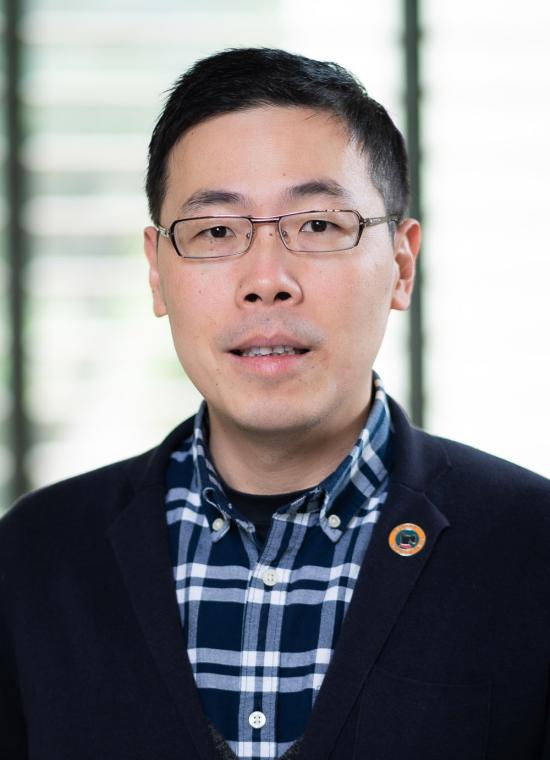
Feng Xiaoمشاهده پروفایل
دانشیار
Feng Xiao is an Associate Professor in the Department of Asian Languages and Literatures at Pomona College, where he also holds the title of Oldenborg Faculty Fellow. He contributes significantly to research and teaching in second language acquisition, particularly in Chinese as a second language, and integrates AI into language pedagogy. Educational Background: Ph.D., Carnegie Mellon University B.A. and M.Ed., Beijing Language and Culture University Feng Xiao's research centers on pragmatics in second language learning, examining how learners develop contextual language use during study abroad and how AI can support personalized language instruction. His work bridges applied linguistics, educational technology, and cross-cultural communication. He applies quantitative methods and data mining to analyze language development and assessment. His recent projects explore the role of AI beyond ChatGPT, gender-inclusive curricula, and the impact of the pandemic on study abroad. His recent publications reflect a strong trend toward integrating artificial intelligence into language education, expanding the understanding of pragmatic development in Chinese, and addressing equity and innovation in teaching. These works span journals in psycholinguistics, language assessment, and digital pedagogy. Scientific Awards and Grants: Hirsch Research Initiation Grant (2021–2023) EnviroLab Asia Curricular Innovation Award (Henry Luce Foundation, 2020) Andrew W. Mellon Grant for Digital Humanities (2016–2019) Hahn Fund for Innovative Teaching with Technology (awarded multiple times) Language Learning Dissertation Grant (2015) Modern Languages Department Dissertation Completion Scholarship (Carnegie Mellon, 2014–2015) Barbara F. Freed Award for Study Abroad Research (2014–2015) Feng Xiao actively mentors students and collaborates on digital tool development for language learning. He has led curriculum innovation projects and secured external funding for research and teaching. His work emphasizes educational equity, technological integration, and inclusive pedagogy. He teaches a range of courses from intermediate to advanced Chinese, as well as specialized topics such as Chinese in society, digital news, and culture. He is involved in interdisciplinary initiatives connecting language learning with digital humanities and environmental studies through grants like the EnviroLab Asia award. His lab-like collaborations focus on AI-driven pedagogical tools and data analysis in language acquisition.