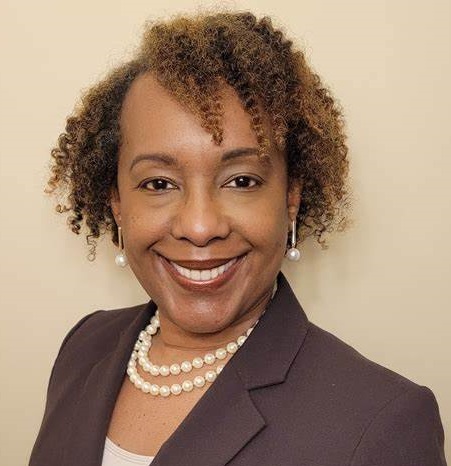
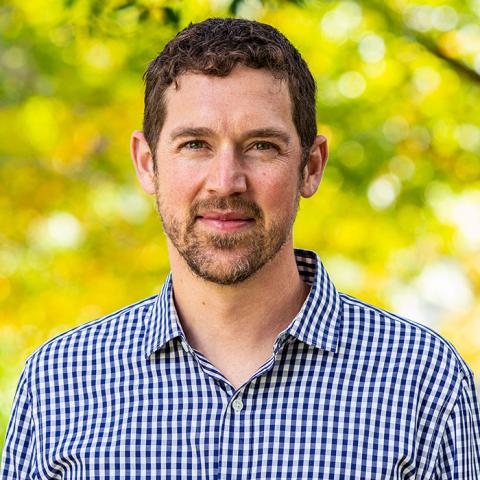
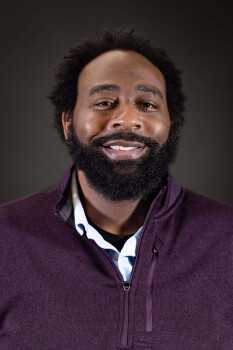
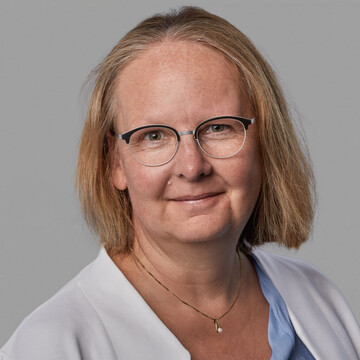
Hannah Wunsch is a Professor of Anesthesiology at Weill Cornell Medical College , Cornell University. She serves as an Attending Anesthesiologist at NewYork-Presbyterian/Weill Cornell Medical Center. M.D. from Washington University School of Medicine (2003) M.Sc. from London School of Hygiene and Tropical Medicine (2002) A.B. from Harvard University (1997) Her research focuses on critical care medicine , with particular emphasis on sepsis outcomes , mechanical ventilation practices , opioid use in postoperative and ICU settings , and health services research utilizing large administrative datasets. Key trends in her recent publications include ICU staffing models , opioid prescription patterns , mechanical ventilation strategies , and long-term outcomes after critical illness . She has published extensively in top-tier journals like Critical Care Medicine , JAMA , and The Lancet .
Dr. Dorian Brown Crosby is an Associate Professor of Political Science at Spelman College, where she has taught since 2006. In addition to her faculty role, she is the Founding Director of Spelman’s Refugee and Forced Migration Studies minor—the first and only such program at an HBCU—and serves as faculty-mentor and board member of the College’s Social Justice Fellows Program. Education Ph.D. in Political Science, Clark Atlanta University M.A. in Political Science and International Relations, University of Delaware B.A. in Political Science, Cum Laude , Spelman College Research Focus Dr. Brown Crosby’s scholarship centers on the resettlement experiences of African refugees in the U.S. Southeast, with particular attention to Somali communities in Georgia and Tennessee. Her interdisciplinary work spans forced migration studies, American government, women’s studies, ethnic and racial politics, and international relations . She employs qualitative methods—including semi-structured interviews—to explore political and civic engagement among refugee populations. Her 2020 monograph Somalis in the Neo-South: African Immigration, Politics and Race analyzes the political incorporation of Somali refugees in Clarkston, Georgia, and Nashville, Tennessee, highlighting how race, religion, and regional identity shape civic participation. Scientific Honors & Leadership President, Southern Region, International Studies Association (first African American to hold this office) Grants & Funding Social Justice Development Grant (2014) Gordon-Zeto Center Curriculum Development Grant (2013) Spelman Campus Leadership Initiatives Grant (2008) Nebraska Humanities Council Grant (2005) Teaching & Global Engagement Dr. Brown Crosby teaches introductory and upper-division courses including Introduction to Political Science, National Government in the U.S., State and Local Government, Public Administration & Public Policy, Legislative Process, Forced Migration in and from Africa (service-learning), and the college-wide First-Year Experience Study-Travel Seminar. She led Spelman’s first CIEE-sponsored trip to Ghana in 2014, accompanied by 27 students, and has been featured in national media interviews discussing higher education and global engagement. While specific advisee names are not listed, her extensive mentorship is evident through directed research, service-learning projects, and study-travel programs that integrate students into her community-based research on refugee resettlement.
Lena Holzer is an Assistant Professor in Gender, Race and the Law at the University of Cambridge’s Faculty of Law and serves as Sheila Lesley Fellow at Girton College. Her work bridges queer-feminist, anti-racist, and intersectional methodologies with international law, focusing on human rights and sports law. PhD in International Law with a minor in International Relations from the Geneva Graduate Institute European Masters Degree in Human Rights and Democratisation Bachelor of Arts in International Development from the University of Vienna Her research explores critical feminist, queer, and intersectional approaches to international law, particularly how international legal frameworks perpetuate binary gender categories and racialized sports governance. She is working on a book tracing international law’s role in legal identity’s gender binary and another analyzing sports regulations’ gendered and racialized impacts. Recent publications highlight her expertise in queer-feminist legal analysis, gender recognition reforms, and the interplay between sports governance and human rights. She has contributed to journals like Australian Feminist Law Journal and Leiden Journal of International Law and authored reports on non-binary gender registration in Europe. 2022 SNIS Award for her PhD thesis 2023 Prix Senior Maurice Chalumeau for her thesis Lena’s academic work engages with the Lauterpacht Centre for International Law and Cambridge Family Law Centre, emphasizing collaborative and inclusive legal scholarship. She has previously taught at Goldsmiths, University of London, and supervised at the Geneva Graduate Institute.
Laila Kadiwal serves as an Associate Professor (Teaching) in the Department of Education, Practice & Society at the UCL Institute of Education, University College London. Her academic work bridges critical theory with practical applications in international education contexts. Dr. Kadiwal earned her DPhil from the University of Sussex, an MSc in Higher Education from the University of Oxford, and completed the Graduate Programme in Islamic Studies and Humanities through SOAS University of London and the Institute of Ismaili Studies. Prior to her UK appointment, she taught for 12 years in diverse educational settings across India. Her research employs a decolonial lens to investigate racism, identity weaponization by authoritarian actors, and knowledge production politics in education and international development. Working across India, Pakistan, Tajikistan, and the UK, she examines education's role in conflict zones, refugee experiences, climate injustice, and minority rights. Notable contributions include developing the Theatre of the Privileged decolonial pedagogy and the 'india and me: engage.reflect.act' public education program that engages with grassroots movements addressing intersectional injustices. Analysis of her recent publications reveals consistent scholarly output focused on decolonial education approaches, critical consciousness development, and resistance to authoritarianism, particularly in South Asian contexts. Her work demonstrates methodological diversity, incorporating semi-structured interviews, participatory approaches, visual analysis, and conceptual frameworks. As co-director of Best Foot Music, Dr. Kadiwal extends her academic work into community practice through an intercultural organization collaborating with displaced and refugee artists in the UK. With extensive international teaching experience, she has supervised over 550 students from 46 countries. At UCL, she leads MA modules including 'Education and Development in Asia' and 'Education in Muslim Communities,' while also serving as a visiting lecturer at institutions including the University of Sussex, University of Brighton, King's College, and universities in Sweden and China.
Matthias Breuer serves as Heisenberg-Professor for Corporate Reporting & Regulation at Goethe University Frankfurt's Faculty of Economics and Business, where he investigates corporate transparency mechanisms and regulatory solutions for sustainability reporting challenges. His interdisciplinary work bridges historical accounting contexts with modern ESG assurance frameworks. His academic foundation includes: PhD from the University of Chicago Master’s degree from the London School of Economics and Political Science Bachelor’s degree from WHU Breuer's research program centers on information verification dynamics in corporate reporting, with particular emphasis on how financial regulation shapes resource allocation, innovation incentives, and disclosure practices. He examines historical precedents (e.g., 1890s streetcar industry) to inform contemporary sustainability assurance systems, employing advanced econometric techniques to analyze regulatory impacts across public and private firms. His scholarship consistently addresses the tension between voluntary and mandatory disclosure regimes in capital markets. Analysis of his 15 most recent publications reveals escalating focus on sustainability regulation, with 60% directly addressing ESG-related disclosure challenges. Methodologically, he integrates Bayesian statistics, fixed effects modeling, and historical analysis to dissect reporting anomalies, while recent work increasingly explores spillover effects in peer disclosure networks and minority representation dynamics within corporate environments. Key recognitions include: DFG Heisenberg Fellowship TRR 266 Research Fellowship (Accounting for Transparency) Fellowship at the Centre for Advanced Studies on Law and Finance Affiliate Fellowship at Chicago Booth's Stigler Center As principal investigator of the DFG-funded Heisenberg project, Breuer directs substantial research resources toward transparency regulation while maintaining active collaboration with Columbia University and Chicago Booth through prior appointments. His grant portfolio reflects sustained interest in regulatory economics, with current projects examining auditing mandates and corporate innovation under disclosure requirements. Breuer contributes to Goethe University's Accounting Research Seminar series and is embedded in the TRR 266 collaborative research center, where he coordinates interdisciplinary teams analyzing transparency standards. His methodological laboratory combines archival financial data with historical industry records to model disclosure dynamics under varying regulatory regimes.
Steven P. Dow is a Professor at the University of California San Diego leading the ProtoLab, which investigates collective intelligence, creativity, and decision-making through social computing and human-centered design. His work develops systems leveraging LLMs, crowdsourcing, and visualization to scaffold problem-solving for individuals and communities. His research spans Social Computing , Human-Computer Interaction , and Participatory Design , focusing on cognitive/social aspects of collaborative processes. Key areas include AI-augmented creativity tools, value-centered civic engagement frameworks, and metadata-driven collective ideation systems that bridge technical and cultural dimensions of design. 2025 publications reveal a strong trend toward LLM-crowd integration for creative workflows, with work appearing at UIST and Collective Intelligence conferences. Research emphasizes inclusive idea convergence in civic contexts and dynamic exploration in design processes using forward-backward propagation techniques. Prof. Dow actively mentors students, with advisees like Sangho Suh and Nancy Qiu leading publications on AI storyboarding and self-reflective crowds. His ProtoLab drives projects including community-driven design environments and context-aware exploratory search systems. The ProtoLab serves as an interdisciplinary hub developing socio-technical systems for community co-design, leveraging ubiquitous devices and mixed-initiative interfaces to transform how teams solve complex problems through emergent scaffolding and value-centered frameworks.
Stefan Bächtold is a Lecturer at the School of Arts and Social Sciences, Monash University Malaysia. His research focuses on the intersection of digital technologies, state authority, and conflict in Southeast Asia, particularly Myanmar and Malaysia. He has held visiting positions at the Technical University of Munich (Germany) and Swisspeace Institute (University of Basel, Switzerland). His work critically examines how digital technologies shape political dynamics and state intervention in contexts of conflict and pandemic response. **Education:** PhD in Political Science (University of Basel, 2016) MA in Sociology and Political Science (University of Fribourg, 2011) **Research Interests:** Bächtold explores technologies' role in peacebuilding, international development, and conflict transformation using methods like ethnography and discourse analysis. His current projects analyze digital tech’s impact on state authority during the pandemic and Southeast Asia’s policy networks for regulating technology. **Grants & Projects:** Lead investigator for 'Building policy networks for regulating digital tech in Southeast Asia' (2024) Co-investigator in 'Digital Technologies as a New Agenda for Korea-Southeast Asia Diplomacy' (2025) **Activities:** Organized workshops on digital governance, including the Southeast Asia Research Center for Digital Technology and Society (SEADS) Roundtables and Monash University Malaysia’s 2024 Graduate Research Week. **Collaborations:** Engages with global institutions like the United Nations, European Union, and local NGOs to evaluate complex interventions in conflict zones.
Paul Zhou is a Senior Lecturer in the Department of Management at Monash University. He holds a PhD in Supply Chain and Operations Management from Hong Kong Polytechnic University (2018), a Master’s in Electronic Commerce from the University of Hong Kong, and a Bachelor’s in Global Supply Chain Management from Hong Kong Polytechnic University. His research focuses on Sustainable Operations Management, Global Supply Chain Networks, and applications of Big Data Analytics/Machine Learning in business operations. He has led projects such as 'Supply Chain Governance Solutions for the Gig Economy' (2025-2028) and 'Machine Learning for Civil Construction Safety' (2019-2022). His work has been featured in top journals like Production and Operations Management and Journal of Operations Management . Notable achievements include the 2017 IACMR Presidential Award for his study on environmental incidents’ market impacts. Zhou’s research explores sustainable supply chain practices, DEI commitments’ market effects, and geopolitical influences on global operations. He serves as Oceania Co-Editor for Journal of Supply Chain Management and reviewer for multiple journals including Production and Operations Management .
Zachary Oberfield is Professor and Chair of Political Science at Haverford College, where he teaches courses in American politics, public policy, criminal justice reform, bureaucracy, the presidency, and Congress. He has previously held academic positions at Temple University and the City College of New York. B.A., Political Science, Hobart and William Smith Colleges Ph.D., Political Science, University of Wisconsin-Madison His research centers on organizational change, leadership, and street-level bureaucracy, with a particular focus on public institutions such as schools and police departments. He investigates how frontline public servants are socialized, how diversity climates affect agency performance, and how reforms in criminal justice and education unfold in practice. His recent publications span topics including school finance fairness, charter school governance, police workforce development, and racial bias in public management. His work employs longitudinal and comparative methods, often analyzing policy implementation over time and across institutional contexts. He has published in leading journals such as American Educational Research Journal , Public Administration Review , and Journal of Public Administration Research and Theory , as well as with major university presses. Zachary Oberfield is actively engaged in contemporary policy debates, contributing to public discourse through outlets like the Washington Post 's Monkey Cage blog. His current research examines criminal justice reforms in Delaware County, PA. He advises on public sector leadership and organizational reform, though no formal students are listed. He has not received any explicitly mentioned scientific awards. He is affiliated with the Department of Political Science at Haverford College, contributing to both teaching and administrative leadership as department chair.
Claire Vernade is a Group Leader at the University of Tübingen in the Cluster of Excellence Machine Learning for Science. She leads an active research group focused on theoretical aspects of sequential decision making, with particular expertise in bandit problems and reinforcement learning theory. Her work bridges theoretical foundations with practical applications in scientific discovery. Her research interests span sequential decision making, bandit problems, theoretical Reinforcement Learning, Learning Theory, and principled learning algorithms. She has made significant contributions to understanding non-stationary environments, lifelong learning frameworks, and the theoretical foundations of bandit algorithms. Her work on "Eigengame: PCA as a Nash Equilibrium" received an Outstanding Paper Award at ICLR 2021. Dr. Vernade has been awarded prestigious grants including an Emmy Noether award (2022) for her FoLiReL project and an ERC Starting Grant (2024) for her ConSequentIAL project. Her current ERC project explores the role of Reinforcement Learning in developing Continual Learning agents, with applications to scientific domains like drug discovery and micro-chemistry. Emmy Noether award under the AI Initiative call (2022) ERC Starting Grant (2024) Outstanding Paper Award at ICLR 2021 She currently supervises three PhD students and actively recruits postdocs and PhD candidates through the IMPRS-IS and ELLIS doctoral programs. Her group collaborates extensively with the broader machine learning community, organizing workshops like FoRLaC at ICML 2024 and serving as co-chairs for tutorials at major conferences. Dr. Vernade is also deeply committed to diversity and inclusion in machine learning, co-leading initiatives like Women in Learning Theory and Tübingen Women in Machine Learning.
Anna Martinelli is an Associate Professor at Chalmers University of Technology, affiliated with the Department of Chemistry and Chemical Engineering's Applied Chemistry division. She holds a Master's in Physics and a PhD in Materials Science from Chalmers, focusing on ion-conducting polymer materials. Her research group explores ionic liquids' physico-chemical properties for applications in green energy conversion systems, such as fuel cells. Key techniques include Raman spectroscopy, NMR, and SAXS. She leads projects funded by grants from the Hasselbald Foundation, SSF, and VR. Education: MSc in Physics (Italy/Sweden), PhD in Materials Science (Chalmers). Postdoctoral research at University of Rome La Sapienza and INP-Grenoble. Current projects include structural battery electrolytes and sustainable energy materials. Research interests: Ionic liquid mixtures, nanoconfined systems, and advanced materials for energy storage. Supervised students include Sanna Björkegren and Rose Fassihi on emulsion membrane projects. Active in developing in situ fuel cell characterization methods.
Dr. Michael D. Burton is an **Associate Professor** and **Eugene McDermott Distinguished Professor** in the Department of Neuroscience at the University of Texas at Dallas (UT Dallas), affiliated with the **School of Behavioral and Brain Sciences**. He is a founding member of the **Center for Advanced Pain Studies (CAPS)** and holds roles in the **Center for Vital Longevity (CVL)**. His research focuses on neuroimmunology, pain mechanisms, and metabolic disorders, emphasizing how immune-nervous system interactions influence chronic pain, depression, anxiety, and aging-related conditions. Dr. Burton’s work bridges preclinical and translational research, using rodent models and human clinical samples. Education: PhD in Animal Science (Immunophysiology and Behavior), University of Illinois at Urbana-Champaign (2012) B.S. in Animal Science and Biotechnology, University of Illinois at Urbana-Champaign (2006) Postdoc in Pain Neurobiology, UT Dallas (2017) Postdoc in Diabetes/Metabolism Research, UT Southwestern Medical Center (2015) Research Interests: Dr. Burton investigates how peripheral stimuli (diet, alcohol, immune activation) affect pain and behavior through neuroimmune pathways. Key areas include: Sex differences in pain sensitivity and neuroinflammation Risk factors for chronic pain (e.g., high-fat diets, aging) Neuroimmune biomarkers for pain and delirium Development of non-opioid analgesics (e.g., cannabinoids) Awards: 2024 ROAR Research Award, UT Dallas 2023 Eugene McDermott Distinguished Professorship 2022 SFNova/Rising Star (Society for Neuroscience) 2019 Mitchell Max Award for Pain Research Grants & Leadership:** Co-Director, **Enhancing Neuroscience Undergraduate Research Experiences (ENSURE)** program ($900K grant) NIH R35, R21 grants (pain and metabolism) Editorial roles: *Neurobiology of Pain*, *Journal of Neuroinflammation*, and others Labs & Teams:** Neuroimmunology and Behavior Lab (UT Dallas) Member, NIH Pain Consortium and Endocrine Society’s Basic Science Group
Prof. Dr. Astrid Neumann is a Professor of German Language Didactics at Leuphana University Lüneburg, affiliated with the Institute for German Language and Literature and its Didactics (IDD) and the Center for Empirical Research on Language and Education (ERLE). Her work bridges language didactics, general pedagogy, and comparative school research. Education: Master's degree in Modern German Literature/Bohemian Studies/Russian Studies from Humboldt University of Berlin (1989-1997), with additional qualifications in German as a foreign language and teacher training (Studienrat). Research Focus: Her primary research explores text linguistics, writing didactics, and German as a second/educational language. She leads practical projects on refugee integration through language education and digital writing tools. Key areas include: Adaptive language support in heterogeneous classrooms AI applications in writing instruction Vocational education curriculum development Publication Trends: Recent works (2022-2025) emphasize digital pedagogy, linguistic diversity management, and AI integration in German language instruction, reflecting strong applied research focus in vocational and inclusive education contexts. Projects & Advising: Leads federally funded projects like BAKODE (language sensitivity) and CODIP (digital subject teaching). Supervises doctoral candidates and coordinates service-learning initiatives linking students with community language support programs. Teams: Directs research teams at ERLE and collaborates on cross-institutional projects like EvaFa (language support evaluation) involving partners from multiple German universities.
Stephanie Bilderback is a Lecturer in the Department of Management and Marketing at Austin Peay State University. She is pursuing a PhD in Management (ABD, expected Spring 2024) from Walden University. Her research focuses on organizational behavior, employee development, and the intersection of technology with workplace dynamics. She explores topics such as AI dependency in the workplace, mental health strategies for employees, and global leadership competencies in interconnected economies. Her work emphasizes ethical leadership, digital communication impacts on productivity, and sustainable business practices. Recent studies include analyzing Snapchat's role in workplace efficiency, managing Gen Z's digital perfectionism, and integrating AI in healthcare training programs. She also investigates regional economic growth through work-based learning initiatives in Tennessee and climate-sensitive business strategies in Dickson County. Bilderback’s research highlights trends in post-pandemic workforce management, including unconscious bias mitigation and remote work culture evolution. She advocates for employee well-being programs addressing screen time addiction and suicide prevention through organizational development. Her writing spans academic journals and book reviews on responsible management education.
Mimi (Paulomi) Bhatt, PhD, MPH, CNM, is an Assistant Professor at NYU Rory Meyers College of Nursing. She is a certified nurse-midwife, researcher, educator, and theorist whose work centers on birth equity, reproductive justice, and the integration of midwifery care in public health systems. She actively provides clinical care within NYC Health + Hospitals and contributes to national and global maternal health policy. PhD in Nursing Theory, NYU Meyers College of Nursing MSN, Frontier Nursing University MPH in Global Health Leadership, NYU Global Institute of Public Health BSN, NYU Steinhardt School of Education BA in Comparative Literature and English Education, NYU College of Arts & Science Dr. Bhatt’s research is grounded in critical feminist theory and qualitative methodologies. Her work investigates how midwifery models can advance health equity, particularly for Black, Indigenous, and other minoritized communities. She explores themes such as autonomy in childbirth, respectful maternity care, perinatal mental health, and systemic barriers faced by midwives of color. Her scholarship emphasizes anti-oppression frameworks and community-based participatory research. Her recent publications analyze experiential outcomes in maternity care, revealing that midwife-led care—especially in community settings—leads to higher autonomy, respect, and lower mistreatment. She has also published on the experiences of sexual and gender-diverse parents, cervical cancer screening in the Dominican Republic, and midwifery integration in India. Her work consistently highlights structural inequities and advocates for transformative change in maternal health systems. Scientific awards and honors include: NYU University-wide Dissertation Award – Allied Health & Social Services (2020) Jonas Nurse Leaders Scholar Award (multiple years) Johnson & Johnson Minority Faculty Nurse Scholar Award (multiple years) Herman Biggs Health Policy Fellow Women’s Leadership Initiative at NYU Dr. Bhatt mentors future nurse-midwives and contributes to policy through service on the NYC Maternal Mortality and Morbidity Review Committee and the International Confederation of Midwives’ Americas Regional Committee. She received postdoctoral training at the Birth Place Lab, University of British Columbia, and as a Provost Postdoctoral Fellow at NYU. Her clinical and academic work is deeply informed by her identity as a first-generation immigrant and her mother’s legacy as a nurse-midwife in India. She is affiliated with the Birth Place Lab and collaborates with multidisciplinary teams focused on respectful maternity care, midwifery practice climate, and global maternal health capacity building.