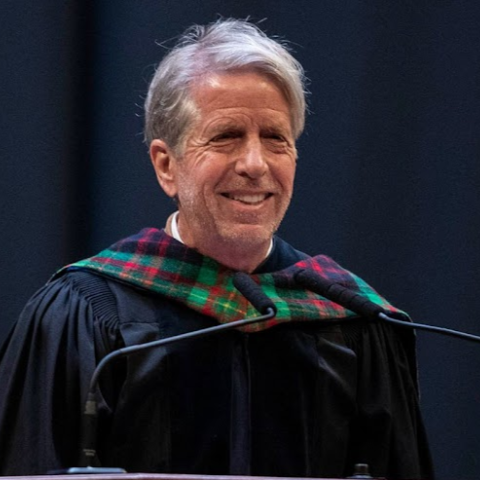
Thomas Hartmann-Wendels is Professor of Bank Management at the University of Cologne's Faculty of Management, Economics and Social Sciences. He has held the Chair of Bank Management since 1999 and serves as Director of both the Institute for Leasing Research (since 2002) and the Institute of Bank Management and Banking Law (since 1999). His research focuses on banking management, corporate finance, leasing, risk management, and financial regulation. His extensive publication record in prestigious journals demonstrates expertise in areas such as bank funding stability, risk reporting standards, loss given default estimations, and the impact of Basel III regulations on the financial system. His work often combines theoretical frameworks with empirical analysis of German and international banking markets. His recent publications show a continued focus on banking risk management, with particular attention to regulatory requirements, leasing industry practices, and private equity compensation structures. His research bridges academic theory with practical banking applications, making significant contributions to both scholarly literature and industry practices. Arthur Anderson Research Award (1987) Professor Hartmann-Wendels has been actively engaged in media commentary on banking issues, with interviews in Deutsche Welle, Kölnische Rundschau, and Capital magazine discussing topics such as bank mergers, fintech disruption, and sustainable banking strategies.
Cinzia Cerroni is a Full Professor at the University of Palermo , affiliated with the Department of Mathematics and Computer Science under the School of Basic and Applied Sciences . She serves as Delegate for the Coordination of the University Orientation and Tutoring Center (COT) since November 4, 2021, and holds regular office hours in Room 105 of her department. Research focuses on the history of mathematics , algebraic structures , and mathematical education Key contributions to cryptographic history , non-Archimedean geometries , and gender representation in STEM Active in teacher collaboration projects and interdisciplinary education Her 15 recent publications span topics from tessellations and bicomplex numbers to wartime impacts on mathematical collaboration and educational methodologies. Subfields include group theory , historical algorithms , geometric patterns , and cryptographic theory . Contact: cinzia.cerroni@unipa.it | Phone: +3909123891092
Jeffrey Colon is a full-time Professor of Law at Fordham University School of Law since 1994, teaching specialized courses including International Tax, Corporate Tax, Partnership Tax, Taxation of Derivatives, Corporations, and Corporate Finance. His academic affiliations encompass current faculty duties at Fordham, past visiting professorships at Fundação Getúlio Vargas Law School (São Paulo) lecturing on tax treaties, adjunct roles at Cardozo School of Law, and the Katherine A. Ryan Distinguished Visiting Professorship at St. Mary's University (Institute on World Legal Problems) in Innsbruck, Austria. Education includes: BA from Yale College JD from Yale Law School LLM in Taxation from Georgetown Law School His research critically examines tax jurisdictional shifts for individuals and assets, cross-border taxation of derivatives and stock options, and modern financial vehicle taxation. Recent scholarship focuses on ETFs and mutual funds, analyzing in-kind redemption flaws and conflicts between tax-exempt/taxable shareholders. This work bridges theoretical tax policy with practical international finance challenges, emphasizing coherence in U.S. tax frameworks for global mobility and investment. Publication trends reveal sustained expertise in international tax complexities, with 1991-2007 articles covering Soviet tax reforms, expatriation rules, and securities lending. Post-2014 works pivot to ETFs (2017, 2023) and mutual fund structures (2014, 2016), exposing systemic vulnerabilities in current tax regimes for pooled investment vehicles. His scholarship consistently addresses treaty conflicts and jurisdictional gaps in global finance. No scientific awards are documented in the provided text; his Katherine A. Ryan title denotes a visiting appointment rather than an honorific award. While the text confirms his extensive publication record and prior legal practice, it omits details on graduate student advising, research grants, or laboratory affiliations. His professional trajectory emphasizes practical tax law experience directly informing scholarly analysis of financial product regulation.
Claudia Custodio is a Professor of Finance at Imperial College London Business School, with additional research affiliations at the Centre for Economic Policy Research (CEPR) and the European Corporate Governance Institute (ECGI). Her academic work spans corporate finance, CEO characteristics, capital structure decisions, and financial education. Her research interests focus on understanding how CEO characteristics and expertise influence corporate policies and performance. She has made significant contributions to understanding the impact of financial education on executive decision-making, the relationship between CEO generalist versus specialist experience and innovation, and how working capital management responds to external shocks like political violence and climate change. Her work often employs rigorous empirical methods including randomized controlled trials to establish causal relationships. Analysis of her recent publications reveals a strong trend toward field experiments and policy-relevant research, particularly in emerging markets. Her work on financial education in Mozambique demonstrates how targeted educational interventions can improve financial decision-making among executives. She also investigates how external shocks like the opioid crisis and climate change affect corporate behavior and economic outcomes through various channels including supply chains and real estate markets. Her research has been supported by various institutions including the Swedish House of Finance, with whom she has collaborated on multiple projects examining working capital management under political violence and information frictions in government support programs during the pandemic. Professor Custodio maintains active research collaborations with scholars across Europe, particularly in Portugal, Sweden, and the Netherlands, reflecting the international nature of her research agenda focused on corporate finance issues in both developed and emerging economies.
Scott Dyreng is the Senior Associate Dean of Innovation and Professor of Accounting at Duke University's Fuqua School of Business. His research focuses on corporate tax avoidance, international taxation, and accounting for income taxes. He teaches managerial accounting to graduate students and has received the Excellence in Teaching Award three times in Duke's MMS program. Education: PhD in Accounting from University of North Carolina (2008) Master’s in Accounting from Brigham Young University Bachelor’s in Accounting from Brigham Young University Research Interests: Dyreng’s work examines how firms strategically manage taxes through international operations, debt agreements, and financial reporting. He explores topics such as tax reform impacts, covenant compliance, and earnings manipulation to avoid tax liabilities. His research bridges accounting, taxation, and corporate strategy to understand tax-driven firm behavior. Awards: Excellence in Teaching Award (Duke MMS Program) — 3-time recipient Grants & Advising: While specific grants aren’t listed, his publications indicate sustained research funding. No advisee名单 are explicitly provided in the text. Labs/Teams: No specific labs or teams are mentioned, but his role as Senior Associate Dean involves overseeing innovation initiatives at Fuqua.
Daniel P. Gross is an Associate Professor in the Strategy area at Duke University’s Fuqua School of Business and a Faculty Research Fellow at the National Bureau of Economic Research (NBER). His research focuses on the causes and consequences of technological change, including crisis innovation policy, automation’s impact on labor markets, and the interplay between innovation and entrepreneurship. Gross holds a Ph.D. in Economics from UC Berkeley and has held positions at Harvard Business School and NBER. His work has been funded by the NSF, Sloan Foundation, and Kauffman Foundation. Education: Ph.D. in Economics, University of California, Berkeley (2015) B.A. in Mathematics and Economics, Tufts University (2008) Research Interests: Gross examines historical and modern contexts of technological change, including crisis-driven innovation (e.g., WWII and pandemic responses), automation effects on workers and firms, and policy frameworks for fostering innovation. He frequently uses historical case studies to inform contemporary economic and policy debates. Key Contributions: His research on WWII-era R&D’s impact on post-war innovation has influenced policy reports like the Economic Report of the President. Notable articles include analyses of telephone operator automation’s labor market effects and critiques of modern innovation policy. Awards & Recognition: Strategy Science conference Best Paper award (2023) Management Science Distinguished Service Award (2024) Grants & Funding: Over $1.2M as PI from NSF, Sloan Foundation, and Duke University, focusing on topics like U.S. scientific training ecosystems and post-WWII innovation legacies. Labs/Teams: Collaborates with interdisciplinary teams at NBER, Duke, and Harvard on innovation policy, historical economics, and labor market dynamics.
Ingrid Smithey Fulmer serves as Professor at the University of Illinois' School of Labor and Employment Relations while holding the strategic leadership position of Advisor for Strategic Initiatives in the Office of the Provost and Executive Vice Chancellor. Her dual appointment bridges academic research and institutional governance. Her research centers on pay transparency systems , compensation design , and human resource innovation , with fingerprint analysis revealing dominant focus areas including Pay Transparency (100%), Pay Communication (97%), Firm Performance (81%), and Pay-for-Performance systems (75%). Notable interdisciplinary connections include Breastfeeding Support research (75%) and Emotions in Social Sciences (54%). Analysis of her 45+ publications shows consistent leadership in compensation literature, with high-impact articles in Personnel Psychology and Annual Review of Organizational Psychology . Her work demonstrates strong real-world relevance through policy citations and significant Mendeley readership (450+ for key 2022 review). Highly cited 2023 Personnel Psychology article on compensation-performance linkage Featured 2022 review in flagship Annual Review journal Media coverage of alumni value capture theory (2024) Fulmer's strategic advisory role involves developing institutional initiatives that translate her research on transparency and performance systems into university-wide practice, with particular emphasis on innovative HR approaches like the skunk works methodology she pioneered for addressing complex organizational challenges.
Kurt R. Sweat is an Assistant Professor in the Department of Health Economics, Systems, and Policy at the O'Donnell School of Public Health, University of Texas Southwestern. His research focuses on market design in healthcare, particularly the heart transplant waitlist system in the U.S. He holds a PhD in Economics from Stanford University (2023), and completed a postdoctoral fellowship at Johns Hopkins University's Carey Business School and Hopkins Business of Health Initiative. His work bridges econometric models with policy analysis, emphasizing healthcare outcomes and system efficiency. Education: PhD in Economics (Stanford University, 2023); Postdoctoral Fellow (Johns Hopkins University, 2023-2024); Undergraduate degrees in Mathematics and Economics (University of Nevada, Las Vegas). Research Interests: Market Design in healthcare systems, health economics, econometric modeling, and industrial organization. His recent work evaluates policy changes in heart transplant waitlist prioritization, revealing redistributive effects and incentives influencing patient survival outcomes. Teaching Experience: Taught advanced econometrics courses at Stanford University, including ECON 271, ECON 270, and BIOS 203, with notable student evaluations (4.6/5.0 to 5.0/5.0). Awards: Recognized with the Outstanding Teaching Assistant Award during his PhD.
Robert J. Barro is the Paul M. Warburg Professor of Economics at Harvard University and a Senior Fellow (adjunct) at the Hoover Institution. His research focuses on macroeconomics, economic growth, and the economics of religion , with notable contributions to the understanding of fiscal policy, monetary policy, and market regulation. He has a PhD in economics from Harvard University and a BS in physics from Caltech. Barro's academic work has been pivotal in challenging Keynesian economic principles through the lens of rational expectations and empirical analysis. His 1991 and 1992 papers on economic growth established foundational frameworks like conditional convergence and the "iron law of convergence" with Xavier Sala-i-Martin. He has extensively studied the impact of government policies on economic activity, including rare disasters (e.g., the coronavirus pandemic) and their effects on inflation and asset markets. As a public intellectual, Barro has contributed regular commentary to outlets like the Wall Street Journal and Business Week , addressing topics such as stimulus spending, tax policy, and the limitations of government intervention. His libertarian economic philosophy emphasizes minimal government roles in defining property rights, baseline education, and targeted infrastructure investments. He has advised governments on currency reforms, though his recommendations (e.g., Russia's currency board, South Korea's dollarization) were often not adopted.
Nur Schuba is a Research Assistant Professor at the Bureau of Economic Geology, The University of Texas at Austin, with a focus on seismic interpretation, structural geology, fault characterization, salt tectonics, and science communication . She contributes to energy and environmental research through advanced geophysical analysis and reservoir characterization. Education : M.F.A. in Visual Communication (Savannah College of Art and Design, 2023), Ph.D. in Geoscience (Rice University, 2019), and B.Sc. in Geophysical Engineering (Istanbul Technical University, 2011). Research interests span salt tectonics, subsurface storage, fault mechanics, and the application of machine learning in seismic velocity estimation. Her work addresses geological challenges in energy recovery, carbon sequestration, and hydrogen storage, with a strong emphasis on science communication for public engagement. Selected publications include studies on salt dome morphology for underground storage, serpentinization patterns in the Galicia margin, and innovative carbon storage incentive models. Her recent work explores the intersection of geophysics and energy transition technologies. Professional history includes roles at ExxonMobil, Schlumberger, and Yellowstone National Park, alongside postdoctoral and research assistant positions at Rice University and UT Austin.
John Conlon is an Assistant Professor at Carnegie Mellon University's Dietrich College of Humanities and Social Sciences within the Department of Social and Decision Sciences . As a behavioral economist, his work bridges economics and psychology through experimental methods to analyze how attention, memory, and cognitive biases influence economic decision-making. Ph.D. in Business Economics from Harvard University B.A. in Economics and Philosophy from The Ohio State University Postdoctoral researcher at Stanford University His research investigates belief formation under cognitive constraints, focusing on how selective memory recall, attention allocation, and social learning distort economic choices. Key applications include education decisions (major selection, salary expectations) and labor markets (teacher recruitment, job search behavior). Article trends reveal systematic exploration of non-Bayesian belief updating , social learning asymmetries , and cue-driven economic biases . These studies employ dual-task experiments , nationally representative surveys , and household fieldwork to challenge rational choice frameworks. Dr. Conlon's interdisciplinary work aligns with Dietrich College's focus on cross-disciplinary collaboration between economists and psychologists. His methodological approach integrates structural modeling with behavioral interventions to address policy-relevant questions.
Charles Holt is the A. Willis Robertson Professor of Political Economy at the University of Virginia's Department of Economics and Director of the Veconlab. His work bridges experimental economics , game theory , and economic education , with a focus on quantal response equilibrium (QRE), asset market bubbles , and belief/risk elicitation methods. He co-founded the journal Experimental Economics and has advised students like Ricky Sahu and Angela Smith on award-winning research. Education: BA, Washington & Lee University MS, PhD, Carnegie Mellon University Holt’s research demonstrates how stochastic decision-making in QRE explains systematic deviations from Nash equilibrium across social dilemmas, auctions, and voting games. His experimental auction designs for institutions like the FCC and Regional Greenhouse Gas Initiative have informed real-world policy. He also pioneered the Holt-Laury measure of risk aversion and the Veconlab software , used by 15,000 students monthly. Scientific awards include the 2023 AEA Distinguished Economic Education Award , the 2018 UVA Thomas Jefferson Award , and the 2008 SEA Kenneth Elzinga Teaching Award .
Lisa M. Leslie is a Professor of Management and Organizations at the Leonard N. Stern School of Business, New York University, where she has been a faculty member since 2013. She previously served as an Assistant Professor at the University of Minnesota Carlson School of Management. Her research focuses on diversity, social justice, and organizational behavior, with particular interest in how diversity ideologies and communication shape workplace inclusion and performance. Ph.D., Organizational Psychology, University of Maryland M.A., Organizational Psychology, University of Maryland A.B., Social Psychology, Princeton University Professor Leslie’s research explores the complexities of diversity in organizations, including the unintended consequences of diversity initiatives, the impact of diversity rhetoric on employee engagement, and the interplay between gender, ethnicity, and workplace outcomes. She investigates how framing diversity as a challenge to be overcome—rather than a guaranteed benefit—can lead to greater employee effort and inclusion. Her work bridges theory and practice, offering actionable insights for leaders committed to equity. Her recent publications reveal a strong focus on diversity communication, work-life policies, and the performance implications of ethnic and gender diversity. Themes across her work include the tension between moral and business cases for diversity, the role of leadership messaging, and the structural barriers that affect equity. Her research often employs meta-analytic and multilevel methods to uncover robust patterns across organizations. Outstanding Publication Award Finalist, AOM-OB Division (2021) Sage Award for Enduring Scholarly Contributions to the Field, AOM-GDO Division (2021) Fellow, Society for Industrial and Organizational Psychology (2020) Top 40 Most Outstanding MBA Professors under 40, Poets & Quants (2017) William A. Owens Scholarly Achievement Award, SIOP (2014) Lisa Leslie has advised numerous co-authors and emerging scholars in organizational behavior and diversity research. While specific PhD advisees are not listed, her collaborative work with researchers like Charles F. Manchester, Elizabeth Flynn, and Dana M. Mayer suggests an active mentoring role. She has received multiple research grants and awards supporting her work on diversity, inclusion, and organizational performance. Her research has been supported by institutional funding at NYU Stern and recognition from top academic associations. Professor Leslie is affiliated with leading research communities in industrial-organizational psychology and management, including the Academy of Management and the Society for Industrial and Organizational Psychology. She contributes to editorial boards and is recognized for her peer review excellence, having received Reviewer of the Year awards. Her work is frequently featured in academic and practitioner outlets, reflecting her dual impact on scholarship and organizational practice.
Jennifer Alonso-García is a tenured Professor of Actuarial Science in the Department of Mathematics at the Faculty of Sciences, Université Libre de Bruxelles (ULB), a position she has held since October 2019. She concurrently serves as an Associate Investigator at CEPAR, a Netspar Fellow, and treasurer of the PBSS board. Previously, she was a tenure-track Assistant Professor at the University of Groningen's Department of Economics, Econometrics and Finance and a Senior Research Associate at CEPAR. Her academic foundation includes mathematics studies completed in Spain and Germany, culminating in a PhD in Actuarial Science from the Université Catholique de Louvain in 2015. She maintains professional certification as an IA|BE Qualified Actuary by the Belgian Institute of Actuaries and brings industry experience as a Risk Advisor specializing in Solvency II and MCEV frameworks. Dr. Alonso-García's research program centers on actuarial science with emphasis on pension systems, retirement income security, longevity risk quantification, and variable annuity product design. Her work addresses critical challenges in demographic risk management, intergenerational equity, and sustainable pension financing through advanced stochastic modeling techniques. She investigates how socio-economic factors impact mortality patterns and retirement outcomes, with particular focus on fairness in pension design. Analysis of her 15 most recent publications (2021-2025) reveals consistent thematic focus on pension economics and actuarial modeling, characterized by three dominant trends: intergenerational risk-sharing mechanisms in public pension schemes, innovative variable annuity contract designs with hybrid guarantees, and socio-demographic mortality analysis incorporating AI techniques. Her work demonstrates strong methodological rigor in applying risk measures to pension sustainability assessments. Her scholarly contributions have been recognized through prestigious awards: ICA 2018 Best Paper Award IAA Section IAAHS Best Paper Award (2018) IAA Section PBSS Best Paper Award (2019) Dr. Alonso-García actively shapes her field through significant service commitments including Associate Editor for Annals of Actuarial Science, Editorial Board membership at ASTIN Bulletin, and Scientific Board position at Anales del Instituto de Actuarios Españoles. She co-organizes the One World Actuarial Research Seminar and frequently participates in international collaborative projects, evidenced by upcoming engagements including a workshop on pension design in Andros, Greece (September 2025), a research visit to UNSW Sydney (October 2025), and the 1st ASTIN Bulletin Conference in Zürich (January 2026).
Mikael Persson is a Professor in the Department of Political Science at the University of Gothenburg. His research focuses on voter behavior, political representation, policy congruence, and the role of education in shaping democratic participation. He explores how socioeconomic factors influence political responsiveness and electoral outcomes, with a particular emphasis on income-based representation gaps and the effects of education on civic competence. Persson has authored or co-authored over 50 peer-reviewed articles in journals such as the American Political Science Review , British Journal of Political Science , and Political Behavior . Key Research Themes: Unequal political representation, electoral incentives, deliberative education, and the interplay between macroeconomic signals and voter decision-making. Methodological Expertise: Uses mixed-method approaches, including quantitative analysis of income registry data, survey experiments, and comparative policy studies. Contributions: Pioneered studies on income-based disparities in policy responsiveness and demonstrated the long-term effects of educational reforms on political engagement. His work challenges assumptions about democratic equality and highlights structural barriers in political representation. Persson collaborates internationally, often leading cross-national comparative analyses. His research has been funded by the Swedish Research Council and the European Research Council. He maintains an active public engagement through media commentary on electoral systems and democratic governance.