Prof. Christoph Goebel is a Professor of Energy Management Technologies at the TUM School of Engineering and Design, Technical University of Munich. His research focuses on optimizing energy systems through advanced algorithms, machine learning, and data-driven approaches. Key areas include renewable energy integration, smart grid technologies, electric vehicle charging optimization, and the application of graph neural networks in power systems. His work bridges theoretical advancements with practical implementation, such as developing platforms like e-SparX for collaborative machine learning in energy research and frameworks like EnergyOS for modular energy management systems. Recent studies explore thermal energy storage models, cost-effective CO2 reduction strategies via heat pumps, and the economic incentives of wind energy data sharing. Goebel's publications (2016–2025) consistently emphasize predictive control, optimization under market constraints, and the integration of ICT innovations into energy infrastructure. Notable contributions include transfer learning models for building thermal dynamics and benchmarking frameworks for energy hardware-software systems.
Dr. Wayes Tushar is a Senior Lecturer at the School of Electrical Engineering and Computer Science, University of Queensland (UQ). Previously, he held roles at Singapore University of Technology and Design (SUTD), including Research Scientist at the SUTD-MIT International Design Centre (IDC) and Postdoctoral Research Fellow. He earned his B.Sc. from Bangladesh University of Engineering and Technology (2007) and Ph.D. from Australian National University (2013). His research focuses on smart grid technologies, energy management systems, renewable energy integration, and game-theoretic approaches for energy markets. Education: B.Sc. Electrical and Electronic Engineering, BUET (2007) Ph.D. Engineering, ANU (2013) Research Interests: Peer-to-peer energy trading, storage management, smart grid optimization, transactive energy systems, and applications of game theory and design thinking in energy systems. He has led multiple grants, including projects funded by Advance Queensland and the Singapore National Research Foundation. Grants & Projects: Peer-to-Peer Energy Trading Schemes for Sustainable Cities (Advance Queensland, 2017–2020) Consumer-centric Energy Management for Buildings (SUTD-MIT IDC, 2017–2019) Green Building Management System (BCA Singapore, 2016–2019) Advising & Supervision: Currently supervising PhD candidates on topics like photovoltaic waste management, electric vehicle market mechanisms, and microgrid design. Former students have worked on transactive control and P2P energy trading frameworks.
Damla Turgut serves as Professor and Department Chair of the Department of Computer Science at the University of Central Florida (UCF). She holds a Ph.D. in Computer Science and Engineering from the University of Texas at Arlington (2002) and has held visiting researcher positions at KTH (Sweden), University of Rome – La Sapienza (Italy), and Imperial College London (UK). Her educational background includes: Ph.D. in Computer Science and Engineering – University of Texas at Arlington Professor Turgut's research focuses on Wireless Networks (ad hoc, sensor, underwater, and vehicular systems), Internet of Things applications in smart cities and healthcare, and Data Analytics integrated with machine learning. A recurring theme across her work is the Value of Information framework for optimizing networked systems. Her methodologies bridge theoretical networking with real-world urban and healthcare challenges. Analysis of her recent publications reveals a strong trajectory in applying machine learning to IoT and mobility systems, with emphasis on privacy-aware resource allocation and predictive urban modeling. Key trends include value-driven scheduling in cloud/IoT environments and neural network applications for transportation demand forecasting. Her distinguished recognitions include: Charles N. Millican Faculty Fellow UCF Research Incentive Award (2019) UCF Women of Distinction Award (2018) University Excellence in Professional Service Award (2017) UCF Teaching Incentive Program Awards (2017, 2009) UCF Woman Making History (2015) UCF iSTEM Faculty Fellow (2014) IEEE ICC Best Paper Award (2013) Professor Turgut actively contributes to academic service as Associate Editor for Elsevier's Ad Hoc Networks and through leadership roles in IEEE conferences (CCNC, GLOBECOM, ICC, LCN). While her advisory roles and grant history are not detailed in the source text, her editorial and committee work demonstrates significant professional engagement.
Philip Brown is an Associate Professor in the Department of Computer Science at the University of Colorado at Colorado Springs. He received his PhD in Electrical and Computer Engineering from the University of California, Santa Barbara in 2018 under the supervision of Jason R. Marden. His research focuses on the intersection of technology and society, utilizing game theory, optimization, and multiagent systems to study incentive mechanisms, cybersecurity, and smart infrastructure. Current Projects: CAREER: Endogenous Information Design for smart transportation networks AFOSR YIP: Robust multiagent coordination with randomized algorithms Deriving satellite maneuver intent via game theory Past Projects: Socially Networked Autonomy: Autonomous vehicle routing COVID-19 Policy Optimization: Localized decision frameworks Value-Based Access Control: Path security mechanisms Dynamic Aviation Routing: Weather-aware path selection Research Areas: Dr. Brown's work spans game theory applications in cyber-social systems, robust network games, and strategic security modeling. He explores how financial/informational incentives shape crowd behavior in smart cities, cybersecurity vulnerabilities from mis-modeled attackers, and the paradoxes of altruism in transportation networks. Publication Trends: His recent articles focus on endogenous Bayesian games for information design, altruism dynamics in congestion games, security modeling for autonomous systems, and pandemic policy analysis. Key subfields include network robustness, incentive mechanisms, and human-machine interaction in infrastructure systems. Scientific Awards: NSF CAREER award (2025) UCCS Outstanding Teacher Award (2024) AFOSR Young Investigator Award (2022) CCDC Best PhD Thesis Award (2018) Best Paper awards at EAI GameNets, IEEE conferences Advising: Dr. Brown has advised 2 PhD graduates (Joshua Seaton & Brandon Collins) and multiple Master's/undergraduate researchers. His lab (DeSCon) investigates decision-making mathematics in infrastructure, epidemiology, and multiagent systems.
Christoph Düsing is a researcher at the Semantic Databases Group within the Faculty of Engineering at Universität Bielefeld . He also contributes to the Center for Cognitive Interaction Technology (CITEC) and provides academic advising for the Master Data Science program at the Faculty of Business Administration and Economics . Research Interests: Federated Learning and distributed AI systems Explainable AI (XAI) for clinical applications Clinical Decision Support Systems for sepsis treatment Graph Neural Networks for social influence modeling Data imbalance and client contribution analysis in collaborative AI Impact of AI on labor market dynamics Recent Publications focus on federated learning applications in healthcare, explainability mechanisms, and graph-based AI solutions. Key themes include sepsis management, antibiotic therapy optimization, and social commerce platform analysis. Labs & Collaborations: Semantic Databases Group, Faculty of Engineering Center for Cognitive Interaction Technology (CITEC) Interdisciplinary projects with healthcare institutions
Muhittin Hakan Demir is an Associate Professor at İzmir University of Economics, where he has been working in the Department of Logistics Management since 2008. He currently serves as both Department Head and faculty member. His academic journey includes a PhD in Industrial Engineering (2001) from Bilkent University, following Master's (1994) and Bachelor's (1992) degrees in the same field. Bilkent University: BSc (1992), MSc (1994), PhD (2001) in Industrial Engineering Izmir University of Economics: Faculty member since 2008, Department Head since 2009 Demir's research focuses on supply chain management, logistics, and facility location , with particular emphasis on energy policy, climate change mitigation, and sustainable development. His recent publications examine topics such as environmental behavior change interventions, Arctic research trends, and low-carbon energy data management. Key research areas include: Climate change policy implementation Behavioral approaches to energy conservation Urban sustainability strategies Energy security frameworks Smart and green energy technologies Community engagement in Arctic research Demir collaborates extensively on interdisciplinary projects related to energy transition and environmental sustainability, with publications in major journals covering topics from LNG supply security to sustainable food consumption patterns.
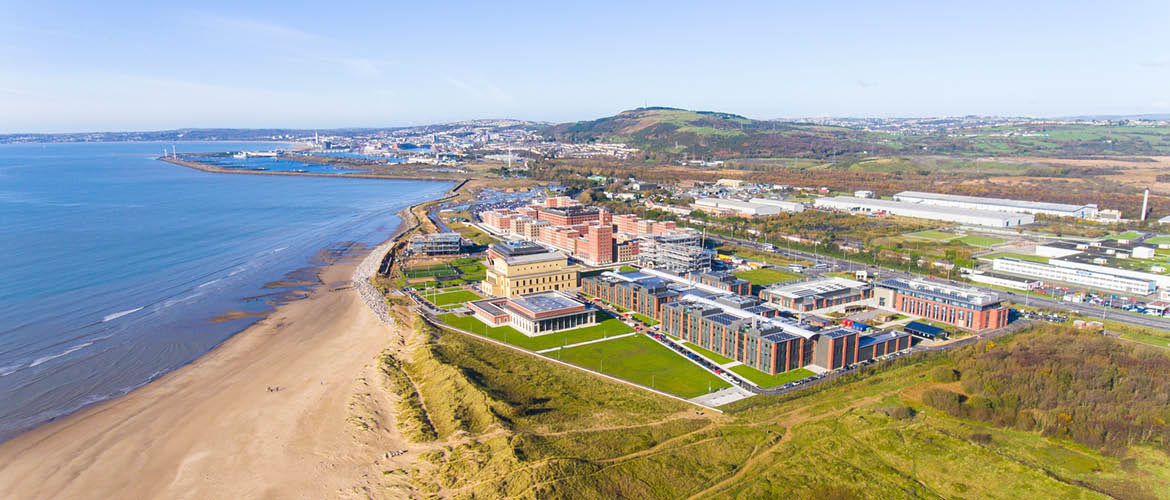
Dr. Giulia Fantini is a Lecturer in Finance and Accounting at the School of Management, Swansea University, where she joined in January 2015. She holds a prestigious Fellowship from the Higher Education Academy (since 2019) and serves in key leadership roles including Chair of the Examinations Scrutiny Committee (since July 2018) and the University's Academic Integrity Cases Officer (since April 2023). Dr. Fantini earned her European PhD in Economics in April 2014 from the University of Ferrara, Italy, in conjunction with Bayes (formerly Cass Business School), London, United Kingdom. Prior to her academic career, she gained over 5 years of industry experience as a Chartered Accountant and qualified Auditor in Italy and Luxembourg. Her research expertise spans executive remuneration, corporate disclosures, corporate governance, SMEs, climate change in finance and accounting, and Environmental, Social and Governance (ESG) categories. Dr. Fantini is particularly interested in the intersection of corporate leadership and ESG transformation, utilizing big data and AI/Machine Learning approaches in her research. Her work bridges theoretical frameworks with practical applications in financial reporting and management. Analysis of Dr. Fantini's recent publications reveals a strong focus on ESG integration in financial decision-making, corporate governance structures, and the application of advanced analytical methods to traditional finance problems. Her work increasingly addresses the challenges of sustainable finance and climate change adaptation in business contexts. Dr. Fantini has received notable recognition for her research, including: A Fellowship from the Higher Education Academy (2019) A British Academy Leverhulme Small Research Grant for her project "Uncovering the 'unknown unknowns' of managerial alignment in multistakeholder capitalism through machine learning approaches" (2023-2024) UKRI Arts and Humanities Research Council Grant for "CEOs and ESG transformation" (2023) As an active supervisor, Dr. Fantini currently leads three PhD students researching topics including financial sustainability in charitable organizations, gender diversity and sustainability agenda, and CEO risk-taking incentives. She previously supervised a PhD that was awarded in 2022 on "The Importance of the Tone and Readability of Reported Narratives: Evidence from UK FTSE 350 Companies." Her teaching expertise includes designing and delivering modules on Financial Accounting, Sustainable Financial Reporting, and International Financial Management, with a particular emphasis on integrating sustainability principles into accounting education. Dr. Fantini collaborates with researchers across Europe and has participated in Erasmus+ staff mobility programs with Otto-von-Guericke Magdeburg University and the Halle Institute for Economic Research in Germany (2019). Her practical industry experience enriches her academic work, creating valuable connections between theory and real-world financial practice.
Prof. dr. Elianne van Steenbergen serves as Professor by Special Appointment in Psychology of Supervision at Utrecht University's Faculty of Social and Behavioural Sciences, Department of Social, Health and Organisational Psychology. She simultaneously holds an Assistant Professor position in the same department and works as a senior supervisory officer at the Dutch Authority for the Financial Markets (AFM) in the Behavior & Culture expert team. Her work involves close collaboration with the Dutch Authority for Consumers & Markets (ACM) and Uitvoeringsinstituut Werknemersverzekeringen (UWV). Van Steenbergen's research centers on stimulating compliance and ethical behavior in organizations, with a specific focus on connecting regulatory supervision practices with psychological research. Her expertise spans Ethical Organizational Culture, Integrity, and Work-Life Balance, with recent work examining how regulatory bodies can become learning organizations through behavioral insights. She delivered her inaugural lecture on Psychology of Supervision on December 7, 2020, establishing this specialized field that examines how people in organizations are stimulated to 'do the right thing.' Her scholarly contributions demonstrate a clear progression from earlier work on work-life balance, leadership and culture toward her current focus on the Psychology of Supervision. The research shows increasing integration of behavioral science into regulatory practice, with particular attention to cognitive biases in supervision, error management cultures, and the development of more effective compliance strategies in financial institutions. As an academic supervisor, van Steenbergen chairs PhD committees and serves as primary supervisor for doctoral candidates including Loet van Stekelenburg (researching 'Expanding Cartel Fines Beyond Deterrence, A Psychological Perspective'). She also contributes to academic discourse through editorial work, having served on the editorial board of Tijdschrift voor Toezicht (Journal) from 2019-2021 and as a peer reviewer for the European Journal of Work and Organizational Psychology. Her practical engagement extends to developing training modules on supervision psychology for various institutions including the University of Utrecht's 'Toezicht met gezag' program, Erasmus leadership programs, and the Dutch School for Public Administration (NSOB). She regularly presents her research at professional conferences and to regulatory bodies across Europe, including ESMA, EIOPA, and EBA.
Guido Cantelmo is an Assistant Professor at the Technical University of Denmark (DTU) within the Department of Technology, Management and Economics, specifically in the Division of Transport's Section for Transport Systems Modelling. His research leverages big data analytics and machine learning to address complex transportation challenges, with expertise spanning traffic flow modeling, demand estimation, shared mobility systems, and urban network optimization. He maintains active collaboration with international cities including Copenhagen, Munich, and Tel Aviv-Yafo for empirical validation of his models. His research integrates computational techniques such as Graph Neural Networks, meta-learning, and physics-informed AI with transportation theory. Primary domains include: Dynamic traffic assignment using real-time data sources Machine learning for imbalanced mobility datasets Emission impact modeling of urban fleets Behavioral analysis of shared mobility adoption Large-scale simulation calibration frameworks Publication analysis (2022-2025) reveals dominant themes: data-driven demand estimation (37% of recent works), machine learning metamodeling (27%), shared mobility optimization (20%), and urban policy impact studies (16%). Methodological innovations include transfer learning for sparse data and multi-city validation approaches. No scientific awards or student mentoring relationships are documented in available sources. Similarly, no information exists regarding research grants, laboratory affiliations, or educational background.
Lauri Lovén is a tenure-tracked Assistant Professor at the University of Oulu's Faculty of Information Technology and Electrical Engineering. As vice-director of the Center for Ubiquitous Computing (UBICOMP) and leader of the Future Computing Group (20+ researchers), he coordinates the Distributed Intelligence strategic research area within Finland's 6G Flagship program. Education: D.Sc.(Tech.) 2021, Docent (Edge Intelligence) 2025, University of Oulu Prior Affiliations: TU Wien (2022), ETH Zürich (2023) Research Focus: Specializing in edge intelligence and distributed AI, his work explores cognitive computing continuums across 6G networks, IoT systems, and industrial metaverse applications. Recent Trends: Recent publications reveal two key directions: 1) AI optimization for 6G wireless networks (handover management, semantic slicing), and 2) intelligent data management frameworks (data fabric, message brokers) for distributed systems. Industry Experience: Combines 20 years of software industry expertise with academic research, having served as founder, CTO, and advisor in AI startups.
Gül Calikli is an Associate Professor (Senior Lecturer) in Software Engineering at the School of Computing Science, University of Glasgow, United Kingdom. She has held academic positions at several prestigious institutions including the University of Zurich as a senior researcher, Chalmers | University of Gothenburg as a lecturer, and postdoctoral fellowships at The Open University (UK) and Ryerson University (Canada). Dr. Calikli earned her Ph.D. in Computer Engineering from Boğaziçi University in Istanbul. Her academic journey reflects a strong commitment to advancing empirical software engineering with a focus on human aspects. Dr. Calikli's research centers on the intersection of software engineering and cognitive psychology, with a particular emphasis on understanding and mitigating cognitive biases in software development practices. Her work explores how human cognitive limitations impact program comprehension, code review, and vulnerability detection. She investigates how to present information effectively to software practitioners considering human cognitive constraints, and develops tools and techniques based on cognitive psychology to enhance decision-making in software development. Her research also incorporates machine learning systems with "human in the loop" approaches, creating joint cognitive systems that extend human intelligence. Analysis of Dr. Calikli's recent publications reveals a consistent focus on human aspects in software engineering, particularly examining cognitive biases like confirmation bias and their impact on software quality. Her work spans multiple domains including code review practices, vulnerability detection, program comprehension, and privacy-aware software development. A notable trend is her methodological approach combining controlled experiments, field studies, and quantitative analysis of system logs to investigate human factors in software engineering. Best Paper Award at ESEM2013 (Industry Track) Chalmers Area of Advance SEED Funding in 2018 ACM SIGSOFT Distinguished Artifact Award at ICSE 2020 ACM Distinguished Paper Award at ICSE 2021 ACM SIGSOFT Distinguished Paper Award at ESEC/FSE'22 Distinguished Reviewer Award at ICSME'23 Distinguished Reviewer Award at ICPC'22 Dr. Calikli actively supervises PhD students working on diverse topics including team dynamics in agile development, eye-tracking for human-AI pair programming, leveraging LLMs for software development/testing, and sustainability in software engineering teams. She has served on numerous program committees for major software engineering conferences including ASE, ICSE, FSE, and ESEC/FSE. Her research has been supported by various funding mechanisms, including the Chalmers Area of Advance SEED Funding. As an active member of the software engineering community, Dr. Calikli contributes to the advancement of the field through her service on editorial boards (including ACM Transactions on Software Engineering and Methodology), participation in the EPSRC Peer Review College, and organization of conference tracks such as the ICPC 2024 ERA Track which she co-chaired.
Julita Vassileva is a Professor in the Department of Computer Science at the University of Saskatchewan with an extensive publication record spanning over two decades. Her research focuses on social computing, human-computer interaction, and artificial intelligence, with significant contributions to understanding online communities, user motivation, and recommendation systems. She maintains an active research program with publications as recent as 2023. Dr. Vassileva's research interests include Computer Science, Distributed Computing, Artificial Intelligence, Human Computer Interaction, and Gender Studies. Her work frequently bridges technical and social aspects of computing, examining how user modeling and adaptive systems can create more engaging and sustainable digital environments. She has developed innovative approaches to address information overload, motivate participation in online communities, and promote fairness in recommendation systems. Analysis of her publication history reveals an evolving research trajectory from early work on peer-to-peer systems and agent-based negotiation to contemporary investigations of personalized persuasion, fairness in AI, and user data ownership. Her SocConnect system demonstrates expertise in social network aggregation, while WISEtales shows her commitment to addressing gender disparities in STEM fields. Recent work focuses on how blockchain technology can empower users with control over their data and how personality-aware persuasive messages can improve user acceptance of fair recommendations. Dr. Vassileva has built a substantial research network with numerous collaborations across her 451 documented publications. Her work has garnered significant attention in the academic community, as evidenced by her top 1% status on Academia.edu with over 69,000 followers - an exceptional number that speaks to the impact and relevance of her research. She has supervised numerous students and collaborators across diverse application domains including educational technology (E-Game for gamification in learning), healthcare (mobile systems for home care workers), and social computing (systems for sustainable online communities). Her research methodology often combines theoretical frameworks from social psychology and behavioral economics with technical implementations in multi-agent systems and user interface design. Dr. Vassileva leads research initiatives focused on creating technology that serves human needs and enhances social connection. Her current work explores the intersection of ethical computing, user empowerment, and personalized interaction, maintaining her consistent focus on developing systems that foster equitable participation and meaningful community building in digital spaces.
Simone Paoletti serves as Associate Professor in the Department of Information Engineering and Mathematical Sciences at the University of Siena, where he joined as a Researcher in 2007 and currently chairs the Teaching Committee for the Master's Degree in Artificial Intelligence and Automation Engineering. His international research includes collaborations at Linköping University, Eindhoven University of Technology, and University of Colorado Boulder. Education: Bachelor's Degree in Computer Engineering (Automatic Control & Industrial Automation), University of Rome Tor Vergata, 2000 PhD in Information Engineering, University of Siena, 2004 Research Focus: Dr. Paoletti specializes in robust control of uncertain systems , identification of hybrid systems , and optimization techniques for smart grid management . His work bridges theoretical control systems with practical sustainable energy applications, highlighted by his 2019 seminar invitation at the National Renewable Energy Laboratory (NREL). Publication Trends: Recent works (2023-2025) demonstrate concentrated research on reinforcement learning and mathematical optimization for renewable energy communities, particularly addressing electric vehicle integration and distributed energy resource management within European-scale frameworks. Scientific Awards: No awards documented in provided materials. Teaching & Service: He instructs Discrete-Event Systems (Master's level) and Dynamic Systems (Bachelor's level), with office hours held Thursdays 12:00-13:00 in S.Niccolo' Building Room 229. His research projects focus on renewable energy community management and grid optimization.