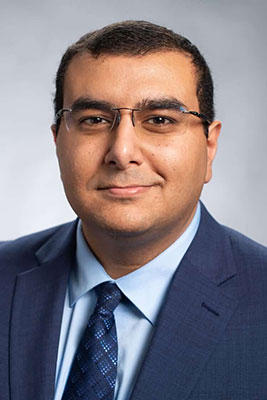
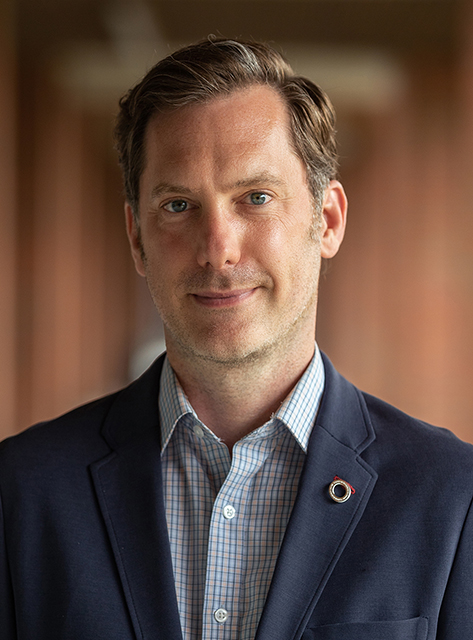
Chen Pan is an Assistant Professor in the Department of Electrical and Computer Engineering at the University of Texas at San Antonio's Klesse College of Engineering and Integrated Design. His research focuses on energy-harvesting embedded systems, low-power computing, and IoT network optimization through machine learning techniques. Ph.D. from University of Pittsburgh Specializes in transient computing for batteryless devices Develops reinforcement learning solutions for UAV-assisted IoT systems Chen's recent publications emphasize energy-aware scheduling, non-volatile memory optimization, and sustainable communication protocols. His work intersects spatiotemporal modeling, fault tolerance, and resource-constrained AI execution across heterogeneous architectures.
Roie Levin is an Assistant Professor at Rutgers University's Department of Computer Science. He received his PhD in Algorithms, Combinatorics and Optimization from Carnegie Mellon University in 2022, advised by Anupam Gupta. Prior to that, he worked at the Allen Institute for Artificial Intelligence (2015-2017) and earned dual BSc degrees in Computer Science/Applied Mathematics and Mathematics from Brown University (2015). Before joining Rutgers, he was a Fulbright Postdoctoral Fellow at Tel Aviv University under Niv Buchbinder. Current Role: Assistant Professor in Computer Science Academic Training: PhD (2022) CMU, BSc (2015) Brown University Postdoctoral: Fulbright Fellow at Tel Aviv University Levin's research focuses on approximation algorithms for uncertain environments (online/dynamic/streaming models) and submodular function optimization. His work spans theoretical foundations and practical implementations across distributed systems, geometric constraints, and reinforcement learning paradigms. Teaching includes graduate and undergraduate algorithms courses (CS 344, CS 513) with emphasis on problem-solving techniques, computational complexity, and modern algorithmic trends. His publications showcase expertise in online algorithms, submodular optimization, and approximation theory with applications in clustering, caching, and machine learning. The 2025 articles demonstrate continued exploration of online consistency and contention resolution, while 2023-2024 works focus on submodular optimization under uncertainty and dynamic environments. Earlier publications (2015-2017) cover semantic parsing, geometric approximation, and planar graph optimization. Fulbright Postdoctoral Fellow Levin's research connects theoretical guarantees with practical implementations, bridging classical algorithm design with modern machine learning applications. His recent work explores primal-dual methods in online settings and robust subspace approximation techniques for streaming data environments.
Emmanuel Baccelli is a Professor for "Open and Secure IoT Ecosystem" at Freie Universität Berlin since September 2019, holding a joint position with Inria and the Einstein Center Digital Future (ECDF). He is also a scientific researcher at Inria since 2007 and co-founder/coordinator of the RIOT open source operating system for IoT devices since 2013. His research focuses on the intersection of low-power protocols, deeply embedded open source software, and security in the Internet of Things (IoT) ecosystem. Baccelli emphasizes the critical trade-off between energy efficiency and security in IoT systems, advocating for privacy-by-design principles and open specifications. His work addresses how users can maintain control over their systems and data in an increasingly connected world. Baccelli's publications demonstrate a clear progression toward secure, efficient IoT systems with recent work focusing on secure firmware updates, TinyML deployment, and privacy-preserving protocols. His research spans from foundational networking protocols to practical implementations for constrained devices, with a consistent emphasis on open source solutions and security-by-design. Baccelli completed his PhD in 2006 at École Polytechnique in Paris on "Routing and Mobility in Large Packet-Based Networks" and received his habilitation from Université Pierre et Marie Curie in 2012. He previously served as a Guest Professor at Freie Universität Berlin in 2013-2014 with a DAAD Grant. His professional activities include significant contributions to IETF standards, particularly RFCs related to routing protocols for low-power networks. Baccelli's research has practical applications across multiple domains including healthcare, smart agriculture, and industrial IoT systems, where security and energy efficiency are paramount concerns.
Keyon Vafa is a Research Fellow at Harvard University's Harvard Data Science Initiative (HDSI) and an affiliate at MIT's LIDS. He completed his PhD in Computer Science at Columbia University (advisor: David Blei), where he held NSF GRFP and Cheung-Kong Fellowships. His work focuses on behavioral machine learning, evaluating AI models' world understanding, and fostering human-AI alignment. He received the 2023 Morton B. Friedman Memorial Prize for engineering excellence. Education PhD in Computer Science, Columbia University, 2023 Bachelor's/Master's degrees (not explicitly stated in text) Research Interests Behavioral machine learning and model interpretability Ethical AI and algorithmic fairness Applications of generative models in social sciences Large language model evaluation and societal impact Publications His recent work includes studies on wage disparity estimation via foundation models, evaluating implicit world models of AI systems, and measuring human-AI expectation alignment. These contributions span top venues like PNAS, NeurIPS, and ICML, addressing critical issues in AI ethics and social science applications. Awards NSF Graduate Research Fellowship Program (GRFP) Cheung-Kong Innovation Doctoral Fellowship Morton B. Friedman Memorial Prize (2023) Grants & Labs Organizes the ICML 2025 Workshop on Assessing World Models of AI systems. His research is supported by grants from the NSF and other institutions. He collaborates with economists and social scientists to bridge AI and societal challenges.
Xing Xinyu is an Associate Professor of Computer Science at Northwestern University's McCormick School of Engineering. Their research focuses on kernel security, reverse engineering, and AI security, with a strong emphasis on fuzzing techniques, adversarial machine learning, and vulnerability discovery. They hold a PhD from Georgia Institute of Technology, an MS from the University of Colorado Boulder, and a BASc from Beihang University. Research interests include advanced cybersecurity methodologies such as heap memory protection, automated exploit generation, and defense mechanisms against adversarial attacks on large language models. Their work bridges theoretical computer science with practical applications in system security and AI ethics. Publications span topics like LLM jailbreak assessments, reinforcement learning optimization, and blockchain anomaly detection. Notable contributions include frameworks like BandFuzz for collaborative fuzzing and SeaK for secure kernel allocators.
Luca Di Gaspero is an Associate Professor of Information Technology at the University of Udine, specializing in metaheuristic optimization techniques. His research enhances combinatorial optimization through hybridization of algorithms for scheduling, routing, and industrial applications. Research spans artificial intelligence in optimization, scheduling algorithms for manufacturing/healthcare, and metaheuristic framework development. Recent publications focus on LLMs in optimization, parallel batch scheduling, and energy-efficient manufacturing. Key Contributions: Developed EasyLocal++ framework for local search algorithms Advanced multi-neighborhood simulated annealing techniques Applied metaheuristics to healthcare logistics and emergency services
Dr. Konstantin Aal is a researcher at the Department of Business Informatics and New Media within the Faculty of Information Systems and New Media at the University of Siegen, Germany. Having joined the university in 2012 after completing his studies in Business Informatics there, Dr. Aal has established himself as a prominent researcher at the intersection of technology, social activism, and human-computer interaction. Dr. Aal's educational background is rooted in Business Informatics at the University of Siegen, where he also completed his major dissertation on the social platform come_NET and its use by children as part of the come_IN project. His academic journey reflects a consistent focus on the social implications of technology. His research interests span several critical areas in contemporary socio-technical studies. Dr. Aal investigates how social media platforms are used in political conflicts and activism, particularly in the Middle East and North Africa region, with specific attention to the Palestinian-Israeli conflict and content moderation practices. He also explores human-technology interaction in contexts of aging and dementia care, human-wildlife conflict, and the digital transformation of rural communities. His work consistently emphasizes participatory design approaches, ethical considerations in technology development, and the importance of cultural sensitivity in global technology deployments. Dr. Aal's publication record shows a strong trajectory of impactful research, with particular emphasis on understanding how marginalized communities appropriate technology for their needs. His recent work on the "PlurAIverse" concept expands design paradigms for artificial intelligence to be more inclusive and culturally sensitive, while his ethnographic work in conflict zones reveals critical insights about digital activism under surveillance. Member of the research team for iStoppFalls (fall prevention for elderly) Contributor to multiple EU-funded projects on digital inclusion and socio-informatics Active participant in the Socio-Informatics research program at the University of Siegen Dr. Aal's work bridges theoretical insights with practical applications, often developing technologies in close collaboration with community stakeholders. His approach emphasizes "grounded design" - developing technological solutions that emerge from deep understanding of local practices and needs.
Marco Aldinucci is a Full Professor and Head of the Parallel Computing group at the University of Torino's Computer Science Department. He leads the HPC Key Technologies and Tools (HPC-KTT) national lab under CINI, involving 38 Italian universities. His expertise spans parallel programming models, HPC systems, federated learning, and energy-efficient computing. Aldinucci has secured over €10M in EU research funding, contributed to frameworks like Fastflow and Streamflow, and pioneered initiatives like the HPC4AI lab and the CINI HPC-KTT lab. His research focuses on advancing exascale computing, cloud-HPC integration, and AI-driven medical solutions. Notable projects include the Gaia AVU-GSR solver for exascale systems and the DeepHealth Toolkit for medical AI. He has held governance roles in EuroHPC and chairs the Observatory on Trends and Applications of Supercomputing in Italy. Aldinucci’s publications (150+) address parallel algorithms, distributed learning, and sustainable HPC infrastructure. His work has been recognized with awards from HPC Advisory Council, NVIDIA, IBM, and Autodesk. Current initiatives include the Software & Integration lab at the Italian National HPC Centre (ICSC) and leadership in the OpenScience working group at Torino. His advising includes Iacopo Colonelli, whose thesis won CINI’s 2023 best award. He actively engages in EU projects, workflow systems, and standards for hybrid computing environments. Aldinucci’s labs and collaborations drive innovations in HPC portability, energy efficiency, and AI scalability.
Dr. Carson Kai-Sang Leung is a Full Professor in Computer Science at the University of Manitoba's Faculty of Science. He founded and directs the Database & Data Mining Lab. His research focuses on big data science, data mining, machine learning, health informatics, and visual analytics. He holds SMIEEE and SMACM fellowships, reflecting his contributions to the field. Education: B.Sc., M.Sc., and Ph.D. from the University of British Columbia (UBC). Research interests include human-centered exploratory data mining, image databases, and scalable algorithms. He emphasizes user-driven constraints in mining processes and has developed techniques like the segment support map and OSSM for optimized frequency counting. His work on subimage queries in large image databases addresses real-world challenges in visual data retrieval. Publications span data mining, healthcare analytics, and transportation systems. His lab collaborates on projects like visual analytics for motor vehicle accidents and environmental data science for smart cities. He is affiliated with institutions such as the Institute of Industrial Mathematical Sciences (IIMS) and TRLabs. Key awards: Senior Member of IEEE (SMIEEE) and Senior Member of ACM (SMACM).
Dr. Luke Tredinnick is a Reader in Media, Information, and Communications at London Metropolitan University, serving as Course Leader for the Media and Communications BSc program. He holds editorial roles for the Sage journal Business Information Review and the Edinburgh University Press journal Journal of Library and Information History . His academic background includes a BA in English and American Literature from the University of Kent, an MSc in Information Science from City University London, and a PhD in Media and Communications from London Metropolitan University. His research focuses on digital culture, digital history, and information theory, with specializations in post-structuralist methodologies and semiotics. Tredinnick has authored three books, including Digital Information Culture (2008) and Digital Information Contexts (2006), and has published widely on topics such as complexity theory, artificial intelligence, information security, and social media. He is a member of the Media, Culture, and Communications Association (MECCSA) and a Fellow of the Higher Education Academy (FHEA). Tredinnick’s recent work examines trends in information warfare, ubiquitous information systems, and the evolving role of technology in business contexts. His contributions to the field span academic publications, editorial leadership, and keynote presentations on digital transformation and ethical information practices.
Dr. Muhammad M. Sherif is an Assistant Professor in the Department of Civil, Construction, and Environmental Engineering at the University of Alabama at Birmingham (UAB), part of the School of Engineering. He joined UAB in Fall 2019 after completing his Ph.D. at the University of Virginia and M.S. at Carnegie Mellon University, both in structural engineering. His research focuses on smart materials, structural systems, and machine learning applications in civil infrastructure. He is particularly interested in additive manufacturing for construction and the development of innovative materials like engineered cementitious composites. Education: B.S., United Arab Emirates University M.S., Carnegie Mellon University Ph.D., University of Virginia Research Interests: Dr. Sherif’s work spans material characterization, machine learning models for structural analysis, and the integration of advanced materials into infrastructure systems. He explores topics like crack detection using UAVs, superelastic shape memory alloys, and multi-objective optimization in welding processes. His Advanced Materials and Smart Infrastructure Systems (AMSIS) lab emphasizes interdisciplinary approaches to solving civil engineering challenges. Publications: His recent work includes studies on UAV-based pavement crack detection, machine learning for concrete strength prediction, and optimization of tube-to-tubesheet joints. These reflect trends toward AI-driven solutions and sustainable material innovations. Advising: He actively mentors students in multidisciplinary research projects, emphasizing self-motivation and innovation. His lab collaborates on topics like composite materials, structural health monitoring, and infrastructure resilience. Labs/Teams: His AMSIS lab at UAB focuses on advancing smart materials and infrastructure systems through cutting-edge research and collaboration.
Dr. Christopher Collins is a Professor of Computer Science at Ontario Tech University, leading the Visualization for Information Analysis Lab (vialab). He holds a PhD from the University of Toronto (2010) and focuses on interdisciplinary research in information visualization, human-computer interaction, and natural language processing. His work addresses challenges in information overload, text analytics, and novel interfaces such as touch, pen, VR/AR. Collins' research has been featured in top-tier venues like ACM CHI and IEEE Transactions on Visualization and Computer Graphics, earning honorable mentions and over $3M in funding as sole PI. He serves on the IEEE VIS Executive Committee and Board of Governors at Ontario Tech University. Education: PhD in Computer Science, University of Toronto (2010) MSc in Computer Science, University of Toronto (2004) BSc (Hons) in Computer Science, Memorial University (2001) Research Interests: Collins' work spans information visualization , pen+touch interfaces , visual analytics , and text-driven systems . He explores how interactive technologies can democratize complex data analysis, particularly in education, healthcare, and creative domains. Recent projects include gaze-driven learning tools, context-aware camera interfaces, and bias-mitigating product review analysis. Awards: ACM CHI Honorable Mention Award IEEE VIS Honorable Mention Award Grants & Impact: Secured $3M+ in research funding. Media coverage includes New York Times and CBS Sunday Morning for innovations in visualization and text analytics. Teaches courses in human-computer interaction, computer graphics, and information visualization. Labs & Collaborations: vialab develops tools like Lexichrome , ConToVi , and NeuroSight . Active in IEEE Visualization and ACM Interactive Media communities. Collaborates with academia and industry globally.
Natesh Pillai is a Professor in the Department of Statistics at Harvard University and a Distinguished Engineer at LinkedIn, focusing on Responsible AI. He holds a Bachelors from IIT Madras, a PhD from Duke University's Department of Statistical Science (2008), and completed a postdoc at the University of Warwick's CRiSM (2008-2010). His research spans applied probability, computational methods, MCMC theory, algorithmic fairness, and climate science. He serves on editorial boards for journals like SIAM Journal on Mathematics of Data Science and Harvard Data Science Review . Key awards include the 2018 Young Statistical Scientist Award and 2021 Fellowship in the Institute of Mathematical Statistics. His work emphasizes bridging theory and practice, with contributions to statistical methodology, causal inference, and scalable computational techniques. Recent collaborations include industry roles at Amazon (2021-2023) and interdisciplinary climate science projects analyzing agricultural yield predictability. Education: Bachelor's: Indian Institute of Technology (IIT) Madras PhD: Duke University, Department of Statistical Science Research Focus: MCMC mixing times, Bayesian methodology, reinforcement learning, climate data modeling Publications emphasize algorithmic efficiency, fairness in AI, and probabilistic frameworks for complex systems. His lab integrates theoretical rigor with real-world applications, including climate modeling and healthcare analytics.
Dr. Andrew Lin is a Senior Lecturer and School Director of One University at the University of Sheffield's School of Biosciences. He holds a PhD from the University of Cambridge and a BA in Biology from Harvard University. His career includes roles as a Lecturer (2019-2022), Vice-Chancellor’s Fellow (2015-2019), and Postdoctoral Fellow at the University of Oxford (2009-2015). Research focuses on how the brain encodes sensory information for memory formation, using Drosophila's olfactory system as a model. Key areas include sparse coding in Kenyon cells, synaptic inhibition/excitation balance, and neural circuit dysfunction links to epilepsy. Teaching includes modules like BMS11004 Introduction to Neuroscience and BMS248 Neural Circuits, Behaviour and Memory. He has secured grants from the European Research Council, BBSRC, and Wellcome Trust. Professional memberships include the FENS-Kavli Network and BBSRC Pool of Experts. Lab research employs techniques like in vivo two-photon imaging, electrophysiology, and genetic manipulation. PhD opportunities are available in neural circuitry and sensory processing.
Evimaria Terzi is a Professor and Department Vice Chair at Boston University (BU), affiliated with the Data Management Lab@BU. Her research focuses on algorithmic data mining with applications in network analysis, recommendation systems, ranking, and clustering. She holds a PhD from the University of Helsinki and has held prior roles at IBM Almaden Research Center (2007–2009) and the Helsinki Institute for Information Technology (HIIT) before 2007. Her work spans theoretical and applied domains, including team formation algorithms, fairness in AI, and large language model evaluation. Notable contributions include studies on LSM tree optimization, counterfactual explanations for auditing fairness, and the dynamics of memorization in LLMs. Her recent publications emphasize flexibility in database systems and ethical AI practices. Evimaria’s research has been recognized through her contributions to conferences like WSDM and KDD, where she has served in organizing roles. The themes of her work consistently bridge algorithmic innovation with real-world applications in social networks, healthcare, and collaborative systems.




.jpg)