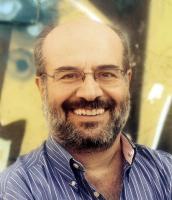
Jack Zhang is an Assistant Professor in the Department of Molecular Biophysics and Biochemistry at Yale School of Medicine. His research focuses on developing advanced cryo-electron microscopy/tomography (cryo-EM/ET) methods to investigate dynamic molecular machines in cellular contexts, particularly mechanisms of cell motility and energy metabolism. PhD in Biophysics from Institute of Biophysics (CAS) Postdoctoral work at MRC Laboratory of Molecular Biology Joined Yale faculty in 2019 Research interests include: Mechanistic analysis of dynein motor proteins Structural studies of mitochondrial respiratory supercomplexes Cytoskeletal repair mechanisms via Abl2-tubulin interactions Environmental signal response in mastigoneme assembly Allostery in microtubule transport activation Recent publications demonstrate expertise in: High-resolution in situ structural biology Tomographic analysis of cellular machines Mechanochemical cycle mapping Male infertility structural pathology Contact: jack.zhang@yale.edu
Magdalena Baborska-Narożny serves as an Associate Professor in the Department of Architecture and Visual Arts at the Faculty of Architecture, Wrocław University of Science and Technology. Her work bridges architectural design, building physics, and social science to address critical challenges in residential performance and sustainability. Her research focuses on: Building performance evaluation through in-situ measurements Thermal comfort and ventilation in low-energy and historical housing Social dimensions of balcony use and heritage conservation Energy efficiency transitions in Polish residential contexts Occupant behavior impacts on building performance Analysis of her 2021-2025 publications reveals consistent emphasis on real-world building performance gaps, particularly examining ventilation strategies, overheating risks, and heritage adaptation challenges. Her methodology combines field measurements in Polish housing with occupant surveys and computational modeling, often comparing international approaches to heritage conservation and energy transitions. Key contributions include quantifying bedroom ventilation effectiveness, analyzing balcony integration in historical tenements, and evaluating solid fuel heating transitions. No scientific awards were documented in the provided sources. Information regarding academic advising relationships and research grant acquisitions was not present in the available materials. No specific laboratory affiliations or research team structures were identified in the source documentation.
Lizbeth Olivia Escobedo Bravo is an Assistant Professor in the Faculty of Computer Science at Dalhousie University, where she conducts research at the intersection of Human-Computer Interaction, Ubiquitous Computing, and Cognitive Assistive Technology. Her work focuses on developing and evaluating technology to improve the quality of life for vulnerable populations, particularly children with autism, pregnant women, and individuals with cognitive disabilities. Her educational background includes a BS and PhD from Universidad Autónoma de Baja California (UABC), an MSc from Centro de Investigación Científica y de Educación Superior de Ensenada (CICESE), and a postdoctoral fellowship in Biomedical Informatics at UC San Diego. BS – Universidad Autónoma de Baja California (UABC) PhD – Universidad Autónoma de Baja California (UABC) MSc – Centro de Investigación Científica y de Educación Superior de Ensenada (CICESE) Postdoc – University of California, San Diego (Biomedical Informatics) Her research interests include Human-Computer Interaction (HCI), Ubiquitous Computing, Cognitive Assistive Technology (CAT), Mobile Technologies, Accessible Computing, and Children-Computer Interaction. She emphasizes interdisciplinary collaboration across computer science, psychology, education, medicine, and design. The 15 most recent articles reflect a consistent focus on assistive technologies for neurodevelopmental and cognitive challenges. Key themes include early detection of developmental delays (ActEarly), handwriting assessment (PenSando), autism support (MOBIS, MOSOCO, FarmerKeeper, SATORI), maternal health (PREGO), and ADHD assistance (SmarTasko). These works span mobile, augmented reality, and sensor-based systems, with strong emphasis on usability, accessibility, and real-world deployment across diverse cultural and economic contexts. Scientific contributions and recognitions include: Active research leadership in multiple assistive technology projects Interdisciplinary collaborations with institutions such as Georgia Tech, UC Irvine, UC San Diego, MSU, Chapman University, and CREATE-NET Industry partnerships with IMSS, Pasitos A.C., ClubLia Kinder, EdNinja Inc., and others Focus on technology for social good and inclusive design She is actively involved in mentoring and advising, currently recruiting PhD and Master’s students for her research group. Her work has been supported through academic and industry collaborations, though specific grants are not listed. She previously worked in the software industry as a project manager and COO, bringing leadership experience to her academic role. Lizbeth leads a dynamic research lab focused on developing and deploying accessible, user-centered technologies. Her team works on projects such as ActEarly, PenSando, and SATORI, often involving cross-border studies and community engagement. The lab emphasizes real-world impact, ethical design, and scalability of solutions, particularly for underserved populations in Latin America and North America.
Dr. Elizabeth Case is a Researcher in the Dynamics Meteorology group within the Faculty of Science at Utrecht University. Her work focuses on understanding cryosphere processes, particularly firn densification on the Greenland Ice Sheet and various glacier dynamics across multiple regions including Antarctica, Wyoming, and Alaska. Her research interests span glaciology, rheology, and Earth sciences with a strong interdisciplinary approach that integrates art and science. Case specializes in mathematical modeling of glacier processes, fieldwork methodology, and the integration of in situ and remotely sensed data. She is particularly known for her work on firn processes, ice sheet dynamics, and the development of innovative observation techniques like phase-sensitive radar for measuring firn compaction. Case's publication record shows a strong focus on ice sheet dynamics, with recent work examining firn densification across Greenland, crevasse formation in West Antarctica, and the interdisciplinary aspects of Antarctic fieldwork. Her research combines traditional glaciological methods with innovative approaches to data collection and interpretation, often bridging scientific and artistic perspectives. She is actively engaged in educational initiatives through the Juneau Icefield Research Program and Cycle for Science, developing hands-on curriculum for students. Case is also a member of Glacial Hauntologies, an art-science collaboration that creates exhibitions exploring creative co-production of scientific and artistic research, particularly focused on public engagement with Antarctic data from Thwaites Glacier and the Laurentide Ice Sheet.
Jean-Daniel Penot is a Researcher at CESI's Research and Innovation Department , with expertise in additive manufacturing, materials science, and industrial integration. His work bridges advanced manufacturing technologies with environmental sustainability and educational innovation. Doctorate in Materials Physics (2010) Engineering Degree in Physics (2007) Research Master in Optoelectronics (2007) Penot's research spans Additive Manufacturing and its applications in automotive, nuclear, and construction sectors. He focuses on Laser-Material Interaction , Machine Learning for process optimization, and Sustainable Engineering through life cycle assessments and geopolymer applications. His recent publications emphasize BIM , AM Modular Plants , and Defect Analysis in 3D-printed metals. Penot leads France Additive initiatives and contributes to International Standards as a board member. Penot supervises PhD students including Maryam Houhou and Amal Khabouchi , with a focus on Industrial Security and Energy Transitions . His projects integrate Thermal Comfort , Ultrasonic Inspection , and Quality Assurance in additive manufacturing systems.
Helwig Hauser is a Professor in the Department of Computer Graphics within the Faculty of Informatics at Vienna University of Technology (TU Wien). His research focuses on advancing visualization techniques across multiple scientific domains. With a career spanning over two decades, he has established himself as a leading expert in visualization research. His primary research interests encompass Computer Graphics, Visualization, Data Visualization, Visual Analytics, Scientific Visualization, Information Visualization, Set Visualization, and Molecular Visualization. Dr. Hauser's work bridges theoretical foundations with practical applications, developing innovative techniques for visual data exploration and analysis across diverse fields from medical imaging to molecular biology. Analysis of his publication record reveals a consistent research trajectory focused on developing novel visualization methodologies. His work demonstrates strong emphasis on interactive visual analytics, set visualization techniques, and domain-specific applications in medical and molecular visualization. Notably, he has made significant contributions to set visualization (Radial Sets), molecular visualization (Watergate), and medical visualization (Aortic Dissection Maps). Best paper award (one out of three) at EuroVis 2007 Heinz Zemanek Preis (2006) Best paper award at SimVis 2005 Dr. Hauser has supervised numerous doctoral and master's students, with a particular focus on visual analytics of complex data types. His research has been supported by various projects including the Punkt-basierte Volumen-Graphik project (2006-2009). He has contributed significantly to the visualization community through his editorial work and service as a journal reviewer, though specific details on current grants were not provided in the source text.
Barbara AJ Lechner is a Rudolf Mößbauer Tenure Track Professor in the Department of Chemistry at the Technical University of Munich (TUM). Appointed in October 2020, she leads research in surface science and nanomaterials characterization at TUM's Institute for Advanced Study (TUM-IAS). Her work focuses on understanding dynamic processes in functional nanomaterials under realistic conditions, particularly model catalysts exposed to reactive gas atmospheres. Dr. Lechner received her Chemistry education at the University of Innsbruck, Austria, followed by a Ph.D. in Physics from the University of Cambridge in 2012. Her postdoctoral work was conducted at the Lawrence Berkeley National Laboratory under Prof. Miquel Salmeron before she joined TUM as a group leader at the Chair of Physical Chemistry. Dr. Lechner's research centers on the dynamic restructuring of functional nanomaterials, particularly how model catalysts behave under reactive gas conditions. Using advanced scanning tunneling microscopy with high temporal and spatial resolution, she investigates how the structure of metal clusters and oxide supports changes in real-time. Her work with precisely defined small clusters allows examination of how highly reactive particle structures form, decay, and influence material function. This research has significant implications for catalyst design and optimization. Analysis of Dr. Lechner's recent publications reveals a consistent focus on surface science and catalysis, with particular emphasis on in-situ characterization techniques. Her work spans fundamental surface processes on materials like iron oxide, titanium dioxide, and platinum surfaces, examining phenomena such as cluster sintering, surface reconstruction, and reaction mechanisms under realistic conditions. The integration of advanced microscopy techniques with controlled gas environments represents a distinctive approach in her research portfolio. ERC Starting Grant (2019) Fellow of the Bavarian Academy of Sciences and Humanities as one of the members of their "Young Academy" (2018) Marie Skłodowska-Curie Individual Fellowship (2017-2019) Max Auwachter Prize (2016) Humboldt Research Fellowship (2016-2017) Springer Thesis Prize (2013) Dr. Lechner has secured significant research funding through prestigious grants including the ERC Starting Grant and Marie Skłodowska-Curie Fellowship. Her research group develops and applies advanced microscopy techniques to study dynamic processes in catalytic systems. She collaborates extensively with researchers across TUM and international institutions, particularly focusing on understanding the fundamental mechanisms that govern catalytic activity and material stability under operating conditions. As a Rudolf Mößbauer Tenure Track Professor, Dr. Lechner leads a research group focused on the development and application of in-situ surface characterization techniques. Her laboratory employs scanning tunneling microscopy integrated with controlled gas environments to observe dynamic processes at the atomic scale. This approach allows her team to directly correlate structural changes with catalytic function, providing insights that could lead to more efficient and stable catalyst designs.
Yun Li is a Research Assistant Professor and Master's Supervisor at Southern University of Science and Technology (SUSTech), affiliated with the Department of Earth and Space Sciences within the Faculty of Science. He serves as a youth council member of the mineral materials division of the Chinese Ceramic Society and holds multiple research grants including the National Natural Science Foundation of China Youth Fund Project. Research Assistant Professor at SUSTech (2022-present) Postdoctoral Research Associate at SUSTech (2020-2022) Youth Director of International Association of Clay Minerals (2025-2029) Principal Investigator for multiple research projects Dr. Li earned his B.S. in Petroleum Engineering from Yan'an University (2010-2014), M.S. in Oil and Gas Field Development Engineering from Southwest Petroleum University (2014-2017), and Ph.D. in Mineralogy, Petrology, Mineral Deposit Geology from Guangzhou Institute of Geochemistry, Chinese Academy of Sciences (2017-2020). Dr. Li's research focuses on mineral surface-interface interactions and gas hydrates, with particular emphasis on unconventional oil and gas resources including gas hydrates, shale oil and gas, and geological hydrogen/helium. His work investigates the geological storage and mineralization of carbon dioxide, employing surface-interface analysis techniques, molecular simulation methods, and in-situ visualization experimental techniques (X-ray and neutron) to study energy/environmental fluid interactions with clay minerals. His research has significant applications in unconventional oil and gas development and carbon capture technologies. Analysis of Dr. Li's recent publications reveals a strong focus on molecular dynamics simulations of hydrate formation mechanisms in clay minerals, particularly examining how different cations, organic matter, and mineral structures affect methane and carbon dioxide hydrate formation. His work bridges fundamental surface science with practical energy applications, showing increasing emphasis on carbon dioxide storage mechanisms in recent years. His publications appear in high-impact journals including ACS Sustainable Chemistry & Engineering, Applied Surface Science, Applied Clay Science, and Langmuir. Young Director of International Association of Clay Minerals (AIPEA) (2025-2029) Young Director of Mineral Materials Branch of Chinese Ceramic Society (2023-2028) SUSTech 'Qiming' and 'Taiyi' Star Scientific Research Achievement Awards (2024) Top Ten Young Scholars' Report at 10th National Conference on Mineral Science and Engineering (2024) Excellent Presentation Awards at multiple international clay and mineral conferences Outstanding reviewer for Applied Clay Science journal As a Master's Supervisor, Dr. Li mentors graduate students in earth sciences and energy-related research. He has secured significant research funding including the China Postdoctoral Science Foundation, Guangdong Basic and Applied Basic Research Foundation, and Shenzhen Science and Technology Program. His current projects include the National Natural Science Foundation of China Youth Fund Project (2025-2027) focusing on unconventional energy resources. Dr. Li has participated in major infrastructure projects including the material genomics experimental facility in Shenzhen and the high-pressure neutron diffraction/imaging spectrometer at Chinese Spallation Neutron Source. Dr. Li's research integrates computational modeling with experimental techniques through collaborations with major research facilities. His work on in-situ visualization techniques connects with neutron source facilities, while his molecular simulation research requires high-performance computing resources. He serves on editorial boards for journals including Unconventional Resources and special issues on unconventional oil and gas, demonstrating leadership in his research community.
Dr. Yaroslav Gerasimenko serves as Group Leader of the Lightwave-STM research group within the Huber group at the University of Regensburg, Germany, where he directs the ERC-funded Orbital Cinema project. His position represents an independent faculty-level research role focused on ultrafast quantum material dynamics. His academic training includes a PhD in Condensed-Matter Physics (2008-2014) from the P. N. Lebedev Physical Institute of the Russian Academy of Sciences and undergraduate studies in Physics and Microelectronics (2002-2008) at the Moscow Institute of Electronic Technology, Russia. Postdoctoral experience spans the University of Regensburg (2020-2022), Jozef Stefan Institute in Slovenia (2016-2020), and P. N. Lebedev Institute (2015). Gerasimenko pioneers lightwave-controlled scanning tunneling microscopy to achieve simultaneous atomic spatial and subcycle temporal resolution. His research centers on quantum materials including transition metal dichalcogenides (e.g., 1T-TaS 2 ) and metal halide perovskites, with emphasis on charge density waves , Mott physics , and non-equilibrium phase transitions . Key innovations involve terahertz plasmonics in graphene and quantum jamming transitions, often leveraging light-induced metastable states. Recent publications (2023-2025) demonstrate breakthrough capabilities in atomic-scale ultrafast imaging , including Nature cover stories on subcycle microscopy and Nature Photonics cover stories on atomic-scale spectroscopy. The work establishes new paradigms for visualizing electron dynamics at fundamental spatiotemporal limits, with applications spanning quantum computing components and next-generation photovoltaics. Scientific recognition includes: ERC Starting Grant for Orbital Cinema project (2023) As principal investigator of the ERC project, Gerasimenko leads instrumentation development for lightwave-STM systems. His research program involves collaborations with the Jozef Stefan Institute (Slovenia), P. N. Lebedev Institute (Russia), and international quantum material consortia. Current efforts focus on extending ultrafast nanoscopy to topological materials and quantum annealers. The Lightwave-STM laboratory at University of Regensburg houses custom cryogenic scanning probe microscopes integrated with multi-terahertz laser systems, enabling experiments at 0.1-atom spatial and 1-femtosecond temporal resolutions under extreme conditions.
Dr. Mingzhao Liu is a Senior Scientist at the Center for Functional Nanomaterials (CFN) within Brookhaven National Laboratory and has served as an Adjunct Professor in the Department of Materials Science and Chemical Engineering at Stony Brook University since 2014. Education: B.S. in Chemistry, Peking University (2002) Ph.D. in Chemistry, University of Chicago (2007) His research bridges two cutting-edge domains: solar energy conversion and quantum information science . For solar energy, he focuses on synthesizing defect-free bismuth vanadate photoelectrodes for hydrogen production via water splitting. For quantum applications, he investigates superconducting metal silicides to enhance qubit stability and coherence, while leading materials subthrust efforts in the Co-design Center for Quantum Advantage (C 2 QA). His work leverages advanced techniques like pulsed laser deposition (PLD), atomic layer deposition (ALD), and in situ x-ray spectroscopy to understand atomic-scale material behavior. Recent publications emphasize interface engineering , surface oxidation control , and defect mitigation in quantum and energy materials. Scientific awards include the Brookhaven Spotlight Award (2012, 2014), Yang Cao-Lan-Xian Thesis Award (2008), and the Albert J. Cross Prize (2006). He was a Peking University Mingde Scholar and earned a Gold Medal at the 30th International Chemistry Olympiad (1998). Dr. Liu manages advanced fabrication tools at CFN, including PLD systems and sputtering apparatus , and collaborates with institutions like Princeton University and IBM through C 2 QA. His work integrates theory-experiment feedback loops to correlate material properties with device performance.
Prof. Dr. Barbara A. J. Lechner is a Professor of Functional Nanomaterials at the Technical University of Munich (TUM), holding her position within the Department of Chemistry at the TUM School of Natural Sciences. Appointed as a Rudolf Mößbauer Professor in October 2020, she leads an active research group investigating dynamic processes in functional nanomaterials under realistic conditions. Her work bridges surface science, catalysis, and nanotechnology with significant funding through prestigious grants including an ERC Starting Grant. Prof. Lechner's educational background includes a Mag. rer. nat. in Chemistry from the University of Innsbruck (2008) followed by a PhD in Physics from the University of Cambridge. Her postdoctoral work was conducted at the Lawrence Berkeley National Laboratory under Prof. Miquel Salmeron before she became a group leader at TUM's Chair of Physical Chemistry in 2016. Her research program focuses on understanding dynamic restructuring processes in functional nanomaterials, particularly model catalysts in reactive gas atmospheres. Using time- and space-resolved scanning tunneling microscopy directly in gas mixtures, her group investigates how metal particle and oxide support structures change and influence material functionality. A key innovation is their use of size-selected clusters with precisely defined atom counts to isolate specific structural effects. Her group also employs synchrotron-based X-ray photoelectron spectroscopy for complementary chemical information. Analysis of Prof. Lechner's recent publications reveals a strong focus on atomic-scale dynamics in catalytic systems, with particular emphasis on iron oxide and platinum-based catalysts. Her work increasingly combines advanced microscopy techniques with computational approaches to understand restructuring mechanisms. Notable trends include investigations of strong metal-support interactions (SMSI), cluster encapsulation effects, and the role of lattice oxygen in catalytic processes. Her 2023-2025 publications demonstrate growing interest in 2D materials and their stability on metal surfaces. Dozentenpreis des Fonds der Chemischen Industrie (2023) ERC Starting Grant (2019) Stipendium im Jungen Kolleg der Bayerischen Akademie der Wissenschaften (2018) Marie Skłodowska Curie Stipendium (2017) Max Auwärter Preis (2016) Springer Thesis Prize (2013) Prof. Lechner leads two major research projects: TACCAMA (Atomic-Scale Motion Picture: Taming Cluster Catalysts at the Abyss of Meta-Stability, 2020-2026), an ERC-funded project focusing on atomic-scale motion in cluster catalysts, and CRC1441 (Tracking the Active Site in Heterogeneous Catalysis for Emission Control, 2021-2024), which investigates active sites in catalytic emission control systems. Her teaching includes experimental methods in physical chemistry and research practicums, indicating active student mentorship though specific advisees aren't listed in the available materials. Her laboratory specializes in advanced surface characterization techniques, particularly movie-rate scanning tunneling microscopy (STM) capable of operating at elevated temperatures and near-ambient pressures. This unique capability allows her team to observe dynamic processes in reactive gas atmospheres, providing unprecedented insights into catalyst restructuring during operation. The group also maintains strong collaborations with synchrotron facilities for complementary X-ray photoelectron spectroscopy measurements.
Kathrin Busch is a biological oceanographer conducting systems-oriented and interdisciplinary environmental research focused on cold and deep marine environments. Her work integrates ecological perspectives with advanced methodological approaches to study microbial communities within "deep-sea forests" formed by sponges and coral reefs. Research Interests: Ecosystem dynamics across spatial-temporal scales Matter fluxes and nutrient cycling Biodiversity assessments of marine microbiomes Abiotic-biotic interactions in extreme environments Biological networks and feedback mechanisms Connectivity in deep-sea ecosystems Methodological Expertise: In situ observational and experimental approaches Molecular ecology techniques Big data management and bioinformatics pipelines Integrative modeling frameworks Advanced data visualization "Digital ocean" technologies
Andreas Kronenberg is a Professor and the Michael T. Halbouty Chair in Geology at Texas A&M University, serving as Associate Director of the Center for Tectonophysics. He holds dual affiliations with the Department of Geology and Geophysics and the Texas A&M College of Geosciences. His research focuses on structural geology, tectonophysics, and mineral physics, with emphasis on Earth materials' mechanical properties and deformation mechanisms at high pressure/temperature conditions. Dr. Kronenberg leads experimental studies on water weakening in quartz/feldspar, anisotropic rock behavior, and carbonate rheology in subduction zones. Education: PhD (Geology, Brown University, 1983), MS (Geology, Brown University, 1979), BS (Geology, UCLA, 1977). Research explores (1) fluid-rock interactions in deformation, (2) crystal plasticity in silicates and carbonates, and (3) high-temperature creep mechanisms. Key contributions include discovering reversible water weakening in quartz and developing StraboSpot's digital deformation data archives. He participates in AGU's Mineral and Rock Physics Focus Group and the NSF-funded In-situ Rock Deformation RCN. Award-winning educator and researcher, Kronenberg teaches graduate courses in structural petrology (Geol 665) and experimental rock mechanics (Geop 615), while mentoring students through collaborative projects. His work bridges laboratory experiments with field observations, advancing understanding of lithospheric deformation processes.
Dimitris Plantzos is a Professor of Classical Archaeology at the National and Kapodistrian University of Athens , where he has taught since the early 2000s. Educated at Athens and Oxford, he combines empirical research with critical theory to explore Greek art, archaeological theory, and modern receptions of antiquity. Member of the Society of Antiquaries of London Director of the Argos Orestikon Excavation Project His research spans archaeology, cultural theory, and identity politics , focusing on Hellenistic and Roman visual culture, the discipline’s history, and the intersection of heritage with contemporary political discourse. He critiques how archaeology legitimizes nationalist and colonial narratives , particularly in Southeastern Europe. Recent publications analyze funerary practices in Ptolemaic Alexandria , archaeogenetics in modern politics , and repatriation as a tool for reasserting Greece’s whiteness . His work often addresses the biopolitical use of antiquity in framing national identity during crises. Scientific awards : Fellow of the Society of Antiquaries of London He directs the Argos Orestikon excavations and contributes to debates on the politicization of archaeology , advocating for a more reflexive discipline.
Dr. Junbeom Park is a Staff Scientist in the Institute of Energy Technologies (IET-1) at Forschungszentrum Jülich, Germany, and a member of the In-situ Electron Microscopy (iEM) group . His work focuses on advanced electron microscopy techniques, data processing, and electrochemical material characterization. PhD in Chemical Engineering from Pohang University of Science and Technology (POSTECH), South Korea Current focus on in-situ TEM for low-temperature water electrolysis and solid-state battery materials Key skills: Python-based image processing, 4D STEM analysis, FIB/SEM, and machine learning for microscopy data Research Interests span electron microscopy , in-situ TEM , machine learning in material science , and nanoscale characterization . His work bridges fundamental structural analysis with applications in energy storage and conversion. Trends in Recent Publications emphasize quantitative in-situ liquid-phase TEM , electrochemical mechanism visualization , and automation-driven data analysis . Topics include solid electrolyte interfaces , metal electrodeposition , and nanoscale process optimization . Professional Roles : Chair of Materials Division, VeKNI (2024–Present) Member, K-TAG Europe (2025–Present) Session Chair at Europe-Korea Conferences (2024, 2025) Team Affiliations include collaboration with the iEM group at Forschungszentrum Jülich, specializing in environmental TEM and data-intensive material analysis .