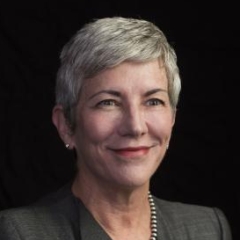
Laura Collins is an Associate Professor in the Department of Education at Concordia University, specializing in applied linguistics. Her research focuses on input processing in second language acquisition, pedagogical grammar, and cross-linguistic influence among bilingual speakers. She has extensive international teaching experience across diverse age groups and serves as the 2nd VP of the American Association for Applied Linguistics and Chair of the IRIS digital repository advisory board. PhD in Humanities, Concordia University MEd in Second Language Teaching, University of Ottawa BEd in Second Language Teaching, University of Toronto BA in History, York University Collins' current projects examine the use of speech technologies to extend second language classrooms and document longitudinal grammatical development in school programs. Funded by SSHRC Insight Grants, her work bridges cognitive approaches with practical pedagogical applications. Recent publications highlight trends in classroom input optimization, frequency-based phonological learning, and intensive language program efficacy, with subfields spanning morpheme perception, vocabulary distribution, and task-based interaction dynamics. Her academic leadership includes editorial roles in The Modern Language Journal and contributions to major handbooks. She teaches courses ranging from classroom-based SLA research to pedagogical grammar, emphasizing practical applications of theoretical insights.
David Huber is a Professor in Psychology and Neuroscience at the University of Colorado. He holds a PhD from Indiana University (2000). His research focuses on human perception, memory, and decision-making from a computational perspective, integrating behavioral studies with neuroimaging techniques (fMRI, ERP) and computational models (Bayesian, neural networks). Key areas include visual cognition, spatial navigation models, memory retrieval dynamics, and priming effects. Education: PhD in Psychology from Indiana University (2000). Research emphasizes mechanisms underlying memory processes, perceptual adaptation, and the neural basis of cognitive functions. Recent work challenges traditional roles of hippocampal place/grid cells, proposing memory-centric models. He explores how perceptual fluency influences decision-making and juror cognition, with studies on serial dependence and gestalt principles in binocular rivalry. His neurocomputational methods include fMRI-based tuning function analysis and virtual electrophysiology modeling. Publications span over two decades, focusing on memory models (SAM-RI), neural habituation, and Bayesian modeling of brain activity. His work advocates for rigorous model-driven approaches in cognitive neuroscience.
Jadranka Kolenović-Đapo is a Professor at the Faculty of Philosophy, University of Sarajevo, where she serves as Vice Dean for Teaching, Education, and Student Affairs. Her research spans personality psychology, social interactions, and cognitive reasoning, with a focus on adolescents and athletes. She has contributed extensively to understanding self-esteem development, humor styles, and psychosocial adjustment in post-conflict societies. Current position: Vice Dean for Teaching, Education, and Student Affairs Institution: Faculty of Philosophy, University of Sarajevo Main research areas: Personality traits, cognitive reasoning, self-efficacy, humor studies Her recent publications highlight the interplay between personality dimensions (e.g., the Dark Triad) and behavioral outcomes, including workplace stress and social interactions. She has validated multiple psychological scales for assessing competencies in sports and self-esteem metrics in youth populations. Key trends in her work include analyzing linguistic violence, imagined contact theory, and psychosocial resilience in clinical and educational contexts. Her interdisciplinary approach bridges psychology, linguistics, and sports science.
Dr. Adrian Owen is a Professor of Cognitive Neuroscience & Imaging at Western University's Brain and Mind Institute, holding the Canada Excellence Research Chair. His work focuses on consciousness disorders, neurodegenerative diseases, and functional neuroimaging applications. He pioneered techniques like detecting residual cognition in vegetative patients using fMRI and fNIRS. Research Focus: Owen's research bridges cognitive neuroscience and clinical practice, emphasizing disorders of consciousness, Alzheimer's/Parkinson's mechanisms, and neurorehabilitation. He develops brain-computer interfaces for communication in non-responsive patients and investigates anesthesia effects on neural connectivity. Key Contributions: Pioneered covert cognition detection in vegetative patients, advanced fNIRS applications in ICU settings, and established international clinical cohorts for consciousness assessment. His work has appeared in Nature , Science , and The Lancet . Labs/Teams: Leads the Owen Lab at Western University, collaborating with clinicians, engineers, and neuroscientists to translate neuroimaging innovations into clinical tools. Grants/Industry Links: Receives funding for interdisciplinary projects linking brain imaging, neurology, and biomedical engineering, fostering industry partnerships for neurotech development.
Manon Jones is a Professor in Psychology and Director of Research at Bangor University's School of Psychology and Sport Science. She directs the Miles Dyslexia Centre, a research hub providing assessment services and professional development for practitioners, and leads the RILL project—a bilingual literacy program for primary schools funded by UKRI, Nuffield Foundation, and Welsh Government. Her research explores cognitive and neurocognitive foundations of reading, dyslexia, and bilingualism. Key themes include: Cross-modal learning in dyslexia Orthographic processing across languages Remote literacy instruction efficacy Neurodivergent cognition models Syntax acquisition in bilinguals Analysis of her 15 most recent publications (2014–2025) reveals dominant foci on dyslexia mechanisms (9 papers), bilingual language processing (7 papers), and literacy intervention design (4 papers). Methodologies include eye-tracking, ERP, and randomized controlled trials, with increasing emphasis on computational modeling since 2021. She leads multiple grants including: RILL randomized control trial (Welsh Government, 2022–2026) Welsh literacy scale-up project (2024–2025) Neurodevelopmental disorder screening tool development (2022–2023) COVID-19 remote teaching research (2020–2022) She directs the Reading Brain lab and collaborates with NHS services to translate research into clinical/educational practice.
Professor Adrian Hilton is a distinguished faculty member at the University of Surrey, serving as Director of the Centre for Vision, Speech and Signal Processing (CVSSP) and Director of the Surrey Institute for People-Centred AI. He is affiliated with the School of Computer Science and Electronic Engineering and leads the Visual Media Research Lab (V-Lab). His research focuses on pioneering next-generation 4D computer vision technologies that enable machines to understand and model dynamic real-world scenes. Key areas include 3D/4D shape capture, computer vision, machine learning, graphics, and animation for applications in sports analysis, film/TV production, virtual reality, and medical imaging. His work bridges the gap between real and computer-generated imagery, with notable contributions in volumetric capture, motion capture, and free-viewpoint video. Hilton's recent publications demonstrate a strong trend toward multimodal integration, particularly combining audio and visual processing for spatial audio applications, while advancing 4D reconstruction techniques for human performance capture. His work increasingly incorporates transformer architectures and neural rendering techniques for improved illumination estimation, shadow modeling, and multi-view consistency. Scientific Awards and Recognition Two EU IST Innovation Prizes Manufacturing Industry Achievement Award Royal Society Industry Fellowship (2008-2011) Royal Society Wolfson Research Merit Award in 4D Vision (2013-2018) Fellow of the Royal Academy of Engineering (FREng) Fellow of the International Association for Pattern Recognition (FIAPR) Fellow of the Institution of Engineering and Technology (FIET) Hilton actively mentors PhD and post-doctoral researchers through his leadership of CVSSP, which has a grant portfolio exceeding £31M and comprises 170 researchers. He has successfully commercialized several technologies, including systems used by the BBC for sports commentary visualization. His research collaborations span major industry partners including BBC, BT, Sony, Framestore, and The Foundry. He co-founded the G3 Games forum and the CVMP Conference on Visual Media Production, demonstrating strong engagement with the creative industries. Current research projects include the S3A Programme Grant in Future Spatial Audio and InnovateUK's ALIVE project for 360 video reconstruction.
Kyle Lewis is a Professor and Christian A. Felipe Chair in Technology Management at the University of California, Santa Barbara (UCSB), where she serves as Chair of the Technology Management Program in the College of Engineering. Her research examines how organizations leverage individual and collective knowledge, focusing on team performance in professional services, new product development, and project-based tasks. She has authored award-winning research in journals like Management Science , Academy of Management Review , and Organization Science , and received the Jay Wright Forrester Award for her work on system dynamics modeling of organizational learning. Education : PhD in Organizational Behavior & Human Resources Management (University of Maryland), MS in Industrial Administration (Carnegie Mellon University), BS in Computer Science and Mathematics (Duke University). Lewis’s research spans transactive memory systems, collective intelligence, and bias interruption strategies. Her work, often conducted with co-authors like Edward G. Anderson and David Bachrach, explores team diversity, knowledge retention amid disruptions, and organizational structures. She has applied system dynamics and social network analysis to model performance in financial services, healthcare, and engineering teams. Her recent publications (2018-2020) include studies on team reflexivity in healthcare, AI product management, and cross-understanding mechanisms. The scientific awards she has received include: Jay Wright Forrester Award (2018) Top 50 Women in Business (Pacific Coast Business Times) Academy of Management Best Paper Award (2005) Lewis has delivered over 20 invited lectures (2016-2019) on topics ranging from Interrupting Implicit Bias to Effective Teaming at institutions like UC Tech, CSU System, and NORDP. She previously held editorial roles as Senior Editor for Organization Science and Associate Editor for Management Science , and directed the Master of Science in Technology Commercialization at University of Texas, Austin.
Giovanni Mento is an Associate Professor at the Department of General Psychology, University of Padova. His research focuses on cognitive neuroscience, developmental psychology, and clinical neurology, with a particular emphasis on neural mechanisms underlying cognitive control, emotional processing, and neurodevelopmental disorders. He employs advanced neuroimaging techniques like high-density EEG to investigate topics such as temporal prediction, decision-making in children, and the impact of preterm birth on brain development. His work integrates interdisciplinary approaches, combining machine learning with electrophysiological data analysis to address challenges in epilepsy forecasting and predictive brain activity. Key research areas include implicit learning, motivational contexts influencing cognition, and the application of EEG to study socio-emotional and behavioral disorders in clinical populations. Recent studies explore the effects of yoga-mindfulness interventions on cognitive control in children, dynamic brain states in preschoolers, and methodological rigor in EEG-based machine learning models. His contributions span both theoretical frameworks (e.g., re-examining top-down control models) and applied clinical research (e.g., neonatal intensive care practices). Mento’s articles highlight trends in understanding developmental trajectories, predictive neural mechanisms, and translational applications of neuroscientific findings to real-world contexts like education and healthcare.
Kristen Diliberto-Macaluso is a Professor of Psychology and Director of Undergraduate Research at Berry College, located in the Department of Psychological Science. She holds a Ph.D. from the University at Albany, SUNY (1996-1999), and has served in roles including Department Chair (2007-2013), Coordinator of the George Scholar Program, and has been a faculty member since 1999. Her research focuses on cognitive processes such as false memory, perceptual pop-out effects, and the interplay between emotion and memory. She also investigates practical applications like using mobile apps to enhance student learning and the psychological impacts of art. Recently, her work includes studies on academic burnout among students and autobiographical memory in Latino immigrants. Dr. Diliberto-Macaluso is deeply engaged in mentoring undergraduate researchers. Her articles span topics from religious schema activation to educational technology, emphasizing applied cognitive science. She actively participates in professional organizations like the Society for the Teaching of Psychology and the Psychonomic Society. Her teaching interests include cognitive psychology, research methods, and eyewitness memory. She has consistently integrated innovative pedagogical strategies into her courses, such as app-based learning tools, as highlighted in her Teaching of Psychology publication.
Astrid Erll is Professor of Anglophone Literatures and Cultures at Goethe-University Frankfurt am Main since 2010. She is a leading international scholar in memory studies with significant contributions to literary theory, transcultural studies, and media studies. Her work bridges humanities and social sciences, focusing on how cultural memory operates across national borders through various media forms. Her research interests include: Memory studies and cultural memory Transcultural and transnational studies Literary theory and narratology Media studies and intermediality Anglophone literatures and cultures Erll's scholarly work demonstrates a clear evolution from national memory frameworks to transnational memory dynamics. Her publications reveal consistent focus on how memories travel across cultural boundaries, with particular attention to literary and audiovisual media. Recent work examines memory during global crises like the pandemic, while earlier research established foundational concepts for understanding memory circulation across national borders. Her notable scientific awards include: Opus Magnum award of Volkswagen Foundation (2016) International Research Fellowship at Netherlands Institute for Advanced Study (2009/2010) University of Wuppertal award for Excellence in Teaching (2008) Justus Liebig University Award for Excellence in Post-doctoral Research (2005) Justus Liebig University Dissertation Prize (2002/2003) Doctoral Fellowship from German National Academic Foundation (1999/2002) Professor Erll leads the Frankfurt Memory Studies Platform and serves as general editor for the book series 'Studies in Collective Memory' (Oxford University Press) and 'Media and Cultural Memory' (de Gruyter). She contributes to multiple international research networks including AFRASO and COST/NITMES, focusing on transcultural memory narratives across Europe and beyond. She maintains active editorial leadership as member of advisory boards for Memory Studies (SAGE), Memory, Mind & Media (Cambridge UP), and The Memory Studies Review (Brill), demonstrating sustained influence in shaping the theoretical direction of the field.
Matt Russell is a PhD candidate in Computer Science at Tufts University, focusing on Brain-Computer Interfaces (BCI) within the Human-Computer Interaction Lab. His research emphasizes measuring mental workload via fNIRS and EEG, with applications in LLM-based interfaces and BCI design. He has taught Data Structures (C++) twice as a professor and served as a teaching assistant for multiple computer science courses. His work bridges neuroscience and engineering to enhance adaptive interface technologies. Education: PhD Candidate in Computer Science, Tufts University Research Interests: Russell’s multidisciplinary research explores implicit BCI design, mental workload analysis, and neuroergonomics. Key areas include fNIRS/EEG-based state classification, LLM interface integration, and real-time BCI systems for memory enhancement. His studies often involve human subject trials to evaluate cognitive and physiological responses. Publications: His articles span 2011 to 2025, focusing on neuroimaging techniques (fNIRS/EEG), BCI innovation, and HCI applications. Recent work explores AI collaboration impacts and low-cost EEG systems for cognitive task decoding. Teaching & Advising: Russell has instructed Data Structures (C++) and supported courses in graphics, cybersecurity, and concurrency. He actively contributes to pedagogical efforts in computer science education. Labs & Projects: His research is conducted in the Human-Computer Interaction Lab at Tufts, with open-source projects hosted on GitHub.
Yanliu Huang is a Professor and Department Head of Marketing at LeBow College of Business, Drexel University. She holds a PhD in Marketing from the Wharton School, University of Pennsylvania, and combines field and lab studies to address critical marketing and consumer behavior questions. Education: PhD in Marketing (Wharton School, University of Pennsylvania) Her research focuses on new technology in marketing , in-store decision making , consumer planning , and consumer welfare . She explores how digital interfaces influence planning, the psychology of indulgent choices, and the impact of store layouts on unplanned purchases. Recent publications examine voice-based shopping interactions , emoji usage in communication , and technology’s role in financial decision making . Her work bridges marketing science , neuroscience , and behavioral economics . Scientific Awards: MSI/H. Paul Root Award, Dean’s Excellence in Research Award, ExCITe Research Funding Award, Best Retail Proposal Award (Society for Marketing Advances) Editorial Roles: Associate Editor at Service Science; Editorial Review Board member at Journal of the Academy of Marketing Science, Journal of Consumer Psychology, and Journal of Retailing Dr. Huang’s research has been featured in Harvard Business Review , Wall Street Journal , and The Economist , with grants supporting studies on digital interfaces and consumer welfare.
Dr. John Kounios is Professor of Psychology at Drexel University and author of the bestselling book The Eureka Factor: Aha Moments, Creative Insight, and the Brain . A Fellow of the Association for Psychological Science and Psychonomic Society, he researches the cognitive neuroscience of insight, creativity, and problem solving. Research Focus: Kounios investigates neural predictors of insight solutions, cognitive differences between analytic and insight problem solving, and reward mechanisms in creative breakthroughs. His work identifies pre-problem neural activity patterns that predict solution approaches. Key Discoveries: Demonstrated that insight solutions are more likely correct than analytic solutions; identified neural precursors to 'aha' moments; revealed reward system activation during insight; showed positive mood facilitates insight while negative mood promotes analytical thinking. Publications: Recent work examines EEG predictors of problem-solving outcomes, flow states in creativity, individual differences in insight phenomenology, and brain-age estimation methods. Research featured in BBC documentaries, The New York Times, and Chicago's Museum of Science and Industry.
Holly Branigan is a Professor of Psychology of Language and Cognition at the University of Edinburgh, affiliated with the School of Philosophy, Psychology and Language Sciences. Her research focuses on language production, dialogue, child language development, and bilingualism. She holds a Personal Chair and has led numerous grants including projects on conversational alignment in children with autism, language experience effects on development, and syntactic priming in dialogue. Her teaching includes undergraduate courses on Psychology of Language and postgraduate modules on Dialogue. She supervises PhD students in topics like syntactic processing, bilingualism, and interactional linguistics. Branigan has secured over £10M in research funding from bodies like the ESRC and EU, leading projects such as 'How does language experience support language development?' (2018–2023) and 'AThEME: Advancing European Multilingual Experience' (2014–2019). Her work explores how speakers adapt language based on social context, interlocutor traits, and cognitive factors. Key achievements include a 7-year ESRC fellowship (1999–2006), and recognition for contributions to understanding syntactic processing mechanisms. She currently leads research on child language imitation in social contexts and bilingual syntactic representation.
Leila De Floriani is a Professor at the University of Maryland, with appointments in the Department of Geographical Sciences and the University of Maryland Institute for Advanced Computer Studies (UMIACS). She previously served as a professor at the University of Genova (Italy) since 1990, where she developed Italy's first undergraduate and graduate curricula in computer graphics and directed the Ph.D. program in Computer Science for eight years. Her professional activities include serving as the 2020 President of the IEEE Computer Society and currently as IEEE Division VIII Director for 2023-24. Professor De Floriani's research spans geometric modeling, data visualization, spatial data representation and processing, computer graphics, shape analysis, and topological data analysis. Her work focuses on developing mathematical models and algorithms for representing, analyzing, and visualizing complex spatial data, particularly through hierarchical models, mesh-based representations, and topology-based approaches. Her research group, the GeoVis group, investigates applications in terrain modeling, environmental data analysis, and forest structure mapping using LiDAR technology. Analysis of her recent publications reveals a strong focus on terrain representation and processing, with increasing emphasis on topological data analysis, machine learning integration, and efficient algorithms for large-scale spatial data. Her work bridges theoretical foundations in computational topology with practical applications in geospatial sciences, demonstrating consistent innovation in data structures and visualization techniques. Scientific Awards & Recognitions Fellow of IEEE (2016) for contributions to geometric modeling and scientific visualization Fellow of International Association for Pattern Recognition (IAPR) (1998) for contributions to geometric modeling and image analysis Fellow of Eurographics Association (2020) for outstanding contributions to computer graphics and visualization Pioneer of Solid Modeling Association (2017) for seminal work in solid and feature-based modeling Inducted Member of IEEE Visualization Academy (2020) IEEE Computer Society Golden Medal Award (2018) Inducted Member of IEEE Honor Society Eta Kappa Nu (2019) Multiple best paper awards at major conferences including Shape Modeling International (2015), IEEE/EG Symposium on Volume and Point-Based Graphics (2008), and ACM SIGSPATIAL (2008) Professor De Floriani has successfully advised numerous PhD students including Xin Xu, Yunting Song, and Noel Dyer, whose recent dissertations focused on topology-based individual tree mapping, efficient terrain analysis, and bathymetric data visualization respectively. Her research has been funded by prestigious agencies including the National Science Foundation, NASA, and the European Commission. As the leader of the UMD GeoVis group, she oversees a research program that develops open-source tools for spatial data analysis available on GitHub, with current projects focusing on forest point cloud processing and topology-based geospatial data visualization. The GeoVis group, affiliated with the Department of Geographical Sciences, UMIACS, and the Center for Geospatial Information Sciences, maintains a strong collaborative environment with ongoing projects in geometric modeling, spatial data structures, topology-based machine learning, and mesh-based terrain modeling. The group has received recent funding from NASA's HPOSS program for developing an open-source library for forest point cloud processing based on topological data analysis.