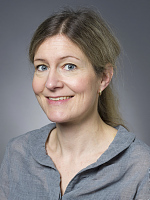
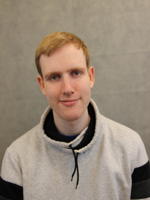
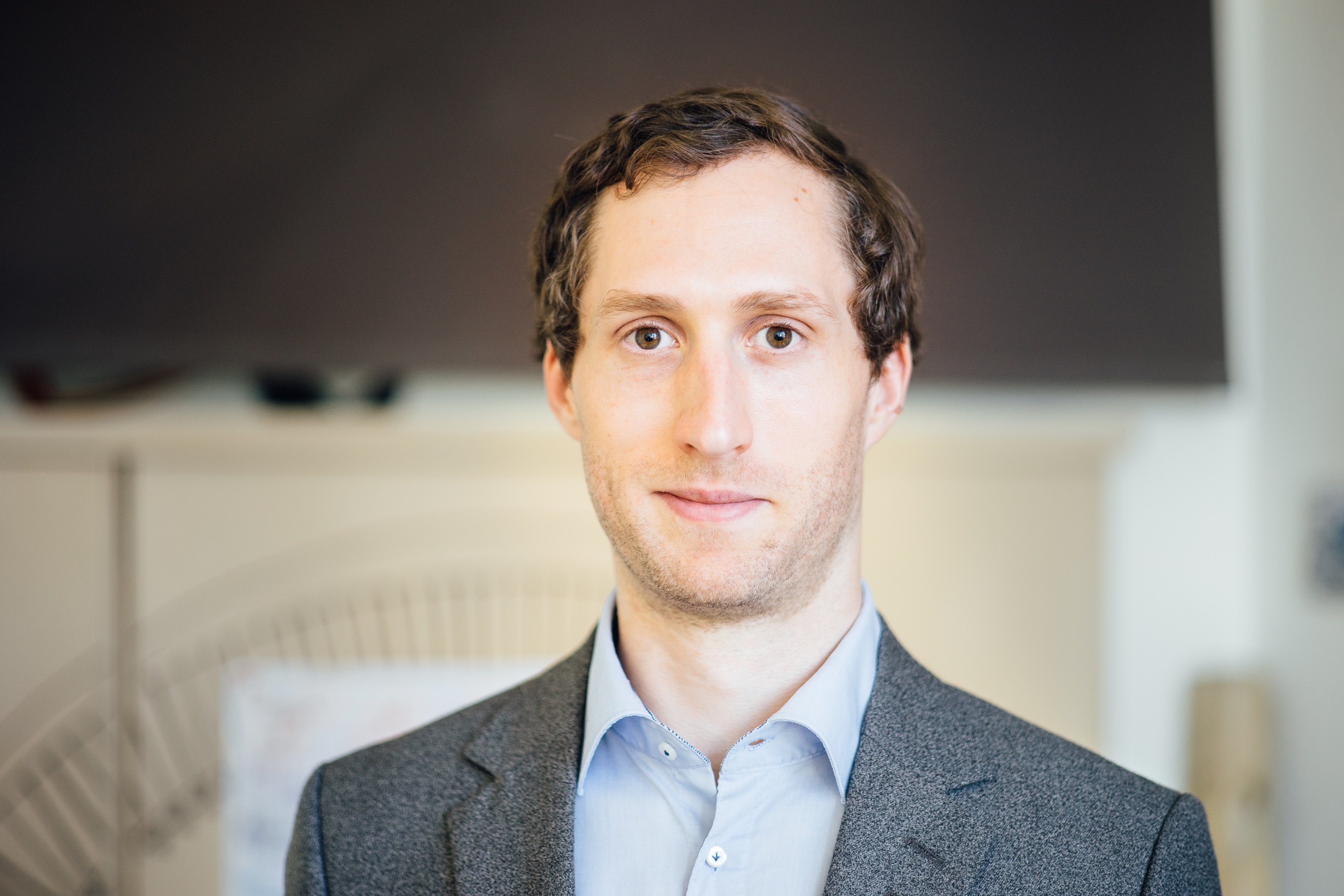
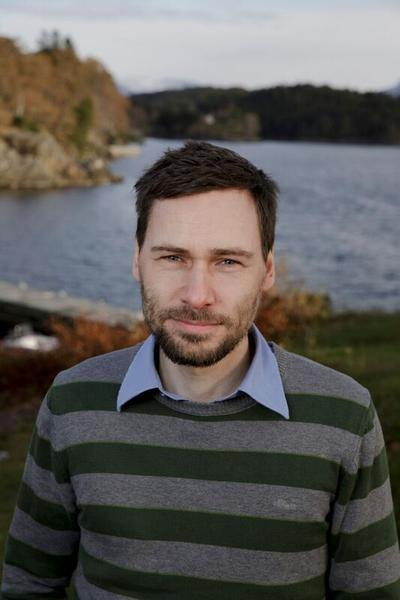
Yuriy Rogovchenko is a Professor in the Department of Mathematical Sciences at the University of Agder. His research spans differential equations, mathematical modeling, and education innovation, with applications in biology, social sciences, and engineering. Rogovchenko has contributed extensively to mathematics education through projects like PLATINUM (Erasmus+ Strategic Partnership) and CPEA-ST-2019/10067 (Eurasia project). PhD in differential equations (Institute of Mathematics, Kyiv, 1987) Regular Associate at Abdus Salam ICTP, Trieste (2004-2011) Editor for 11 international journals Referee for over 70 journals Research Interests: Qualitative theory of differential equations, perturbation methods, mathematical modeling in interdisciplinary contexts. He focuses on enhancing conceptual understanding through inquiry-based learning and nonstandard problems. Publications: Recent works include advancements in linear system observability, parameter identification methods, and educational studies on exact differential equations. His collaborations with Svitlana Rogovchenko and Matthias Pätzold highlight applications in engineering and biology. Awards: Sørlandet kompetansefonds research award (2016).
Ida Scheel is an Associate Professor in Statistics and Data Science at the University of Oslo , Department of Mathematics. She specializes in Bayesian hierarchical modeling, recommendation systems, and stochastic processes on networks. Her research interests include: Bayesian statistics and model diagnostics Data science applications in environmental and health domains Network-based machine learning Uncertainty quantification in predictive modeling Recent publication trends show a focus on Bayesian model validation, machine learning for product adoption prediction, and real-estate analytics. She contributes to interdisciplinary projects like BigInsight and CELS . Scientific awards : Sverdrup Prize for Young Researchers (2011) Advising : Supervised 8 PhD students (main/co-supervisor) in areas spanning Bayesian causal effects, neural network survival analysis, and model conflict detection. Key grants include participation in the Data Science@UiO and Integreat projects. Labs/teams : Active member of the Center for Computational Inference in Evolutionary Life Science (CELS) and the BigInsight center.
**Daniel Romero** is a **Professor** in the **Department of Information and Communication Technology** at the **University of Agder**, Norway. His research focuses on UAV communications, time-series analysis using machine learning and network science, and decentralized processing for sensor networks. He holds a Ph.D. in Signal Theory and Communications from the University of Vigo (2015), an M.Sc. in Signal Theory (2011), and a Telecommunication Engineering degree (2009). **Education**: Ph.D. in Signal Theory and Communications, University of Vigo (2015) M.Sc. in Signal Theory and Communications, University of Vigo (2011) Telecommunication Engineering, University of Vigo (2009) **Research Interests**: His work spans UAV communication systems (focusing on low-latency, high-reliability networks), time-series analysis for complex systems (using ML and network science), and decentralized computation in sensor networks to improve robustness and hardware efficiency. Recent projects include radio map estimation for mmWave beam alignment, spoofing detection via graph neural networks, and aerial base station placement optimization. **Publications**: Over 30+ peer-reviewed articles in top venues like IEEE Transactions on Wireless Communications and ICC. Recent trends emphasize radio map estimation (2023–2024), UAV-enabled spectrum surveying (2022), and robust D2D communications (2022). **Advising & Grants**: Teaches PhD courses (Statistical Signal Processing, Advanced Optimization) and leads the **Advanced Signal Processing Lab (ASL)**. Collaborates with the **CIEM (Center for Integrated Emergency Management)** on crisis-related communication systems. **Labs/Teams**: Directs the Advanced Signal Processing Lab (ASL.uia.no) and contributes to CIEM, applying ML and signal processing to emergency management challenges.
Bård Eirik Hallesby Norheim is a Full Professor of Theology at NLA University College in Bergen, Norway, specializing in Theology, Religion and Philosophy. He holds a Doctor of Philosophy from MF Norwegian School of Theology (2012) and has extensive academic credentials including Candidatus Theologiae and Candidatus Magisterii degrees. His academic journey includes exchange studies at universities in Erlangen (Germany), Uppsala (Sweden), and Tübingen (Germany), focusing on various theological disciplines. He teaches courses including Youth Ministry, Practical Theology, and Leadership in ecclesial contexts. Professor Norheim's research focuses on three main areas: leadership and rhetoric, youth ministry, and the intersection between systematic and practical theology. His work explores how theological concepts translate into practical ministry contexts, with particular attention to baptismal theology, Christian practices, and youth engagement in church life. His scholarly contributions reveal significant trends in contemporary theology, particularly in how churches navigate the challenges of youth engagement in a rapidly changing cultural landscape. His research often bridges historical theological insights with contemporary practical challenges facing churches, especially in the Nordic context. Among his notable achievements are several book publications including "The Four Speeches Every Leader Has to Know" (2020) and "Practicing Baptism: Christian Practices and the Presence of Christ" (2014). He is also working on upcoming publications such as "The Three Fears Every Leader Has to Know" and "The Five Questions: An Academic Handbook on Youth Ministry Research". Professor Norheim leads several significant research projects including "Rekkeviddeangst" (on digital communication), LEK (leader training in the Church of Norway), and TLC (Teaching and Learning theology in Crisis). His work demonstrates a strong commitment to connecting theological scholarship with practical ministry applications, particularly in the context of youth engagement and church leadership. His research team includes collaborators from various institutions including Stellenbosch University and Pan Africa Christian University, reflecting his commitment to international theological dialogue. Current work focuses on how churches can better engage young adults through innovative practices that honor theological tradition while addressing contemporary challenges.
Diego G. Campos is a Researcher at the Centre for Educational Measurement (CEMO) within the Faculty of Educational Sciences at the University of Oslo. His work focuses on advancing methodological innovations in educational research, particularly in integrating large-scale data into systematic reviews and meta-analyses. He was awarded His Majesty the King’s Gold Medal 2025 for his doctoral thesis, which introduced novel approaches to streamline evidence synthesis using machine learning and two-stage meta-analysis techniques. His research bridges gaps between research and policy by enhancing the efficiency and accuracy of knowledge synthesis in education, addressing challenges like information overflow and digital divides. Key contributions include: Developing machine learning algorithms to accelerate study screening in systematic reviews. Pioneering two-stage individual participant data (IPD) meta-analysis to handle complex datasets. Leading the Digital Divide in Education Research Hub (DiDiRes), addressing digital inequalities in education. Diego’s awards include the King’s Gold Medal and an international publication prize for machine learning applications in screening. His work emphasizes making research more practical, cumulative, and impactful for policy and practice.
Professor Edit Bugge is a sociolinguist at the University of Bergen's Department of Language, Literature, Mathematics and Interpreting, leading the IMPECT research project (2021-2025) funded by the Norwegian Research Council. Her work focuses on language variation/change, citizenship language requirements, and adult second language acquisition, particularly among low-literate migrants. She has managed projects examining Faroese dialect attitudes, Norwegian orthographic reforms, and multilingual early childhood education. Prof. Bugge teaches courses on Norwegian language teaching, sociolinguistics, and research methodology, including courses like UVN801 (Teaching Adult Immigrants Norwegian) and MPUV505 (Educational Research in Practice). Her research bridges linguistic theory with policy, addressing societal impacts of language testing and migration policies. Her research spans sociolinguistic fieldwork in Norway, the Faroe Islands, and South Africa, exploring topics like dialect perception (e.g., Faroese and Shetlandic), language reform implementation (e.g., the Norwegian pronoun 'hen'), and literacy development in marginalized groups. Bugge's interdisciplinary approach combines ethnography, corpus linguistics, and policy analysis to address issues of language as a tool for inclusion/exclusion. Key contributions include scoping reviews of LESLLA research (low-educated second language learners) and critical analyses of citizenship language policies. Recent work highlights migrants' narratives of navigating legal integration systems, revealing systemic barriers faced by low-literacy groups. Her publications span academic journals (e.g., Journal of Sociolinguistics , British Journal of Sociology of Education ) and edited volumes on language education and policy. Bugge actively participates in national/international conferences, delivering keynote addresses on topics like early childhood language socialization and the hidden costs of migration-related linguistic testing.
Ingebjørg Tonne is a Professor of Nordic languages/Norwegian as a second language at the Department of Linguistics and Nordic Studies (ILN) at the University of Oslo. She previously served as deputy head of MultiLing, center for multilingualism (a Center for Excellence in Research funded by the Norwegian Research Council) from January 1, 2022 to May 1, 2024. Earlier, from December 1, 2015 to June 30, 2017, she was head of teaching at ILN. Her academic career spans multiple institutions including the University of Oslo, Oslo Metropolitan University (where she taught from 2002-2014), and NTNU. Tonne holds a doctorate in linguistics from the University of Oslo (2001), with a contrastive dissertation on aspect in Norwegian-Spanish-English. Her educational background prepared her for extensive work in linguistics and language education. Professor Tonne's research focuses on the relationship between grammar teaching and writing development in school students, and the interplay between linguistic factors related to reading and writing skills. She is particularly interested in grammatical contrasts between different languages and how contrastive work can contribute to increased metalinguistic awareness in students. Her methodological approaches span corpus studies, ethnographically oriented studies, interview-based research, conceptual discussions about language concepts like "mother tongue," and qualitative studies of teachers' written assessments of student texts. She has made significant contributions to understanding how grammar instruction impacts literacy development among second language learners. Her publication record shows a consistent focus on second language acquisition, particularly Norwegian as a second language, with emphasis on grammar instruction, writing development, and literacy. Over the past decade, her work has increasingly examined teacher responses to student writing, the role of literature in language education, and the conceptual frameworks that shape our understanding of language learning. Her research often bridges theoretical linguistics with practical classroom applications, demonstrating how linguistic insights can improve language teaching methodologies. Professor Tonne has supervised students in the master's program in multicultural and international education at OsloMet, focusing on sociolinguistic topics related to human rights, language rights, and the multicultural school in Norway. She was part of the "Multiplicity Project" at OsloMet, which investigated how increased reading of literature could improve students' reading and writing skills compared to ordinary textbook use. Her teaching responsibilities at the University of Oslo include courses NOAS1100, NOAS2101, NOAS2102, NOAS4101, and NOAS4103, all related to Norwegian language education. She is an active member of MultiLing, the Center for Multilingualism in Society across the lifespan, which was designated as a Center of Excellence by the Norwegian Research Council. This center brings together researchers from multiple disciplines to study multilingualism from various perspectives, including linguistic, cognitive, social, and educational dimensions. Professor Tonne's work contributes significantly to the center's focus on how multilingualism develops and functions in different societal contexts.
Johan Sokrates Wind is a Research Fellow at the University of Oslo's Department of Mathematics, specializing in Differential Equations and Computational Mathematics. His primary affiliation is with the Faculty of Mathematics and Natural Sciences. He holds a Master's in Industrial Mathematics from the Norwegian University of Science and Technology (NTNU) and began his PhD in August 2021. Wind's research focuses on deep learning, neural networks, and overparameterized machine learning systems. He has explored topics such as the Neural Tangent Kernel, Deep Linear Networks, and implicit biases in optimization algorithms. His work bridges theoretical analysis with practical implementations, as evidenced by his blog The Good Minima , where he publishes technical insights on neural network behavior and training dynamics. Notably, he has contributed to projects like real-time visual odometry on smartphones during his part-time role at Arm Ltd. Wind is an active participant in competitive programming and Kaggle competitions, showcasing his problem-solving skills and algorithmic expertise. His research emphasizes analytically tractable models and the mathematical foundations of modern AI systems. Recent investigations include the RWKV language model architecture, efficient CIFAR-10 classification, and the role of initialization and learning rates in SGD's implicit bias. Wind’s publications highlight interdisciplinary approaches, combining elements of optimization theory, computational mathematics, and applied machine learning. He maintains an active blog with detailed technical posts, demonstrating a commitment to open science and knowledge-sharing. His academic journey reflects a balance between theoretical rigor and practical innovation, positioning him as a rising researcher in computational and mathematical aspects of deep learning.
Antoine Tambue is a Full Professor in Mathematics at the Department of Computer Science, Electrical Engineering and Mathematical Sciences, Western Norway University of Applied Sciences (HVL), Norway, and an Honorary Professor at the University of Cape Town, South Africa. His research focuses on stochastic calculus, numerical analysis, computational finance, and AI, with a vision to develop efficient numerical algorithms for high-dimensional problems in energy, finance, and data science. He holds a PhD from Heriot-Watt University (UK), funded by the ORS Awards Scheme, and has held postdoctoral roles at the University of Bergen and NTNU. He also served as the AIMS ARETÉ junior research Chair, supervising 5 PhD and 12 master’s students across multiple institutions. Education: Bachelor in Mathematics – University of Dschang, Cameroon Master in Mathematics – University of Yaounde I, Cameroon Professional Master in Mathematics Education – Ecole Normale Supérieure de Yaoundé Postgraduate Diploma in Mathematical Sciences – AIMS South Africa & University of Cape Town PhD in Mathematics – Heriot-Watt University (UK) Research Interests: Tambue’s work bridges stochastic analysis, numerical methods, and AI. Key areas include: - Developing scalable algorithms for high-dimensional PDEs and uncertainty quantification - Stochastic optimal control and Bayesian inference in computational finance and engineering - Machine learning applications in glaciology and energy systems. Scientific Awards: ORS Awards Scheme PhD Scholarship AIMS ARETÉ Junior Research Chair (Robert Bosch Stiftung) Advising & Grants: Supervised 5 PhD and 12 MSc students across Africa and Europe. Research funded by interdisciplinary projects linking applied mathematics to energy and environmental challenges.
Carlo Michael Knotz is an Associate Professor of Political Science at the University of Stavanger, affiliated with the Department of Media and Social Studies in the Faculty of Social Sciences. His research addresses public attitudes toward welfare, immigration, technological change, and political behavior, with a strong methodological focus on surveys and experiments. His educational background includes studies in Mannheim, Barcelona, and Konstanz, followed by a PhD from Lund University. He held postdoctoral positions in Bremen and Lausanne before joining the University of Stavanger in 2021. Since August 2024, he has served as the coordinator of the B.A. Political Science program and the Digital Society Research Group. Knotz's research spans several interconnected areas: the political effects of AI and technological vulnerability, particularly among the higher-educated; public attitudes toward immigrants and welfare chauvinism; and societal responses during the COVID-19 pandemic, including vaccine allocation and triage ethics. He frequently uses data from the OECD's 'Risks that Matter' survey and has conducted original public opinion research in Switzerland. His recent publications reveal a consistent trend toward understanding how economic and social insecurities—whether from technology, migration, or health crises—shape political preferences and policy attitudes. His work often involves large-scale comparative data and experimental designs, contributing to debates on welfare deservingness, labor market integration, and digital transformation. Reviewed for journals such as Comparative Political Studies , European Sociological Review , Journal of European Public Policy , and Social Science & Medicine . Presented at major conferences including the International Conference of Europeanists and the Norwegian Political Science Conference. Co-edited a special issue in the Journal of European Social Policy on immigration and the welfare state. He teaches upper-level courses on welfare state politics and co-teaches an introduction to quantitative methods. He has developed the R package 'bst290' and online tutorials to support student learning in data analysis. He is also active in public discourse through blog posts and social media, discussing topics such as AI, inequality, and research transparency.
Alejandro Omar Blenkmann is a Researcher at the RITMO Centre for Interdisciplinary Research on Rhythm, Time and Movement , Department of Psychology, University of Oslo. His work focuses on brain prediction mechanisms, auditory sensory processing, and intracranial electrode localization. He holds a PhD in Engineering (2012) from the National University of La Plata, Argentina, and has academic affiliations with institutions in Norway, Argentina, and the United Kingdom. Education: PhD in Engineering (2012) - National University of La Plata MSc in Biomedical Engineering (2007) - Favaloro University BSc in Engineering (2004) - Favaloro University Research Interests: Neuronal networks in auditory prediction Intracranial recordings (ECoG/SEEG) Frontal lobe role in prediction iElectrodes open-source toolbox development Collaborations: University of Cambridge University of California, Berkeley International Biomedical Cooperation Network
Anja Nastasja Robstad is an Associate Professor in the Department of Health and Nursing Sciences at the University of Agder, Norway. She holds a PhD in Health Sciences (2020) with a focus on healthcare professionals' attitudes toward obese ICU patients, a Master's in Critical Care Nursing (2015), and a nursing degree (2006). Her clinical background includes emergency and intensive care nursing at Sørlandet Hospital. PhD: University of Agder (2020) Master’s: Critical Care Nursing, University of Agder (2015) BSc: Nursing, University of Agder (2006) Robstad's research centers on intensive care nursing , obesity-related healthcare attitudes , and patient safety . She explores stigma in clinical settings, patient experiences with obesity, and systematic review methodologies. Her work addresses challenges in Nordic nursing education and inclusive internationalization. Recent publications include 2024 studies on endometriosis pain communication , asthma and physical activity , and obese patient experiences . Earlier work includes psychometric testing of attitude instruments (2018) and hermeneutic analyses of ICU nursing practices (2017). Scientific contributions include articles in journals such as: Acta Obstetricia et Gynecologica Scandinavica Journal of Advanced Nursing BMC Medical Research Methodology Nauka (book chapter)
Vegard Antun is a Postdoctoral Fellow at the Department of Mathematics, University of Oslo , specializing in applied mathematics with a focus on inverse problems, imaging, and deep learning. Education: PhD (2020), Master's (2016), and Bachelor's (2013) degrees from the University of Oslo. Research Interests: Stability and accuracy in AI algorithms, compressive sensing, signal recovery, and mathematical paradoxes in deep learning. Key Projects: Supervised a 2022 interdisciplinary project on deep learning observables for partial differential equations. His work explores the theoretical limitations of AI, particularly the instability of neural networks in inverse problems and their implications for scientific computing, as highlighted in his research on mathematical paradoxes and Smale’s 18th problem. His publications span topics such as binary sampling , wavelet reconstruction , and data-efficient neural networks , emphasizing the tension between AI accuracy and robustness. He has contributed to understanding implicit regularization , existence of optimal decoders , and hybrid concept-based models for scientific applications.
Anders Wiik is an Associate Professor in Mathematics Didactics at the Department of Mathematical Sciences , University of Agder (UiA), Norway. His career spans roles as Senior Lecturer and PhD candidate (2019–2025), focusing on data visualizations as sociocultural artifacts. He teaches mathematics and didactics at all teacher education levels and supervises theses in mathematical didactics. PhD in Mathematics Didactics (University of Agder, 2025) Master’s in Mathematics Didactics (University of Agder, 2013–2017) Year unit in Mathematics (NTNU, 2011–2012) His research explores mathematics' societal role through: Visual-numeric literacy in journalistic media Connections between school and everyday mathematics Mathematization as a social process Development of teaching methods for reflective citizenship Recent publications analyze data visualizations in weather forecasts and pandemic communication, emphasizing their complexity as cultural artifacts. Collaborative projects include the Coordinate Project (2025–2026) and Student Active Portfolio Evaluation (2025). His work bridges academic research with public engagement, highlighting implicit mathematical skills in daily life.
Torsten Martiny-Huenger is an Associate Professor at the Department of Psychology, UiT The Arctic University of Norway. His research focuses on cognitive processes related to self-regulation, decision-making, and associative learning. He explores topics such as the role of situational cues in future action planning, mechanisms of action control via if-then planning, and the interplay between conscientiousness traits and behavioral strategies. Key research areas include cognitive psychology, behavioral science, and risk judgment. His work often involves experimental methods to study priming effects, implicit learning, and the neural correlates of decision-making. Notable contributions address how verbal instructions shape action-effect associations and how environmental cues influence self-regulation success. Recent studies investigate reinvestment decisions under loss framing, the impact of self-instructed stimulus-affect plans on evaluative responses, and the spontaneous planning mechanisms underlying short-term task adherence. His research spans theoretical discussions on evaluating scientific theories to applied studies in health psychology, such as interventions targeting obesity and cardiometabolic risk factors in older adults. No scientific awards or grants are explicitly listed in the provided materials. His academic profile emphasizes experimental psychology and cognitive science applications, with a focus on translating theoretical insights into real-world behavioral interventions.