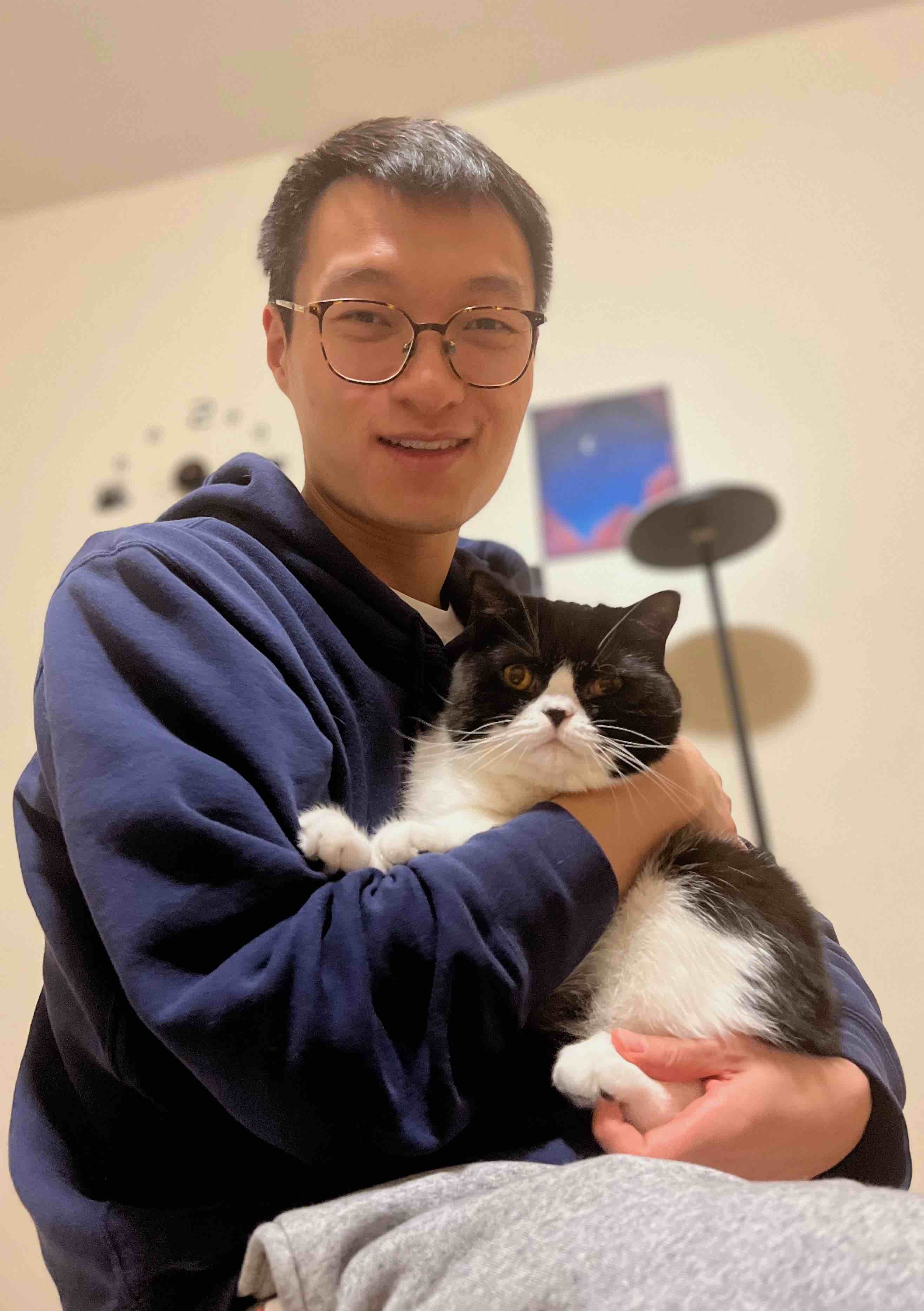
Haijun Xia is an Assistant Professor at the University of California, San Diego (UCSD), where he directs the Foundation Interface Lab and contributes to the Cognitive Science and Design Lab. His work focuses on Human-Computer Interaction (HCI) and Human-AI Collaboration , emphasizing the development of dynamic, malleable interfaces that integrate human cognition with intelligent systems to enhance thinking and working paradigms. Education: Bachelor's, Tsinghua University Master's and PhD, University of Toronto His research spans generative AI , interface design , and creative collaboration , with applications in data visualization, programming, and scholarly work. He advocates for treating information as a malleable material that can be flexibly manipulated by users and AI agents. Recent publications highlight advancements in: 2025 CHI Conference - Generative user interfaces, malleable overview-detail designs, and compositional structures for human-AI co-creation 2024 CHI Conference - Structured design space exploration with LLMs, ASCII diagram analysis, and adaptive presentation systems 2023 CHI/UIST Conferences - Data particle visualization, contextual logging tools, and metaphor generation for science communication Scientific recognitions include: Multiple Best Paper Awards and Honorable Mentions at CHI and UIST Hellman Fellowship and grants from NSF , Microsoft , Google , Meta , Apple , and Adobe He actively recruits undergraduate and graduate interns and has an upcoming postdoc position in early 2025 for researchers interested in foundational interface development.
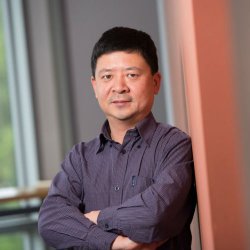
Professor David Taubman is a distinguished academic serving as Professor and Deputy Head of School (Research) at the School of Electrical Engineering and Telecommunications (EE&T) at the University of New South Wales (UNSW) in Sydney, Australia. He is also co-director of Kakadu Software Pty. Ltd. and its affiliates Kakadu R&D and Kakadu GPU. With a career spanning over three decades, Professor Taubman has made significant contributions to the field of image and video compression, most notably as the author of the EBCOT coding algorithm adopted in the JPEG2000 international standard. Professor Taubman earned his B.Sc. in Mathematics and Computer Science (1986) and B.E. (Medal) in Electrical Engineering (1988) from the University of Sydney, followed by an M.Sc. (1992) and Ph.D. (1994) in Electrical Engineering from the University of California at Berkeley. His professional journey includes engineering work at the Electricity Commission of N.S.W. (1988-1990), research positions at Hewlett-Packard Laboratories in Palo Alto (1994-1998), and an academic career at UNSW where he progressed from Senior Lecturer (1998-2003) to Associate Professor (2004-2009) and finally to Professor (2009-present). He has held various leadership roles including Head of the EE&T Telecommunications Research Group (2003-2014), Head of the EE&T Signal Processing Research Group (2014-present), Director of Research for the School of EE&T (2011-2016), and Deputy Head of School (Research) since 2017. Professor Taubman's research interests center on image and video compression, with particular expertise in JPEG2000 standards and implementations. His work spans signal processing, wavelet transforms, scalable video coding, motion modeling, and multimedia systems. He has pioneered numerous compression algorithms and frameworks, including the EBCOT coding algorithm that became central to the JPEG2000 standard. His recent research focuses on efficient motion modeling with cuboidal partitioning, learned lifting-based transform structures, and high-throughput implementations of JPEG2000 for video applications. His work bridges theoretical foundations with practical implementations, as evidenced by the commercially successful Kakadu Software tools that have garnered around 500 commercial licensees. Analysis of Professor Taubman's recent publications reveals a consistent focus on advancing compression technologies with particular emphasis on scalability, efficiency, and adaptability. His work spans traditional image compression (JPEG2000 extensions), video coding (cuboid-based partitioning for UHD/360-degree video), and emerging applications (nanopore sequencing data compression). A notable trend is the integration of machine learning techniques with traditional compression frameworks, as seen in his work on learned lifting-based transform structures. His research maintains strong connections to real-world applications across diverse domains including medical imaging, astronomical data processing, and genomic sequencing. IEEE Fellow Engineers Australia Fellow (by invitation) Professor Taubman has served as Associate Editor for the IEEE Transactions on Image Processing for two four-year appointments (2003-2005 and 2010-2013). He has been actively involved in numerous research grants focused on image and video compression technologies, particularly those related to the JPEG2000 standard and its extensions. His work has received significant industry support, reflected in his consultancy with various U.S., Japanese, and Australian corporations. He has also contributed to international standards development as a member of Standards Australia Technical Committee MS-065 (mirroring ISO TC42 on Digital Photography) and as a constitutional member of Standards Australia Technical Committee IT-029 (Coded Representation of Picture, Audio and Multimedia/Hypermedia Information). Professor Taubman co-directs Kakadu Software Pty. Ltd. and its research affiliates Kakadu R&D and Kakadu GPU, which have developed the commercially successful Kakadu Software tools for JPEG2000. His research group at UNSW focuses on advanced image and video compression techniques, with particular expertise in wavelet-based methods, scalable coding, and motion modeling. The group maintains strong industry connections and has contributed significantly to the development and standardization of image compression technologies worldwide.
Arnaud Bertsch is a Lecturer at the École Polytechnique Fédérale de Lausanne (EPFL) within the School of Engineering (STI) and the Department of Microengineering (IEM). He is affiliated with the Microsystems Laboratory 1 (LMIS1) and has been actively involved in teaching advanced microfabrication techniques and MEMS sensor/actuator practicals. His research spans microfluidics, nanofluidics, biomedical devices, and 3D microfabrication, with a focus on neural probes, drug delivery systems, and cell manipulation technologies. Microfluidic hydrodynamic and dielectrophoretic systems Nanovolcano microelectrode arrays for electrophysiology Thermal control of ionic transport in nanochannels 3D lipid microrobots for drug delivery MEMS-based intraocular pressure sensors Arnaud Bertsch has supervised PhD students including Torres Vila Pol, Zhang Tao, and past advisees like Clémentine Lipp, Nicolas Maïno, and Joan Teixidor. His work bridges fundamental research in nanofluidics with applied biomedical solutions, contributing to fields such as neuroscience, cancer therapy, and implantable medical devices. The articles listed demonstrate expertise in microsystem design, electrochemical sensing, and biofabrication technologies.
Zhu-Tian Chen is an Assistant Professor in the Department of Computer Science and Engineering at the University of Minnesota, Twin Cities, where he leads research in data visualization, human-computer interaction, and augmented reality. Prior to this, he held postdoctoral positions at Harvard University and UC San Diego, working with leading researchers in visual computing and interactive design. Ph.D. in Computer Science, Hong Kong University of Science and Technology B.Eng. in Software Engineering, South China University of Technology His research focuses on augmenting human intelligence through hybrid human-AI systems, particularly in everyday and outdoor environments. He specializes in designing intelligent AR interfaces, embedded visualizations, and language-oriented interactions for applications in sports analytics, education, and data analysis. His work integrates human-centered design with applied machine learning to create intuitive and effective visualization tools. The recent trend in his publications shows a strong emphasis on intelligent AR systems for dynamic scenes, LLM-based code generation interfaces, and real-time augmentation of sports videos using natural language and gaze-based interactions. His work frequently appears in top-tier venues such as IEEE VIS, ACM CHI, and UIST. Best Paper Award, ACM CHI'23 Best Short Paper Honorable Mention, EuroVis'23 Best Paper Honorable Mention, IEEE VIS'22 (twice) Certificate of Distinction and Excellence in Teaching, Harvard University Hong Kong Ph.D. Fellowship Dr. Chen actively mentors undergraduate, master’s, and PhD students, as well as visiting scholars and interns, and is building a new research lab focused on visualization for intelligent AR systems. He has served on program committees for major conferences including ACM CHI, IEEE VIS, and EuroVis, and has been invited to speak at institutions such as Apple, JP Morgan, and multiple universities worldwide. He also contributes to the academic community through grant reviewing for NSF and the Department of Energy. He leads research projects in intelligent AR systems for sports, language-oriented interactions with LLMs, and immersive data visualization, often in collaboration with institutions like Harvard, UC San Diego, and HKUST. His lab welcomes students and collaborators interested in visualization, HCI, and applied AI.
Evan Torner is Professor of German Studies and Film & Media Studies at the University of Cincinnati, where he directs the UC Game Lab. His research integrates German cinema, science fiction, and role-playing game studies, with emphasis on East German (DEFA) film, colonial representations, and participatory media. Previously an Andrew W. Mellon Fellow at Grinnell College, he earned his Ph.D. from the University of Massachusetts Amherst (2013). Education highlights: Ph.D. in German Studies (University of Massachusetts Amherst, 2013) M.E. (University of Tokyo, 2014) B.A. (Grinnell College, 2004) Research examines transnational genre cinema, especially kagome metal cultural circuits, and game-based pedagogy. Current projects analyze Cold War cinematic exchanges and larp (live-action role-playing) as pedagogical tools. Publications reflect sustained inquiry into German film history and game studies, particularly DEFA's transnational collaborations and narrative innovations in science fiction. Recent trends show increased focus on role-playing methodologies and game theory applications. Awards & Honors: Dean's Teaching Excellence Award (2017) Outstanding Essay Award in Cinema Studies (2015) DAAD Fellowships (2009-2010, 2012) Block Winter Award for interdisciplinary scholarship (2020) Leads NIH/NSF-funded projects on game-based learning and co-edits the Analog Game Studies journal. Advises students in German-film crossovers and organizes international larp events. Directs the UC Game Lab, fostering research on immersive media and game design pedagogy.
Professor Ning Wang is a leading academic in communication systems at the University of Surrey's Institute for Communication Systems (ICS), School of Computer Science and Electronic Engineering. He holds a PhD from the University of Surrey (2004) and has expertise in 5G/6G networks, edge computing, and space-terrestrial integration. As a coordinator for the EuroMaster Programme and Communication Networks and Software (CNS) pathway, he leads research in network management, mobile video delivery, and IoT applications. His work has been featured in IEEE ComSoc Technology News three times since 2012. Current leadership roles include 5GIC Work Area 1 leader for content and network context. Research collaborations span global institutions like UCL, ETH Zurich, and industry partners like BT and InterDigital. Notable contributions include SDN-based space-terrestrial network integration (VDPA scheme) and O-RAN automation via federated DRL. Over 130 publications and active participation in standards bodies (IETF, 3GPP) reflect his impact on future network architectures. Educations: BEng in Computing (Changchun University of Science and Technology, 1996) MEng in Electronic Engineering (Nanyang Technological University, 2000) PhD in Electronic Engineering (University of Surrey, 2004) Research Focus: Future Internet design, network intelligence, content-centric networking, and satellite integration. Key projects include EU Horizon Europe SPIRIT (immersive telepresence), ESA TINA (satellite 5G functions), and EPSRC NG-CDI (converged digital infrastructures). His research emphasizes practical solutions like edge-AI for VNF splitting and holographic frame synchronisation. Grants & Projects: Over £20M in grants from EPSRC, EU Horizon, InnovateUK, and Royal Society. Active in EU-funded SAT5G (satellite-terrestrial 5G) and C-DAX (smart grid cybersecurity).
Darren Mundy is Professor and Dean of the Faculty of Arts, Cultures and Education at the University of Hull, where he has been a faculty member since 2003. He has previously served as Head of School, Associate Principal, and Associate Dean, demonstrating sustained academic leadership. His work is centered in the Department of Screen within the Faculty of Arts, Cultures and Education. University: University of Hull School: Faculty of Arts, Cultures and Education Department: Screen Role: Dean and Professor Darren Mundy’s research focuses on the transformative role of technology in education and digital society. His early work explored engagement-enhancing technologies such as The Wild Thing and PAM-PAM, evolved into designing learning environments through the Euroversity project, and has matured into advancing critical digital literacies via the DETECT project. His interdisciplinary interests span educational technology, social media, eGovernment, information security, privacy, and eHealth. He has played a foundational role in establishing the Games Design program at Hull and has taught across web design, games art, and development for two decades. His recent publications reflect a strong trend in digital representation, technology acceptance models, and digital transformation, particularly in educational and governmental contexts. Articles such as 'An Analysis of Middle Eastern Female Athletes Visual Self-Presentation Strategies on Instagram' and 'Critical digital literacies at school level: A systematic review' highlight his focus on equity, representation, and critical engagement in digital spaces. His work often involves international collaboration and EU-funded initiatives. Darren has received recognition through multiple external examiner roles at institutions including the University of Bedfordshire, Coventry University, Ulster University, and the University of Bolton, underscoring his academic standing. He has led externally funded projects such as 'Who moved my block?' (AHRC) and 'DETECT' (European Commission), demonstrating his ability to secure research support. He has supervised over a dozen postgraduate students to completion, including eight PhDs and four MSc by Research students, and currently supervises a part-time PhD candidate exploring mixed reality applications for dementia care. His advisory work emphasizes real-world impact in technology-enabled learning and digital inclusion. Darren is also co-manager of the EU-funded Euroversity Network, promoting transnational educational collaboration. His leadership extends beyond research and teaching into institutional development and international academic service, making him a key figure in shaping digital education policy and practice.
Patrik Voštinár is an Assistant Professor at the Department of Computer Science , Faculty of Natural Sciences , Matej Bel University . Holding a PhD in Applied Computer Science from the same university (2014-2017), he teaches courses in Programming , Discrete Mathematics , Web Technologies , and Android Programming . As department head and study advisor, he actively shapes academic programs and student experiences. Matej Bel University (2017-present) Department of Computer Science Faculty of Natural Sciences His research focuses on computer science education and educational technology , with particular emphasis on: VR/AR applications in teaching Game-based learning environments Microcontroller programming pedagogy Mobile application development education Physical computing tools for K-12 Adaptive learning interfaces His work with MakeCode , micro:bit , and EEG-controlled games demonstrates innovative approaches to programming education. He has received multiple eLearning competition awards for educational courseware development. Heart on the palm (Project of the year 2019) 2nd price in eLearning competition (2023) for Discrete Mathematics course Price of České společnosti pro systémovou integraci (2023) for Web Technologies 1st price in eLearning competition (2023) for Geometry Didactics Voštinár actively contributes to academic communities through: Membership in DIDINFO conference program (since 2017) Editorial Board member of Elementary Mathematics Education Journal Organizing workshops for primary/secondary students Popularizing informatics through extracurricular programs
Harald Köstler is an Associate Professor and Head of Research at the Erlangen National High Performance Computing Center (NHR@FAU) within the Department of Computer Science at Friedrich-Alexander-Universität Erlangen-Nürnberg (FAU). He leads the research group on HPC Software Design at the Chair of Computer Science 10 (System Simulation), focusing on software engineering for high-performance computing and data analytics. His research interests include: Software Engineering for HPC Code Generation for Numerical Solvers Performance Engineering on Hybrid Architectures Discontinuous Galerkin and Lattice Boltzmann Methods Multigrid Solvers and Parallel Algorithms Performance Portability across CPUs, GPUs, and FPGAs The recent publications highlight a strong trend in developing efficient, scalable, and portable simulation frameworks for complex physical systems. His work emphasizes code generation, performance optimization, and the integration of classical model-driven and data-driven approaches. Key application areas include computational fluid dynamics, geotechnical engineering, and climate modeling, often leveraging the waLBerla and ExaStencils frameworks. Harald Köstler has no listed scientific awards in the provided text. He advises students in the areas of high-performance computing, numerical methods, and software engineering for scientific applications. His research is supported by collaborations within the FAU HPC ecosystem and likely involves grants related to national high-performance computing initiatives. He is a key contributor to the waLBerla framework, a block-structured, high-performance software for multiphysics simulations, and is involved with the ExaStencils project, which focuses on advanced multigrid solver generation. These frameworks form the core of his research team's efforts in scalable scientific computing.
Spencer Bambrick is an Assistant Professor in the Electronic Production and Design (EPD) department at Berklee College of Music, where he teaches courses in music technology and game audio. His work bridges academic instruction and professional creative practice in sound design and interactive media. His research and professional interests focus on video game audio , sound design , and music technology . He emphasizes creating engaging, inclusive, and psychologically safe learning environments, encouraging students to explore game audio through hands-on, interactive projects. Class discussions often revolve around video games and audio design, reflecting his deep engagement with the field. The available publications and creative works show a strong trend in interactive media , game audio strategy , and socially conscious sound projects , such as the grant-funded interactive documentary Bird , which addresses mass incarceration through choral music and immersive storytelling. Awards: Game Audio Network Guild Award (Distinguished Service) Promax and Broadcast Design Association Award (Nick Jr. Block Party, Music and Sound Design, Short Form) Game Audio Network Guild Award Nomination (Publication, Game Audio Strategy Guide) Spencer advises students through his teaching and mentorship in the EPD program. His professional work includes grant-funded creative projects like Bird , demonstrating sustained engagement with both academic and external funding sources. He has also authored a key textbook in the field, indicating a strong commitment to pedagogy and dissemination of knowledge. He is involved in the Bird project, an interactive documentary featuring music recorded by the Grammy-winning Crossing Choir. This project represents a confluence of artistic innovation, social commentary, and advanced audio production techniques.
Liz Goode is a Senior Lecturer at Southern Cross University, working within the Academic Portfolio Office. She specializes in evaluating innovative education models through the scholarship of learning and teaching (SoLT), with a focus on immersive/block teaching models and enabling education for non-traditional students. Her research interests include: Pedagogy in higher education Student engagement Student success Enabling education programs Immersive learning models Curriculum reform Key scientific awards include: Excellence in Pedagogical Research Award (IBILTA, 2024) Outstanding Teaching Award (Southern Cross University, 2021) 5 Star Staff Commendation (Southern Cross University, 2019) World Teacher's Day Award (Southern Cross University, 2019) Vice-Chancellor’s Award for Collaboration Excellence (University of Newcastle, 2017) Office for Learning and Teaching (OLT) Citation (2014) Vice Chancellor’s Citation for Outstanding Contributions to Student Learning (University of Newcastle, 2012) University Medal (University of Newcastle, 2010) Her recent publications demonstrate a consistent focus on immersive block models, student success in blended/online education, and curriculum reform for equity-focused outcomes across multiple disciplines.
Pascal Knierim is a researcher in the Department of Computer Science at Ludwig Maximilian University of Munich, Germany. He completed his PhD at the same institution in 2020 with a dissertation titled "Enhancing interaction in mixed reality: the impact of modalities and interaction techniques on the user experience in augmented and virtual reality." His research focuses on human-computer interaction, particularly in virtual and augmented reality environments, with an ORCID identifier 0000-0001-9578-9953. Knierim's research interests span virtual reality, augmented reality, mixed reality, ubiquitous computing, and extended reality systems. He has made significant contributions to understanding user interaction in immersive environments, privacy considerations in VR/AR, biometric identification using thermal imaging, and universal interaction frameworks. His work often combines technical innovation with user-centered design principles, resulting in numerous publications at top-tier venues including CHI, MUM, UbiComp, and IEEE Pervasive Computing. Recent work has explored content blocking in extended reality, social anxiety in VR proxemics, user awareness of privacy permissions, and framework development for ubiquitous research preservation. Knierim has collaborated extensively with researchers such as Thomas Kosch, Florian Alt, and Albrecht Schmidt, forming a productive research group within LMU Munich's computer science department. He has also contributed to the academic community through editorial roles for major conferences including Mensch und Computer 2023 and the 22nd International Conference on Mobile and Ubiquitous Multimedia (MUM 2023), demonstrating leadership within his research community. His research demonstrates a strong commitment to both theoretical advancement and practical applications of immersive technologies, with particular attention to user experience, privacy, and accessibility considerations.
Marc van Essen serves as Professor of International Business and holds dual administrative appointments as Interim Associate Dean for Undergraduate Programs and Associate Dean of International Programs and Partnerships at the University of South Carolina's Darla Moore School of Business, where he also directs undergraduate and graduate international business programs. Previously, he held a professorship in entrepreneurship and innovation at the University of St. Gallen's School of Management. His academic credentials include: Ph.D. in Management (cum laude), Erasmus University Rotterdam, 2011 M.Sc. in Economics and Law (cum laude), Utrecht University, 2007 B.Sc. in Economics and Law (cum laude), Utrecht University, 2005 Professor van Essen's research program centers on entrepreneurship, comparative corporate governance, international business, and family business dynamics , distinguished by rigorous meta-analytic methodologies that synthesize cross-national empirical evidence. His work systematically examines how institutional contexts—including political ideologies, cultural norms, and regulatory frameworks—shape corporate governance practices, gender diversity outcomes, and business model innovation. This approach has yielded significant insights into the contingency factors affecting board composition, state ownership impacts, and internationalization strategies across diverse markets. Analysis of his recent publications (2022-2025) reveals a dominant focus on meta-analytic investigations of institutional contingencies, with recurring themes including gender diversity in boardrooms, business incubator effectiveness, CEO overconfidence effects, and voluntary environmental program efficacy. His research consistently bridges institutional theory, agency theory, and stakeholder theory to address complex global business challenges, demonstrating exceptional methodological sophistication in synthesizing fragmented empirical findings into coherent theoretical frameworks. His scholarly contributions have been recognized through prestigious awards: Family Firm Institute Best Unpublished Research Award (2017) Coles College of Business Working Paper Series Best Paper Award (2017) OMT Best International Paper Award (2011, 2016) Jürgen Hauschildt Best Paper Award in Innovation Management (VHB, 2015) APJM Best Paper Award (2012) Richard Farmer Best Dissertation Award, Academy of International Business (2012) Erasmus Research Institute of Management Best Dissertation Award (2012) Professor van Essen has received the Delta Zeta student organization's award for best professor of the semester. His teaching portfolio spans continents and degree levels, including Business in Europe (undergraduate and Professional MBA), Comparative Corporate Governance (Master of International Business), Global Management Practices, international entrepreneurship (MBA), and advanced research methods (PhD) at institutions including the University of South Carolina, University of St. Gallen, EDHEC Business School, and HEC Paris. As program director, he oversees strategic development of international business curricula and global partnerships, significantly expanding the Moore School's international engagement through initiatives like the CEMS Program. His leadership extends to directing program teams that coordinate international exchanges, develop global immersion experiences, and manage cross-border academic partnerships, fostering comprehensive international business education that integrates theoretical knowledge with practical global market exposure.
Volker Menke is an artistic-technical Lecturer in the CAD Laboratory at the State Academy of Fine Arts Stuttgart , specializing in digital design tools and immersive technologies since 2000. He has participated in international lecturer mobilities across Europe, including institutions in Iceland, Lithuania, Norway, and the UK. Current affiliation: State Academy of Fine Arts Stuttgart (School of Architecture, CAD Department) Research focus: VR/AR applications in arts education, game engine visualization, and open-source 3D/XR building workshops His projects like The World in a Suitcase (2021–2024) explore innovative teaching scenarios via virtual environments, while TranslatedWorld demonstrates game engines as digital building blocks for spatial design. Though no formal awards are listed, his work has been funded by the Ministry of Science, Research and the Arts of Baden-Württemberg .
Qi Cao is an Associate Professor in the School of Computing Science at the University of Glasgow, specializing in computational intelligence for financial analytics and technology-enhanced learning. His research bridges computing science with practical applications in finance, education, and immersive technologies. Education includes: PhD from Nanyang Technological University (2007) Bachelor of Engineering from HuaZhong University of Science & Technology (2000) Research spans: Intelligent systems for financial trading and portfolio management Virtual/Augmented Reality for educational enhancement Software engineering education methodologies Recent publications focus on educational technology innovations, including VR learning environments, blockchain applications, and AI-enhanced assessment tools. His work on generative AI in education and automated financial systems demonstrates interdisciplinary impact. Awards include IEEE MultiMedia Best Paper Award and recognition for applied research in industrial informatics. Developed open-source frameworks for financial analytics and VR education applications.