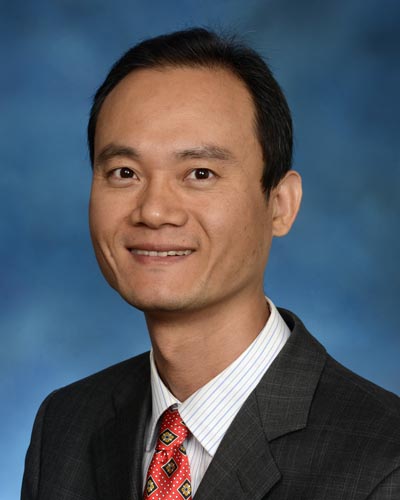
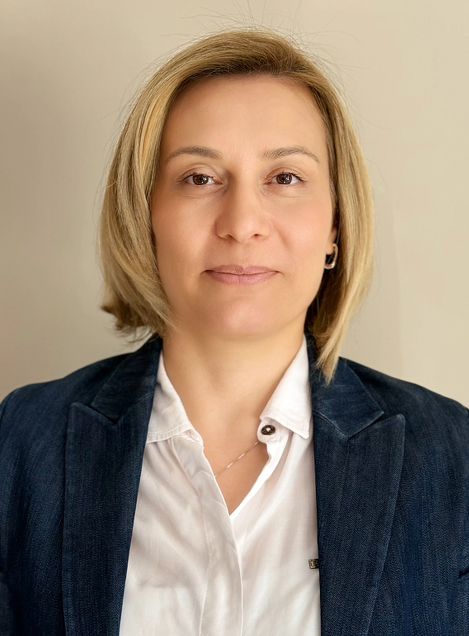
Prof. Helder Nakaya is Deputy Director at the School of Pharmaceutical Sciences, University of São Paulo, Brazil, and Adjunct Professor at Emory University School of Medicine, USA. His expertise lies in Systems Vaccinology, integrating systems-wide measurements, network analysis, and predictive modeling to study vaccine-induced immunity and infectious diseases. Education: PhD in Molecular Biology with training in Bioinformatics. His research focuses include Systems Biology , Vaccinology , and Computational Immunology , with contributions to understanding immune responses to Yellow Fever, Influenza, and SARS-CoV-2 vaccines. His lab develops data-driven approaches for infectious disease mechanisms. Recent publications highlight his work in machine learning for health data , network analysis in immunology , and mechanistic studies of sepsis and COVID-19 . He serves as an academic editor and reviewer for journals like PeerJ.
Dr.-Ing. Anna Krause is a researcher at the Chair of Data Science (Informatik X) within the Faculty of Mathematics and Computer Science at the University of Würzburg. She leads the Deep Learning for Dynamical Systems Group and has been actively involved in teaching at the university since 2019, including courses on Machine Learning for Time Series Analysis and Data Mining. Doctoral degree in Electrical Engineering (2019), University of Hannover Diploma in Electrical Engineering (2009), Technical University Dresden Her research focuses on Environmental Sensing and Time Series Analysis , particularly on enhancing physics-based models using machine learning techniques for meteorological applications and sparse sensor networks. She has made significant contributions to explainable AI, climate modeling, and fraud detection systems. Anna's recent publications demonstrate expertise in climate modeling (ConvMOS, ICLR 2024-2025), physics-informed neural networks (TaylorPDENet, ECMLPKDD 2023), and fraud detection (MIDAS workshops, ECMLPKDD 2020-2023). She actively contributes to conferences as organizer and PC member, including ECMLPKDD and ICLR workshops. Scientific Awards Best ML Innovation Award (2020) for Deep Learning in Climate Modeling Best Student Paper Award (2020) for Multi-Task Land Use Regression Best Paper Award (2020) for Financial Fraud Detection with INALU The DynaBench dataset introduced in 2023 provides benchmark tools for learning dynamical systems from low-resolution data. Her work combines theoretical advancements with practical implementations, including edge computing applications for beekeeping monitoring systems.
Zahed Siddique, Ph.D., is the Associate Dean for Research and Dick and Shirley O'Shields Professor in the School of Aerospace and Mechanical Engineering at the University of Oklahoma. He has previously served as the Director of AME at OU and is actively engaged in engineering design education, virtual prototyping, and additive manufacturing research. Ph.D., Mechanical Engineering, Georgia Institute of Technology (2000) M.S., Mechanical Engineering, Georgia Institute of Technology (1996) B.S., Mechanical Engineering, Georgia Institute of Technology (1994) Dr. Siddique's research focuses on developing tools to enhance engineering design education , Internet-based product design for collaborative environments, and design for product variety using graph grammars and combinatorics. His work extends to virtual prototyping , next-generation CAD systems, and design for sustainability , with recent emphasis on AI integration in additive manufacturing and defect detection. His recent publications highlight trends in additive manufacturing , machine learning applications for imbalanced data, and human factors in engineering education . Articles analyze digital twins, diffusion models, hydrogen fuel challenges, and neurocognitive impacts of environmental conditions on student performance. Scientific Awards Regents' Award for Superior Teaching (2008) Ralph R. Teetor Educational Award (2007) Brandon H. Griffith Award (2007) Junior Faculty Research Award (2001) Dr. Siddique has taught courses such as Design Practicum , Design for X , and Product Family Design . He leads the Product and Process Design Lab , fostering innovation in engineering education through 3D printing and advanced materials.
Mr. Shuang Ao is a Postdoctoral Research Fellow at the School of Computer Science and Engineering, University of New South Wales (UNSW Sydney). He earned his PhD from the University of Technology Sydney in January 2024. His research focuses on machine learning, reinforcement learning, and curriculum learning, with applications in robotic control and antibody drug discovery. Research Interests: Machine Learning Reinforcement Learning Curriculum Learning Graph Algorithms Optimization Techniques Recent Publication Trends: Shuang's work spans large language models for location-based recommendations, spatio-temporal forecasting, reinforcement learning frameworks, and graph algorithm optimizations. His articles address both theoretical advancements and practical applications in scalable systems and data analysis. Contact: Email: shuang.ao@unsw.edu.au
Dora Blanco Heras is a Full Professor in the Department of Electronics and Computer Engineering at the University of Santiago de Compostela. She holds a BS in Physics (1993) and a PhD cum laude from her current university. Research Focus: High Performance Computing, Computer Vision, Remote Sensing Projects: Rapid Digital Monitoring of River Ecosystems, High Performance and Cloud Computing for Demanding Applications Her work emphasizes GPU-accelerated algorithms for multispectral/hyperspectral image processing, anomaly detection, and human-computer interfaces for sustainability indices. She has contributed to technical committees like GRSS Earth Science Informatics and organized summer schools on geospatial AI.
Mohamed Abouelenien is an Associate Professor in the Department of Computer and Information Science at the College of Engineering and Computer Science, University of Michigan - Dearborn . He leads the Affective Computing and Multimodal Systems Lab (ACMS) , focusing on human behavior modeling and multimodal system development. Research Interests: Applied machine learning, computer vision, natural language processing, affective computing, and multimodal interaction. Applications: Healthcare, driver safety, building climate control, and educational assessment. Funding Sources: Ford Motor Company, Educational Testing Service (ETS), Toyota Research Institute (TRI), and Procter & Gamble (P&G). Publication Trends: Recent work emphasizes thermal imaging analysis, multimodal deception detection, driver alertness monitoring, and deep learning frameworks like PyraSegNet and PyraMoT for facial thermal processing. His research combines physiological signal extraction, circadian rhythm modeling, and safety-critical systems. Methodologies: Utilizes computer vision, data mining, machine learning, and natural language processing in healthcare applications.
Professor Peter Österholm at Åbo Akademi University's Faculty of Natural Sciences and Engineering specializes in Environmental Geology with a focus on Acid Sulfate Soils . His work addresses critical environmental challenges through interdisciplinary approaches. 2023-2025 : Active principal researcher in two major projects, including EU BIONEER for post-mining waste management Research Themes : Geochemical remediation, microbial interactions, water quality impacts Recent publications highlight: 2025: Microbial responses to limestone/peat treatments in hypermonosulfidic sediments 2024: Machine learning applications for acid sulfate soil mapping 2023: Innovative macropore targeting to reduce acid-metal release Collaborations include European Regional Development Fund , Kiertokaari , and Finnish Transport Agency . He organized the 2024 GeoDays conference and serves as co-investigator in multiple international projects.
Rong Chen is an Associate Professor in the Department of Diagnostic Radiology and Nuclear Medicine at the University of Maryland School of Medicine. He serves as Associate Vice Chair of AI and leads the Biomedical Data Mining Laboratory, focusing on integrating machine learning, computational neuroscience, and neuroimaging to decode brain-behavior relationships. His work spans clinical and translational research for disorders like Alzheimer’s, Parkinson’s, autism, and HIV, and he develops open-source software (GAMMA suite, Advanced Connectivity Analysis) for neuroimaging data analysis. Education: BS in Biomedical Engineering, Southeast University, China (1996) MS in Electrical Engineering, The Graduate School of Chinese Academy of Sciences (1999) PhD in Electrical and Computer Engineering, Washington State University (2003) Postdoctoral Researcher in Radiology, University of Pennsylvania (2005) MTR in Translational Research, University of Pennsylvania (2012) Research Interests: Computational modeling of neural activity and behavior Development of machine learning frameworks for neuroimaging Brain-inspired AI and therapeutic concepts Longitudinal analysis of brain disorders Distributed data mining for heterogeneous databases Software tools for biomarker detection and functional connectivity Scientific Contributions: 20+ years of advanced modeling and algorithm development Two open-source neuroimaging software packages (GAMMA suite, ACA) NIH and BRAIN initiative-funded research Editorial roles in journals like Frontiers in Computational Neuroscience Honors: Senior Member of IEEE Labs & Collaborations: Dr. Chen collaborates with institutions like NIH and Oracle, and his lab has developed tools used in studies on sickle cell disease, autism, and traumatic brain injury.
İLKAY SİBEL KERVANCI serves as an Assistant Professor in the Department of Computer Engineering at Gaziantep University's Faculty of Engineering. Her academic career spans teaching and research in artificial intelligence, machine learning, and data mining with practical applications across finance and bioinformatics sectors. PhD in Computer Engineering, Çukurova University (2023) MSc in Informatics, Kahramanmaraş Sütçü İmam University (2017) BSc in Computer Engineering, Kocaeli University (2004) Her research centers on machine learning applications for cryptocurrency price forecasting using LSTM and GRU networks, neutrosophic logic implementations in regression problems, and drug-target interaction prediction. Recent work demonstrates expertise in hyperparameter optimization, time series analysis, and handling imbalanced datasets through hybrid feature reduction techniques. She actively contributes to advancing neural network architectures for financial and biomedical challenges. Publication trends reveal consistent focus on Bitcoin price prediction (6 publications since 2017), expanding into drug-target interaction modeling and neutrosophic applications. Her work bridges theoretical machine learning with industrial applications in cement manufacturing, stock markets, and pharmaceutical research through recurrent neural networks and optimization frameworks. Dr. Kervanci teaches graduate courses including Introduction to Artificial Intelligence Methods and Introduction to Data Mining Methods, alongside undergraduate courses such as Artificial Intelligence in Engineering and Discrete Mathematics, demonstrating commitment to computational education across academic levels.
Gözde Özsert Yigit is an Assistant Professor in the Department of Computer Engineering at Gaziantep University, Faculty of Engineering. Her research focuses on applying machine learning and AI to biomedical data analysis, environmental monitoring, and predictive modeling. PhD in Computer Engineering (2016-2022), Çukurova University MSc in Computer Engineering (2014-2016), Çukurova University BSc in Computer Engineering (2007-2012), Çukurova University Her work spans machine learning applications , including water quality monitoring , food image classification , and drug-target interaction prediction . Recent studies emphasize interpretable feature selection methods and handling imbalanced datasets. She has contributed to 5 journal articles and 12 conference proceedings between 2014-2025, covering topics like oxygen uptake prediction, admission decision models, and hybrid AI strategies for biomedical and environmental challenges. Currently supervises academic projects and has participated in national refereeing activities (e.g., Teknofest, 2020). Affiliated with YÖK Academic, ORCID, and Web of Science databases.
Prof. habil. dr. Gintautas Dzemyda is a leading Lithuanian computer scientist, Professor and Senior Researcher at Vilnius University Institute of Data Science and Digital Technologies (VU DMSTI), and Head of the Cognitive Computing Group . He is simultaneously affiliated with the Institute of Mathematics and Informatics (MII) in Vilnius, where he has built an internationally recognized scientific school in visual data analysis. Education & Qualifications 1984 – Candidate of Technical Sciences (PhD equivalent), thesis on “Problem Structure Analysis – a Tool for More Effective Optimization”. 1997 – Habilitation Doctor of Technical Sciences, dissertation on “Isolation of Necessary Knowledge to Improve Optimization Efficiency”. 1992 – Associate Professor, Institute of Mathematics and Informatics, Vilnius. 1998 – Professor, Kaunas University of Technology. Research Interests Prof. Dzemyda’s research integrates data science, artificial intelligence, optimization, and cognitive computing . Core topics include dimensionality reduction, multidimensional data visualization, neural-network–based analytics, parallel and distributed computing, multi-criteria decision support, and advanced AI applications in medicine (ophthalmology, cardiology, oncology). His work has pioneered Lithuanian capabilities in visual analytics and large-scale data exploration. Publication Trends Across 270+ refereed works and 2 Springer monographs (2013, 2023), recent outputs (2021–2025) emphasize geometric multidimensional scaling for big-data visualization, deep learning for pancreatic-cancer detection on CT images, reinforcement learning for autonomous navigation, and fraud-detection techniques for highly imbalanced financial datasets. These contributions appear in Springer LNCS/LNNS, Informatica, Journal of Global Optimization, Engineering Applications of Artificial Intelligence , and other top venues. Awards & Recognition Lithuanian State Science Prize (2001 & 2021) Honorary Doctor of the University of Latvia (2019) Knight's Cross of the Order “For Merit to Lithuania” (2007) Doctoral Supervision & Committees He has mentored 28 doctoral graduates (15 direct, 13 through academic descendants) and currently supervises: Dalia Breskuvienė – Classifier training-set optimization Modestas Motiejauskas – Emotion recognition in photographs Victor Bulava – Machine-learning methods for cyber-incident early detection He also chairs or serves on doctoral and habilitation committees at VU, KTU, VGTU, VMU and MII. Laboratory & Projects As Head of the Cognitive Computing Group , Prof. Dzemyda coordinates several national and EU projects, including the current Lithuanian Research Council grant “Geometric Method for Multidimensional Scaling” (S-MIP-20-19, 2020-2022) and the SMART programme project “CognitiveSTATS” (2021-2023) focused on combating misinformation during pandemics. His team develops open-access tools for large-scale data visualization and contributes to the MIDAS national research-data archive.
Prof. Dr. Virginijus Marcinkevičius is a Professor at Vilnius University , serving as the head of the Smart Technologies Research Group and the Artificial Intelligence Laboratory within the Institute of Data Science and Digital Technologies . He is also a Senior Researcher , Project Lead Researcher , and Group Leader . Based in Vilnius, Lithuania, he has been instrumental in advancing research in machine learning , artificial intelligence , cybersecurity , and natural language processing . Research Interests: Machine Learning & AI Cybersecurity & Threat Detection Natural Language Processing Hyperspectral Imaging & Remote Sensing Autonomous Systems & Robotics Big Data & Cloud Computing His work spans both theoretical and applied aspects, including IoT security , visual analytics , and intelligent decision support systems . Recent projects include the development of propaganda detection systems , hyperspectral unmixing algorithms , and autonomous driving agents . Doctoral Supervision: He has supervised 19+ PhD students and 5+ consultants , covering topics from machine learning in cybersecurity to neural machine translation and autonomous UAV navigation . Projects & Grants: He has led or contributed to 15+ national and EU-funded projects , including: CognitiveSTATS – COVID-19 data literacy platform Propaganda and Disinformation Research – ML-based detection DAMIS – Data mining system for national research Raštija 2 – Lithuanian language resource integration Publications: He has authored or co-authored 60+ peer-reviewed publications in journals like IEEE Access , Informatica , Frontiers in Psychology , and Machine Vision and Applications . Professional Memberships: He is a member of the Lithuanian Computer Society , Lithuanian Mathematical Society , and Lithuanian Operations Research Society .
Dr. Jolita Bernatavičienė serves as a Senior Researcher at Vilnius University's Institute of Data Science and Digital Technologies within the Image and Signal Analysis Group. With a Doctorate in Technological Sciences (Informatics), she has established herself as a leading researcher in medical image analysis and artificial intelligence applications in healthcare. Her extensive research portfolio spans over 15 years of continuous contributions to the field. Dr. Bernatavičienė's research interests primarily focus on medical image analysis, particularly in ophthalmology and oncology applications. Her work integrates advanced machine learning techniques with medical diagnostics, specializing in eye fundus image analysis for glaucoma detection and prostate MRI analysis for cancer identification. She has made significant contributions to deep learning architectures, signal processing methodologies, and data analysis frameworks applicable to biomedical challenges. Her publication record demonstrates strong trends in applying cutting-edge AI techniques to solve concrete medical problems, with a noticeable shift toward more sophisticated deep learning architectures in recent years. The research spans multiple medical domains including ophthalmology, cardiology, oncology, and renewable energy systems monitoring, reflecting her interdisciplinary approach to data science applications. Leader of International Conference 'Data Analysis Methods for Software Systems (DAMSS)' 2015-2024 Member of IEEE Computer Society section (since 2022) Member of the Council of the Lithuanian Computer Association, Artificial Intelligence Section Member of the Lithuanian Operations Research Society Expert at the Science, Innovation and Technology Agency (MITA) (2020-2022) Dr. Bernatavičienė actively supervises doctoral and master's students, with current doctoral student Roman Surkant working on prostate MRI analysis. She leads multiple significant research projects including 'Developing Talents in Artificial Intelligence to Solve Disruptive Environmental Problems' and serves as scientific leader for the Research Council of Lithuania funded project on cardiac MRI texture analysis. Her work has been supported by various national and international funding mechanisms including COST activities, EuroHPC programs, and Lithuanian national research grants. She is principal investigator for the long-term project developing a database of depersonalized fundus images (2018-2030) and has led numerous projects related to medical image analysis, AI applications in healthcare, and data science methodologies. Her research group maintains strong international collaborations through COST actions and other European research networks.
Erik Štrumbelj is a researcher specializing in probability, statistics, and machine learning. His work focuses on stochastic processes, Monte Carlo methods, Bayesian statistics, and applications in sports analytics (player evaluation, match simulation, statistical forecasting). He has contributed to advancing computationally intensive statistical analysis and has collaborated on interdisciplinary projects involving data mining, high-performance computing, and explainable AI. Key research trends include: Developing game theory-based explanations for machine learning predictions Modeling sports outcomes using Markov processes Analyzing forecasting reliability through betting odds Integrating data mining with medical modeling He has been involved in numerous research projects funded by ARRS and international bilateral agreements, addressing topics like imbalanced data analysis, AI explainability, and hypercomputing applications.
Professor Jun Liu is a Professor of Artificial Intelligence and Director of the Artificial Intelligence Research Centre (AIRC) at the School of Computing, Ulster University. With over 270 publications and more than £18 million in research funding, he is a leading figure in artificial intelligence, particularly in trust and explainable AI systems and logic-based reasoning methods. Dr. Liu received his BSc and MSc degrees in Applied Mathematics, and PhD degree in Information Engineering from Southwest Jiaotong University, Chengdu, China, in 1993, 1996, and 1999, respectively. Prior to joining Ulster University, he held postdoctoral positions at The University of Manchester, UK (Feb. 2002 - Dec. 2004) and the Belgian Nuclear Research Centre (SCK*CEN) (Mar. 2000 - Feb. 2002). Professor Liu's research focuses on trust and explainable data-knowledge integrated AI decision models with applications in safety and risk analysis, policy decision making, security/disaster management, and healthcare; and logic and automated reasoning methods for intelligent systems, including resolution-based automated reasoning and lattice-valued logics for handling incomparability, inconsistency, and imprecision. His work spans theoretical foundations to practical applications in smart homes, healthcare, and industrial settings. His recent publications demonstrate a strong trend toward developing more trustworthy and explainable AI systems, with particular emphasis on belief rule-based approaches for handling uncertainty in decision-making. The research spans multiple domains including smart home activity recognition, medical imaging, food quality analysis, and environmental monitoring, showing the versatility and applicability of his methodologies. Ulster University best computer science paper award for 2016 IEEE Senior Member including IEEESMC and IEEECI Fellow of the UK Higher Education Academy Associate Editor of IEEE Transaction on Fuzzy Systems Current Chair of IEEE CIS Emergent Technologies Technical Committee As Director of the Artificial Intelligence Research Centre, Professor Liu has secured significant research funding as principal investigator and co-investigator. His current projects include "The use of Agentic AI in judicial decision-making" funded by EPSRC and "Adaptive Modeling Method for Deep Belief Rule Base" for smart home applications. He serves on editorial boards of multiple high-impact journals and organizes international conferences including the 23rd UK Workshop on Computational Intelligence. The Artificial Intelligence Research Centre under Professor Liu's leadership focuses on developing cutting-edge AI methodologies with practical applications. The center collaborates extensively with industry partners including BT through the BTIIC Phase 2 initiative and PwC through their Advanced Engineering and Research Centre, ensuring research has real-world impact across multiple sectors.