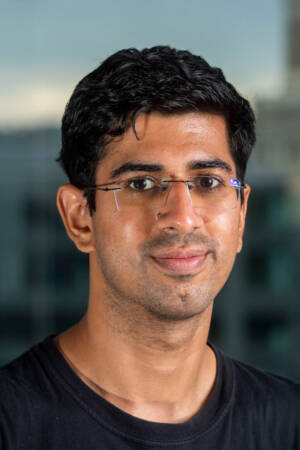
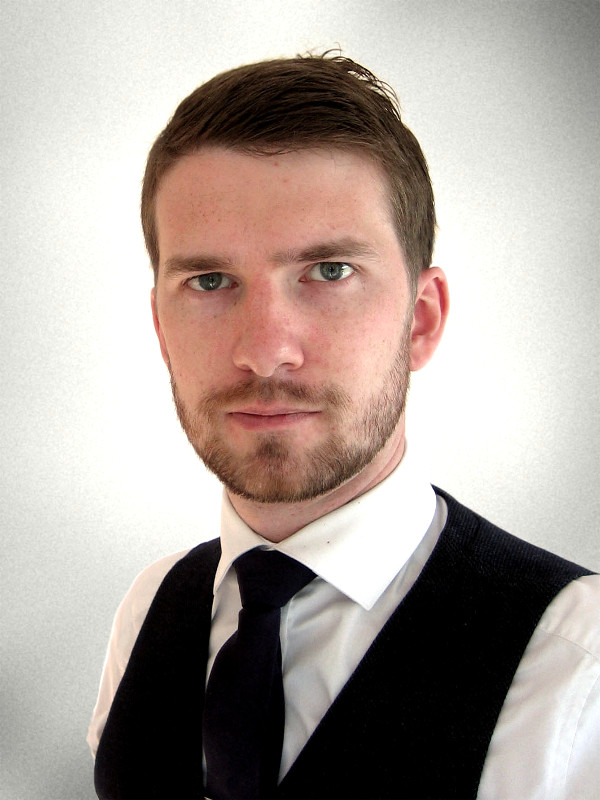
Chris Atkeson is a Professor at the Robotics Institute of Carnegie Mellon University. His research focuses on achieving human-level competence in machines through humanoid robotics and human-aware environments. He explores machine learning techniques such as reinforcement learning, nonparametric methods, and memory-based learning to develop robots capable of complex tasks like manipulation, locomotion, and perception. His work emphasizes bridging the gap between simulation and real-world applications (sim2real transfer), with contributions to tactile sensing (e.g., FingerVision), dynamic walking control, and human-robot collaboration. Notable projects include participation in the DARPA Robotics Challenge with Team WPI-CMU, where his team developed reliable humanoid behavior for disaster response scenarios. Atkeson’s research spans robotics, computer vision, and control systems, with a focus on enabling robots to perceive, learn, and act in unstructured environments. His recent work includes advancements in 3D scene capture, soft robotics, and energy-based planning for compositional tasks.
Andrea Tagliasacchi is an Associate Professor in the School of Computing Science at Simon Fraser University (SFU), where he holds the Visual Computing Research Chair. He is also a part-time (20%) Staff Research Scientist at Google DeepMind in Toronto and holds an associate professor (status only) appointment in the Department of Computer Science at the University of Toronto. Education: PhD in Computing Science – Simon Fraser University (NSERC Alexander Graham Bell Fellow) Postdoctoral Research – École Polytechnique Fédérale de Lausanne (EPFL) MSc in Computer Science – Politecnico di Milano (Gold Medalist) His research lies at the intersection of computer vision, computer graphics, and machine learning, with a focus on 3D visual perception. Key areas include neural radiance fields (NeRF), 3D Gaussian splatting, inverse rendering, and geometric deep learning, with applications in robotics, augmented reality, and autonomous systems. His work emphasizes robust and efficient scene understanding and reconstruction from visual data. His recent publications, appearing in top venues like CVPR, SIGGRAPH, NeurIPS, and ECCV, demonstrate a strong emphasis on neural fields, 3D reconstruction, and generative modeling. Trends include improving rendering efficiency, enhancing robustness to noise and distractors, and enabling controllable and 3D-aware generation. His group has made significant contributions to Gaussian splatting, NeRF optimization, and diffusion-based 3D/4D synthesis. Scientific Awards: 2024 CVPR Best Paper Award (Honorable Mention) 2020 CVPR Best Student Paper Award 2015 SGP Best Paper Award NSERC Alexander Graham Bell Canada Graduate Scholarship MITACS Best Paper Award (SIGGRAPH Asia 2009) NSF Best Poster Award (SGP 2012) He has advised numerous PhD and MSc students, many of whom are now researchers at leading institutions and companies. His research has been supported through collaborations with Google, Intel, and academic partners. He serves the community as a Senior Area Chair for CVPR 2025, Associate Editor for IEEE TPAMI (2024–2026), Guest Editor for IEEE TPAMI on 3D GenAI, and Program Chair for 3DV 2024. He leads a vibrant research lab at SFU focused on pushing the boundaries of 3D scene understanding with machine learning.
Jiatao Gu is an Assistant Professor in the Department of Computer and Information Science (CIS) at the University of Pennsylvania, with a part-time role as Staff Research Scientist at Apple (MLR). He holds a Ph.D. in Electrical and Electronic Engineering from the University of Hong Kong (2018) and a B.Eng. in Electronic Engineering from Tsinghua University (2014). His research focuses on generative machine learning and AI agent interaction with the physical world, emphasizing multi-modal systems spanning language, images, videos, and 3D. Key themes include efficient modeling , flexible architecture design , and scalable decision-making frameworks . 2025: ICLR paper on DART framework 2024: TMLR work on GFlowNet alignment 2023: NeurIPS research on diffusion stability 2022: ACL papers on speech translation Recent publications explore diffusion models for text-to-image synthesis, 3D reconstruction, and efficient sampling techniques. His work addresses fundamental challenges in attention mechanisms, entropy collapse, and multi-stage distillation while advancing non-autoregressive translation and vision-language reasoning . Prospective students can apply through his recruitment process at UPenn. Prior affiliations include Meta AI (FAIR Labs) and academic collaborations with institutions like New York University's CILVR Lab.
Xingang Pan is an Assistant Professor in the College of Computing and Data Science at Nanyang Technological University (NTU), leading the MMLab@NTU. His research focuses on generative AI and visual content creation, particularly in generative models, 3D vision, computer graphics, and computer vision. Prior to NTU, he was a postdoc at the Max Planck Institute for Informatics and earned his Ph.D. from the Chinese University of Hong Kong (2021) and B.Sc. from Tsinghua University (2016). His work emphasizes generative intelligence, exploring long-term world simulation, diffusion models, and multi-scale 3D generation. Notable contributions include WORLDMEM (2025), Alias-free Latent Diffusion (2025), and SAR3D (2025). His research has been published in top venues like CVPR, ICCV, and SIGGRAPH. Xingang Pan oversees the MMLab@NTU, which actively recruits students globally without nationality constraints. The lab’s projects include GAN2Shape (unsupervised 3D reconstruction from 2D GANs) and LN3Diff (scalable 3D generation).
Angjoo Kanazawa is an Assistant Professor in the Department of Electrical Engineering and Computer Sciences (EECS) at the University of California, Berkeley. She leads the Kanazawa AI Research (KAIR) lab under the Berkeley Artificial Intelligence Research (BAIR) umbrella and serves on the advisory board of Wonder Dynamics. Her research focuses on the intersection of computer vision, computer graphics, and machine learning, with a particular emphasis on 4D reconstruction of dynamic scenes, neural radiance fields (NeRF), and systems that model human-environment interactions from 2D visual data. Education : Ph.D., Computer Science (2017), University of Maryland, College Park BA, Mathematics and Computer Science (2012), New York University (NYU) Her work aims to build systems that can capture, perceive, and understand complex 3D/4D worlds from photographs and videos, enabling applications in scene reconstruction, motion analysis, and generative modeling. She has pioneered techniques for scaling NeRFs across GPUs (NeRF-XL), developing open-source tools like nerfstudio and gsplat. Her recent publications focus on topics like self-occluded avatar recovery (SOAR), decentralized diffusion models, and 4D reconstruction of articulated objects for robotics. Kanazawa's research has been recognized with prestigious awards including the IEEE CS TCPAMI Young Researcher Award (2024) , Sloan Research Fellowship (2023) , and Google Faculty Research Award (2021) . Her lab has trained numerous students who now hold positions at leading institutions and companies like Anthropic, Meta Reality Labs, and Luma AI. Key Scientific Awards : IEEE CS TCPAMI Young Researcher Award (2024) Sloan Research Fellow (2023) Hellman Fellow (2022) Bakar Fellows Spark Award (2022) Google Faculty Research Award (2021) Her KAIR lab collaborates extensively with industry partners and academic institutions, including the Max Planck Institute and Google Research. She has served as an advisor for PhD students and postdocs who now lead teams at UC Berkeley, MIT, Stanford, and Luma AI, while her teaching includes graduate courses like CS 280A (Computer Vision) and CS 294-173 (Learning for 3D Vision).
Alexei A. Efros is the Howard Friesen Professor in the EECS Department at the University of California, Berkeley, and a core member of the Berkeley Artificial Intelligence Research (BAIR) Lab. Previously, he spent a decade at Carnegie Mellon University’s Robotics Institute. His research focuses on data-driven computer vision, self-supervised learning, computational photography, and generative models. He has pioneered advancements in visual representation learning, including seminal work on neural radiance fields and generative adversarial networks. Education Background: Efros holds a PhD in Computer Science from MIT, though specific details of his academic journey are not explicitly provided in the text. His career includes postdoctoral research at the University of Oxford with Andrew Zisserman and collaborative work with Team WILLOW at INRIA Paris. Research Interests: Efros explores how vast uncurated visual data can be leveraged for understanding and synthesizing the visual world. Key areas include self-supervised learning, generative models, and applications in robotics and art. His lab has contributed influential techniques such as Style Transfer, GAN-based image synthesis, and neural scene representation learning. Recent work emphasizes real-time adaptation (Test-Time Training), 3D perception models, and ethical AI implications of generative systems. Publications: Over 150+ publications span topics like Generative Adversarial Networks (GANs), unsupervised learning, and visual-linguistic models. Notable works include Unpaired Image-to-Image Translation (CUT/GAU), Style Transfer , and Swapping Autoencoder . His research has significant industry impact, with techniques adopted in Adobe’s software and generative AI applications. Grants & Collaborations: Efros has secured major funding from NSF, DARPA, and industry partnerships (e.g., Adobe, NVIDIA). He co-leads projects on scalable vision models, ethical AI, and real-world perception systems. Current collaborations include work with MIT, NYU, and INRIA Paris. Labs & Teams: Leads the BAIR Vision Group at Berkeley, fostering interdisciplinary research between computer vision, graphics, and robotics. The group emphasizes Slow Science principles, prioritizing deep exploration over rapid publication.
Deva Ramanan is a Professor at the Robotics Institute of Carnegie Melllon University, where he leads research in computer vision and machine learning. His work focuses on modeling human visual perception, leveraging large-scale visual data, and developing systems for 3D understanding, neural rendering, and autonomous systems. He advises a large group of PhD students and has mentored numerous postdoctoral researchers now in leading roles across industry and academia. His research interests include computer vision, machine learning, human perception modeling, 3D scene understanding, neural rendering, autonomous driving, video understanding, and multimodal foundation models. These areas reflect his focus on both foundational models and their application to real-world problems in robotics and AI. The recent publications highlight a strong trend toward multimodal and 3D-aware models, with increasing use of diffusion models, neural fields, and large vision-language systems. Key themes include scene flow, 3D reconstruction from monocular video, autonomous driving perception, and robust evaluation of vision-language models. There is a clear emphasis on both methodological innovation and practical deployment in dynamic environments. Marr Prize, Honorable Mention (ICCV 2021) Best Paper, Honorable Mention (ECCV 2020) Best Paper Finalist (WACV 2024) Best Paper Award (WACV 2016) Best Industrial Paper, Honorable Mention (BMVC 2017) Marr Prize winner (ICCV 2009) Deva Ramanan has advised numerous PhD and master’s students, many of whom are now at top institutions and companies including Apple, Meta, Google, Nvidia, OpenAI, and Princeton. He has received substantial funding from IARPA, DARPA, NSF, Intel, Google, and Facebook for projects in video analytics, dispersed computing, visual cloud systems, and multi-task recognition. His group has developed influential datasets and benchmarks used widely in the community. He leads a vibrant research lab focused on advancing computer vision through deep learning and multimodal integration. His team works on core challenges in perception, including 3D reconstruction, motion modeling, object detection, and scene understanding, with applications in robotics and autonomous systems.
Prof. Olga Sorkine Hornung is a Full Professor of Computer Science at ETH Zürich, leading the Interactive Geometry Lab. She holds a BSc and PhD from Tel Aviv University (2000 and 2006) and conducted postdoctoral research at Technical University Berlin. Her research focuses on computer graphics, geometric modeling, and geometry processing, with applications in shape editing, digital fabrication, and animation. She has received numerous accolades, including the ACM Fellowship (2020), ERC Consolidator Grant (2020), and the Golden Owl Teaching Award (2021). Her work bridges theoretical foundations and practical algorithms, addressing challenges in parameterization, surface compression, and interactive design tools. Her research interests span: Computer Graphics & Visualization Geometric Modeling & Processing 3D Content Creation & Digital Fabrication Garment Design & Simulation Human Motion Analysis & Animation Awards and grants include: 2024: Best Paper Honorable Mention (EUROGRAPHICS) 2023: Member of Swiss Academy of Engineering Sciences (SATW) 2020: ERC Consolidator Grant 2017: Rössler Prize (ETH Zurich) Her lab focuses on developing novel methods for interactive geometry processing, with recent advancements in garment modeling (e.g., AIpparel, Rags2Riches) and motion retargeting systems like WalkTheDog. She actively collaborates on interdisciplinary projects, including biomedical applications and sustainable fashion technology.
Shubham Tulsiani is an Assistant Professor at Carnegie Mellon University's Robotics Institute, where he leads the Computer Vision group and the Physical Perception Lab. His research focuses on inferring physically and spatially grounded representations from perceptual inputs, with applications in 3D vision, robot manipulation, and neural scene reconstruction. He directs an active research group with multiple PhD and Master's students. Research interests center on 3D scene understanding , robot learning , and generative modeling , with specific emphasis on: self-supervised perception, neural rendering, multi-view geometry, manipulation from visual inputs, and physics-based reasoning. The lab develops methods that leverage physical world constraints as supervisory signals. Recent publications demonstrate strong focus on diffusion models for 3D tasks , sparse-view reconstruction , and robotic manipulation transfer . Key trends include neural inverse rendering, view synthesis from limited observations, and translating human interactions to robot actions. Awards include: Best Student Paper Award at CVPR 2015 Advising includes supervision of 5 PhD students, 4 MS students, and undergraduates. Lab alumni hold positions at Google, Stanford, Meta, and Princeton. The Physical Perception Lab collaborates with FAIR Pittsburgh and the CMU Computer Vision group.
Tzu-Mao Li is an Assistant Professor in the Department of Computer Science and Engineering (CSE) at the University of California, San Diego (UCSD), affiliated with the Center for Visual Computing. His research focuses on differentiable graphics algorithms, combining classical visual computing with modern machine learning techniques. He holds a Ph.D. from MIT CSAIL under Frédo Durand and a postdoc at MIT and UC Berkeley with Jonathan Ragan-Kelley. His work spans rendering, programming languages for graphics, Monte Carlo methods, and inverse problems. Education: B.S. and M.S. from National Taiwan University (2011-2013), advised by Yung-Yu Chuang. Ph.D. from MIT CSAIL (Computer Graphics Group), advised by Frédo Durand. Postdoctoral research at MIT and UC Berkeley with Jonathan Ragan-Kelley. Research Interests: Differentiable rendering, Monte Carlo integration, programming language design for visual computing, physical simulation, adversarial machine learning, and applications in computer vision and robotics. Key areas include rendering algorithms (path tracing, bidirectional methods), optimization techniques (MCMC, gradient-based), and neural representations (SDFs, neural fields). Publications focus on advancing rendering algorithms, differentiable systems, and applications in inverse problems. Notable contributions include edge sampling for differentiable rendering, warped-area sampling, and diffusion models for BSDF sampling. Awards: ACM SIGGRAPH 2020 Outstanding Doctoral Dissertation Award, multiple Best Paper Awards at SIGGRAPH, and oral presentations at ICCV. Teaching: Courses include CSE 167 (Computer Graphics), CSE 168 (Rendering), and CSE 272 (Advanced Image Synthesis), emphasizing physically-based methods and programming.
Prof. Matthias Nießner is a Professor at the Technical University of Munich , where he leads the Visual Computing Lab . Prior to this, he held a Visiting Assistant Professor position at Stanford University . His work bridges computer vision , graphics , and machine learning , focusing on 3D reconstruction , semantic scene understanding , and AI-driven video synthesis . Prof. Nießner has published over 150 works in top venues like SIGGRAPH , CVPR , and ECCV , with several receiving best paper awards (SIGCHI’14, HPG’15, SPG’18, SIGGRAPH’16 Emerging Tech). His research has garnered international media attention, including features in the New York Times , Wall Street Journal , and MIT Technological Review , as well as TV demonstrations (e.g., Jimmy Kimmel Live for Face2Face technology). Awards : TUM-IAS Rudolph Moessbauer Fellowship (2017–ongoing) Google Faculty Award (2017) Nvidia Professor Partnership Award (2018) ERC Starting Grant (2018, €1.5M) Eurographics Young Researcher Award (2019) Research Trends : 3D Gaussian Splatting for real-time rendering Neural Radiance Fields (NeRF) with mesh supervision Audio-driven facial animation via diffusion models Latent space diffusion for 3D scenes Self-supervised and zero-shot methods for 3D and image analysis As a co-founder and director of Synthesia Inc. , he drives democratization of synthetic media. His YouTube channel has over 5 million views, reflecting his impact beyond academia.
Haibin Ling is the SUNY Empire Innovation Professor in the Department of Computer Science at Stony Brook University, part of the College of Engineering and Applied Sciences. His research focuses on computer vision, medical image analysis, augmented reality, and AI applications in science. He holds a Ph.D. from the University of Maryland (2006) and prior degrees from Peking University. Previously, he worked at Temple University (2008–2019) and held roles at Siemens Corporate Research, UCLA, and Microsoft Research Asia. Professor Ling's work spans biomedical imaging, AI for science, and human-computer interaction. He leads the CV Lab and collaborates with the AI Institute at Stony Brook. Awards include the NSF CAREER Award (2014), Best Student Paper (ACM UIST 2003), and IEEE Fellow (2020). He serves on editorial boards for IEEE Trans. PAMI, Pattern Recognition, and CVIU, and chairs major conferences like CVPR. His research group includes over 50 students and alumni, with active projects in tracking benchmarks (LaSOT), Leafsnap, and medical imaging tools. Notable publications address OCTA flow estimation, backdoor attacks on vision models, and topology-guided medical learning. Collaborations involve institutions like Temple University and Stony Brook's Department of Applied Mathematics and Statistics.
David B. Lindell is an Assistant Professor in the Department of Computer Science at the University of Toronto, with affiliations to the Vector Institute and AXL. He is a founding member of the Toronto Computational Imaging Group. His research focuses on physically based intelligent sensing, integrating physical models, signal processing, and AI to advance sensing systems. Notable projects include imaging around corners, through scattering media, and developing machine learning algorithms for 3D scene reconstruction. Education: Ph.D. in Computational Imaging from Stanford University (advisor: Gordon Wetzstein). Awards include the 2024 Ontario Early Researcher Award and the Best Student Paper at CVPR 2025. His work combines computational imaging with applications in computer graphics and autonomous systems. Research interests span non-line-of-sight imaging, single-photon sensing, and neural representations. Key contributions include the Light-Cone Transform (Nature 2018), confocal diffuse tomography (Nature Communications 2020), and AutoInt (CVPR 2021). His lab develops systems for 3D reconstruction, transient imaging, and photon-efficient sensors. Selected grants and support: NSF CAREER Award, DARPA REVEAL program, and KAUST Visual Computing Center funding. Active collaborations with industry and academic institutions on autonomous driving and medical imaging applications.
Dr. Arno Solin is a tenured Associate Professor in Machine Learning at Aalto University's Department of Computer Science and an Academy of Finland Research Fellow . He leads the Aalto machine learning research group and serves as Director of the Finnish Doctoral Program Network in AI (AI-DOC) . His work bridges probabilistic modeling with practical applications in sensor fusion and real-time inference. ELLIS Scholar (European Laboratory for Learning and Intelligent Systems) Adjunct Professor at Tampere University Member of Young Academy Finland (2021–2025) Research Interests focus on data-efficient machine learning with probabilistic methods for real-time inference and sensor fusion. Key areas include Gaussian processes, diffusion models, stochastic differential equations, and uncertainty quantification in deep learning. His group develops methods that combine structural constraints with adaptive learning for deployment on resource-limited hardware. Publication Trends show consistent output in top venues (NeurIPS, ICML, ICLR, AISTATS) with emphasis on diffusion models , 3D scene reconstruction , and real-time probabilistic modeling . Recent works explore physics-informed learning, heterophily-aware graph models, and compressed representations for world models in reinforcement learning. Scientific Recognition : Awarded AI Researcher of the Year 2024 by AI Finland Teacher of the Year 2023 at Aalto CS ISIF Jean-Pierre Le Cadre Best Paper Award (2018) MLSP Schizophrenia Classification Challenge Winner (2014) NeurIPS/ICML Reviewer Awards Research Leadership includes coordinating Finland's AI Center of Excellence program and directing the Finnish Doctoral Program Network in AI (AI-DOC). He supervises 15+ doctoral/postdoctoral researchers and has spun off Spectacular AI , a company commercializing sensor fusion technology.
Ravi Ramamoorthi is the Ronald L. Graham Professor of Computer Science and Director of the UC San Diego Center for Visual Computing. He holds a faculty position in the Department of Computer Science and Engineering (CSE) and is an affiliate of the Department of Electrical and Computer Engineering (ECE). He joined UC San Diego in 2014, previously at UC Berkeley and Columbia University. He also holds a part-time appointment as a Distinguished Research Scientist at NVIDIA. His research focuses on visual computing, including rendering, computer vision, light field cameras, and physics-based modeling. Notable contributions include foundational work on spherical harmonic lighting, neural radiance fields (NeRF), and Monte Carlo rendering techniques. His work bridges graphics, vision, and signal processing with applications in sparse reconstruction, importance sampling, and real-time rendering. He teaches courses like CSE 167 (Computer Graphics), CSE 168 (Rendering), and advanced topics in computer graphics. Awards include ACM and IEEE Fellowships, the Okawa Foundation Grant, and multiple Frontiers of Science Awards. His research is supported by NSF, ONR, and industry collaborators including Adobe, Sony, and Qualcomm. Key projects include the Center for Visual Computing, Light Field research, and educational initiatives like edX MOOCs on computer graphics and rendering. His work has influenced industry tools (e.g., Pixar, RenderMan) and modern real-time rendering pipelines with denoising techniques.