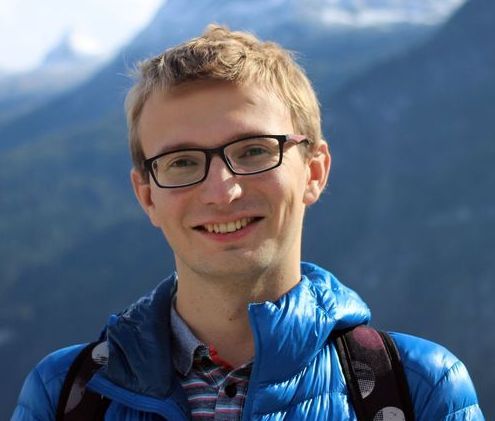
Paolo Rota is a tenure-track Assistant Professor at the University of Trento, affiliated with the Department of Information Engineering and Computer Science (DISI) and the Center for Mind/Brain Sciences (CIMeC). His research lies at the intersection of computer vision, machine learning, and multimodal AI, with a strong emphasis on vision-language models and activity recognition. His research interests include zero-shot action recognition, temporal action localization, open-world recognition, and person image synthesis. He explores how large multimodal models can be leveraged for practical applications in video analytics and industrial AI, often developing training-free or source-free adaptation methods that improve model generalization. Recent publications show a consistent trend in utilizing large vision-language models (e.g., CLIP, LMMs) for tasks such as image classification, domain adaptation, and action recognition, emphasizing simplicity, zero-shot capabilities, and real-world applicability. His work frequently appears in top venues including CVPR, NeurIPS, ICCV, and ICIAP. He actively mentors PhD students including Benedetta Liberatori, Jiaqi Liu, Yan Shu, Shiyao Xu, and Alessandro Conti, often co-advising with faculty such as Elisa Ricci and Nicu Sebe. He also contributes to teaching, including delivering lectures on machine learning for the MSc in Data Science program. He co-founded Mountain Maps, a startup using AI to enhance outdoor navigation and mountain exploration. His work bridges academic research and practical innovation, aiming to increase the real-world impact of AI systems.
Cecilio Angulo Bahón is a full Professor at the Polytechnic University of Catalonia (UPC), affiliated with the Barcelona School of Industrial Engineering (ETSEIB) and the Department of Systems, Automatics and Industrial Informatics Engineering . He leads research in Artificial Intelligence and Robotics , with significant contributions to healthcare data analytics, digital twins, and human-robot collaboration. His research spans machine learning for medical data harmonization, generative adversarial networks in health informatics, and evolutionary algorithms for control systems. Recent publications focus on synthetic healthcare data generation, climate-resilient agriculture , and UMAP-based data analysis . His work bridges AI theory with practical applications in industrial and healthcare domains. Scientific awards include the Sant Jordi 2023 Digital Polytechnic Initiative Award . He has supervised doctoral candidates like Carlos Flores-Vázquez and N. Raya, with key collaborations at the IDEAI-UPC Intelligent Data Science and AI Research Group and the Institute of Robotics and Industrial Informatics (CSIC-UPC).
Belen Masia is a tenured Associate Professor in the Computer Science Department at Universidad de Zaragoza , Spain. She is affiliated with the Graphics & Imaging Lab (part of the I3A Institute ) and the Vision, Image and Neurodevelopment Group (within the IIS Aragon Institute ). Her research bridges computational imaging , applied perception , and virtual reality , focusing on modeling human visual behavior and improving graphics/vision algorithms through perceptual insights. Education : Ph.D. in Computer Science (Eurographics PhD Award 2015), postdoctoral work at Max Planck Institute for Informatics . Research Highlights : Virtual Reality : Studying user behavior, saliency prediction, multimodal perception, and cinematography in VR. Appearance Modeling : Developing intuitive material representations and metrics for editing. Applied Perception : Leveraging human vision insights to diagnose defects in non-verbal patients. Computational Displays : Exploring HDR imaging and display optimization. Scientific Awards : Eurographics Young Researcher Award 2017 Eurographics PhD Award 2015 MIT Technology Review Top Ten Innovators Below 35 in Spain 2014 NVIDIA Graduate Fellowship 2012 Leonardo Fellowship from BBVA Foundation 2020 Leadership & Editorial Roles : Co-chair of Full Papers track at Eurographics 2026 Associate Editor for ACM Transactions on Graphics, Computers and Graphics, and ACM Transactions on Applied Perception Co-founder of DIVE Medical , a startup for automated visual function diagnosis PhD Students : Dario Lanza (2025, Modeling, Perception and Editing of Volumetric Materials ) Daniel Martin (2024, Computational Models of Visual Attention in VR , Best PhD Thesis Award EGSE) Julia Guerrero-Viu (2023, WiGRAPH Rising Star) Sandra Malpica (2023, VR Gaze Behavior ) Manuel Lagunas (2021, BBVA/SCIE Young Researcher Award) Ana Serrano (2019, Eurographics PhD Award & Unizar Outstanding Thesis) Collaborations & Grants : Involved in the EU-funded PRIME Innovative Training Network (predictive rendering and appearance reproduction) and leading projects on deep learning for pediatric visual diagnosis.
Carlos Antonio Andújar Gran is a faculty member at the Faculty of Informatics of Barcelona (FIB), Universitat Politècnica de Catalunya (UPC), where he is affiliated with the Department of Computer Science. He actively contributes to the academic community through teaching and supervising numerous student projects, particularly in advanced computing domains. His research interests center on the application of computer graphics, virtual reality, and artificial intelligence to real-world problems. Key areas include the 3D visualization and virtual reconstruction of cultural heritage, physically accurate rendering, intelligent segmentation of images, and the use of machine learning and reinforcement learning in sports analytics, particularly for padel. His work bridges technical innovation with practical applications in cultural preservation and sports technology. The recent publications under his supervision reflect a strong trend in digital cultural heritage, with multiple projects focused on tools for virtual visits, reconstruction, lighting simulation, and web-based 3D visualization of heritage models. Another significant trend is the application of AI to padel, including ball and player tracking, virtual coaching, and training virtual agents using reinforcement learning. These projects demonstrate a consistent focus on computer vision, interactive systems, and data-driven modeling. Carlos Antonio Andújar Gran has supervised a substantial number of students, guiding both undergraduate and master's theses. While specific grant information is not available in the text, his sustained supervision across many years suggests active involvement in research projects. He plays a key role in mentoring the next generation of computer scientists at UPC. His work is closely tied to the Department of Computer Science at FIB, where he collaborates with other faculty members such as Imanol Muñoz Pandiella, Núria Pelechano Gómez, and Mohammadreza Javadiha on various student projects, indicating a collaborative research environment focused on graphics, AI, and VR applications.
María Teresa Vilariño Picos is a Full Professor at the University of Santiago de Compostela, specializing in Digital Humanities, Comparative Literature, and Cyberculture studies. Her academic work bridges Literary Theory with technology, urban studies, and education. She coordinates the Ñínós Project for Sustainable Development education and participates in multiple academic committees within the Faculty of Philology. She is affiliated with research centers including CEFILMUS (Film Studies), CIPPCE (Emerging Processes), CEGAL (Galician Supercomputing), and international groups like NUPILL (Brazil) and Narratopedia (Colombia). Doctorate in Theory of Literature and Comparative Literature (USC) MSc in Rare Congenital Metabolic Diseases Her research explores transmedia narratives, interactive digital art, and the intersection of literature with virtual reality, artificial intelligence, and urban architecture. Key projects include Crossed Narratives (2016), Trans-Architectures (2011), and Connected but Alone (2021), which examines digital narrative's impact on education and social interaction. Her work spans cyberpoetry, video game narratives, and digital cartographies of cities. She has contributed to 15+ publications since 2001, with recent work focusing on educommunication 3.0, intermediality, and performative digital spaces. She teaches courses on Text/Image relationships and Literary Theory, and leads research on educational innovation through social pedagogy.
Ignacio Arganda Carreras is an Associate Professor at the Universidad del País Vasco/Euskal Herriko Unibertsitatea (UPV/EHU) and an Ikerbasque Research Associate, affiliated with the Donostia International Physics Center (DIPC). His research focuses on biomedical computer vision, with a strong emphasis on deep learning applications in microscopy and medical imaging. Key areas include bioimage analysis pipelines, domain adaptation for cross-modal image segmentation, and AI-driven solutions for healthcare diagnostics. He has contributed extensively to open-source tools like BiaPy, CartoCell, and DL4MicEverywhere, which advance accessibility to deep learning in bioimaging. His work bridges computational methods with biological and medical challenges, addressing issues like 3D object detection, super-resolution imaging, and automated classification in microscopy and clinical settings. Research highlights include developing the MitoEM and Nucmm datasets for mitochondria and neuronal nuclei segmentation, as well as innovative applications in wound healing modeling and aquaculture monitoring. His methodologies emphasize reproducibility, generalization, and mitigation of overfitting in deep learning models.
Dr. Palanichamy Naveen is an Assistant Professor in the Department of Electronics and Communication Engineering at Dr. N.G.P. Institute of Technology, India. His research lies at the intersection of computer vision, machine learning, and signal processing, with applications in healthcare, control systems, and academic policy. He actively collaborates with researchers globally, including institutions in the Czech Republic, and has contributed over 60 publications to academic literature. His research interests span Computer Vision , Deep Learning , Image and Video Processing , Signal Processing , and Optimization Algorithms . He also explores interdisciplinary topics such as academic performance appraisal and sports analytics. His work reflects a strong commitment to both technical innovation and institutional improvement in engineering education. The recent trend in his publications demonstrates a dual focus: applying AI to solve real-world problems in medical imaging and industrial control, while also contributing to academic governance through models for faculty evaluation and research incentivization. This blend of technical and administrative research highlights his broad impact in engineering academia. Scientific Contributions: Developed lightweight transformer models for retinal disease detection from OCT scans Proposed novel bio-inspired optimization algorithms for PID controller tuning Designed frameworks for faculty performance appraisal and research contribution assessment Created a relative grading system for ODI cricket player rankings Dr. Naveen is actively involved in academic discourse and knowledge dissemination through preprint platforms and peer-reviewed journals. While no formal advising or grant information is available in the text, his extensive publication record and international collaborations suggest active mentorship and research leadership. He is also engaged with academic networks like SciProfiles and Multidisciplinary Digital Publishing Institute, contributing to the broader scholarly ecosystem.
David Lopez Vilariño is a **Professor** at the **University of Santiago de Compostela**, affiliated with the **Department of Electronics and Computing** within the **Faculty of Physics**. He earned his PhD in 2001 with a thesis titled *"Active contours at the pixel level: design and implementation on cellular network architectures,"* advised by Dr. Diego Cabello Ferrer. His research focuses on **Computer Architecture**, **FPGA Acceleration**, **LiDAR Data Analysis**, and **Embedded Systems**, with notable contributions to LiDAR-based applications in urban planning, infrastructure monitoring, and medical imaging. He is part of the **ARQCOMP (Computer Architecture)** and **Artificial Vision** research groups. His work spans topics such as high-performance computing, parallel processing, and hardware optimization for vision-capable systems. Key projects include developing FPGA-based solutions for real-time video surveillance, retinal vessel analysis, and autonomous navigation systems. Publications emphasize **LiDAR data processing**, including algorithms for road detection, power line characterization, and 3D point cloud analysis. He also pioneered tools like the *Open Lidar Visualizer and Analyser* for 3D stereoscopic visualization. His expertise bridges hardware design and software development, particularly in leveraging FPGAs for embedded vision systems. No scientific awards or grants are explicitly listed, but his prolific publication record highlights sustained innovation in computer vision and geospatial technologies. His research team collaborates on projects involving manycore systems, GPU acceleration, and reconfigurable computing architectures.
Rafael Barea Navarro is a Professor in the Department of Electronics Technology at the University of Alcalá. His research focuses on biomedical engineering, autonomous systems, robotics, artificial intelligence, and driver safety. He leads the Biomedical Engineering Research Group (GIB) and the Robótica de Servicios y Tecnologías para la Seguridad Vial (Robesafe) group. His work bridges AI applications in medical diagnostics (e.g., multiple sclerosis via OCT) and advanced autonomous vehicle technologies, including motion prediction, reinforcement learning, and real-time safety systems. Education: PhD in Electronics from the University of Alcalá (2001), with a thesis on EOG-based human-computer interfaces for mobility assistance. His research spans over 50 peer-reviewed articles since 2000, emphasizing practical applications in healthcare and robotics. Key research themes include: 1) AI-driven medical diagnostics; 2) autonomous vehicle control systems; 3) sensor fusion for navigation; and 4) driver attention monitoring. His work integrates robotics, computer vision, and biomedical signal processing. Publications emphasize interdisciplinary approaches, with recent work combining OCT and explainable AI for early disease diagnosis, and hybrid reinforcement learning frameworks for urban autonomous driving.
Toni Susin is an Associate Professor of Applied Mathematics at UPC-BarcelonaTech. He leads the Dynamic Simulation Lab, part of the ViRVIG research group in Barcelona. His research focuses on numerical methods, physically-based simulation, and applications in computer graphics and biomechanics. Key research areas include Physically-Based Animation Surgical Simulation Biomechanical Applications Image-Based Modeling Fluid Animation Techniques His recent work spans microbiome data analysis, sports performance tracking, and biomedical simulations. While no scientific awards are listed, his career includes founding three tech companies and mentoring numerous PhD/Master's students in computational methods and simulation technologies.
Gleb Pogudin is an Assistant Professor at École Polytechnique, Institute Polytechnique de Paris, where he is a member of the MAX team within the Laboratoire d'informatique. His research focuses on the intersection of symbolic computation, differential equations, and algebraic methods with applications across multiple scientific domains. Dr. Pogudin's primary research interests span several interconnected areas: Symbolic computation and computer algebra algorithms Theory and applications of differential and difference equations Nonlinear algebra and polynomial systems Structural identifiability of dynamical models Model reduction techniques for complex systems His recent publications (2024-2025) demonstrate a strong focus on developing theoretical foundations for differential elimination, structural identifiability analysis, and model reduction. These works span applications in systems biology, epidemiology, pharmacology, and optics. Notably, his research bridges pure mathematical theory with practical computational implementations, creating tools that address real-world scientific challenges. Dr. Pogudin has developed several significant software tools that implement his theoretical advances: StructuralIdentifiability.jl: A Julia package for assessing structural identifiability CLUE: Software for exact model reduction of ODE models via constrained lumping SIAN: Software for structural identifiability analysis of ODE models His GitHub repositories contain numerous implementations of algorithms from his papers on differential elimination and related topics, demonstrating his commitment to making theoretical advances practically accessible to researchers across disciplines.
Antonio Garrido del Solo is a Professor in the Department of Computer Systems at the School of Computer Engineering, University of Castilla-La Mancha (UCLM). He has been affiliated with UCLM since 1986, becoming a Catedrático (Full Professor) in the area of Computer Architecture and Technology (ATC) in 2003. He served as Director of the School of Engineering at UCLM (2000-2008), Director of the Information Technology section at the Regional Development Institute (IDR) of UCLM (1996-2000), and Deputy Director of the Informatics Department at UCLM (1993). Professor Garrido earned his Licentiate in Physical Sciences from the University of Granada in 1986 and his Doctorate from the University of Valencia in 1991. Since 1993, he has been the co-founder of the High-Performance Networks and Architectures (RAAP) research group at UCLM, which currently includes 23 doctors. His academic leadership includes heading the Computer Architecture and Technology area from 2008 to 2021. His research interests span wireless networks, multimedia communications, video transcoding, software-defined networking, edge computing, and energy efficiency in networks. Professor Garrido has focused on digital image processing, broadband video transmission, video transcoding, and multimedia data transmission over wireless networks. His recent work demonstrates a strong emphasis on software-defined networking applications for wireless LANs, particularly in multicast transmission, load balancing, and energy efficiency. His publication record shows a clear evolution from video transcoding and wireless communications to software-defined networking and edge computing. The past decade reveals a significant shift toward SDN-based solutions for wireless networks, with particular attention to quality of service, resource allocation, and energy efficiency in enterprise WLAN environments. His work often combines theoretical networking principles with practical implementations for real-world applications. Professor Garrido has been deeply involved in university quality evaluation since 2000, serving as an external evaluator for Spain's National University Quality Evaluation Plan (PNECU), ANECA's Evaluation Plan (PEI), and multiple ANECA programs including VERIFICA, MONITOR, and ACREDITA. Since 2018, he has been a member of the EURO-INF seal commission, which he has chaired since 2022. He has also collaborated with regional quality agencies (ACCUEE, AQUIB, DEVA) in evaluating university programs and faculty. His research has been supported by numerous competitive research projects, including MECODIVI (2018-2021), excellence networks in computer architecture and advanced communications (2017-2019), and multiple projects focused on multimedia content delivery, wireless sensor networks, and energy management systems. He has led the RAAP research group for nearly three decades, securing funding from both regional and national sources. Professor Garrido co-founded the RAAP (High-Performance Networks and Architectures) research group at UCLM in 1993, which has grown to include 23 doctors. The group has maintained a consistent research focus on network architectures, wireless communications, and multimedia systems, while adapting to emerging technologies like software-defined networking and edge computing. Their collaborative approach has resulted in numerous publications in top-tier networking journals and conferences.
Víctor Manuel Brea Sánchez is an Associate Professor at the Research Center on Intelligent Technologies (CiTIUS) within the University of Santiago de Compostela (Spain). His work focuses on hardware implementations for computer vision and CMOS-3D technologies . Research Areas : Computer Vision, Electronic Design, Low-Power Embedded Systems Projects : AZOR (Search, Location, Rescue), Power Management Unit Chip for Energy Harvesting His recent publications emphasize CMOS-based vision sensors , analog computing-in-memory , and spatio-temporal feature extraction . Trends include deep learning acceleration, event cameras, and hardware for real-time object detection. Scientific contributions include the Best Paper Award at the 2003 European Conference on Circuit Theory and Design. Collaborations with researchers like Manuel Mucientes and Paula López highlight interdisciplinary efforts in AI-driven hardware design.
María del Pilar Jarabo Amores is a Full Professor at the Department of Signal Theory and Communications, University of Alcalá. Her research focuses on passive radar systems, sensor networks, and signal processing for defense and surveillance applications. She leads the AES3 research group (Acoustic and Electromagnetic Smart Sensor networks and Signal processing) and has expertise in radar detection, clutter modeling, and target tracking. Education: PhD in Telecommunications Engineering from the University of Alcalá (2005), supervised by Dr. Francisco López Ferreras. Research Interests: Development of passive radar technologies using DVB-T/S signals, motion compensation algorithms, and AI-driven detection methods. Key application areas include drone surveillance, maritime monitoring, and urban traffic imaging. Her work emphasizes robust detection in cluttered environments and distributed sensor network architectures. Key Contributions: Pioneered motion compensation techniques for passive radar systems, designed smart antennas for improved coverage (e.g., Ku-band microwave video camera), and developed adaptive beamforming methods. Her group's IDEPAR demonstrator showcases passive radar capabilities for terrestrial traffic monitoring. Labs/Teams: Leads the AES3 group, collaborating on EU-funded projects involving SAR imagery analysis and oil spill detection. Active in developing sensor networks for critical infrastructure protection.
Claudia Poch Pérez Botija is a researcher affiliated with the School of Language and Education at Universidad Nebrija. Her work focuses on Psychobiology , particularly in cognitive neuroscience and neurophysiological mechanisms of memory and attention. Doctorate: Universidad Autónoma de Madrid (2015) Thesis: Neural oscillatory activity associated with attention orientation in working memory Supervisors: Dr. Pablo Campo Martínez-Lage, Dr. Luis Carretié Arangüena Key research areas include working memory dynamics , emotional processing , neural oscillations (alpha/gamma), and language cognition . Her studies often employ EEG/ERP techniques to explore memory-perception interactions and bilingual cognitive control. Recent publications reveal trends in: Pattern separation mechanisms during memory encoding Cross-modal integration in illusory perception Emotional primacy effects in memory recognition Lesion studies of temporopolar regions in epilepsy patients Neurogenetic influences on fear conditioning (D2 receptor variants) Alpha/gamma oscillation modulation in attentional processes She contributes to understanding mnemonic discrimination , semantic memory impairment in neurological conditions, and neural correlates of bilingualism . Her work bridges basic cognitive mechanisms with clinical applications in temporal lobe epilepsy. Active in the CINC Nebrija Research Center on Cognition and CEDI Research Group , she investigates interrelations between cognition, education, and individual differences.