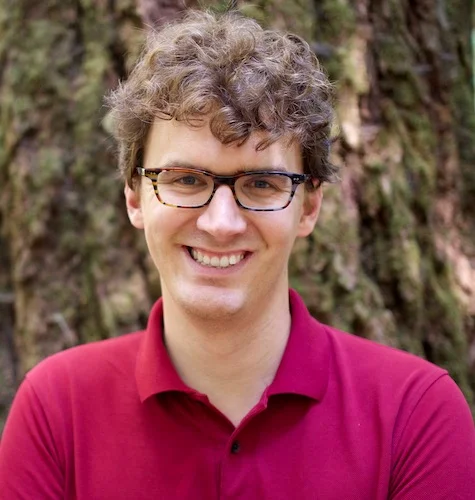
Carl Vondrick is a Professor in the Department of Computer Science at Columbia University. His research focuses on creating robust and versatile perception systems that leverage video and interaction with the natural world, with applications in 3D reconstruction, visual question answering, and robot manipulation. Former research scientist at Google Visiting researcher at Cruise Education: PhD (2017) from MIT, advised by Antonio Torralba BS (2011) from UC Irvine, advised by Deva Ramanan His research explores multimodal approaches for cross-task and cross-modal transfer, scene dynamics, audiovisual perception, interpretable models, and spatial awareness systems. The lab emphasizes zero-shot generalization and neuro-symbolic methods while addressing safety and robustness in AI systems. Key publication trends include: 2025: Video generation for robotics 2024: Differentiable rendering and cross-modal reasoning 2023: Robust perception and 3D modeling Scientific Awards: 2024 PAMI Young Researcher Award 2021 NSF CAREER Award Teaching Roles: Teaching Computer Vision II (2021-2025), Computer Vision I (2018-2019), and Representation Learning (2020-2022). Advising: Advises 8 current PhD students and has mentored 5 graduated students now at institutions like MBZUAI and UMD. The lab recruits 1-2 PhD students annually through Columbia’s PhD program. Grants and Collaborations: Funded by NSF, DARPA, Toyota Research Institute, Amazon Research, and Google.
Prof. Matthias Nießner is a Professor at the Technical University of Munich , where he leads the Visual Computing Lab . Prior to this, he held a Visiting Assistant Professor position at Stanford University . His work bridges computer vision , graphics , and machine learning , focusing on 3D reconstruction , semantic scene understanding , and AI-driven video synthesis . Prof. Nießner has published over 150 works in top venues like SIGGRAPH , CVPR , and ECCV , with several receiving best paper awards (SIGCHI’14, HPG’15, SPG’18, SIGGRAPH’16 Emerging Tech). His research has garnered international media attention, including features in the New York Times , Wall Street Journal , and MIT Technological Review , as well as TV demonstrations (e.g., Jimmy Kimmel Live for Face2Face technology). Awards : TUM-IAS Rudolph Moessbauer Fellowship (2017–ongoing) Google Faculty Award (2017) Nvidia Professor Partnership Award (2018) ERC Starting Grant (2018, €1.5M) Eurographics Young Researcher Award (2019) Research Trends : 3D Gaussian Splatting for real-time rendering Neural Radiance Fields (NeRF) with mesh supervision Audio-driven facial animation via diffusion models Latent space diffusion for 3D scenes Self-supervised and zero-shot methods for 3D and image analysis As a co-founder and director of Synthesia Inc. , he drives democratization of synthetic media. His YouTube channel has over 5 million views, reflecting his impact beyond academia.
Julian McAuley is a Professor in the Department of Computer Science and Engineering at the University of California, San Diego's Jacobs School of Engineering. His research spans recommender systems, machine learning, natural language processing, music information retrieval, and multimodal learning. He maintains an active research group with numerous PhD students and postdocs working on cutting-edge AI problems. His research interests focus on developing advanced algorithms for personalized recommendation systems, with particular emphasis on sequential recommendation, multimodal learning, and integrating large language models with traditional recommendation approaches. His work bridges the gap between theoretical machine learning and practical applications across multiple domains including e-commerce, music, and healthcare. McAuley has published extensively in top-tier conferences including NeurIPS, ICML, KDD, SIGIR, and ACL, with his most recent work exploring the intersection of large language models and recommendation systems. His publications reveal a strong trend toward multimodal approaches that combine text, vision, and audio for more comprehensive understanding and recommendation. He has received significant research funding from major technology companies including Google, Amazon, Facebook, Adobe, and Samsung, as well as government agencies like the National Science Foundation and Department of Defense. His work has practical applications across multiple industries, with a focus on improving user experience through better personalization. McAuley advises numerous PhD students who have gone on to successful careers at leading technology companies and academic institutions. His former students include Wang-Cheng Kang and Jianmo Ni at Google DeepMind, Chris Donahue and Zachary Lipton as assistant professors at CMU, and Ruining He at Google Deepmind.
Joachim Weickert is a Professor of Mathematics and Computer Science at Saarland University where he heads the Mathematical Image Analysis Group since 2001. He received his diploma and Ph.D. in mathematics from the University of Kaiserslautern (1991, 1996), and a habilitation degree in computer science from the University of Mannheim (2001). Prior to his current position, he worked as a research assistant at the University of Kaiserslautern, as a post-doctoral researcher at the universities of Utrecht and Copenhagen, and as an assistant professor at the University of Mannheim. His research focuses on image processing, computer vision, and scientific computing, with special emphasis on techniques based on partial differential equations, variational principles, wavelets, morphological and nonlocal methods, as well as neuroexplicit approaches. He has developed mathematical models and efficient numerical algorithms for image restoration, enhancement, segmentation, compression, optic flow computation, stereo reconstruction, shape from shading, and signal processing methods for tensor fields. These ideas have been successfully applied in industry, biomedical image analysis, and other fields. Analysis of his recent publications reveals a strong trend toward combining traditional PDE-based methods with modern deep learning approaches, particularly in the areas of image inpainting and compression. His work increasingly explores the connections between numerical algorithms for partial differential equations and neural network architectures, demonstrating how mathematical foundations can inform cutting-edge AI techniques while maintaining strong theoretical guarantees. Gottfried Wilhelm Leibniz Prize (2010), considered the most important research award in Germany ERC Advanced Grant (2017) for "Inpainting-based Compression of Visual Data" Elected member of Academia Europaea - The Academy of Europe Jan Koenderink Prize for Fundamental Contributions in Computer Vision (2014) Multiple DAGM Prizes and Best Paper Awards throughout his career AAIA Fellow (2021) and Highly Ranked Scholar (2024) distinctions Professor Weickert has supervised over 250 bachelor's and master's theses and initiated the Master Programme in Visual Computing at Saarland University, the first of its kind in Germany taught in English. He has established numerous interdisciplinary collaborations with colleagues from medicine, bioinformatics, pharmacy, physics, mechatronics, and mechanical engineering. As Principal Investigator for Visual Computing within the Multimodal Computing and Interaction Cluster of Excellence, and former dean of the Faculty of Mathematics and Computer Science (2008-2010), he has played a significant leadership role in advancing visual computing research and education. He heads the Mathematical Image Analysis Group, which has been at the forefront of developing mathematical methods for image analysis. The group maintains strong connections with both theoretical mathematics and practical applications, bridging the gap between fundamental research and real-world implementation across various domains including medical imaging, industrial inspection, and multimedia processing.
Detlev Marpe is a leading researcher at the Fraunhofer Heinrich Hertz Institute (HHI), serving as Head of the Video Coding & Analytics Department and Head of the Image & Video Coding Group. His work focuses on advancing video compression standards, including HEVC (H.265) and its extensions. He has contributed significantly to tools like entropy coding, transform coding, and scalable video coding. His research emphasizes efficient compression techniques, such as adaptive context models and wavelet-based methods, with applications in multimedia communication and low-delay video encoding. Affiliations: Fraunhofer Institute for Telecommunications HHI, Berlin, Germany Roles: Department Head, Research Group Leader, and Adjunct Lecturer at TU Berlin (2013/14) Research Interests: Video coding standards (HEVC, H.264/AVC), entropy coding (CABAC), wavelet-based compression, scalable video coding (SVC), multiview video coding (MVC), and rate-distortion optimization. His work bridges theoretical advancements with practical implementations, addressing challenges in compression efficiency, scalability, and real-time applications. Publications & Awards: Over 200 publications in top-tier journals and conferences, including IEEE Transactions and SPIE. Notable awards include the Chester Sall Best Paper Award and multiple Best Paper Awards from IEEE journals. His contributions to video coding standards have been adopted in global specifications like MPEG and ITU-T. Grants & Labs: Involved in major research projects on HEVC extensions, 3D video coding, and low-delay applications. Collaborates with industry partners and academic institutions globally. His team at HHI develops reference software and test models for emerging standards.
Professor Anestis Terzis serves as a Professor of Digital Systems Design and Head of the Institute for Communication Technology (IKT) at Technische Hochschule Ulm within the Faculty of Electrical Engineering and Information Technology. He coordinates the International Electrical Engineering Program and is responsible for the Vehicle Systems specialization. His office is located in Room W2405 at Albert-Einstein-Allee 53-55, 89081 Ulm, Germany. Professor Terzis specializes in digital system design with focus on FPGA, VHDL, and high-level design methodologies. His research spans Camera Monitor Systems (CMS) for automotive mirror replacement, advanced camera-based driver assistance systems, vehicle electronics, digitalization in laboratory didactics, and autonomous driving technologies. He has pioneered work in digital mirror systems compliant with ISO 16505 standards and has contributed significantly to image processing for automotive applications. His publication record demonstrates consistent contributions to automotive imaging technology, with recent work focusing on image compression impacts on detection quality, CMS image quality parameters, and programmable processing for autonomous vehicles. Professor Terzis has edited the comprehensive Handbook of Camera Monitor Systems published by Springer, establishing himself as a leading authority in this specialized field. As Head of the Institute for Communication Technology, he leads research initiatives connecting digital systems design with automotive applications. He also serves as Coordinator for the Study with In-depth Practice program and is a member of the Institute for Vehicle System Technology (IFS), demonstrating his commitment to both theoretical advancement and practical implementation in automotive electronics.
Dr. Ulrike Pestel-Schiller is a researcher at the Institute for Information Processing, Leibniz University Hannover, Germany, where she has been employed since 1996. Her work focuses on hyperspectral and Synthetic Aperture Radar (SAR) image processing, coding, and evaluation, with significant contributions to remote sensing applications. She actively supervises bachelor's and master's theses in these fields. Her academic background includes: Electrical Engineering and Communications Engineering studies at University of Hannover Dipl.-Ing. (Master's equivalent) awarded in 1989 Dr.-Ing. (Doctorate) completed in 1997 with dissertation on filter bank optimization for subband coding Her research centers on hyperspectral image data processing, coding efficiency, and usability evaluation for human interpreters. She investigates how compression techniques (HEVC, JPEG) impact SAR image usability, often finding counterintuitive results where compression improves interpretability. Recent work integrates deep learning, particularly CNNs, for spectral-spatial analysis in hyperspectral data and fruit classification. Her early career focused on HDTV video coding standards development. Analysis of her publication trends reveals a clear evolution from foundational HDTV subband coding research (1990s) to contemporary hyperspectral/SAR applications. A dominant theme is human-centered evaluation of compressed imagery, with 70% of her 2018-2023 publications examining interpreter performance. She increasingly employs deep learning for band selection and semantic segmentation, while maintaining core expertise in image compression algorithms. No scientific awards were documented in the source material. Dr. Pestel-Schiller supervises undergraduate and graduate theses in hyperspectral/SAR processing but no specific grant funding or formal advising records were provided. Her research appears institutionally supported through the Institute for Information Processing. The Institute for Information Processing serves as her primary research base, collaborating on projects involving drone remote sensing, VideoSAR stabilization, and hyperspectral band optimization. Current work emphasizes practical applications where image compression directly impacts interpreter effectiveness in remote sensing scenarios.
Aljaž Božič is a Research Scientist at Meta Reality Labs Research , focusing on neural rendering, 3D reconstruction, and AI-driven geometry modeling. He earned his Ph.D. in Computer Science from the Technical University of Munich (TUM) and holds a Master's in Computer Science from TUM and a Bachelor's in Mathematics from the University of Ljubljana . His research spans computer vision, graphics, and artificial intelligence , with a focus on neural rendering , generative AI , and 3D deformable object modeling , targeting applications in VR/AR and robotics. His work includes time-consistent dynamic scene reconstruction (SceNeRFlow), volumetric hair appearance modeling, and high-fidelity walkable VR spaces (VR-NeRF), alongside efficient NeRF distillation and calibration methods (Neural Lens Modeling). Key article trends include Transformer-based monocular reconstruction (TransformerFusion), neural parametric shape models (NPMs), and self-supervised non-rigid tracking (Neural Deformation Graphs). He has contributed to open-source projects like the TransformerFusion GitHub repository , emphasizing MIT-licensed tools for scene reconstruction. At TUM, he served as a Teaching Assistant for courses such as 3D Scanning and Spatial Learning and 3D Vision Seminar , bridging academic instruction with research innovation. His work integrates advanced neural networks with practical optimization techniques, advancing fields like RGB-D reconstruction (DeepDeform) and variational SLAM.
Hyuk-Jae Lee is a prominent researcher in computer architecture and hardware acceleration for deep learning systems, with an extensive publication record spanning over two decades. His work primarily focuses on hardware implementations for video processing, memory systems, and neural network acceleration. Through numerous collaborations with researchers at Korean institutions (particularly with Hyun Kim, Chae-Eun Rhee, and Xuan Truong Nguyen), Lee has established himself as a leading figure in circuit design for AI applications. Lee's research interests center around computer architecture, hardware acceleration, deep learning systems, video coding and compression, memory systems, and image processing. His work demonstrates a consistent focus on bridging the gap between theoretical algorithms and practical hardware implementations, with particular emphasis on optimizing performance and efficiency for real-world applications. His recent work shows a strong shift toward accelerating large language models and transformer-based architectures, reflecting current trends in AI hardware. Analysis of Lee's recent publications (2023-2025) reveals a clear research trajectory toward solving memory bandwidth and computational efficiency challenges in modern AI systems. His work spans the spectrum from low-level circuit design to high-level system architecture, with particular strength in memory systems optimization and hardware acceleration for neural networks. The consistent publication record in top-tier IEEE journals demonstrates sustained research productivity and impact in the field. Throughout his career, Lee has collaborated extensively with a core group of researchers, suggesting stable research teams and laboratories focused on hardware acceleration. His publications in IEEE Transactions on Circuits and Systems, IEEE Transactions on Computers, and IEEE Transactions on Video Technology indicate recognition by multiple relevant academic communities.
Florentin Wörgötter is a faculty member at the Department for Computational Neuroscience , Georg August University of Göttingen, Germany. His research bridges robotics , computational neuroscience , and machine learning , focusing on action prediction, neural networks, and human-robot interaction. Key Research Areas : Action segmentation, semantic decomposition of manipulation sequences, 3D object reconstruction, and sensor fusion for infant movement classification. Recent Trends : Combining task-dependent learning with optimal path search, using foundation models for graph-based action recognition, and improving CNN interpretability through influence functions. He collaborates extensively with researchers like Minija Tamosiunaite , Tomas Kulvicius , and Poramate Manoonpong , contributing to journals such as NeuroImage , Robotics and Autonomous Systems , and IEEE Transactions on Neural Networks . His work often integrates deep learning , semantic reasoning , and biologically inspired models for robotic applications.
Maria G. Martini is a Professor at Kingston University London, UK, with an extensive research portfolio spanning over two decades in multimedia quality assessment, video compression, and medical imaging. Her work demonstrates strong international collaboration, particularly with European researchers including Péter A. Kara (31 publications) and Nabajeet Barman (30 publications). Her primary research interests focus on Video Quality Assessment , Medical Imaging , Light Field Displays , Neuromorphic Vision Sensors , and Quality of Experience modeling. Recent work has centered on medical image quality assessment, neuromorphic vision sensor data compression, and gaming video streaming applications, reflecting her ability to adapt to emerging technologies while maintaining core expertise in quality metrics. Analysis of her recent publications (2022-2025) reveals a strong trend toward specialized quality assessment methodologies for emerging visual technologies, including neuromorphic sensors, light field displays, and medical imaging applications. Her work bridges theoretical quality metrics with practical implementation challenges, often addressing standardization needs and dataset documentation to improve research reproducibility. Martini has contributed significantly to quality metric standardization efforts, particularly regarding the Bjøntegaard Delta metric and SSIM-PSNR relationships for compressed content. Her recent publications in IEEE Transactions and other high-impact journals demonstrate continued research leadership in the field. Her research methodology consistently combines objective quality metrics with subjective evaluation frameworks, addressing both technical implementation challenges and human perception aspects. This dual approach has positioned her work as influential in both academic and standardization contexts.
UnivProf. Dr. Fabian Sinz is a Professor at the Institute of Computer Science, University of Göttingen, heading the Machine Learning group. His research focuses on interdisciplinary applications of machine learning in computational neuroscience, data science, and neuroscience. He teaches courses such as Data Science I and leads seminars on Machine Learning and Computational Neuroscience. His work bridges theoretical machine learning with empirical neuroscience, particularly in modeling neural activity and connectomics. Research interests include neural population coding, generative models for neural data, and applying machine learning to understand brain function. Notable contributions involve developing methods like TRACE and NEURD for analyzing neural datasets and predicting visual cortex responses. Recent publications emphasize foundational models for neural activity prediction and cross-modal learning. Dr. Sinz collaborates on large-scale projects like the Dynamic Sensorium Competition, advancing reproducibility in predictive modeling of brain activity. He has advised on machine learning applications in health informatics and biomechanical reconstruction. His lab’s work frequently intersects with computer vision, computational biology, and neuroimaging technologies.
Ja-Ling Wu is a distinguished Professor in the Department of Electrical Engineering at National Taiwan University's College of Electrical Engineering and Computer Science. With an extensive publication record spanning over four decades (1984-2025), Professor Wu has established himself as a leading researcher in multimedia systems, image processing, and security technologies. His academic career demonstrates consistent productivity with 255 indexed publications showing no signs of slowing down, with numerous papers published in 2024 and 2025. Professor Wu's research interests center on image compression, cryptography, privacy-preserving systems, and machine learning applications. His work bridges theoretical foundations with practical implementations, particularly in multimedia security and efficient data representation. Over his career, he has developed innovative approaches to image and video coding, data hiding techniques, and secure computation methods that have influenced both academic research and industry applications. Analysis of his recent publications (2023-2025) reveals a strategic evolution of his research toward contemporary challenges in AI security, with increasing focus on learned image compression, privacy-preserving machine learning, and the integration of cryptographic techniques with deep learning systems. His work demonstrates a consistent ability to adapt to emerging technological landscapes while maintaining core expertise in multimedia processing. Professor Wu has mentored numerous students who have become active researchers in their own right, with many continuing to collaborate with him on cutting-edge projects. His leadership in the field is evident through his sustained publication output across top venues including IEEE Transactions, ACM Multimedia, and specialized cryptography conferences.
Prof. Jörn Ostermann is a Full Professor and Head of the Institut für Informationsverarbeitung at Leibniz Universität Hannover since 2003, with prior roles at AT&T Bell Labs and AT&T Labs-Research. He served as Dean of the Faculty of Electrical Engineering and Computer Science (2011–2013) and member of the Senat (since 2020). His research spans video coding, computer vision, machine learning, 3D modeling, and computer-human interfaces , with applications in SAR imaging, predictive maintenance, children's speech analysis, and cochlear implants. Key projects include Next Generation Video Coding , Conditional Coding for Learned Compression , and GreenAutoML4FAS . Notable trends in his recent publications (2025–2023) include Neural network-based video compression Uncertainty estimation in speech recognition Zero-delay coding for cochlear implants Domain adaptation for aerial image segmentation 3D mesh compression standards Error concealment in VVC coding Scientific recognitions: AT&T Standards Recognition Award (1998) ISO Award (1998) IEEE Fellow (2005) Distinguished Lecturer, IEEE CAS Society (2002/2003) MPEG Convenor (2020–2023) He co-authored a graduate textbook on Video Communications , holds >30 patents, and has led >20 research projects. His work bridges academic research and industrial standardization, particularly in MPEG and IEEE committees.
Mariya Toneva is a Tenure-track Professor (W2) at the Max Planck Institute for Software Systems in Saarbrücken, Germany, where she leads the Bridging AI and Neuroscience (BrAIN) group. Her research integrates machine learning, natural language processing, and neuroscience to develop computational models of language processing in the brain and improve NLP systems through brain alignment. Her research vision focuses on bidirectional benefits: 1) Using brain data to develop better language models that align with human cognition, and 2) Using insights from language models to understand human language processing. Current projects investigate how episodic memory can enhance long-term LLM agents and how speech models can better reflect neural processing hierarchies. Toneva's recent publications demonstrate significant contributions in brain-LLM alignment, with work appearing at ICLR, CogSci, TMLR, EMNLP, and INTERSPEECH. Her research group systematically examines why language models align with brain recordings and develops methods to improve this alignment through brain-tuning techniques. She actively seeks PhD students and postdoctoral researchers for projects involving neuropixel data analysis of speech processing and multimodal transformer architectures. Toneva regularly presents keynotes at major conferences (e.g., ELLISxUniReps Speaker Series) and participates in workshops on NeuroAI and cognitive modeling. Her interdisciplinary approach combines techniques from machine learning, natural language processing, and cognitive neuroscience to address fundamental questions about language representation in both artificial and biological neural systems.