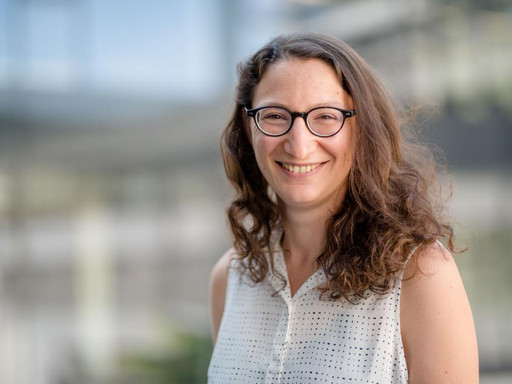
Prof. Dr.-Ing. Kay Weidenmann serves as Chair holder of Hybrid Composite Materials at the Institute of Materials Resource Management within the Faculty of Mathematics, Natural Sciences, and Materials Engineering at Augsburg University. His research focuses on developing innovative composite material systems with particular emphasis on hybrid metal-ceramic structures and lightweight construction solutions. Previously, he held positions at the Karlsruhe Institute of Technology (KIT) where he was nominated as associate professor in 2015 and completed his habilitation in Materials Science in 2012. Doctorate (Dr.-Ing.) in Mechanical Engineering, Universität Karlsruhe (TH), 2006 Habilitation in Materials Science, Faculty of Mechanical Engineering, 2012 Study of materials science at University of Stuttgart, 1998-2003 Weidenmann's research spans the development of process routes for hybrid materials (particularly fiber-reinforced polymer-metal hybrids), materials science evaluation of lightweight construction concepts, microstructure-mechanical property relationships in composites, and novel in-situ test methods for damage characterization. His work bridges fundamental materials science with practical engineering applications, particularly in automotive and aerospace sectors where weight reduction is critical. Analysis of his recent publications reveals strong focus on interpenetrating metal-ceramic composites, advanced characterization techniques using X-ray CT, and innovative manufacturing approaches including additive manufacturing of metallic glass structures. His work increasingly incorporates computational methods, machine learning for microstructure analysis, and sustainability considerations through composite recycling research. KIT Certificate "Academic Leadership" (2014) Baden-Wuerttemberg certificate in university didactics (2009) Prof. Weidenmann leads an active research group comprising postdoctoral researchers and graduate students working across multiple research areas including processes, materials and mechanics, condition monitoring, and robotics. His group maintains strong industry collaborations and pursues both fundamental research and applied projects addressing real-world engineering challenges in composite materials. Current work focuses on self-healing composites, sustainable recycling methods, and advanced characterization of hybrid material systems.