Michalis Vazirgiannis is a Professor at LIX, École Polytechnique (France) leading the Data Science and Mining (DaSciM) group. With academic backgrounds in Physics (Athens University), AI (Heriot-Watt University), and Informatics (Athens University), he has conducted research at Fraunhofer, Max Planck MPI, and INRIA/FUTURS while teaching at institutions across Greece, France, China, and Spain. His research spans Machine/Deep Learning for Graphs (GNNs, graph kernels, embeddings) Text Mining & NLP (Graph-of-Words, biomedical text analysis) Combinatorial Optimization for pandemic forecasting and energy systems Event/Anomaly Detection in time series and sensory data Industrial collaborations with Airbus, Google, Tencent, and BNP . He has supervised 29 completed PhD theses, published over 250 papers, and received prestigious awards including Marie Curie and Tencent Rhino-Bird Fellowships. His team leads the ANR-HELAS Chair (2020-2025) focusing on heterogeneous data deep learning.
Pere-Pau Vázquez is an Assistant Professor in AI for Visual Computing at the Computer Vision Lab, TU Wien, Austria . Previously, he held academic positions at the ViRVIG Group and Facultat d'Informàtica de Barcelona (UPC) , where he taught courses in Programming, Computer Graphics, and Visualization for over 20 years. His research focuses on Information Visualization, Scientific Visualization, Medical Data Visualization, Molecular Visualization, and AI applications to Visual Computing . Current Teaching : Data Visualization, Fast Realistic Rendering, Information Visualization, Medical Images, Scientific Visualization, Virtual Reality, and 3D Medical Visualization. Former PhD Students : Elena Molina, Alexandra Cortez, Jesús Díaz, Pedro Hermosilla, Eva Monclús. His scientific awards include the Best PhD Thesis Award (UPC, 2003), Best Student Paper Award (SPIE, 2012), and Best Paper Award (International Conference on Computer Graphics Theory and Applications, 2013). Recent publications explore AI integration in biomedical visualization, molecular data analysis, and interactive techniques for volume rendering. He serves on the EuroGraphics Executive Board as Secretary and is active in steering committees for EuroVis and Visual Computing for Biology and Medicine . His work bridges Computer Graphics, Artificial Intelligence, and Human-Computer Interaction , with applications in medical and molecular data analysis.
Paolo Rota is a tenure-track Assistant Professor at the University of Trento, affiliated with the Department of Information Engineering and Computer Science (DISI) and the Center for Mind/Brain Sciences (CIMeC). His research lies at the intersection of computer vision, machine learning, and multimodal AI, with a strong emphasis on vision-language models and activity recognition. His research interests include zero-shot action recognition, temporal action localization, open-world recognition, and person image synthesis. He explores how large multimodal models can be leveraged for practical applications in video analytics and industrial AI, often developing training-free or source-free adaptation methods that improve model generalization. Recent publications show a consistent trend in utilizing large vision-language models (e.g., CLIP, LMMs) for tasks such as image classification, domain adaptation, and action recognition, emphasizing simplicity, zero-shot capabilities, and real-world applicability. His work frequently appears in top venues including CVPR, NeurIPS, ICCV, and ICIAP. He actively mentors PhD students including Benedetta Liberatori, Jiaqi Liu, Yan Shu, Shiyao Xu, and Alessandro Conti, often co-advising with faculty such as Elisa Ricci and Nicu Sebe. He also contributes to teaching, including delivering lectures on machine learning for the MSc in Data Science program. He co-founded Mountain Maps, a startup using AI to enhance outdoor navigation and mountain exploration. His work bridges academic research and practical innovation, aiming to increase the real-world impact of AI systems.
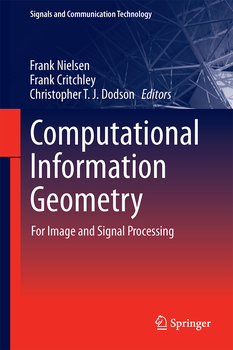
Frank NIELSEN is a Professor at École Polytechnique with expertise in information geometry, data science, and machine learning. He holds a PhD (1996) and HDR (2006) in computer science and has established himself as a leading researcher in geometric approaches to information science. His educational background includes a PhD in computer science (1996) followed by a Habilitation à Diriger des Recherches (HDR) in 2006, the highest academic qualification in France that qualifies one to supervise doctoral candidates. Dr. NIELSEN's research focuses on the Geometric Science of Information , where he develops theoretical frameworks for understanding data through geometric and information-theoretic lenses. His work bridges Computational information geometry Statistical manifold theory Bregman divergences and their applications Machine learning with geometric foundations High-dimensional data analysis He aims to address the challenge of inappropriate data representation in current Data Science by building a theory of Computational Information Geometry to enable Intrinsic Data Science with principled distances. His extensive publication record shows a clear trend toward developing geometric frameworks for understanding statistical divergences, with recent work focusing on Bregman geometry, Fisher-Rao metrics, and their applications in machine learning. His research spans theoretical developments in information geometry to practical implementations like the pyBregMan Python library, demonstrating both theoretical depth and practical relevance. Dr. NIELSEN has made significant contributions through his teaching and publications. He has taught courses at École Polytechnique including INF442, INF517, and INF591. His authored textbooks include Introduction to HPC with MPI for Data Science (2016), A Concise and Practical Introduction to Programming Algorithms in Java (2009), and Visual Computing: Geometry, Graphics, and Vision (2005). He has also edited influential volumes such as Computational Information Geometry for Image and Signal Processing (2016) and Geometric Theory of Information (2014). He actively organizes and participates in academic events, serving on program committees for major conferences including GSI (Geometric Science of Information), CVPR, and ICCV. His work has established him as a key figure in the growing field of geometric approaches to information science.
Mariano Cabezas is a researcher in medical imaging and computer vision, currently affiliated with Macquarie University and as an affiliate at the University of Sydney . His work focuses on automating brain MRI analysis for pathologies like multiple sclerosis, Alzheimer's disease, and tumors, with additional contributions to UAV image analysis. PhD in Computer Science (2013), University of Girona MSc in Automation, Computation, and Systems (2010), University of Girona BSc in Computer Science (2009), University of Girona Research Interests : Specializes in magnetic resonance imaging , lesion detection , deep learning , and image processing , with applications in multiple sclerosis , hearing loss , and UAV-derived ecological data . His recent work includes federated learning frameworks for cross-site MS lesion segmentation and pseudo-labeling techniques for longitudinal brain volume estimation. Publication Trends : Over the past five years, his research has emphasized federated learning (4 articles), lesion segmentation (9 articles), and UAV image analysis (3 articles), with a strong focus on clinical validation and cross-institutional collaboration. Labs & Collaborations : Contributed to the NIC-VICOROB group at the University of Girona and maintains affiliations with the Research Institute of the Hospital Vall d'Hebron (VHIR) in Barcelona and Macquarie University in Sydney. Actively develops open-source tools hosted on GitHub.
Dr. Jose Manuel Sánchez Peña is a Full Professor at Universidad Carlos III de Madrid (UC3M), affiliated with the Grupo Universitario de Tecnologías de Identificación (GUTI). His research focuses on precision agriculture technologies, optoelectronics, and neuroscientific interfaces. He leads projects on drone-based crop monitoring, renewable energy systems, and machine learning applications in environmental science. Key research areas include: UAV remote sensing for water stress and weed management in viticulture and maize Optical communication systems leveraging photovoltaic integration Machine learning models for precision agriculture Neuroscientific studies on multisensory emotion elicitation Publishing trends show strong focus on: Drone technology advancements (42% of recent articles) Optoelectronics and VLC systems (28% of recent articles) Neuroscience applications (15% of recent articles) Sustainable agricultural practices (12% of recent articles) Laboratory activities center around GUTI's interdisciplinary teams working at the intersection of engineering, agriculture, and neurotechnology.
Julian Fierrez is a Full Professor at the School of Engineering, Universidad Autonoma de Madrid. With an h-index of 74 and over 20,000 citations, his work spans biometrics, signal/image processing, artificial intelligence, and human-computer interaction. Key research areas include: Biometric anti-spoofing and DeepFakes detection Mobile and behavioral biometrics Bias/fairness in AI systems Biometric applications in e-health and education Security in multimodal biometric systems His recent publications show strong focus on deep learning applications for biometric security, with specific subfields including fake detection, keystroke authentication, facial analysis for Parkinson detection, and privacy-preserving AI. He serves as Associate Editor for multiple IEEE and Elsevier journals. Scientific distinctions include: IAPR Young Biometrics Investigator Award (2017) Miguel Catalan Award to Best Researcher under 40 (2017) EURASIP Best PhD Award (2012) EBF European Biometric Industry Award (2006) Prof. Fierrez leads the BiDA Lab and supervises students like Ruben Tolosana and Aythami Morales. Current projects include BBforTAI (Biometrics and Behavior for Unbiased & Trustworthy AI) and PRIMA (Privacy Matters). He also contributes to standardization efforts in biometric evaluation.
Cecilio Angulo Bahón is a full Professor at the Polytechnic University of Catalonia (UPC), affiliated with the Barcelona School of Industrial Engineering (ETSEIB) and the Department of Systems, Automatics and Industrial Informatics Engineering . He leads research in Artificial Intelligence and Robotics , with significant contributions to healthcare data analytics, digital twins, and human-robot collaboration. His research spans machine learning for medical data harmonization, generative adversarial networks in health informatics, and evolutionary algorithms for control systems. Recent publications focus on synthetic healthcare data generation, climate-resilient agriculture , and UMAP-based data analysis . His work bridges AI theory with practical applications in industrial and healthcare domains. Scientific awards include the Sant Jordi 2023 Digital Polytechnic Initiative Award . He has supervised doctoral candidates like Carlos Flores-Vázquez and N. Raya, with key collaborations at the IDEAI-UPC Intelligent Data Science and AI Research Group and the Institute of Robotics and Industrial Informatics (CSIC-UPC).
Raul Adrian Oset Sinha is an Associate Professor in the Department of Mathematics at the Faculty of Mathematics, University of Valencia, Spain. His research is centered on singularity theory, differential geometry, and topology, particularly focusing on stable maps, geometric invariants, and the geometry of singular surfaces. His work lies at the intersection of Geometry and Topology , Singularity Theory , and Global Analysis . He investigates the geometric structure of mappings from manifolds, especially in low dimensions, analyzing projections, curvature properties, and topological invariants of singular images. The trends in his publications reveal a consistent focus on stable mappings , projections of surfaces , and classification of singularities . His recent work explores axial curvature, frontal surfaces, and augmentations, contributing to the understanding of geometric behavior in higher codimensions and corank-one settings. He is a member of the research group GEOSING: Singularities, Generic Geometry and Applications , collaborating with leading experts such as M. A. S. Ruas, F. Tari, and K. Saji. His publications appear in journals like Mathematische Annalen , Advances in Geometry , and Journal of Singularities . Oset Sinha earned his PhD from the University of Valencia in 2009 under the supervision of Dr. Maria del Carmen Romero Fuster. His thesis, Topological invariants of stable maps from 3-manifolds to three-space , laid the foundation for his ongoing research in singularity theory. He has advised students and supervised research, though specific names are not listed. He actively collaborates internationally and contributes to the academic community through peer reviewing and editorial work.
Irene del Canto Serrano is a Researcher in the Department of Electronic Engineering at the School of Engineering, Universitat de València. Her work integrates biomedical engineering with cardiac electrophysiology, focusing on the interaction between mechanical forces and electrical activity in the heart. She is actively involved in two key research groups: GRELCA (Cardiac Electrophysiology group) and i2N (Electronic Instrumentation in Medical and Nuclear Physics), reflecting her dual expertise in physiology and instrumentation. Education: PhD in Biomedical Engineering, Universitat Politècnica de València (2015). Thesis: Estudio de las modificaciones farmacológicas de los efectos electrofisiológicos producidos por el estiramiento local miocárdico a partir de técnicas dinámicas de cartografía eléctrica, en un modelo experimental de corazón aislado de conejo , supervised by Dr. David Moratal Pérez and Dr. Francisco Javier Chorro Gascó. Her research interests center on cardiac electrophysiology , particularly mechanoelectric feedback , myocardial stretch , arrhythmia mechanisms , and pharmacological modulation using experimental models. She also explores cardiac imaging , especially cardiac MRI for strain and deformation analysis, and applies machine learning to improve detection and classification in myocardial infarction. Her recent publications highlight a strong trend toward integrating biomarkers (e.g., ferritin), iron therapy , and cardiac function recovery in heart failure, showing translational relevance. Her 15 most recent publications reflect a consistent focus on experimental cardiology using isolated heart models, pharmacological interventions (ranolazine, GS967, eleclazine), and advanced imaging techniques. She investigates how drugs affect stretch-induced arrhythmias, evaluates MRI-based strain changes post-iron therapy, and develops AI tools for cardiac image analysis. These works span basic science (e.g., CaMKII inhibition) to clinical applications (e.g., Myocardial-IRON trial analysis). Scientific Awards: No scientific awards mentioned in the provided text. Advising and Grants: While no formal students or grants are listed, her role as a postdoctoral researcher and active publication record suggest involvement in mentoring junior researchers and contributing to funded projects, particularly within the GRELCA and i2N groups. She has co-authored numerous experimental studies, indicating strong collaborative and project-based research activity. Labs and Teams: Irene is affiliated with two prominent research groups at Universitat de València: GRELCA (Cardiac Electrophysiology group) , which studies arrhythmia mechanisms and therapeutic interventions, and i2N (Electronic Instrumentation in Medical and Nuclear Physics) , which develops advanced tools for medical diagnostics. These affiliations underscore her interdisciplinary approach, combining physiology, engineering, and data science.
Angel Merchan Perez is a faculty member at the Universidad Politécnica de Madrid , affiliated with the College of Computer Science and the Computer Systems Architecture and Technology Department . He is a key member of the Center for Biomedical Technology (CTB) since 2011 and the Technologies for Health Sciences Research Group since 2018. His work bridges neuroscience and computational technologies, focusing on ultrastructural analysis of the brain. Doctoral Postdoc: Harvard Medical School (1992-1995) Current Projects: Cajal Blue Brain Project, Human Brain Project His research focuses on developing advanced 3D electron microscopy techniques (FIB-SEM) for synaptic reconstruction, enabling quantitative analysis of synapse distribution and density in rat, mouse, and human cerebral cortex . He also contributed to image-analysis software like Espina for automated synapse detection. Recent publications highlight his expertise in: 3D Synaptic Mapping in Hippocampal Neurons Neurodevelopmental Disorder Pathology (Schizophrenia, Autism) Thalamocortical Circuit Complexity Mitochondrial Distribution in Neuropil Software Tools for Electron Microscopy
Dr. José Luis Calvo Rolle serves as a Professor in the Department of Industrial Engineering at the School of Engineering, Universidade da Coruña (UDC), specializing in Systems Engineering and Automation. His research focuses on intelligent control systems, fault detection, and virtual instrumentation within the Cybernetic Science and Technology Research Group. Teaches across multiple programs including Master's in Industrial Computing and Robotics, Textile Technology, and Occupational Risk Prevention Coordinates thesis supervision across Industrial Engineering and related disciplines His research spans intelligent control systems and optimization, with significant contributions in virtual sensors, fault detection, and AI-driven modeling for industrial applications. Current projects integrate machine learning with industrial processes for naval construction, wastewater treatment, and precision livestock farming, demonstrating cross-disciplinary impact from energy systems to agricultural technology. Recent publications reveal strong trends in applying deep learning to industrial metaverse frameworks, wastewater optimization, and livestock monitoring systems. His work bridges theoretical control engineering with practical implementations in energy management, naval manufacturing, and sustainable agriculture, frequently utilizing dimensionality reduction and one-class classification techniques. Dr. Calvo Rolle actively mentors students through thesis supervision across multiple engineering disciplines and coordinates research projects with diverse funding sources including the European Commission, Spanish National Research Agency, and industrial partners like Navantia and Telefónica. His laboratory work centers on the Cybernetic Science and Technology Research Group, developing testbeds for industrial automation, virtual instrumentation, and AI-driven monitoring systems. Current initiatives include digital twin implementations for naval manufacturing and smart energy management systems.
Ignacio Arganda Carreras is an Associate Professor at the Universidad del País Vasco/Euskal Herriko Unibertsitatea (UPV/EHU) and an Ikerbasque Research Associate, affiliated with the Donostia International Physics Center (DIPC). His research focuses on biomedical computer vision, with a strong emphasis on deep learning applications in microscopy and medical imaging. Key areas include bioimage analysis pipelines, domain adaptation for cross-modal image segmentation, and AI-driven solutions for healthcare diagnostics. He has contributed extensively to open-source tools like BiaPy, CartoCell, and DL4MicEverywhere, which advance accessibility to deep learning in bioimaging. His work bridges computational methods with biological and medical challenges, addressing issues like 3D object detection, super-resolution imaging, and automated classification in microscopy and clinical settings. Research highlights include developing the MitoEM and Nucmm datasets for mitochondria and neuronal nuclei segmentation, as well as innovative applications in wound healing modeling and aquaculture monitoring. His methodologies emphasize reproducibility, generalization, and mitigation of overfitting in deep learning models.
Jose David Martin Guerrero is a Professor in the Department of Electronic Engineering at the School of Engineering, Universitat de València. His research is conducted within the Intelligent Data Analysis Laboratory (IDAL), focusing on the intersection of quantum computing, machine learning, and biomedical applications. His research interests span Quantum Machine Learning , Reinforcement Learning for Quantum Control , Deep Learning for Medical Image Analysis , and Long-COVID Symptom Trajectory Modeling . He applies advanced AI techniques to solve complex problems in physics, healthcare, and engineering, particularly in modeling prostate cancer, hemodialysis, and post-COVID neurological and functional impairments. The recent publications highlight a strong trend toward integrating quantum computing with classical machine learning, especially in developing quantum neural networks, quantum autoencoders, and reinforcement learning for quantum gate optimization. Simultaneously, a significant body of work uses clustering, deep learning, and Bayesian modeling to analyze longitudinal clinical data from multicenter studies like LONG-COVID-EXP, aiming to understand symptom persistence and recovery patterns in post-COVID patients. Dr. Martin Guerrero earned his PhD from the Universitat de València in 2004 with a thesis on unsupervised techniques for web trend detection and collaborative filtering-based recommendation systems, supervised by Dr. Emilio Soria Olivas and Dr. Paulo Jorge Gomes Lisboa. His work demonstrates active collaboration across disciplines, particularly in clinical research involving multicenter studies, and in quantum computing applications in physics and finance. While no specific grants are mentioned, his involvement in large-scale clinical studies and quantum computing research suggests significant project leadership and funding acquisition. He leads research within the Intelligent Data Analysis Laboratory (IDAL) , which focuses on self-organizing maps, clustering, learning vector quantization, and their applications in security, healthcare, and quantum systems.
Dr. Palanichamy Naveen is an Assistant Professor in the Department of Electronics and Communication Engineering at Dr. N.G.P. Institute of Technology, India. His research lies at the intersection of computer vision, machine learning, and signal processing, with applications in healthcare, control systems, and academic policy. He actively collaborates with researchers globally, including institutions in the Czech Republic, and has contributed over 60 publications to academic literature. His research interests span Computer Vision , Deep Learning , Image and Video Processing , Signal Processing , and Optimization Algorithms . He also explores interdisciplinary topics such as academic performance appraisal and sports analytics. His work reflects a strong commitment to both technical innovation and institutional improvement in engineering education. The recent trend in his publications demonstrates a dual focus: applying AI to solve real-world problems in medical imaging and industrial control, while also contributing to academic governance through models for faculty evaluation and research incentivization. This blend of technical and administrative research highlights his broad impact in engineering academia. Scientific Contributions: Developed lightweight transformer models for retinal disease detection from OCT scans Proposed novel bio-inspired optimization algorithms for PID controller tuning Designed frameworks for faculty performance appraisal and research contribution assessment Created a relative grading system for ODI cricket player rankings Dr. Naveen is actively involved in academic discourse and knowledge dissemination through preprint platforms and peer-reviewed journals. While no formal advising or grant information is available in the text, his extensive publication record and international collaborations suggest active mentorship and research leadership. He is also engaged with academic networks like SciProfiles and Multidisciplinary Digital Publishing Institute, contributing to the broader scholarly ecosystem.