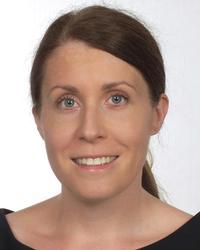
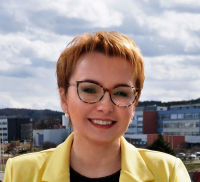
Monika Gabryś-Sławińska is a Professor at the Department of Polish Literary History , part of the Faculty of Languages, Literatures and Cultures at the University of Maria Curie-Skłodowska (UMCS). Her research spans 19th- and 20th-century Polish literature , focusing on Stefan Żeromski , historical journalism , text editing , voice emission , and museology . MA in Polish Philology (1998, UMCS) PhD in Literary Studies (2007, UMCS) Habilitation in Literary Studies (2016, UMCS) Her research interests include political commentary in historical press , media's role in cultural identity , and sociolinguistic trends . She has edited over 29 academic volumes and authored 5 monographs. Scientific awards: Bronze Cross of Merit KEN Medals (Bronze, Silver) 8 Rector's Awards (UMCS) Lublin Mayor's Medal (2019) She has participated in 5 research grants , organized 35 academic conferences , and contributed extensively to Annales UMCS as a scientific editor.
Professor Agnieszka Zabłocka-Kos is a faculty member at the Institute of Art History, University of Wrocław, specializing in Central European architectural history and urbanism. Her work focuses on 19th-20th century architecture, with particular emphasis on Wrocław/Breslau, including post-war reconstruction, national identity construction, and sacred space design. Professor, University of Wrocław Specialist in 19th-20th century Central European architecture Director of postdoctoral internships (NCN FUGA III) Recipient of multiple Rector's awards for research and teaching Research Themes: Urban development in Central Europe, political architecture in Poland/Germany, sacred architecture of the 19th century, post-war modernism, industrial architecture revitalization. Her students have produced award-winning theses on topics like Wrocław urban blocks, Silesian architects, and post-industrial adaptations. Scientific Contributions: Notable works include the edited volume Architecture in the 'long' 19th century (2019), multiple articles on Breslau's architectural conflicts, and international projects on Central European sacred architecture. She has supervised 33 master's and 5 doctoral theses, with several student works published as books. Dettloff Prize for dissertation (1992) Rector's awards for research and didactic achievements International projects with universities in Berlin, Freiburg, and Leipzig Advisor for Wrocław's Monument Office and City Development Bureau Her teaching integrates interdisciplinary approaches, linking art history with political, economic, and social contexts. She promotes student research popularization through conferences, exhibitions, and publications.
Professor Paweł Chmura is a Full Professor at Wrocław University of Health and Sport Sciences, specializing in Sports Sciences with a focus on football performance analysis. He serves in the Department of Individual and Team Sports, where he conducts research on exercise physiology, training load monitoring, and physical activity analysis in soccer players. With over 130 publications, Professor Chmura is a recognized expert in sports science and also holds a UEFA A coaching license. Professor Chmura's research interests center on exercise physiology, particularly in the context of team sports. His work extensively examines repeated maximum effort capabilities, physical activity analysis in soccer players, and monitoring training loads. He has developed innovative concepts such as the Psychomotor Fatigue Threshold and investigates how environmental factors like temperature and air quality affect athletic performance. His research bridges the gap between theoretical sports science and practical coaching applications, making significant contributions to football performance optimization. Professor Chmura's extensive publication record demonstrates a consistent focus on soccer performance analysis, with recent work expanding into multidisciplinary approaches including physiological, psychological, and tactical aspects of the game. His research shows increasing sophistication in methodology, incorporating advanced monitoring technologies and comprehensive analysis frameworks that consider multiple performance indicators simultaneously. This evolution reflects broader trends in sports science toward integrated, holistic approaches to athlete performance. Professor Chmura actively supervises the Motosoccer Student Research Club and invites master's and doctoral students to collaborate on research projects related to football, exercise physiology, game analysis, and motor preparation. His mentorship extends beyond formal academic supervision to practical coaching guidance, leveraging his UEFA A coaching certification to provide students with both theoretical knowledge and practical field experience. As a UEFA A-licensed football coach and tennis instructor, Professor Chmura maintains strong connections between academic research and practical sports applications. He leads the Motosoccer Student Research Club, which provides hands-on research opportunities for students interested in sports science. His dual expertise in academic research and practical coaching creates a unique environment for applied sports science research that directly impacts coaching methodologies and athlete development.
Joanna Grela is a Professor at the Department of Comparative Civilization Studies within the Faculty of Philosophy at Jagiellonian University (UJ) in Kraków, Poland. She holds habilitation in cultural studies (2016, SWPS University, Warsaw), a doctorate in religious studies (2004, Jagiellonian University), and is a certified Tibetologist (2000, INALCO, Paris). Her academic credentials also include an MA in philosophy (1996, Jagiellonian University) and postgraduate studies in gender (2009, Jagiellonian University). Her educational background includes: 2004: PhD in Humanities in religious studies, Jagiellonian University 2000: Diplôme Unilingue de Langue et Civilization Orientales de Tibétain, Institut National des Langues et Civilizations Orientales (INALCO), Paris 1996: Master of Philosophy, Jagiellonian University 2009: Postgraduate studies in gender, Jagiellonian University Professor Grela's research focuses on Tibetan, Himalayan, and Mongolian cultures, with particular emphasis on pre-Buddhist cults and their contemporary representations in popular culture, societal transformations, Tibetan ethnic and cultural identity, cultural stereotypes, and the comparative anthropology of Buddhism. Her work bridges religious studies, cultural anthropology, and Tibetan studies, examining both historical traditions and their modern adaptations. She has made significant contributions to understanding how traditional Buddhist practices interact with contemporary social contexts, digital technologies, and global cultural flows. Her scholarly output reveals consistent engagement with Tibetan religious culture, Buddhist textual traditions, and the adaptation of Buddhist practices in modern contexts. She has extensively explored the relationship between pre-Buddhist traditions and contemporary religious practices, the role of deities in Tibetan Buddhism, and the transformation of Buddhist thought in different cultural settings including Thailand and Poland. Her more recent work addresses how Buddhism is adapting to digital environments and contemporary social challenges. Her notable achievements include: 2017: Pro Arte Docendi Award from the Rector of Jagiellonian University Multiple teaching awards (2011/12, 2012/13, 2014/15) Membership in the International Association of Buddhist Universities (IABU) Collaboration with the Centre d'Etudes Himalayennes CNRS Professor Grela has led significant research projects including 'The impact of secularization and schooling on socio-religious relations between ritual specialists and the lay community in the Rebkong region' (2018-2020) and 'The Common Buddhist Text Project' (2009-2016). Her work demonstrates a strong commitment to both scholarly research and teaching excellence, with numerous publications spanning academic journals, edited volumes, and encyclopedia entries. She maintains active international collaboration and has presented her research at conferences across Europe and Asia.
Przemysław Kordos is a Professor at the University of Warsaw , affiliated with the Faculty of Liberal Arts , where he serves as Coordinator for the Development of the Modern Greek Philology Program . He holds two PhDs in Humanities (2007, 2019) and was awarded the Loukis Papaphilippou Seat of Advancement in Modern Greek scholarship. Education: MA in Ethnology and Cultural Anthropology (University of Warsaw, 2001) MS in Sociology (University of Warsaw, 2002) PhD in Humanities (University of Warsaw, 2007) Second PhD in Humanities (University of Warsaw, 2019) His research interests span: Contemporary Modern Greek and Cypriot literature Polish-Greek cultural relations (philhellenism) Social and ethnographic issues in Greece and Cyprus Travel literature analysis Fantasy literature's cultural implications His scientific work reveals a focus on linguistic assimilation in foreign language learning (via fMRI studies), historical parallels between Polish and Greek independence movements, and critical analyses of Cypriot folk culture's politicization. Key scientific awards include: Loukis Papaphilippou Seat (University of Warsaw) Internships at EKPA and IKY (Greece) Scholarships at IMXA (Greece) and MUNI (Czech Republic) His academic contributions include cataloging 60+ Polish travel accounts to Greece, analyzing the shift from travel literature to tourism discourse, and examining the Hellene-Romios dichotomy's role in modern Greek identity construction.
Dr. Monika Dacka is an Assistant Professor at the Department of Developmental Psychology, Faculty of Social Sciences, John Paul II Catholic University of Lublin. Her research focuses on personality development, procrastination behaviors, moral intelligence, and psychosocial challenges across life stages. Academic Rank: Assistant Professor Institution: John Paul II Catholic University of Lublin Key Research Areas: Developmental Psychology, Personality Psychology, Adolescent Risk Behaviors Her recent work examines time perception in digital contexts, the quarter-life crisis, and moral development in young adults. She actively reviews for journals like Annales Universitatis Mariae Curie-Skłodowska and Seminare. Poszukiwania naukowe . Dr. Dacka supervises master's theses on topics spanning adolescent procrastination, helicopter parenting, and social media challenges. She contributes to educational workshops on judicial mediation, forensic psychology, and pandemic-era coping strategies. Notable projects include the adaptation of the Developmental Crisis Questionnaire (DCQ-12) and participation in international conferences on Kazimierz Dąbrowski's psychological theories. Her publications address chronic fatigue in adolescents, sexual abuse prevention, and health behavior transformations.
Katarzyna Wrońska is a Professor at the Institute of Pedagogy, Jagiellonian University in Kraków , where she also serves as an Erasmus+ Programme Coordinator . Her academic work spans pedagogical theory, educational philosophy, and historical analyses of learning systems. She teaches courses including History of Pedagogical Thought and Practice , Philosophy of Education , and Contemporary Pedagogical Trends , primarily for graduate students. Her research focuses on intersections between liberalism and education, historical pedagogical models (notably John Locke's theories), Christian humanism in curriculum development, and ethical dimensions of self-instruction. She examines autonomy in universities, competition dynamics in learning environments, and civility as an absent pedagogical discourse. The 15 most recent publications reveal trends in three domains: (1) Liberal Educational Philosophy (2012-2024), analyzing autonomy, competition, and state roles; (2) Historical Pedagogy (2011-2021), particularly Polish Enlightenment-era reforms; and (3) Educational Ethics (2005-2023), covering Christian values, civil society, and moral instruction during authoritarian regimes. She supervises doctoral and master's students in pedagogy, though specific advisees aren't named. Consultations for students occur weekly at Batorego Street 12, room 15, during academic year 2024/25, with appointments required via email.
Dr. Joanna Gutral-Sutherland is an Assistant Professor at SWPS University , affiliated with the Faculty of Design in Warsaw and the Department of Social Applications of New Technologies . She also contributes to the Centre for Climate Action and Social Transformations (4CAST) . Her research focuses on: Social expectations and psychological needs Personality trait development across the lifespan Climate change impact on well-being Mental health stigma and prevention Psychoeducation and cognitive-behavioral therapy Self-concept and temporal comparisons Scientific recognitions include: Professor Zbigniew Pietrasiński Award (2016) Podcast of the Year 2022 for "Gutral Gada" Vivelo Top Creators 2024 She teaches statistics, psychological research methodology, and personal skills development at SWPS University, while providing individual cognitive-behavioral psychotherapy and coordinating UX specialization programs.
Dr. Grzegorz Kotłowski serves as an Assistant Professor at the University of Gdańsk's Faculty of Languages within the Institute of Classical and Slavonic Studies, Division of Classical Philology. He concurrently holds the significant administrative position of Deputy Dean for Students Affairs at the Faculty of Languages, demonstrating dual expertise in academic scholarship and institutional leadership. His research centers on Classical Philology with intense specialization in Latin epigraphy, particularly the documentation and analysis of Neo-Latin inscriptions in historical churches of Gdańsk (notably St. Mary's Church) and Warmia (Frombork Cathedral). Dr. Kotłowski's work bridges philological rigor with historical contextualization, examining epitaphs, sepulchral plates, and commemorative texts from the early modern period to reconstruct social hierarchies, religious practices, and cultural identities within Gdańsk's multicultural urban landscape. His methodological contributions extend to digital approaches in Neo-Latin studies, addressing data acquisition and dataset creation challenges. Recent publications (2020-2022) reveal a highly focused epigraphic output, with over twenty articles detailing specific monuments while collectively forming a comprehensive corpus of Gdańsk's Latin funerary heritage. His collaborative multi-volume series with Elżbieta Starek— Łacińskie inskrypcje w kościołach Gdańska (covering Mariacka Basilica, Śródmieście, and Oliwa) and Łacińskie inskrypcje w kościołach Warmii (Frombork)—establishes foundational references for regional epigraphic studies. No scientific awards are documented in available sources. Administrative responsibilities as Deputy Dean for Students Affairs indicate active engagement in academic governance, though specific advising roles or grant funding remain unreported in current materials. The absence of laboratory or team descriptions suggests individual or small-collaboration research models centered on archival and field-based epigraphy.
Dr. Sabina Owsianowska is a Lecturer at the Faculty of Tourism and Recreation , University School of Physical Education in Cracow , Poland. She has been actively involved in teaching Polish and international students since 2006, particularly through the LLP-Erasmus program. MA in Tourism Studies (University School of Physical Education in Cracow, 2001) PhD in Humanities (University School of Physical Education in Cracow, 2005) Her research focuses on tourism anthropology , examining tourism as a cultural and social phenomenon , with special interest in: Socio-cultural dimensions of leisure Gender issues in tourism Media influence on tourism Semiotics of tourist experiences Cultural and heritage tourism Her academic contributions include: Co-editor of Anthropology of Tourism in Central and Eastern Europe (Rowman & Littlefield, 2018) Editorial board member of Folia Turistica journal since 2014 Co-editor of multiple thematic issues in tourism anthropology Dr. Owsianowska has: Published 9 book chapters Contributed to refereed journals and conference proceedings Authored critical reviews of contemporary tourism research Key collaborative projects include work with: Dr. Marek Banaszkiewicz Prof. Nelson Graburn Prof. Maria Della Lucia Dr. Elena Giudici
Sylwia Janiak-Kobylińska is a Polish conductor, educator, and artistic leader currently serving as the Dean of the Faculty of Conducting, Composition, and Music Theory at the Stanisław Moniuszko Academy of Music in Gdańsk. She is President of the SAJ Foundation Supporting Young Artists, founder of the Baltic Philharmonic Orchestra of the Youth, and an active participant in international music competitions and festivals. Her work spans symphonic and opera conducting, artistic direction of multidisciplinary projects, and pedagogical leadership. Her research interests focus on Orchestral Conducting Contemporary Music Interpretation Artistic Education for Youth Symphonic and Opera Collaboration Cultural Management in Music Interdisciplinary Art Projects Her recent artistic projects, such as the inUnity. Contemporary Music from Gdańsk album and the Homage to Szymborska concert series, highlight collaborations between classical and jazz composers, youth orchestras, and interdisciplinary teams. These works emphasize themes of unity, cultural heritage, and innovation in music education. Scientific awards and recognitions include Meritorious for Polish Culture badge (2023) Antoni Wit Award at the G. Fitelberg Conducting Competition Multiple Rector’s Awards at the Academy of Music in Gdańsk Pomeranian Artistic Award in 'Artistic Hope' category As an educator, she leads orchestral workshops, mentors students across multiple faculties, and pioneered the 4C’s in Music Art program (Creativity, Collaboration, Critical Thinking, Communication). Her leadership in the SAJ Foundation and Baltic Philharmonic Orchestra of the Youth has fostered over 1000 young musicians since 2011.
Dr. Anna Rogos-Hebda is an Assistant Professor at the Faculty of English, Adam Mickiewicz University in Poznań, Poland. She is actively involved in research and teaching in the fields of cognitive and historical linguistics, with a strong emphasis on diachronic semantics, emotion terminology, and corpus-based analysis. Faculty of English, Adam Mickiewicz University Researcher in Cognitive and Historical Linguistics Active contributor to international academic conferences Her research interests center on the language of emotions , conceptual metaphor theory , and the diachronic development of abstract categories in English and Polish. She employs corpus linguistics and cognitive semantics to investigate semantic change, particularly in Middle and Late Modern English. Her work explores how emotions such as hope, belief, and hate are linguistically encoded and evolve over time. The recent articles reflect a consistent focus on diachronic cognitive linguistics , with themes including semantic change in emotion terms , conceptualization of social categories (e.g., beggars, refugees, immigrants), and political and ideological discourse . Her methodology is predominantly corpus-based, often involving quantitative and multivariate analysis of lexical usage across time and cultures. She has not been awarded any formal scientific prizes or fellowships mentioned in the text. Dr. Rogos-Hebda has served as an assistant editor for Studia Anglica Posnaniensia (2001–2010) and has been actively involved in organizing academic events such as the History of English Language in Poznań (HEL-P) and Figurative Thought and Language (FTL) conferences. She has received research support through scholarships from the University of Helsinki and Otto Friedrich Universität, Bamberg, as well as a conference grant from the Foundation for Polish Science. She is a member of several professional organizations, including Societas Linguistica Europea (SLE), Polish Association for the Study of English (PASE), International Society for the Linguistics of English (ISLE), and The Philological Society (TPS). She regularly presents her work at major international conferences and contributes to collaborative research projects, particularly with scholars like Małgorzata Fabiszak and Karolina Krawczak-Glynn.
Dr. Anna Grudecka is an Assistant Professor at the Warsaw School of Economics , affiliated with the Department of International Business . Her work bridges marketing, international business, and cultural studies. Research Focus: Consumer behavior in global markets, country-of-origin effects, cultural values in branding, and digital platform dynamics. Publications: Recent studies explore cross-border e-commerce, charitable crowdfunding, and the interplay of cultural values with digital marketing strategies. Her work spans 2015–2025, with recent emphasis on pandemic-related shifts and multi-sided platform economics. Awards: No scientific awards explicitly mentioned in available sources. Advising: No student names provided in public records.
Prof. Małgorzata Lipowska is a distinguished psychologist and speech therapist at the University of Gdansk’s Faculty of Social Sciences, Department of Developmental Psychology and Psychopathology. Her academic career spans over two decades, focusing on clinical psychology, child and adolescent psychotherapy, and the intersection of neuropsychology with cross-cultural research. Habilitation in Psychology (2012), Ph.D. in Psychology (2000), Master’s in Psychology (1996) Current roles: Provincial Consultant for Clinical Psychology, Head of postgraduate programs in Social Sciences, Applied Behavior Analysis, and Early Support for children with developmental disorders Her research interests include: Child neuropsychology: Dyslexia, Dyscalculia, ADHD Developmental psychology: Language development, Special Educational Needs Body image: Cross-cultural perspectives, Stigmatization Environmental impacts: Air pollution on cognitive development, Nature exposure benefits Recent publications highlight her cross-national collaborations (Poland, China, Vietnam, Bosnia, Egypt) and interdisciplinary approach combining psychology, public health, and environmental science. Awards include the Silver Cross of Merit (2016) and multiple Rector’s Medals. She leads clinical training programs and chairs academic committees while maintaining active research and mentorship roles.
Dr. Joanna Macalik is a Lecturer in the Department of Marketing Management at Wrocław University of Economics. Her academic work focuses on the intersection of marketing theory and practical applications across multiple domains including personal branding, museum marketing, and regional branding. Dr. Macalik's research interests span several interconnected domains of modern marketing. She has made significant contributions to understanding personal branding, particularly among startup leaders and young professionals. Her work examines how individuals construct and leverage their personal brands to enhance business performance and career advancement. Additionally, she has conducted extensive research on museum marketing, investigating how cultural institutions communicate with their audiences and contribute to regional branding efforts. Her studies on influencer marketing, particularly during the COVID-19 pandemic, demonstrate her ability to address timely and relevant marketing challenges. Analysis of Dr. Macalik's publication record reveals a clear trajectory of research focused on branding across different contexts. Her work consistently bridges theoretical marketing concepts with practical applications, often using empirical research methods. The publications show a progression from traditional marketing communication topics toward more contemporary digital and social media applications. Notably, her research frequently employs case study methodologies, with a particular focus on the Wroclaw region in Poland, suggesting strong local engagement alongside broader theoretical contributions. Dr. Macalik has advised numerous students and contributed to various research projects, though specific details about her mentoring activities are not widely publicized. Her work has likely contributed to curriculum development in marketing communication, personal branding, and digital marketing within her department.