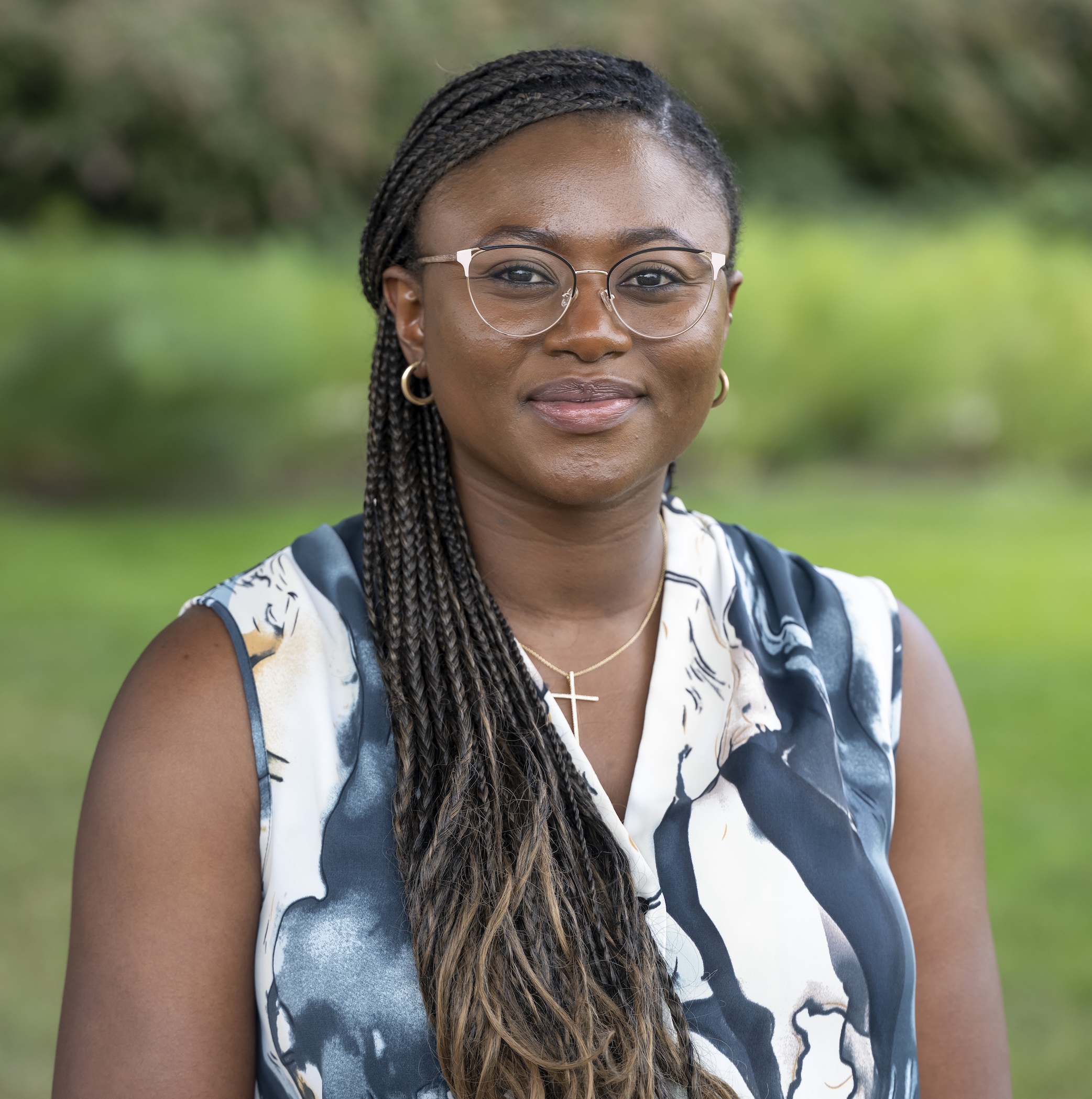
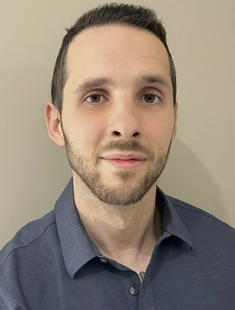
Hannah K. Bako is an Assistant Professor at the School of Data Science , University of Virginia, leading the ViDAR Lab . Her work bridges data visualization, human-computer interaction (HCI), and design, focusing on enhancing creativity through computational tools and example-aided workflows. Recruiting students for Fall 2026 Program Committee member for IUI'26, VISCOMM, and VIS'25 Research explores: How examples inspire visualization design processes Techniques to improve diversity in automated design generation Code augmentation strategies for D3.js authoring Semantic decomposition of visualization design workflows Teaching : Spring 2026 course DS 2003: Communicating with Data . Recent News : August 2025: Became Assistant Professor at UVA SDS July 2025: Two papers accepted at IEEE VIS'25 May 2025: Completed PhD dissertation defense
Ehsan Amjadian serves as an Adjunct Associate Professor at the University of Waterloo while holding industry leadership positions. He currently acts as Artificial Intelligence Fellow at BMO Canada (Bank of Montreal) and previously served as Head of AI Acceleration & Innovation at RBC (Royal Bank of Canada), where he led advanced AI product development from ideation to production deployment. Education Ph.D. in Deep Learning & Natural Language Processing, Carleton University Research Interests Dr. Amjadian's work centers on applied Artificial Intelligence with emphasis on Natural Language Processing, Deep Learning, and Generative AI systems. His research extends to Computer Vision applications for satellite imagery, Data Protection frameworks, and AI solutions for financial systems and climate modeling. Industry patents reflect his focus on translating theoretical AI into production-grade systems for real-world financial and environmental challenges. Scientific Awards No scientific awards, fellowships, or medals were mentioned in the source material. Advising and Grants The provided text contains no information regarding graduate student supervision, research grants, or funded projects. Labs and Teams While leading AI innovation teams at RBC and BMO, no academic laboratory affiliations or university research teams were specified in the source material.
Katrina Heijne is a researcher and educator at the Faculty of Industrial Design Engineering (IDE), Delft University of Technology, where she is affiliated with the Department of Design, Organisation and Strategy and the Creative Processes group. She actively contributes to teaching courses such as Creative Facilitation and Deliberate Creativity, and is involved in the Connected Creativity Minor & Lab. Her research focuses on creative processes, including visual thinking, idea generation techniques, co-design, and group facilitation in design contexts. She explores how structured methodologies can enhance creativity in both individual and collaborative settings, particularly in urban design and educational environments. The recent publications of Katrina Heijne reflect a consistent focus on creativity support tools, ranging from AI as an inspiration source to systematic roadmaps for creative problem solving. Her work bridges design theory and practical facilitation, emphasizing evidence-based approaches to creativity. She was nominated for the TU Delft Education Team Award in 2024 for her contributions to the Connected Creativity initiative. Katrina also serves as an advisor/consultant for SeriousCreativity, applying her academic expertise in real-world innovation settings. She has co-authored multiple publications on creative methodologies and is actively engaged in research projects such as U_CODE - Urban Collective Design Environment, which investigates collaborative urban design processes.
Jonny Holmström serves as Professor at Umeå University's Department of Informatics and directs the Swedish Center for Digital Innovation (SCDI), which he co-founded. He holds an additional affiliation as Professor at the Centre for Transdisciplinary AI, focusing on bridging theoretical research with practical AI applications across sectors including forestry, banking, and public services. His work appears in premier journals such as MIS Quarterly, Information Systems Journal, and Journal of Information Technology. His research centers on digital innovation, transformation, and entrepreneurship, examining how organizations navigate digital change through platform governance, AI integration, and entrepreneurial storytelling. Recent work investigates generative AI's impact on business model design, data work practices, and organizational transformation, emphasizing practical frameworks for managing digital transitions while addressing resistance and ethical considerations. Analysis of his 15 most recent publications (2024-2026) reveals a dominant focus on generative AI's organizational implications, particularly its role in reshaping platform governance, facilitating innovation through prompting, and transforming business models. Concurrent themes include digital platform evolution, data flow management in innovation networks, and citizen-centric digital government design, reflecting a consistent emphasis on practical implementation challenges in real-world contexts. Holmström leads significant research initiatives including a 28 MSEK program at Umeå University and the Kempe Foundation-funded SCDI AI Business Lab. His current project 'Using No-Code AI to Teach Machine Learning in Higher Education' (2024) aims to democratize AI education. He serves on editorial boards for CAIS, EJIS, Information and Organization, and JAIS, and heads the Swedish Center for Digital Innovation research group while participating in 'AI and society' collaborations. He founded and directs the Swedish Center for Digital Innovation (SCDI), which operates the SCDI AI Business Lab exploring practical AI applications for businesses. His work integrates with the Centre for Transdisciplinary AI to advance cross-sector AI implementation, particularly in public services and sustainable business models within the circular economy framework.
Hari Subramonyam is an Assistant Professor (Research) at Stanford University's Graduate School of Education with a courtesy appointment in Computer Science. He serves as the Ram and Vijay Shriram Faculty Fellow at Stanford's Institute for Human-Centered AI (HAI) and is a core faculty member of Stanford HCI. Subramonyam earned his PhD in Information from the University of Michigan under advisor Eytan Adar. His research focuses on the intersection of Human-Computer Interaction (HCI) and Learning Sciences, specifically developing AI systems to augment human learning through cognitively informed design, co-design with educators, and transformative learning experiences. His work prioritizes ethical AI, responsible design practices, and human values in technology creation. Research spans generative AI for education, human-AI interaction paradigms, and accessible learning technologies. Subramonyam's publications demonstrate strong focus on human-centered AI systems for education, visualization, and creative applications. His recent work (2023-2025) concentrates on generative AI interfaces for writing assistance, educational tools, and collaborative systems, while maintaining consistent exploration of visualization techniques and AI transparency frameworks. Awards & Honors: Best Paper Award at CHI (2025, 2020, 2019) Honorable Mention Award at CHI (2025) Best Paper Award at IUI (2021) Ram and Vijay Shriram Faculty Fellow HAI Hoffman Yee Grant (2024) Cover Story in Interactions Magazine (2024) Advising & Grants: Leads 27 students including PhD advisee Neha Rajagopalan (co-advised) and diverse MS/BS researchers. Received HAI Hoffman Yee Grant (2024) for "Integrating Intelligence: Building Shared Conceptual Grounding for Interacting with Generative AI" as co-investigator. Teaches courses on data visualization (CS 448B) and educational technology design (EDUC 432). Labs & Leadership: Core faculty at Stanford HCI group, directing research on human-centered AI systems. Organizes workshops including "Tools for Thought" (CHI 2025) and "Human–AI Coevolution" (ICLR 2025). Maintains collaborations with National University of Singapore and University of Michigan.
Thomas Joiner is the Robert O. Lawton Distinguished Professor of Psychology at Florida State University and Director of the FSU Psychology Clinic, affiliated with the Department of Psychology in the College of Arts and Sciences. Education: University of Texas, Austin (1993) Dr. Joiner's research centers on suicide prevention and the interpersonal theory of suicide, with emphasis on suicidal behavior in military and first-responder populations. His work investigates eating disorders, mood disorders, personality disorders, and acute suicidal affective disturbance (ASAD), integrating interpersonal, cognitive, and neurobiological perspectives to understand depression and related conditions. His recent publications reveal consistent focus on suicide risk factors across diverse populations, including military personnel, firefighters, and youth with bipolar disorder. Key themes include stressful life events, rumination mechanisms, occupational suicide rates, and theoretical advancements like ASAD, demonstrating interdisciplinary approaches spanning clinical, epidemiological, and neurobiological domains. Scientific Awards: Robert O. Lawton Distinguished Professorship Dr. Joiner actively mentors graduate and undergraduate students, currently recruiting for Fall 2026 and offering Directed Individual Study opportunities. His research is supported by grants funding the Laboratory for the Study and Prevention of Suicide-Related Conditions and Behaviors, which serves as a training ground for doctoral students and provides community mental health services through the FSU Psychology Clinic. He directs the Laboratory for the Study and Prevention of Suicide-Related Conditions and Behaviors, which conducts cutting-edge research on suicide prevention across military, occupational, and clinical settings. Current projects examine lethal means safety, ASAD, and suicide epidemiology, with interdisciplinary collaborations spanning psychology, neuroscience, and public health.
Martin Schreier is a Professor and head of the Institute for Marketing Management at the Vienna University of Economics and Business (WU). His research focuses on marketing, product development, consumer behavior, and user-driven innovation. A key finding from his work demonstrates that crowdsourced product ideas yield higher sales and gross margins compared to designer-generated products, as evidenced by a Japanese enterprise study showing €10 million revenue growth over three years. His studies also highlight how labeling products as user-ideated enhances consumer trust and sales performance. Schreier's research spans diverse topics, including the psychological drivers of customization, blockchain applications in marketing, and the role of consumer communities in innovation. Recent studies examine generative AI in luxury product co-creation, groundedness in retail experiences, and ethical implications of crowdsourcing. His work bridges academic insights with real-world applications, advising companies on leveraging user creativity and designing effective innovation incentives. He has published extensively on the economic and psychological impacts of consumer-driven innovation, with a focus on cross-cultural differences and market-specific strategies. His findings challenge traditional R&D models, emphasizing the commercial potential of user participation in product development across non-luxury sectors.
Orit Shaer is a Professor and co-Chair of Computer Science at Wellesley College , where she founded and directs the Human-Computer Interaction (HCI) Lab . Her work bridges tangible interaction, human-AI collaboration, and mixed-reality interfaces, focusing on transforming work and learning environments through embodied technologies. Education : B.A. from Academic College of Tel-Aviv, M.S. and Ph.D. in Computer Science from Tufts University Research interests center on novel human-computer interaction paradigms : Human-AI collaboration frameworks Tangible and embodied interface design Mixed-reality applications for productivity Genomics collaboration tools STEAM education technologies Recent publications highlight human-AI co-creation (CHI 2024), temporal dynamics in automated work (CHIWork 2024), and pandemic-era remote interaction studies (IEEE Pervasive Computing 2021). Awarded: NSF CAREER Award Agilent Technologies Research Award Google App Engine Education Award Pinanski Prize for Excellent Teaching Best Paper Honorable Mention (ACM CHI 2014) Honorable Mention (CHIWork 2022) She co-founded the international CHIWork Symposium and chairs the ACM TEI conference. Her NSF IRES grant (2022) supports US-German collaboration on human-automation interaction.
Dr. Cory L. Cobb is an Assistant Professor at Texas A&M University and a licensed psychologist in Texas. A prevention scientist trained in clinical psychology, he directs a community-centered research program focused on reducing mental-health disparities among Latino populations through culturally sensitive, technology-enabled interventions. Education Postdoctoral Research Fellow, Prevention Science – University of Texas at Austin, 2021 Ph.D., Counseling Psychology – University of Central Arkansas, 2019 M.S., Mental Health Counseling – University of Central Arkansas, 2016 B.A., Psychology – University of Central Arkansas, 2014 A.A., General Education – Pulaski Technical College, 2012 Research Focus Dr. Cobb’s scholarship integrates prevention science and clinical psychology to examine sociocultural determinants of mental and behavioral health in Latino communities. His multi-level investigations span individual, family, and community factors, with a strong emphasis on digital mental-health technologies for scaling evidence-based interventions. He is particularly interested in resilience mechanisms that can be leveraged to offset discrimination, acculturative stress, and limited access to services among underserved Latinos. Scientific Recognition NIMH R34 Grant: “Latino Youth and Family Study-III” APS Rising Star Award – 2025 APA Samuel M. Turner Early Career Award for Distinguished Contributions to Diversity in Clinical Psychology National APA Convention Research Award – 2015 Associate Editor, American Journal of Health Behavior (2023–present) Associate Editor, International Journal of Intercultural Relations (2022–present) Associate Fellow, Texas A&M Telehealth Institute Mentorship & Service Committed to lifelong mentorship, Dr. Cobb trains undergraduate, graduate, and postdoctoral scholars in research design, data analysis, and career development. He fosters inclusive mentoring environments that emphasize publication writing, professional networking, and dissemination of culturally informed science.
M. Beatrice Fazi is an Associate Professor in Digital Humanities at the School of Media, Arts and Humanities , University of Sussex. Her work bridges philosophy, computation, and digital culture, focusing on the ontological and epistemological implications of technoscience. She has authored the monograph Contingent Computation (2018) and contributes extensively to debates on AI, algorithmic thought, and computational aesthetics. Research Focus: Philosophy of computation, media theory, generative AI, and digital humanities. Key Projects: Investigating abstraction in AI, explainability in deep learning, and synthesis in large language models. Grants & Awards: British Academy/Leverhulme Grant (2017-2018) Fellow, Higher Education Academy Collaborations: Affiliated with the Sussex Digital Humanities Lab , Digital Theory Lab (NYU) , and Antikythera (Berggruen Institute) . She has held visiting roles at New York University and the Center for Advanced Internet Studies.
Dr. Regina Miranda is a Professor of Clinical Psychology, Cognitive Psychology, and Health Psychology at Hunter College's School of Arts and Sciences. Her research focuses on understanding suicide ideation and its prevention in youth, with a particular emphasis on cultural and cognitive factors affecting marginalized communities. She co-founded the Youth Suicide Research Consortium to address diversity gaps in mental health research. Dr. Miranda holds a BA from Yale University (1997), a PhD from New York University (2004), and completed a postdoctoral fellowship at Columbia University's College of Physicians and Surgeons. Her work integrates clinical practice, cultural competence, and translational research to improve mental health outcomes for underrepresented groups. Education: BA in Psychology, Yale University (1997) PhD in Clinical Psychology, New York University (2004) Post-doctoral Fellowship, Columbia University (2004–2005) Research Interests: Dr. Miranda's research explores suicide ideation through four core themes: cognitive processes underlying suicidal thoughts, cultural influences on mental health, developmental trajectories of suicidal behavior, and innovative interventions to disrupt hopelessness. Her lab (The Miranda Lab) employs mixed-methods approaches, including neurophysiological assessments and community-based participatory research, to address systemic inequities in youth suicide prevention. Labs/Teams: The Laboratory for the Study of Youth Cognition and Suicide investigates how cognitive and cultural factors intersect to influence suicide risk. Current projects include developing culturally responsive assessment tools and testing interventions targeting future-oriented thinking. Mentorship & Advocacy: Dr. Miranda prioritizes empowering students from underrepresented backgrounds, emphasizing authenticity in academic and clinical work. Her mentorship style integrates personal and professional development, reflecting her commitment to addressing disparities in mental health research and care.
Daragh Byrne is an Associate Teaching Professor at the Carnegie Mellon University School of Architecture , with courtesy appointments in the School of Design and Human-Computer Interaction Institute (HCII) . Previously an Assistant Research Professor at Arizona State University’s School of Arts, Media and Engineering, he manages the NSF-funded XSEAD project and leads MakeSchools , a catalog of making practices in higher education. PhD in Digital Media from Dublin City University (2011) M.Res. in Design and Evaluation of Advanced Interactive Systems from Lancaster University B.Sc. in Computer Applications from Dublin City University His research explores experiential media systems through Internet of Things and tangible interaction design , focusing on how computational tools can capture human experience and enable multidisciplinary collaboration. Key projects include Sentient Concrete (thermochromic architectural surfaces) and Spooky Technology (speculative design around invisible technologies). He has developed CMU’s Designing for the Internet of Things course since 2016, creating hands-on curricula for connected product design. Recent publications examine creative physical computing education , AI-driven documentation systems , and XR-enabled skill training . Awards include multiple CMU research grants and the CHI 2018 Best Paper Award . He actively advises PhD and Masters students in Computational Design, emphasizing human-centered design and speculative technology research .
Andreas Fink serves as a University Professor at the Institute of Psychology within the Faculty of Natural Sciences at Karl-Franzens-University Graz, Austria. His research bridges cognitive neuroscience, psychology, and sports science with a particular emphasis on understanding the neurobiological foundations of creative thinking and emotional processing. As a leading figure in creativity neuroscience, Professor Fink employs advanced methodologies including EEG, fMRI, and ambulatory monitoring to investigate how physical activity influences brain function and cognitive performance. His work has significant implications for mental health interventions and cognitive enhancement strategies across various populations. Professor Fink's research interests center on three interconnected domains: biological mechanisms of cognitive and affective functions, creativity neuroscience, and the relationship between physical activity and brain health. His laboratory investigates how physical exercise influences neural processes related to creativity, emotion regulation, and cognitive performance through both basic neuroscience research and applied interventions. A hallmark of his approach is examining EEG alpha power during creative ideation tasks while simultaneously exploring how running, dance, and other physical activities can improve mental health outcomes and cognitive functioning. His work spans from laboratory-based experimental designs to real-world interventions with ecological validity. Analysis of Professor Fink's recent publication trajectory reveals a sophisticated evolution in his research focus, with increasing emphasis on the intersection of physical movement, brain function, and creative cognition. His work has progressively incorporated more ecologically valid approaches using ambulatory monitoring to study creativity in natural contexts, while maintaining rigorous neuroscience methodology. A consistent theme across his publications is neuroplasticity, particularly how physical exercise interventions induce structural and functional brain changes, with special attention to hippocampal volume and white matter integrity. His research has expanded to explore specialized forms of creativity including malevolent creativity and the nuanced relationship between everyday movement patterns and creative cognition. 2009 Psychology Prize for innovative scientific or practical work for his habilitation thesis 'The neuroscientific study of creative thinking' from the Professional Association of Austrian Psychologists (BÖP) and the Austrian Psychological Society (ÖGP) Professor Fink currently leads multiple significant research initiatives funded by the Austrian Science Fund (FWF), including 'Neuronal mechanisms underlying the generation of creative solutions in complex environments' (2016-2018), 'Running Away From Depression with Your Brain and Your Heart' (2022-2025), and 'Dance and Brain' (2024-2026). These projects demonstrate his commitment to translating basic neuroscience findings into practical interventions for mental health. While specific doctoral students aren't listed in the provided materials, his position as a full professor and principal investigator on multiple grants indicates active mentorship of junior researchers and graduate students. His collaborative approach is evident through interdisciplinary partnerships spanning psychology, neuroscience, sports science, and clinical practice. Professor Fink is an active member of the 'Complexity of Life' profile area at the University of Graz and participates in the 'Brain and Behavior' research network. His laboratory environment fosters interdisciplinary collaboration, bringing together researchers from diverse backgrounds to tackle complex questions about the brain-mind-body connection. Current projects suggest his team employs a multimodal approach combining neuroimaging, physiological monitoring, behavioral assessments, and intervention studies to comprehensively investigate how physical activity influences brain function and creative cognition. His 'Running Away From Depression' project exemplifies his translational research focus, directly connecting basic neuroscience findings to clinical applications for mental health improvement.
Jinghui Cheng is an Associate Professor at the Department of Computer Engineering and Software Engineering at Polytechnique Montréal . He holds a PhD in Computer Science from DePaul University (2017), preceded by an MSE and BSE from Xi’an Jiaotong University, China. His research uniquely bridges Human-Computer Interaction (HCI) with Software Engineering , focusing on technologies that support domain experts with specialized information needs. Awards : Canada Research Chair Tier 2 in User Experience Design of Data-Driven Systems His recent work examines playful AI interactions (e.g., ChatGPT), designer-developer collaboration , and privacy motivation in UI/UX. He actively supervises PhD and Master’s students in the HCD Lab , with over 20 completed theses. Collaborations span institutions like the École Polytechnique and partnerships with researchers such as Jin L. C. Guo and Bram Adams . Cheng’s 15 most recent publications (2023-2025) reflect trends in AI-assisted design , usability in open-source communities , and ethical technology development . His grants include the AUDACE grant (2020) co-led with Dr. Gabrielle Pagé, focusing on healthcare applications.
Dr. George Fitzmaurice is a Research Fellow at Autodesk, leading the Human Computer Interaction and Visualization Research group. With over 120 publications and 95 patents, his work spans 25 years of innovation in interactive systems, focusing on technology-assisted learning , 3D visualization , and novel input techniques . His notable contributions include the Maya 1.0 UI and SketchBook Pro design, as well as pioneering Graspable UIs and Spatially-Aware Displays . Education : MIT (B.Sc. Math/CS), Brown (M.Sc. CS), Toronto (Ph.D. CS) His research explores immersive visualization and generative AI applications in design workflows, with recent work focusing on VR/AR tools like TimeTunnel for motion editing and WhatIF for AI-assisted narrative design. Current projects examine the intersection of large language models , 3D design systems , and collaborative environments . Key article themes include: Generative AI integration (3DALL-E, WorldSmith) Immersive motion analysis (AvatAR, VideoPoseVR) Creative workflow optimization (MoodCubes, Immersive Sampling) Privacy-aware VR systems (Vice VRsa) Scientific Recognition: 2019 - Inducted into ACM CHI Academy 2024 - Awarded ACM Fellow for computing contributions He has developed foundational interaction techniques like ViewCube™ and SteeringWheels™ , and his work continues to shape modern 3D UI paradigms and spatial computing approaches through projects like DreamSketch and Tesseract.