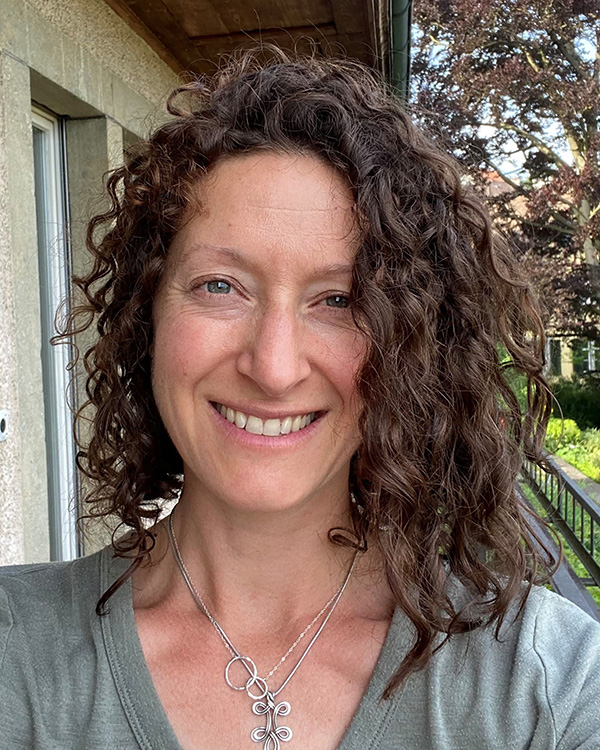
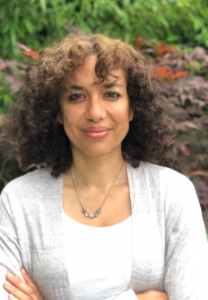
Ben Seiyon Lee is an Assistant Professor in the Department of Statistics at George Mason University's College of Science. His work bridges computational statistics, climate modeling, and environmental risk assessment. Education: PhD in Statistics, Pennsylvania State University (2020) Lee specializes in computational methods for high-dimensional spatiotemporal data and uncertainty quantification in climate models. His research explores climate change impacts on extreme hydrological events, wildfire emissions, and medical decision-making. Recent publications focus on Bayesian spatiotemporal frameworks for extreme precipitation analysis, zero-inflated spatial models, and multisector uncertainty quantification. His work addresses challenges in flood risk assessment, agricultural yield projections, and healthcare compliance metrics.
Professor Steve G Burrow is a faculty member at the School of Civil, Aerospace and Design Engineering at the University of Bristol. His research focuses on energy harvesting, vibration control, and environmental sensing, particularly in aerospace and glaciological contexts. Professor of Aircraft Systems Member of the Cabot Institute for the Environment Active in Dynamics and Control research themes His work in energy harvesting emphasizes electromagnetic transducers and nonlinear resonant structures, while environmental sensing involves deploying sensors under ice sheets to study glacial hydrology. Recent articles highlight inerter-based suspension systems, vibration absorber optimization, and broadband energy harvesting techniques. Collaborations span nonlinear mathematics, glaciology, and structural dynamics. No scientific awards were explicitly mentioned, but his research outputs demonstrate extensive contributions to power electronics and sustainable technologies.
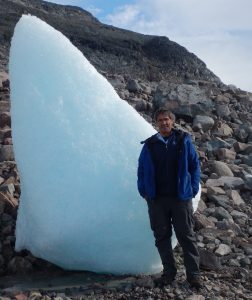
Dr. Julie Fosdick is an Associate Professor in the Department of Earth Sciences at the University of Connecticut. She directs the Basin Analysis and Helium Thermochronology Laboratory and serves as Undergraduate Research Coordinator. Her educational background includes: PhD and MS in Geological & Environmental Sciences (Stanford University) BS in Geological Sciences (UC Santa Barbara, high honors) She completed an NSF Earth Science Postdoctoral Fellowship at the University of Arizona. Fosdick's research reconstructs: mountain-building and erosion processes through: Detrital thermochronology of orogenic systems Sedimentary basin analysis Tectonic-sedimentation interactions Paleotopography evolution Her NSF CAREER Award supports studies of sediment recycling in Argentina's Sierras Pampeanas. Current investigations examine: Post-glacial landscape evolution in Arctic Canada Andean hinterland tectonic development San Andreas Fault dynamics through Neogene deposits Greenland paleoclimate from subglacial sediments Her lab employs multi-method geochronology and thermal history modeling. Fieldwork spans global locations including: Argentine Andes Alaskan Range Greenland ice sheet California fault systems She maintains active collaborations across geoscience disciplines.
David Al-Attar is a Professor at the University of Cambridge's Department of Earth Sciences, actively involved in theoretical and computational geophysics research. He serves as a supervisor within the Cambridge NERC Doctoral Landscape Awards (Training Partnerships) program, particularly in the CREATES initiative focusing on climate and environmental science. Education: While specific educational details aren't provided in the text, his extensive publication record and professorial position at Cambridge indicate advanced training in geophysics and applied mathematics. Research Interests: Professor Al-Attar's work spans several interconnected areas within geophysics. His primary focus includes theoretical and computational problems in geophysics, with particular emphasis on continuum mechanics as applied to Earth systems. He develops new physical and mathematical theories for understanding Earth processes, including rigorous function space methods for inverse problems and uncertainty quantification. His sea level change research aims to constrain ice sheet evolution during the last glacial period to better understand modern contributions to sea level rise. Additionally, he investigates solid Earth dynamics including seismic free oscillations, body tides, and Earth rotation, contributing to our understanding of deep Earth structure and mantle dynamics. Research Themes: His publications demonstrate expertise in adjoint methods, glacial isostatic adjustment, mantle viscosity, planetary seismology, and computational methods for geophysical problems. Recent work emphasizes 3-D Earth modeling, sensitivity analysis, and the integration of satellite observations with theoretical models. Current Projects: Potential projects for students include inverse problems related to deglacial sea level change with focus on uncertainty quantification, modern sea level monitoring using satellite data, and solid Earth dynamics particularly regarding outer core viscosity in tidal and rotational dynamics. Contact: He can be reached at da380@cam.ac.uk for research inquiries and collaboration opportunities.
Jonathan B. Martin is a Professor at the University of Florida's College of Liberal Arts and Sciences. His research focuses on hydrogeochemical processes in diverse environments including carbonate karst aquifers, coastal systems affected by sea-level change, and deglaciated watersheds in Greenland. He leads the Research Coordination Network on Carbonate Critical Zones and holds an NSF grant for Greenland watershed studies. Education: BA in Environmental Science, Wesleyan University (1980) MS in Geology, Duke University (1987) PhD in Earth Sciences, University of California, San Diego (Scripps Institution of Oceanography) (1993) Research Interests: Martin's work examines geochemical fluxes driven by biogeochemical reactions coupled with hydrological flow. This includes: (1) Water-solute-isotope dynamics in carbonate karst aquifers like Florida's Floridan Aquifer and Bahamian/Yucatan systems; (2) Coastal aquifer-estuary exchanges impacting metal mobilization and greenhouse gas fluxes; and (3) Weathering processes in deglaciated landscapes affecting global carbon cycles. His lab develops field methods to quantify submarine groundwater discharge and contaminant transport. Publications: Recent articles demonstrate strong emphasis on climate-aquifer interactions, with recurring themes including Greenland glacial meltwater biogeochemistry, coastal karst aquifer responses to sea-level rise, and carbonate mineral reactions in global carbon cycling. Work frequently integrates field measurements with geochemical modeling. Laboratory: Directs the Hydrogeochemistry Laboratory with capabilities including ion chromatography, cavity ring-down spectroscopy, nutrient autoanalysis, and fluorescence spectrometry for studies of water-rock interactions.
Professor David J.A. Evans is a distinguished glacial geomorphologist at Durham University's Department of Geography. His research spans three interconnected themes at the interface of glacial geology and Quaternary science, focusing on palaeoglaciology and the reconstruction of former glaciers and ice sheets through time. With extensive field experience across the Arctic, North Atlantic, and Southern Hemisphere, he has contributed significantly to the understanding of glacial landscapes and processes globally. BA (Hons), St. David's University College, University of Wales, Lampeter, 1982 MSc, Memorial University of Newfoundland, Canada, 1984 PhD, University of Alberta, Canada, 1988 Professor Evans' research centers on glacial landsystems, glacial sedimentology, and Quaternary palaeoenvironments of glaciated basins. His work develops conceptual landsystems models for glacial process-form relationships, with field sites ranging from the Canadian High Arctic to mid-latitude mountains. He has pioneered research connecting subglacial process-form relationships to landform development models, particularly through his studies of active temperate glacier margins in Iceland. His sedimentological work has established a genetically framed classification scheme for tills and glacitectonites. Evans has contributed to major ice sheet reconstructions worldwide, including the British and Irish Ice Sheet (through the BRITICE-CHRONO project), Laurentide Ice Sheet, and Arctic Norway. His extensive publication record demonstrates consistent research activity with 15 recent articles focusing on ice sheet dynamics, glacial landform evolution, and Quaternary environmental reconstruction across multiple continents. These works reveal a strong emphasis on methodological innovation in mapping and analyzing glacial landscapes, with increasing integration of remote sensing and quantitative approaches to understand both contemporary glacier behavior and past ice sheet dynamics. Scientific Recognition: Busk Medal (Royal Geographical Society), 2017, for excellence and originality in the study of glacial landscapes and processes and empowering the next generation Professor Evans has collaborated extensively with international research teams on major projects including BRITICE-CHRONO and has contributed to engineering geology applications through technical guides for glaciated terrains. His work bridges pure academic research with practical applications in engineering geology and environmental management. He has supervised numerous field guides and edited influential publications in glacial geomorphology. His research involves extensive fieldwork in Iceland (particularly on the Vatnajökull ice cap), the British Isles, Canadian Arctic, and other glaciated regions, often using modern glacier systems as analogues for reconstructing past ice sheets. Evans has developed significant expertise in glacial landsystem mapping and interpretation, contributing to both academic understanding and practical engineering applications in glaciated terrains.
Andrew Thompson is the John S. and Sherry Chen Professor of Environmental Science and Engineering at the California Institute of Technology. He serves as Director of the Ronald and Maxine Linde Center for Global Environmental Science and Executive Officer for Environmental Science at Caltech. With a Ph.D. from Scripps Institute of Oceanography (2006), his career at Caltech spans from Assistant Professor (2011-17) to his current Professor role since 2017. Education: B.S. in Physics from Dartmouth College (2000), C.A.S. (2001) and M.Phil. (2002) at University of Cambridge Leadership: Director of Linde Center (2023-), Academic Officer (2019-22) His research focuses on ocean circulation dynamics and physical processes governing climate systems . Key areas include: Ocean Turbulence and Submesoscale Dynamics Antarctic Circumpolar Current and Drake Passage Dynamics Climate Change Impacts on Ice Shelf Melt Rates Current projects involve ChinStrAP (Changes in Stratification at the Antarctic Peninsula), using autonomous ocean gliders to study eddy formation and air-sea exchange. His group employs idealized numerical models , remote sensing , and climate simulations to explore topics like: Warm water pathways onto Antarctic continental shelves Role of mesoscale/submesoscale eddies in ocean mixing Global overturning circulation responses to climate change Scientific achievements include the Packard Fellowship for Science and Engineering . He mentors graduate students Xiaozhou Ruan , Giuliana Viglione , and Andrew Delman , fostering interdisciplinary collaboration with institutions like Scripps Institution of Oceanography and CSIR . His group emphasizes inclusive training for early-career scientists in climate-relevant STEM careers .
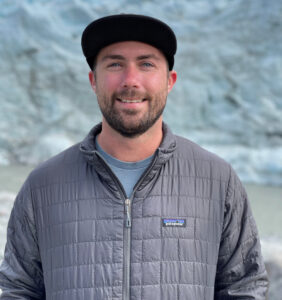
Mike Wood is an Assistant Professor at the Moss Landing Marine Laboratories (MLML) with a joint appointment in the Department of Computer Science at San José State University (SJSU). His research focuses on ice-ocean-biology interactions and sea level rise dynamics related to the Greenland Ice Sheet, utilizing satellite observations, numerical ocean models, and in situ measurements. He leads the Computational Oceanography lab at MLML. Research Themes : Ice-ocean interactions, climate change impacts on polar regions, satellite remote sensing, and computational modeling. Academic Affiliation : MLML (Computational Oceanography) and SJSU Computer Science Department. Methodologies : Numerical modeling, satellite data analysis, and field observations in Greenlandic fjords. His recent publications reveal a focus on Greenland glacial meltwater dynamics, fjord-scale oceanography, and bathymetric mapping. Mike enjoys surfing and climbing when not engaged in academic work.
Dr. Thanh-Son Pham is an ARC DECRA Research Fellow in the Geophysics Department at The Australian National University’s Research School of Earth Sciences. His research focuses on using seismic waves to study Earth’s interior structures, from polar ice sheets to the inner core. He has pioneered methods like teleseismic P-wave coda autocorrelation and coda correlation wavefield analysis, leading to breakthroughs such as detecting J-waves in the inner core and identifying an innermost inner core layer. His work has been featured in Science , Nature Communications , and international media. He holds a PhD from ANU (2019) and has supervised research projects on Antarctic seismology and earthquake source physics. Awards include the 2024 Zatman lectureship from SEDI. Current projects include probing Antarctic ice sheets via correlation seismology and advancing machine learning tools for deep Earth studies. Education: PhD in Geophysics (ANU, 2019), Graduate Diploma in Earth System Physics (ICTP, 2015), BSc in Applied Mathematics (Hanoi University, 2013) Research interests span seismic source inversion, Antarctic ice dynamics, and inner core anisotropy. His 2024 articles address Hunga Tonga eruption mechanics and PKIKP wave analysis using deep learning. Media highlights include BBC, NYT, and ANU press releases.
Prof. Flavio Anselmetti is a Full Professor of Quaternary Geology and Paleoclimatology at the University of Bern , where he has been employed since 2012. He also serves as the Managing Director of the Institute of Geological Sciences . Prior to this, he held significant roles at ETH Zurich, including SNSF Assistant Professor, and at EAWAG Dübendorf as Head of the Sedimentology Group, while remaining a Titular Professor at ETH Zurich until 2012. His academic training includes a Diploma in Geology (1990) from the University of Basel , followed by a PhD (1994) from ETH Zurich and University of Miami (USA) . He spent three years as a Postdoctoral Fellow and Research Associate at the University of Miami between 1994 and 1997. Paleoseismology : Using lacustrine and marine sediments to reconstruct earthquake and tsunami records Climate Change Studies : Investigating Holocene and Pleistocene climate shifts through sediment cores Sediment Dynamics : Analyzing source-to-sink systems and glacial sediment properties His recent publications focus on sedimentary archives in Science Advances , Quaternary Research , and Environmental Modelling and Software , with an emphasis on deep learning applications in sediment analysis , multi-proxy paleoenvironmental reconstructions , and human impact assessments over millennia. He has contributed to major projects in the Alpine foreland and Caribbean regions . Prof. Anselmetti leads the Quaternary Geology and Paleoclimatology Research Group and collaborates with international teams on ICDP-DOVE drilling campaigns and multibeam bathymetry mapping in Swiss lakes. His work extends to geohazard assessment , carbonate-siliciclastic shelf dynamics , and subaqueous fault analysis in active tectonic zones.
Jenny Suckale is an Associate Professor of Geophysics at Stanford University and a Senior Fellow, by courtesy, at the Woods Institute for the Environment. Her research focuses on reducing disaster risk through interdisciplinary approaches that combine mathematical modeling with observational data and community-driven scientific co-production. Education : Ph.D. in Geophysics from MIT (2011), MPA from Harvard Kennedy School (2006), M.Sc. in Physics (with Distinction) from Freie Universität Berlin (2002). Her group investigates extreme events across multiple natural systems, including volcanic eruptions, ice-sheet instability, permafrost disintegration, induced seismicity, and flood-risk mitigation. This work aims to identify common physical processes and risk-reduction strategies applicable across diverse hazards. Scientific awards include: Presidential Early Career Awards for Scientists and Engineers CAREER award from the National Science Foundation Contact: jsuckale@stanford.edu | Research Group: SIGMA
Professor Joy Singarayer is a leading academic in the Department of Meteorology at the University of Reading, specializing in paleoclimatology. She holds the position of Joint Head of Department (Facilities and Finance) and is actively involved in research on climate-human interactions and past environmental changes. Her work bridges climate science, archaeology, and ecology, with a focus on understanding how past climate fluctuations inform future environmental resilience. Her research interests include the impact of climate change on agriculture and water resources, human-land-climate interactions across prehistoric to modern eras, and paleoclimate reconstructions using Quaternary records. Notable projects include CROPP (Peruvian climate resilience), PRIDE (Caspian Sea biodiversity), and Amazonian paleoecology studies. Professor Singarayer has supervised numerous PhD students exploring topics like agent-based modeling of pre-Columbian cultures, Caspian Sea hydrology, and Amazonian drought responses. Her interdisciplinary approach integrates climate modeling, fieldwork, and data analysis to address global environmental challenges. She is affiliated with the University of Reading's Meteorology Department and collaborates internationally on projects like the PotASH initiative studying southern hemisphere paleolakes. Her contributions span academic leadership, policy-relevant research, and fostering inclusive academic environments through her role on the SMPCS WIDE committee.
Marcus Christl is a Lecturer at the ETH Zürich Department of Physics and Head of the Laboratory of Ion Beam Physics (LIP) . His academic profile focuses on Accelerator Mass Spectrometry (AMS) , cosmogenic nuclide dating, and environmental applications of isotope geochemistry. Office: HPK H 33, Otto-Stern-Weg 5, 8093 Zürich, Switzerland Phone: +41 44 633 38 84 / +41 44 633 65 07 Email: mchristl@phys.ethz.ch ORCID: 0000-0002-3131-6652 Dr. Christl teaches courses in Accelerator Mass Spectrometry and Quaternary Dating Methods , including: 402-0180-00L Ethics and Scientific Integrity for Doctoral Students in Physics 402-0620-00L Current Topics in Accelerator Mass Spectrometry and Its Applications 402-0621-00L Introduction to Accelerator Mass Spectrometry His research spans multiple disciplines through cosmogenic isotope analysis: Climate Science : Using 10 Be and 14 C records to reconstruct solar activity cycles and climate fluctuations over millennial timescales Geochronology : Developing novel dating techniques using 36 Cl/ 10 Be ratios for ice cores and landscape features Geomorphology : Quantifying erosion dynamics in diverse environments from the Alpine foreland to South African pediments Oceanography : Tracing Atlantic water transport patterns using 129 I– 236 U dual tracers Radiochemistry : Advancing methods for nuclear forensics and environmental pollutant analysis Recent publications reveal trends in: Refining AMS systems for analyzing transuranic elements Quantifying landscape evolution through multi-isotope approaches Understanding ocean circulation pathways using artificial radionuclides Investigating soil dynamics in glaciated and tropical environments Correlating cosmogenic production with sea level and climate changes
Daniel Farinotti is a Professor of Glaciology at the Department of Civil, Environmental and Geomatic Engineering at ETH Zurich and at the Swiss Federal Institute for Forest, Snow and Landscape Research (WSL). His work focuses on understanding glacier evolution and its impacts on water resources across mountainous regions globally. Dr. Farinotti's research interests center on glaciological modeling and its applications to water resource management. His expertise includes estimating glacier ice thickness from surface properties, long-term modeling of glacier mass changes, quantifying runoff contributions from glaciated catchments, and implications for water management in high mountain areas. His research integrates field observations, remote sensing data, and numerical modeling to address critical questions about glacier response to climate change. Dr. Farinotti's scientific achievements have been recognized with prestigious awards including the 2017 Nature Research Award for Outstanding Achievements in Review and the 2013 Award for Outstanding Contributions to Review from the Journal of Geophysical Research - Earth Surface. His publications demonstrate a consistent pattern of high-impact research across glaciology, hydrology, and climate science, with particular emphasis on the interactions between glacier dynamics and water resources. As a principal investigator, Dr. Farinotti has secured significant research funding from organizations including the Swiss National Foundation and German Federal Foreign Office. His work often involves international collaborations across multiple institutions, reflecting the global nature of glacier research and its implications for water security. He maintains active involvement in major scientific initiatives focused on glacier monitoring and climate change impacts. Dr. Farinotti leads the Glaciology research group at ETH Zurich's Laboratory of Hydraulics, Hydrology and Glaciology (VAW), which conducts fieldwork across multiple mountain ranges globally. The group employs advanced techniques including geophysical surveys, remote sensing, and numerical modeling to investigate glacier dynamics and their hydrological impacts.
Linda Bailey Hayden is a distinguished Professor and Associate Dean of Mathematics and Computer Science at Elizabeth City State University (ECSU), where she has made significant contributions to mathematics education and geoscience applications since 1980. Originally from Portsmouth, Virginia, she overcame segregation barriers to pursue her academic career, earning degrees from Virginia State University, University of Cincinnati, Old Dominion University, and American University. At ECSU, she founded the Center of Excellence in Remote Sensing Education and Research to increase minority participation in environmental science. Dr. Hayden's research interests span mathematics education, applications of mathematics in geoscience, remote sensing technologies, and environmental science. Her work uniquely bridges theoretical mathematics with practical applications in climate science, ice sheet monitoring, water quality assessment, and Antarctic research. She has pioneered educational approaches that connect mathematics with real-world environmental challenges, particularly through NASA-related programs and the GLOBE initiative. Her publication record reveals a strong focus on mentorship, educational outreach, and interdisciplinary research connecting mathematics with environmental science. The most recent publications demonstrate her ongoing commitment to developing innovative approaches for engaging students in scientific research, particularly through hackathons, remote sensing applications, and climate change education. Her work consistently emphasizes increasing participation of underrepresented groups in STEM fields. Presidential Award for Excellence in Science, Mathematics, and Engineering Mentoring (2003) Emerald Honors for Educational Leadership from US Black Engineer magazine Mathematically Gifted & Black Black History Month 2017 Honoree An Antarctic ice shelf was named after her institution by the Advisory Committee on Antarctic Names Dr. Hayden has dedicated her career to mentoring minorities and women in STEM fields through various programs including the Nurturing ECSU Research Talent (NERT) initiative, the Home-Institution Support Program, and numerous NASA-funded educational projects. Her grant history reflects strong partnerships with federal agencies to offer interdisciplinary training in remote sensing and environmental science. She has established multiple educational partnerships focused on enhancing undergraduate involvement in research, particularly for underrepresented students. As founder of the Center of Excellence in Remote Sensing Education and Research at ECSU, she has built a significant infrastructure for geoscience research and education, developing cyberinfrastructure for remote sensing of ice sheets and creating numerous educational programs from middle school through undergraduate levels. Her work has connected ECSU with major research institutions and federal agencies, establishing the university as a hub for remote sensing education in minority-serving institutions.