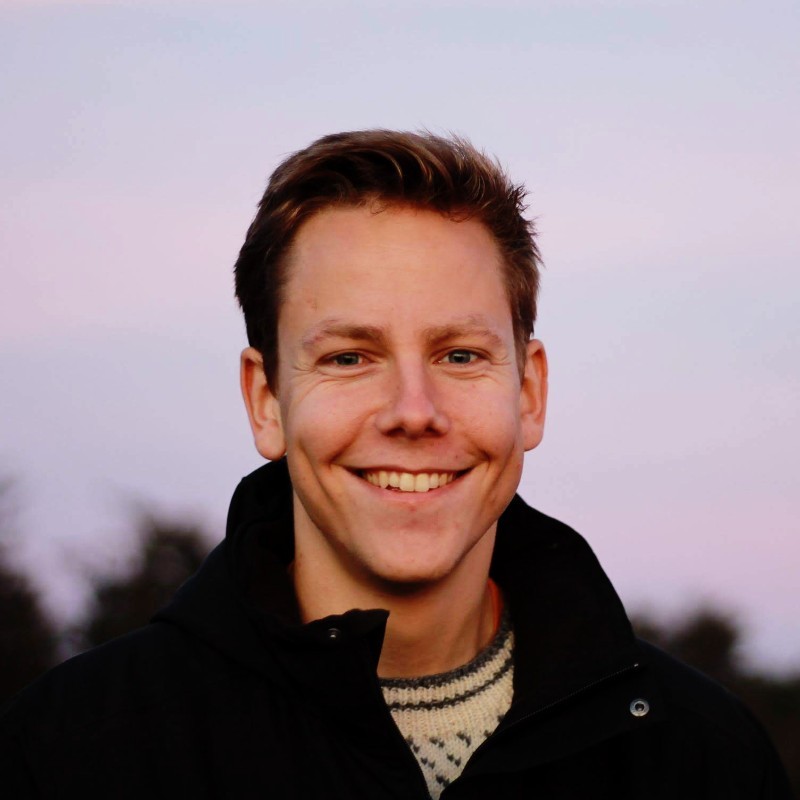
Professor Eigil Kaas is affiliated with the Niels Bohr Institute at the University of Copenhagen . His work spans climate dynamics , numerical weather prediction (NWP) , and atmospheric modeling . As former Section Head of Climate and Computational Geophysics , he leads research on climate-chemistry coupling and sea ice impacts. Education : MSc (1987) and PhD (1993) in Meteorology from University of Copenhagen Research Focus : Climate dynamics and physics Numerical methods in atmospheric models Machine learning for weather prediction Arctic sea ice-climate interactions Thunderstorm electricity and radiation Coupled atmosphere-ocean modeling Article Trends : Recent work combines neural networks with radiative transfer optimization Focus on storm dynamics and gamma-ray flashes Extreme precipitation modeling under climate change Pioneering tidal flow studies in Faroe Island fjords Teaching Legacy : Instructor of Atmospheric Physics and Dynamical Meteorology courses Developed zonally averaged climate model for educational use Mentored 12 PhD/MSc students with DMI/ECMWF collaborations Professional Roles : Chairman of BFI Group 28 (Geosciences & Climate) Scientific Advisory Committee member at ECMWF Project lead in EU ENSEMBLES and PEGASOS initiatives
Aslak Grinsted is an Associate Professor at the Physics of Ice, Climate and Earth section within the Niels Bohr Institute at the University of Copenhagen . His research focuses on ice flow modeling , particularly through computational simulations of glaciological processes and climate-ice interactions. His work spans multiple subfields including ice stream dynamics , firn densification , subglacial hydrology , anisotropic ice mechanics , and Greenland Ice Sheet stability . Recent publications analyze 2D firn densification , crystal fabric anisotropy , and subglacial drainage cascades , with specific applications to the Northeast Greenland Ice Stream and Dome C ice cores. Collaboration networks show extensive work with institutions like University of Copenhagen , DARK Cosmology Centre , and Technical University of Denmark . Research outputs frequently appear in journals such as Journal of Glaciology , Nature Communications , and The Cryosphere , covering topics like ice failure strength , temperature-ice volume relationships , and grounding line migration .
John Peter Merryman Boncori serves as Head of Microwaves and Remote Sensing at the Department of Space Research and Technology, Technical University of Denmark (DTU). His research directly contributes to UN Sustainable Development Goals through advanced Earth observation techniques. His research spans Remote Sensing , Synthetic Aperture Radar , and Glaciology , with specific expertise in InSAR processing for tectonic monitoring and ice sheet dynamics. Key focus areas include: Greenland Ice Sheet velocity measurement using SAR Multi-scale analysis of active fault systems in Italy Validation of ground motion services using GNSS Subglacial hydrology modeling in polar regions Dr. Boncori actively supervises PhD research in critical areas: Crowd counting via remote sensing (CroCo project) Field-scale soil moisture mapping InSAR error characterization Ship tracking with iceberg discrimination Ice velocity retrieval using TOPS-mode SAR He leads the Microwaves and Remote Sensing group at DTU Space, developing advanced methodologies for radar interferometry and satellite-based deformation monitoring. His team maintains strong international collaborations across Europe for Earth observation projects, with particular emphasis on cryosphere and tectonic applications.
Dr. Sebastian Bjerregaard Simonsen is a Senior Researcher at DTU Space, Technical University of Denmark, specializing in glaciology, remote sensing data assimilation, and cryospheric dynamics. His work leverages satellite altimetry (CryoSat-2, Sentinel-3) to quantify ice sheet changes, with a focus on Greenland and Antarctic regions. Research Themes: Ice sheet surface processes, meltwater dynamics, firn compaction, climate modeling, and subglacial hydrology. Supervision: Major supervisor for PhD candidates Astrid Puggaard (2022–2026), Nicolaj Hansen (2019–2023), and Nicolaj H. Andersen (2017–2023). Collaborations: Partners with European Space Agency, PROMICE project, and international teams studying ice sheets. Notable Contributions: Development of Greenland gravitational mass balance datasets (2024), editorial work at Geosciences (2017–2018), and field campaigns in Greenland and Svalbard totaling over a year in the high Arctic. His research aligns with UN Sustainable Development Goals, particularly SDG 13 (Climate Action). Recent publications emphasize radar altimetry, surface roughness, and spatiotemporal density distribution in ice sheets.
Joachim Mathiesen serves as Head of Department at the Niels Bohr Institute within the Faculty of Science at the University of Copenhagen. His position indicates senior academic standing with leadership responsibilities in one of Denmark's premier physics research institutions. His ORCID profile (0000-0002-5621-5487) and institutional email mathies@nbi.ku.dk confirm his active affiliation. Professor Mathiesen's research spans multiple interdisciplinary domains including fluid dynamics in porous media, turbulence phenomena, glaciology, and computational social science. His work demonstrates strong methodological diversity, employing neutron imaging, computational modeling, and statistical analysis across different physical systems. Recent publications reveal particular focus on transport phenomena in geological formations and social network responses to crises. Analysis of his recent publications shows a clear trend toward interdisciplinary applications of fluid mechanics principles, extending from geological systems (sandstone, glaciers) to social networks. His work frequently appears in high-impact journals including Nature Physics, Water Resources Research, and The Cryosphere, indicating significant recognition within multiple scientific communities. The consistent publication record through 2024 demonstrates ongoing active research. His research collaborations span multiple international institutions, with notable partnerships in Norway (Linga), France (Le Borgne, Renard), Greenland (Hvidberg), and the United States (Goldenfeld). The department maintains strong connections with facilities for neutron imaging and computational physics research.
Lars Bolet is affiliated with the Department of the Built Environment at the Faculty of Engineering and Science, Aalborg University (AAU), Denmark. His work focuses on traffic engineering, road safety, and municipal infrastructure management. He has contributed extensively to research and public discourse on transportation systems. His research interests include: Traffic safety and accident prediction modeling Integration of hospital data in traffic risk assessment Energy-efficient transportation technologies Winter road maintenance and de-icing policies Economic impacts of traffic accidents on municipalities Sustainable urban mobility and infrastructure planning The analysis of his 15 most recent publications reveals a consistent focus on practical applications in civil and traffic engineering, emphasizing data-driven decision-making, public safety, and cost-efficiency in municipal road management. His work often bridges technical engineering solutions with socioeconomic implications, particularly in how local governments manage traffic risks and infrastructure investments. Scientific contributions and media engagement: Active contributor to traffic safety research since the 1990s Frequent media commentator on road conditions, traffic policies, and accident prevention Presenter at public and private sector events on municipal transport costs and safety investments Co-author of influential reports using real-world injury data to improve accident hotspot identification Lars Bolet has also engaged in advisory and outreach activities, including contributions to national infrastructure reporting and expert commentary in policy debates. While formal PhD supervision appears limited, he has played a significant role in applied research and knowledge dissemination. His work is closely tied to public institutions such as the Danish Road Directorate and various Danish municipalities, reflecting a career deeply integrated with practical civil engineering challenges.
Helle Astrid Kjær is an Associate Professor at the Physics of Ice, Climate and Earth department within the Niels Bohr Institute at the University of Copenhagen . With 9 years of expertise in analyzing ice core impurities via Continuous Flow Analysis (CFA) , she has participated in 6 deep ice core campaigns across both hemispheres and developed novel CFA methods for acid and phosphorus. Her fieldwork includes 9 months across 6 seasons on the Greenland ice sheet. Education: Cand. Scient. in Geophysics Research Focus: Kjær's work centers on leveraging ice core impurities to reconstruct climate processes like volcanic eruptions, sea ice dynamics, and atmospheric transport. She contributes to projects such as ice2ice , investigating abrupt climate events and nutrient fluxes in polar ice. Article Trends: Her recent publications span Greenland and Antarctic ice core chronologies, aerosol and mercury fluxes during climate transitions, and DO event spatial patterns. Methodological innovations in CFA and field equipment like the Lightweight In-Situ Analysis (LISA) box are recurring themes. External Roles: She has held positions at institutions including the Desert Research Institute (USA) , National Institute for Polar Research (Japan) , and GNS Science (New Zealand) .
Nicholas Mossor Rathmann is an Assistant Professor at the Niels Bohr Institute , University of Copenhagen , working within the Physics of Ice, Climate and Earth department. His research focuses on the rheology and dynamics of ice sheets, particularly the role of crystal orientation fabrics in large-scale ice flow, subglacial hydrology, and climate-driven ice mass changes. His recent work includes modeling firn densification, simulating crystal fabric evolution in polycrystalline ice and olivine, and analyzing the mechanical strength of glacier ice using field and remote sensing data. His publications span high-impact journals such as Nature Communications , Journal of Glaciology , and The Cryosphere . He collaborates extensively with international teams and contributes to major polar research initiatives, including the EastGRIP ice core project and Greenland Ice Sheet modeling efforts.
Dorthe Dahl-Jensen is a Professor of Geophysics at the Niels Bohr Institute, University of Copenhagen, where she leads the Ice, Climate and Geophysics research group. As Director of the Center of Excellence for Ice and Climate, she oversees major international research initiatives focused on understanding past climate through ice core analysis and modeling ice sheet dynamics. Her leadership extends to chairing the NEEM Steering Committee and previously leading the NGRIP deep drilling program. University of Copenhagen (2002-present): Professor, Niels Bohr Institute Center of Excellence for Ice and Climate: Director NEEM Deep Drilling Project: International Coordinator IPY Cluster 'Stability of the Greenland Ice Sheet': Cluster Leader Royal Danish Academy of Sciences: Member Dahl-Jensen's research focuses on reconstructing past climate records using ice cores and borehole data, with particular emphasis on the Greenland Ice Sheet. Her work combines theoretical modeling of ice flow with empirical analysis of ice core data to understand both historical climate patterns and future ice sheet behavior. She specializes in developing anisotropic flow laws to describe ice deformation and uses radio echo sounding to map ice fabric and subglacial conditions. Her current research projects include the ERC Advanced Grant WATERundertheICE and the EU FP7 Past4Future program, which aim to understand past warm periods and improve projections of ice sheet response to climate change. Her publication record demonstrates expertise across multiple disciplines, with recent work spanning glaciology, remote sensing, paleoclimatology, and climate science. The research themes consistently focus on ice sheet dynamics, climate reconstruction, and the implications of past climate changes for understanding current and future warming. Her team's work on the Northeast Greenland Ice Stream has provided critical insights into ice fabric evolution and deformation mechanisms that govern ice flow. EU Descartes Price (2008) VEGA Medal (2008) Amalienborg Prize (2009) Munch Prize (2009) Multiple foundation honors including Inge Lehman's, Christine Meyers, and Ole Rømers Foundations Professor Dahl-Jensen has advised 38 PhD and Master's students throughout her career, currently supervising 4 PhD candidates and 2 Master's students. She has secured significant research funding including the ERC Advanced Investigators Grant WATERundertheICE (2010-2014) and coordination of the EU FP7 Past4Future project. Her leadership extends to chairing the Danish National Committee for the International Polar Year and serving on numerous international scientific boards including the Scientific Council of the ISAC and the Advisory Board for IDPO. She leads the Center of Excellence for Ice and Climate and coordinates the international NEEM deep drilling program involving 14 nations. Her research group operates multiple field sites in Greenland and maintains strong collaborations with international polar research institutions. The team utilizes advanced techniques including radio echo sounding, ice core analysis, and high-resolution climate modeling to investigate ice sheet dynamics and past climate conditions.
Mads Lykke Dømgaard is a Postdoctoral Researcher at the Department of Geosciences and Natural Resource Management within the Faculty of Science at the University of Copenhagen. His research focuses on glaciology, particularly studying glaciers in Antarctica and Greenland using historical aerial images and satellite data to understand past glacier fluctuations and expand knowledge on historical glaciology. His educational background includes: PhD in Geosciences (2024) from the University of Copenhagen, with dissertation titled "Remote Sensing of the Cryosphere: Expanding Observations on Glacier Dynamics and Related Glacial Phenomena" Dømgaard's research interests center on historical glaciology, utilizing archival aerial photographs and modern satellite data to reconstruct glacier changes over decades. His work primarily examines Antarctic and Greenland ice sheets, focusing on glacier dynamics, ice shelf collapse, and the impacts of climate change on polar regions. He employs advanced remote sensing techniques including satellite altimetry and photogrammetry to analyze long-term cryospheric changes, with particular attention to ice-marginal lake systems and glacier surge mechanisms. His recent publications demonstrate a strong trajectory in polar research, with multiple high-impact papers in Nature Communications and The Cryosphere. The research shows increasing integration of historical data sources with contemporary satellite observations to understand century-scale glacier behavior and their response to climate forcing, with significant attention to both Antarctic and Greenland ice systems. Dømgaard is currently working on the AIR ANTARCTICA Project funded by the VILLUM FOUNDATION, which began as his PhD project in May 2021 under the supervision of Anders Anker Bjørk. His research has received substantial media attention, with publications picked up by over 70 news outlets, blogged about extensively, and widely discussed on social media platforms including X (formerly Twitter) and Reddit. His work has also been referenced in Wikipedia and academic platforms like Mendeley.
Karl Attard is an Assistant Professor at the Department of Biology , University of Southern Denmark (SDU), affiliated with the Nordcee and HADAL research centers. His research focuses on marine ecosystems' roles in the global carbon cycle, particularly in shallow coastal habitats such as seagrass meadows, coral gardens, and Arctic environments. He employs cutting-edge laboratory and in situ technologies to study carbon flow pathways, benthic metabolism, and biodiversity-carbon cycle linkages. Key research themes include: Quantifying organic matter production, respiration, and sequestration in coastal and deep-sea ecosystems Assessing impacts of climate change on marine carbon dynamics Exploring microbial diversity's role in biogeochemical processes Developing methodologies like aquatic eddy covariance for flux measurements His work spans Arctic Ocean hypoxia, Baltic Sea macrophyte detritus, and seagrass restoration ecology. Over 40 peer-reviewed articles since 2009 highlight his contributions to understanding benthic-pelagic coupling and ecosystem resilience under environmental stressors. Attard collaborates with interdisciplinary teams to bridge gaps between empirical fieldwork and predictive modeling, advancing both fundamental and applied marine science.
Klaus Mosegaard is a Professor at the University of Copenhagen's Niels Bohr Institute within the Physics of Ice, Climate and Earth department. His academic affiliation spans decades of research in computational geophysics and inverse problems methodology. His research focuses on computational aspects of inverse problems and geostatistics, with applications across seismology, planetary geophysics, geothermal investigations, and geomagnetism. Key contributions include development of algorithms for nonlinear inversion, particularly through Markov Chain Monte Carlo methods. His work bridges theoretical advances with practical applications in planetary seismology (including Mars interior studies), deep seismic lithosphere analysis, resource exploration, and thermal studies in Greenland ice shelves. Analysis of his 110+ publications reveals consistent innovation in probabilistic inversion techniques, with recent work integrating machine learning (particularly generative adversarial networks) with traditional geostatistical methods for reservoir characterization and facies modeling. His 2023-2025 publications demonstrate ongoing leadership in addressing dimensionality challenges in large-scale inverse problems. Best Paper Award Computers and Geosciences 2008 The Ole Rømer Grant for outstanding research in geophysics (1994) Teaching Award, Faculty of Science, University of Copenhagen (2000) Honorable Mention for Best Papers in Geophysics journal (2011) Mosegaard has delivered 25+ invited lectures on Bayesian inversion paradigms, Monte Carlo methods, and seismic inversion since 2020, including presentations at major international conferences. His research profile shows sustained external collaborations across planetary science and petroleum geophysics fields, with significant contributions to Mars interior modeling through InSight mission data analysis.
Mikkel Langgaard Lauritzen is a Postdoctoral Researcher at the Physics of Ice, Climate and Earth (PICE) section of the Niels Bohr Institute, University of Copenhagen. His primary research focuses on ice flow modeling of the Greenland Ice Sheet, combining numerical modeling with observational data to understand past and present ice sheet behavior and predict future changes. His research interests span: Glaciology and Ice Sheet Dynamics Climate Change Impacts on Polar Regions Numerical Modeling of Ice Flow Greenland Ice Sheet Evolution Geophysical Methods in Glaciology Climate-Ice Sheet Interactions Lauritzen's publication record demonstrates a strong interdisciplinary approach, bridging glaciology, climate science, and geophysics. His recent work focuses on understanding the Greenland Ice Sheet's response to climate variability, ice stream dynamics using innovative sensing techniques, and community aspects of glaciological research. He has also contributed to theoretical physics through work in effective field theory. As an educator, Lauritzen has served as a Teaching Assistant for multiple courses at the University of Copenhagen, including Electrodynamics, Complex Analysis, and Linear Algebra and Calculus, demonstrating his strong foundation in both physics and mathematics that supports his research approach.
Niels Nørmark Sørensen serves as Professor in the Department of Wind and Energy Systems at Technical University of Denmark (DTU), specializing in computational fluid dynamics for wind energy applications. His research focuses on developing high-fidelity aerodynamic models for wind turbines and complex terrain flows. His scientific expertise spans: Development of EllipSys2D/3D Navier-Stokes solvers Turbulence and transition modeling Hyperbolic mesh generation Moving grid algorithms High-performance computing implementations His work directly contributes to UN Sustainable Development Goals in renewable energy. Recent publications demonstrate strong focus on rotor aerodynamics, digital twin technology, and shape optimization. Key trends include advanced RANS solvers for airfoil design, correction models for BEM methods, and high-fidelity modeling of leading-edge erosion effects. The research consistently bridges theoretical CFD with practical wind turbine engineering challenges. He actively supervises multiple PhD projects and participates in major collaborative initiatives including IEA Wind TCP Task 47 (TURBINIA Phase II). Current projects address: Wind turbine tower vortex-induced vibrations 3D shape optimization of rotors Aeroacoustic modeling with serrated airfoils Leading edge repair performance analysis
Professor Shfaqat A Khan is affiliated with the Department of Space Research and Technology Geodesy and Earth Observation at the Technical University of Denmark . As a leading expert in Greenland ice sheet dynamics, he combines geodetic observations with glaciological modeling to study climate change impacts. Key techniques: GNSS, GRACE satellite data, altimetry Focus regions: Greenland, Arctic, High Mountain Asia Current projects: 3 active PhD studies on ice flow modeling and hydrodynamic coupling Research trends in his 2024-2025 publications reveal a comprehensive approach to ice sheet monitoring: Integrating multi-sensor data (GNSS/GRACE/ICESat) Quantifying 90+ years of glacier evolution Analyzing seismic impacts of extreme glacial events Developing Arctic-wide uplift and deformation models His work appears in 15+ major outlets including Nature and Science , with significant media coverage (300+ news outlets). As main supervisor for 5 PhD students, he drives cutting-edge research in cryospheric geophysics.