معرفی
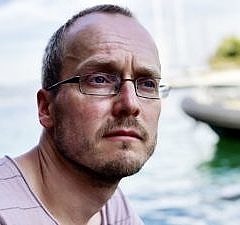
Mads Lykke Dømgaard is a Postdoctoral Researcher at the Department of Geosciences and Natural Resource Management within the Faculty of Science at the University of Copenhagen. His research focuses on glaciology, particularly studying glaciers in Antarctica and Greenland using historical aerial images and satellite data to understand past glacier fluctuations and expand knowledge on historical glaciology.
His educational background includes:
- PhD in Geosciences (2024) from the University of Copenhagen, with dissertation titled "Remote Sensing of the Cryosphere: Expanding Observations on Glacier Dynamics and Related Glacial Phenomena"
Dømgaard's research interests center on historical glaciology, utilizing archival aerial photographs and modern satellite data to reconstruct glacier changes over decades. His work primarily examines Antarctic and Greenland ice sheets, focusing on glacier dynamics, ice shelf collapse, and the impacts of climate change on polar regions. He employs advanced remote sensing techniques including satellite altimetry and photogrammetry to analyze long-term cryospheric changes, with particular attention to ice-marginal lake systems and glacier surge mechanisms.
His recent publications demonstrate a strong trajectory in polar research, with multiple high-impact papers in Nature Communications and The Cryosphere. The research shows increasing integration of historical data sources with contemporary satellite observations to understand century-scale glacier behavior and their response to climate forcing, with significant attention to both Antarctic and Greenland ice systems.
Dømgaard is currently working on the AIR ANTARCTICA Project funded by the VILLUM FOUNDATION, which began as his PhD project in May 2021 under the supervision of Anders Anker Bjørk. His research has received substantial media attention, with publications picked up by over 70 news outlets, blogged about extensively, and widely discussed on social media platforms including X (formerly Twitter) and Reddit. His work has also been referenced in Wikipedia and academic platforms like Mendeley.