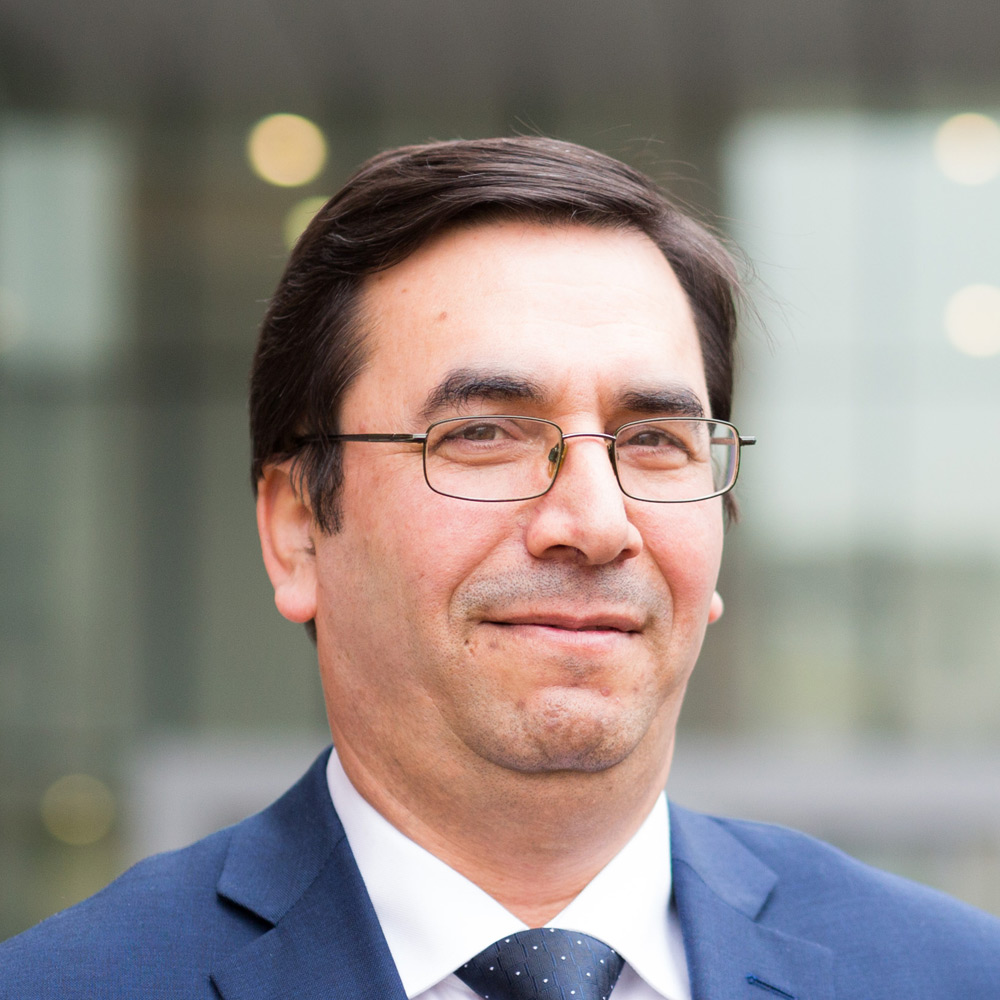
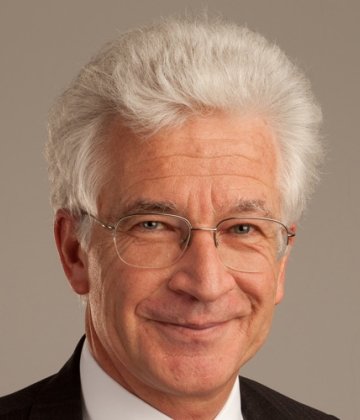
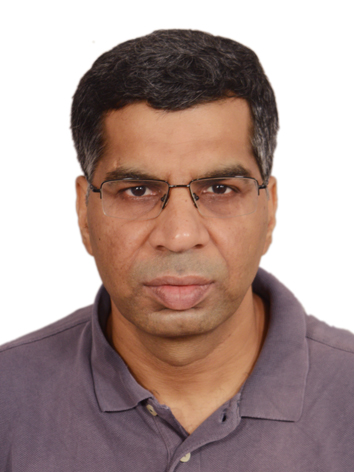
Can ÖZCAN is an Assistant Professor and Head of the Industrial Design Department at İzmir University of Economics (IUE) since 2006. He holds a PhD in Semiotics from Dokuz Eylül University and is the Director of EKOTAM Design Research and Application Center. His academic career includes roles at Izmir Institute of Technology and Yeditepe University, where he contributed to department establishment and curriculum development. Education: B.ID (Middle East Technical University), MSc/PhD (Dokuz Eylül University, Semiotics) Research focuses on Design Project Management, History of Industrial Design, Design Education, and Semiotics. He explores design's role in crime prevention, cultural industries, and food packaging through projects like 'Secure Urban Environments by Design' and 'Menemen Pottery Development Model'. Administratively, he led EKOTAM (2011–present) and managed industry collaborations in product/service design, brand development, and franchising. His courses include advanced topics in design management, semiotics, and design history. Notable projects include EU-funded urban security frameworks and brand identity studies for Turkish agricultural products. He has advised over a dozen graduate theses on topics ranging from yacht design to sustainability in cities.
Pardis Pishdad is an Associate Professor and Graduate Program Director in the School of Building Construction at Georgia Institute of Technology’s College of Design. She directs the Smart Built Environment Eco-System (Smart Bees) Laboratory, focusing on integrating cyber-physical systems, digital twins, and innovative project delivery methods (e.g., IPD, Flash Tracking) for sustainable built environments. Her research bridges technology adoption, trust-building in construction contracts, and supply chain optimization. Education: PhD, Environmental Design and Planning (Virginia Tech) Master’s Degrees: Civil Engineering (Virginia Tech), Design Studies in Project Management (Harvard), Architecture (University of Tehran) Bachelor’s in Architectural Engineering (Azad University of Shiraz) Research Interests: Her work emphasizes sustainable construction practices using IoT, BIM, and blockchain. Key areas include lifecycle cost analysis, lean construction, and smart building technologies. She explores trust dynamics and collaboration in construction projects through game theory and process optimization. Recognition: 2018 ENR Top 20 Under 40 Professionals 2016 CII National Outstanding Researcher Award 2020-2022 Georgia Tech Provost Teaching Learning Fellow Advisory Roles: Academic Advisor for CII’s Supply Chain Management Community, Vice Chair of BuildingSMART’s BIM Forum 5D Taskforce. Formerly advised the Construction Management Association of America’s Board (2016–2018). Industry Collaboration: Partnerships with Turner Construction, GDOT, and VDOT. Research on Flash Tracking and blockchain has been integrated into industry practices. Labs & Teams: The Smart Bees Lab pioneers cyber-physical systems for smart buildings, exploring AI-driven solutions and sustainable construction frameworks.
Dr. Haider Abbas is a Professor at the Department of Information Security, College of Signals, National University of Sciences and Technology (NUST), Pakistan. He serves as the founder and director of the National Cyber Security Auditing and Evaluation Lab (NCSAEL) at NUST. Dr. Abbas is a distinguished Cyber Security professional, academician, and researcher with expertise in information security, network security, and ethical hacking. Education: MS in Engineering and Management of Information Systems (2006), PhD in Information Security (2010), both from KTH Royal Institute of Technology, Sweden. His research spans cybersecurity, Industry 4.0 threats, operating systems security, and cyberwarfare. He has authored over 130 scientific publications and secured ICT research grants from US, EU, KSA, and Pakistan. Dr. Abbas holds editorial roles as Regional Editor for Neural Computing and Applications (Springer) and Associate Editor for multiple journals including IEEE Communication Magazine and Journal of Network and Computer Applications. Scientific Awards: Overall NUST University Best Researcher (2017-2018) Research Productivity Award (Pakistan Council for Science and Technology) CyberPatriot Award (US Airforce Association) Fellow of IET, BCS, and Institute of Science and Technology (UK) Senior Member of IEEE (USA) Member of NITB Board of Governors (Pakistan) Dr. Abbas has advised graduate and doctoral students at Florida Institute of Technology, Manchester Metropolitan University, King Saud University, and Al-Farabi Kazakh National University. He has served as Track Chair for numerous IEEE conferences and contributed to professional services including journal editorships, industry consultations, and conference committee roles.
Susan Scott is an Associate Professor in the Information Systems and Innovation Group at the Department of Management of The London School of Economics and Political Science. Her research focuses on the intersection of digital innovation and organizational change, particularly examining how information systems reshape work practices and risk management in financial services, travel, and publishing sectors. Education : PhD in Management Studies (University of Cambridge, 1993-1998), MSc in Analysis, Design and Management of Information Systems (LSE, 1991-1992), BA in History and Politics (SOAS, 1987-1990) Research Interests Digital Innovation Work Practices and Organizational Structuring Organizational Technologies Strategy, Structures, and Information Infrastructures Managing Change Materiality and Practice Research Her recent publications analyze the materiality of digital systems through case studies in book publishing and travel , while historical studies trace the evolution of financial infrastructure like SWIFT . She explores how metadata, software standards, and social media reshape organizational accountability and risk practices. Scientific Awards ICIS Best Paper in Field Award (2007) Nordic Exchange Scholarship (2000-2001) ESRC PhD Scholarship (1993-1996) Best Paper Nominations (Academy of Management, ECIS, ICIS) Selected for European Research Paper of the Year (2014, 2015) Grants and Professional Roles Recipient of grants from SWIFT , British Academy , and HEFCE . She has served on editorial boards of Information and Organization and Organization Science , and co-chaired conferences like IFIP 8.2 and ICIS .
Professor Mehmet Demirbag serves as Deputy Dean of Essex Business School and Professor of International Business at the University of Essex. Previously, he held significant leadership roles including Vice Dean (Internationalisation) and Head of Department of Strategy and Organisation at Strathclyde Business School, and Chair in International Business at the University of Sheffield Management School. His extensive academic career spans over a decade in UK higher education institutions with specialized expertise in international business strategy. Dr. Demirbag completed his Master's degree in Business Analysis at the University of Leicester and earned his PhD at the University of Bradford Management School. His educational background established the foundation for his research focus on international business phenomena, particularly regarding emerging economies and multinational enterprises. His research interests center around internationalisation of R&D activities, offshore R&D, FDI location choice, product and regional diversification strategies of MNEs, multinationals from emerging countries, international mergers and acquisitions, and reverse knowledge transfer by emerging country MNEs. These interconnected research streams examine how firms navigate global markets, particularly focusing on the strategic behavior of emerging market multinationals and their interactions with developed economies. Analysis of his recent publications reveals consistent thematic patterns across international business, strategic management, and human resource management domains. His work demonstrates particular emphasis on emerging market multinationals, cross-border knowledge transfer mechanisms, international strategic decision-making in uncertain environments, and the institutional contexts shaping multinational enterprise behavior. The interdisciplinary nature of his research bridges theoretical frameworks from international business, strategic management, and organizational studies. Professor Demirbag maintains active editorial roles as consulting editor of the Journal of International Management and advisory editor of Eurasian Business Review. He has co-guest edited special issues for numerous prestigious journals including British Journal of Management, Human Resource Management, Journal of World Business, and International Business Review, among others. His editorial contributions span research areas related to emerging market MNEs, MNEs in emerging markets, transitional periphery contexts, and human resource management in uncertain environments. As an educator, Professor Demirbag teaches International Business and International Strategic Management at undergraduate, postgraduate, and executive levels. His supervision portfolio includes doctoral candidates such as Selman Alisan Gemuhluoglu and previously guided Koushik Das Sarma to completion of their PhD in Business Administration. His research has received funding from various sources including the European Commission, and his work on FDI and SMEs has contributed to REF impact cases at both the University of Bradford and the University of Sheffield.
Guido Perboli is a Full Professor in the Department of Management and Production Engineering (DIGEP) at the Polytechnic University of Turin, where he also serves as Logistics Coordinator and Project Coordinator for activities supporting relationships with government bodies. He is a member of the Interdepartmental Center CARS@PoliTO (Center for Automotive Research and Sustainable Mobility) and serves as Director of the ICT for City Logistics and Enterprises (ICElab@Polito) research center, which he founded in 2016. His research interests span a broad range of topics including Operations Research, Logistics, Last-mile Delivery, Sustainable Logistics, Combinatorial Optimization, Stochastic Programming, Business Development, and Lean Business methodologies. His work particularly focuses on City Logistics, Green Logistics, and the application of emerging technologies like Blockchain and AI in supply chain management. He has developed GUEST, a Lean Business methodology for innovation processes from early idea definition to implementation. Professor Perboli's recent publications demonstrate a strong focus on urban logistics, last-mile delivery optimization, blockchain applications in supply chains, and the integration of AI techniques in transportation systems. His work shows an increasing trend toward interdisciplinary research that combines optimization methods with emerging technologies to address sustainable urban mobility challenges. Professional Recognition: CASE Best Paper award from IEEE Conference on Automation Science and Engineering (2011) Effective member of INFORMS (2019-present) Effective member of EURO (1995-present) Effective member of AIRO (1995-present) Associate Editor for Journal of Applied Research and Technology (2020-present) Associate Editor for Sustainability (2018-present) Professor Perboli actively advises PhD students and has supervised numerous research projects, including EU-funded initiatives like SINFONICA, HESTER, and 5G-LOGINNOV. He serves as Scientific Director for multiple commercial research projects focused on blockchain, IoT, and AI applications in logistics. Beyond academia, he is Chief Scientific Officer of Arisk S.p.A., a fintech company specializing in business crisis prediction using AI and machine learning. His research group, ICElab@Polito, focuses on two main areas supporting urban growth: logistics and enterprises. The center collaborates with numerous companies including Amazon, DHL, and FCA, addressing real-world challenges in urban logistics and supply chain management through innovative research approaches.
Giacomo Chiesa is a Full Professor at the Department of Architecture and Design (DAD) at Politecnico di Torino. He is a member of the Interdepartmental Center Ec-L - Energy Center Lab. His research focuses on Architectural Technology , Bioclimatic Design , Building Performance , and Urban Climate . Research Interests : Building Simulation, Passive Cooling, Smart Buildings, Digital Twin, Climate Change Adaptation Recent publications analyze urban weather datasets for energy simulations, shading control thresholds , and ventilation strategies in educational buildings. His work covers energy renovation roadmaps , thermal comfort , and climate-resilient building systems . Teaching : PhD courses in Human-Centric Methodologies and MSc courses in ICT in Building Design Research Leadership : Scientific Director for projects like Urban Generation and Prelude , EU-funded initiatives
Alessandro Frova is a Full Professor of Corporate Finance at Bocconi University. He previously held the position of Full Professor of Economics and Corporate Management at the University of Pavia. His research focuses on strategy and finance, competition and antitrust, telecommunications, and ICT. Frova earned his Economics degree from Bocconi University and conducted graduate studies at the London School of Economics. He has collaborated with the AGCom (Italian Communications Authority) and the Aspen Institute Italia, focusing on ICT-related issues. He co-founded LaRete-net, a platform for open discussion on information and communication technologies. Frova is also a member of the steering committee for Mercato Concorrenza e Regole (il Mulino) and actively contributes to research institutes and journals in the ICMT field. His publications span corporate finance, telecommunications regulation, and antitrust policy, with recent works addressing broadband development in Italy, antitrust damage assessment, and regulatory challenges in the telecom sector. Frova’s academic contributions emphasize the intersection of corporate strategy, financial management, and regulatory frameworks in competitive markets.
Professor Zoheir Sabeur is Professor of Data Science and Artificial Intelligence at Bournemouth University (2019–present) and Head of the Processes and Behaviour Understanding (PRO_BU) Research Group. He concurrently serves as Visiting Professor of Data Science at Colorado School of Mines (2017–present) and held the position of Science Director at the IT Innovation Centre, University of Southampton (2009–2019). Over three decades he has led more than 30 large-scale projects as Principal Investigator, securing over £12 million of funding from the European Commission, UKRI, DSTL, NERC, EPSRC and industry. Education PhD in Theoretical Physics, University of Glasgow (1990) MSc in Theoretical Physics, University of Glasgow (1986) BSc First-Class Honours in Physics and Applied Mathematics, Université d'Oran (1984) Advanced Leadership Programme, Ashridge Business School (2011) Research Interests Professor Sabeur’s research focuses on the fundamental theory and application of data science and artificial intelligence to understand complex human, natural and industrial processes and behaviours. His work spans multi-modal sensing, big-data analytics and machine-learning algorithms that extract actionable knowledge from large heterogeneous datasets. Application domains include: Healthcare: AI-driven diagnostics and prognostics for chronic diseases such as COPD, asthma and cancers through omics and phenotypic data integration. Environmental & Climate: Earth-observation analytics for wildlife migration and climate-change impact assessment using satellite data and global grid systems. Maritime & Cyber-Physical Security: Real-time risk assessment for shipping in extreme environments, smart-city safety and critical-infrastructure protection using computer vision and sensor fusion. Recent research has produced novel AI classifiers that analyse lung-auscultation audio signals to grade COPD severity, as well as digital-twin frameworks for detecting malicious behaviour in urban spaces. Scientific Awards & Recognition Fellow of the British Computer Society (FBCS) Fellow of the Institute of Marine Engineering, Science & Technology (FIMarEST) Chartered Engineer (CEng) and Chartered Physicist (CPhys) Multiple ORS Awards (1987, 1988, 1989) Grants & Doctoral Supervision Professor Sabeur has secured and led more than 40 funded projects since 1996, including recent grants such as INSIGHT (NIHR, 2024) and S4AllCities (H2020, 2020). He currently supervises three ongoing PhD students at Bournemouth University and has successfully graduated three others, covering topics from computational hydrodynamics to AI-based respiratory-disease analytics. He welcomes enquiries from prospective postgraduate researchers interested in data science, AI and interdisciplinary applications under schemes such as UKRI and Horizon Europe.
Om P. Damani is a Professor in the Department of Computer Science and Engineering at Indian Institute of Technology Bombay. He serves as Faculty In-Charge of the Sustainable Development unit of the Center for Policy Studies and is also associated with the Centre for Technology Alternatives for Rural Areas (CTARA). His work bridges computer science with social development challenges, focusing on practical applications for rural communities. Dr. Damani's research interests span Technology for Development of the bottom 80%, System Dynamics: Modeling and Simulation for Social Development, System Architecture, and Data Science. His work demonstrates how computational approaches can address complex development challenges through projects like GramDrishti (for detecting rural infrastructure in satellite images), JalTantra (for optimizing water distribution networks), and FAI (Farm Assessment Index for holistic farming practice evaluation). His publications reveal a consistent focus on applying computer science to solve real-world problems in water management, agricultural systems, and rural infrastructure. His research has been recognized with significant awards including the IIT Bombay Industrial Impact Award 2010, IIT Bombay Impactful Research Award 2019, and Best Poster Award at Agriculture Science Congress 2017. Dr. Damani has successfully translated theoretical research into practical tools that address development challenges, particularly in water resource management and agricultural systems. As an educator, he has mentored numerous PhD students including Chintan Tundia, Shreenivas Kunte, Nikhil Hooda, Sivamuthu Prakash Murugan, Dipak L. Chaudhari, Prateek Kapadia, and Manoj K. Chinnakotla. His teaching portfolio includes courses on System Dynamics: Modeling and Simulation for Development (CS 752), Program Derivation (CS 420), and ICT for Development. Dr. Damani's educational background includes a Ph.D. in Computer Sciences from the University of Texas at Austin (1994-1999), B.Tech. in Computer Science and Engineering from IIT Kanpur (1990-1994), and prior professional experience at IBM T J Watson Research Lab and Akamai Technologies.
Eleni Stai is an Assistant Professor at the School of Electrical and Computer Engineering, National Technical University of Athens (NTUA), affiliated with the Division of Communication, Electronic and Information Engineering. She holds advanced degrees in Electrical Engineering, Mathematics, and Applied Mathematical Sciences from NTUA and the National and Kapodistrian University of Athens. Her academic credentials include: Diploma in Electrical and Computer Engineering, NTUA (2009) B.Sc. in Mathematics, National and Kapodistrian University of Athens (2013) M.Sc. in Applied Mathematical Sciences, NTUA (2014) Ph.D. in Electrical Engineering, NTUA (2015) Dr. Stai's research integrates advanced optimization techniques with communications networks and energy systems. She develops stochastic and deterministic optimization frameworks for network resource allocation, data analytics on complex topologies, and smart-grid control applications. Her work bridges theoretical foundations with practical implementations in energy-harvesting networks, network slicing, and reinforcement learning for distributed systems. Analysis of her recent publications reveals dominant research thrusts in AI-driven network management (particularly O-RAN and network slicing), energy-integrated communications, and optimization of energy communities. A significant portion of her work addresses the convergence of 5G/6G networking with power systems, emphasizing real-time control and sustainability. Her scientific contributions have been recognized through prestigious awards: Chorafas Foundation Best Ph.D. Thesis award Thomaidis Foundation Best M.Sc. Thesis award Best Paper Award at ICT 2016 Best Presenter Award at IEEE ENERGYCON 2022 Dr. Stai serves on technical program committees for major international conferences and has co-authored the book "Evolutionary Dynamics of Complex Communications Networks". She teaches undergraduate courses in Queuing Systems, Computer Networks, and Social Network Analysis, reflecting her expertise in network theory and applications. Her research trajectory demonstrates continuous evolution from fundamental network optimization to AI-enhanced solutions for next-generation communication-energy systems. Her work builds upon her postdoctoral experience at EPFL (2016-2020) and ETH Zurich (2020-2023), where she developed advanced frameworks for communications networks and energy systems.
Paul Rohmeyer is an Adjunct Professor at Stevens Institute of Technology's School of Business, holding roles such as Associate Teaching Professor (2015-Present) and former Program Director for the MSIS program (2017-2019). He holds a PhD in Information Management from Stevens (2006) and has extensive industry experience in IT governance, risk management, and leadership roles across AXA Financial, SAIC/Bellcore, and American Home Products. His research focuses on Information Security Management, Risk Assessment, Project Management, and Business Intelligence. Notable work includes his 2018 book on Financial Cybersecurity Risk Management and studies on network dynamics impacting company profitability (2015), cloud computing risks (2015), and cybersecurity policy frameworks (2012). Rohmeyer is a Ponemon Institute Fellow and actively contributes to professional organizations like ISACA and PMI. He teaches advanced courses in cybersecurity, data management, and project management at both graduate and undergraduate levels, including MIS 646 Information Security Management and FIN 545 Risk Management for Financial Cybersecurity. His career spans academic leadership and executive IT roles, with a strong emphasis on bridging theoretical research and practical applications in organizational security and technological innovation.
Laura Brandolini is a Researcher at the Department of Industrial and Information Engineering, University of Pavia, where she collaborates with the Computer Vision and Multimedia Laboratory. She simultaneously serves in the university's ICT area, administering over 200 central servers including backup systems, virtualized services, and hardware infrastructure. Her educational background includes: Master in Computer Engineering (cum laude), University of Pavia, 1998 PhD in Industrial and Information Engineering, University of Pavia, 2013 Dr. Brandolini's research integrates computational topology with practical imaging applications, specializing in Reeb graph computation for 3D mesh segmentation and medical shape analysis. Her work bridges theoretical computer science with clinical neuroscience, particularly in developing topological descriptors for brain structures like the striatum. This interdisciplinary approach enables novel solutions for surface mesh processing in both industrial and medical contexts. Her 2012 publications reveal a consistent focus on computational geometry applied to medical imaging, demonstrating how Reeb graph theory can simplify complex 3D shape analysis. These works established foundational techniques for efficient mesh segmentation with applications in neuroimaging and computer-aided diagnosis systems. She has received the following recognition: Best Student Paper Award at ICPRAM 2012 Dr. Brandolini maintains active industry engagement through her PMP certification (held since 2004) and PMI-NIC involvement, while her dual roles demonstrate unique synergy between academic research and enterprise IT operations. Her current work combines server infrastructure management with advancing computer vision methodologies.
Aurélien Tabard is an Associate Professor at LIRIS (Laboratoire d'InfoRmatique en Image et Systèmes d'information), a joint research unit between Université Claude Bernard Lyon 1 and CNRS. His academic career spans over a decade with positions at prestigious institutions including the IT University of Copenhagen, University of Munich, and INRIA. He completed his PhD at Université Paris-Sud in 2009, focusing on supporting lightweight reflection on familiar information. Tabard's research centers on convivial informatics, exploring alternatives to computational platforms that consider digital limits and foster sufficiency, maintenance, autonomy, and durability. His work emphasizes participatory approaches to designing resilient infrastructures and tools for rapid prototyping by non-designers. He investigates software obsolescence, digital sufficiency, and the materiality of data physicalization through projects like Limites Numériques and PC4-Congrats within PEPR eNSEMBLE. His recent publications reveal strong trends toward sustainability in computing, examining how digital systems can be designed with longevity and environmental impact in mind. There's a clear progression from technical HCI research toward broader societal implications of digital technology, particularly focusing on how users experience aging devices and negotiate digital limits collectively. Honorable mention award for 'Obsolescence Paths: living with aging devices' at ICT4S 2023 Student Lea Mosesso received the prize for best MSc thesis from Conseil National du Numérique Tabard actively mentors PhD students including Maëva Calmettes (working on skill and expertise sharing), Edlira Nano (studying software obsolescence), and Lea Mosesso (researching digital sufficiency). He collaborates extensively with researchers across France and internationally, particularly with Inria Lille where he spent a sabbatical in 2023. His current projects involve understanding software obsolescence, digital sufficiency, and the interplay between micro design decisions and systemic forces shaping ICT. He leads the Limites Numériques team, which investigates how to design computational platforms that take digital limits into consideration. The team recently developed an exhibit on water in the digital sector that will travel to Rhône-Alpes in spring 2025. Tabard also contributes to participatory design tools and critical approaches to participatory design, working with colleagues like Nolwenn Maudet, Thomas Thibault, and Romain Rouvoy.
Monideepa Tarafdar is the Charles J. Dockendorff Endowed Professor of Information Systems at the Isenberg School of Management, University of Massachusetts Amherst. She holds a PhD in Management from the Indian Institute of Management Calcutta, specializing in Information Systems and Strategy. Her research focuses on technostress, AI ethics, and the societal impacts of digital technologies. She has held academic roles at Lancaster University and the University of Toledo, and visiting positions at MIT Sloan and LSE. A world-leading scholar, she was named AIS Fellow (2024) and featured in Stanford’s Top 2% Cited Scientists (2024). Her work examines technostress creators like overload, complexity, and invasion, offering coping strategies such as proactive reorientation and organizational support. She studies AI’s role in hiring bias, social media addiction, and gig economy well-being. As Editor-in-Chief of the Journal of AIS and coordinator of Isenberg’s PhD program, she drives interdisciplinary research in IS. Key achievements include over 120 papers, mentorship accolades, and grants addressing ICT-enabled inclusion and algorithmic transparency. Recent awards include the AIS Best Publication Award (2022), multiple Research Excellence Awards, and recognition for her impactful work on workplace resilience. She advises organizations on managing technostress and serves as a scientific advisor to Unplug (Dublin). Her current projects explore gender bias in job ads and the sociotechnical dimensions of climate change discourse.