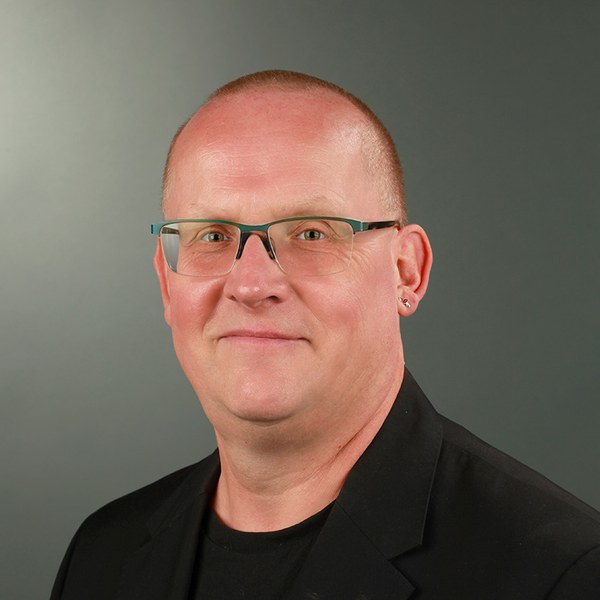
Prof. Stefan van Waasen serves as Director of the Peter Grünberg Institute's Integrated Computing Architectures division (PGI-4) and holds a Full Professorship in Communication Systems at the University of Duisburg-Essen. His work bridges quantum computing, neuromorphic systems, and cryogenic electronics development. Director, Integrated Computing Architectures (PGI-4) Full Professor, Communication Systems, University of Duisburg-Essen Research Focus: Electronic Systems for Quantum & Neuromorphic Computing Research Interests center on quantum dot electronics, memristor-based architectures, and cryogenic CMOS technology. His group develops scalable control systems for qubits and neuromorphic networks, with particular emphasis on power management and signal integrity at ultra-low temperatures. Publication Trends reveal a technical focus on quantum computing interfaces, neuromorphic hardware, and particle detector systems. His recent work includes co-simulation tools for cryogenic electronics optimization and novel architectures for memristor arrays in machine learning applications. Laboratory Involvement includes leadership at Forschungszentrum Jülich's Peter Grünberg Institute (PGI-4), where his team works on integrated circuits for quantum and neuromorphic computing platforms.
Örjan Sandred is a Professor of Composition at the University of Manitoba's Desautels Faculty of Music, where he founded Studio FLAT for computer music research and production. He teaches composition, computer-assisted composition, and electro-acoustic music while maintaining an active international composition career. Diplomi i Komposition, Royal College of Music Stockholm MFA, Royal College of Music Stockholm Additional studies at McGill University and IRCAM (Paris) His research focuses on Computer-Assisted Composition with emphasis on rule-based systems, live electronics integration, and artificial intelligence applications. Sandred developed the Cluster Engine constraint-solving system for music composition, exploring how computers can process musical ideas through formalized rules. His work bridges acoustic instruments with digital technologies, creating innovative performance systems where musicians interact with responsive computer environments. His recent compositions demonstrate evolving trends in interactive performance systems (Tilting Points, Sketches of Shifting Landscapes), climate change expression (Footprints), and pandemic-era multimedia installations (Sonic Trails: Lockdown). These works consistently integrate live electronics with acoustic instruments through sophisticated Max/MSP patches. Scientific awards include: Guggenheim Fellowship (2022) Fellow of the Royal Society of Canada (2023) DAAD Visiting Professorship at Hochschule für Musik Detmold (2016) Manitoba Arts Council support for major commissions Sandred maintains significant international collaborations with performers and institutions worldwide. His compositions receive regular premieres across Europe, North America, and Asia through commissions from organizations like the Swedish Concert Institute and Théâtre du Châtelet in Paris. He directs Studio FLAT as a hub for computer music research while developing educational resources including his book The Musical Fundamentals of Computer Assisted Composition . Current projects include an installation collaboration with the Royal Winnipeg Ballet and conductors from Sweden/Canada, plus ongoing development of the Cluster Engine system within Max environment through MOZlib.
Prof. Dr.-Ing. Jörg Gollnick serves as a Professor in the Department of Mechanical Engineering and Energy Technology at the Technical University of Central Hesse, affiliated with the Institute of Mechanics and Materials (IMM) Research. His teaching portfolio includes core courses in Materials Science, Manufacturing Technology, and Fatigue Strength and Fracture Mechanics at both lecture and internship levels. His research spans Applied Materials Science with emphasis on steel material optimization, welding process technology, and failure analysis. Specialized interests include cyclic material testing per DIN/ISO standards, fracture mechanics (K IC determination, J-integral analysis), and sustainable material practices covering recycling methodologies and bio-based polymer development. Current work integrates RFID-enabled lifecycle monitoring for pharmaceutical glove integrity prediction. Prof. Gollnick leads the Digi-ster project (2023-2026), funded by Hesse's Distr@l program, developing AI-driven systems to forecast plastic glove aging in pharmaceutical isolators. This initiative combines Wi-Fi/RFID tracking with software modeling to prevent contamination in vaccine production. He operates within the IMM Research Institute framework, focusing on applied industrial solutions.
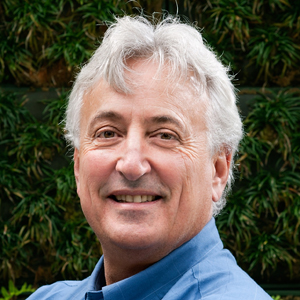
Andrea Cannata is a Full Professor of Solid Earth Geophysics at the University of Catania , Italy. He serves as a key researcher at the National Institute of Geophysics and Volcanology (INGV-OE) , contributing to multidisciplinary studies in volcanology , seismology , and microseism analysis . His career spans institutions like the University of Perugia (2015–2018) and collaborations with global entities such as the Berkeley Seismological Laboratory and NIED, Japan . Education: PhD in Geodynamics and Seismotectonics (University of Catania, 2009), Master’s in Theoretical and Applied Geophysics (University of Pisa, 2004), Bachelor’s in Geological Sciences (University of Catania, 2002). Research Focus: Analysis of seismic and infrasound signals in volcanic environments, magma dynamics, volcano-earthquake interaction, seismic noise interferometry, and machine learning applications in geophysics. Publications highlight his expertise in volcanic tremors , lava fountain monitoring , microseism-storm correlation , and Antarctic seismo-climatic studies . His work spans 75+ ISI JCR papers , book chapters , and scientific reports , with significant contributions to machine learning in volcano monitoring and COVID-19 lockdown seismic noise analysis . Projects include i-waveNET for Mediterranean sea state monitoring and multiparametric studies of Mount Melbourne and Stromboli paroxysms . His Antarctic expeditions (2016–2017) advanced understanding of glacial seismicity and volcanic degassing .
Maximillian Van Wyk de Vries is an Assistant Professor in Natural Hazards at the University of Cambridge, jointly affiliated with the Department of Geography and the Department of Earth Sciences. He leads the Cambridge Complex and Multihazard research group (CoMHaz), focusing on interactions between natural hazards and human activity impacts. His research integrates remote sensing, numerical modeling, and fieldwork to study: Hazard/risk at ice-clad volcanoes under climate change Large-scale landslide detection via satellite imagery Novel methods for glacial/landslide motion tracking Bidirectional glacier-landslide interactions Multihazard modeling using AI approaches Recent publications (2024-2025) demonstrate strong emphasis on: Landslide monitoring techniques (InSAR, optical feature tracking) Multihazard cascades in Nepal/Himalayas Glacial-volcanic interactions in Alaska/Patagonia Climate-hazard feedbacks and AI applications Regional focus on South Asia and Andes He directs the CoMHaz research group conducting interdisciplinary work on complex hazard systems. No awards or student advisees are mentioned in available sources.
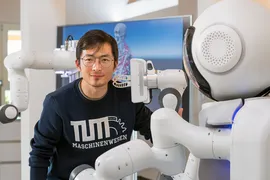
Hao Xing is a scientific researcher and post-doctoral fellow at the Institute for Cognitive Systems (ICS), Technical University of Munich (TUM), working with Prof. Gordon Cheng since May 2024. Previously, he served as a research assistant at the Munich Institute of Robotics and Machine Intelligence (MIRMI) and completed his PhD under Prof. Darius Burschka from 2019. His educational background includes: Master of Science in Mechanical Engineering from Technical University of Munich Bachelor of Engineering in Mechanical Engineering from Hefei University of Technology, China Xing's research focuses on Robot Vision , Human Action Recognition , and Graph Convolutional Networks , with significant contributions to Human-Object Interaction Recognition , Scene Understanding , and Visual Depth Estimation . His work leverages machine learning to develop robust algorithms for human activity analysis and robotic perception, emphasizing spatio-temporal modeling and uncertainty handling in real-world scenarios. Analysis of his 13 recent publications (2019-2025) reveals a dominant focus on graph-based approaches for action recognition and segmentation, with increasing emphasis on open-world applications, uncertainty modeling, and healthcare integration. His research spans computer vision, robotics, and medical applications, demonstrating strong interdisciplinary impact through collaborations in surgical robotics and patient monitoring systems. Xing actively mentors students through master's thesis projects in Stereo Matching, Human Activity Segmentation, and Monocular Depth Estimation, requiring expertise in deep learning frameworks and computer vision algorithms. While no major grants are explicitly mentioned, his thesis topics indicate active research funding in geometric vision and human activity analysis. He operates within the Institute for Cognitive Systems (ICS) at TUM, a key unit in MIRMI's robotics ecosystem focused on advancing human-robot interaction through vision-based scene understanding and motion generation capabilities.
Robert Costanza is Professor of Ecological Economics at the Institute for Global Prosperity, University College London . He is concurrently Honorary Professor at the Australian National University (Crawford School of Public Policy), Affiliate Fellow at the Gund Institute for Environment (University of Vermont), deTao Master of Ecological Economics (Shanghai), Senior Research Fellow at the Stockholm Resilience Centre, and Overseas Expert of the Chinese Academy of Sciences. A 2024 Blue Planet Prize laureate, he co-founded the International Society for Ecological Economics and served as founding editor of Ecological Economics and Solutions , and is Editor-in-Chief of The Anthropocene Review . Fellowships include the Academy of Social Sciences in Australia (FASSA) and the Royal Society of Arts (FRSA). Education Ph.D. in Systems Ecology, University of Florida, 1974–1979 Research Interests Professor Costanza’s transdisciplinary research integrates human and natural systems to address policy and management challenges across scales—from local watersheds to the globe. Core themes include: Ecological Economics & Ecosystem Services: quantifying and valuing benefits provided by nature to inform sustainable decision-making. Landscape Ecology & Socio-Ecological Modelling: linking spatial patterns with ecological and economic processes. Energy & Material Flow Analysis: tracking resource inputs, transformations, and environmental impacts. Environmental Policy & Governance: designing incentive structures and institutions that avoid social traps and societal addictions. Well-being & Sustainability Indicators: developing alternatives to GDP such as the Genuine Progress Indicator (GPI) and SDG-aligned metrics. Recent Publication Trends Across his latest 15 peer-reviewed articles (2024-2025), Professor Costanza advances cultural ecosystem services valuation using online deliberation, explores Antarctic governance and tipping points , critiques GDP-centric economics, and proposes wellbeing-centred policy frameworks. Studies span diverse geographies—China, Australia, Antarctica, Latin America—and integrate participatory methods, Indigenous perspectives, and future-scenario analysis. Scientific Awards & Recognition 2024 Blue Planet Prize (premier global environmental award) Fellow of the Academy of Social Sciences in Australia (FASSA) Fellow of the Royal Society of Arts (FRSA) Overseas Expert, Chinese Academy of Sciences Co-founder & Past-President, International Society for Ecological Economics Founding Editor, Ecological Economics Founding Co-Editor-in-Chief, Solutions Editor-in-Chief, The Anthropocene Review Grants & Collaborative Projects Professor Costanza leads or co-leads several multi-million-dollar initiatives: Integrated Farm Modelling for Resilience & Sustainable Prosperity – ARC Linkage project with National Australia Bank & GIZ (2022-2025) Economics of Land Degradation (ELD) Initiative – global science-policy platform hosted by GIZ with UNEP, European Commission, BMZ Genuine Progress Indicator (GPI) – applied in Vermont, Maryland, Oregon, Australia Overcoming Societal Addictions – scenario-planning and motivational interviewing analogues for societies Future Visions & Scenarios for Policy – participatory envisioning across scales (Australia, Iowa, New Orleans, LAC 2050) Valuing Natural Capital in Agro-ecosystems – partnership with National Australia Bank Ecosystem Services Gaming Platform – integrating research, education, and entertainment Laboratories & Teams Although no single “lab” name is specified, Professor Costanza’s work is anchored in the Institute for Global Prosperity at UCL and supported by an extensive international network spanning the Stockholm Resilience Centre, Gund Institute, Crawford School, and multiple UN and NGO partners. These collaborations provide interdisciplinary teams for modelling, scenario development, and policy engagement.
Rune Grand Graversen is a Professor in Polar Meteorology and Climate Dynamics at the Department of Physics and Technology, UiT The Arctic University of Norway. His research focuses on Arctic warming, atmospheric energy transport, polar lows, climate sensitivity, and sea-ice predictions. He leads the Complex Systems Modeling research group and is involved in projects studying intermittent fluctuations in physical systems and ice-sheet modeling. PhD : Atmospheric Sciences and Oceanography, Department of Meteorology, Stockholm University (2008) MSc : Geophysics, Niels Bohr Institute, Copenhagen University (2002) Diploma : Flute, The Royal Danish Academy of Music (1995) Graversen’s research investigates the mechanisms linking atmospheric circulation, oceanic and cryospheric processes to Arctic and global climate change. Key themes include: Arctic amplification , atmospheric wave dynamics , energy transport mechanisms , and improving climate model predictions . His work integrates satellite data assimilation and numerical models to study sea ice variability and extreme weather events. His recent publications highlight trends in Arctic warming drivers , volcanic climate forcing , and multi-scale energy transport . Articles often employ wave decomposition techniques , climate feedback analysis , and high-resolution modeling to address questions about polar climate impacts on global systems. Academic Affiliations : Professor (2014–present), Department of Physics and Technology, UiT The Arctic University of Norway Assistant Professor (2011–2014), Department of Meteorology, Stockholm University Postdoctoral Fellow (2010–2011), Department of Meteorology, Stockholm University Postdoctoral Fellow (2008–2010), Royal Netherlands Meteorological Institute Research Groups and Projects : Group Leader, Complex Systems Modeling Member, Intermittent fluctuations in physical systems Member, nICE (sea ice modeling) project
Joseph Licciardi is a Professor in the Department of Earth Sciences at the University of New Hampshire. His research focuses on glacial geology, geomorphology, paleoclimatology, and volcanology, with particular emphasis on geochronology and climate change mechanisms. Primary Research Areas: Cosmogenic isotope dating, glacial history, and climate change dynamics Field Sites: Western United States (Yellowstone, Grand Teton), Iceland, Peruvian Andes, Alaska, Hawaii, Galápagos Islands Timescale Focus: Quaternary Period, late Pleistocene and Holocene His work integrates field observations, laboratory techniques, and modeling approaches to understand glacier fluctuations, volcanic activity, and climate variability. While no specific scientific awards are mentioned in the available text, his publications demonstrate sustained contributions to understanding deglacial processes and paleoclimatic reconstruction.
Csaba Palotai is an Associate Professor in the Department of Aerospace, Physics and Space Sciences at the College of Engineering and Science, Florida Institute of Technology. His research specializes in numerical modeling of planetary atmospheres, with expertise in atmospheric dynamics, cloud physics of giant planets (Jupiter, Uranus, Neptune), and extraterrestrial impacts. He investigates Solar System formation processes through comet/asteroid collision studies and comparative exoplanetary research. Research Focus: Planetary atmospheric dynamics and convective systems Cloud microphysics and hydrological cycles in gas giants Bolide impact modeling and atmospheric fragmentation Ice giant phenomena (dark spots, vortices) using EPIC GCM Mission design for Uranian atmospheric probes His recent articles (2022-2025) demonstrate a focus on Jovian moist convection dynamics, ice giant exploration priorities, impact event analysis, and advanced numerical techniques. Over 80% of publications involve Jupiter or ice giants, with recurring themes of eddy transport, convective parameterization, and mission-relevant atmospheric science.
Professor Jonathan Essex holds the Chair in Computational Systems Chemistry at the University of Southampton, where he leads innovative research at the intersection of computational methods and biological systems. His work focuses on advancing molecular simulation techniques to enable more accurate predictions in drug discovery and medical diagnostics. Develops novel computational methodologies Applies simulations to antibody design and drug delivery Collaborates with academic and industrial partners globally His research spans fundamental challenges in simulation accuracy while addressing practical pharmaceutical needs. Key collaborations include industry partners like Johnson & Johnson and academic institutions through EPSRC and BBSRC grants. Scientific recognitions include: 2002 Marlow Medal from Royal Society of Chemistry Royal Society Wolfson Research Merit Award (2013) As an active PhD supervisor, he mentors students in computational chemistry and systems biology projects, maintaining editorial roles at Journal of Computer Aided Molecular Design and BMC Chemistry .
Rebecca L. Totten is an Associate Professor in the Department of Geological Sciences at the University of Alabama , with additional appointments as a Research Associate at the Alabama Museum of Natural History and a Faculty Fellow with the Alabama Water Institute . She leads the Sedimentary Geology and Micropaleontology Lab and maintains affiliations with the Center for Sedimentary Basin Studies and Alabama Stable Isotope Laboratory . PhD in Earth Science from Rice University (2015) BS in Geology and Geophysics from University of Kansas (2009) Geological Survey of Alabama collaboration NSF THOR project leadership Schmidt Ocean Institute Fire and Ice expedition Her research focuses on reconstructing paleoclimatic records through sedimentology, stratigraphy, and micropaleontology, particularly examining glacial dynamics in Antarctica and Patagonia alongside coastal evolution in the Gulf of Mexico. She integrates geochemical signatures , diatom microfossils , and seismic data to understand historical climate interactions. Marine Geology Paleoclimatology Glacial Stability Analysis Coastal Resilience Studies Isotope Geochemistry Antarctic Studies Recent publications demonstrate her expertise in Antarctic glacial retreat , Cretaceous marine reptile ecology , and Gulf Coast storm history . Collaborative projects span institutions including Universidad de Chile, University of Birmingham, and USGS, with funding from NSF , NERC , and BOEM . She has received the Goldwater Award and CONSERVE Distinguished Faculty Fellowship , mentoring numerous students who have earned NSF Graduate Research Fellowships and UA Graduate Council Fellowships . Graduate and undergraduate researchers in her lab work on topics ranging from shark paleoecology to volcanic impact assessments in marine environments.
Nicole Van Lipzig is a full professor at the Department of Earth and Environmental Sciences, Faculty of Science, KU Leuven. Her research focuses on climate change impacts, wind energy meteorology, and mesoscale atmospheric processes. She leads multiple long-term projects spanning 2022-2028, including wind farm co-design in the North Sea and climate adaptation strategies in Belgium. Faculty of Science Advisory Committee Chair KU Leuven Institute for Energy and Society (KIES) member Urban Studies Institute (LUSI) member Her sabbatical project (2023-2025) involves collaborations with global institutions like Technical University of Denmark and NREL, aiming to strengthen wind energy research through industry partnerships and academic exchanges. Current students include Borgers, R., Jamaer, S., and Neirynck, J.
Megan S. Ballard serves as a Senior Research Scientist at the Applied Research Laboratories (ARL), University of Texas at Austin. With a Ph.D. in Acoustics from Penn State (2009) and a B.S. in Ocean Engineering from Florida Atlantic University (2005), she has established herself as a leading researcher in underwater acoustics. Her work bridges theoretical modeling and experimental field studies to advance understanding of sound propagation in complex marine environments. Her educational background includes: B.S. in Ocean Engineering from Florida Atlantic University (2005) Ph.D. in Acoustics from Pennsylvania State University (2009) Dr. Ballard's primary research areas encompass underwater acoustic propagation modeling, geoacoustic inversion, and direct measurement of marine sediment properties. She has pioneered studies on out-of-plane propagation effects, arctic acoustics in ice-covered regions, and the acoustic behavior of seagrass ecosystems. Her methodologies integrate advanced instrumentation, field experiments, and computational modeling to address challenges in ocean acoustics, with applications in environmental monitoring and naval operations. Analysis of her recent publications (2020-2022) reveals a consistent emphasis on acoustic propagation in biologically and geologically complex marine habitats. Key contributions include investigations of seagrass meadows, arctic fjords with brash ice, and mud-dominated seabeds. Her work frequently employs innovative measurement techniques and modeling approaches to characterize sediment properties and sound-speed profiles, enhancing predictive capabilities for underwater sound transmission. Dr. Ballard has been recognized with several prestigious awards: A.B. Wood Medal and Prize from the UK Institute of Acoustics (2021) R. Bruce Lindsay Award from the Acoustical Society of America (2016) Postdoctoral Special Research Award from the Office of Naval Research (2011) National Defense Science and Engineering Graduate Fellowship Award (2006) Elected Fellow of the Acoustical Society of America Information about Dr. Ballard's advising activities and grant funding is not provided in the available text, though her extensive publication record indicates active research leadership through collaborations with interdisciplinary teams. Dr. Ballard is affiliated with the Applied Research Laboratories at UT Austin, where she conducts research in underwater acoustics. She has held leadership roles in the Acoustical Society of America, including past-chair of the Technical Committee on Underwater Acoustics, and serves as Editor for the Proceedings of Meetings on Acoustics. Her collaborative research involves interdisciplinary teams focusing on marine acoustics and ocean engineering.
Rodrigo Narro Perez is an Assistant Professor at McMaster University in the Earth, Environment & Society department. His work spans interdisciplinary domains, blending physical geography with social justice themes. Research focuses on glacial geomorphology and climate change in tropical and temperate regions. Teaches courses like Environmental Assessment, Natural Disasters, and Glacial Sediments and Environments. Active in anti-racism pedagogy and community engagement frameworks. His research interests include: Climate change impacts on glacial systems Geomorphological analysis of moraine-dammed lakes Integration of social and physical geography Anti-racist approaches in science education Recent publications analyze glacial sedimentology in Peru, Iceland, and the Cordillera Blanca, with a focus on correlating geological processes to climate trends. His pedagogical work emphasizes storytelling as a tool for addressing racial and ethnic disparities in scientific education.