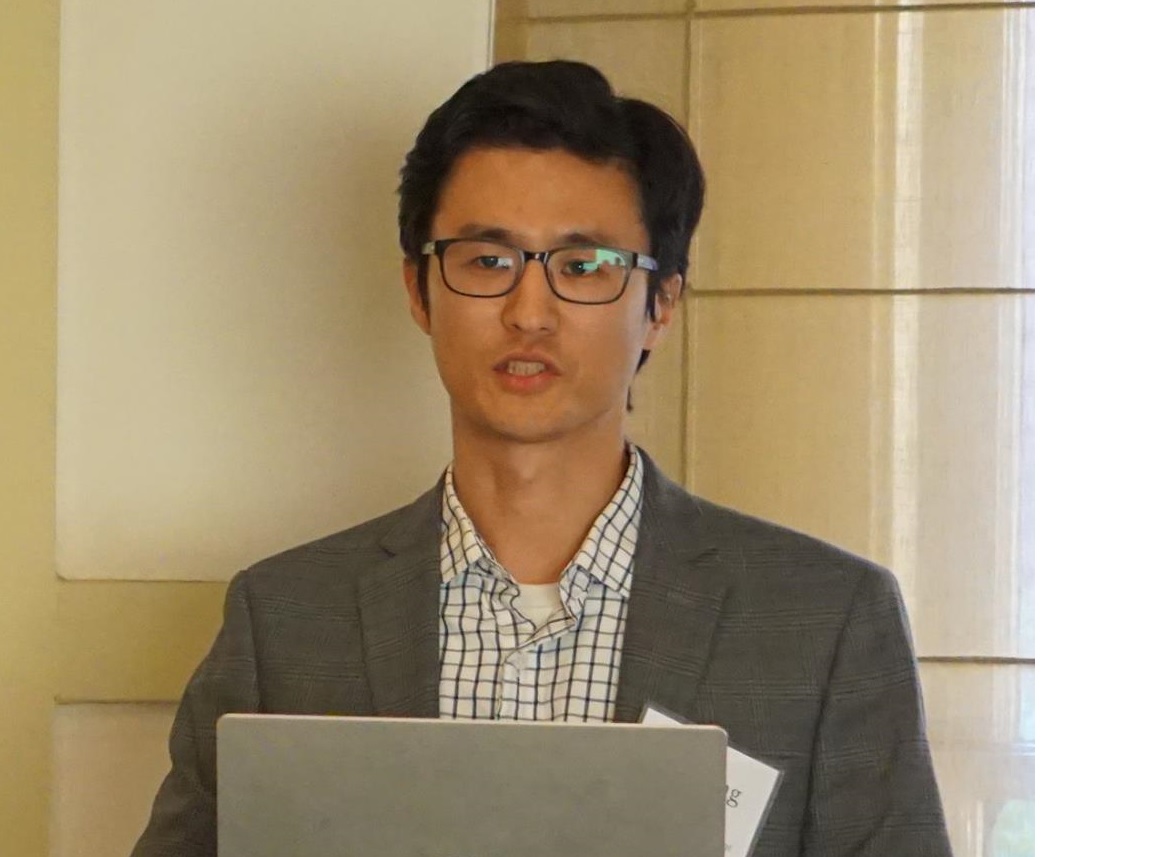
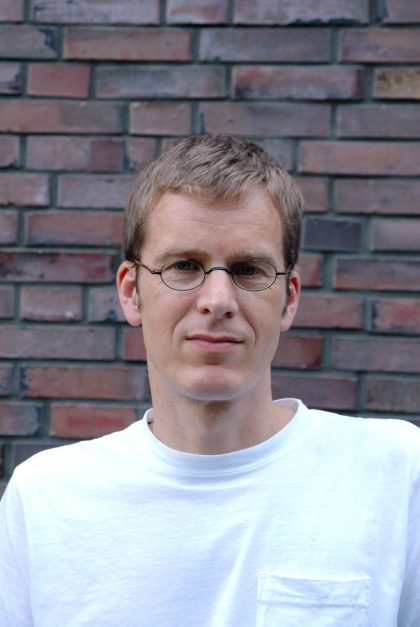
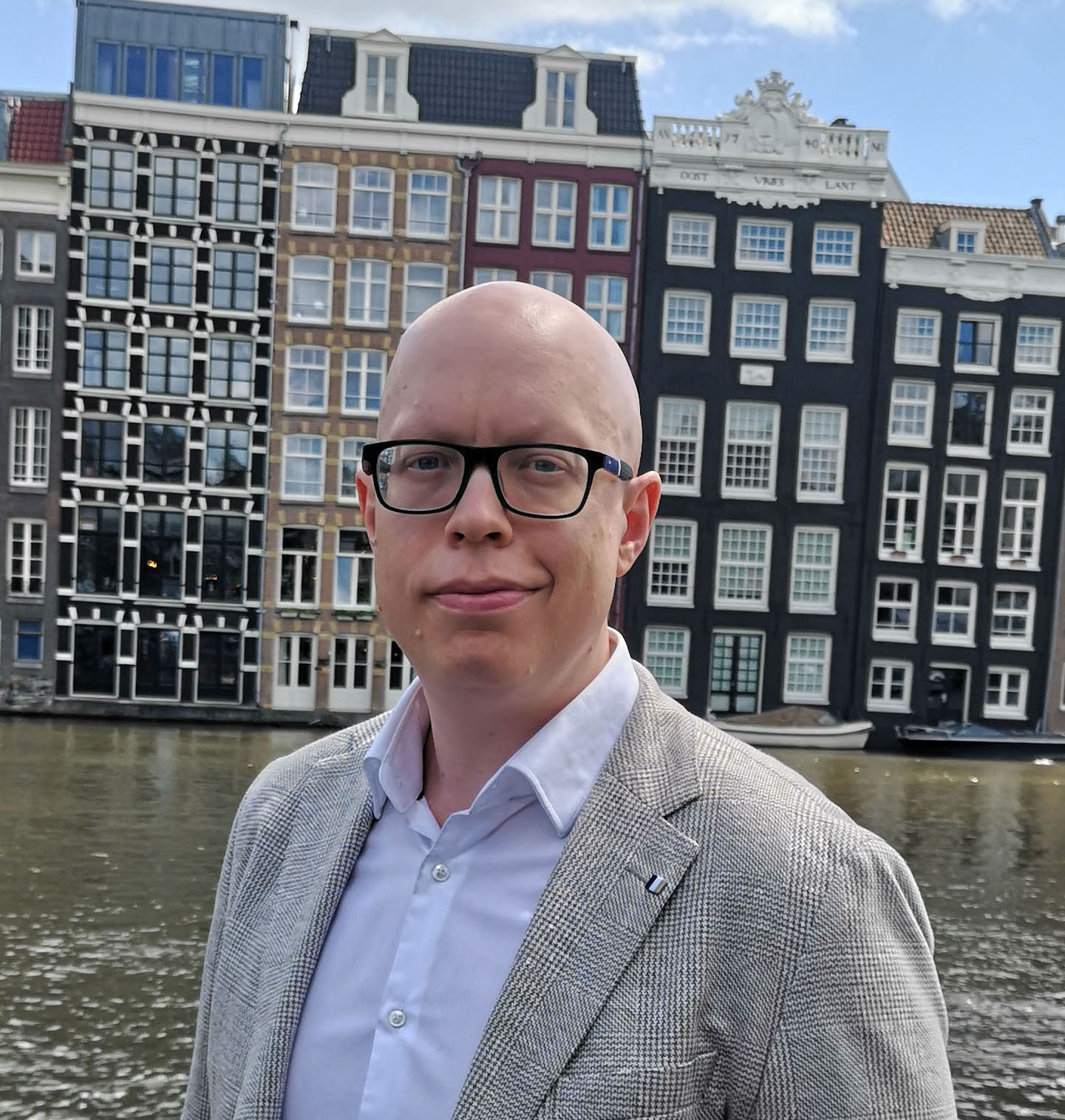
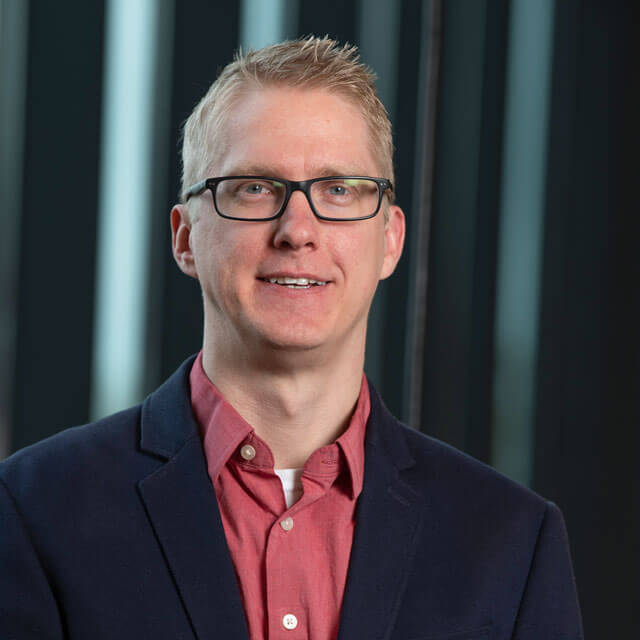
Jiarui Ding is an Assistant Professor in the Department of Computer Science at the University of British Columbia , within the Faculty of Science. His research focuses on the intersection of bioinformatics, computational biology, and machine learning, with an emphasis on single-cell genomics and probabilistic deep learning. Key interests include computational immunology, cancer biology, and the application of AI to biomedical problems like food allergy neuroscience. He is affiliated with the CAIDA: UBC ICICS Centre for Artificial Intelligence Decision-making and Action and the Data Science Institute , indicating strong interdisciplinary engagement. He actively recruits doctoral students for research projects in these areas, with desired start dates year-round. His work bridges computational methods with biological systems, exemplified by publications on single-cell data integration ( e.g. , CellUntangler), generative models for T-cell receptors, and mechanistic studies of immune responses in diseases like eosinophilic esophagitis. His research also addresses challenges in multiomics data analysis and the development of novel algorithms for genomic data interpretation. No awards or grants are explicitly listed in the provided materials, though his involvement in high-impact projects suggests potential external funding. He emphasizes collaboration, stating availability for interdisciplinary projects and undergraduate research mentorship.
Dr. Joshua Friedman is a Professor in the Department of Math and Science at the United States Merchant Marine Academy (USMMA) since 2005. His research focuses on advanced mathematical analysis including Selberg trace formulas, automorphic forms, zeta functions, and Fuchsian/Kleinian groups. He has contributed to areas such as analytic number theory, spectral geometry, and combinatorial optimization through his publications. Teaching interests span all mathematics courses. Education: PhD and MA in Mathematics (Stony Brook University), BS in Math & Physics (Binghamton University) His work bridges pure mathematics with applied problems like automated timetabling using integer programming. Recent research emphasizes zeta functions, regularized determinants, and scattering theory applications. Notable contributions include studies on Bessel function integrals linked to Mahler measure (2022), deep learning approaches to graph theory problems (2021), and effective bounds in modular form analysis (2019). His 2016 papers address scattering determinants and hyperbolic manifold applications.
Alexandre Bayen is the Associate Provost for Moffett Field Program Development and the Liao-Cho Professor of Engineering at UC Berkeley. He holds dual professorships in Electrical Engineering and Computer Science and Civil and Environmental Engineering. Previously, he served as Director of the Institute of Transportation Studies (2014–2021). He is also a Faculty Scientist at Lawrence Berkeley National Laboratory (LBNL). Bayen received his Ph.D. in Aeronautics and Astronautics from Stanford University (2004) and has been at UC Berkeley since 2005. His research focuses on intelligent transportation systems, cyber-physical systems, and AI applications in traffic modeling, environmental monitoring, and autonomous systems. Notable projects include Mobile Millennium (real-time traffic monitoring), Floating Sensor Network (water flow analysis), and FLOW (mixed-autonomy traffic control). He has authored over 200 peer-reviewed publications and two books. Bayen’s awards include the PECASE (2010), IEEE awards (Ruberti Prize, TCCPS Mid-Career Award), and Okawa Research Grant (2013). He has advised numerous students and led major initiatives like the Berkeley Deep Drive consortium and the Connected Corridors project. His academic service spans UC Berkeley, LBNL, and national/international committees in transportation and control systems.
Mihaela Vajiac is a Professor and Program Director for Mathematics at Chapman University's Schmid College of Science and Technology. She serves as Director of the Center of Excellence in Complex and Hypercomplex Analysis (CECHA) and organizes the Math/Physics/Computation Seminar. Her educational background includes a Ph.D. from Boston University and a B.S. from the University of Bucharest. Dr. Vajiac's research spans: Complex/Hypercomplex Analysis : Investigating Dirac-type operators, quaternionic systems, and applications in physics and engineering. Algebraic Computational Methods : Developing algebraic tools for PDEs including Maxwell and Cauchy-Fueter systems. Differential Geometry : Exploring integrable systems, curvature invariants, and symplectic structures. Her recent publications focus on bicomplex tensor products, spectral factorization in hypercomplex spaces, and geometric invariants, reflecting sustained innovation in operator theory and Clifford analysis. She co-organizes international workshops like IWOTA 2021 and maintains active collaborations with global researchers.
In Young Min is a Lecturer in Korean studies at the Centre for East Asian Studies, Heidelberg University. He holds a B.A. and M.A. in Political Science from Yonsei University (South Korea), and a Ph.D. in Political Science and International Relations from the University of Southern California. His research focuses on international relations and security in East Asia, particularly the dynamics of power asymmetry and smaller states' agency in shaping these dynamics, with a regional focus on Korea. Recent work examines historical and contemporary issues surrounding the Korean Peninsula, including nuclear policy and unification treaties. His interdisciplinary contributions span political theory and historical analysis. Education History: B.A. and M.A. in Political Science, Yonsei University, South Korea Ph.D. in Political Science and International Relations, University of Southern California Research Interests: Power asymmetry dynamics in international relations Ontological security and identity in hierarchical systems Korean Peninsula security and unification South Korea's nuclear policy and non-proliferation challenges Publications Trends: His work bridges historical and contemporary analyses, with contributions to journals like the International Relations of the Asia-Pacific and Journal of Asian Security and International Affairs . Earlier technical articles in mathematics and computational methods reflect interdisciplinary engagement, though recent focus is on political science and international relations.
Jay Gopalakrishnan is a Professor of Mathematics and the Maseeh Distinguished Chair at Portland State University's Department of Mathematics. His research focuses on scientific computation, numerical analysis, finite elements, and multigrid methods with applications in optics and mechanics. He has contributed significantly to the development of hybridizable discontinuous Galerkin (HDG) methods and the Discontinuous Petrov-Galerkin (DPG) framework, emphasizing structure-preserving numerical techniques. His work spans diverse domains including microstructured optical fibers, spacetime tents for hyperbolic systems, and eigenvalue cluster computations. Notable research activities include developing accurate computational tools for leaky modes in fibers, stability analysis of acoustic waveguides, and bone mineralization models. He advises doctoral students at institutions such as Intel Corporation, The MathWorks, and James Madison University. His teaching includes advanced numerical analysis courses and undergraduate mathematical computing. Collaborations with researchers like L. Demkowicz and J. Schöberl highlight his interdisciplinary impact in computational mathematics and engineering.
Michael Strube is an Honorary Professor at the Department of Computational Linguistics at Heidelberg University and leads the Natural Language Processing (NLP) Group at HITS (Heidelberg Institute for Theoretical Studies) in Germany. He has been with HITS (previously EML Research and European Media Laboratory) since 2003 and became an Honorary Professor at Heidelberg University in 2010. He is also a Fellow of the Association for Computational Linguistics (2019). Dr. Strube received his PhD from the Computational Linguistics Department at the University of Freiburg in December 1996 under the supervision of Udo Hahn. Between 1997 and 1999, he was a postdoctoral fellow at the Institute for Research in Cognitive Science at the University of Pennsylvania, Philadelphia. Michael Strube's research focuses on semantics and discourse pragmatics, graph-based methods for text representation and analysis, extraction of world knowledge from Wikipedia for computational linguistics, and development of methods to synchronize multilingual content. His work spans coreference resolution, discourse processing, text summarization, entity linking, and natural language generation. He has made significant contributions to coherence modeling, anaphora resolution, and the application of geometric deep learning in NLP. His recent publications demonstrate strong trends in discourse processing, coreference resolution, and the application of geometric approaches to NLP problems. Strube has pioneered work in hyperbolic space for entity typing and graph embeddings, while maintaining his foundational work in discourse and coherence. His research bridges theoretical linguistics with practical NLP applications across multiple languages. Dr. Strube has received several prestigious awards, including: Fellow of the Association for Computational Linguistics (2019) Best Paper Award for "Fine-grained entity typing in hyperbolic space" (2019) Honorable Mention for the IJCAI-JAIR best paper prize 2010 for "Knowledge Derived from Wikipedia for Computing Semantic Relatedness" Professor Strube has advised numerous PhD students who have gone on to successful careers in academia and industry. His current PhD students include Yi Fan, Wei Liu, Haixia Chai, Mehwish Fatima, and Sungho Jeon, working on topics such as discourse structure, discourse relations, coreference resolution, and cross-lingual summarization. His former students include Federico Lopez, Benjamin Heinzerling, Mohsen Mesgar, and Nafise Moosavi, who now hold positions at institutions like Argo AI, RIKEN, Bosch Center for AI, and the University of Sheffield. As group leader of the NLP Group at HITS, Strube oversees a team focused on advancing natural language processing through research in discourse analysis, coreference resolution, text generation, and knowledge extraction. The group has been involved in numerous collaborative projects and has made significant contributions to the field through publications, shared tasks, and community building via workshops and conferences.
PD Dr. Florian Frank is Privatdozent (senior lecturer with full teaching licence) for Applied Mathematics at Friedrich-Alexander-Universität Erlangen-Nürnberg (FAU) and heads the Bavarian research project „Parallel mesh loading and partitioning for large-scale simulation“ . His expertise spans high-performance computing, phase-field and discontinuous Galerkin methods, digital-rock physics, and reactive transport in porous media. Education & career 2022 – Venia legendi (private lecturer), Mathematics, FAU 2019 – Dr. habil., Mathematics, FAU 2013 – Dr. rer. nat., Applied Mathematics, FAU 2008 – Graduate Mathematician, University of Frankfurt 2021-2022 (acting) W2 Professor Scientific Computing, FAU 2018-2021 (acting) W2 Professor Mathematical Modelling, FAU 2017-2018 Senior Postdoc, CAAM, Rice University, USA 2014-2017 Postdoc, CAAM, Rice University, USA Research interests Frank focuses on the development and analysis of numerical schemes for partial differential equations that govern multiphase, multicomponent and reactive processes in porous or biological media. Key themes include discontinuous Galerkin and finite-volume methods , physics-preserving discretizations , high-performance computing , and digital-rock-based pore-scale simulations . He couples phase-field approaches with (Navier–)Stokes, Cahn–Hilliard, Nernst–Planck and density-gradient equations to quantify flow, transport, colloid dynamics and interfacial phenomena. Recent publications reveal a clear trend toward data-driven modelling : convolutional neural networks are trained with direct numerical simulation data to predict permeability and diffusion coefficients from 3-D micro-CT images, while advanced preconditioners and regularization techniques accelerate multiphase thermodynamic computations. Awards & recognition 2020 – Emmy-Noether-Prize der Naturwissenschaftlichen Fakultät, FAU 2017 – Promotion to Senior Postdoctoral Research Associate , George R. Brown School of Engineering, Rice University Projects, tools & supervision Frank currently leads a Bavarian state-funded project on parallel mesh handling for large-scale simulations. Together with collaborators he maintains the open-source MATLAB/GNU Octave toolbox FESTUNG for discontinuous Galerkin methods. Since 2018 he has (co-)supervised ten BSc and MSc theses on topics ranging from Stokes preconditioning to enriched Galerkin shallow-water solvers, regularly serves as reviewer for more than a dozen international journals, and is guest editor of special issues in Computational Geosciences and Oil & Gas Science and Technology .
Eötvös Loránd University's Faculty of Science researcher Dávid Szeghy has been affiliated with the Department of Geometry since 2006. His work focuses on differential geometry, mathematical physics, and geometric analysis of Lorentz manifolds. PhD in Mathematics (2008, ELTE) Publications span 2003–2023 with emphasis on horizon differentiability, isometric group actions, and pseudo-Riemannian conjugate loci Key collaborations include J. Szenthe and A. Fothi Research trends show deep engagement with Lorentzian geometry , including studies on: Orbit type theorems for isometric actions Normalizable vs. non-normalizable orbits Horizon smoothness in general relativity Exponential mapping properties in spacetime His work appears in journals like Annales Henri Poincaré , Classical and Quantum Gravity , and Geometriae Dedicata , with citations across mathematics and physics domains.
Prof. Dr.-Ing. Sven Buchholz serves as a Professor in the Department of Computer Science and Media at Brandenburg University of Technology in Brandenburg an der Havel, Germany. His office is located in Building C, Room C.2.18 at Magdeburger Straße 50, with contact information including telephone +49 3381 355-482 and email sven.buchholz@th-brandenburg.de. Specializing in Applied Computer Science , Prof. Buchholz focuses on data management and data mining with a distinctive research trajectory in geometric algebra applications. His scholarly work demonstrates expertise across multiple domains including neural network architectures using Clifford algebra, solving complex partial differential equations, protein structure prediction, and computer vision systems. The evolution of his research shows progression from foundational theoretical work on Clifford neurons in the early 2000s to increasingly interdisciplinary applications in recent years. Analysis of his publication history reveals a significant research focus spanning over 15 years, with a notable resurgence of activity in 2024. His recent work demonstrates sophisticated applications of geometric algebra to solve challenging problems across physics (Maxwell's equations, Navier-Stokes equations), molecular biology (protein structure prediction), and robotics (camera pose estimation). This interdisciplinary approach connects mathematical theory with practical implementations in scientific computing and artificial intelligence. Prof. Buchholz maintains an active research profile with multiple high-impact publications in 2024, indicating ongoing contributions to the advancement of geometric algebra applications in computational science. His work bridges theoretical mathematics with practical machine learning implementations, contributing to both academic knowledge and potential real-world applications in scientific computing and data analysis.
Dr. Helia Farhood is an Honorary Senior Research Fellow at the School of Computing, Macquarie University, specializing in Artificial Intelligence, Machine Learning, and Image Processing with applications in educational technology and object recognition. Her academic qualifications include a PhD in Computer Systems and Artificial Intelligence from the University of Technology Sydney (awarded November 2021) and a Master's degree in Computer-AI from Amirkabir University of Technology (Tehran Polytechnic, awarded September 2013). Dr. Farhood's research spans interdisciplinary AI applications, with significant contributions in student outcome prediction using generative adversarial networks, explainable AI through LIME heatmaps, and image-based storytelling systems. Her work integrates machine learning with educational data mining to enhance creativity assessment and learning analytics, while maintaining strong technical focus on 3D reconstruction and object recognition. Analysis of her 16 publications (2020-2025) reveals three dominant research trajectories: (1) AI-driven educational analytics for student performance prediction, (2) advanced image processing techniques for object recognition and 3D reconstruction, and (3) systematic reviews establishing methodological foundations in presentation attack detection and image-based storytelling. Her recent work increasingly emphasizes explainability and ethical considerations in AI deployment. Dr. Farhood has participated in externally funded research projects, including the 2022 project "Estimating the Number of Tyres in Stockpiles" (October-December 2022). No information is available regarding students she has advised. No information is available about specific research laboratories or teams led by Dr. Farhood.
Adam Misik is a researcher at the Chair of Media Technology (Prof. Steinbach) within the College of Engineering at the Technical University of Munich. He earned a B.Sc. in 2019 and M.Sc. in 2022 in Electrical Engineering and Information Technology, with study visits at EPFL and Télécom ParisTech. Since June 2022, he has been an external PhD student at Siemens AG. His research focuses on multimodal sensor data analysis using computer vision and deep learning techniques, particularly for 3D reconstruction and localization problems. His work intersects with fields like haptic communication , indoor mapping , and human activity understanding . Key publication trends include point cloud registration , hyperbolic learning , and equivariant neural networks . Recent works address surface material classification (2025), CAD model retrieval (2025), and SLAM systems (2024). Education: B.Sc. (2019), M.Sc. (2022) in Electrical Engineering and Information Technology, TU Munich Current Role: External PhD student at Siemens AG since 2022 Research Affiliation: Chair of Media Technology at TU Munich, part of the Munich Institute of Robotics and Machine Intelligence (MIRMI)
Christian Martin is a Researcher at the University of Leipzig since 2019, affiliated with the ScaDS.AI Center for Scalable Data Analytics and Artificial Intelligence in Dresden/Leipzig. His work focuses on integrating Machine Learning and Biomedical Data Analysis for applications in Life Science & Medicine , particularly in Personalized Medicine and Medical Imaging . Current affiliation: ScaDS.AI Center, University of Leipzig Previous roles: Software Developer & Research Associate at Loeser/Meierhofer Medizintechnik GmbH (2008-2019), Research Associate at Biodata Mining Group, University of Bielefeld (2003-2008) His research spans Deep Learning , Radiomics , and Image Processing for medical applications, with notable projects like: GRAMMY (Integrative analysis of gastric cancer, microenvironment, and patient outcomes) MIRACLE (Machine learning for lung cancer relapse prediction) SaxoCell Omics (Systems biology for radiomics classification) He has supervised multiple master's students including: Mohammad Issa (Automotive lane detection) Wael Assy (Soft tissue sarcoma classification) Julius Ellermann (MRI image prediction) Jan Philipp Zimmer (Cervix cancer classification) Marlene Mertens (Cervical cancer analysis) Contact: christian.martin@informatik.uni-leipzig.de
Christian A. Naesseth is an Assistant Professor of Machine Learning at the University of Amsterdam, where he is a member of the Amsterdam Machine Learning Lab and serves as lab manager of the UvA-Bosch Delta Lab 2. He is also an ELLIS member, actively contributing to the European AI research community. His work bridges theoretical machine learning with practical applications across scientific domains. University of Amsterdam - Faculty of Science Amsterdam Machine Learning Lab (AMLab) UvA-Bosch Delta Lab 2 (Lab Manager) ELLIS Institute member Naesseth's research focuses on generative modeling, uncertainty quantification, and probabilistic machine learning. His work spans diffusion models, flow matching techniques, stochastic differential equations, and their applications in scientific domains. He has made significant contributions to simulation-free training frameworks like SDE Matching, which eliminates the need for discretization and simulation when fitting latent SDE models to data. His research also addresses critical challenges in uncertainty quantification, including conformal prediction, risk monitoring in test-time adaptation, and multiple hypothesis testing. His recent publications demonstrate a consistent focus on improving efficiency and reliability in generative modeling while maintaining theoretical rigor. The work on SDE Matching represents a major advancement in training efficiency for latent stochastic differential equations, achieving speed improvements of several orders of magnitude. His research on risk monitoring and conformal prediction addresses practical deployment challenges for AI systems operating under distribution shift. Best Workshop Paper Award at AABI 2025 for SDE Matching 100% acceptance rate across major ML conferences in the 2024-2025 cycle (5/5 NeurIPS, 2/2 AISTATS, 2/2 ICML, 1/1 UAI) Naesseth actively mentors PhD students and postdocs, including Grigory Bartosh, Hany Abdulsamad, and several visiting researchers from institutions worldwide. He serves as program chair for AABI 2024 and has been involved in organizing multiple workshops at major conferences including ICML and NeurIPS. His lab has secured funding through collaborations with Bosch and likely other industry partners, supporting postdoctoral researchers and PhD students working at the intersection of theory and applications. He leads the UvA-Bosch Delta Lab 2, which focuses on advancing the theoretical foundations of machine learning while developing practical applications. The lab maintains strong connections with the broader Amsterdam Machine Learning ecosystem, including collaborations with ELLIS units in Amsterdam, Delft, and Nijmegen.
Brian Wells serves as Associate Professor of Physics in the College of Arts and Sciences at the University of Hartford, with research spanning computational photonics and low-dimensional magnetic systems. His collaborative work bridges theoretical modeling and practical undergraduate-accessible experimentation. Education PhD, University of Massachusetts, Lowell MS, University of Massachusetts, Lowell BS, Clark University Professor Wells' research bifurcates into two synergistic domains. His photonics work develops theories and numerical simulations for optical metamaterials—particularly plasmonic nanowire assemblies—using MATLAB and Finite Element Method software, while establishing an undergraduate-focused lab for microwave-scale metamaterials fabrication via silk-screen printing. This enables investigations into cloaking, negatively indexed materials, and super-lensing. Concurrently, he studies spin-spin interactions in frustrated magnetic systems using ALPS simulation codes and MATLAB, comparing results with quantum Monte Carlo data and experimental validation from Clark University's magneto-Chemistry group. His publication trajectory reveals a strategic evolution: early work (2005-2009) centered on quantum magnetic systems in copper compounds, while recent publications (2013-2017) demonstrate deep engagement with nonlocal effects in metamaterials, plasmonic waveguide dynamics, and spontaneous emission phenomena—showcasing consistent application of computational physics across domains. No scientific awards were documented in available sources. Professor Wells' lab development indicates active research funding, though specific grants aren't detailed. His collaborations with UMass Lowell and Clark University enhance resource access, while the microwave metamaterials approach creates exceptional undergraduate research opportunities—students participate in full experimental cycles from fabrication to validation, gaining skills typically reserved for graduate programs. The emerging microwave metamaterials lab utilizes conductive ink and traditional printing techniques to democratize advanced research, allowing students to investigate cloaking mechanisms and super-lensing effects through hands-on experimentation. This practical framework transforms theoretical concepts into tangible learning experiences while advancing frontier research in accessible ways.