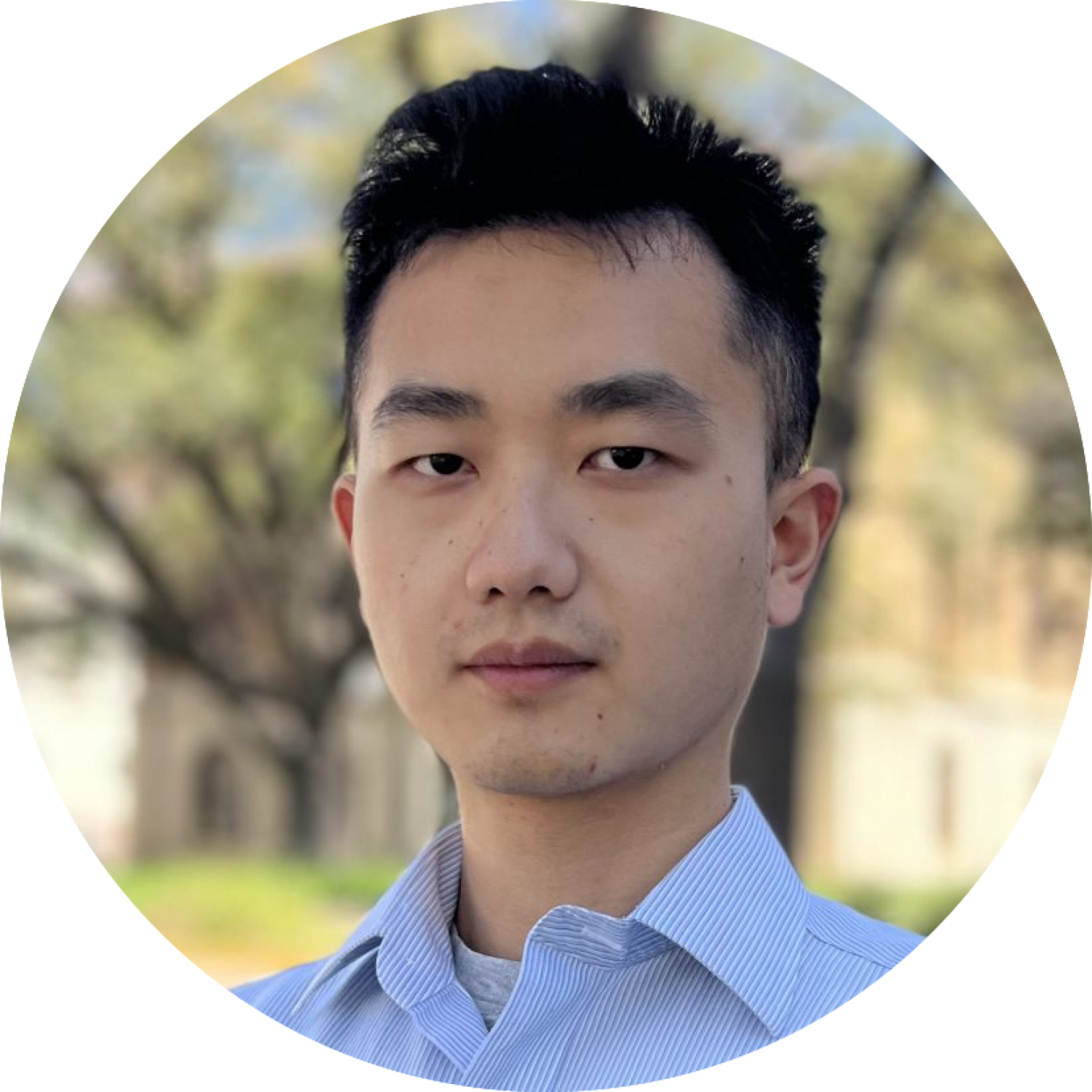
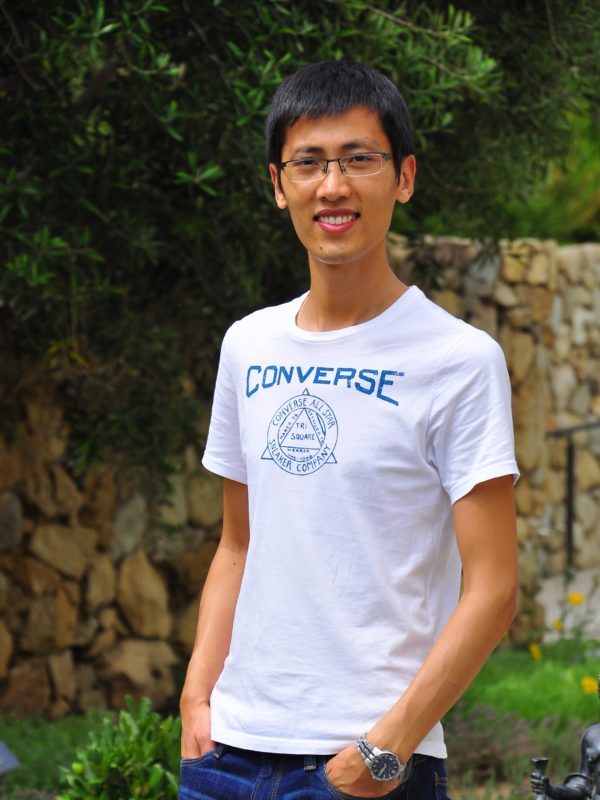
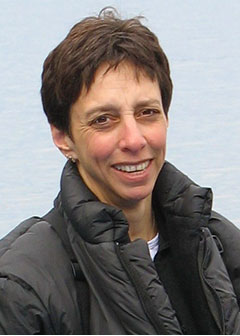
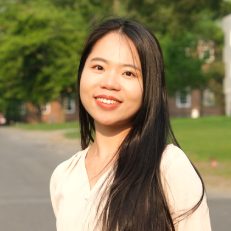
Zhi Li is an Assistant Professor at the University of Colorado Boulder's College of Engineering and Applied Science, Department of Civil, Environmental and Architectural Engineering. He leads the newly established Flood Lab, focusing on flood prediction and monitoring through remote sensing and coupled hydrologic-hydraulic models. Joined CU Boulder in Fall 2025 Former Dean's Postdoc Fellow at Stanford University PhD in Civil Engineering & Environmental Science from University of Oklahoma (2022) His research spans hydrological modeling , extreme events , and AI4Science applications, particularly in deep learning and intelligent agents for flood risk assessment. Li’s work also connects floods with public health and economic systems , aiming to develop the Flood-Agriculture-Climate-Economics-Disease (FACED) framework. Key Themes: High-resolution flood modeling Climate change impacts on hydro-meteorology Remote sensing integration Flood-agriculture interdependencies Global health implications Scientific Awards: Dean's Postdoc Fellow, Stanford Doerr School of Sustainability (2023) Hoving Fellowship, University of Oklahoma (2019) Li’s recent publications emphasize improved precipitation estimation (IMERG V07), Brown Ocean Effect studies, and Fourier neural operators for rapid flood forecasting. His collaborative work with NOAA and NASA focuses on comparing ground-based and spaceborne radar systems for extreme event analysis.
Dr Francesca Pianosi is an Associate Professor in Water & Environmental Engineering at the University of Bristol 's School of Civil, Aerospace and Design Engineering. She contributes to the Cabot Institute for the Environment and leads research on data analysis, mathematical modelling, and uncertainty quantification for hydrology and water engineering. Specialises in simulation and optimisation methods for water resource management Focuses on uncertainty propagation in natural hazard models Developed the open-source SAFE Toolbox for sensitivity analysis Research Trends Her recent publications (2023-2025) demonstrate expertise in: Groundwater flow and recharge in data-scarce regions Digital Twin applications for watershed management Climate change impact on landslides and droughts Multi-objective optimisation for reservoir operations Integration of machine learning with hydrological models Scientific Awards Arne Richter Award for Outstanding Young Scientists (2015) Best Research Oriented Paper - Journal of Water Resources Planning and Management (2024) Early Career Research Excellence (ECRE) award (2014) Francesca leads the Water Management and Adaptation based on Watershed Digital Twins project (2024-2027) and contributes to the USARIS project on uncertainty quantification for infrastructure systems (2023-2025).
Ross A Woods is a Reader in Water & Environmental Engineering at the School of Civil, Aerospace and Design Engineering, University of Bristol , and an active member of the Cabot Institute for the Environment . His research focuses on large-sample hydrology, flood and drought risk, climate-water interactions, and catchment classification. Keywords : Hydrology, Water Resources, Hazards, Hydroclimatology Research Themes : Flood Estimation in Ungauged Catchments, Climate Change Impacts on Hydrology, Snow-Rain Transition Effects, Hydrological Modeling with Simple Models Scientific Trends His recent work emphasizes groundwater-surface water interactions (e.g., DECIPHeR-GW, 2025), snow hydrology under climate change (e.g., Northern Hemisphere SWE datasets, 2025), and catchment-scale water balance analysis (e.g., 2024 studies on soil drainage and streamflow seasonality). Key disciplines include hydrology, climate science, and environmental engineering. Scientific Awards 2022 STAHY Best Paper Award (awarded 2023) Adjunct Faculty Member (2006) Award for Outstanding Achievement (2010) He has contributed to hydrology through 671 catchment studies (CAMELS-GB dataset) and model development (e.g., TOSSH toolbox, 2021). His work bridges theoretical hydrology with applied water management in regions like New Zealand, Brazil, and the contiguous USA.
Linnea Blåfield is a Postdoctoral Researcher in the Department of Geography and Geology at the University of Turku, Finland, specializing in high-latitude river systems and hydroclimatic impacts on fluvial processes. Her work bridges geomorphology, hydrology, and environmental engineering to address climate-driven river dynamics. Her research focuses on fluvial geomorphology in cold regions, examining sediment transport under ice-covered conditions, river migration mechanisms, and seasonal hydroclimatic variations. Key methodologies include particle image velocimetry, hydrological modeling, and geospatial analysis to study sediment connectivity, channel evolution, and river-ice interactions in boreal and subarctic environments. Recent publications (2021-2025) reveal consistent themes: digital twin development for river basin management, long-term morphodynamic responses to climate shifts, and sediment dynamics in ice-affected rivers. These works emphasize interdisciplinary collaboration across Nordic institutions and practical applications for river management and climate adaptation. No scientific awards were documented in the provided materials. Information regarding advised students or secured research grants was not present in the source text. Dr. Blåfield collaborates extensively with researchers from the University of Oulu (Petteri Alho, Elina Kasvi), Finnish Environment Institute, and Baltic Sea research teams, focusing on field data collection and modeling of Nordic river systems.
Chunyu Dong is a Postdoctoral Scholar at the University of California, Los Angeles (UCLA), affiliated with both the Department of Geography and the Institute of the Environment and Sustainability. His research focuses on ecohydrology and snow hydrology, particularly examining climate change impacts on water cycles and terrestrial ecosystems at multiple scales. Dong employs innovative methodologies including remote sensing, hydrological modeling, and time-lapse photography to analyze snow processes and vegetation responses to drought. Ph.D. in Hydrology and Climatology (Heidelberg University, 2016) Developed cloud-free MODIS snow data algorithms Contributed to time-lapse snow monitoring techniques His current work involves interdisciplinary collaboration with Professors Glen MacDonald, Gregory Okin, and Thomas Gillespie on drought impacts in southern California. Projects include analyzing vegetation sensitivity to drought, wildfire-vegetation-climate interactions, and energy infrastructure resilience. Despite lacking formal faculty rank, his research bridges environmental science, climatology, and geographic information systems.
Dr Clément Duvert is a Senior Research Fellow in Hydrology and Biogeochemistry at Charles Darwin University's Research Institute for Environment and Livelihoods, part of the Faculty of Science and Technology. He leads projects on aquatic carbon cycling, ecohydrology, and stream-groundwater interactions in tropical regions. His work combines field studies, isotopic techniques, and numerical modeling. He co-leads the Top End Hydrology Lab with Dr Dylan Irvine and supervises PhD students in hydrology and aquatic biogeochemistry. Education: Completed his PhD at Queensland University of Technology (Brisbane) on isotope tracking in aquifers and streams. Prior to CDU, worked as a research associate in Mexico on erosion and sediment transport in tropical rivers. Research Interests: Focus on carbon transfer in tropical landscapes, groundwater-surface water interactions, and greenhouse gas emissions. Key areas include isotopic hydrology, tropical river dynamics, and climate impacts on water systems. Recent projects investigate carbon budgets, water quality trends, and groundwater recharge in Australia. Grants & Projects: Principal Investigator on projects like 'Breathing streams: integrating aquatic emissions into carbon budgets' (DE220100852) and 'Water Security for Northern Australia' (CRCNA WSP). Collaborates on initiatives addressing cultural-natural resource management and climate policy. Labs & Teams: Co-leads the Top End Hydrology Lab. Engages in cross-disciplinary collaborations across Australia and internationally, focusing on sustainable water solutions in tropical regions.
Raul Wood is a Research Fellow at the Swiss Federal Institute for Forest, Snow and Landscape Research (WSL), specifically within the Institute for Snow and Avalanche Research (SLF) in Davos. He operates in the Snow and Atmosphere Unit under the Hydrology & Climate Impacts in Mountain Regions Group, focusing on climate-hydrology interactions in alpine environments. His research centers on extreme hydroclimatic events, with emphasis on precipitation extremes, flood/drought dynamics, and climate change impacts in mountainous regions. Wood employs global climate model ensembles and hydrological modeling to dissect internal variability versus forced responses, particularly across European and Alpine domains. His work bridges theoretical climate science with practical water resource management challenges. Analysis of Wood's publication record reveals consistent focus on multi-scale extreme event analysis, compound hazards, and ensemble-based uncertainty quantification. His recent work increasingly addresses societal impacts through urban flood resilience and population exposure metrics, while maintaining technical rigor in statistical downscaling and hydrological modeling. Wood actively contributes to three major research initiatives: SynFire (synchronous forest fires in Europe), Hydro-SMILE (hydrological ensemble for Swiss droughts/floods), and upXdown (upstream-downstream drought cascades in the Alps). These projects demonstrate his commitment to solving complex climate-water challenges through collaborative, interdisciplinary approaches with European partners.
Brenda Konar is a Professor at the University of Alaska Fairbanks (UAF), serving as the Alaska EPSCoR Project Director within the College of Fisheries and Ocean Sciences. Her research focuses on marine biology, phycology, intertidal ecology, and kelp forest dynamics. Key areas include ecosystem change, trophic downgrading, and the impacts of glacial melt and climate variability on subarctic marine ecosystems. She teaches courses such as Scientific Diving and Kelp Forest Ecology, and advises graduate students in marine science. Her work spans projects like Arctic kelp bed monitoring and long-term ecological assessments in Cook Inlet. Current research projects include studying habitat degradation in kelp forests due to glacial melting, detecting long-term changes in Arctic kelp beds, and evaluating nearshore communities in Cook Inlet. She also investigates the ecological consequences of sea otter population collapses and the role of biological and physical drivers in shaping coastal communities. Dr. Konar has received the Chessable Research Award and collaborates on initiatives like the Scientific Diving Program and the Chukchi Sea Offshore Monitoring Project. She actively publishes on topics ranging from kelp decomposition to the effects of marine heatwaves on invertebrates, emphasizing interdisciplinary approaches to understanding subarctic marine ecosystems.
Noemi Vergopolan is an Assistant Professor in Earth, Environmental and Planetary Sciences at Rice University. Her research focuses on computational hydrology and the water-climate nexus, leveraging satellite remote sensing, machine learning, and high-performance computing to improve hydrological prediction and decision-making for water resource management. Education: B.S. in Environmental Engineering (Federal University of Paraná), M.A. and Ph.D. in Civil and Environmental Engineering (Princeton University). Research Interests: Computational hydrology, satellite remote sensing of soil moisture, Earth system modeling, and the water-energy-food nexus. Her work emphasizes scalable approaches for high-resolution hydrological prediction and bridging gaps between local and global monitoring systems. Awards: 2022 American Geophysical Union - Science for Solutions Award 2022 Paul F. Boulos Excellence in Computational Hydrology Award Her research includes developing frameworks like HydroBlocks and SMAP-HydroBlocks for field-scale hydrological modeling, advancing drought monitoring, and integrating machine learning with climate models. Current projects address flash drought dynamics, agroforestry systems, and hyper-resolution soil moisture applications in India and Malawi.
Maria Shahgedanova is a Professor in the Department of Meteorology at the University of Reading, Faculty of Science. She serves as Programme Co-Director for the MSc in Environmental Management and teaches climatology and climate change at both undergraduate and postgraduate levels. She is affiliated with key research groups including the Walker Institute, Water@Reading, and the Environmental Science Research Division. Research Interests: Her work centers on climate change and variability in extratropical Eurasia and mountainous regions, with emphasis on the mountain cryosphere, glacier dynamics, water resources, and natural hazards. She investigates the impacts of light-absorbing impurities on snowmelt, uses stable water isotopes in hydrological assessments, and develops meteorological forecasts for early warning systems. Her research is particularly focused on Central Asia and High Mountain Asia. The recent publications reflect a strong trend in climate-hydrology interactions in glacierized environments, with increasing emphasis on disaster risk reduction, isotope hydrology, and climate adaptation. Much of her work integrates remote sensing, modeling, and field data to assess future water security and hazards under climate change. University of Reading Engagement and Impact Award (2022) Schlumberger Foundation Fellowship Climate and Cryosphere (CliC) Fellowship Contributing Author, IPCC SROCC Chapter on High Mountain Areas Maria leads multiple international research projects funded by IAEA, UKRI, the Royal Society, and GCRF. She supervises PhD students including Qiao Li and Saule Suleimenova, and mentors postdoctoral researchers such as Dr. Gavkhar Mamadjanova and Dr. Vadim Yapiyev. She leads the Mountain Observatories working group at the Mountain Research Initiative (MRI) and established the Central Asia Research and Adaptation Water Network (CARAWAN), enhancing regional collaboration and capacity building. Her team’s work at the Tuyuksu Mountain Observatory has gained international recognition, including coverage in the New York Times . She actively collaborates with ECMWF, WMO’s Third Pole Regional Climate Change Network (TPRCC), and IAEA’s GLOWAL network, demonstrating strong engagement in global climate science initiatives.
Zhiying Li is an Assistant Professor at the O'Neill School of Public and Environmental Affairs at Indiana University Bloomington, where she joined as a tenure-track faculty member in 2023. She leads the Hydroclimatology Group, focusing on fundamental and applied questions regarding how climate variability and human intervention are altering the water cycle, with particular emphasis on hydroclimatic extremes and water availability. Dr. Li earned her Ph.D. in Geography from The Ohio State University in 2021, an M.S. in Physical Geography from the University of Chinese Academy of Sciences in Beijing (2017), and a B.S. in Agriculture in Soil and Water Conservation from Northwest A&F University in China (2014). Her research spans multiple critical areas in hydroclimatology, including drought monitoring systems, hydrological modeling, streamflow prediction, and extreme precipitation analysis. She employs diverse methodologies such as process-based hydrologic models, Earth System Models, spatiotemporal statistical modeling, machine learning, and remote sensing to address complex water-climate challenges. Her work has significant implications for risk management, climate adaptation, and sustainable development under changing climatic conditions. Analysis of her recent publications reveals a strong focus on drought monitoring systems, particularly examining how static drought thresholds perform in nonstationary climate conditions. Her research demonstrates growing interest in machine learning applications for hydroclimatic prediction and understanding spatial heterogeneity in water balance controls across the United States. Her work bridges fundamental hydroclimatology with practical applications for water resource management. American Association of Geographers (AAG) 'Elevate the Discipline' Climate Change & Society Cohort (2023) The Story Exchange 'Our Women in Science Incentive Prize' (2022) Presidential Fellowship, The Ohio State University (2020-21) AAG Climate Specialty Group Paper of the Year Award for 2024 AGU Advances paper Sustainability Research Development Grant by IU Integrated Program in the Environment First Place Climate Specialty Group's Student Paper Competition for the 2025 AAG Annual Meeting Dr. Li actively mentors graduate students including Ph.D. candidates Guoqing Gong and Tian Yang, and serves as Principal Investigator for multiple research projects. She secured significant funding through USGS 104G National Competitive Grant (as PI with co-PIs Ficklin and Lesk) to study hydrologic intensification and water availability, and a USGS 104B Annual Base Grant to investigate drought-flood abrupt alternation in Indiana. Her Hydroclimatology Group fosters an inclusive research environment that advances knowledge at the intersection of water, climate, and people. The Hydroclimatology Group at IU Bloomington employs a multidisciplinary approach, utilizing process-based hydrologic models, statistical modeling, machine learning algorithms, and remote sensing techniques to address complex water-climate challenges. Current research focuses on hydroclimatic extremes such as drought and flooding, water availability under climate change, and developing improved drought monitoring systems that account for nonstationary climate conditions.
Assoc. Prof. Dr. İsmail Dabanlı is an Associate Professor in the Department of Civil Engineering at Istanbul Technical University. He has held this position since 2021 after serving as an Associate Professor at Istanbul Medipol University from 2019 to 2021, where he also served as Deputy Head of Department from 2018 to 2020. His academic career began as a Research Assistant at Istanbul Technical University in 2011, where he later completed his Integrated Doctorate in Hydraulic and Water Resources Engineering. Dr. Dabanlı earned his Integrated Doctorate in Hydraulic and Water Resources Engineering from Istanbul Technical University between 2011 and 2017. He holds dual bachelor's degrees from the same institution: a Licence in Civil Engineering (2005-2010) and a Bachelor's Degree in Architecture (2007-2011). He also served as a Visiting Researcher at Clemson University from 2016 to 2017, expanding his international research experience. Dr. Dabanlı's research focuses on numerical modeling, hydrology, and risk analysis, with particular emphasis on climate change impacts, drought assessment, and water resources management. His work spans both theoretical developments in trend analysis methodologies and practical applications across Turkey, Algeria, and the Mediterranean basin. He has developed and applied innovative statistical approaches for analyzing hydroclimatic variables including precipitation, temperature, and sea surface temperatures, with significant contributions to the Innovative Trend Analysis (ITA) methodology. His publication record shows a strong focus on Mediterranean climate systems, drought characterization, and flood analysis. His recent work has increasingly addressed practical climate adaptation strategies, including urban water scarcity mitigation and UNESCO World Heritage site protection. The breadth of his research demonstrates a consistent trajectory from fundamental hydrological science to applied solutions for water management challenges under climate change. Dr. Dabanlı serves as a member of both the Chamber of Architects (since 2011) and the Chamber of Civil Engineers (since 2010), reflecting his interdisciplinary background that bridges civil engineering and architecture. His editorial work includes serving as Editor for journals related to climate change and water resources since 2018. As an academic advisor, Dr. Dabanlı has supervised graduate students including AYDIN KADRİ YURTSEVER (research on earthquake impacts on groundwater levels) and ALI ALTAS (research on probability-based drought analysis across Turkey). He has led significant research projects including the 'Determination of Long-Term Drought Trends Across Türkiye' (2023-2024) and the 'RESEARCH OF TOPKAPI PALACE HISTORICAL WATER SUPPLY ELEMENTS' (2021-2024), which connects historical water systems with modern engineering approaches. Dr. Dabanlı's work on Topkapı Palace's historical water supply systems demonstrates his interest in integrating historical engineering knowledge with contemporary water management challenges. His research portfolio shows a consistent trajectory from fundamental hydrological research to applied climate change impact studies with direct policy relevance, making significant contributions to both academic knowledge and practical water resource management solutions in Turkey and beyond.
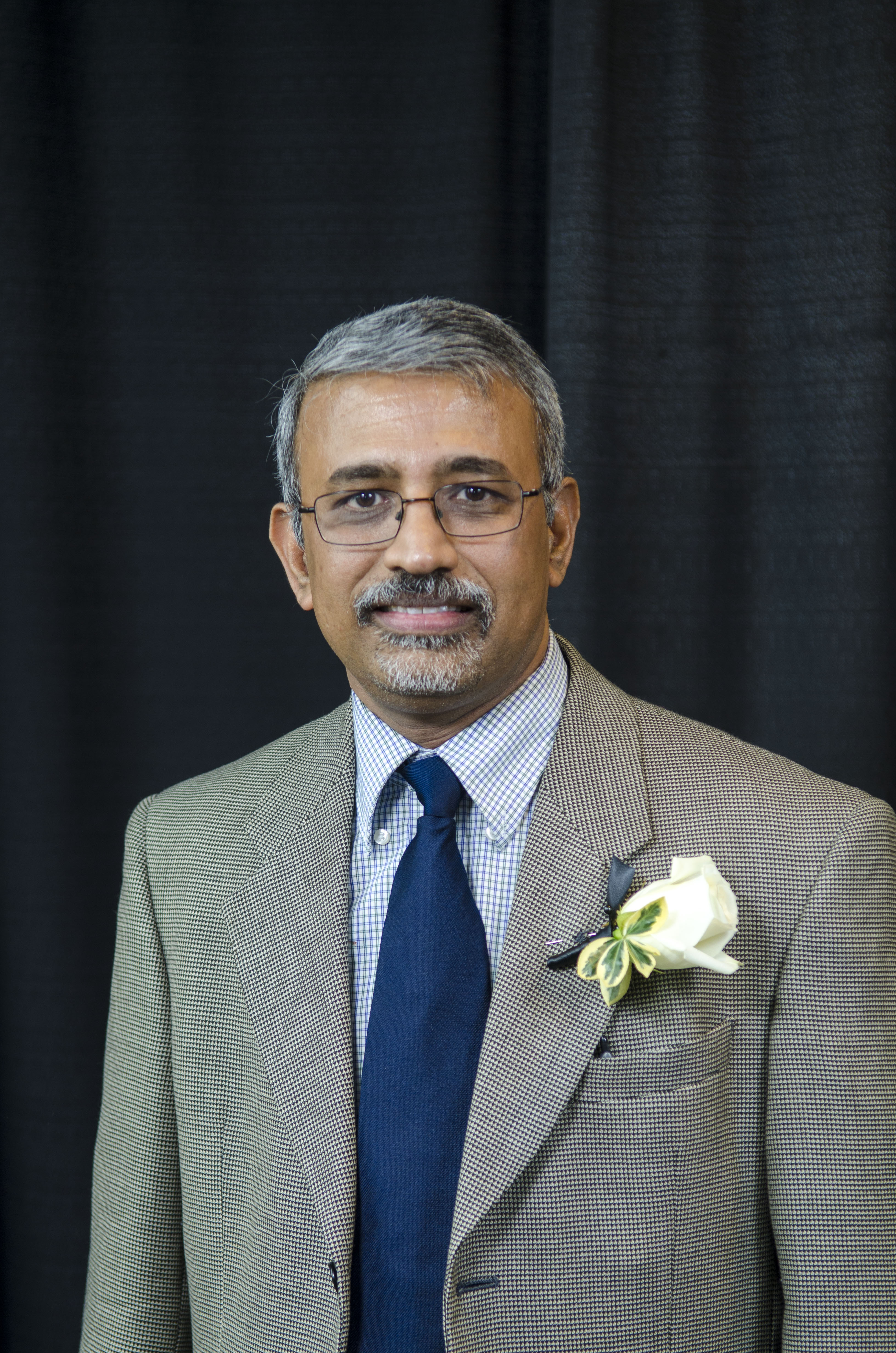
Rajagopalan Balaji is a Professor and Chair in the Department of Civil, Environmental, and Architectural Engineering at the University of Colorado Boulder, with a fellowship at the Cooperative Institute for Research in Environmental Sciences (CIRES). His work bridges climate science and water resources engineering, focusing on sustainable water management under climate variability. Education: B.Tech from NIT Kurukshetra (1989), M.Tech from Indian Statistical Institute (1991), and Ph.D. in Stochastic Hydroclimatology from Utah State University (1995). Research Themes: Climate drivers of hydrology, ensemble hydroclimate projections, decision support systems, Indian monsoon variability, big-data techniques, and Arctic sea-ice dynamics. Scientific Contributions: Over 50 peer-reviewed publications, including work on Science (2005) and Geophysical Research Letters (multiple). His Google Scholar articles (2025-2020) emphasize wildfire impacts on water quality, Bayesian forecasting models, and global lake storage trends. Awards: Devendra Lal Memorial Medal (2021), CIRES Fellow (2001-present). Students: Supervised 11 M.S. and Ph.D. students, including Katrina Grantz (Ph.D. 2005) and James Prairie (Ph.D. 2005). Applied Interests: Climate-informed reservoir operations, construction safety analytics, and paleoclimate reconstructions for modern water planning. His team develops tools like the SCHAAKE Shuffle for weather resampling.
Giovanni Leonelli is an Associate Professor at the University of Parma in the Department of Chemical, Life and Environmental Sustainability Sciences . His work integrates geomorphology , climatology , and stable isotope analysis to study climate reconstruction and environmental dynamics in alpine and glacial systems. Focuses on climate change impacts in mountainous regions like the Alps, Northern Apennines, and Chilean Andes Utilizes tree-ring isotopes and GIS analysis for reconstructing environmental shifts Teaches courses on Cartography and GIS , Applied Geomorphology , and Geomorphological Hazards His recent publications emphasize debris flow characterization , glacier retreat effects , and dendrochronological climate proxies . Scientific awards include recognition for his master’s thesis in Natural and Environmental Sciences by the Lombardy Institute (2003).
Danielle Touma is a Research Assistant Professor at The University of Texas at Austin, affiliated with the Institute for Geophysics within the Jackson School of Geosciences. She holds an office at ROC and can be reached at danielle.touma@utexas.edu . Her research focuses on climate variability, extreme climate events, hydroclimatology, and natural hazards. She is based at 2305 Speedway Stop C1160, Austin, TX 78712-1692, and can be contacted at (512) 471-6048. Research Interests : Dr. Touma’s work examines the interplay between climate change and extreme weather phenomena, including wildfire risk amplification, hydroclimatic volatility, and the impacts of vegetation dynamics on precipitation regimes. She also explores attribution methods for linking extreme events to anthropogenic climate drivers, with a focus on nonstationary climate systems and multi-dimensional risk assessment. Key Contributions : Her research has highlighted the growing frequency of extreme rainfall events and their compounding effects on post-wildfire landscapes, as well as the role of stratospheric aerosol injection in fire weather mitigation. She has also contributed to understanding tropical cyclone precipitation patterns and the regional impacts of greenhouse gas emissions. Affiliations and Labs : As part of the Institute for Geophysics, she collaborates on projects addressing climate variability and natural hazards, leveraging advanced modeling and observational data to inform environmental policy and disaster preparedness.