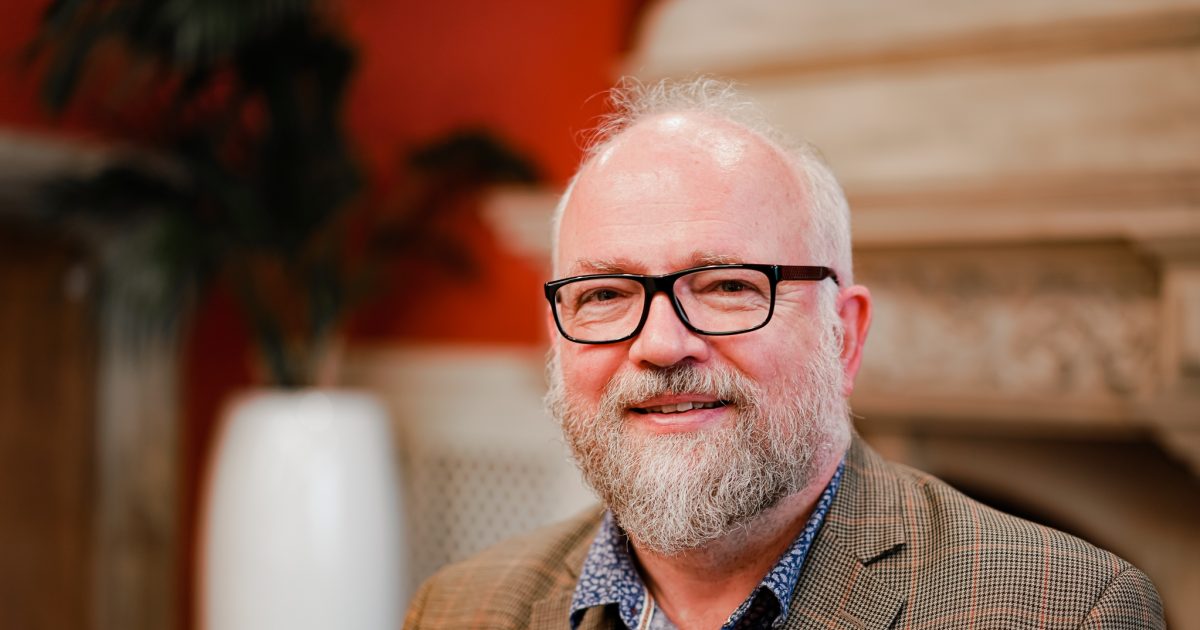
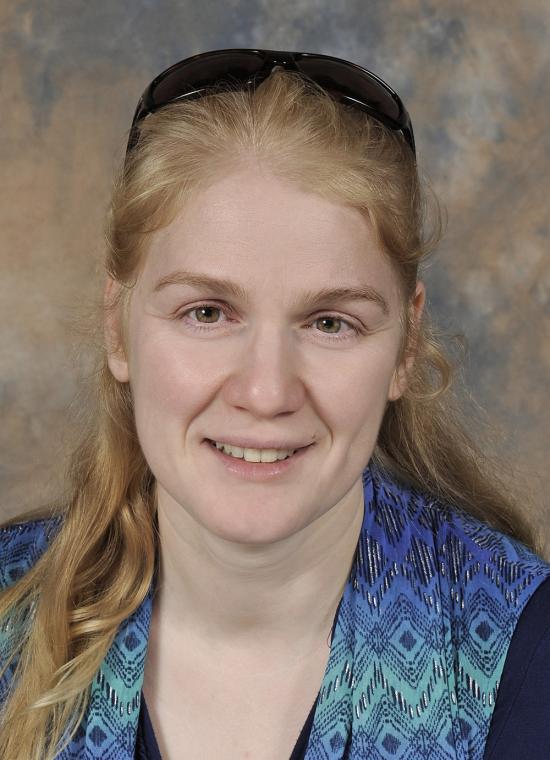
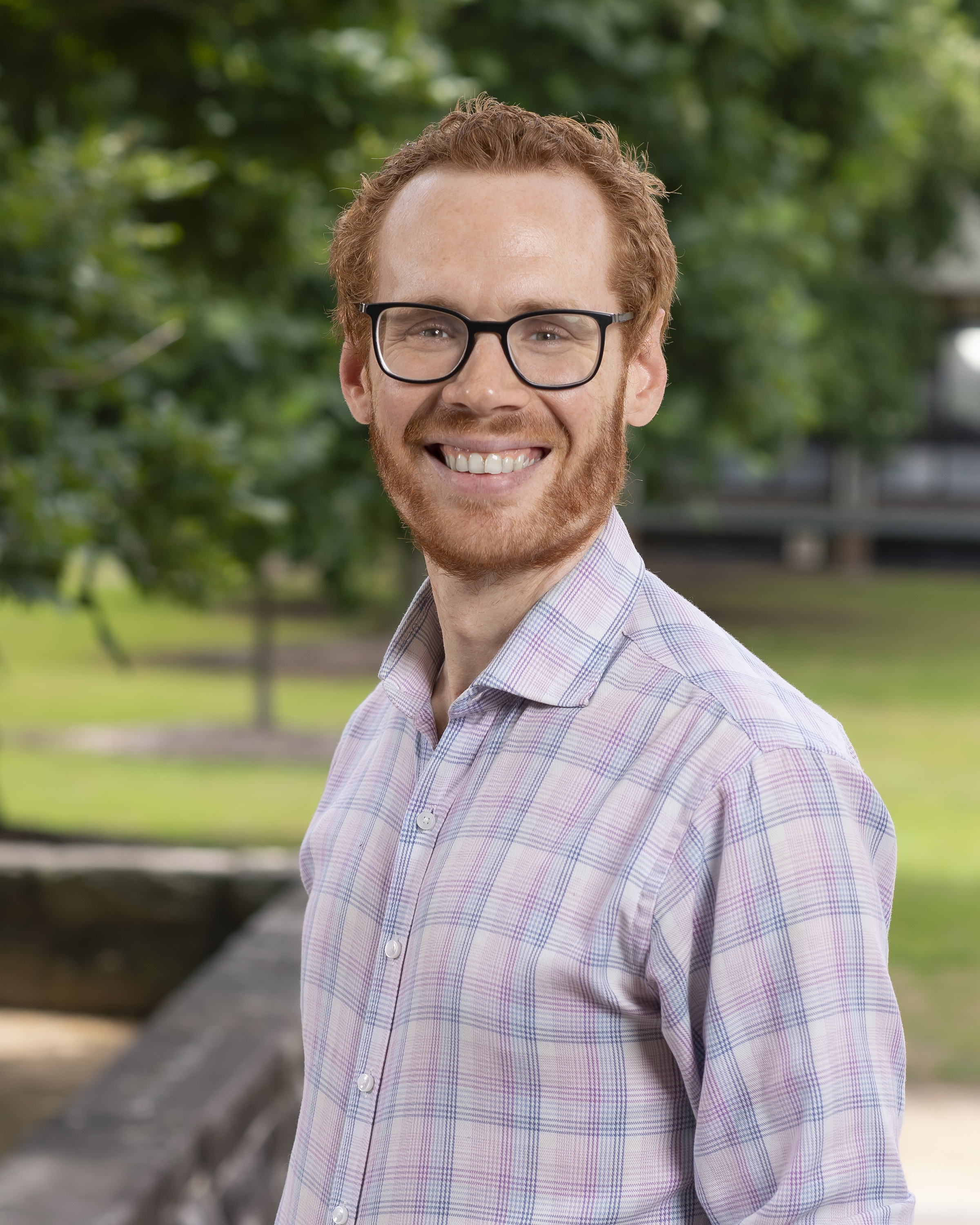
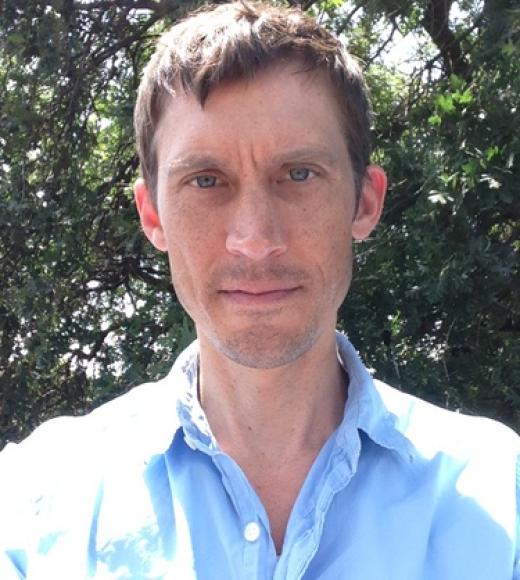
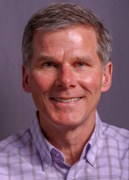
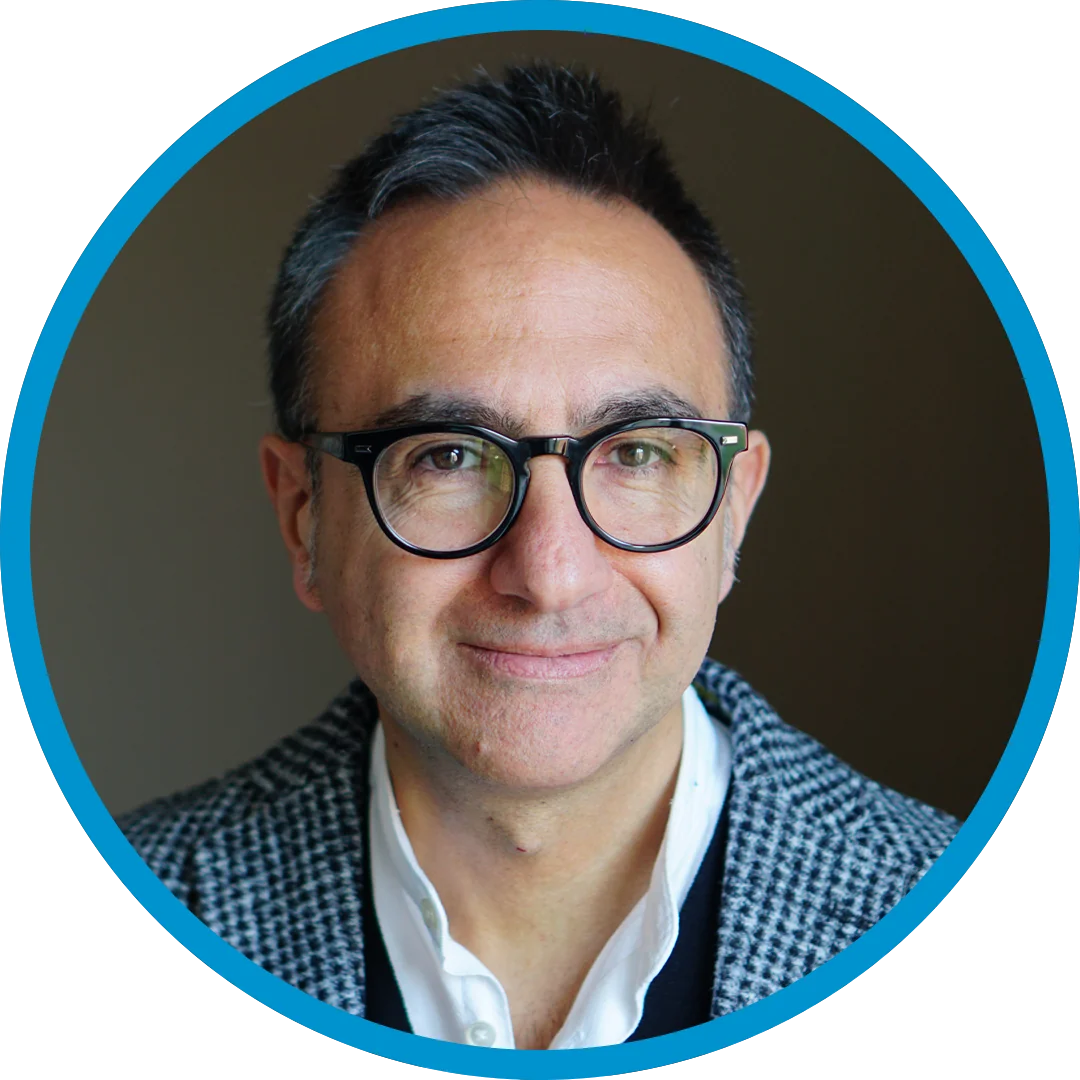
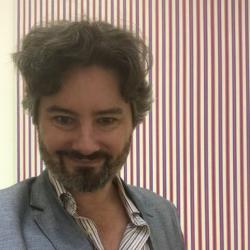
Clark Warner serves as a Lecturer in the Management and Organizations Department at the Questrom School of Business, Boston University. His teaching expertise spans organizational behavior, ethics, corporate social responsibility, and quantitative data analysis, where he has instructed courses including ethics, organizational behavior, and corporate social responsibility. His educational background is extensive and interdisciplinary: PhD in Management, Université de Toulouse-Capitole (2021) Master of Theological Studies, Boston University School of Theology (2016) MA and MBA, Stanford University (1993) AB in Applied Mathematics-Computer Science, Harvard University (1985) Warner's research centers on behavioral ethics, with specific focus on the development and use of intuition in ethical decision-making. As an active member of the International Humanistic Management Association, his work bridges theoretical frameworks with practical applications in organizational contexts, emphasizing humanistic approaches to business ethics and ethical leadership development. His recent publications reveal a strong thematic trajectory examining dual-process ethical decision-making mechanisms and the foundational concept of people mattering in workplaces. These works demonstrate interdisciplinary integration of psychology, management theory, and ethical frameworks, highlighting how intuitive processes interact with rational analysis in moral choices within organizational settings.
Dr. Andrea R. English is a Senior Lecturer in Philosophy of Education at the Moray House School of Education and Sport, University of Edinburgh. She holds significant academic leadership roles, including President-Elect of the John Dewey Society and Editor-in-Chief of IMPACT: Philosophical Perspectives on Education Policy . Her research focuses on productive struggle in learning, dialogic pedagogy, and decolonizing education. She earned her doctorate from Humboldt University Berlin and has taught globally, including at Mount Saint Vincent University and Humboldt University Berlin. Dr. English leads the Productive Struggle Lab and the Listening Study Group, emphasizing anti-oppressive and democratic educational approaches. She coordinates teacher education initiatives and supervises PhD students exploring critical thinking, inclusive education, and decolonization. Her work bridges philosophy and practice, addressing how teachers foster student resilience through pedagogical listening, particularly in STEM education. She actively contributes to Scotland’s anti-racist curriculum project and collaborates internationally on transformative learning and ethical teaching practices. Dr. English’s teaching spans undergraduate and postgraduate programs, including courses on critical thinking, inclusive pedagogy, and John Dewey’s educational philosophy. Her funded research explores AI tools for identifying student struggle and the role of negativity in transformative learning. She frequently presents at global conferences, advocating for dialogic teaching and moral education reform.
David De Roure is Professor of e-Research at the University of Oxford and Academic Director of both the Digital Scholarship initiative and the Laboratory for AI Security Research. He is also an Honorary Research Professor at the Royal Northern College of Music (RNCM), where he serves as Technical Director of the Centre for Practice & Research in Science & Music (PRiSM). His work bridges computer science, digital humanities, cybersecurity, and music through his distinctive interdisciplinary approach. De Roure received his PhD in 1990 supervised by David W Barron and Peter Henderson, with research in Lisp and distributed systems. Prior to joining Oxford in 2010, he was Professor of Computer Science at the University of Southampton and Director of the Centre for Pervasive Computing in the Environment. His career spans multiple institutions and research domains, reflecting his commitment to interdisciplinary work. De Roure's research focuses on new methods of digital scholarship, innovation in knowledge infrastructure, cybersecurity, and computational approaches to music. His work uniquely combines humanities (digital musicology), social sciences (social machines and web science), engineering (Internet of Things), and computer science (distributed systems, AI). A key theme is empowering human creativity through technology rather than replacing humans with AI. He emphasizes co-creation between humans and machines, particularly in music composition where he explores how algorithms can generate fragments for human assembly. His recent publications reveal a strong focus on AI security in IoT systems, digital scholarship methods, and the intersection of music with computational approaches. There's a clear trajectory from foundational work in social machines and web science toward current applications in cybersecurity and music-AI co-creation. His publications consistently bridge technical domains with humanistic inquiry, demonstrating his commitment to interdisciplinary scholarship that addresses real-world challenges. Fellow of the British Computer Society (FBCS) Fellow of the Institute of Mathematics and its Applications (FIMA) Fellow of the Royal Society of Arts (FRSA) Chartered IT Professional (CITP) Turing Fellow at The Alan Turing Institute (2018-2024) De Roure has co-founded three major interdisciplinary initiatives: PETRAS National Centre of Excellence for IoT Systems Cybersecurity (the world's largest socio-technical research center focused on IoT security), the Software Sustainability Institute (dedicated to improving research software), and PRiSM at RNCM. He was Director of the Oxford e-Research Centre from 2012-17 and has led numerous research projects including SOCIAM (The Theory and Practice of Social Machines), FAST (Fusing Audio and Semantic Technologies), and Transforming Musicology. The Laboratory for AI Security Research, which he directs, took its first PhD students in 2024. At Oxford, De Roure chairs the Digital Research Cluster at Wolfson College and oversees the Laboratory for AI Security Research. The PRiSM team at RNCM has produced numerous musical works and performances, including six premieres in New York in 2024. He has been involved in designing gesture recognition software used in many performances and has collaborated on public engagement projects including the Science Together project which released a Hip Hop album. His current work includes exploring Chladni Plates for new musical instrument design and developing algorithmically enhanced instruments.
Gizem Karaali is a Professor of Mathematics and Statistics and Chair of the Mathematics Department at Pomona College, part of The Claremont Colleges. She holds a Ph.D. in Mathematics from UC Berkeley (2004) and a B.S. in Electrical Engineering and Mathematics from Boğaziçi University. Her research spans algebraic structures like Lie algebras, representation theory, and humanistic mathematics, with a focus on integrating social justice into mathematics education. She co-founded the Journal of Humanistic Mathematics and created innovative courses such as the first-year seminar Can Zombies Do Math? to explore mathematics’ humanistic dimensions. Research Interests: Representation Theory, Algebraic Combinatorics, Quantitative Literacy, Mathematics Education, and the intersection of math with social justice. She has published widely in journals like Advances in Mathematics , Ramanujan Journal , and Journal of Humanistic Mathematics . Awards: NSA Young Investigator Award (2011-2013), NEH Enduring Questions Grant (2014-2016), AMS Project NExT Fellow. Active in editorial roles for Journal of Humanistic Mathematics and Numeracy . Teaching: Courses include Calculus, Linear Algebra, Abstract Algebra, and interdisciplinary topics like Mathematics, Philosophy, and the Real World. Advised senior theses in diverse areas including ethnomathematics and quantitative literacy.
Professor Paul Black is a distinguished academic at King's College London, affiliated with the School of Education, Communication & Society and the Centre for Research in Education in Science, Technology, Engineering & Mathematics (CRESTEM). His career has centered on advancing educational assessment and pedagogy, particularly in STEM disciplines. He is renowned for pioneering formative assessment strategies that integrate learning and evaluation to enhance student outcomes. Research Interests: Black's work explores how teacher-led assessments can drive classroom innovation, emphasizing the synergy between formative and summative methods. His contributions address global educational challenges, including standardization debates and the equitable implementation of assessment frameworks. Key Article Trends: His publications from 2013–2020 highlight themes like ethical assessment practices, the historical impact of formative assessment, and bridging theory-practice gaps in STEM education. Recent works underscore the adaptability of assessment strategies in diverse cultural and linguistic contexts. Professional Impact: The 2023 book 'Educational Assessment: The Influence of Paul Black on Research, Pedagogy and Practice' documents his legacy, noting his influence on scholars worldwide. His ideas have informed policy responses to crises like pandemic-related exam cancellations. Advising & Grants: While specific grants or advisees are not detailed here, his work reflects collaborative research with educators and policy experts. The CRESTEM centre serves as a hub for advancing his vision of holistic educational reform.
Dr. Michael Stevens is a Senior Lecturer at University of New South Wales (UNSW) Canberra , where he focuses on advanced manufacturing and biomedical device control systems . His work bridges digital manufacturing for SMEs with smart artificial heart technologies , emphasizing industry collaboration and translational research. Specializes in physiological control systems for rotary blood pumps Develops unobtrusive fall detection systems for dementia patients Leads international projects on total artificial heart development Education : B.Eng (Medical - First Class Honours), Queensland University of Technology (2010) PhD in Physiological Control for Biventricular Assist Devices, University of Queensland (2014) Research Trends show consistent focus on: Machine learning for biomedical diagnostics (2018–2025) mmWave radar and thermal sensors in patient monitoring (2021–2024) Computational fluid dynamics in artificial heart modeling (2016–2024) Physiological control algorithms for rotary blood pumps (2011–2025) Scientific Awards : UNSW Scientia Education Award (2021) for contextual teaching Heart Foundation Runner-up for "Smart Artificial Hearts" pitch (2021) ARC PGC Supervisor Award (2017) for mentoring Grants & Supervision : Holds over $6 million in competitive funding including MRFF and ARC grants. Currently supervises 4 PhD students while maintaining industry partnerships with VitalCare and BiVACOR. Labs & Facilities : Works across UNSW Engineering labs and Graduate School of Biomedical Engineering platforms, including mock circulation loops and high-performance computing clusters for CFD simulations.
Karen Barad is Distinguished Professor of History of Consciousness at the University of California, Santa Cruz, with joint appointments in Philosophy and Feminist Studies. She holds a Ph.D. in theoretical particle physics from SUNY Stony Brook and previously held a tenured position in a physics department before transitioning to interdisciplinary work. At UCSC, she is affiliated with the Humanities Division and serves as faculty in the History of Consciousness Department and Philosophy Department. Barad earned her Ph.D. in Physics from SUNY Stony Brook, building a foundation in theoretical particle physics before moving toward more interdisciplinary work. Her unique trajectory from physics to philosophy and feminist studies has shaped her distinctive approach to questions of matter, meaning, and ethics. Barad's research spans multiple disciplines including science studies, multispecies studies, physics, nuclear studies, continental philosophy, epistemology, ontology, ethics, politics, and philosophy of physics. Her theoretical framework of "agential realism" has significantly influenced feminist theory, science studies, and philosophy. She approaches questions of matter, meaning, and ethics through the lens of quantum physics, developing concepts like intra-action, diffraction, and entanglement as philosophical tools. Her work challenges traditional boundaries between subject/object, nature/culture, and human/non-human. Her publications over the last two decades reveal a consistent engagement with the intersections of science, philosophy, and ethics, particularly focusing on how material-discursive practices shape reality. Barad's work increasingly addresses ecological concerns, nuclear legacies, and questions of justice, demonstrating how scientific concepts can inform ethical and political thought. Her writing moves fluidly between theoretical physics, feminist theory, and philosophical inquiry, creating new pathways for understanding the entanglement of matter and meaning. honorary doctorate from Gothenburg University Fulbright fellowship Kresge College Teaching Award Barad has received significant recognition for her scholarship and her research has been generously supported by major funding organizations including the National Science Foundation, the Ford Foundation, the Hughes Foundation, the Irvine Foundation, the Mellon Foundation, and the National Endowment for the Humanities. As Co-Director of the Science & Justice Graduate Training Program at UCSC, Barad has mentored numerous graduate students and shaped interdisciplinary research connecting scientific inquiry with questions of social justice. Her collaborative work with scholars like Jenny Reardon has helped establish science & justice as a vital field of inquiry. Barad's approach to mentoring emphasizes the ethical responsibilities inherent in scientific and philosophical practices. Through her leadership in the Science & Justice Research Center, which she helped found, Barad has fostered innovative collaborations across disciplines, creating spaces where scientists, humanists, and social scientists can work together on pressing contemporary issues. Her work continues to influence multiple fields, with ongoing projects exploring nuclear colonialism, ecological ethics, and the material consequences of scientific practices.
Lee M. Miller is a Professor and Vice Chair of Academic Affairs in the Department of Neurobiology, Physiology and Behavior at the University of California, Davis, affiliated with the Center for Mind and Brain. His research focuses on neuroengineering, computational neuroscience, and neural mechanisms underlying attention, speech processing, and multisensory integration. Research interests include the development of neural prosthetics, decoding of neuromuscular signals for prosthetic control, and understanding how auditory and visual systems interact during speech perception and attentional processes. His work bridges clinical applications (e.g., cochlear implants) with fundamental neuroscience, leveraging tools like electrophysiological recordings, EEG/MEG, and advanced signal processing techniques. Recent publications highlight innovations in electromyographic speech neuroprosthetics, the topology of neuromuscular signals, and the neural basis of speech-in-noise processing. Miller’s studies emphasize translational potential, such as improving speech synthesis from brain signals and designing haptic feedback systems for motor coordination. His contributions have advanced understanding of neural mechanisms in sensory integration, auditory attention, and the impact of cognitive factors on perception. Miller maintains a lab dedicated to these interdisciplinary efforts, with a focus on both basic science and clinical applications.
Garrett Sullivan is Edwin Erle Sparks Professor of English at Pennsylvania State University's College of Liberal Arts and Sciences. He specializes in Renaissance literature with particular focus on Shakespeare, Marlowe, and early modern drama. His interdisciplinary research examines embodiment, cognition, and cartography in literary works. Education includes Ph.D. from Brown University (1995) and B.A. from Davidson College (1983). Primary research explores connections between literary production and historical concepts of space, geography, and the body. Publications include monographs on landscape representation, memory in Renaissance drama, sleep in romance literature, and Shakespeare in wartime cinema. Recent work analyzes cinematic adaptations of Shakespeare during World War II. Co-edits the Oxford University Press series Early Modern Literary Geographies and has curated exhibitions at Folger Shakespeare Library. Research supported by NEH and Folger Library fellowships.
Eleanor Goerss serves as a Research Fellow at the Institute of Art History within the Faculty of Humanities at the University of Tübingen, working since 2023 on the DFG-funded project 'History as a Visual Concept: Peter of Poitiers’ Compendium historiae' under Prof. Andrea Worm’s direction. Her position involves reconstructing medieval visual epistemology through manuscript analysis and digital editing methodologies. Her academic foundation includes a PhD in History of Art and Architecture from Harvard University (2016–2023) and a dual BA in Art History and Mathematics from Columbia University (2012–2016). This quantitative-humanistic training informs her analytical approach to medieval diagrammatic systems. Goerss specializes in the visual representation of knowledge in 13th–14th century Europe, with particular focus on Lullian art, genealogical diagrams, and manuscript transmission networks. Her research interrogates how medieval thinkers encoded theological and philosophical concepts through recursive visual structures, examining the interplay between mathematical logic and religious epistemology in diagrammatic forms. This work bridges art history, cognitive science, and medieval studies through rigorous paleographic analysis. Her 2024 publications reveal a cohesive trajectory exploring recursive structures in Lullian figures, manuscript adaptation of dialogue forms, and Peter of Poitiers’ historiographical diagrams. Collectively, these works demonstrate how medieval visual systems functioned as cognitive tools for knowledge organization, with particular attention to the materiality of manuscripts and cross-institutional transmission patterns across European intellectual centers. Her scientific recognition includes: Kress Institutional Fellowship at Institut national d’histoire de l’art, Paris (2021–2023) DAAD Research Grant at University of Freiburg (2019–2020) Frederick Sheldon Traveling Scholar Grant from Harvard University (2019–2020) Certificate of Distinction in Teaching, Harvard University (2018–2019) Art History Senior Thesis Prize, Columbia University (2016) As lead researcher on the DFG project, Goerss directs manuscript digitization efforts and develops analytical frameworks for reconstructing Peter of Poitiers’ genealogical systems. Her grant portfolio demonstrates consistent success in securing competitive funding from German, French, and American institutions, reflecting the international significance of her work. Though no current advisees are documented, her Harvard teaching award indicates pedagogical excellence in undergraduate instruction. She operates within the DFG project team at Tübingen’s Institute of Art History, collaborating with Prof. Andrea Worm on the scholarly edition of Peter of Poitiers’ Compendium. This interdisciplinary team integrates codicology, digital humanities, and historical theology to produce critical editions and visual reconstructions of medieval knowledge systems.
Florin George Călian is a researcher at the Center for Ecumenical Research within the Lucian Blaga University of Sibiu , with a focus on the intersection of history of philosophy , religious studies , and classical philology . He co-founded the Dan Slușanschi School of Classical and Oriental Languages , which offers Latin, Ancient Greek, Biblical Hebrew, and Sahidic Coptic to international students. Călian’s editorial work includes coordinating the Review of Ecumenical Studies (RES) and the Ratio publishing series. Education : Master’s in Greco-Roman History (University of Bucharest), Master’s in Medieval Studies (Central European University), PhD in Philosophy (Central European University, supervised by Gabor Betegh). Research Areas : Ontology of numbers in Plato, sacred space politics, Neoplatonic theology, historiography of alchemy, and interdisciplinary links between philosophy and Eastern Orthodox Christianity. Recent Publications include analyses of Plato’s mathematical ontology, critiques of Hagia Sophia’s reconversion, and editorials on the problem of evil. His 2021 monograph Numbers, Ontologically Speaking: Plato on Numerosity reinterprets Platonic dialogues through mathematical philosophy. Academic Engagements span roles as a coordinator for the Dan Slușanschi School, editorial board member for RES and SCHOLÉ , and organizer of conferences bridging theology and philosophy.
Stefano Redaelli is a Professor at the University of Warsaw in the Artes Liberales faculty. He serves as the Coordinator for First-Degree Studies in Mediterranean Culture. His academic journey spans both humanities and exact sciences. Habilitation (2017): Thematic cycle on intersections between humanistic and scientific culture in 20th-21st century Italian literature PhD in Humanities (2011): Literary representations of madness in Mario Tobino, Alda Merini, and Carmelo Samonà Master in Writing (2006, University of Siena) PhD in Physics (2003, University of Warsaw): Chaos and noise in solar wind flow Master in Physics (1994, University of L’Aquila) Research Interests focus on: Contemporary Italian literature Medical humanities and illness narratives Intersections between science and literature Madness in literary discourse Therapeutic writing and creativity Interdisciplinary translation studies Publications highlight trends in: Mental health narratives (2022-2023) Science-literature interface (2016-2019) Dantean and Holocaust intertextuality (2017) Mathematical poetics (2016) Grants include: NCN Opus 16 (2019-2023): Madness post-Basaglia Law NCN Sonata 4 (2013-2016): Science-humanities dialogue Visiting Fellowships : 2025: University of Pisa 2024: University G. D’Annunzio di Chieti (Psychology faculty) 2021: University G. D’Annunzio di Chieti (Humanities faculty)
Professor Alexander Marr FSA holds the position of Professor of Renaissance and Early Modern Art and is Head of the Department of History of Art at the University of Cambridge. He is a Fellow and Dean of Discipline at Trinity Hall, and previously taught at the University of Southern California and University of St Andrews. His research focuses on European art from 1400 to 1800, with an emphasis on intellectual and literary contexts, science, and social history. Key areas include the intersection of art and science, humanist patronage, and the transformation of ingenuity into Romantic genius. Educated at Sotheby's Institute of Art and the University of Oxford (MSt and DPhil in Modern History), Marr has directed major research initiatives such as the ERC-funded Genius before Romanticism project. His awards include the Philip Leverhulme Prize and a Senior Fellowship at the Paul Mellon Centre. Marr leads the Leonardo da Vinci Society and serves as a Trustee of the Walpole Society. His recent publications include Rubens's Spirit (2021) and Logodaedalus (2018), with an upcoming monograph on Holbein's wit. Marr's work explores topics like visual puns in Holbein's portraits, the cultural history of ingenuity, and Descartes' philosophical legacy. He directs research projects at CRASSH and collaborates with institutions like the Van Abbemuseum.
Luca D'Acci is an Associate Professor in Sustainable Urban Forms and Evaluations at the Polytechnic of Turin, affiliated with the Interuniversity Department of Territorial Sciences, Planning and Policies (DIST). He holds additional affiliations as a Senior Research Fellow at the University of Portsmouth and as a member of research networks at the University of Birmingham and Erasmus University Rotterdam. His academic journey includes international roles such as Head of Urban Environment at Erasmus University Rotterdam and visiting researcher positions at the University of Oxford, University of Cambridge, and ETH Zurich. Education: MSc in Architecture-Science of Cities, Polytechnic of Turin (2003, cum laude) PhD in Economic Assessments, Polytechnic of Turin (2007) BSc in Mathematics, University of Turin (2007) BSc in Construction Engineering, Polytechnic of Turin (2009, cum laude) Post-PhD in Urbanism, University of Campinas (2010) Anthropology, University of Oxford (2020, 20 credits) Luca D'Acci’s research focuses on urban morphology, urban allometry, isobenefit urbanism, and the socio-economic-environmental impacts of urban form. His work bridges humanistic and quantitative approaches, integrating engineering, architecture, economics, and anthropology. He investigates how urbanicity, urban form, and spatial configuration influence well-being, sustainability, and resilience. His recent publications (2023–2025) reveal a strong trend toward computational modeling and simulation of urban growth, particularly through the lens of isobenefit urbanism —a concept he has pioneered. These works combine cellular automata, agent-based modeling, and morphogenetic frameworks to simulate sustainable urban futures. He also explores fractal patterns in housing markets, the psychology of urban living, and the mental costs of urbanicity. His research spans disciplines including urban science, environmental psychology, urban economics, and complex systems. Scientific Awards and Honors: Fellow, Erasmus Happiness Economics Research Organisation (EHERO), Erasmus University Rotterdam (2022–) Senior Research Fellow, University of Portsmouth (2017–) Fellow, Cluster for Sustainable Cities, University of Portsmouth (2017–2020) Fellow, Urban Morphology Research Group, University of Birmingham (2016–2021) Member, Cambridge Networks Network, University of Cambridge (2016–) Honorary Fellow, University of Birmingham (2016–) Luca D'Acci actively advises PhD students as a member of the Doctoral Collegium for Urban and Regional Development at Politecnico di Torino (2020–2024). He has secured and contributed to significant research grants, including projects funded by the World Bank, Asian Development Bank, European Commission, EPSRC, Lincoln Institute of Land Policy, and University College London (Future Urban Growth Lab). His editorial roles include membership on the boards of PLOS ONE , PLOS Mental Health , and Humanities & Social Sciences Communications . Labs and Research Networks: Future Urban Growth Lab (UCL, 2019–) LEUr Urban Ecology Lab (UFSC, 2022–) URban Evolution Morphology (UReM, 2024–) Erasmus Universiteit Rotterdam (EHERO, 2022–2024) Spatial Intelligence Unit (SPIN Unit), Estonia (2013–) International Society of Biourbanism (2013–)
Hui Luan Tran is a Junior Professor (Assistant Professor) at the Institute of Art History and Musicology, Department of Art History, at Johannes Gutenberg University Mainz since May 2022. Previously, they served as Research Assistant at the University of Bonn (2020-2022), Central Institute for Art History Munich (2019-2022), and Ludwig Maximilian University of Munich (2014-2016). Holding a PhD in Art History from LMU Munich (2018), their dissertation focused on 'Pre-Ideological Dying: The Death of Cleopatra as a Motif in Image Theory' under Prof. Dr. Ulrich Pfisterer. Their research explores early modern art theory, visual arts (Italy 16th-17th centuries, France 17th-18th centuries), image theory, ecological and economic dimensions of artistic creation, and the history of optics and visual perception. They are co-leader of the working group 'Ecology of Premodern Art' and involved in research networks like the Postdoc Forum for French Studies. Publications include a monograph on Cleopatra's death motif (2020), chapters on military art, Aby Warburg's education, and interdisciplinary studies in journals like Zeitschrift für Kunstgeschichte. Their work bridges art history, historiography, and scientific visualization. Current projects examine printing press logos at the Gutenberg Museum, funded by Tavolozza-Stiftung and Ernst von Siemens Kunststiftung. Scientific Awards: DAAD-funded Research Stay (Florence, 2017-2018) Postdoc Fellowship at Central Institute for Art History Munich (2018-2020) Gielen-Leyendecker-Stiftung Funding for Warburg Research Grants: Gefördert u.a. von der Tavolozza-Stiftung und der Ernst von Siemens Kunststiftung