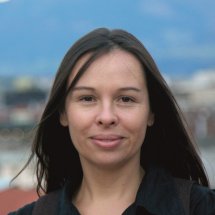
Clark Warner serves as a Lecturer in the Management and Organizations Department at the Questrom School of Business, Boston University. His teaching expertise spans organizational behavior, ethics, corporate social responsibility, and quantitative data analysis, where he has instructed courses including ethics, organizational behavior, and corporate social responsibility. His educational background is extensive and interdisciplinary: PhD in Management, Université de Toulouse-Capitole (2021) Master of Theological Studies, Boston University School of Theology (2016) MA and MBA, Stanford University (1993) AB in Applied Mathematics-Computer Science, Harvard University (1985) Warner's research centers on behavioral ethics, with specific focus on the development and use of intuition in ethical decision-making. As an active member of the International Humanistic Management Association, his work bridges theoretical frameworks with practical applications in organizational contexts, emphasizing humanistic approaches to business ethics and ethical leadership development. His recent publications reveal a strong thematic trajectory examining dual-process ethical decision-making mechanisms and the foundational concept of people mattering in workplaces. These works demonstrate interdisciplinary integration of psychology, management theory, and ethical frameworks, highlighting how intuitive processes interact with rational analysis in moral choices within organizational settings.
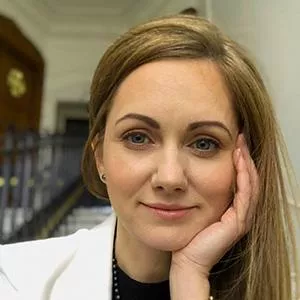
Astrid Wagner is a Senior Scientist and Deputy Director at the Institute of Philosophy (IFS) of the Spanish National Research Council (CSIC) in Madrid. She holds a PhD in Philosophy from Technische Universität Berlin, recognized by the National University of Distance Education (UNED), and previously served as professor for 20 years at TU Berlin. Her research focuses on philosophy of culture, science epistemology, and digital society challenges. Key interests include philosophy of language, perception phenomenology, pragmatism, and ethical implications of digital transformation. Recent work examines uncertainty dynamics, trust frameworks, post-truth phenomena, infodemics, conspiracy theories, cognitive vulnerability, and digital citizenship. Wagner leads major research initiatives including the INconRES project on ethical-epistemological keys to digital social dynamics (2021-2025), the ORTEGA-CM interdisciplinary innovation consortium on José Ortega y Gasset's legacy (2024-2026), and previously directed the RESPONTRUST project combating COVID-19 disinformation (2021-2023). She co-leads the DESTERRA project analyzing disinformation's societal foundations (2022-2025) and participates in UCM's Rationality, Knowledge and Action research group. She serves on Spain's Committee of Experts for National Security against disinformation, advises the Congressional Science Office, and holds editorial positions at the Journal of Ortega Studies. Wagner contributes to GENET Association's Gender Studies Network and juries for the Princess of Asturias Award and Javier Muguerza Philosophy Prize.
Michael R. Dove is the Margaret K. Musser Professor of Social Ecology and Professor of Anthropology at Yale University, where he also serves as Curator of Anthropology at the Peabody Museum and Co-Coordinator of the Combined YSE/Anthropology Doctoral Program. With over forty years of research experience, his work focuses on environmental anthropology, particularly the environmental relations of local communities in South and Southeast Asia. Dove earned his B.A. from Northwestern University and his M.A. and Ph.D. from Stanford University. His academic journey has spanned decades of field research in Asia, including more than a dozen years conducting long-term studies on human ecology in Borneo and Java, developing government research capacity in Indonesia, and advising the Pakistan Forest Service on social forestry policies. Professor Dove's research interests encompass the anthropology of climate change, cultural and political aspects of natural hazards and disasters, indigenous environmental knowledge and practice, environmental institutions and movements, history of environment-related sciences, and multispecies ethnography. His work often examines how local environmental systems interact with national and global markets, politics, and ideologies, with a focus on problematizing orthodox approaches to conservation and development. He has made significant contributions to understanding human-environment relations through both theoretical frameworks and practical applications. Dove's recent scholarly output demonstrates a progression toward more integrated approaches to environmental challenges, blending historical perspectives with contemporary issues. His publications increasingly focus on the intersections of climate change, social justice, and indigenous knowledge systems, while maintaining his longstanding interest in Southeast Asian environmental relations. The work shows a growing emphasis on post-humanist approaches and multispecies ethnography, reflecting broader trends in environmental anthropology while maintaining his distinctive focus on political ecology and institutional analysis. As an educator, Professor Dove has supervised numerous doctoral and master's students, many of whom have gone on to win research awards and secure prestigious positions. He organizes separate research labs for doctoral students from Yale School of the Environment and other departments, as well as for joint YSE/Anthropology doctoral students. His advisees typically conduct international research and have excellent records of obtaining research support both within and beyond Yale. The Dove Lab at Yale School of the Environment serves as a hub for environmental anthropology research, focusing on topics including natural resource management, property rights, power struggles, household energy transitions, and human-wildlife interactions. The lab fosters a collaborative environment with 30-50 students working on related issues each year, characterized by supportive peer dynamics rather than competition. It also contributes to policy and social change through its research and the work of its alumni.
Dr. Andrea R. English is a Senior Lecturer in Philosophy of Education at the Moray House School of Education and Sport, University of Edinburgh. She holds significant academic leadership roles, including President-Elect of the John Dewey Society and Editor-in-Chief of IMPACT: Philosophical Perspectives on Education Policy . Her research focuses on productive struggle in learning, dialogic pedagogy, and decolonizing education. She earned her doctorate from Humboldt University Berlin and has taught globally, including at Mount Saint Vincent University and Humboldt University Berlin. Dr. English leads the Productive Struggle Lab and the Listening Study Group, emphasizing anti-oppressive and democratic educational approaches. She coordinates teacher education initiatives and supervises PhD students exploring critical thinking, inclusive education, and decolonization. Her work bridges philosophy and practice, addressing how teachers foster student resilience through pedagogical listening, particularly in STEM education. She actively contributes to Scotland’s anti-racist curriculum project and collaborates internationally on transformative learning and ethical teaching practices. Dr. English’s teaching spans undergraduate and postgraduate programs, including courses on critical thinking, inclusive pedagogy, and John Dewey’s educational philosophy. Her funded research explores AI tools for identifying student struggle and the role of negativity in transformative learning. She frequently presents at global conferences, advocating for dialogic teaching and moral education reform.
Prof. Dr. Peter Vorderer is a full professor of Media and Communication Studies at the University of Mannheim's Philosophical Faculty, leading the Institute for Media and Communication Studies. He holds a PhD from TU Berlin and has held professorships at institutions such as the University of Toronto, USC's Annenberg School, and the Free University of Amsterdam since 2010. His research focuses on media psychology, exploring media effects, entertainment media narratives, and the pervasive role of digital connectivity in everyday life. Education includes studies at Heidelberg and Mannheim Universities, with additional training at NYU and the University of Michigan. He has served as editor for Zeitschrift für Medienpsychologie and Media Psychology , and as President of the International Communication Association (2014-2015). His work bridges psychological and societal impacts of media, emphasizing entertainment's cognitive and emotional dimensions. Key research themes include media-induced resonance theory, mobile communication's psychological effects, and digital dependency. His 15 most recent articles (2014-2020) reveal a focus on media's role in well-being, social behavior, and cognitive processing. Awards include ICA Fellowship (2016). His lab contributes to understanding media's dual hedonic/eudaimonic functions and their societal implications.
Luis Botella Garcia Del Cid is a Full Professor at the Department of Psychology and Speech Therapy, Faculty of Psychology, Educational Sciences and Sports, Ramon Llull University. His work focuses on therapeutic alliance, constructivism, and clinical psychology. University: Ramon Llull University School: Faculty of Psychology, Educational Sciences and Sports Department: Psychology and Speech Therapy Email: lluisbg@blanquerna.url.edu His research spans therapeutic alliance, psychometrics, constructivist approaches, and clinical psychology. He investigates therapist personal style, team solutions in psychotherapy, and adolescent interactions with social media influencers. His recent projects include ACM Psicopersona and Proceso Terapéutico funded by AGAUR. Key publications (2022-2023) address dyadic coping during the pandemic, fuzzy cognitive mapping in clinical supervision, and teamwork in psychotherapy. Articles span interdisciplinary collaborations across 27 countries with a focus on psychological distress and relationship quality. He collaborates with the Psicopersona research group and participates in systems-thinking-based clinical models. His work integrates constructivist theory with practical applications in therapeutic contexts and adolescent digital behavior.
Bonnie Honig, Nancy Duke Lewis Professor at Brown University, holds joint appointments in Modern Culture and Media and Political Science , with courtesy roles in Religious Studies and Theater and Performance Studies . Her scholarly work intersects democratic theory , feminist critique , and cultural analysis , examining how inherited political narratives shape collective action. Education: PhD (Johns Hopkins, 1989), MSc (London School of Economics, 11981), BA (Concordia University, 1980) Central to her research is a reexamination of classical texts like Sophocles' Antigone and Euripides' Bacchae to develop agonistic democratic models . Her Antigone, Interrupted (2013) challenges heroic readings of Antigone, proposing instead a collective feminist politics rooted in textual counter-interpretations. Public Things: Democracy in Disrepair (2017) argues for shared objects as democratic orientation devices , while Emergency Politics (2009) analyzes crisis responses beyond Schmittian frameworks. The 2021 dual publications A Feminist Theory of Refusal and Shell Shocked: Feminist Criticism After Trump extend these themes through Trump-era analysis and queer theoretical lenses . Scientific Awards: 2023-24 Guggenheim Fellowship 2012 David Easton Prize 2012 Okin-Young Award 2007-08 American Philosophical Society Fellowship 1994 Scripps Prize Affiliated with the American Bar Foundation and Digital Democracy Group at Simon Fraser University, Honig's teaching spans feminist theory , Politics and Film , and advanced seminars on Arendt . Her Shell Shocked analysis of Trump-era disaster patriarchy connects classical feminist frameworks to contemporary political crises.
Nuria Chinchilla is Professor of People Management in Organizations at IESE Business School, University of Navarra, and holder of the Carmina Roca and Rafael Pich-Aguilera Chair of Women and Leadership. She founded the International Center for Work & Family and the I-WIL Initiative (IESE Women in Leadership), which focuses on fostering diversity in business and women's leadership globally. Her educational background includes a PhD in Business Administration and Economics, an MBA from IESE Business School, and a Law Degree from the University of Barcelona. She began her full-time professorship at IESE in 1984 and has maintained an active academic career spanning over four decades. Professor Chinchilla's research focuses on women and leadership, life course integration, family-responsible organizations, personal and professional career management, and organizational change. Her work examines how women leaders contribute to company development, the role of women on boards of directors, work-family balance, and corporate family responsibility. She has developed frameworks for integrating professional and personal life in harmony, emphasizing the conciliation with oneself as a starting point for broader life integration. Her recent publications reflect trends toward understanding talent management in post-pandemic organizations, sustainable business practices, and the impact of technology on work-life balance. Her research connects leadership development with ecological and humanistic approaches to business, exploring how purpose-driven organizations can create meaningful change. Best Female Manager of the Year by FEDEPE Gold Cross from European Development Foundation (AEFE) Member of Royal Academy of Economic and Financial Sciences of Spain (RACEF) since December 2018 Spanish candidate for UN CEDAW 2012 Professor Chinchilla serves as an advisor to numerous companies and government agencies, and is a member of several advisory boards including the VIP Advisory Board of the European Professional Women's Network, the Board of Trustees of UIC, and was a member of IWF-Spain from 2015-2019. She is a frequent speaker at universities and international conferences worldwide and has served as a visiting professor at business schools across Europe, Latin America, and Africa. Her work through the I-WIL network organizes events connecting women leaders at different career stages and investigates women's leadership impact on organizations.
Laura A. Meek is an Assistant Professor in the Department of Anthropology at the University of British Columbia Okanagan , specializing in Medical Anthropology , Decolonial Science and Technology Studies , and East African research . She holds affiliations with interdisciplinary networks like the UBC-O Science and Technology Studies Collective and co-directs the Storying Otherwise: Creative Ethnographic Writing Hub . PhD, MA in Anthropology (University of California, Davis) MA in Women’s Studies (George Washington University) Honors BA in Comparative Human Development (University of Chicago) Her research examines counterfeit pharmaceuticals and bodily epistemologies in Tanzania, framed through feminist , decolonial , and anti-racist lenses . She investigates leprosy elimination campaigns and fugitive science practices across Africa and Hong Kong, with recent work focusing on creative ethnographic prose and critical disability studies . Her publications span high-impact journals like Social Science & Medicine and Medical Anthropology Quarterly , addressing themes of radical uncertainty and world-making practices . Laura’s 15 most recent articles (2021–2025) analyze: pharmaceutical counterfeits in East Africa, the temporal politics of leprosy , anti-colonial global health , and creative writing as research . Her work bridges Indian Ocean connections and STS frameworks to critique neocolonial health governance. 2025 Collaborative Research Mobility Award 2024 Wenner-Gren Workshop Grant 2023 MAE–MAT Early Career Paper Award 2021 Society for Humanistic Anthropology Creative Ethnographic Prose Prize 2018 Wenner-Gren Dissertation Grant 2013 NSF Doctoral Dissertation Grant She supervises M.A. and Ph.D. students in UBC-O’s Interdisciplinary Graduate Studies programs, particularly in global health , African politics , and STS . Her professional service includes co-chairing the 2026 Cascadia Medical Anthropology Seminar and serving on the American Anthropological Association Nominations Committee .
David De Roure is Professor of e-Research at the University of Oxford and Academic Director of both the Digital Scholarship initiative and the Laboratory for AI Security Research. He is also an Honorary Research Professor at the Royal Northern College of Music (RNCM), where he serves as Technical Director of the Centre for Practice & Research in Science & Music (PRiSM). His work bridges computer science, digital humanities, cybersecurity, and music through his distinctive interdisciplinary approach. De Roure received his PhD in 1990 supervised by David W Barron and Peter Henderson, with research in Lisp and distributed systems. Prior to joining Oxford in 2010, he was Professor of Computer Science at the University of Southampton and Director of the Centre for Pervasive Computing in the Environment. His career spans multiple institutions and research domains, reflecting his commitment to interdisciplinary work. De Roure's research focuses on new methods of digital scholarship, innovation in knowledge infrastructure, cybersecurity, and computational approaches to music. His work uniquely combines humanities (digital musicology), social sciences (social machines and web science), engineering (Internet of Things), and computer science (distributed systems, AI). A key theme is empowering human creativity through technology rather than replacing humans with AI. He emphasizes co-creation between humans and machines, particularly in music composition where he explores how algorithms can generate fragments for human assembly. His recent publications reveal a strong focus on AI security in IoT systems, digital scholarship methods, and the intersection of music with computational approaches. There's a clear trajectory from foundational work in social machines and web science toward current applications in cybersecurity and music-AI co-creation. His publications consistently bridge technical domains with humanistic inquiry, demonstrating his commitment to interdisciplinary scholarship that addresses real-world challenges. Fellow of the British Computer Society (FBCS) Fellow of the Institute of Mathematics and its Applications (FIMA) Fellow of the Royal Society of Arts (FRSA) Chartered IT Professional (CITP) Turing Fellow at The Alan Turing Institute (2018-2024) De Roure has co-founded three major interdisciplinary initiatives: PETRAS National Centre of Excellence for IoT Systems Cybersecurity (the world's largest socio-technical research center focused on IoT security), the Software Sustainability Institute (dedicated to improving research software), and PRiSM at RNCM. He was Director of the Oxford e-Research Centre from 2012-17 and has led numerous research projects including SOCIAM (The Theory and Practice of Social Machines), FAST (Fusing Audio and Semantic Technologies), and Transforming Musicology. The Laboratory for AI Security Research, which he directs, took its first PhD students in 2024. At Oxford, De Roure chairs the Digital Research Cluster at Wolfson College and oversees the Laboratory for AI Security Research. The PRiSM team at RNCM has produced numerous musical works and performances, including six premieres in New York in 2024. He has been involved in designing gesture recognition software used in many performances and has collaborated on public engagement projects including the Science Together project which released a Hip Hop album. His current work includes exploring Chladni Plates for new musical instrument design and developing algorithmically enhanced instruments.
William B Gartner serves as the Bertarelli Foundation Distinguished Professor of Family Entrepreneurship at Babson College's F.W. Olin Graduate School of Business, where he also directs research at the Bertarelli Institute for Family Entrepreneurship. Having joined Babson's faculty in 2017, Gartner brings over 40 years of experience studying entrepreneurial phenomena, with particular expertise in family entrepreneurship dynamics. He previously held distinguished chairs at the University of Southern California and Clemson University, establishing himself as a leading scholar in the field. Gartner earned his PhD, MBA, and BBA from the University of Washington, forming the foundation for his extensive research career. His academic journey began during entrepreneurship's early days in the late 1970s when he took one of the first entrepreneurship courses as an MBA student at the University of Washington, when only six students initially enrolled in the class. Gartner's research primarily explores how families act entrepreneurially, examining topics including entrepreneurial legacy, intergenerational knowledge transfer, and the transformation of family businesses across generations. His work bridges entrepreneurship theory with practical applications, particularly focusing on how entrepreneurial legacies can drive innovation in family businesses. He is particularly interested in the linguistic innovations entrepreneurs employ and how storytelling shapes entrepreneurial identity and practice. His scholarship has evolved to incorporate humanities perspectives, recognizing that literature, philosophy, and history provide valuable insights into entrepreneurial thinking and behavior. Analysis of Gartner's recent publications reveals a strong emphasis on family entrepreneurship as an ongoing process rather than a static state, with increasing attention to methodological innovation in entrepreneurship research. His work demonstrates growing interest in the role of narrative, visual methods, and qualitative approaches to understand complex entrepreneurial phenomena. The research shows consistent focus on family business succession as transformation rather than simple transfer, with increasing attention to adolescent entrepreneurial development and the influence of parenting styles. 2025 — Top 1% of Scholars in all subjects, Stanford/Elsevier's Top 2% Scientist Rankings 2024 — The FamCap25 – The Top FamilyEnterprise Academics, FAMILY CAPITAL MAGAZINE 2022 — Justin G. Longnecker Fellow, United States Association of Small Business and Entrepreneurship 2016 — Dedication to Entrepreneurship Award, Entrepreneurship Division, Academy of Management 2013 — Foundational Paper Award, Entrepreneurship Division, Academy of Management 2005 — International Award for Entrepreneurship and Small Business Research Gartner actively mentors doctoral students and early-career researchers, frequently collaborating on publications addressing complex family business dynamics. His editorial roles as Special Issue Editor for Entrepreneurship and Regional Development and Academy of Management Perspectives demonstrate his influence in shaping research agendas. He has secured significant research funding supporting studies on entrepreneurial legacy, family business succession, and adolescent entrepreneurial development, though specific grant amounts aren't detailed in the available materials. As Director of Research at the Bertarelli Institute for Family Entrepreneurship, Gartner leads initiatives connecting academic research with practical applications for family businesses. His work emphasizes the transformative potential of entrepreneurship within family contexts, challenging traditional notions of family business succession as mere transfer of ownership. Through workshops and seminars, he helps families explore how entrepreneurial legacies can lead to new innovations while preserving core values across generations.
Tatjana Schnell is a Professor of Existential Psychology at MF Norwegian School of Theology, Religion and Society, where she has worked since October 2020. She also holds a fellowship at the Humanistic University Berlin (since 2024). Her professional journey includes academic training in psychology, theology, religious studies, and philosophy across Germany, the UK, and Austria, with a doctorate from the University of Trier (Germany) and habilitation from the University of Innsbruck (Austria), where she founded the Existential Psychology Lab. Education : Psychology, Theology, Religious Studies, and Philosophy from the University of Göttingen, University of London, University of Heidelberg, and University of Cambridge Degree : Doctorate in Psychology (University of Trier, Germany) Habilitation : Psychology (University of Innsbruck, Austria) Tatjana Schnell's research focuses on existential themes including meaning in life, existential health, death attitudes, alienation, and religious/spiritual/secular worldviews. Her work bridges individual psychology with societal and environmental implications, with extensive international collaborations and publications. She has authored key works like "The Psychology of Meaning in Life" (2nd ed., 2025) and "Sinn finden" (2024). Her recent publications examine pandemic psychology, existential resources in gifted adults, workplace spirituality, and meaning-based interventions for chronic pain and cancer rehabilitation. Her research projects include "Making Sense of Volunteering," "Sinnmacher - The Meaning App," and studies on existential resources in palliative care. The Tatjana Schnell website provides further details about her work. Fellow : Humanistic University Berlin (2024) Tatjana Schnell has developed innovative tools like the Sources of Meaning Card Method (SoMeCaM) and Meaning in Work Inventory (ME-Work), with validated versions across multiple cultures. Her work emphasizes the practical application of existential psychology in mental health, organizational behavior, and ecological engagement. She founded the Existential Psychology Lab at the University of Innsbruck and continues to lead impactful research at MF Norwegian School of Theology, Religion and Society.
Dr. Maren Elfert is a Senior Lecturer in International Education at King’s College London, part of the School of Education, Communication & Society. She is affiliated with the Centre for Public Policy Research (CPPR). Previously, she worked at the UNESCO Institute for Lifelong Learning (2000s), earned her PhD in 2016 from the University of British Columbia, and completed a postdoctoral fellowship at the University of Alberta (2017-2018). Education: PhD in Education, University of British Columbia (2016) Professional History: UNESCO staff member (over a decade), Postdoctoral Fellow (University of Alberta), King’s College London faculty since 2019. Her research focuses on global governance of education, particularly the influence of international organizations like UNESCO, OECD, and the World Bank. She explores historical and contemporary dynamics shaping educational concepts and policies, including lifelong learning and the Sustainable Development Goals (SDGs). Her work emphasizes the interplay between international agendas and localized educational practices. Key research outputs include the book Global Governance of Education (2023) and articles examining SDG4’s role in global education policy. Her grants include SSHRC and Spencer Foundation fellowships, along with a British Academy/Leverhulme grant. Awards: SSHRC Postdoctoral Fellowship National Academy of Education/Spencer Foundation Fellowship British Academy/Leverhulme Small Grant Dr. Elfert advises PhD students on international education, global governance, and the historical role of international organizations. She leads the Diffusion of Global Education Policies project funded by the British Academy (2023–2025). Her affiliations include the King’s International Education Research Network, focusing on global education challenges.
Alina Landowska serves as Assistant Professor in the Department of Cultural Studies at the Faculty of Humanities, SWPS University of Social Sciences and Humanities in Warsaw. Her academic profile integrates cultural studies, computational linguistics, and ethics, with significant contributions to understanding moral foundations in digital discourse and technological futures. Her educational background includes degrees in Management and Economics from Gdańsk University of Technology and European Integration from the Pontifical University of John Paul II in Krakow, complemented by international scholarship experiences: SDG Academy (United Nations) Tantur Ecumenical Institute, Jerusalem (University of Notre Dame) Baltic University Program, Uppsala Swedish Institute of Environmental Research, Kalmar Royal Danish Student Fund, Copenhagen Landowska's research investigates cultural evolution through computational discourse analysis, focusing on morality-technology intersections. She pioneers text-mining methodologies to examine moral foundations in social media, anticipatory rhetoric in digital communication, and value-based management frameworks. Her work bridges humanities with data science, analyzing polarization mechanisms and proleptic cues in online environments while exploring cooperation ethics in business contexts. Recent publications demonstrate methodological innovation in mapping technological futures through sentiment/emotion analysis and moral-value detection systems. Her article corpus reveals consistent thematic threads: digital rhetoric analysis (particularly prolepsis functions), moral psychology applications in AI/social media, and cultural evolution studies linking cooperation theory with business ethics. This interdisciplinary approach positions her at the nexus of computational social science and humanistic inquiry. No scientific awards or prizes are documented in her current professional profile. As an educator, Landowska mentors students in discourse analysis methodologies and socio-economic media studies while serving as executive coach with EMCC Poland. Her research leadership extends to co-founding the Institute for Development think tank and representing Employers of Poland at the OECD's Business and Industry Advisory Committee (2016-2018). She previously held vice-presidential roles in the Polish Association of Businesswomen. Landowska maintains active research affiliations with the Humanistic Management Center (University of Lucerne), International Council for Small Business (George Washington University), and ArgDiaP association. Her 2022-2024 tenure with New Ethos Lab advanced dialogue studies in persuasion frameworks, complementing her current work on digital rhetoric's ethical dimensions.
Michał Pałasz, PhD, is an Associate Professor at Jagiellonian University's Faculty of Management and Social Communication, Institute of Culture. His research focuses on management in the Anthropocene, posthumanism, ecological humanities, and climate policy. He serves as a European Climate Pact Ambassador, advocating for socio-environmental change through academic and community engagement. His research interests include exploring non-human agency, degrowth, and critical management studies. He has published extensively on climate action, cultural management, and digital culture, with notable works like Culture Management Must Fuel Socioenvironmental Change (2024) and Language Affects Climate (2024). His work bridges theory and practice, emphasizing inclusive and planetary-bound solutions. Pałasz has collaborated on projects such as Tick-tock, the End of the World (2022), examining multidisciplinary responses to the climate crisis. His academic contributions span journal articles, edited books, and conference presentations, often addressing the intersection of management, culture, and environmental sustainability. He teaches courses on posthumanistic management and climate policy, integrating critical perspectives into education. His work highlights the urgency of rethinking management practices to address polycrisis challenges, advocating for more-than-human-centered approaches.