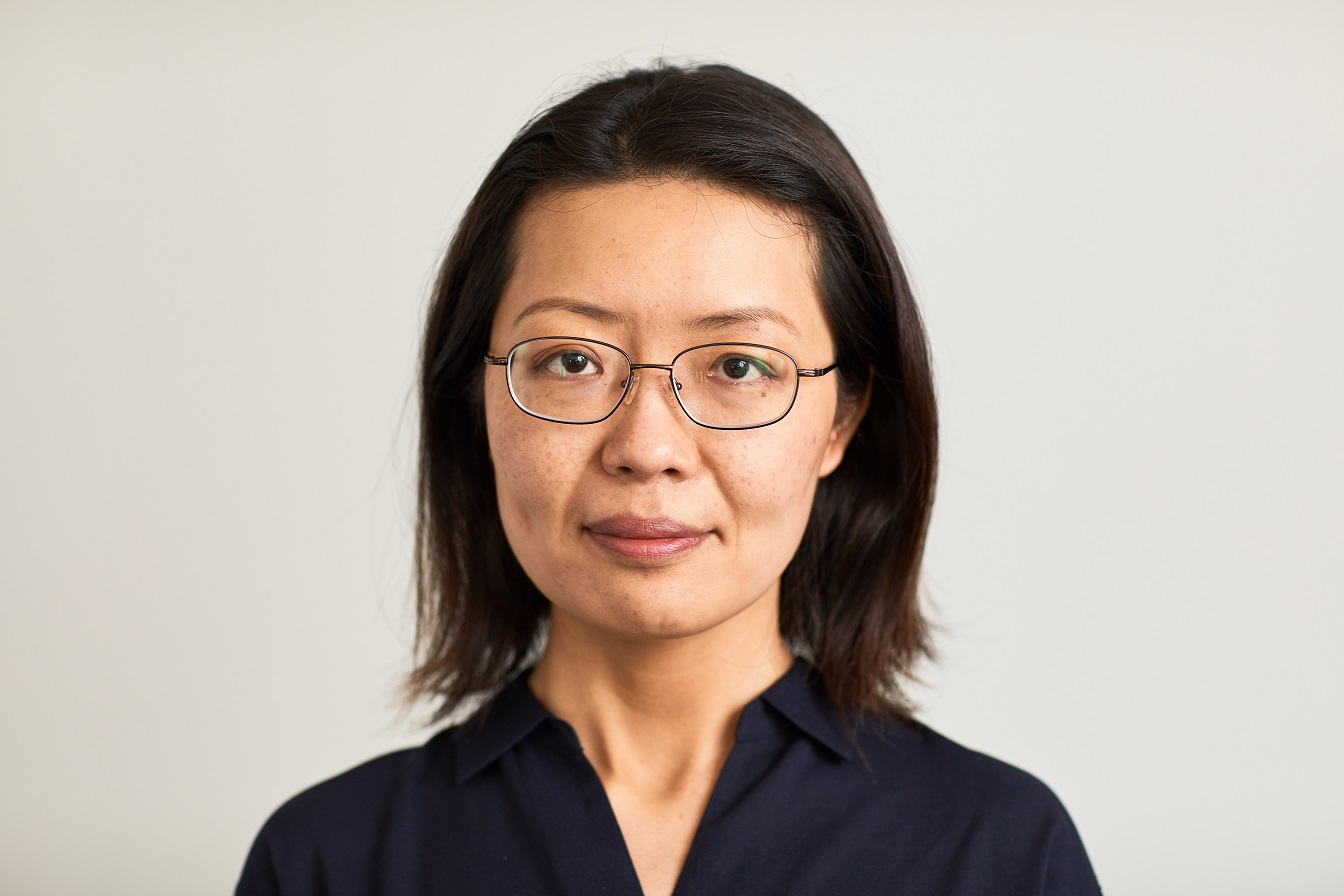
Jana Schaich Borg is an Assistant Research Professor at the Social Science Research Institute at Duke University. She specializes in integrating neuroscience, computational modeling, and emerging technologies to study social decision-making processes and their interactions with internal value representations. As a data scientist, she collaborates with interdisciplinary teams to develop novel statistical approaches for analyzing high-dimensional, multi-modal data. Research interests include Moral psychology and computational ethics Human-AI interaction in decision-making Automated social behavior analysis Neuroscience of social cognition Interdisciplinary data science education Recent publications highlight her focus on ethical AI development, moral preference modeling, and automated behavioral analysis. She teaches IDS 707: Data Visualization at Duke University.
Magnus Liebherr is a Professor at the University of Duisburg-Essen , focusing on Technology Acceptance , Artificial Intelligence , and Sustainable Transportation . His work bridges Business Administration with Human-Computer Interaction , exploring how users adapt to emerging technologies like autonomous vehicles and AI systems. Key research areas include: Acceptance of AI applications in mobility Business model development for climate-neutral transportation Cognitive and psychological factors in technology interaction Digital media effects on adolescent well-being Trust calibration in automated systems His recent publications examine Large Language Model dependency , gamified language learning , and mental workload metrics for autonomous vehicles. While no formal awards are listed, his interdisciplinary work spans psychology , engineering , and business strategy .
Ruth Fong is a Teaching Professor at the Department of Computer Science, Princeton University , where she teaches foundational and advanced AI/ML courses (COS324, COS126) while leading the Looking Glass Lab in explainable AI research. She collaborates closely with the Visual AI Lab and Professor Olga Russakovsky . Education: PhD in Visual Geometry Group, University of Oxford (advised by Andrea Vedaldi , funded by Rhodes Trust and Open Philanthropy ) MSc in Neuroscience, University of Oxford (with Rafal Bogacz , Ben Willmore , and Nicol Harper ) AB in Computer Science, Harvard University (with David Cox and Walter Scheirer ) Research Focus: Pioneering Explainable AI and ML Fairness , with emphasis on post-hoc model understanding, interpretable-by-design architectures, and human-AI interaction frameworks. Her work spans computer vision, self-supervised learning, and neuroscience-inspired methodologies. Publication Trends: Recent papers (2023-2025) analyze interactive explanations , concept salience , and gender artifacts in vision datasets . Earlier work (2017-2020) established foundational techniques in extremal perturbations , backpropagation saliency , and neural network interpretability . Scientific Awards: Princeton Engineering Council Teaching Award (2025) Keller Center Summer Course Development Grant (2025) CHI Honorable Mention Paper Award (2023) Open Philanthropy AI Fellowship (2018) Rhodes Scholarship (2015) Advising: Directly mentored 10 Princeton undergraduates on IW/senior theses projects spanning generative AI , medical imaging fairness , and interactive visualization tools . Grants include Princeton SEAS and Open Philanthropy funding for the Looking Glass Lab. Lab & Team: Leads the Looking Glass Lab with 6 graduate/postgraduate members including Rawand Aziz , Matthew Barrett , and Ben Wachspress . Collaborates with faculty across Princeton and Oxford.
Heng Ji is a Professor at the Siebel School of Computing and Data Science , affiliated with the Department of Computer Science , Electrical and Computer Engineering Department , and multiple research labs including the Coordinated Science Laboratory and Carl R. Woese Institute for Genomic Biology at the University of Illinois Urbana-Champaign. She serves as an Amazon Scholar and Founding Director of the Amazon-Illinois Center on AI for Interactive Conversational Experiences (AICE) and CapitalOne-Illinois Center on AI Safety and Knowledge Systems (ASKS) . B.A. and M.A. in Computational Linguistics from Tsinghua University M.S. and Ph.D. in Computer Science from New York University Her research bridges Natural Language Processing with Vision-Language Models , Knowledge-Enhanced LLMs , and AI for Science (e.g., chemical language modeling). She leads major multi-institutional projects such as DARPA ECOLE MIRACLE , KAIROS RESIN , and DEFT Tinker Bell , while advising governments (U.S. Air Force Data Analytics Expert Panel) and industry (Amazon, Google, IBM). Her work on multimodal reasoning, agent-based systems, and chemical language models (e.g., mCLM ) has been supported by NSF, DARPA, and corporate partners. Recent publications (2025) focus on LLM agents , vision-language integration , and scientific knowledge acquisition . Awards include NSF CAREER , IEEE Intelligent Systems' AI's 10 to Watch , and multiple Outstanding Paper Awards at ACL/NAACL. She advises students like Chi Han (ACL/NAACL awardee) and post-docs Xiusi Chen and Yuji Zhang , and leads the BLENDER Lab , which develops frameworks like WiNELL (Wikipedia updating) and ProteinZero (protein generation). She has also served as NAACL Secretary and Program Co-Chair for ACL-IJCNLP2022. Outstanding Paper Award at ACL2024 Two Outstanding Paper Awards at NAACL2024 Young Scientist by World Laureates Association (2023-2024) AI's 10 to Watch by IEEE (2013) NSF CAREER (2009) Google/IBM/Bosch Research Awards
Yang Song is an ARC Future Fellow and Scientia Associate Professor at the School of Computer Science and Engineering , University of New South Wales (UNSW) . She serves as Associate Head of School (Research) and Co-Director of iCinema , focusing on AI and Computer Vision applications for social good. Education: BEng in Computer Engineering (Nanyang Technological University, Singapore), PhD in Computer Science (UNSW, 2013) Research Areas: Biomedical image analysis, human-centred AI, graph data modeling, neuro-symbolic learning, and AI trustworthiness. Her work develops domain-specific deep learning models for radiological segmentation, histopathology cancer analysis, and 3D reconstruction. Recent projects address explainability in LLMs, fairness in AI, and human-robot interaction frameworks. With over 200 peer-reviewed publications in top venues like CVPR , MICCAI , and NeurIPS , her research spans biomedical imaging, robotics, and general multimodal AI. Scientific Awards include: 2024: ARC Industrial Transformation Research Hub for Human-Robot Teaming 2023: Google Inclusion Research Award 2022: NHMRC Ideas Grant for computational brain imaging 2021: UNSW Engineering Research Excellence Award 2020: Scientia Fellowship (UNSW) 2019: ARC Future Fellowship She supervises 24 current PhD/MPhil students and has graduated 15 advisees, including placements at Harvard University and Siemens Healthineers. Her grants include collaborations with Surf Life Saving Australia and industry partnerships for AI-driven solutions.
Harish Ravichandar is an Assistant Professor at the School of Interactive Computing , Georgia Institute of Technology, and a core faculty member of the Institute for Robotics and Intelligent Machines (IRIM) . He leads the Structured Techniques for Algorithmic Robotics (STAR) Lab , focusing on structured computational frameworks and learning algorithms with inductive biases to enhance robot efficiency, reliability, and self-sufficiency in human-robot collaboration and complex applications like dexterous manipulation and multi-agent coordination. His research bridges robot learning , human-robot interaction , and multi-agent systems , emphasizing stable, frugal, and safe skill acquisition from human demonstrations. Key themes include intention inference , trajectory optimization , and heterogeneous team coordination , often leveraging Koopman operators , hypernetworks , and graph-based methods . Scientific recognition includes the NSF CAREER Award , IEEE MRS Best Paper Award , and Georgia Tech’s College of Computing Outstanding Post-Doctoral Research Award . His work also received the ASME DSCC Best Student Paper Award and P&W Institute Graduate Fellowship . Harish’s educational background includes a Ph.D. in Electrical and Computer Engineering from the University of Connecticut (2018) , an M.S. from the University of Florida (2014) , and a B.E. in Instrumentation and Control Engineering from Anna University (2012) . He previously held postdoctoral and research scientist roles at Georgia Tech before his current position.
W. Hong Yeo is a Professor in the Woodruff School of Mechanical Engineering and Program Faculty in Bioengineering at the Georgia Institute of Technology, where he also directs the WISH Center. He holds adjunct appointments in the Wallace H. Coulter Department of Biomedical Engineering. Previously, he was an Assistant Professor at Virginia Commonwealth University (2014-2016) and a postdoctoral fellow at the University of Illinois Urbana-Champaign's Beckman Institute. Dr. Yeo's research integrates nanomechanics, soft materials, and nano-microfabrication to develop bio-interfaced systems. Key areas include: Flexible Bioelectronics : Wearable/implantable sensors for health monitoring Human-Machine Interfaces : Neural prosthetics and soft robotics Translational Nanoengineering : Nanoparticle biosensing and diagnostics His publications (2023-2025) demonstrate strong focus on wireless health technologies, including multi-modal wearable systems, implantable sensors for cardiovascular/neurological monitoring, and AI-integrated diagnostics. Trends show increasing emphasis on closed-loop therapeutic systems and scalable manufacturing. Awards & Recognition : BMES Innovation and Career Development Award Virginia Commercialization Award Blavatnik Award Nominee NSF Summer Institute Fellowship Research funding sources include MEDARVA Foundation, NIH, DARPA, and industry partners like CooperVision. He leads the Center for Human-Centric Interfaces & Engineering , developing next-generation bio-interfaced systems.
Michael Goldsmith is a Senior Research Fellow at the Department of Computer Science and Worcester College, University of Oxford. He holds multiple leadership positions including Director of the Oxford Martin Programme on AI Threat Detection, Associate Director of the Cyber Security Centre, and Co-Director of the Centre for Doctoral Training in Cybersecurity. His research bridges formal methods, concurrency theory, and practical cybersecurity applications. Goldsmith's research focuses on cybersecurity analytics including threat detection, risk management, and trust frameworks. He pioneered automated cryptoprotocol analysis and investigates multidisciplinary projects spanning mathematical models to socio-technical systems. His core interests include formal verification, AI threat landscapes, privacy architectures, and security protocol design. Analysis of his recent publications reveals strong emphasis on practical cybersecurity challenges: 63% focus on threat detection (especially insider threats), 22% on trust/risk frameworks, and 15% on formal methods applications. His work consistently integrates technical security mechanisms with human factors and organizational contexts. He currently advises Ahmed Salman and has supervised 10+ students including Mary Bispham, Rodrigo Carvalho, and Elizabeth Phillips. His research teams collaborate on projects funded by Technology Strategy Board, government agencies, and industry partners. Goldsmith leads the Oxford Martin Programme on AI Threat Detection and co-directs the Centre for Doctoral Training in Cybersecurity. His research group develops tools for security visualization (CyberVis), trust metrics, and identity management frameworks.
Laurent Tapie is a Senior Lecturer at Paris Descartes University with a focus on Biomedical Engineering, Mechanical Engineering, and CAD/CAM . As Deputy Director of the URB2i research unit and manager of the PlatiNum platform , he coordinates the 3d4care.org consortium . His academic background includes a Doctorate in Mechanical Engineering from École Normale Supérieure de Cachan and authorization to direct research (HDR) from Université Paris 13. Research Interests: Mechanical Engineering, Biomedical Engineering, Medical Devices, CAD/CAM, Shaping of Biomaterials Theses Supervised: 3D evaluation of dento-prosthetic joints, impact of CAD/CAM on dental prosthesis integrity, and metrological evaluations of prostheses. Publications: His work spans dental CAD/CAM systems, surface integrity of prostheses, additive manufacturing, and 3D printing applications during the COVID-19 pandemic . Recent articles focus on data dispersion in CAD/CAM chains, tool-material influence on roughness, and numerical workflow standardization . Scientific Award: Prix du comité scientifique de la session recherche (2019). Projects: Currently leads initiatives like ProGéoMéca (Labex LaSIPS), Bio-Dents (CNRS Biomimicry), and additive process development for multi-material dental aligners .
Prashant Mehta is a Professor of Mechanical Science and Engineering at the University of Illinois at Urbana-Champaign , affiliated with the Coordinated Science Laboratory . His research focuses on controlled interacting particle systems and machine learning applications , particularly in human activity recognition using motion sensors. Education: Ph.D. in Mathematics, Cornell University (2004) M.S. in Electrical & Computer Engineering, University of Massachusetts Amherst (1996) B.E. in Electrical & Electronics Engineering, Birla Institute of Technology & Sciences (1993) Mehta's work has pioneered the feedback particle filter (FPF) algorithm for nonlinear estimation, applied in robotic systems and gesture recognition. His research spans control of combustion instabilities in jet engines, mean-field games , and dynamical systems in aerospace engineering. His publications emphasize nonlinear control theory and stochastic filtering , with recent trends in sensor data pattern recognition and cyber-physical systems . He has received multiple scientific awards , including the MURI award for the Cyberoctopus project and Excellence in Undergraduate Advising Awards . Scientific Honors: MURI Award (2019) for Cyberoctopus Excellence in Undergraduate Advising (2010, 2008) Outstanding Teaching Assistant Award (1994) Senior Member, IEEE Control Systems Society Member, ASME Energy Systems Subcommittee Member, SIAM Dynamical Systems Group Mehta has supervised students like Jin Kim (IEEE CDC Best Student Paper, 2019) and co-founded the startup Rithmio , acquired by Bosch Sensortec . His laboratory develops gesture-detection filters for applications in soft robotics and human-machine interfaces .
Pardis Emami-Naeini is an Assistant Professor of Computer Science at Duke University, with joint appointments in the Sanford School of Public Policy and the Department of Electrical and Computer Engineering. She serves as the Director of the Duke Interdisciplinary Security, Privacy, and Interaction Research (InSPIre) lab and is a Duke Science and Technology Scholar. Her interdisciplinary work bridges computer science, public policy, and electrical engineering, with a focus on developing usable privacy and security solutions that empower individuals from diverse sociodemographic backgrounds. Dr. Emami-Naeini earned her Ph.D. in Computer Science from Carnegie Mellon University in 2020, followed by postdoctoral research at the University of Washington (2020-2022). Her research sits at the intersection of security, privacy, and human-computer interaction, with particular expertise in IoT security, technology-enabled abuse, reproductive health privacy, and smart city security. She has published extensively at flagship venues including IEEE S&P, CHI, CSCW, and SOUPS, with her work covered by major media outlets such as Wired and The Wall Street Journal. Her recent publications reveal a clear trajectory toward examining the human dimensions of security and privacy in emerging technologies, from LLM chatbots for mental health to social robots and period-tracking apps in the post-Roe v. Wade landscape. Her work consistently emphasizes the need for privacy-aware design that accounts for diverse user needs and contexts, particularly for vulnerable populations. Google Systems and ML Research Gift Award (2025) Google AI Research Scholar Program Award (2024) Top 5% Instructor in Duke Trinity College (2024) ORAU Ralph E. Powe Junior Faculty Enhancement Award (2023) Duke Science and Technology Scholar (2022) IEEE S&P paper highlighted in IEEE Security and Privacy Magazine (2021) CyLab Presidential Fellowship (2019) Dr. Emami-Naeini actively mentors several Ph.D. students including Jabari Kwesi, Jessie Cao, and Hiba Laabadli, as well as undergraduate and master's students. Her research has influenced key organizations including the National Institute of Standards and Technology (NIST), Consumer Reports, and the World Economic Forum in creating usable security and privacy labels for smart devices. She serves on numerous program committees including USENIX Security and CHI, and has participated in NSF grant review panels, demonstrating her growing leadership in the security and privacy community. Her InSPIre lab conducts user-centered research to uncover security and privacy needs of diverse stakeholders, with a particular focus on marginalized communities. The lab's work spans multiple domains including intimate partner violence, reproductive health, virtual reality, and smart cities, always with a strong emphasis on translating research findings into practical tools and policy recommendations.
Miroslav Pajic serves as a Professor in the Department of Electrical and Computer Engineering at Duke University's Pratt School of Engineering. He also holds joint appointments as Associate Professor in the Thomas Lord Department of Mechanical Engineering and Materials Science and Associate Professor of Computer Science. As Director of Master's Studies, he oversees the graduate program in Electrical and Computer Engineering and teaches numerous courses spanning embedded systems, cyber-physical systems design, and robotics. Education: Ph.D. in Electrical and Computer Engineering from University of Pennsylvania (2012) Miroslav Pajic's research focuses on the design and analysis of cyber-physical systems (CPS) with varying levels of autonomy and human interaction. His work spans the intersection of embedded systems, artificial intelligence, machine learning, control theory, formal methods, and robotics. He specializes in developing high-assurance autonomous systems with applications in robotics, automotive systems, and medical devices, with particular emphasis on CPS security and resilient autonomy. His research addresses fundamental challenges in creating systems that can operate reliably in uncertain environments while maintaining security against potential cyber attacks. Analysis of Pajic's recent publications reveals a strong interdisciplinary research program bridging theoretical foundations with practical applications. His work spans secure sensor fusion for distributed autonomy, medical applications of CPS (particularly deep brain stimulation for neurological disorders), and innovative sensing technologies for autonomous vehicles. A significant portion of his research addresses security challenges in cyber-physical systems, including stealthy GPS attacks on UAVs and methods for attack-resilient state estimation. His publications increasingly integrate machine learning techniques with traditional control theory to create more adaptive and robust autonomous systems. Pajic actively mentors graduate students and leads research groups focused on cyber-physical systems security and high-assurance autonomy. His research is supported by multiple grants, including the NSF AI Institute for Edge Computing (Athena), which he co-leads. He has received funding from various sources to support his work on secure and resilient cyber-physical systems, medical device security, and autonomous vehicle technologies. Pajic collaborates extensively with medical researchers on applications of cyber-physical systems in healthcare, particularly in deep brain stimulation for neurological disorders. His work bridges the gap between theoretical control systems and practical implementations in safety-critical domains, with a growing emphasis on translating research into real-world applications that improve system security and reliability.
Miguel Ángel Bernal Merino serves as a Part-Time Lecturer in the Department of Modern Philology, Translation and Interpretation at the University of Las Palmas de Gran Canaria. Concurrently, he acts as convener of the MA in Translation at the University of Roehampton in London, managing its Specialised Translation, Audiovisual Translation, and Intercultural Communication pathways since 2005. His academic profile bridges theoretical research and industry application in localization disciplines. PhD in The Localisation of Video Games, Imperial College London MSc in The Localisation of Multimedia Interactive Entertainment Software, Imperial College London Certificate in Software Localisation, University of Limerick CELTA, University of Cambridge MPhil in Lip-Synched Dubbing, Universidad de Alicante MA in Hispanic Literature, University of Rhode Island BA in English & Spanish Linguistics, Universidad de Alicante Bernal Merino's research pioneers the expansion of Translation Studies into interactive media domains. His work on video game localization examines interactivity, cultural adaptation, glocalisation, and playability, while his audiovisual translation research investigates creativity in lip-synched dubbing, subtitling, and audiodescription. He extends these frameworks into gaming-based language learning through haptic environments and multisensory reinforcement, exploring physiological aspects of multilingual cognition and polysemiotic neural networks. This multidisciplinary approach fundamentally challenges traditional boundaries in translation theory. His publication trajectory reveals evolving industry-academia integration, shifting from foundational game localization frameworks (2008-2015) toward user-centered research and educational applications (2018-2024). Recent work emphasizes measurable business impacts through quality localization, regional market adaptations, and crowd-sourced methodologies, demonstrating consistent influence on professional standards across gaming and translation sectors. Fellow of the Higher Education Academy Bernal Merino supervises doctoral research on mobile game localization, transmedia fan experiences, and historical game content translation while developing industry-academia pipelines through projects like AHRC's Media Across Borders. His funded initiatives—including Maximising ROI through Quality Game Localisation and Video Games for Language Learning—bridge theoretical innovation with commercial implementation, focusing on glocalisation strategies, interactivity metrics, and playability optimization. These collaborations connect European universities, gaming studios, and localization service providers. As chair of the IGDA Localization SIG and member of GIR Discourse, Communication and Society, he directs international forums for game localization discourse. His work with Routes into Languages promotes audiovisual media in language education, while REF-readiness collaborations enhance research excellence across European institutions through his professional network spanning industry conferences like GDC Summit and Game Global.
Jethro Johnson is an Innovation Track Principal Investigator at the Kennedy Institute of Rheumatology and Deputy Director of the Oxford Centre for Microbiome Studies (OCMS) at the University of Oxford. His work integrates computational genomics and microbiome research to explore host-microbiome interactions in health and disease. PhD in Nutritional Ecology (University of Auckland, 2012) MRC Career Development Fellowship Former postdoctoral researcher at Jackson Laboratory for Genomic Medicine Research focuses on: Mechanistic understanding of gut microbiome impacts on metabolic diseases Multi-omic data integration for host-microbiome studies Computational approaches to microbiome analysis Methodological developments in 16S rRNA gene profiling Publications emphasize microbiome-disease associations, methodological innovations, and computational genomics applications across human and mouse models. Key themes include metabolic dysfunction, immune interactions, and microbial diversity analysis. Scientific recognition includes: MRC Career Development Fellowship in Computational Genomics As OCMS Deputy Director, he contributes to advancing microbiome research infrastructure and collaborative projects while leading his own computational genomics group at the Kennedy Institute.
Dr. Jiahong Chen is a Lecturer in Law at the University of Sheffield School of Law . His research focuses on the intersection of law and technology, particularly Data Protection Law , Cybersecurity Law , Law and AI , and Internet Regulation . He serves as Departmental EDI Director and Deputy LLM Programme Director. PhD, University of Edinburgh LLM, China University of Political Science and Law LLB, China University of Political Science and Law His research examines regulatory challenges in smart homes , large language models , and data ethics . Current projects include the ESRC-funded "The Internet of Tactical Engagement (IoTE)" and RAI UK's "Addressing Socio-technical Limitations of Large Language Models" . Publications span GDPR interpretation, health data regulation, and smart device accountability. He teaches modules on Information Technology Law , Data Privacy and Governance , and Consumer Law .