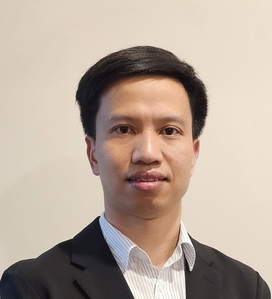
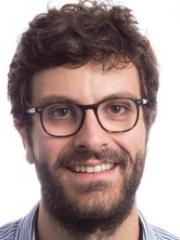
Dr. Sirui Li is a Lecturer at Murdoch University's School of Information Technology within the College of Science, Technology, Engineering and Mathematics. Her research focuses on Artificial Intelligence, Natural Language Processing (NLP), Machine Learning, Knowledge Graphs, Data Analysis, Temporal Data, and Multi-modal Models, with applications in medicine, agriculture, and mining. She collaborates with industry partners like BHP and has published in journals such as Food Chemistry and Knowledge and Information Systems , as well as conferences like ICSME and IJCNN. Education: Bachelor of Advanced Computing (Honours) in Computer Science at Australian National University Master of Computing (Specialising in AI) at ANU Ph.D. in Information Technology (AI) at Murdoch University Research interests include interdisciplinary applications of AI, such as clinical coding privacy solutions, disease spread modeling, and drug repurposing for pandemics. Her work emphasizes practical industry integration, demonstrated through awards like the 2024 EMNLP Best Demo Award and the 2023 Iron Ore Circuit Hackathon innovation prize. Professional roles include IEEE Western Australia Section committee membership, conference chair positions, and peer review for top journals. She actively mentors students pursuing Honours, Master's, or PhD projects in her areas of expertise.
Dr. Alireza Nili is a Senior Lecturer in Service Science at QUT's School of Information Systems within the Faculty of Science. His expertise spans digitization of customer-centric services, AI/chatbots, IoT/IIoT, and sustainable technologies. He holds a PhD from Victoria University of Wellington and has coordinated large-scale courses like IT Systems Design (IFB103), achieving top teaching scores. Nili's research focuses on service ecosystems, trust in digital services, and public/retail sector innovations. He has secured over $1.4M in industry grants for projects involving Cisco, Amazon, and Services Australia. His awards include the 2023 Educator of the Year and multiple top conference paper recognitions. Nili supervises PhD students at Level 3 mentoring status and contributes to major conferences as track chair/associate editor. Research highlights include frameworks for chatbot governance, IOT in agriculture, and AI ethics. His work appears in IEEE Software , Communications of the ACM , and MIT Sloan Management Review . Current projects address consumer trust in AI technologies and spatial data systems. Nili's interdisciplinary approach combines design science with empirical methodologies to bridge theory and practice in digital service innovation.
Dr. Thilina Halloluwa is a Teaching Focused Lecturer in the Department of Human-Centred Computing at The University of Queensland (UQ). He holds a PhD in Human-Computer Interaction from Queensland University of Technology (2019) and a Computer Science undergraduate degree from the Sri Lanka Institute of Information Technology. With over 15 years of academic and industry experience, his research emphasizes real-world impact in education technology, financial inclusion, smart agriculture, and HCI. Educational Background: PhD in Human-Computer Interaction, Queensland University of Technology (2019) Bachelor of Computer Science, Sri Lanka Institute of Information Technology Research Interests: Education for All: Leveraging technology to enhance collaborative learning and social experiences in education. Human Money Interaction: Designing ethical AI solutions for financial services, particularly for underserved communities. Smart Agro: Developing AI-driven tools for crop disease detection, yield optimization, and precision agriculture. Software Project Estimation: Improving effort estimation accuracy through explainable AI (Metrix project). Key Contributions: Developed UrbanAgro (tomato disease detection) and BellCrop (bell pepper disease datasets). Pioneered Dhana Labha , a financial management tool for rural Sri Lankan communities. Advanced online exam proctoring systems for low-resource settings. Previous Roles: Lecturer at University of Sydney (2023) Senior Lecturer at University of Colombo (2013–2023) Lab/Team Affiliations: Smart Agro Project: AI-driven agricultural solutions Metrix Initiative: Software project estimation frameworks
Jon McCormack is a Professor jointly appointed in Monash University's Faculty of Art, Design & Architecture (MADA) and Faculty of Information Technology. He founded and directs SensiLab, a research facility focusing on computational creativity, human-machine interfaces, and generative systems. His work spans electronic media art, evolutionary music, and artificial life. McCormack holds a PhD in Computer Science from Monash University, along with degrees in Computer Science, Applied Mathematics, and Film/Television. Research interests include computational creativity, tangible interfaces, and cybernetic systems. Notable projects include 'Explainable Artificial Creativity' (ARC-funded) and 'Building 4.0 CRC,' addressing architectural innovation through AI. He has been recognized with awards for collaborative projects like the Blundstone Intelligent Footwear for Healthcare. McCormack's recent articles explore AI-driven art, generative systems, and interdisciplinary design. His work bridges artistic practice with technical innovation, emphasizing ethical and creative dimensions of human-AI collaboration. SensiLab serves as a hub for practice-based research in digital media and interactive systems. Education: PhD in Computer Science, Monash University (2004) Bachelor of Science (Honours), Computer Science/Applied Mathematics, Monash University (1987) Graduate Diploma in Film/TV, Swinburne University (1986) Bachelor of Science, Computer Science/Applied Mathematics, Monash University (1985) Key Projects: Lead investigator on 'Explainable Artificial Creativity' (2022–2026) Co-investigator in 'Building 4.0 CRC' (2020–2027), exploring AI-driven architectural design Awards: 2022 Designers Australia Award for Blundstone Footwear 2020 'On the Machine Condition' Prize McCormack's lab, SensiLab, fosters collaborations across disciplines, producing exhibitions, software, and theoretical frameworks for computational creativity. He actively supervises PhD students in practice-based research, emphasizing the intersection of art and technology.
Didar Zowghi is a Senior Principal Research Scientist and Science Team Leader at CSIRO Data61, Australia's national science agency. His work focuses on advancing ethical AI systems, data quality frameworks, and requirements engineering methodologies. He leads research initiatives addressing challenges in AI governance, diversity/inclusion in technology, and human-centered AI development. Research interests include AI ethics, data completeness in healthcare systems, and the application of machine learning in requirements engineering. His contributions span theoretical frameworks for responsible AI patterns, empirical studies on user perceptions of AI tools like M365 Copilot, and analysis of AI's role in global diplomatic practices. Zowghi has published extensively on topics ranging from blockchain in supply chains to pedagogical innovations in software engineering education. His work often bridges technical systems and societal impacts, emphasizing real-world implementation challenges through collaborative industry-academia projects. Notable outputs include the Responsible AI Pattern Catalogue and studies examining barriers to data quality in IoT platforms. He has pioneered frameworks linking innovation initiatives to occupational skill requirements and developed tools like Elica for dynamic requirements knowledge extraction in agile teams.
Dr. Teresa Wang is a Senior Lecturer in Data Science at Monash University's Faculty of Information Technology, specializing in entity/user modeling, relational/structural machine learning, and graph/network analysis. She holds a Ph.D. from the University of Queensland and degrees from Nanjing University. Currently, she directs the Master of Data Science Program and teaches courses like FIT5201 Machine Learning. Her research focuses on social, e-commerce, and health data modeling, with notable projects including the Knowledge Enriched Approach for Effective Personalization (2025–2027) and collaborations on AI in Mental Health and Site Safety. Dr. Wang has co-authored over 59 publications, emphasizing areas like ontology matching and multimodal data analysis. She actively supervises PhD students and contributes to initiatives like the CSIRO Next Generation Graduates Program for clean energy and sustainability. Education: Ph.D. in Computer Science (2017), University of Queensland Master of Computer Science (2013), Nanjing University Bachelor of Software Engineering (2010), Nanjing University Research Interests: Entity modeling, spatio-temporal data analysis, graph mining, recommender systems, and health/medical records mining. She explores applications in social media, e-commerce, and healthcare sectors. Projects: "Knowledge Enriched Approach for Effective Personalization" (2025–2027) "AI for Clean Energy and Sustainability" (2023–2027) "CSIRO Next Generation Graduates Program: AI in Mental Health" (2023–2027) "Large-scale multimodal knowledge management" (2022–2025) Grants & Collaborations: Engaged with CSIRO, Crank Group, and Pola Practice Pty Ltd. Her work aligns with UN SDGs in education and sustainable energy systems. Labs/Teams: Part of the Monash Energy Institute and Monash Data Futures Institute, contributing to interdisciplinary AI and energy research.
Associate Professor Sonny Pham leads research in artificial intelligence at Curtin University's School of EECMS. His work balances theoretical foundations with practical applications in computer vision, data mining, and deep learning. As head of the IAMAI research group, he collaborates with industry partners on security systems, healthcare AI, and sustainable technologies. His research explores: Computationally efficient deep learning architectures Compressed sensing for high-dimensional data Robust statistical methods for real-world problems Applications in computer vision and industrial automation Recent publications demonstrate a focus on medical imaging interpretation and efficient neural networks, with applications spanning radiology report generation, semantic segmentation for autonomous systems, and cybersecurity. His team's work consistently bridges theoretical AI advancements with industrial applications. Honors include: Multiple WANMA Awards (2021-2024) for industry-impactful research INCITE Award for social impact technology (2024) IEEE Young Author Best Paper Award (2010) Over $5M in competitive research funding including MRFF and DFAT grants He leads the IAMAI research group with 12+ graduate students and coordinates Curtin's Master of Artificial Intelligence program. Industry collaborations include Alcoa Australia, iCetana, and HyprFire.
Professor David Taubman is a distinguished academic serving as Professor and Deputy Head of School (Research) at the School of Electrical Engineering and Telecommunications (EE&T) at the University of New South Wales (UNSW) in Sydney, Australia. He is also co-director of Kakadu Software Pty. Ltd. and its affiliates Kakadu R&D and Kakadu GPU. With a career spanning over three decades, Professor Taubman has made significant contributions to the field of image and video compression, most notably as the author of the EBCOT coding algorithm adopted in the JPEG2000 international standard. Professor Taubman earned his B.Sc. in Mathematics and Computer Science (1986) and B.E. (Medal) in Electrical Engineering (1988) from the University of Sydney, followed by an M.Sc. (1992) and Ph.D. (1994) in Electrical Engineering from the University of California at Berkeley. His professional journey includes engineering work at the Electricity Commission of N.S.W. (1988-1990), research positions at Hewlett-Packard Laboratories in Palo Alto (1994-1998), and an academic career at UNSW where he progressed from Senior Lecturer (1998-2003) to Associate Professor (2004-2009) and finally to Professor (2009-present). He has held various leadership roles including Head of the EE&T Telecommunications Research Group (2003-2014), Head of the EE&T Signal Processing Research Group (2014-present), Director of Research for the School of EE&T (2011-2016), and Deputy Head of School (Research) since 2017. Professor Taubman's research interests center on image and video compression, with particular expertise in JPEG2000 standards and implementations. His work spans signal processing, wavelet transforms, scalable video coding, motion modeling, and multimedia systems. He has pioneered numerous compression algorithms and frameworks, including the EBCOT coding algorithm that became central to the JPEG2000 standard. His recent research focuses on efficient motion modeling with cuboidal partitioning, learned lifting-based transform structures, and high-throughput implementations of JPEG2000 for video applications. His work bridges theoretical foundations with practical implementations, as evidenced by the commercially successful Kakadu Software tools that have garnered around 500 commercial licensees. Analysis of Professor Taubman's recent publications reveals a consistent focus on advancing compression technologies with particular emphasis on scalability, efficiency, and adaptability. His work spans traditional image compression (JPEG2000 extensions), video coding (cuboid-based partitioning for UHD/360-degree video), and emerging applications (nanopore sequencing data compression). A notable trend is the integration of machine learning techniques with traditional compression frameworks, as seen in his work on learned lifting-based transform structures. His research maintains strong connections to real-world applications across diverse domains including medical imaging, astronomical data processing, and genomic sequencing. IEEE Fellow Engineers Australia Fellow (by invitation) Professor Taubman has served as Associate Editor for the IEEE Transactions on Image Processing for two four-year appointments (2003-2005 and 2010-2013). He has been actively involved in numerous research grants focused on image and video compression technologies, particularly those related to the JPEG2000 standard and its extensions. His work has received significant industry support, reflected in his consultancy with various U.S., Japanese, and Australian corporations. He has also contributed to international standards development as a member of Standards Australia Technical Committee MS-065 (mirroring ISO TC42 on Digital Photography) and as a constitutional member of Standards Australia Technical Committee IT-029 (Coded Representation of Picture, Audio and Multimedia/Hypermedia Information). Professor Taubman co-directs Kakadu Software Pty. Ltd. and its research affiliates Kakadu R&D and Kakadu GPU, which have developed the commercially successful Kakadu Software tools for JPEG2000. His research group at UNSW focuses on advanced image and video compression techniques, with particular expertise in wavelet-based methods, scalable coding, and motion modeling. The group maintains strong industry connections and has contributed significantly to the development and standardization of image compression technologies worldwide.
Dr. Maxime Cordeil is a Senior Lecturer in Human Centred Computing at the School of Electrical Engineering and Computer Science, The University of Queensland. His research focuses on Virtual and Augmented Reality technologies for data interaction, interactive visualization systems, and AR interfaces for industry applications. He has authored over 60 publications in top-tier venues such as ACM CHI and IEEE VR, and was nominated as Australia's Field Leader in Computer Graphics in 2021 and 2022. Research Interests: Data visualization, immersive analytics, medical imaging, collaborative systems, and human-computer interaction. Current Projects: Includes embedded visualizations for sports performance, interactive machine learning in 3D environments, and mixed-reality applications in forensic science. PhD Supervision: Actively guiding students in topics like immersive gesture exploration, AR for digital health, and collaborative VR systems. His work bridges theory and practice, with tools like IATK (Immersive Analytics Toolkit) and the MADE-Axes hardware system. He collaborates with industry partners like Raytracer and CSIRO, focusing on applications in space exploration, underwater training, and remote operations. Awards: Multiple best paper recognitions at ISS and CHI, plus industry-driven research grants. Labs: Leads the Immersive Analytics research group at UQ, specializing in embodied interaction and spatial computing.
Dr. Sam Ferguson is a Senior Lecturer at the School of Computer Science, University of Technology Sydney (UTS), with a multidisciplinary background in music performance, cognitive science, and psycho-acoustics. His research explores the intersection of sound, music, and human experience through creative coding, machine learning, and interactive systems. Key Research Areas: Sound and Music Computing, Human-Computer Interaction, Creative Coding, Cognitive Science, Installation Art, and Acoustics. Current Projects: ARC Linkage project on creative coding and multiplicitous media; industry collaborations on IoT-based audiovisual systems. Recent Publications: Focus on spatial audio complexity, gestural interaction with networked sound, music emotion recognition frameworks, and robotic performance through genre-based cultural platforms. Leadership Roles: Director of Teaching & Learning Engagement; former Deputy Head of School (Teaching and Learning); active in ACM Creativity and Cognition Steering Committee. Teaching: Courses like Digital Media Studio , Prototyping Physical Interaction , and Data Processing using R within UTS's interdisciplinary Software Development Studio.
Dr. Jue (Grace) Xie is a Lecturer in the Department of Human Centred Computing at Monash University's Faculty of Information Technology. She is also a Senior Software Engineer and Research Fellow at Action Lab, with over 15 years of experience in applied research spanning software architectures, web systems, consumer health informatics, and conversational AI. Grace holds a PhD from Monash Faculty of Information Technology (2012) and has contributed to diverse interdisciplinary projects, including collaborations with Microsoft Research Asia and Monash research centers. Her teaching roles include Chief Examiner for units like FIT5183 Mobile and Distributed Computing Systems and Lecturer for Programming for Distributed Systems and Service-Oriented Computing . Research Interests Applied Conversational AI Human-Computer Interaction (HCI) Web Systems & Social Networks Knowledge Engineering Recent publications focus on AI-driven healthcare interventions, mental health support via chatbots, and stakeholder-inclusive design in aged care. Her work aligns with UN Sustainable Development Goals 3 (Good Health) and 9 (Innovation). Awards include the Future Women Leaders Conference 2019 . She is a Fellow of the Computer Society (IEEE) and the Association for Information Systems .
David Lo is the OUB Chair Professor of Computer Science at Singapore Management University's School of Computing and Information Systems, where he directs the Information Systems and Technology Cluster and the Center for Research on Intelligent Software Engineering. An ACM Fellow, IEEE Fellow, and ASE Fellow, his research focuses on AI for Software Engineering (AI4SE), leveraging machine learning, data mining, and NLP to enhance software analytics and automation. Research Highlights: AI4SE, code LLMs, human-AI synergy in software engineering, software reliability, and empirical studies of practitioner pain points Awards: IEEE TCSE Distinguished Service Award, university-wide Teaching Excellence Award, Outstanding Graduate Supervisor Award, 2 Test-of-Time Awards, and 11 ACM SIGSOFT/IEEE TCSE Distinguished Paper Awards Leadership: General Chair of ASE'16 and MSR'22, PC Co-Chair for ASE'20, FSE'24, and ICSE'25, ACM SIGSOFT Executive Committee member His work has received over 20 awards, 37,000 citations, and an H-index of 100. As an educator, he has mentored trainees who became faculty and R&D experts globally.
Corina Pasareanu is an ACM Fellow and IEEE ASE Fellow serving as a Principal Scientist at Carnegie Mellon University's CyLab Security and Privacy Institute and Technical Professional Leader for Data Science at NASA Ames Research Center through KBR. Her work bridges formal methods, software verification, and artificial intelligence to ensure the safety and security of complex systems, particularly autonomous systems and machine learning applications. Dr. Pasareanu received her academic training at: Ph.D. in Computer Science, Kansas State University (2001) M.S. in Computer Science, University Politehcnica of Bucharest (1995) B.S. in Computer Science, University Politehcnica of Bucharest (1994) Her research focuses on developing formal verification techniques that can provide mathematical guarantees about the behavior of complex software systems. She specializes in applying model checking, symbolic execution, and compositional verification methods to challenges in autonomy, security, and AI safety. Her recent work addresses the verification of systems incorporating machine learning components, particularly neural networks used in safety-critical applications like autonomous vehicles. She investigates how to ensure these systems behave correctly even when their perception components have uncertainties or are subject to adversarial attacks. Analysis of her recent publications shows a strong trend toward verifying AI and machine learning systems, particularly focusing on neural networks in autonomous systems. Her work increasingly addresses the challenges of Large Language Models, examining both their vulnerabilities to attacks and methods to defend against them. She also continues to advance traditional software verification techniques while adapting them to modern programming languages and paradigms. Dr. Pasareanu has received numerous prestigious awards recognizing her contributions to the field: ACM Fellow IEEE ASE Fellow ETAPS Test of Time Award (2021) ASE Most Influential Paper Award (2018) ESEC/FSE Test of Time Award (2018) ISSTA Retrospective Impact Paper Award (2018) ACM Impact Paper Award (2010) ICSE 2010 Most Influential Paper Award (2010) As an advisor, Dr. Pasareanu mentors several PhD students and postdoctoral researchers, often in collaboration with other faculty members at CMU. Her students focus on cutting-edge research at the intersection of formal methods and AI safety. Her research is supported by substantial funding from diverse sources including NSF, DARPA, NASA, AWS, and industry partnerships. She leads multiple projects focused on AI security, formal verification of neural networks, and software analysis techniques. Dr. Pasareanu also plays a significant role in the broader research community, serving as Program/General Chair for major conferences including ICSE 2025, and as an associate editor for IEEE TSE and STTT. Dr. Pasareanu leads research teams working on projects like "Trinity: Neurosymbolic Learning and Reasoning" (DARPA) and "HUGS: Human-Guided Software Testing and Analysis" (NSF). Her work often involves interdisciplinary collaboration between computer scientists, formal methods experts, and domain specialists to address complex safety challenges in autonomous systems.
Associate Professor Erica Southgate is a leading researcher at the University of Newcastle , specializing in emerging educational technologies with a focus on virtual reality and AI ethics . Her work bridges digital learning and sociology of education , emphasizing equity in education and technology accessibility for all learners. PhD and BEd from University of Newcastle 2016 Equity Fellow for national research 2017 ASCILITE Innovation Award Southgate's research explores how immersive technologies can transform education through student content creation , ethical frameworks , and curriculum redesign . Recent studies focus on generative AI policy , VR learning environments , and digital footprint management . Her VR School Study demonstrates practical implementation strategies. Key publications include the first VR education book and AI ethics guidelines for Australian Government. She leads the Digital Identity, Curation and Education (DICE) research network and advocates for human rights in educational technology .
David McMeekin is a Senior Lecturer at Curtin University's School of Elec Eng, Comp and Math Sci (EECMS), part of the Faculty of Science and Engineering. He holds a PhD in Software Engineering focusing on the human aspects of software development and has extensive experience in both academia and international NGOs. His research emphasizes applying technology to solve societal challenges, including accessibility for vision-impaired individuals, autism support through tech, cultural heritage preservation, and spatial data infrastructure. Education and professional background are not explicitly detailed in this profile, though his career spans over three decades in education and tech sectors. Research interests include semantic web technologies for spatial data, assistive technologies for disabilities, and digital humanities. He has been recognized with the 2014 Western Australian Spatial Educator of the Year award. Teaching spans topics like software engineering, programming languages (C, Java, Python), cross-cultural communication, and spatial data processing. His work bridges technical innovation with social impact, particularly in enhancing accessibility and cultural preservation through digital tools.