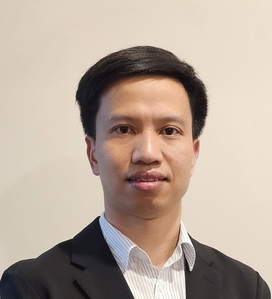
Associate Professor Sonny Pham leads research in artificial intelligence at Curtin University's School of EECMS. His work balances theoretical foundations with practical applications in computer vision, data mining, and deep learning. As head of the IAMAI research group, he collaborates with industry partners on security systems, healthcare AI, and sustainable technologies. His research explores: Computationally efficient deep learning architectures Compressed sensing for high-dimensional data Robust statistical methods for real-world problems Applications in computer vision and industrial automation Recent publications demonstrate a focus on medical imaging interpretation and efficient neural networks, with applications spanning radiology report generation, semantic segmentation for autonomous systems, and cybersecurity. His team's work consistently bridges theoretical AI advancements with industrial applications. Honors include: Multiple WANMA Awards (2021-2024) for industry-impactful research INCITE Award for social impact technology (2024) IEEE Young Author Best Paper Award (2010) Over $5M in competitive research funding including MRFF and DFAT grants He leads the IAMAI research group with 12+ graduate students and coordinates Curtin's Master of Artificial Intelligence program. Industry collaborations include Alcoa Australia, iCetana, and HyprFire.
Professor Lynette Cheah is a leading academic in sustainable transport, holding the position of Professor and Chair of Sustainable Transport at the University of the Sunshine Coast (UniSC), Queensland, Australia. She directs the Sustainable Mobility Research Laboratory, focusing on data-driven models and digital tools to reduce transport environmental impacts. Her expertise spans smart cities, urban freight, transport modeling, and policy assessment. Educations: PhD in Engineering Systems (MIT) MSc in Management Science and Engineering (Stanford University) BSc in Civil and Environmental Engineering (Northwestern University) Research Interests: Lynette’s work integrates interdisciplinary approaches to address sustainable mobility challenges. Key areas include electric mobility, low-carbon transport infrastructure, transport equity, urban freight optimization, and climate policy. She collaborates with urban planners, computer scientists, and policymakers to translate research into real-world impact, such as leading UN climate reports and advising Singapore’s Public Transport Council (2019–2024). Publications & Awards: Lynette has authored over 70 peer-reviewed articles, including high-impact journals like Transportation Research and Nature Energy . Notable awards include the 2023 TRB Best Applied Research Paper Award and the 2020 Graedel Prize. Her work has been featured in CNN, Nature, and ChannelNewsAsia. Grants & Collaborations: Current projects include electric mobility lifecycle assessments, universal basic mobility trials, and low-carbon transport infrastructure studies. Past collaborations include foresight studies for Singapore’s 2040 urban mobility vision and material flow analyses for vehicle lightweighting. Labs & Teams: She leads the Sustainable Mobility Research Laboratory at UniSC, fostering innovation in smart city technologies and sustainable transport systems.
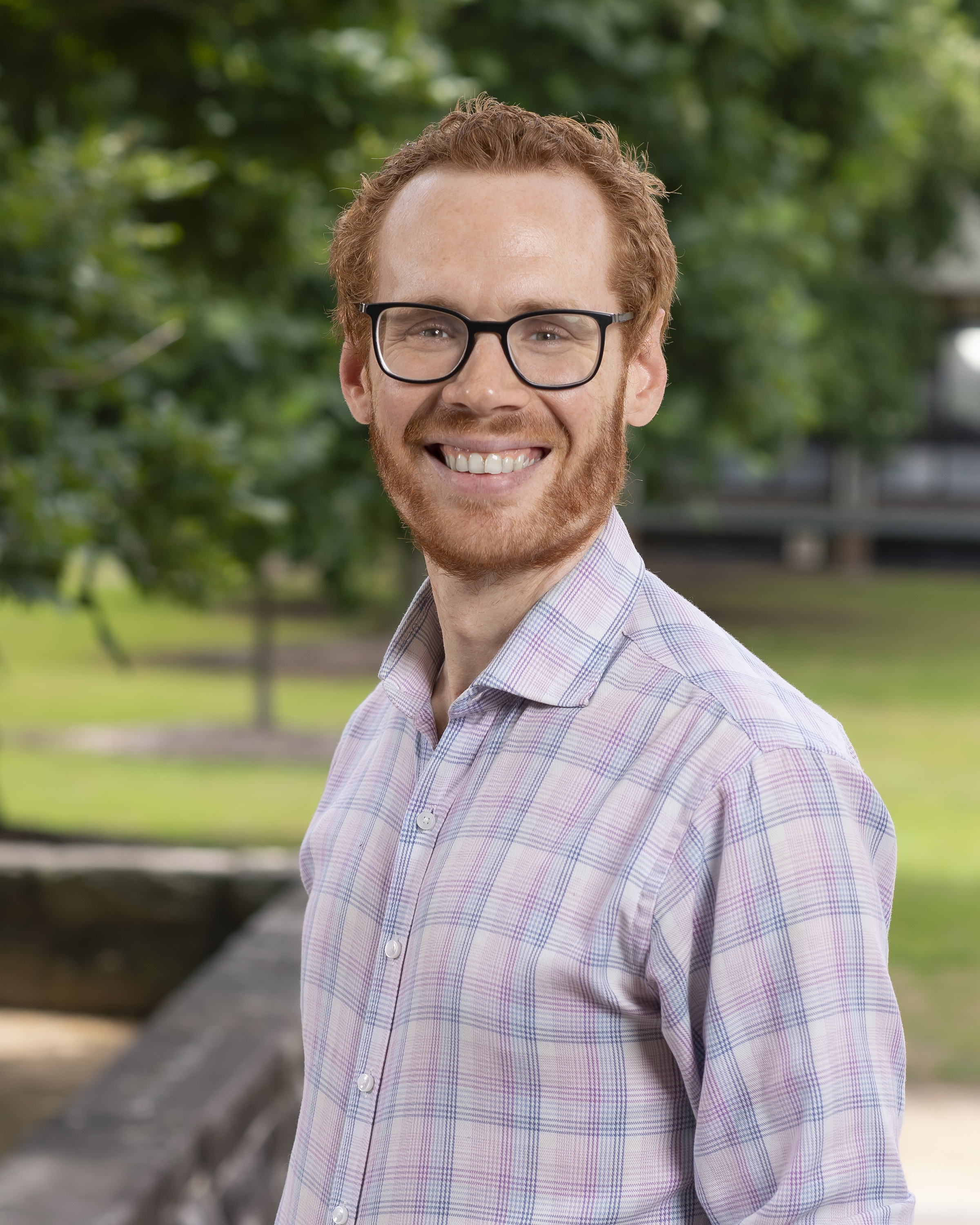
Associate Professor Lizzie Muller serves as Director of Research in the School of Art & Design at the University of New South Wales. An accomplished curator and researcher, she specializes in audience experience and interdisciplinary collaboration, with a particular focus on the future of museums as sites of knowledge production. Her research bridges curatorial practice with theories and methods from participatory design and interaction design, developing audience-centered curatorial methodologies and innovative approaches to audience research. Her work extends to preservation and archiving, particularly experiential documentation and oral histories of media art. Co-author of Curating Lively Objects: Exhibitions Beyond Disciplines (Routledge Museum Studies Series, 2022) Elected Councillor of the Sydney Culture Network Co-founder of the bi-monthly Sydney Culture Data Salon with Keir Winesmith Muller's research output demonstrates a consistent trajectory exploring the intersection of art, science, and technology through major international exhibitions including Human Non Human (Powerhouse Museum, 2018/19) and A Working Model of the World (staged across UNSW Galleries, Parsons School of Design, and University of Dundee). Her recent work focuses on art-science collaborations, deep time history through the ARC Centre for Excellence in Australian Biodiversity and Heritage, and the development of audience-centered curatorial frameworks. Scientific Awards: 2024 ADA Deans Award for Excellence in Higher Degree Supervision Muller leads significant research initiatives as Chief Investigator on multiple ARC-funded projects including the ARC Linkage project Curating Third Space: The Value of ArtScience Collaboration and SSHRC-funded research on The Living Effect and Curating Lively Objects . She has supervised numerous PhD and MFA candidates, with a special focus on curatorial practice-based research, and currently serves as Program Director of the Master of Curating and Cultural Leadership at UNSW Art & Design.
Roberto Martinez-Maldonado is an Associate Professor in the Department of Human Centred Computing at Monash University's Faculty of Information Technology. He holds a PhD in Human-Computer Interaction and Educational Data Mining from the University of Sydney. His research focuses on Learning Analytics, Artificial Intelligence in Education, and Collaborative Learning, with applications in healthcare and classroom settings. Prior to Monash, he worked at the Connected Intelligence Centre (CIC) and as a lecturer at the University of Technology, Sydney. His academic journey includes a Master's in Information Technology from Universidad Tecmilenio and a Bachelor's in Computer Systems Engineering from Instituto Tecnológico de Mérida. Key research projects include developing analytics dashboards for healthcare simulations, teamwork analytics for professional education, and AI-driven tools for reflective practice. His innovations include the HuCETA framework and the Data Storytelling editor, which enhance educational data visualization and teacher-student interaction. He has received multiple awards, including the 2022 Best Student Paper and 2020 Best Paper Award. His work contributes to UN Sustainable Development Goals related to quality education. He supervises PhD students in Multimodal Teamwork and Classroom Analytics. Roberto is actively involved in academic conferences, serving on program committees for LAK and AIED. Media engagements include ABC Radio interviews discussing classroom design and AI in education.
Mehrtash Tafazzoli Harandi is an Associate Professor in the Department of Electrical and Computer Systems Engineering at Monash University, part of the Faculty of Engineering. His research focuses on machine learning and computer vision, particularly visual data analysis, with contributions to geometric deep learning, continual learning, and medical imaging. He holds editorial roles at IET Computer Vision , Frontiers in Imaging , and Journal of Imaging . Education & Previous Affiliations: Prior to Monash, he worked at NICTA (Canberra & Queensland Research Labs) and CSIRO-Data61. His Erdős number is 4 via a collaboration path through Richard Hartley. Research Interests: His work spans geometric learning, diffusion models, medical image analysis, and sustainable AI applications. Key areas include unlearning mechanisms in AI, 3D reconstruction compression, and robust MRI reconstruction using contrastive learning. Grants & Projects: He leads projects funded by ARC, US Air Force, and industry collaborations, including 'Can Machines Unlearn?' (ARC, A$790k) and 'Exploiting Geometries of Learning' (ARC, A$420k). His work addresses challenges in lifelong learning, model adaptation, and trustworthy AI from limited data. Awards: Recipient of Best Recognition Paper (IEEE DICTA 2013), NICTA Impact Award (2015), and multiple outstanding reviewer recognitions at top conferences. Teaching: Teaches courses on neural networks, computer vision, and advanced data analysis at Monash University. Supervises PhD students with a focus on mathematical and computational proficiency. Labs/Teams: Collaborates with the Australian Center for Robotic Vision (ACRV) and contributes to interdisciplinary projects at CSIRO-Data61. His research group explores cutting-edge AI applications in healthcare, manufacturing, and environmental sustainability.
Dr. Michael Stevens is a Senior Lecturer at University of New South Wales (UNSW) Canberra , where he focuses on advanced manufacturing and biomedical device control systems . His work bridges digital manufacturing for SMEs with smart artificial heart technologies , emphasizing industry collaboration and translational research. Specializes in physiological control systems for rotary blood pumps Develops unobtrusive fall detection systems for dementia patients Leads international projects on total artificial heart development Education : B.Eng (Medical - First Class Honours), Queensland University of Technology (2010) PhD in Physiological Control for Biventricular Assist Devices, University of Queensland (2014) Research Trends show consistent focus on: Machine learning for biomedical diagnostics (2018–2025) mmWave radar and thermal sensors in patient monitoring (2021–2024) Computational fluid dynamics in artificial heart modeling (2016–2024) Physiological control algorithms for rotary blood pumps (2011–2025) Scientific Awards : UNSW Scientia Education Award (2021) for contextual teaching Heart Foundation Runner-up for "Smart Artificial Hearts" pitch (2021) ARC PGC Supervisor Award (2017) for mentoring Grants & Supervision : Holds over $6 million in competitive funding including MRFF and ARC grants. Currently supervises 4 PhD students while maintaining industry partnerships with VitalCare and BiVACOR. Labs & Facilities : Works across UNSW Engineering labs and Graduate School of Biomedical Engineering platforms, including mock circulation loops and high-performance computing clusters for CFD simulations.
David Lo is the OUB Chair Professor of Computer Science at Singapore Management University's School of Computing and Information Systems, where he directs the Information Systems and Technology Cluster and the Center for Research on Intelligent Software Engineering. An ACM Fellow, IEEE Fellow, and ASE Fellow, his research focuses on AI for Software Engineering (AI4SE), leveraging machine learning, data mining, and NLP to enhance software analytics and automation. Research Highlights: AI4SE, code LLMs, human-AI synergy in software engineering, software reliability, and empirical studies of practitioner pain points Awards: IEEE TCSE Distinguished Service Award, university-wide Teaching Excellence Award, Outstanding Graduate Supervisor Award, 2 Test-of-Time Awards, and 11 ACM SIGSOFT/IEEE TCSE Distinguished Paper Awards Leadership: General Chair of ASE'16 and MSR'22, PC Co-Chair for ASE'20, FSE'24, and ICSE'25, ACM SIGSOFT Executive Committee member His work has received over 20 awards, 37,000 citations, and an H-index of 100. As an educator, he has mentored trainees who became faculty and R&D experts globally.
Dr. Maxime Cordeil is a Senior Lecturer in Human Centred Computing at the School of Electrical Engineering and Computer Science, The University of Queensland. His research focuses on Virtual and Augmented Reality technologies for data interaction, interactive visualization systems, and AR interfaces for industry applications. He has authored over 60 publications in top-tier venues such as ACM CHI and IEEE VR, and was nominated as Australia's Field Leader in Computer Graphics in 2021 and 2022. Research Interests: Data visualization, immersive analytics, medical imaging, collaborative systems, and human-computer interaction. Current Projects: Includes embedded visualizations for sports performance, interactive machine learning in 3D environments, and mixed-reality applications in forensic science. PhD Supervision: Actively guiding students in topics like immersive gesture exploration, AR for digital health, and collaborative VR systems. His work bridges theory and practice, with tools like IATK (Immersive Analytics Toolkit) and the MADE-Axes hardware system. He collaborates with industry partners like Raytracer and CSIRO, focusing on applications in space exploration, underwater training, and remote operations. Awards: Multiple best paper recognitions at ISS and CHI, plus industry-driven research grants. Labs: Leads the Immersive Analytics research group at UQ, specializing in embodied interaction and spatial computing.
Chun Ouyang is a Professor at Queensland University of Technology (QUT) in the School of Computer Science within the Faculty of Science. With an extensive publication record spanning over two decades from 2002 to 2025, Professor Ouyang has established themselves as a leading researcher in Business Process Management, Process Mining, and Explainable AI. Their work bridges theoretical foundations with practical applications across healthcare, finance, and industrial sectors. Professor Ouyang's research interests primarily focus on Business Process Management systems, Process Mining techniques, Explainable Artificial Intelligence, and Healthcare Process Analysis. Their work has evolved from foundational BPMN/BPEL translation research in the early 2000s to sophisticated process mining approaches in the 2010s, and most recently to cutting-edge Explainable AI applications in clinical and business contexts. They have developed novel methodologies for process querying, predictive process analytics, and XAI evaluation frameworks that have significantly advanced the field. Their research consistently emphasizes practical applicability while maintaining strong theoretical foundations, with publications in top-tier journals and conferences including IEEE Transactions, Springer journals, and major BPM conferences. Analysis of Professor Ouyang's recent publications (2023-2025) reveals a strategic research trajectory that integrates traditional process mining with modern AI techniques, particularly focusing on explainability and trustworthiness. Their work demonstrates a consistent pattern of addressing real-world challenges through rigorous methodological development, with increasing emphasis on healthcare applications, clinical decision support systems, and the ethical implications of AI deployment. The publications show strong interdisciplinary collaboration patterns, particularly with medical researchers and industry partners. Professor Ouyang has mentored numerous PhD students and early-career researchers who have gone on to establish themselves in the BPM and AI communities. Their research group at QUT has secured multiple competitive grants supporting innovative work in process analytics and AI. They maintain active collaborations with leading researchers globally, including Catarina Pinto Moreira, Arthur ter Hofstede, and Moe Wynn. Professor Ouyang leads the Process Analytics Research Group at QUT, which focuses on developing advanced techniques for business process analysis, prediction, and optimization. The group maintains strong industry connections with healthcare providers, financial institutions, and government agencies, ensuring their research has practical impact. Current projects include developing trustworthy AI systems for clinical decision support, cross-organizational process analysis frameworks, and next-generation process mining techniques for complex, distributed systems.
Professor Dian Tjondronegoro is a leading academic at Griffith University's Department of Management within the Griffith Business School. He holds roles such as Acting Head of Department and Deputy Head (Research), and is affiliated with the Centre for Work, Organisation and Wellbeing, Griffith Asia Institute, and the Griffith Inclusive Future Beacon. His research focuses on AI ethics, eHealth systems, and digital governance, with over $9M in grants from bodies like the ARC and NHMRC. He has published 145+ peer-reviewed papers and leads initiatives like the 'Governing in the Digital Age' program. A Fellow of the Australian Computer Society and Senior Member of IEEE/ACM, he has won the Gold Disrupters Award (2019) and multiple teaching accolades. Education: PhD in Information Systems (Deakin University, 2005), BIS (QUT, 2001). Research Interests: AI, machine learning, healthcare innovation, responsible AI, workplace design, and digital economy strategies. His articles emphasize AI applications in healthcare monitoring, workplace productivity, and ethical surveillance. Recent work explores post-COVID workplace trends and AI-driven public health solutions. He advises on government policy and innovation through roles like Gold Coast Health's Digital Innovation Advisory Committee. His teaching includes courses on digital strategy and innovation management.
Dr. Mike Seymour is a Senior Lecturer at the University of Sydney Business School, specializing in Human-Computer Interaction (HCI), Digital Humans, and AI ethics. He holds a BSc, MBA, and PhD from the University of Sydney. His research focuses on photorealistic digital faces for immersive interfaces, blockchain socio-technical systems, and agile project management in creative industries. Dr. Seymour is a member of the Sydney Nano Institute and leads the Motus Lab. He has published in top journals like *Harvard Business Review*, *Communications of the ACM*, and *Information Systems Research*. His current projects include ARC-funded research on digital humans for anti-racism initiatives and adaptive AI for brain injury patients. He has received awards such as the SOAR Prize and ECR Researcher of the Year. His teaching spans CX, UX, and project management courses (e.g., INFS2040, INFS3080). Media engagements include ABC News, Sky News, and *The Australian Financial Review* for commentary on AI ethics and film industry trends. Education: BSc (University of Sydney) MBA (University of Sydney) PhD (University of Sydney) Research Themes: Real-time photorealistic avatars Deepfake ethics Agile methodologies in VFX Grants: A$450K ARC DP25 grant for anti-racism digital humans Earned $200K in industry partnerships (e.g., Epic Games) Labs/Teams: Leads the Motus Lab and collaborates with the Digital Human Research Group.
Dr Bernd Ploderer is an Associate Professor in the School of Computer Science at Queensland University of Technology (QUT), where he conducts research in Human-Computer Interaction (HCI), focusing on health, wellbeing, and human-centred computing. He leads the Digital Wellbeing Lab and is actively involved in multiple Australian Competitive Grant-funded projects, including those on generative AI for self-care, tangible intergenerational interaction, and children's active play. Education: PhD in Human-Computer Interaction (University of Melbourne, 2011), MA in Communications (University of Salzburg, 2007), BSc (Hons) in Information Systems (FH Joanneum Graz, 2003) Previous Positions: Research Fellow and Lecturer at the University of Melbourne (2011–2015) Professional Recognition: Fellow of the Higher Education Academy, Graduate Certificate in Academic Practice (QUT, 2017) Dr Ploderer’s research centers on designing interactive technologies that support personal and social wellbeing, with a strong emphasis on user-centered and co-design methods. His work spans domains such as digital self-care , mobile health , generative AI , tangible and embodied interaction , and intergenerational and child play . He has developed innovative educational methods in HCI, notably the ‘working field theories for design’ approach, which received an Honorable Mention at CHI 2021. His recent publications (2023–2025) reflect a growing interest in AI-mediated self-care, nature-connected technologies, and inclusive design for diverse populations including teens, older adults, and individuals with disabilities. These works appear in top-tier venues such as CHI , DIS , and Personal and Ubiquitous Computing . Dr Ploderer has received several awards, including: QUT Vice Chancellor's Performance Award (2016) PCHF Innovation Grant (2018) Metro North Hospital and Health Service Link Grant (2017) Honorable Mention at CHI 2021 Associate Chair for Health Subcommittee at CHI 2022 He is actively involved in research supervision, currently mentoring PhD and Honours students on topics such as conversational agents for music education, mental wellbeing for international students, and relational technologies for dementia care. He has supervised numerous completed PhD and Masters theses, often in collaboration with Professor Margot Brereton and other QUT researchers. Dr Ploderer also contributes to research ethics and integrity within his school and serves on committees for CHI and CHISIG. His lab, the Digital Wellbeing Lab, fosters interdisciplinary collaboration focused on creating technology that enhances social, mental, and physical wellbeing.
Professor Lisa Kervin is a leading academic in early childhood education at the University of Wollongong (UOW), serving as Director of Early Start Research and holding a Professorial appointment in the School of Education. Her research focuses on young children’s literate practices, play-based learning, and digital technology integration in education. She leads the ARC Centre of Excellence for the Digital Child and has secured significant funding, including a 2025 ARC Future Fellowship exploring intergenerational play. Kervin was honored as a Member of the Order of Australia (AM) in 2024 for contributions to early childhood digital literacy research. She has supervised over 35 research students, many now in academic and leadership roles, and currently oversees seven doctoral candidates. Her work bridges theory and practice through collaborations with educators and industry partners, emphasizing interdisciplinary approaches to child development and policy influence globally. Education: PhD in Language and Literacy from UOW (2001–2004). Professional roles include Principal Fellow of the Australian Literacy Educators’ Association and Director qualifications from the Australian Institute of Company Directors. Her research spans digital childhood ethics, play pedagogy, and literacy curriculum design, with outputs impacting government policies and international educational frameworks. Ongoing projects include the ‘DigIQ’ program promoting digital literacy and ‘Playgroups for All Ages’ fostering intergenerational engagement. Grants and collaborations involve partnerships across six universities and 33 global organizations. Her teaching innovations include the Early Childhood Elevate Mentoring Program to support educators’ academic progression. Kervin’s work addresses critical issues like screen time impacts, STEAM education, and culturally responsive pedagogies, positioning her as a key voice in 21st-century early childhood education.
Dr. Jue (Grace) Xie is a Lecturer in the Department of Human Centred Computing at Monash University's Faculty of Information Technology. She is also a Senior Software Engineer and Research Fellow at Action Lab, with over 15 years of experience in applied research spanning software architectures, web systems, consumer health informatics, and conversational AI. Grace holds a PhD from Monash Faculty of Information Technology (2012) and has contributed to diverse interdisciplinary projects, including collaborations with Microsoft Research Asia and Monash research centers. Her teaching roles include Chief Examiner for units like FIT5183 Mobile and Distributed Computing Systems and Lecturer for Programming for Distributed Systems and Service-Oriented Computing . Research Interests Applied Conversational AI Human-Computer Interaction (HCI) Web Systems & Social Networks Knowledge Engineering Recent publications focus on AI-driven healthcare interventions, mental health support via chatbots, and stakeholder-inclusive design in aged care. Her work aligns with UN Sustainable Development Goals 3 (Good Health) and 9 (Innovation). Awards include the Future Women Leaders Conference 2019 . She is a Fellow of the Computer Society (IEEE) and the Association for Information Systems .
Dr. Olga Oleinikova is an Associate Professor and Director of the Social Impact Technologies and Democracy Research Hub (SITADHub) within the School of Communication at the University of Technology Sydney (UTS), Australia. Internationally recognized for her contributions to research and social impact, she has been named among Forbes Top 40 Global Ukrainians and Forbes 30 Under 30 Asia. She was also a finalist for the Australian Council of Humanities, Arts and Social Sciences (CHASS) Future Leader Award. Her educational background includes a PhD in Sociology from the University of Sydney (2016), with prestigious research fellowships at Oxford University's European Studies Centre (2018-2019), Charles University in Prague (2023-2024), and the WZB Berlin Social Science Center (2015). Dr. Oleinikova's research focuses on migration studies (particularly Eastern European migration to Australia), democracy studies, diaspora politics, and social impact technologies. Her work examines life strategies of migrants navigating displacement, democratic performance in Ukraine and Europe, and the intersection of technology and democracy. She has developed a theoretical framework distinguishing between 'achievement life strategies' and 'survival life strategies' among migrants from crisis regimes. Her publication portfolio includes several acclaimed works, with her most recent book 'New Eastern European Migration to Australia: From Ukraine, Czech Republic and Hungary' (Palgrave, 2023) examining new migration patterns. Her research demonstrates consistent focus on Eastern European migration, diaspora politics, and democratic development, with increasing attention to technology's role in democratic processes. Forbes Top 40 Global Ukrainians Forbes 30 Under 30 Asia CHASS Future Leader Award Finalist Visa People's Choice Award Anthill 30 Under 30 Winner Dr. Oleinikova has secured over $3 million in funding for social and commercial initiatives. She serves on several nonprofit boards, acts as an advisor to the Australia-Ukraine Chamber of Commerce, and mentors through the 1991 Open Data Incubator and Future Schools Australia. She founded the SITAD Visiting Fellowship Program, supporting Ukrainian early-career researchers and postgraduate students. Her media reach is substantial, with expert commentary featured in BBC News, Bloomberg, ABC News, CNA, The Conversation, Politico, SBS, and KyivPost, reaching an estimated 9.1 million people. She has delivered more than 30 keynote and invited talks at leading institutions worldwide. SITADHub, which she founded and directs, is a dynamic networked research center with 170 associates across 16 countries actively researching democracy, human-computer interaction, and global mobility, with a focus on Ukraine and broader Eastern Europe. The hub conducts unique research and maintains university partnerships throughout Europe and the Asia Pacific, including with WZB Berlin Social Science Research Centre, University of Oxford, and University of Sydney.