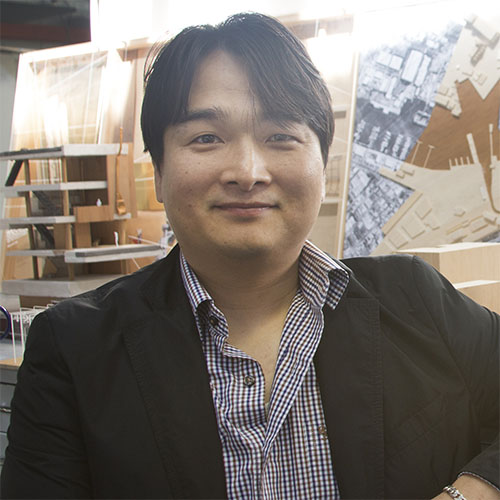
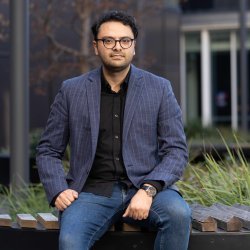
Kimbal Marriott is a Professor in Computer Science at Monash University, affiliated with the Clayton School of Information Technology and the Department of Human Centred Computing. He leads the Monash Assistive Tech and Society (MATS) Centre. Previously, he served as Head of the Department of Human-Centred Computing. His research focuses on accessible technologies for visually impaired individuals, leveraging mixed reality, AI, tactile displays, and 3D printing. He holds a PhD (1989) and B.Sc. (Honours) from the University of Melbourne, with prior experience at IBM TJ Watson Research Center. Key projects include 'Accessible Data Exploration and Analysis for Blind People' (ARC-funded) and 'Enabling Accessible, Inclusive Playgrounds for Children with Vision Impairment'. Awards include IEEE InfoVis 2015 Best Paper and Honorable Mention (2016). He teaches units such as FIT5147 (Data Exploration) and FIT1049 (IT Professional Practice). His work aligns with UN SDGs related to education and accessibility. Recent articles emphasize tactile displays combined with conversational agents, commodity technology for accessibility in cultural institutions, and immersive analytics workflows. His book *The Golden Age of Data Visualization* explores historical and technological advancements in the field.
Professor Terry Flew (BEc (Hons), MEc (Sydney), MBA (QUT), PhD (Griffith)) is a leading academic at the University of Sydney , holding the Professor of Digital Communication & Culture position within the Faculty of Arts and Social Sciences . As an Australian Research Council Laureate Fellow (2024-2029), he leads the Centre for AI, Trust & Governance , a flagship initiative involving multiple faculties. His international appointments include Research Fellow at the UK Creative Industries Policy & Evidence Centre and Honorary Professor at the University of Nottingham Ningbo China. Co-Director, Centre for AI Trust and Governance Member, SSSHARC research center International collaborations with Carleton University (Canada), Communications University of China, University of Glasgow (UK) Research Focus : Specializing in platform governance , digital policy , and mediated trust , Professor Flew bridges media economics , AI ethics , and creative industries . His work examines digital platform regulation , news media sustainability , and global internet governance , with recent projects analyzing trust mechanisms in AI systems and digital content regulation . The 2024-2028 Laureate Fellowship on "Mediated Trust" integrates these themes. Publications & Grants : With 16 authored/edited books and 129 journal articles , he has secured $11 million in research funding (including $9.9 million from ARC). Key grants include ARC Discovery projects on digital platform governance and Linkage projects on citizen journalism. Professional Leadership : Served as ICA President (2019-2020), ANZCA President (2009-10), and Lead Commissioner for the Australian Law Reform Commission. Currently sits on editorial boards of Journal of Communication , Global Media and Communication , and Media International Australia .
Dr. Thilina Halloluwa is a Teaching Focused Lecturer in the Department of Human-Centred Computing at The University of Queensland (UQ). He holds a PhD in Human-Computer Interaction from Queensland University of Technology (2019) and a Computer Science undergraduate degree from the Sri Lanka Institute of Information Technology. With over 15 years of academic and industry experience, his research emphasizes real-world impact in education technology, financial inclusion, smart agriculture, and HCI. Educational Background: PhD in Human-Computer Interaction, Queensland University of Technology (2019) Bachelor of Computer Science, Sri Lanka Institute of Information Technology Research Interests: Education for All: Leveraging technology to enhance collaborative learning and social experiences in education. Human Money Interaction: Designing ethical AI solutions for financial services, particularly for underserved communities. Smart Agro: Developing AI-driven tools for crop disease detection, yield optimization, and precision agriculture. Software Project Estimation: Improving effort estimation accuracy through explainable AI (Metrix project). Key Contributions: Developed UrbanAgro (tomato disease detection) and BellCrop (bell pepper disease datasets). Pioneered Dhana Labha , a financial management tool for rural Sri Lankan communities. Advanced online exam proctoring systems for low-resource settings. Previous Roles: Lecturer at University of Sydney (2023) Senior Lecturer at University of Colombo (2013–2023) Lab/Team Affiliations: Smart Agro Project: AI-driven agricultural solutions Metrix Initiative: Software project estimation frameworks
Associate Professor Naseem Ahmadpour is a leading researcher in Human-Computer Interaction (HCI) and Design at the University of Sydney 's School of Architecture, Design and Planning. She directs the Affective Interactions Lab and serves as Associate Dean (Research) and Chair of the EDI Committee . PhD, University of Montreal MSc, Chalmers University of Technology BSc, Bahonar University Her research critically examines the ethical implications of sociotechnical systems in care and work futures, focusing on participatory design with vulnerable populations. She explores immersive technologies like VR for mental health, pain management, and clinical training, while advocating for equity in design practices. Recent work includes 15+ publications (2023-2026) on VR applications, ethical design tools, and sociotechnical critiques. She has received the SOAR Prize (2022-2023) and led grants on VR in clinical education, digital volunteering, and aging technologies. Dr. Ahmadpour supervises PhD students in projects like Collaborative Reflection in Mental Health and Cultural Bias in Digital Design . She contributes to the Design. Think. Make. Break. Repeat methodology handbook and co-leads the VirtX Community of Practice for immersive realities.
Dr. Anne Ozdowska is a Research Fellow in the School of Computing at The Australian National University (ANU). Her work focuses on heuristic evaluation methods for design, inclusive technologies, and game design principles. She holds a PhD in Human-Computer Interaction from Queensland University of Technology (QUT) awarded in 2019, alongside a BCompSc degree. Her research emphasizes applying Universal Design and game mechanics to create accessible technologies. She is registered to supervise research students in these areas. Key research interests include: Heuristic evaluation frameworks for early design validation Inclusive game design for diverse audiences Augmented Reality applications in health and education Assistive technologies for neurodiverse populations Publications span topics from cross-platform multiplayer game design (2025) to foundational studies on screen time effects in young children (2012). Her work bridges academic research with practical applications, including commercialized software from her doctoral research. Professional contributions include developing GameFlow heuristic frameworks and contributing to educational interventions for students with autism spectrum disorder. Details on grants and lab affiliations are not explicitly stated in available materials.
Yong-Bin Kang is a Senior Data Science Research Fellow at the ARC Centre of Excellence for Automated Decision Making and Society (ADM+S) at Swinburne University of Technology, affiliated with the School of Social Sciences, Media, Film and Education. He holds a PhD in AI from Monash University and leads numerous transdisciplinary research projects applying artificial intelligence to address complex societal challenges. Education: PhD in Faculty of IT, Monash University, Australia Dr. Kang's research focuses on Responsible AI and Society, with specific interests in developing Societal-AI platforms that integrate social data with ethical principles. His work spans healthcare, humanitech, education, financial planning, environmental health, and justice domains. He investigates how AI can enhance decision-making processes while promoting societal well-being, with particular attention to ethical implementation and human-centered approaches. His expertise encompasses AI, natural language processing, machine learning, and decision-making optimization. Analysis of Dr. Kang's recent publications reveals a strong trajectory toward socially responsible AI applications across diverse domains. His work consistently bridges technical AI capabilities with social implications, particularly focusing on ethical frameworks, community-centered design, and addressing societal inequalities through technology. The publications demonstrate increasing collaboration across disciplines including criminology, environmental science, mental health, and education. Dr. Kang is actively involved in significant research funding initiatives, with multiple ongoing projects that address critical societal challenges through AI. His supervision availability includes Doctorate (PhD) candidates, indicating his commitment to mentoring the next generation of researchers in AI and data science fields. Current Flagship Areas: Digital Capability Innovative Society Manufacturing Futures Sustainable Development Goals: Good Health and Well Being (SDG 3) Industry, Innovation and Infrastructure (SDG 9) Affordable and Clean Energy (SDG 7)
JuHyun Lee is an Associate Professor of Architecture and Computational Design in the School of Built Environment at the Faculty of Arts, Design and Architecture (ADA), University of New South Wales (UNSW) Sydney, where they also hold the prestigious title of Scientia Academic. With a professional background in architecture and construction (1998-2002), they have held academic positions across Australia including a five-year post-doctoral fellowship at the University of Newcastle (2012-2017) and a senior research fellowship at the University of South Australia (2018), following earlier research and teaching roles in South Korea (2003-2011). Lee specializes in architectural design computing, design cognition, and urban complexity, integrating computational methods, cognitive science, and architectural theory to advance architectural intelligence and human-centered design. Their research spans architectural visualization, analysis and design methods, algorithm/protocol design, and data visualization with computational approaches. They have established a strong research program examining the intersection of language, culture, and design cognition, particularly focusing on cross-cultural design communication between Australia and Korea. Lee's recent publications demonstrate a clear trajectory toward increasingly sophisticated integration of computational methods with architectural design theory, particularly in the areas of shape grammar, space syntax, and machine learning applications. Their work shows consistent focus on practical applications of computational design methods to real-world architectural problems, with growing emphasis on cross-cultural collaboration and intelligent design systems. The research portfolio reveals a deepening engagement with AI and machine learning techniques applied to architectural design assessment and generation. Scientia Academic at UNSW Sydney Associate Fellow of the Higher Education Academy (AFHEA, 2020) As an educator, Lee develops cutting-edge courses in computational design and Building Information Modeling (BIM), integrating experiential learning and industry engagement. They have secured over $11 million in research funding, including multiple ARC Discovery Projects and an Australia-Korea Foundation grant. Lee co-directs the Advanced Architectural Analytics Laboratory (A 3 LAB), leading interdisciplinary research on design automation, spatial analysis, and machine learning applications in architecture, while also leading cross-cultural initiatives like the Australia-Korea Architects' Network (AKAN). Lee supervises multiple HDR students working on culturally sustainable urban design, socio-spatial patterns in public housing, and computational layout generation. Their research has significant implications for improving design communication across cultural boundaries and developing more coherent, clear, and accessible built environments through computational design approaches.
Jon McCormack is a Professor jointly appointed in Monash University's Faculty of Art, Design & Architecture (MADA) and Faculty of Information Technology. He founded and directs SensiLab, a research facility focusing on computational creativity, human-machine interfaces, and generative systems. His work spans electronic media art, evolutionary music, and artificial life. McCormack holds a PhD in Computer Science from Monash University, along with degrees in Computer Science, Applied Mathematics, and Film/Television. Research interests include computational creativity, tangible interfaces, and cybernetic systems. Notable projects include 'Explainable Artificial Creativity' (ARC-funded) and 'Building 4.0 CRC,' addressing architectural innovation through AI. He has been recognized with awards for collaborative projects like the Blundstone Intelligent Footwear for Healthcare. McCormack's recent articles explore AI-driven art, generative systems, and interdisciplinary design. His work bridges artistic practice with technical innovation, emphasizing ethical and creative dimensions of human-AI collaboration. SensiLab serves as a hub for practice-based research in digital media and interactive systems. Education: PhD in Computer Science, Monash University (2004) Bachelor of Science (Honours), Computer Science/Applied Mathematics, Monash University (1987) Graduate Diploma in Film/TV, Swinburne University (1986) Bachelor of Science, Computer Science/Applied Mathematics, Monash University (1985) Key Projects: Lead investigator on 'Explainable Artificial Creativity' (2022–2026) Co-investigator in 'Building 4.0 CRC' (2020–2027), exploring AI-driven architectural design Awards: 2022 Designers Australia Award for Blundstone Footwear 2020 'On the Machine Condition' Prize McCormack's lab, SensiLab, fosters collaborations across disciplines, producing exhibitions, software, and theoretical frameworks for computational creativity. He actively supervises PhD students in practice-based research, emphasizing the intersection of art and technology.
Professor David Taubman is a distinguished academic serving as Professor and Deputy Head of School (Research) at the School of Electrical Engineering and Telecommunications (EE&T) at the University of New South Wales (UNSW) in Sydney, Australia. He is also co-director of Kakadu Software Pty. Ltd. and its affiliates Kakadu R&D and Kakadu GPU. With a career spanning over three decades, Professor Taubman has made significant contributions to the field of image and video compression, most notably as the author of the EBCOT coding algorithm adopted in the JPEG2000 international standard. Professor Taubman earned his B.Sc. in Mathematics and Computer Science (1986) and B.E. (Medal) in Electrical Engineering (1988) from the University of Sydney, followed by an M.Sc. (1992) and Ph.D. (1994) in Electrical Engineering from the University of California at Berkeley. His professional journey includes engineering work at the Electricity Commission of N.S.W. (1988-1990), research positions at Hewlett-Packard Laboratories in Palo Alto (1994-1998), and an academic career at UNSW where he progressed from Senior Lecturer (1998-2003) to Associate Professor (2004-2009) and finally to Professor (2009-present). He has held various leadership roles including Head of the EE&T Telecommunications Research Group (2003-2014), Head of the EE&T Signal Processing Research Group (2014-present), Director of Research for the School of EE&T (2011-2016), and Deputy Head of School (Research) since 2017. Professor Taubman's research interests center on image and video compression, with particular expertise in JPEG2000 standards and implementations. His work spans signal processing, wavelet transforms, scalable video coding, motion modeling, and multimedia systems. He has pioneered numerous compression algorithms and frameworks, including the EBCOT coding algorithm that became central to the JPEG2000 standard. His recent research focuses on efficient motion modeling with cuboidal partitioning, learned lifting-based transform structures, and high-throughput implementations of JPEG2000 for video applications. His work bridges theoretical foundations with practical implementations, as evidenced by the commercially successful Kakadu Software tools that have garnered around 500 commercial licensees. Analysis of Professor Taubman's recent publications reveals a consistent focus on advancing compression technologies with particular emphasis on scalability, efficiency, and adaptability. His work spans traditional image compression (JPEG2000 extensions), video coding (cuboid-based partitioning for UHD/360-degree video), and emerging applications (nanopore sequencing data compression). A notable trend is the integration of machine learning techniques with traditional compression frameworks, as seen in his work on learned lifting-based transform structures. His research maintains strong connections to real-world applications across diverse domains including medical imaging, astronomical data processing, and genomic sequencing. IEEE Fellow Engineers Australia Fellow (by invitation) Professor Taubman has served as Associate Editor for the IEEE Transactions on Image Processing for two four-year appointments (2003-2005 and 2010-2013). He has been actively involved in numerous research grants focused on image and video compression technologies, particularly those related to the JPEG2000 standard and its extensions. His work has received significant industry support, reflected in his consultancy with various U.S., Japanese, and Australian corporations. He has also contributed to international standards development as a member of Standards Australia Technical Committee MS-065 (mirroring ISO TC42 on Digital Photography) and as a constitutional member of Standards Australia Technical Committee IT-029 (Coded Representation of Picture, Audio and Multimedia/Hypermedia Information). Professor Taubman co-directs Kakadu Software Pty. Ltd. and its research affiliates Kakadu R&D and Kakadu GPU, which have developed the commercially successful Kakadu Software tools for JPEG2000. His research group at UNSW focuses on advanced image and video compression techniques, with particular expertise in wavelet-based methods, scalable coding, and motion modeling. The group maintains strong industry connections and has contributed significantly to the development and standardization of image compression technologies worldwide.
Dr Ehsan Nabavi is a Senior Lecturer in Technology and Society at the College of Asia and the Pacific (CPAS), Australian National University (ANU). He leads ANU’s Responsible Innovation Lab, focusing on responsible computing, modeling, and AI ethics. His interdisciplinary work bridges technical and social sciences, particularly addressing wicked problems in sustainability and water governance. Current Affiliation: ANU (CPAS), since 2020 Former Roles: Research Fellow at ANU School of Cybernetics (2018–2020), Harvard Kennedy School (2016–2017) Visiting Positions: SOAS University of London, University of Bonn (ZEF) His research spans responsible AI , transdisciplinary modeling , and socio-technical systems , as reflected in his publications across journals like Nature Humanities and Social Sciences Communications , IEEE Transactions on Technology and Society , and Water Alternatives . His recent articles emphasize ethical AI deployment, human-water systems, and integrating social aspects into modeling. Labs: Responsible Innovation Lab (ANU) Future Work: Developing frameworks for responsible AI in sustainability and policy contexts
Professor Eduardo Velloso is an academic staff member at the School of Computer Science , University of Sydney . He is a member of the Centre for AI Trust and Governance and holds a PhD in Computer Science from Lancaster University and a Bachelor of Computer Engineering from Pontifical Catholic University of Rio de Janeiro. Teaches COMP4447/5047 - Pervasive Computing and INFO1111 - Computing Professionalism Research Interests focus on distributed collaboration in mixed reality , human-AI interaction , and HCI theory and methodology . His work integrates Engineering, Design, and Psychology to explore gaze interaction, adaptive agents, and multimodal interfaces. Key projects include Blended Whiteboard for remote MR collaboration and GazeGrip for mobile accessibility. Publication Trends show expertise in Virtual Reality , Mixed Reality , and Human-AI Interaction , with recent work on Algorithmic Recourse and Immersive Educational Tools . Awards include ACM Best Paper Awards at CHI, UIST, TOCHI, and DIS venues. Scientific Awards 2024 ACM CHI & DIS Honorable Mentions 2022 UoM-FEIT Teaching & Learning Award 2019 UoM-CIS Excellence in Research Award 2015 ACM UIST Best Paper Award Advising includes supervision of research students Marvin, Tinghui LI, and Wendi YU in projects on asynchronous MR collaboration , situationally-induced impairments , and physical environment integration . His lab explores AI-assisted interaction and context-aware computing through projects like SpinalLog and LiftSmart .
Didar Zowghi is a Senior Principal Research Scientist and Science Team Leader at CSIRO Data61, Australia's national science agency. His work focuses on advancing ethical AI systems, data quality frameworks, and requirements engineering methodologies. He leads research initiatives addressing challenges in AI governance, diversity/inclusion in technology, and human-centered AI development. Research interests include AI ethics, data completeness in healthcare systems, and the application of machine learning in requirements engineering. His contributions span theoretical frameworks for responsible AI patterns, empirical studies on user perceptions of AI tools like M365 Copilot, and analysis of AI's role in global diplomatic practices. Zowghi has published extensively on topics ranging from blockchain in supply chains to pedagogical innovations in software engineering education. His work often bridges technical systems and societal impacts, emphasizing real-world implementation challenges through collaborative industry-academia projects. Notable outputs include the Responsible AI Pattern Catalogue and studies examining barriers to data quality in IoT platforms. He has pioneered frameworks linking innovation initiatives to occupational skill requirements and developed tools like Elica for dynamic requirements knowledge extraction in agile teams.
Dr. Teresa Wang is a Senior Lecturer in Data Science at Monash University's Faculty of Information Technology, specializing in entity/user modeling, relational/structural machine learning, and graph/network analysis. She holds a Ph.D. from the University of Queensland and degrees from Nanjing University. Currently, she directs the Master of Data Science Program and teaches courses like FIT5201 Machine Learning. Her research focuses on social, e-commerce, and health data modeling, with notable projects including the Knowledge Enriched Approach for Effective Personalization (2025–2027) and collaborations on AI in Mental Health and Site Safety. Dr. Wang has co-authored over 59 publications, emphasizing areas like ontology matching and multimodal data analysis. She actively supervises PhD students and contributes to initiatives like the CSIRO Next Generation Graduates Program for clean energy and sustainability. Education: Ph.D. in Computer Science (2017), University of Queensland Master of Computer Science (2013), Nanjing University Bachelor of Software Engineering (2010), Nanjing University Research Interests: Entity modeling, spatio-temporal data analysis, graph mining, recommender systems, and health/medical records mining. She explores applications in social media, e-commerce, and healthcare sectors. Projects: "Knowledge Enriched Approach for Effective Personalization" (2025–2027) "AI for Clean Energy and Sustainability" (2023–2027) "CSIRO Next Generation Graduates Program: AI in Mental Health" (2023–2027) "Large-scale multimodal knowledge management" (2022–2025) Grants & Collaborations: Engaged with CSIRO, Crank Group, and Pola Practice Pty Ltd. Her work aligns with UN SDGs in education and sustainable energy systems. Labs/Teams: Part of the Monash Energy Institute and Monash Data Futures Institute, contributing to interdisciplinary AI and energy research.
Ryan Kelly is an Associate Professor in the School of Computing Technologies at RMIT University, specializing in Human-Computer Interaction (HCI), digital health, and mixed reality. His research focuses on technology-enabled social connection and wellbeing, including designing communication tools for close relationships, digital health initiatives like the Music-Attuned Care via eHealth (MATCH) project, and VR applications for mental health. He collaborates with industry partners such as Google, Netflix, and the Worldwide Fund for Nature, and has developed technologies for older adults, including simplified video calling systems for aged care during the pandemic. His work has been featured globally in media, including Al-Jazeera's documentary All Hail the Algorithm . He actively contributes to the HCI community as a reviewer and committee member for conferences like ACM CHI and CSCW, holding roles such as Editor for CSCW 2025 and Awards Co-Chair for CSCW 2023. Ryan supervises PhD candidates exploring human-centered AI for social connection and online safety for older adults. His research aligns with UN Sustainable Development Goals 3 (Good Health), 9 (Industry Innovation), and 11 (Sustainable Cities). Key projects include the VR mindfulness application used by over 200,000 Australians and the Painpad device for pain logging in UK hospitals. He advocates for participatory design frameworks, emphasizing ethical AI and technology’s role in fostering meaningful human experiences.
Dr. Sam Ferguson is a Senior Lecturer at the School of Computer Science, University of Technology Sydney (UTS), with a multidisciplinary background in music performance, cognitive science, and psycho-acoustics. His research explores the intersection of sound, music, and human experience through creative coding, machine learning, and interactive systems. Key Research Areas: Sound and Music Computing, Human-Computer Interaction, Creative Coding, Cognitive Science, Installation Art, and Acoustics. Current Projects: ARC Linkage project on creative coding and multiplicitous media; industry collaborations on IoT-based audiovisual systems. Recent Publications: Focus on spatial audio complexity, gestural interaction with networked sound, music emotion recognition frameworks, and robotic performance through genre-based cultural platforms. Leadership Roles: Director of Teaching & Learning Engagement; former Deputy Head of School (Teaching and Learning); active in ACM Creativity and Cognition Steering Committee. Teaching: Courses like Digital Media Studio , Prototyping Physical Interaction , and Data Processing using R within UTS's interdisciplinary Software Development Studio.