Lingxi Li is a Professor at the Elmore Family School of Electrical and Computer Engineering at Purdue University's Indianapolis campus. His research focuses on modeling complex systems, connected and automated vehicles, intelligent transportation systems, and parallel intelligence. He holds a Ph.D. from the University of Illinois at Urbana-Champaign (2008), and master's and bachelor's degrees from the Chinese Academy of Sciences (2003) and Tsinghua University (2000). Research Interests: Dr. Li's work bridges control systems, transportation engineering, and AI, with emphasis on human-machine interaction, autonomous vehicle systems, and scenario-based traffic modeling. His projects include developing frameworks for Industry 5.0 collaboration, enhancing traffic flow prediction through parallel learning, and advancing safety in micro-mobility systems like e-scooters. Recent Publications: Over 15+ articles (2023-2025) explore topics such as game-theoretic vehicle interaction modeling, vision-language systems for autonomous driving, and acoustic SLAM technologies. These studies reflect a focus on real-world validation and system integration in smart transportation. Labs & Initiatives: Leads research in autonomous mining systems and scenario engineering for intelligent vehicles, leveraging parallel intelligence concepts. Collaborates on projects like ParallelWorkforce (Industry 5.0 frameworks) and SceNDD++ (naturalistic driving datasets).
Stefan Riezler is a full professor of Statistical Natural Language Processing at Heidelberg University's Department of Computational Linguistics (since 2010), affiliated with the Faculty of Mathematics and Computer Science. Prior to this, he worked in Silicon Valley at Xerox PARC and Google Research. He holds a PhD in Computational Linguistics from the University of Tübingen (1998) and conducted postdoctoral research at Brown University (1999). His research spans machine learning, NLP, and medical informatics, focusing on interactive statistical learning. He co-leads the Interdisciplinary Center for Scientific Computing (IWR) and serves on the editorial boards of Computational Linguistics and Transactions of the Association for Computational Linguistics . Key research areas include neural machine translation, healthcare AI (e.g., sepsis prediction), data augmentation, and reproducibility in ML. He develops tools like JoeyNMT and explores ethical challenges in clinical machine learning. Notable recent work includes advancements in time series analysis, multimodal interfaces (e.g., NLMaps for OpenStreetMap), and ethical frameworks addressing validity in healthcare ML. His publications emphasize practical applications of NLP in healthcare, speech translation, and cross-lingual systems. Grants and collaborations include interdisciplinary projects on medical data science and training next-gen NLP researchers. He actively contributes to open-source toolkits and reproducible research practices.
Julie A. Adams is a Professor of Computer Science at Oregon State University's School of Electrical Engineering and Computer Science, with a courtesy appointment in Mechanical and Industrial Engineering. She serves as the CoRIS Associate Director for Research in the Collaborative Robotics and Intelligent Systems Institute. Her research focuses on human-machine teaming, unmanned systems, and swarm robotics, with over 25 years of experience in the field. Education: Ph.D., Computer and Information Systems, University of Pennsylvania (1995) M.S.E., Computer and Information Systems, University of Pennsylvania (1993) B.S., Computer Science & B.B.A., Accounting, Siena College (1989-1990) Research Interests: Human interaction with unmanned systems, swarm robotics, drone technology, and human-AI collaboration. Her work has been highlighted in National Geographic, Scientific American Podcast, and BBC Online. She leads the Human-Machine Teaming Laboratory and is the principal investigator for the FAA Center of Excellence (ASSURE). Awards: 2007 NSF CAREER Award, DARPA Computer Science Study Panel member, contributor to National Academies reports on UUVs and UAV countermeasures. Grants & Labs: Primary investigator for ASSURE (FAA-funded). Her lab explores adaptive systems for human-robot interaction, including swarm supervision and unmanned aerial system safety. Past industry roles include Honeywell and Eastman Kodak. Labs/Teams: Human-Machine Teaming Laboratory (founded at Vanderbilt University, relocated to Oregon State).
Waldemar Karwowski is a Pegasus Professor and Chairman of the Department of Industrial Engineering and Management Systems at the University of Central Florida, USA. He also serves as Executive Director of the Institute for Advanced Systems Engineering. His affiliations include the College of Engineering and Computer Science and multiple international academic roles. He holds a Doctor of Science (dr hab.) in Management Science from Poland, a Ph.D. in Industrial Engineering from Texas Tech University, and three honorary doctorates from universities in Ukraine, Slovakia, and Russia. His research focuses on neuroergonomics, human systems integration, safety engineering, nonlinear dynamics in human-machine systems, and applications of soft computing. He co-edits leading journals including Human Factors and Ergonomics in Manufacturing and Theoretical Issues in Ergonomics Science . Key achievements include Fellowships from HFES, IEA, and the UK's Institute of Ergonomics, and past presidencies of HFES (2007) and the International Ergonomics Association (2000-2003). His work addresses grand challenges in human factors, AI ethics, and healthcare safety culture. Recent research explores EEG-based neuroergonomic metrics, graph neural networks for brain connectivity analysis, and pandemic modeling with nonlinear dynamics. Awards include the Handbook of Human Factors and Ergonomics (5th ed., 2022) co-edited with Gavriel Salvendy. His advisory roles span industry and government, emphasizing systems engineering and human-centered AI integration.
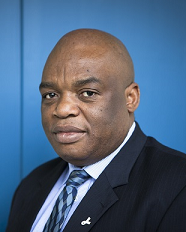
Prof. Emmanuel Kabengele Mpinga is a Professor at the Institute of Global Health (ISG) within the Faculty of Medicine at the University of Geneva. He leads the Division of Health and Human Rights, focusing on four core research areas: identifying rights violations impacting public health, clarifying the epistemology of health-human rights links, developing global surveillance indicators for health rights implementation, and designing intervention strategies. His work is part of an international network led by Harvard University and collaborates with institutions like Geneva University Hospitals (HUG). Education & Roles: Holds a Doctorate in Health Systems Policies, Masters in Public Health, and certifications in Health Administration and Human Rights. He has held an Swiss School of Public Health+ assistant professorship (2008-2012) and advises UN agencies, governments, and NGOs on human rights and public health. His research spans over two decades, addressing topics like Noma disease, economic costs of torture, and female genital mutilation. Research Interests: Interdisciplinary projects include the SNIS-funded Noma research initiative (2019-2021) to globalize Noma as a neglected disease, costing models for health rights violations, and human rights frameworks in AI-driven healthcare. His work emphasizes socio-economic impacts of health inequities and policy advocacy. Grants & Collaborations: Active in projects funded by Swiss Network for International Studies (SNIS), Northumbria University, and Danish Institute against Torture (Dignity). Collaborates with WHO, UN agencies, and global health networks. Leads training programs in health and human rights across Francophone Africa through e-learning platforms. Labs/Teams: Heads the Health and Human Rights Division at ISG, coordinating international research networks. Supervises PhD students (e.g., Krystel Ouaijan on malnutrition, Joshua Galjour on HIV/AIDS and political instability).
Dr. Neal Bangerter is a Visiting Professor in the Department of Bioengineering at Imperial College London's Faculty of Engineering. He specializes in medical imaging (MRI), artificial intelligence, machine learning, and signal processing. Dr. Bangerter holds adjunct appointments at INSEAD, the University of Utah, and Brigham Young University. His research focuses on ultra-high field MRI, AI applications in healthcare, and data-driven bioscience technologies. He leads the London Collaborative Ultra-High Field Scanner (LOCUS) project and advises companies on AI and innovation strategies. Education: B.S. in Physics (UC Berkeley), M.S. and Ph.D. in Electrical Engineering (Stanford University). Career highlights include roles at McKinsey & Company, Microsoft, and Reactrix, as well as founding BYU's Medical Imaging Research Center. He has pioneered cross-faculty initiatives like the Crocker Innovation Fellowship Program. Research interests include novel MRI pulse sequences, AI in medical imaging, and large-scale health data analysis. His work spans collaborations with Stanford, Oxford, Cambridge, and Siemens Healthcare. He teaches executive education at INSEAD, focusing on bridging technical concepts with business strategies. Key awards include the David Evans Chair at Brigham Young University. His contributions to the UK Biobank Neuroimaging study and development of MRI techniques like RAFO-4 highlight his impact on advancing imaging technologies and AI applications in healthcare.
Dr. Maxime Cordeil is a Senior Lecturer in Human Centred Computing at the School of Electrical Engineering and Computer Science, The University of Queensland. His research focuses on Virtual and Augmented Reality technologies for data interaction, interactive visualization systems, and AR interfaces for industry applications. He has authored over 60 publications in top-tier venues such as ACM CHI and IEEE VR, and was nominated as Australia's Field Leader in Computer Graphics in 2021 and 2022. Research Interests: Data visualization, immersive analytics, medical imaging, collaborative systems, and human-computer interaction. Current Projects: Includes embedded visualizations for sports performance, interactive machine learning in 3D environments, and mixed-reality applications in forensic science. PhD Supervision: Actively guiding students in topics like immersive gesture exploration, AR for digital health, and collaborative VR systems. His work bridges theory and practice, with tools like IATK (Immersive Analytics Toolkit) and the MADE-Axes hardware system. He collaborates with industry partners like Raytracer and CSIRO, focusing on applications in space exploration, underwater training, and remote operations. Awards: Multiple best paper recognitions at ISS and CHI, plus industry-driven research grants. Labs: Leads the Immersive Analytics research group at UQ, specializing in embodied interaction and spatial computing.
Purnima Mankekar is a Professor in the Department of Gender Studies and Asian American Studies Department at the University of California, Los Angeles (UCLA), where her interdisciplinary work bridges cultural anthropology, media studies, and gender theory with critical focus on South Asia and diasporic communities. Trained as a cultural anthropologist, she examines television, digital media, and public cultures through the lens of affect politics and identity formation. Her educational background: Ph.D. in Anthropology from the University of Washington (1993) Mankekar's research manifests in interconnected domains: Digital media, Big Data, and algorithmic social life Virtual anthropology and affect theory frameworks Film/television studies intersecting with nationalism Feminist and queer of color critique methodologies Postcolonial and South Asian American studies Current projects analyze affective labor in Bengaluru's BPO industry and sociopolitical dimensions of AI in India, reflecting her commitment to contemporary technocultural shifts. Her publications demonstrate sustained engagement with media-affect-transnationalism intersections, exploring television's role in nation-building, erotic dimensions of transnational media, and affective structures of caste/identity across South Asia and diaspora contexts. Major recognitions include: Mellon Postdoctoral Fellowship at Duke University (1997-1998) Bunting Fellowship at Harvard's Radcliffe Institute (2000-2001) Stanford Humanities Center fellowship (2005-2006) Asia Research Institute fellowship, National University of Singapore (2013) Fullbright Senior Faculty Research Award for Bangalore call center research (2008-2009) Stanford Asian American Studies Distinguished Faculty Award (2002) Professor Mankekar mentors graduate students in Gender and Asian American Studies while securing significant research funding including Fullbright and institutional fellowships that enable her ethnographic work on media, affect, and technology in India.
Emilia Vann Yaroson is a Lecturer in Operations and Supply Chain Management at the Sheffield University Management School (The University of Sheffield). She holds a PhD in Operations and Information Management from the University of Bradford, an MSc in Business and Financial Economics from the University of Greenwich, and a PgCHE (Postgraduate Certificate in Higher Education). Her research focuses on leveraging emerging technologies (AI, blockchain, cloud computing, digital twins) to enhance supply chain resilience and sustainability, particularly aligned with UN SDGs related to healthcare access, environmental protection, and poverty reduction. Research Interests Pharmaceutical supply chains and resilience strategies Circular economy integration in supply chains Impact of Industry 4.0/5.0 technologies on sustainable operations Healthcare operations and quality improvement Artificial intelligence-driven decision-making in supply chains Teaching She teaches operations management, supply chain analytics, and related modules across undergraduate and postgraduate programs, including executive education. Her teaching aligns with the school’s Triple Crown accreditation, positioning it among global elite management schools. Research Group She is part of the Operations Management and Decision Sciences group, contributing to interdisciplinary projects on supply chain innovation and sustainability. Her work bridges theoretical frameworks (e.g., Complex Adaptive Systems) with practical applications in healthcare and manufacturing sectors.
Henrik von Coler is an Assistant Professor at Georgia Institute of Technology's School of Music within the College of Design. His work bridges engineering, electronic music, and empirical research, focusing on spatial audio systems, live electronics, and human-computer interaction in musical contexts. He joined Georgia Tech in 2023 after serving as director of the TU Studio for Electronic Music at Technische Universität Berlin from 2015 to 2023, where he founded the Electronic Orchestra Charlottenburg (EOC) to explore live electronic ensembles in multichannel environments. His research emphasizes the integration of sound, space, and HCI to enhance compositional and performative expressiveness. Notable projects include immersive audio installations, virtual instrument design, and AI-assisted composition. Coler has performed globally on immersive audio systems and curated international concerts. His technical contributions span spatial sound synthesis algorithms, networked music systems, and real-time signal processing tools. Key areas of exploration include volumetric music performances in metaverse environments, hybrid spatial interaction via ARCube, and statistical models for spectral synthesis. He has developed open-source systems like Orchestra (for metaverse performances) and SPRAWL (for ensemble interaction). Coler’s work often combines empirical research with artistic practice, aiming to redefine the boundaries of live electronic music through technological innovation. His academic output spans over 30 peer-reviewed articles since 2011, with recent focus on metaverse applications, AI-human collaboration, and immersive audio design. While no formal awards are listed, his leadership roles and project outcomes highlight significant contributions to music technology and spatial audio engineering.
R. Luke DuBois is an Associate Professor and Co-Chair of the Technology, Culture and Society Department at the NYU Tandon School of Engineering, where he also directs the Integrated Design & Media program and the Brooklyn Experimental Media Center. He holds a DMA in music composition from Columbia University and is a renowned artist, composer, and performer whose work explores intersections between technology, sound, and visual media. His research focuses on digital media, human-computer interaction, and emerging technologies applied to artistic expression and accessibility. Key roles include directing the SONYC initiative (addressing urban noise pollution via AI) and leading the NYU Ability Project (advancing disability studies through technology). He has collaborated with institutions like the Smithsonian and artists such as Maya Lin, and his work has been exhibited globally, including at the Sundance Film Festival and the Aspen Institute. DuBois co-developed the Jitter software suite for real-time data manipulation and performs in avant-garde groups like Bioluminescence and Fair Use. His artistic practice combines time-lapse phonography, interactive installations, and interdisciplinary projects that critique cultural ephemera while advancing accessibility in STEM and the arts. Recent contributions include browser-based tools for accessible music notation (SoundCells) and sonification techniques for calculus education. He serves on the Board of the ISSUE Project Room and has been featured in major publications like the New York Times and TED Conference talks.
Daniel A. McAdams is the Robert H. Fletcher Professor in Mechanical Engineering at Texas A&M University and serves as the NSF Program Director of Convergent Activities. His research develops design theory and methodology with focus on functional modeling, bio-inspired design, and technology evolution. Educational Background: PhD in Mechanical Engineering from University of Texas at Austin MS in Mechanical Engineering from California Institute of Technology BS in Mechanical Engineering from University of Texas at Austin His research investigates innovation in concept synthesis through computational methods, bio-inspired design approaches, and technology evolution applied to product development. Current projects include function-sharing principles in biological systems, digital twin architectures, and patent mining for technology forecasting. Recent publications explore applications of speculative fiction in design ideation, graph-theoretic approaches for digital twins, and automated assessment in engineering education, demonstrating cross-disciplinary innovation across design science. Awards and Honors: ASME Design Theory and Methodology Award Distinguished Achievement Award for Student Relations Multiple Faculty Fellow awards Design Studies Best Paper Award Outstanding Faculty Mentor Award He leads the Product Synthesis Engineering Lab, advancing design methodologies for complex engineered systems through computational approaches and biological analogies.
Graham Dove is an Assistant Professor at New York University (NYU) , affiliated with the Center for Urban Science and Progress (CUSP) . His work focuses on human-centered design approaches to AI , data-enabled products , and community science initiatives . He co-directs the Human-Centered Technology, Innovation, and Design PhD program and teaches courses like Digital Civics for Social Innovation and Design for Innovation with AI and ML . His research spans healthcare technology (e.g., MS care design with clinicians), urban environmental advocacy (e.g., NYC Chinatown air quality projects), and open data applications in civic innovation. He emphasizes participatory design and has collaborated with organizations like NYC Open Technology Institute (OTI) and BetaNYC. Currently, he explores how technology can address societal challenges through civic quality of life , remote patient monitoring , and environmental resilience . His lab ( People+Technology Lab ) integrates interdisciplinary methods to create equitable tech solutions. Notable projects include SONYC Urban Sound Tagging (sonic data for city planning) and community science frameworks to mitigate environmental risks. He advocates for transparency in smart city deployments and ethical AI design .
Dr. Radu Jianu is a Lecturer in the Department of Computer Science at City, University of London , where he has been a faculty member since 2016. He is affiliated with the giCentre , a leading research group in information visualization. He earned his PhD and MSc in Computer Science from Brown University, USA, and a Diploma in Engineering from the Polytechnic University of Timisoara, Romania. His academic career includes a previous role as Assistant Professor at Florida International University (2012–2016). His research focuses on Data Visualisation, Visual Analytics, and Human-Computer Interaction . He conducts interdisciplinary collaborations with domains such as biology, food policy, and energy decarbonisation, aiming to develop interactive visual tools that enhance data understanding and decision-making. His methodological approach includes user studies, eye-tracking, and the design of novel visualization techniques. Dr. Jianu teaches Programming in Java and Cognition and Technologies , and he coordinates the Programming Bootcamp. He also holds administrative responsibilities as the Progression and Support Director in the Computer Science Department and is a member of its Executive Committee (ExCo). His recent publications reflect a growing interest in LLM-assisted visual analytics, gaze-aware systems, and collaborative human-AI analytical frameworks . He has published in top venues such as IEEE TVCG, CHI, EuroVis, and Nature Immunology, with several best paper awards. His work on the RAMPVIS project highlights his contributions to visualization in public health emergencies. Scientific Awards: Best Paper Award, Symposium on Graph Drawing (2018) Best Short Paper Award, EuroVis (2020) Advising and Grants: Dr. Jianu supervises multiple PhD and MSc students, including Dany Laksono (Energy Decarbonisation) and Maeve Hutchinson (NLP-mediated Visualization). His students have co-authored high-impact, award-winning papers. He has been involved in funded research initiatives such as RAMPVIS, which received support from UKRI/EPSRC for developing visual analytics infrastructure during the COVID-19 pandemic. Labs and Teams: He is an active member of the giCentre at City, University of London, a hub for visualization research. He also collaborates with interdisciplinary teams in epidemiology, immunology, and computer science, contributing to large-scale projects like the Immunological Genome Project and RAMPVIS.
Ricardo Valerdi is a Professor and Department Head in the Department of Systems and Industrial Engineering at the University of Arizona's College of Engineering. He is a Distinguished Outreach Professor, Faculty Athletics Representative for the Big 12 Conference and NCAA, and a member of the Graduate Faculty. His academic journey includes positions at MIT (2005–2011) and continuous service at the University of Arizona since 2011, with current roles beginning in 2018 and ongoing leadership since 2020. His educational background includes a PhD in Industrial and Systems Engineering from the University of Southern California, an MS in System Architecture and Engineering from the same institution, and a BS in Electrical Engineering from the University of San Diego. Valerdi's research spans systems engineering, cost estimation, model-based systems engineering (MBSE), digital engineering, sports analytics, and test and evaluation of complex systems. He is renowned for his work on the Constructive Systems Engineering Cost Model (COSYSMO) and has pioneered the integration of virtual reality with MBSE. His recent publications reflect a strong focus on executable modeling, systems thinking education, cost modeling convergence, and applications in space and defense systems. His body of work from 2020 to 2025 shows a consistent trajectory in advancing digital engineering tools, integrating immersive technologies into systems design, refining parametric cost models, and assessing systems thinking competencies in education. The publications emphasize interdisciplinary applications, including space missions, ERP systems, and cyber resiliency, demonstrating a blend of theoretical and applied systems engineering. Best paper award, Journal of Systems Engineering International Council of Systems Engineering, Summer I 2016 Foreign Member, Mexican Academy of Engineering, Summer I 2016 Frank Freiman Award for Lifetime Achievement in Cost Estimation and Parametric Modeling, International Cost Estimating & Analysis Association, Fall 2015 Dr. Valerdi has advised numerous graduate students and led educational initiatives integrating industry-focused projects. He founded and co-edited the Journal of Enterprise Transformation and served as editor-in-chief of the Journal of Cost Analysis and Parametrics. He has received significant recognition and grants supporting research in systems engineering cost modeling, human systems integration, and digital transformation. His leadership extends to service as a Fulbright Scholar, visiting professor at West Point, and visiting fellow of the UK Royal Academy of Engineering. He leads research teams focused on cost estimation, digital engineering, and systems integration, often collaborating with defense and aerospace stakeholders. His labs and initiatives emphasize virtual reality integration, executable modeling, and systems thinking assessment. Future work is expected to further explore AI-driven cost models, digital twins for complex systems, and scalable frameworks for MBSE adoption across domains.