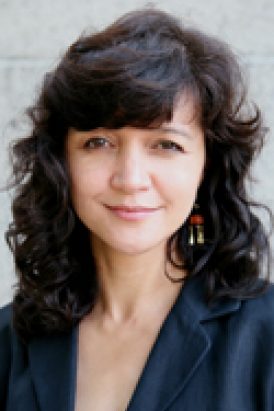
Mariane C. Ferme is a Professor in the Department of Anthropology at the University of California, Berkeley. Her research focuses on sociocultural dynamics in West Africa, particularly Sierra Leone, with expertise in political anthropology, legal studies, and material culture. She holds a PhD in Anthropology from the University of Chicago and has taught at prestigious institutions including the University of Cambridge and École des Hautes Études en Sciences Sociales. Education : PhD in Anthropology (University of Chicago), MA in Political Science (University of Milano), BA in Anthropology (Wellesley College). Ferme’s research spans the political imagination in conflict zones, agrarian transformations, and the interplay between humanitarian law and local justice systems. Her work has been supported by major grants from the National Science Foundation and the France-Berkeley Fund. She has published extensively on Sierra Leone’s post-war societies and the socio-cultural dimensions of the Ebola outbreak. Scientific awards include funding from the National Science Foundation, Hellman Family Faculty Fund, France-Berkeley Fund, Harvard Academy for International and Area Studies, and the Carter Woodson Institute for African and African-American Studies.
Noah A. Smith is an Adjunct Professor of Computer Science and Engineering at the University of Washington. His work focuses on computational linguistics, machine learning, and natural language processing. He holds a Ph.D. in Computer Science from Johns Hopkins University (2006). His research explores ethical AI applications, multimodal systems, and foundational aspects of language models. Key research areas include: Ethical considerations in NLP, such as detecting rights abuses through text analysis Efficient decoding and alignment strategies for large language models Large-scale evaluation frameworks for multitask and multimodal generation Understanding pretraining dynamics and data composition effects Recent work emphasizes transparency in language models (e.g., tracing outputs to training data) and improving alignment through human feedback. He has contributed to open-source projects like OLMo and Dolma, advancing reproducibility in NLP research. No awards explicitly listed in provided texts. No specific advising or grant details available, though extensive publication output indicates active research involvement.
Rev Dr Michael Fuller is a Lecturer in Science and Religion at the University of Edinburgh's School of Divinity. He holds degrees in Chemistry (MA and DPhil from Oxford) and Theology (BA from Cambridge), with additional ordination in the Scottish Episcopal Church. His work bridges science-religion dialogue, theological analysis of literature and music, and ethical considerations of emerging technologies like big data. Qualifications include: MA Chemistry (Oxford, 1989) DPhil Chemistry (Oxford, 1989) BA Theology (Cambridge, 1991) Fellow of the Higher Education Academy (2010) Fellow of the International Society for Science and Religion (2016) Research interests emphasize interdisciplinary dialogue between scientific disciplines and religious thought, particularly exploring human uniqueness, ethics of technology, and theological interpretation in music and literature. Recent work examines big data's ethical implications and Wagnerian redemption narratives. Key affiliations include: Vice-President for Publications, European Society for the Study of Science and Theology International Advisory Board member for Zagreb University's CePOZiR Centre Former Chair of the Science and Religion Forum Publications include over ten edited volumes and numerous articles on science-religion interface topics. His work often addresses public intellectualism, advocating for constructive dialogue between scientific and religious communities.
Kelly Askew is a Professor of Anthropology and Afroamerican & African Studies at the University of Michigan’s College of Literature, Science, and the Arts. She holds a PhD in Anthropology (Harvard, 1997) and a BA in Music and Anthropology (Yale, 1997), with over three decades of fieldwork in Tanzania and Kenya. Education PhD in Anthropology, Harvard University (1997) BA in Music and Anthropology, Yale University Key Roles Chair of the Department of Anthropology Niara Sudarkasa Collegiate Professor Her research bridges three primary domains: Postsocialist transitions (e.g., property rights formalization and land conflicts), art and political aesthetics (e.g., Swahili music, African visual arts, ethnographic filmmaking), and indigenous political movements (e.g., Maasai and Parakuyo pastoralists). She has produced award-winning documentaries like The Chairman and the Lions (2013) and Maasai Remix (2019), which examine cultural resilience and land rights. Scientific awards include being a finalist for the African Studies Association Herskovits Award (2002). Recent publications analyze land dispossession mechanisms, postsocialist cultural production, and media’s role in political identity. She has secured grants from the National Science Foundation, National Endowment for the Humanities, and Ford Foundation.
Niccolò Ridi is Senior Lecturer in Public International Law and Associate Director of the Centre for International Governance and Dispute Resolution (CIGAD) at King's College London's Dickson Poon School of Law. He joined King's in 2021 after roles at Liverpool University, Copenhagen University, and the Graduate Institute of International and Development Studies. He holds a PhD from King's, an LLM from Cambridge, and an LLB/MA from Florence. His research focuses on international law (public/private), dispute settlement, and empirical methodologies including data mining/social network analysis. He is finalizing books on international adjudication precedent and comity principles (with Thomas Schultz). He serves as Assistant Editor of the Journal of International Dispute Settlement and is affiliated with leading legal societies. Key research areas include judicial behavior analysis, international court performance, and legal communities' practices. His recent work employs scientometrics to study legal idea propagation and network analysis of scholarly collaboration. He co-leads interdisciplinary initiatives like the Centre for Data Futures, exploring data-driven legal tools. His 2020s research emphasizes ICJ dynamics, Security Council resolution impacts, and investment arbitration innovations. He has supervised 1 PhD student and participates in global legal forums.
Karen Panetta is a Professor at Tufts University School of Engineering with appointments in Electrical and Computer Engineering, Computer Science, Mechanical Engineering, and Academic Services. She currently serves as Dean of Graduate Education for the School of Engineering and holds the title of Distinguished Professor. Ph.D. in Electrical Engineering, Northeastern University M.S. in Electrical Engineering, Northeastern University B.S. in Computer Engineering, Boston University Dr. Panetta's research focuses on developing efficient algorithms for simulation, modeling, and signal and image processing for security and biomedical applications. Her work brings together artificial intelligence, machine learning, and visual sensing systems to create solutions for robot vision and biomedical imaging. She develops algorithms inspired by the human visual system to enable machines to 'see' like humans, with applications in homeland security, biomedicine, facial recognition, and search and rescue operations. Her research has significant humanitarian applications, addressing global challenges facing women and children. Dr. Panetta has received numerous prestigious awards including induction into the National Academy of Engineering (2023), the Presidential Award for Science and Engineering Education and Mentoring (2011), and the IEEE Award for Distinguished Ethical Practices (2013). She is a fellow of multiple prestigious academies including the National Academy of Inventors, European Academy of Sciences and the Arts, and IEEE. Member, National Academy of Engineering (2023) Presidential Award for Science and Engineering Education and Mentoring (2011) IEEE Award for Distinguished Ethical Practices (2013) Fellow, National Academy of Inventors Fellow, European Academy of Sciences and the Arts Fellow, Asia-Pacific Artificial Intelligence Association As an educator and mentor, Dr. Panetta founded the nationally acclaimed Nerd Girls program to promote engineering to young students, particularly women. She previously served as worldwide director for IEEE Women in Engineering and editor-in-chief of the IEEE Women in Engineering magazine. Her approach to graduate education emphasizes the importance of building strong collaborative relationships between faculty and students, with a focus on proactive communication and documentation of research progress. Dr. Panetta's humanitarian research applies engineering solutions to global challenges, including developing technology to help doctors find cancerous tumors, security screeners find concealed weapons, and law enforcement agencies find criminals and missing children. Her work demonstrates a commitment to 'Doing The Right Thing' by addressing issues affecting populations with limited resources or 'voice' in society.
Jeffrey Ruoff is an Associate Professor of Film and Media Studies at Dartmouth College. His research focuses on documentary filmmaking, film festivals, and North African cinema. He authored Telluride in the Film Festival Galaxy (2016) and edited works on film programming and travel cinema. Ruoff teaches documentary production, video mashups, and courses on New Waves in Film. His films, including the 2012 documentary Still Moving: Pilobolus at Forty , explore dance and cultural history. He holds a B.A. from Cornell University, an M.F.A. from Temple University, and a Ph.D. from the University of Iowa. In 2015-16, he participated in the OpEd Public Voices Fellowship. Ruoff’s writing appears in academic journals and popular outlets like The Huffington Post and Fortune .
Dr Marion Kant is a Lecturer in the Department of German at the University of Cambridge's Faculty of Modern and Medieval Languages and Linguistics. Her work bridges musicology and dance history, focusing on body politics, the history and aesthetics of performance (theatre, opera, dance, ballet), German-Jewish relations, Nazi ideology, and anti-fascist exile. Her research explores the intersection of physical culture, nationalism, and avant-garde arts. She is currently editing a six-volume Cultural History of Dance for Bloomsbury, examining German nationalism and movement concepts from the 19th and 20th centuries. Her publications span German physical cultures, nationalist ideologies, and the role of dance in exile communities. Key Research Themes: Body aesthetics, German-Jewish assimilation, Nazi cultural policies, avant-garde movements, and transnational exile networks. Notable Projects: Analysis of Nazi-era dance policies, documentation of anti-fascist artists in Los Angeles, and historical studies of German physical cultures.
Enrique Sánchez Lansch is a Professor of Media Dramaturgy at the Institute for Music and Media at Robert Schumann University of Düsseldorf, appointed in 2018. Born in Gijón, northern Spain, and raised in Cologne, he has established himself as a prominent documentary filmmaker with a strong focus on music-related subjects. His educational background includes studies in music with a focus on singing, Romance languages, philosophy, and German studies. He completed his master's thesis on adaptation of literature into music films. After gaining professional experience in fictional series production, he pursued further studies in film and screenwriting at Columbia University and UCLA. Sánchez Lansch's research and creative interests center on the intersection of music and visual media. His work explores how musical experiences can be effectively translated to film, examining the relationship between sound and image. He has particular expertise in documenting musical institutions, historical contexts of music, and the educational aspects of musical performance. His approach combines rigorous historical research with innovative visual storytelling techniques that respect the integrity of musical performance while creating compelling cinematic narratives. His filmography reveals a consistent focus on music documentaries that bridge cultural and historical contexts. Early works focused on major musical institutions and figures, while more recent projects have expanded to examine the relationship between music and broader social, political, and cultural phenomena. His films consistently demonstrate a sophisticated understanding of both musical content and cinematic storytelling. His notable awards include: German Film Award German Documentary Film Award Bavarian Film Award German Critics' Award German Kinogilde Award Franz Hofer Prize Best Documentary Film at Los Angeles Latino International Film Festival Best Documentary Film at SEMINCI Festival de Valladolid Diapason d'Or Emmy nomination for "A Celebration for Gershwin" Sánchez Lansch has served as a mentor to young filmmakers, notably curating and presenting music short films by young talents for the Beethovenfest Bonn from 2006 to 2013. His professional activities extend beyond filmmaking to include teaching at institutions such as the dffb (German Film and Television Academy Berlin) and his current professorship at Robert Schumann University. He is an active member of both the German Film Academy and the European Film Academy, contributing to the broader film community through these organizations. As Professor of Media Dramaturgy, Sánchez Lansch contributes to the academic framework of the Institute for Music and Media, bringing his extensive professional experience to bear on the education of future media creators. His work bridges the gap between academic study and professional practice in the field of music-related visual media.
Miguel Ferreira is a Professor and the BPI | Fundação “la Caixa” Chair in Responsible Finance at Nova School of Business and Economics (Nova SBE), where he also serves as Vice-Dean for Faculty and Research. He holds a PhD in Finance from the University of Wisconsin-Madison, a Master in Economics from Nova SBE, and a Bachelor in Business from ISCTE-IUL. His research focuses on corporate finance, governance, sustainable finance, and household finance. Education: PhD in Finance, University of Wisconsin-Madison (2000) Master in Economics, Universidade Nova de Lisboa (1995) Bachelor in Business Administration, ISCTE (1992) Research Interests: Corporate finance, governance, and sustainable finance Household finance and financial literacy Asset management and international markets Recent Work Trends: His publications explore topics like entrepreneurship dynamics, monetary policy transmission, financial distress effects, and the impact of credit ratings on corporate and public financing. His work bridges theoretical finance with real-world policy applications. Awards: European Research Council (ERC) Starting and Advanced Grants Most Cited Portuguese Economist since 2000 Top 100 Author in Top Finance Journals Advising & Grants: Editor for the Journal of Banking and Finance ; recipient of multiple research grants, including from the ERC and La Caixa Foundation. He advises on policy and is a board member at BPI Asset Management. Labs/Teams: Directs the Nova Finance Knowledge Center and leads the Finanças para Todos financial literacy program, recognized nationally and internationally.
Professor Maria H.A. Jaschok is a Senior Research Associate at the Contemporary China Studies Programme in the Oxford School of Global and Area Studies (OSGA), University of Oxford. Formerly Director of the International Gender Studies Centre at Lady Margaret Hall (2000–2018), she also held a Visiting Professorship at King’s College London (2019–2021). A Life Fellow of the Global China Academy, her work focuses on Chinese Muslim women’s mosques, gendered religious practices, and feminist ethnography. Education: PhD from the School of Oriental and African Studies (SOAS), University of London. Extensive fieldwork in China, including prolonged residence in Shunde County, Guangdong, and collaborations with scholars like Shui Jingjun. Research Interests: Anthropology of religion (Islam), feminist methodologies, oral history, gendered identity, and the sociology of the body. Her studies explore marginalized voices in Chinese Muslim communities, particularly women’s agency through religious institutions and oral traditions. Recent Work: Co-editing a volume on Islam in China and ethnography, and leading research on sensory anthropology of women’s mosques. Current projects include a monograph on feminist debates around voice and silence in Chinese Muslim traditions, and a study of the Beijing World Women’s Congress (1995). Awards: Life Fellowship at the Global China Academy, London. Supervision: Advising four students on topics like queer identity in Chinese cyberspace, generational marital conflicts, and homonationalism in the Middle East (2023–2025). Labs/Teams: Collaborates with ethnomusicologists and Islamic studies researchers on projects funded by the Leverhulme Trust and King’s College London, focusing on cross-cultural feminist research and soundscapes in religious spaces.
Professor Ida Koivisto from the Faculty of Law at the University of Helsinki specializes in administrative law, constitutional law, and global administrative law. Her research focuses on transparency in digital governance, automated decision-making in public administration, and the intersection of law with digital technology. Key research themes: Digital transparency, legal automation, EU administrative law Active in multidisciplinary projects like DARE (Digital Administration Redesigned for Everyone) and AlgoT (Algorithmic Transparency) Recent publications explore ethical dimensions of AI in governance, legal personhood in digital systems, and paradoxes of transparency. Her work appears in journals like Artificial Intelligence, Humans and the Law and Critical Analysis of Law . International collaborations include academic visits to the University of Toronto, University of Hong Kong, and European University Institute. She contributes to policy through expert statements for Finland's Constitutional Law Committee and other public institutions.
Britt Kramvig is a Professor at the School of Business and Economics , part of the Faculty of Biosciences, Fisheries and Economics (BFE) at UiT The Arctic University of Norway. Her research intersects decolonization , Indigenous (Sámi) studies, and creative industries , with a focus on storytelling, archive decolonization, and Arctic land-seascapes. She coordinates PhD studies in Tourism and Northern Studies and teaches courses on qualitative methods, climate change impacts on tourism, and knowledge co-production. Research Interests: Kramvig explores the decolonial potential of Indigenous archives , creative industries as decolonial praxis , and Arctic environmental humanities . Her work emphasizes ontology over epistemology , art-science collaborations (e.g., Dark Ecology, BAT), and indigenous survivance in tourism and cultural policy. She actively disrupts appropriation processes in Arctic landscapes through pluriversal storytelling. Key Collaborations: Kramvig contributes to international projects like Surviving the Unthinkable and The New Sámi Renaissance , advocating for indigenous data sovereignty and decolonial research ethics . She leads interdisciplinary efforts to integrate Sámi epistemologies into environmental science and policymaking. Recent Publications: Her 2023-2025 works address Arctic decolonization , indigenous archival practices , and co-creation in tourism , often published in journals like Environmental Research Letters and GeoHumanities . Notable topics include counter-mapping , indigenous survivance , and collaborative listening in Arctic soundscapes. Academic Affiliations: Member of the Norwegian Scientific Academy for Polar Research and the Indigenous Voices research group at UiT. She participates in the OKTA - Sami Art and Friction-Filled Communities on Festivals project.
Jessica Mayhew is an Associate Professor in the Department of Anthropology at Central Washington University. She specializes in primate behavior, biological anthropology, and cognitive ethology, with a focus on social play, dominance hierarchies, and communication patterns in primates such as chimpanzees, macaques, lemurs, and gorillas. Her research integrates field studies, captive observations, and interdisciplinary approaches to understand primate social dynamics and conservation challenges. Her work extends to historical analysis, such as interpreting Bronze Age wall paintings depicting primates, and modern contexts like examining the impact of human caregivers on captive primates and the portrayal of nonhuman primates in digital media. She has conducted studies in diverse locations including China, Madagascar, and sanctuaries in the United States. Mayhew’s publications span topics like lateralization in lemurs, dominance behavior in Tibetan macaques, and paternal care in orangutans. She teaches courses on biological anthropology, primate origins, nonverbal communication, and primatology, reflecting her expertise in both academic instruction and applied research. Her advising and grants focus on primate behavior studies, with notable projects including camera trap deployments in China and collaborative work at sanctuaries. No specific labs or teams are listed, though her collaborative nature is evident through joint publications with institutions like Duke Lemur Center and international field collaborations.
Bruno Palier is a CNRS Research Director at Sciences Po, affiliated with the Centre d'études européennes et de politique comparée (CEE) and a key member of the Laboratoire interdisciplinaire d’évaluation des politiques publiques (LIEPP). He is a leading scholar in comparative politics and public policy, focusing on the reform of social protection and pension systems in France and Europe. University: Sciences Po School: Centre d'études européennes et de politique comparée Academic Rank: Researcher (CNRS) His research interests lie at the intersection of political science, sociology, and public policy. He is a foremost expert on the political economy of welfare state reform, social investment strategies, and the dynamics of pension reforms. His work examines how political institutions, economic pressures, and social actors shape the evolution of social policies across advanced democracies. Palier's recent projects center on the contemporary crisis of work in France. He coordinated the 2023 collective work What Do We Know About Work? , which brought together 60 social scientists to document the realities of working conditions, management practices, digitalization, and inequalities. This project has sparked a major public and academic debate, leading to a follow-up initiative, Working Better , which aims to translate research findings into concrete policy proposals for improving the quality of work. Major Works: What do we know about work? (2023) Working Better (2025, forthcoming) The World Politics of Social Investment (2022, 2 vols.) Refonder le système de protection sociale (2014) Réformer les retraites (2021) Throughout his career, Palier has led major research initiatives, including serving as the director of LIEPP (2014-2020) and coordinating the European Network of Excellence RECWOWE. He has also held visiting professorships at Harvard, Tokyo, and Stockholm universities, demonstrating his international academic standing. His work is highly influential in both academic circles and public policy debates, particularly in France. He has a strong record of scientific mediation, actively engaging with the media and policymakers to bridge the gap between academic research and public discourse. His current work on the future of work and social investment represents a significant contribution to understanding and addressing some of the most pressing social challenges of our time.