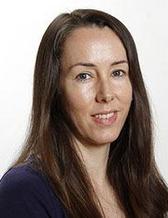
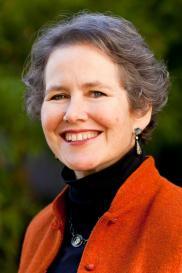
Amy Bruckman is a Regents’ Professor and Senior Associate Chair in the School of Interactive Computing at Georgia Institute of Technology. As a Fellow of The ACM and member of the SIGCHI Academy , she contributes to social computing research focusing on online collaboration, cross-cultural understanding, and content moderation. Her 2022 book "Should You Believe Wikipedia? Online Communities and the Construction of Knowledge" explores digital knowledge creation. Education: Ph.D. from MIT Media Lab (1997), B.A. in Physics from Harvard (1987) Research Affiliations: GVU Center, IRI People and Technology Her work addresses social computing challenges including: AI ethics in human-AI interaction Algorithmic bias in content moderation Epistemic justice in online communities Comparative platform analysis (Reddit, Discord, TikTok) Grassroots technology movements Recent publications examine: AI support tools for online counseling Community-driven research frameworks Racial bias mitigation in toxic language detection Designing teachable social media experiences Human trafficking intervention ethics Scientific recognition includes: ACM Fellowship SIGCHI Academy membership She has contributed to: Georgia Tech's Computing Education initiatives Research ethics frameworks for Human-Computer Interaction
Martin T. Wells is the Charles A. Alexander Professor of Statistical Sciences at Cornell University, with joint appointments in the Department of Statistical Science, Department of Biological Statistics and Computational Biology, Department of Social Statistics, and as Professor of Clinical Epidemiology and Health Services Research at Weill Medical School. He serves as Editor-in-Chief of the ASA-SIAM Book Series and Co-Editor of the Journal of Empirical Legal Studies. Cornell University, Ithaca, NY Weill Cornell Medical College Research Interests span applied and theoretical statistics, Bayesian methods, biostatistics, clinical epidemiology, and computational biology. His work bridges disciplines like finance, legal studies, and health services research. Article Trends highlight advancements in Bayesian modeling, quantum cognition machine learning, tensor analysis, and misclassification correction, with applications in genomics, finance, and public health. Fellow of the American Statistical Association Fellow of the Royal Statistical Society Contributions include developing statistical software (e.g., rTensor), methodological innovations in clinical trials, and empirical legal studies on civil rights and the death penalty.
Heather Congdon Fors is a Senior Lecturer at the Department of Economics, University of Gothenburg. She holds a Ph.D. in Economics from the University of Gothenburg (2006), an M.A. in Economics from the University of Waterloo (1999), and a B.A. (Honours) in Economics from the University of Manitoba (1997). Her research focuses on development economics, education, child labor, and political economy. She has led the research project 'Child labor and school attendance in India' (2014–2018) and serves as a reviewer for journals such as the European Journal of Political Economy and Economic Inquiry. Her teaching expertise includes macroeconomics, statistics, institutional economics, and international economics. She has completed pedagogical training programs including HPE201 to HPE103. Her work explores topics such as the impact of globalization on education, land certification on schooling in Ethiopia, and the persistence of harmful cultural norms like female genital cutting in Africa. She has published extensively in peer-reviewed journals and authored reports on child labor policies, institutional change in post-colonial states, and gender biases in education. Fors has contributed to interdisciplinary projects, including analyses of bureaucrats' use of cost-benefit analysis in environmental policy and the long-term impacts of colonial missions on cultural practices. Her research bridges theoretical frameworks with empirical studies, addressing global challenges such as sustainable development goals and educational inequalities. She is based at Vasagatan 1, Gothenburg, and can be reached at heather.fors@economics.gu.se.
Daniel E. Ho holds multiple prestigious positions at Stanford University: William Benjamin Scott and Luna M. Scott Professor of Law Professor of Political Science Professor of Computer Science (by courtesy) Senior Fellow, Stanford Institute for Economic Policy Research Senior Fellow, Stanford Institute for Human-Centered Artificial Intelligence Faculty Fellow, Center for Advanced Study in the Behavioral Sciences He serves on the National Artificial Intelligence Advisory Commission (NAIAC), as Senior Advisor on Responsible AI at the U.S. Department of Labor, and as a Public Member of the Administrative Conference of the United States (ACUS). Ho earned his J.D. from Yale Law School and Ph.D. from Harvard University, completing a clerkship with Judge Stephen F. Williams on the U.S. Court of Appeals for the District of Columbia Circuit. His research bridges artificial intelligence, law, and public policy with emphasis on: Regulatory governance frameworks for AI systems Fairness and bias mitigation in algorithmic decision-making Environmental enforcement using satellite imagery and computer vision Methods for estimating racial disparities without direct demographic data Legal AI reliability and statutory research systems Analysis of his 2025 publications reveals a consistent focus on practical AI governance tools addressing real-world regulatory challenges. Key themes include developing benchmarks for legal applications, mitigating hallucination in legal AI tools, and creating systems for statutory research. His work demonstrates strong integration of technical AI methods with policy implementation, particularly in environmental enforcement and fairness assessment. As Director of the Regulation, Evaluation, and Governance Lab (RegLab), Ho leads interdisciplinary research partnerships with government agencies. While specific grant details aren't provided, RegLab's operational model indicates substantial research funding for policy-relevant AI projects. No student advisees are mentioned in available materials. Ho's leadership extends to national advisory roles where he shapes federal AI policy through evidence-based recommendations, particularly regarding environmental protection and civil rights enforcement mechanisms.
Stephen Billings is an Associate Professor of Finance at the Leeds School of Business, University of Colorado Boulder, where he holds the Global Real Estate Capital Markets Chair position. He serves as the faculty director of the MS in Real Estate program and research director for the CU Real Estate Center. His work spans multiple research centers including the Center for Research on Consumer Financial Decision Making and the Michael A. Klump Center for Real Estate. Billings received his PhD in Economics from the University of Colorado, a MS in urban planning from the University of North Carolina, and a BS in economics from Georgetown University. Prior to joining CU Boulder in 2016, he was faculty at the University of North Carolina Charlotte with appointments in both economics and public policy, where he also served as faculty director for the real estate center. His research focuses on the intersection of housing, schools, neighborhoods and crime, addressing critical policy issues including the impact of public investment in light-rail transit on neighborhoods, school segregation's influence on academic achievement and crime, neighborhood gentrification causes, lead-based paint in low-income housing, and the effects of sea level rise and natural disasters on neighborhood sorting and household finances. Billings employs sophisticated analysis of large micro-datasets with studies based on data and policies in Charlotte, NC and Denver, CO. His work connects urban economics with public policy, demonstrating how neighborhood environments shape individual outcomes across multiple dimensions. Billings' recent publication record demonstrates a consistent focus on neighborhood effects, school choice impacts, crime economics, and housing market dynamics. His work frequently examines the intersection of race, housing, and economic outcomes, with particular attention to policy implications. He has developed innovative methodological approaches to studying residential amenities and neighborhood spillovers, with increasing attention to climate change impacts on housing markets. His research appears in top journals including The Quarterly Journal of Economics, American Economic Review: Insights, and Journal of Urban Economics. As an educator, Billings teaches undergraduate and masters classes in real estate finance and economics, as well as doctoral and masters level courses on cost-benefit analysis and statistical methods. He has extensive consulting experience conducting economic impact studies, including assessments of North Carolina's public higher education system, affordable housing needs in Colorado communities, and the economic effects of marijuana legalization on property markets. His practical policy work complements his academic research, creating a bridge between theoretical insights and real-world applications. Billings leads significant research initiatives through the CU Real Estate Center, where he directs studies examining the impact of business improvement districts and other urban development policies. His work bridges academic research with practical policy applications, making substantial contributions to our understanding of how housing, education, and neighborhood environments shape individual outcomes and community development. His December 2023 memo on the HUD Officer Next Door Program exemplifies his engagement with current housing policy issues.
Richard Jochelson serves as Dean of Law at the Faculty of Law, University of Manitoba (Robson Hall), a position he has held since July 1, 2016. Previously, he taught criminal law for 10 years at the University of Winnipeg. Dr. Jochelson holds a Ph.D. in Law from Osgoode Hall Law School at York University, an LLM from the University of Toronto Faculty of Law, an LL.B. with Gold Medal from the University of Calgary Faculty of Law, and a B.Sc. in Zoology with Distinction from the same institution. He completed his legal training as a clerk at the Alberta Court of Appeal and Court of Queen's Bench before working at a major Canadian law firm. Dr. Jochelson's research program centers on critical issues in criminal justice and constitutional law, with primary interests in police powers jurisprudence, sexual regulation (particularly obscenity and indecency law), jury systems and representativeness, and legal pedagogy. His interdisciplinary approach bridges law with sociology and psychology, bringing empirical and theoretical rigor to legal scholarship. His work consistently addresses social justice concerns, examining how vulnerable populations interact with the justice system and how concepts like risk, precaution, and visibility shape legal decision-making. He has developed a distinctive methodology combining doctrinal analysis with empirical research on judicial behavior and jury decision-making. His recent publications reveal evolving scholarly priorities that respond to contemporary legal challenges. The 2025 article "Morbid Matters" addresses medical assistance in dying within federal corrections, while his 2024 works on youth terrorism cases and agnotology demonstrate expansion into new interdisciplinary territories. His longstanding commitment to police powers scholarship continues with "Ancillary Police Powers in Canada" (2024). The pandemic period saw significant contributions to understanding digital justice, mental health in legal education, and remote court proceedings. His criminal law scholarship maintains focus on jury representativeness, particularly regarding Indigenous inclusion following Bill C-75's elimination of peremptory challenges. Students' Teacher Recognition Award (CATL) - 2018 Dr. Jochelson has secured multiple SSHRC Insight Grants as both Principal and Co-investigator, demonstrating his ability to lead interdisciplinary research teams. His mentorship extends to junior academics and students, with several publications co-authored with emerging scholars. He has built significant research infrastructure, notably assembling nearly 40 interdisciplinary scholars across Canada for Robsoncrim.com, which has elevated the Criminal Law Edition of the Manitoba Law Journal to prominence as one of Canada's preeminent criminal law publications. As Dean of Law, Dr. Jochelson provides leadership in academic governance and legal education innovation. His service includes extensive committee work on academic affairs, workload policy, and hiring/tenure committees. His commitment to universal design principles informs both his teaching approach and administrative leadership, emphasizing accessibility and student-centered pedagogy that allows flexible evaluation methods tailored to individual learning preferences.
Elliott Ash is an Associate Professor of Law, Economics, and Data Science at ETH Zurich's Center for Law & Economics. He holds a Ph.D. in Economics and J.D. from Columbia University, a B.A. in Economics, Government, and Philosophy from the University of Texas at Austin, and an LL.M. in International Criminal Law from the University of Amsterdam. His research focuses on empirical legal studies using econometrics, NLP, and ML, examining topics like judicial behavior, legislative impact, and AI-driven governance. He has been funded by the ERC, Swiss NSF, and others. Research Interests: Elliott explores automation of legal decisions, text-as-data analysis in law, and the intersection of AI with legal systems. He develops tools like BallotBot and LePaRD to enhance legal transparency and public understanding. His work bridges law, economics, and computer science, with publications in top journals like the American Economic Journal and Review of Economics and Statistics . Teaching: Courses include Building a Robot Judge , Natural Language Processing for Law , and Big Data for Public Policy . He co-organizes the Zurich Workshop in AI+Economics and Monash-Warwick-Zurich Text-as-Data Workshops. Awards: European Research Council Starting Grant, Swiss National Science Foundation Grant, and multiple grants from U.S. and Swiss institutions. His work has been featured in NPR , VoxEU , and Georgetown Law Journal . Labs/Teams: Leads the Swiss AI Initiative's Human-AI Alignment team, collaborates with the CEPR on Political Economy research, and serves as an Economic Journal Associate Editor.
Margaret E. Roberts is a Professor in the Department of Political Science at the University of California, San Diego. She co-directs the China Data Lab at the 21st Century China Center and serves as an affiliate at the UC Institute on Global Conflict and Cooperation. Her academic appointments reflect her interdisciplinary approach combining political science, statistics, and computational methods. University of California, San Diego, Department of Political Science (Current) Co-director, China Data Lab at the 21st Century China Center Affiliate, UC Institute on Global Conflict and Cooperation Roberts earned her PhD in Government from Harvard University (2014), MS in Statistics from Stanford University (2009), and BA in International Relations and Economics from Stanford University (2009). Her educational background bridges political science, statistics, and computational methods, forming the foundation for her interdisciplinary research approach. Professor Roberts' research focuses on the intersection of political methodology and the politics of information, with specific expertise in automated content analysis and the politics of censorship and propaganda in China. Her work employs innovative methods including social media analysis, online experiments, and large-scale text analysis to understand how censorship and propaganda influence information access and political beliefs. She has made significant contributions to text-as-data methodologies, developing tools like the Structural Topic Model (stm) R package that have become widely used in social science research. Roberts' research portfolio demonstrates consistent focus on authoritarian information control, particularly in China, while expanding into broader applications of text analysis in political science. Her publications span top journals in political science, computer science, and interdisciplinary fields, reflecting the cross-disciplinary nature of her work. Goldsmith Book Award Best Book Award in the Human Rights Section Best Book Award in Information Technology and Politics Section Best Book Award of the last decade in the Political Communication Section of the American Political Science Association Chancellor's Associates Endowed Chair at UCSD Foreign Affairs Best Books of 2018 Professor Roberts has secured significant research funding supporting her work on Chinese censorship, propaganda, and text analysis methodologies. Her research has practical applications for understanding digital authoritarianism, content moderation, and the development of computational tools for social science research. She has mentored numerous students and collaborators, contributing to the next generation of scholars working at the intersection of political science and computational methods. Roberts also leads the China Data Lab, which serves as a hub for research on Chinese politics and society using digital methods.
Reşat Kasaba is a Professor at the Henry M. Jackson School of International Studies, University of Washington, where he has taught undergraduate and graduate courses for over 30 years. He currently directs the Interdisciplinary Ph.D. Program in Near and Middle Eastern Studies and served as the director of the Jackson School from 2010 to 2020. His expertise centers on the political and economic history of the Middle East, particularly Turkey. His educational qualifications include: Ph.D. in Sociology, State University of New York at Binghamton, 1986 M.A. in Sociology, State University of New York at Binghamton, 1978 B.S. in Economics and Statistics, Middle East Technical University, Ankara, Turkey, 1976 Professor Kasaba's research interests encompass political economy, economic history, state-society relations, migration and refugee studies, ethnicity and nationalism, urban history, and U.S. foreign policy in the Middle East. His work often focuses on modern Turkey, analyzing the rural-urban divide and the historical trajectory of state formation. His scholarly output features four influential books that explore the dynamics of empire, migration, modernity, and legal systems in the Ottoman and Turkish contexts. Collectively, these works contribute to understanding the complex interplay between social forces, national identity, and political economy in the region. He has been recognized with the UW Distinguished Teaching Award. Additionally, he has held leadership roles in prominent academic associations: President, Association of Professional Schools of International Affairs (2017-2019) Board Member, Middle East Studies Association of North America (2015-2018) Professor Kasaba is actively involved in graduate education, currently accepting new MA students for the 2026-2027 academic year and mentoring Ph.D. candidates through the Interdisciplinary Ph.D. Program. His teaching covers diverse topics including world cities, state-society relations, and the modern Middle East.
Jennifer Leeman is a Professor at George Mason University , focusing on the sociopolitics of language, with emphasis on multilingualism, Spanish in the US, and heritage language education. Her interdisciplinary work bridges critical applied linguistics, sociolinguistics, education, Latinx studies, and linguistic anthropology. BA in Spanish, University of Pennsylvania MA in Hispanic Civilization, New York University in Madrid MAT in TESOL & Bilingual Education, Georgetown University PhD in Hispanic Linguistics, Georgetown University Her research examines: Language ideologies and racialization processes in censuses Antiracist pedagogical frameworks for Spanish teaching Multilingual policy analysis across education and governance Critical service-learning in heritage language contexts Recent publications analyze census categorization, language and immigration policies, and critical pedagogy implementation. She received a 2024-25 Fulbright Senior Scholar award for research at the University of Murcia, Spain, and a 2023-24 Residential fellowship at Mason's Center for Humanities Research. Key scientific contributions include: Pioneering the online graduate certificate in Spanish Heritage Language Education (2021) Leadership roles in AAAL, MLA, and Instituto Cervantes’ advisory committees Editorial board memberships across journals like Language Policy and Hispania Her 15 most recent articles (2018-2025) reveal trends in: Language-race-national identity intersections Census-driven ethnoracial classifications Antiracist pedagogy in language classrooms Heritage speaker identity dynamics Monolingual policy critiques Transnational demographic analysis Contact: jleeman@gmu.edu | Office: Horizon Hall 5132
Christine Mahoney is a Professor of Public Policy and Politics and Chief Innovation Officer at the Frank Batten School of Leadership and Public Policy at the University of Virginia. She also serves as Director of the Tadler Program in Impact Investing in Appalachia, the UVA Environmental Institute-funded Climate Collaborative on Appalachian Renewable Energy & Resilience, and the EPA-funded Community Change project for economic development in Appalachia. Previously, she was an Assistant Professor at the Maxwell School of Syracuse University and Director of the Center for European Studies and the Maxwell EU Center. Dr. Mahoney earned her Ph.D. in Political Science from Pennsylvania State University in 2006, with fields of study in American politics, Comparative politics, and Research Methods & Statistical Analysis. She also completed her M.A. (2003) and B.A. (2001) in Political Science and International Politics, respectively, at Pennsylvania State University. Professor Mahoney specializes in social justice advocacy, activism, and direct action through social entrepreneurship. Her research focuses on how advocates shape public policy, with particular attention to lobbying strategies in powerful political systems like the United States and the European Union. She has conducted extensive fieldwork in seven conflict zones across Asia, Africa, Eastern Europe, and Latin America, studying the rights of forcibly displaced people and proposing innovative solutions through social entrepreneurship. Her work bridges political science with practical applications in impact investing and refugee integration, creating tangible pathways for social change through entrepreneurial approaches. Professor Mahoney's scholarly output reveals an evolution from comparative studies of advocacy systems to practical applications of social entrepreneurship for forcibly displaced populations. Her early work established foundational knowledge about lobbying in transatlantic political systems, while her more recent research has shifted toward actionable solutions for global displacement crises and sustainable community development. This trajectory demonstrates her commitment to translating academic insights into real-world impact, particularly through the lens of social entrepreneurship and impact investing. Fulbright Fellow Visiting Scholar at Oxford National Science Foundation grant recipient Emerging Scholar award from the American Political Science Association UVA's Public Impact-Focused Research Award Through Social Entrepreneurship at UVA (SE@UVA), which she founded and led for a decade (2011-2021), Professor Mahoney has mentored over 80 student social enterprise teams and supported more than 100 social entrepreneurs with over 38,400 hours of pro-bono consulting. She has secured $37.7 million in funding for programs addressing social and environmental challenges, including the Tadler Program in Appalachia that has made significant strides in advancing rural policy and economic development. Her work demonstrates a consistent commitment to connecting academic research with practical applications that address pressing social problems. Professor Mahoney leads several significant initiatives including the Refugee Investment Network, where she serves as fellow and advisor, and multiple UVA-based programs focused on social entrepreneurship, impact investing, and community development. Her interdisciplinary approach brings together policy experts, social entrepreneurs, impact investors, and community stakeholders to develop innovative solutions to complex social problems, particularly in the areas of refugee integration and rural economic development in Appalachia.
Abigail Jacobs is an Assistant Professor at the University of Michigan , jointly appointed in the School of Information and the College of Literature, Science, and the Arts . She is also affiliated with the Center for Ethics, Society, and Computing (ESC) and the Michigan Institute for Data Science (MIDAS) . Education: PhD in Computer Science, University of Colorado Boulder (2015-2019) BA in Mathematical Methods in the Social Sciences and Mathematics, Northwestern University (2011-2015) Research Interests: Dr. Jacobs examines measurement and validity in machine learning , focusing on hidden assumptions in AI systems, governance structures in sociotechnical systems, and inequality in algorithmic design. Her work bridges AI, data science, and social science methodologies, emphasizing interdisciplinary collaboration. Recent Publications (2024-2025) explore generative AI evaluation, algorithmic transparency in government (e.g., US Census Bureau), motion capture data ethics, and sociotechnical frameworks for AI governance. Earlier works (2023) address fairness in ranking systems and racial categorization in algorithmic bias studies. Scientific Awards: Microsoft Research AI & Society Fellowship (2024) NSF Graduate Research Fellowship (during PhD) Advising & Grants: She co-advises Ph.D. students Amina Abdu and Meera Desai . Her research includes a Notre Dame-IBM Tech Ethics Lab grant on AI audits and collaborations with institutions like UC Berkeley, Microsoft Research, and the National Academies .
Mariane C. Ferme is a Professor in the Department of Anthropology at the University of California, Berkeley. Her research focuses on sociocultural dynamics in West Africa, particularly Sierra Leone, with expertise in political anthropology, legal studies, and material culture. She holds a PhD in Anthropology from the University of Chicago and has taught at prestigious institutions including the University of Cambridge and École des Hautes Études en Sciences Sociales. Education : PhD in Anthropology (University of Chicago), MA in Political Science (University of Milano), BA in Anthropology (Wellesley College). Ferme’s research spans the political imagination in conflict zones, agrarian transformations, and the interplay between humanitarian law and local justice systems. Her work has been supported by major grants from the National Science Foundation and the France-Berkeley Fund. She has published extensively on Sierra Leone’s post-war societies and the socio-cultural dimensions of the Ebola outbreak. Scientific awards include funding from the National Science Foundation, Hellman Family Faculty Fund, France-Berkeley Fund, Harvard Academy for International and Area Studies, and the Carter Woodson Institute for African and African-American Studies.
Richard Hornbeck is the V. Duane Rath Professor of Economics at the University of Chicago Booth School of Business. He is an economic historian and applied-micro economist whose research focuses on the historical development of the American economy, examining why some places and people have become wealthier while others have remained poorer. Hornbeck is a research associate at the National Bureau of Economic Research, affiliated with programs on the Development of the American Economy, Development Economics, and Environmental and Energy Economics. Hornbeck's research spans multiple critical areas of economic history, with particular emphasis on slavery and emancipation economics, environmental history (especially the Dust Bowl migration), gender dynamics in 19th-century manufacturing, railroad development, and agricultural economics related to the Ogallala Aquifer. His work frequently utilizes newly digitized historical data to provide fresh insights into longstanding economic questions, connecting historical events to contemporary economic issues of wealth distribution and regional disparities. His publication record shows strong trends in American economic development research, with recent work focusing on the economic impacts of emancipation, historical manufacturing patterns by gender, and urban economic development. Many of his papers have been published as lead articles in top journals including the Journal of Political Economy, American Economic Review, and Review of Economics and Statistics. Hornbeck has received several prestigious honors including the Alfred P. Sloan Fellowship in 2014 and selection for the 2009 Review of Economic Studies Tour. His NBER affiliations demonstrate his standing in multiple subfields of economics research. Prior to joining Chicago Booth in 2015, Hornbeck was the Dunwalke Associate Professor of American History in the Economics Department at Harvard University. He received his PhD in economics from MIT in 2009 and a bachelor's degree in economics from the University of Chicago in 2004. His teaching includes courses on applied microeconomics in economic history and business in historical perspective, with course schedules extending through 2026.
Steven D. Levitt is the William B. Ogden Distinguished Service Professor of Economics at the University of Chicago, where he directs the Becker Center on Chicago Price Theory. He has been affiliated with the university since 1997, following a PhD from MIT and BA from Harvard. Fields of Interest: Economics, Criminology, Education Policy, Real Estate, Political Economy, Social Policy, Game Theory Levitt's research spans empirical economic analysis across diverse domains, including crime, education, politics, and behavioral economics. His work often employs unconventional data sources and focuses on identifying causal relationships through natural experiments. Recent publications highlight intersections between incentives, social behavior, and policy outcomes. Notable awards include the John Bates Clark Medal (2004) and recognition as one of Time magazine's 100 People Who Shape Our World (2006). He is widely known for co-authoring the Freakonomics book series and blog, which popularized the application of economic principles to real-world phenomena. Contact: SLevitt@UChicago.edu