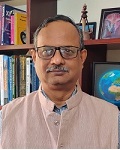
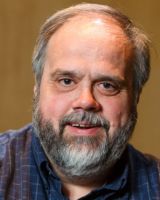
Joss Wright is an Associate Professor and Senior Research Fellow at the Oxford Internet Institute , University of Oxford. He co-directs the Oxford EPSRC Cybersecurity Doctoral Training Centre and the Oxford Martin Programme on the Wildlife Trade, focusing on computational approaches to social science questions about information control and privacy. Education : PhD in Computer Science from the University of York (research on anonymous communication systems), postdoctoral work at the University of Siegen (cloud computing security). His research spans internet censorship , privacy-enhancing technologies , and cyber-enabled crime (notably the online illegal wildlife trade ). He bridges technical analyses of security systems with their social and political implications, advising the European Commission and UK Parliamentary Science Committee on digital policy. Recent work includes machine learning applications to detect patent filing trends related to wildlife trade and analyzing Chinese smart city surveillance for human rights risks. He has contributed to media outlets like the Guardian and New Scientist. Notable projects include the Oxford Martin Programme on Wildlife Trade and studies on discriminatory effects of internet filtering . He supervises students like William Lugoloobi (DPhil in Social Data Science) and former advisee Samantha Bradshaw (now Assistant Professor at American University).
Dr. Isabella Kasselstrand is a Senior Lecturer in the Department of Sociology at the University of Aberdeen, part of the School of Social Science. She holds a PhD in Sociology from the University of Edinburgh (2014) and has prior faculty roles at California State University, Bakersfield (Associate Professor) and Pitzer College (Visiting Position). Her research focuses on secularization, secularity, and nonreligious identities, employing quantitative and mixed-methods approaches with a regional emphasis on Northern Europe, particularly Scandinavia and Scotland. Key research areas include religious indifference, immigration impacts on religiosity, social trust dynamics, and cultural religion practices. She co-authored the book Beyond Doubt: The Secularization of Society (2023) and serves as Co-Editor of Secularism & Nonreligion , and on editorial boards of Sociology of Religion and Journal for the Scientific Study of Religion . She also holds the role of Publications Officer for the British Sociological Association's Sociology of Religion Study Group. Teaching expertise includes research methods, social inequality, and introductory sociology courses at both undergraduate and postgraduate levels. Her recent publications analyze trends in secular spirituality, public perceptions of women's empowerment, and comparative secularization patterns. She actively supervises PhD students focusing on quantitative methods and secularization themes.
Professor Ioannis Katakis is a Faculty Member at the University of Nicosia, where he is affiliated with the School of Sciences and Engineering and the Department of Computer Science. He has held various academic positions across multiple institutions including Aristotle University of Thessaloniki, University of Cyprus, Cyprus University of Technology, Open University of Cyprus, Hellenic Open University, Athens University of Economics and Business, and National and Kapodistrian University of Athens. His educational background includes a PhD in Machine Learning for Automated Text Classification (2005-2009), a Master's in Information Systems (2005-2007), and a Bachelor's in Computer Science (2000-2004), all from Aristotle University of Thessaloniki. Professor Katakis specializes in several cutting-edge areas of computer science and data analysis. His primary research interests include Mining Social, Web and Urban Data , Sentiment Analysis and Opinion Mining , Data Streams , and Multi-label Learning . His work bridges theoretical machine learning approaches with practical applications in social media analysis, healthcare informatics, privacy protection, and smart city technologies. He has published extensively in top venues including CIKM, ECML/PKDD, IEEE TKDE, and ECAI. His recent publications demonstrate a clear trend toward applying machine learning techniques to real-world problems with societal impact. He has focused on areas such as GDPR compliance in smart devices, sentiment analysis in crowd-sourced content, healthcare applications including drug reaction classification and brain disease monitoring, and privacy protection in wearable technologies. His work often involves multi-modal data analysis and addresses challenges in data streams and multi-label classification. Professor Katakis has made significant contributions to his field, with his research cited over 4,200 times. He serves as an Editor for the journal Information Systems and has edited four special issues in journals such as DAMI and InfSys. He regularly contributes to the academic community by serving on program committees for major conferences including ECML/PKDD, WSDM, DEBS, and IJCAI, and by reviewing for prestigious journals like TPAMI, DMKD, TKDE, TKDD, JMLR, TWEB, and ML. He has been actively involved in European research projects, notably serving as Quality Assurance Coordinator and Senior Researcher for projects such as VAVEL (www.vavel-project.eu) and INSIGHT (www.insight-ict.eu). His grant activities demonstrate a strong focus on collaborative, interdisciplinary research with practical applications in urban data management, social media analysis, and healthcare informatics. He has organized three workshops at major conferences (ICML, ECML/PKDD, EDBT/ICDT) and has extensive experience translating research into practical applications through his involvement in European projects.
Tatsuhiro Ueno serves as Professor at Waseda University's Faculty of Law and School of Law, specializing in Intellectual Property Law, Copyright Law, and Information Law. He currently holds leadership positions as Director of the Institute of Comparative Law (since 2024) and President of SARLIB (Society for Administration of Remuneration for Public Transmission by Libraries or Similar Facilities). With extensive international experience including visiting scholar positions at Ludwig Maximilian University of Munich and the Max Planck Institute for Intellectual Property and Competition Law, Professor Ueno has established himself as a leading authority in copyright law reform and international intellectual property matters. Professor Ueno earned his Master of Law from Kyoto University following undergraduate and graduate studies there. His academic career includes teaching positions at Rikkyo University College of Law and Politics and Seijo University Faculty of Law before joining Waseda University in 2013, where he now contributes to shaping Japan's legal education landscape. His research focuses on the critical intersection of intellectual property law with emerging technologies, particularly artificial intelligence systems and digital platforms. Professor Ueno has pioneered work on text and data mining exceptions, copyright limitations in digital environments, and creator-oriented copyright frameworks. His scholarship bridges theoretical analysis with practical policy development, influencing both domestic legislation and international copyright discourse. His recent publications demonstrate a concentrated focus on AI and copyright law, with numerous articles examining the legal challenges posed by generative AI systems, text and data mining exceptions, and the evolving landscape of copyright protection in the digital era. Professor Ueno's work consistently addresses the balance between protecting creators' rights and ensuring public access to knowledge. KDDI Foundation Book Publishing Grant (January 2025) for "Creator-Oriented Copyright System" Professor Ueno actively participates in numerous government committees shaping Japan's copyright law, including serving as Chairman of the Law and Computers Society and as a longstanding member of the Copyright Subcommittee of the Council for Cultural Affairs. His research is supported by multiple grants from the Japan Society for the Promotion of Science, including ongoing projects examining human portraits and voices in the AI age (2025-2029) and AI and intellectual property rights systems (2024-2029). He regularly presents at international forums including WIPO Summer Schools, ATRIP conferences, and copyright forums worldwide, establishing his reputation as a key thought leader in global copyright policy development.
Ted Gerber is a Professor of Sociology at the University of Wisconsin-Madison, with active affiliations at the Center for Demography and Ecology, Center for Russian East Europe and Central Asia, Holtz Center for Science and Technology Studies, and University of Wisconsin Survey Center. Education: Ph.D. in Sociology, University of California, Berkeley, 1995 His research integrates Demography and Ecology, Education, Statistical Methods, and Social Stratification to analyze post-Soviet societies—particularly Russia—through quantitative lenses. Key investigations include housing regimes, migration patterns, social mobility, and collective memory of historical trauma like Stalinist repressions, examining how geopolitical contexts shape socioeconomic outcomes and public attitudes. Gerber's 2016-2021 publications reveal consistent focus on stratification dynamics in transitional economies, utilizing survey data from Russia, Ukraine, and Kyrgyzstan. Recurring themes include the interplay between migration and gender, propaganda effects on public opinion, and methodological innovations in measuring housing status and social mobility within hybrid political systems. Scientific Awards: No major scientific awards listed in provided information Teaching Soc 360 (Statistics), Soc 496 (Population in Russia), and advanced seminars on stratification/migration, Gerber's mentorship appears through co-authored publications with colleagues like Jane Zavisca and Qian He, though specific student advisees and grant details remain unmentioned in the text. His collaborative work across four UW-Madison research centers enables interdisciplinary exploration of demography, post-Soviet transitions, and science-policy interfaces, particularly regarding how historical legacies influence contemporary social structures in Eurasia.
Douglas Yu is a Professor in the School of Biological Sciences at the University of East Anglia (UEA), where he also serves as Principal Investigator and Director of the Ecology, Conservation, and Environment Center (ECEC), a joint venture with the Kunming Institute of Zoology. He is a member of the Centre for Ecology, Evolution and Conservation and the Organisms and the Environment research group. His research focuses on cooperation in ecological systems, particularly mutualisms between species and conservation as cooperation between humans and nature. Key methodologies include environmental DNA (eDNA), metabarcoding, and game theory. He co-founded NatureMetrics to commercialize biodiversity monitoring tools. His work spans tropical ecology, conservation genetics, and human-wildlife conflict resolution, notably in the Amazon. His recent research outputs highlight trends in molecular biodiversity assessment, landscape-scale eDNA analysis, and integrating remote sensing with ecological data. He leads multiple NERC-funded projects and industry collaborations focused on pollination services, cocoa sustainability, and statistical frameworks for eDNA. He is actively involved in scientific governance, serving on the NERC Biomolecular Analysis Facility Steering Committee and UKRI grant panels. He also contributes to public discourse through media appearances on topics like leech-based disease surveillance and bee conservation. He teaches courses in evolutionary biology, conservation genetics, and statistical modeling using R. He welcomes PhD and postdoctoral researchers, especially those interested in fieldwork in East Asia.
Thorsten Schmidt is Professor of Mathematical Stochastics at the University of Freiburg, succeeding Prof. Ernst Eberlein in the summer semester of 2015. He also serves as Senior Financial Engineer at MathFinance. Previously, he held professorships at Chemnitz University of Technology (2008-2015), Technical University Munich (2008), and University of Leipzig (2004 onwards). From 2017-2019, he was a Research Fellow at the Freiburg Institute for Advanced Studies (FRIAS) in a joint research group with the University of Strasbourg and USIAS on the topic of Linking Finance and Insurance. His research focuses primarily on financial and actuarial mathematics, stochastic processes, and statistics, with recent work on machine learning methods and their applications in financial mathematics and AI regulation. In Freiburg, his goal with his young team is to tackle complex challenges with improved mathematical models and apply these methodologies to various fields. Key Research Areas: Financial mathematics and credit risks Pricing and hedging of derivative financial products Statistics of stochastic processes Energy markets and nonlinear filter theory Machine learning applications in finance and insurance His recent publications show a strong trend toward integrating machine learning with traditional mathematical finance, particularly in risk management, insurance-finance arbitrage, and robust financial modeling. His work increasingly addresses ethical considerations in AI applications within finance, reflecting his broader interest in responsible AI development. Notable Awards: IDA Award Finance (2015) FRIAS-USIAS Research Fellow (2017/2018) IDA Award Machine Learning and AI (2020) MAPFRE Research Grant (2020) Luis Bachelier Fellow (2021) As Editor-in-Chief of Statistics and Risk Modeling and Associate Editor for Mathematical Finance and International Journal of Theoretical and Applied Finance, Schmidt plays a significant role in academic publishing. He leads the CRC 'Small Data' research center with Harald Binder, focusing on medical problems where disease progression must be estimated with few data points per patient. His LeanAI project, funded by the Vector Foundation, explores the connection between machine learning and theorem-proving software LEAN, aiming to develop AI that can translate between mathematics and formal proof systems. His laboratory work centers around the application of stochastic methods combined with machine learning to solve problems in finance and insurance where data is limited ('Small Data' initiative), with significant funding from DFG (€12 million for CRC Small Data) and the Carl Zeiss Foundation.
Professor Sylvia Walby is a faculty member at Royal Holloway, University of London, within the Department of Law and Criminology, School of Law and Social Sciences. She holds the Alexander von Humboldt Foundation Anneliese Maier Research Award, hosted by the University of Duisburg-Essen (2018–2025), and has held visiting positions at institutions including UCLA and Harvard. Current research focuses on violence and society, including gender dimensions, trafficking, and complex systems theory. Her work contributes to Sustainable Development Goals (SDGs), particularly those addressing gender equality and reduced inequalities. Key publications include Trafficking Chains: Modern Slavery in Society (2024) and methodological contributions to violence measurement. Her research spans criminology, sociology, and gender studies, emphasizing policy engagement and data-driven approaches. Recent articles analyze violent crime trends, trafficking data integration, and violence measurement in crime surveys. These works highlight intersections of gender, policy, and statistical methodologies. Scientific awards include Fellowships from the British Academy and Academy of Social Sciences, an OBE, and an honorary doctorate from Queen’s University Belfast. She has served as Chair of the REF2021 Sociology Sub-Panel and held leadership roles in the International Sociological Association and European Sociological Association.
John J. Curtin is a Professor in the Department of Psychology at the University of Wisconsin-Madison, where he directs the Addiction Research Center. His work bridges clinical psychology, computer science, and engineering to develop innovative digital solutions for mental health and addiction treatment. Dr. Curtin's research focuses on digital therapeutics and personal sensing technologies for substance use disorders and mental illness. His laboratory develops software applications that provide evidence-based interventions, treatment management tools, and enhanced communication with care providers. He specializes in algorithm development for moment-to-moment psychiatric risk prediction and just-in-time personalized interventions that adapt to both patient characteristics and their current context. His research program is highly interdisciplinary, collaborating with the Center for Health Enhancement Systems Studies, computer science, geography, and electrical and computer engineering departments. Dr. Curtin's work combines machine learning approaches with novel data streams from geolocation, cellular communications, social media activity, and wearable biosensors to create more effective and personalized treatment approaches. Dr. Curtin has secured continuous funding from the National Institutes of Health (NIAAA, NIDA, NCI and NIMH) since 1998. His current research examines machine learning-assisted precision medicine for smoking cessation, contextualized daily prediction of lapse risk in opioid use disorder, and dynamic real-time prediction of alcohol use lapse using mobile health technologies. His laboratory has produced numerous publications advancing the field of digital mental health interventions, with a particular focus on using technology to deliver precisely tailored treatments at the right moment for individuals struggling with substance use disorders.
Prof. Dr. Helen Baykara-Krumme is a full-time Professor of Sociology with a focus on Migration and Participation at the Institute of Sociology, University of Duisburg-Essen since March 2019. She serves as Managing Director of the Institute of Sociology (2020-2022), Chair of the Faculty of Humanities Ethics Committee since 2020, and Chair of the InZentIM Board since 2024. Her research spans migration, transnationalization, integration, and participation, with specialized focus on family processes in migration contexts, life course analysis, aging in migration contexts, migration-related organizational change, migration-disability intersections, and urban research methodologies. Education: Sociology, Statistics, and Agricultural Sciences (1995-2002, Free University & Humboldt University Berlin); PhD in Philosophy (2007, Free University Berlin); Habilitation (2017, Chemnitz University of Technology) Research Leadership: Coordinated BMBF-funded ZOMiDi project on civil society responses to migration diversity; edited Organisationaler Wandel durch Migration? (2022); contributed to the Ninth Family Report of the Federal Government (2016-2021) Methodological Expertise: Quantitative survey methods, intergenerational solidarity analysis, urban ethnography, and intersectional frameworks Awards: Fellow of the International Max Planck Research School LIFE (2002-2006) Teaching: Supervises final theses, leads courses on migration and globalization, and maintains regular consultation hours
Sible Andringa is Professor of Second Language Pedagogy at the University of Amsterdam's Faculty of Humanities, officially inaugurated on June 16, 2023. Dr. Andringa serves as Academic Director of the Institute for Dutch Language Education (INTT), Coordinator of the Language Learning, Literacy and Multilingualism research group, and Coordinator of the Master's program in Dutch as a Second Language and Multilingualism. Dr. Andringa's research focuses on second language acquisition and bilingualism, specifically investigating the added value of explicit instruction, how input distribution affects language learning outcomes, and the role of awareness in language learning trajectories. Key ongoing projects include the Meta-LLL project examining how literacy shapes language learning, the SLA4All initiative for reproducing SLA research with non-academic samples, and the OASIS project creating accessible research summaries for practitioners. Previously, Dr. Andringa led Project MIND studying bilingual daycare effects and contributed to the Stilis project on listening proficiency. As General Editor of the Dutch Journal of Applied Linguistics (DuJAL), Dr. Andringa promotes open science principles in language research. Recent publications demonstrate a focus on addressing sampling biases in SLA research, open access publishing ethics, and practical applications of language acquisition research for educational settings. Academic Director, Institute for Dutch Language Education (INTT) Coordinator, Language Learning, Literacy and Multilingualism research group Coordinator, Master's program Dutch as a Second Language and Multilingualism General Editor, Dutch Journal of Applied Linguistics (DuJAL) Member, Mastery Team for Modern Foreign Languages Member, OASIS project team Member, IRIS database advisory group Dr. Andringa supervises PhD candidates including Kyra Hanekamp and Darlene Keydeniers, particularly in research related to bilingual daycare environments and language development. The research program has received funding from the Dutch ministry of Social Affairs for Project MIND and continues to secure support for ongoing projects examining language learning mechanisms. Dr. Andringa leads the Language Learning, Literacy, and Multilingualism research group which investigates language and literacy acquisition across the lifespan, with emphasis on how language skills are learned, maintained, and used in educational contexts. The group meets weekly to discuss projects, plans, funding opportunities, and research topics while promoting collaboration, methodological innovation, and open science principles.
Prof. Rajiv Sinha is a Professor in the Department of Earth Sciences at Indian Institute of Technology Kanpur . With a PhD from the University of Cambridge (1992), his career spans over two decades at IITK, including roles as Head of Department since 2014. Education: PhD (University of Cambridge, 1992), M.Tech (University of Roorkee, 1987), B.Sc (Patna University, 1983) Key Affiliations: Member of International Association of Sedimentologists, SEPM, Quaternary Research Association, and Indian Professional Societies Research Focus: Specializing in river science , Prof. Sinha investigates fluvial geomorphology , sedimentology , and natural hazards like Kosi floods . His work integrates remote sensing and GIS for climate change and paleoclimate reconstruction , notably studying the Ganga river system and its anthropogenic impacts . Scientific Leadership: His publications (2013-2017) reveal: Anthropocene river systems (2016) Indus Civilization paleohydrology (2017) Kosi megafan dynamics (2015) Monsoon evolution (2010, 2014) Groundwater management (2016) Awards & Recognitions: Pandit Girish Ranjan Chair Professorship (2013) National Mineral Award (2002) Alexander von Humboldt Fellowship (2000) UGC Research Fellowship (1988) University Gold Medal (1987) Collaborative Network: Partners include University of Durham , Imperial College London , and Institute du Physique de Globe, Paris . Currently leading Ganga River Basin Management studies and river science initiatives at IITK.
Felipe Thomaz is an Associate Professor of Marketing at Saïd Business School, University of Oxford, and Deputy Director of the Oxford Future of Marketing Initiative. He holds a PhD in Marketing from the University of Pittsburgh and previously taught at the University of South Carolina. His research focuses on marketing strategy, AI ethics, illicit markets, and ESG integration, with notable contributions to frameworks like Ad Net Zero for net-zero advertising emissions. He collaborates with UN agencies, NGOs, and tech companies to address global sustainability goals and wildlife trafficking networks. Education: PhD in Marketing (University of Pittsburgh), MSc in Marketing & Finance (University of Pittsburgh), BSc in Animal Sciences (University of Florida). Research interests include digital marketing channels, brand performance via social networks, AI-driven marketing strategies, and conservation science linked to wildlife trade. His work bridges academia and industry, resulting in spinouts and IP transfers from Saïd Business School. Key projects include: Ad Net Zero: Global standard for reducing advertising emissions UN collaboration on wildlife trafficking through dark web analysis UNESCO partnerships on eliminating stereotypes in advertising His interdisciplinary approach spans marketing, mathematics, and conservation science, with publications in top journals like Journal of Marketing and Conservation Science and Practice .
Martin Wells is the Charles A. Alexander Professor of Statistical Sciences at Cornell University, with joint appointments in Social Statistics, Clinical Epidemiology, and Industrial Labor Relations. Since joining Cornell in 1987, he has developed methodologies spanning Bayesian inference, tensor analysis, and machine learning applications in biomedicine and finance. His research integrates statistical theory with computational innovations, particularly in high-dimensional modeling and quantum-inspired algorithms. Recent work focuses on geometric approaches to tensor decomposition, misclassification correction methods, and phylodynamic models incorporating dormancy effects. Professor Wells teaches statistical methodology across disciplines including law, medicine, and biology, adapting analytical frameworks to diverse research contexts. His interdisciplinary collaborations extend to Weill Medical College and the School of Industrial and Labor Relations.
Laura Dugan is the Ralph D. Mershon Professor of Human Security and Professor of Sociology at The Ohio State University. She co-leads the Global Terrorism Database (GTD) and Government Actions in Terrorist Environments (GATE) project, which are foundational datasets for understanding terrorism and government responses. Her work focuses on violence prevention policies, methodological innovation for overcoming data limitations, and the intersection of terrorism with political and social contexts. Education includes a Ph.D. and M.S. in Public Policy and Management from Carnegie Mellon University (1995–1999), an M.S. in Statistics (1998), and a B.F.A. in Applied Media Arts from Edinboro University (1987). Research interests span terrorism studies, criminological explanations for violence, government counterterrorism strategies, and methodological approaches to analyzing large-scale datasets. Her work bridges criminology, political science, and sociology, with a focus on empirically grounded analyses of terrorism’s causes and consequences. Publications emphasize terrorism’s global patterns, the efficacy of interventions, and interdisciplinary methodological advancements. Key works include analyses of the GTD’s insights into terrorism’s evolution and GATE’s revelations about government actions’ impact on terrorism. Her grants and advising involve leading large-scale projects like GTD and GATE, which are pivotal for academic and policy communities. She collaborates extensively on datasets and policy-oriented research, influencing both scholarly discourse and practical counterterrorism measures. Laura Dugan’s research teams and labs focus on maintaining and expanding these databases while exploring their applications in policy contexts, ensuring data accessibility for global researchers and practitioners.