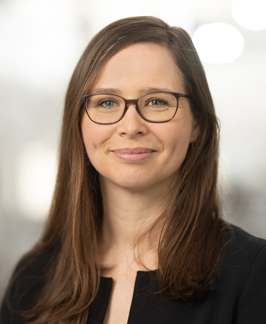
Yasemin Bekyol is a Researcher at the FAU Research Center for Human Rights Erlangen-Nuremberg (FAU CHREN), leading the project "Health! Participation in the Care Sector," and a doctoral candidate at MFI focusing on "Vulnerability in the European Asylum System." She holds an MSc in International Politics from SOAS, University of London, and a BA in English and Political Economics from Heidelberg University and Loughborough University. Her research explores migration governance, refugee integration in healthcare systems, gender-sensitive asylum policies, and EU responses to crises like COVID-19. Key themes include labor rights for refugees, vulnerability frameworks, and transnational policy coordination. Publications analyze migration policy reforms, refugee workforce integration, and pandemic impacts, with recent work emphasizing equitable skills partnerships and systemic barriers in health sectors. Awards: FFL Fellowship for gender equality in academia (2021-2022) She collaborates on EU-funded projects (e.g., FAU CHREN’s COVID-19 migration study) and has advised institutions like the German Red Cross on asylum-seeker integration.
Dr. Janina Stürner-Siovitz is a postdoctoral research fellow and project leader at the Institute of Political Science and the Centre for Human Rights Erlangen-Nürnberg at Friedrich-Alexander-University Erlangen-Nuremberg. She specializes in migration governance within complex multi-level systems, with a particular focus on city diplomacy and the role of urban authorities in migration policy-making at global, European, and African levels. Her current work centers on the 'Equal Partnerships' project examining African intermediary cities as actors in urban migration governance. Her educational background includes: PhD in Political Sciences from Friedrich-Alexander-University Erlangen-Nuremberg (summa cum laude) Franco-German master's degree in International Relations with focus on migration policies Franco-German bachelor's degree in Political Sciences from Sciences Po Aix and University of Freiburg Stürner-Siovitz's research focuses on migration governance in multi-level systems, with particular emphasis on how cities interact with states and international actors in implementing the Global Compacts for Migration and Refugees. She examines city diplomacy in regional and global migration governance across Europe, Africa, and UN systems, with special attention to AU-EU relations, climate mobility, and empowerment in protracted displacement situations. Her work bridges local experience from her time with the City of Stuttgart with transnational research on migration policy networks. Analysis of her recent publications reveals a strong focus on African urban governance in migration contexts, with increasing attention to climate mobility and intermediary cities. Her work demonstrates how municipal authorities are becoming key actors in transnational migration governance, challenging traditional nation-state centered approaches. She consistently examines how local-global connections shape migration policy implementation and how cities develop innovative approaches to migration governance that transcend national frameworks. Her notable affiliations and recognitions include: Visiting Fellow of the German Marshall Fund of the United States Research Associate of the City Diplomacy Lab Non-Resident Fellow of the Chicago Council on Global Affairs Peer reviewer for the UN Network on Migration Knowledge Platform Member of UNHCR's Global Academic Interdisciplinary Network Stürner-Siovitz has developed significant policy impact through commissioned work for major international organizations. Her research has informed policy processes for the European Commission, German Federal Foreign Office, UN agencies, and numerous foundations. She has extensive experience designing evaluation processes, workshops, and policy papers that bridge academic research and practical governance needs. Her current 'Equal Partnerships' project represents a continuation of her longstanding work on how cities shape migration governance, now with a specific focus on African intermediary cities and multi-stakeholder partnerships. Her field work spans Belgium, Germany, Kenya, Morocco, Tunisia, Uganda, and the United States, providing her with firsthand experience across diverse migration contexts. This global perspective informs her analysis of how local authorities navigate the complex challenges of migration governance in different political and cultural settings.
Professor Andreas Frewer is a distinguished scholar in medical ethics at Friedrich-Alexander-Universität Erlangen-Nürnberg, holding the Professorship for Ethics in Medicine at the Institute for the History and Ethics of Medicine. He serves as Senior Advisory Expert for the World Health Organization (WHO) on global clinical ethics and leads multiple research initiatives including the graduate school "Human Rights and Ethics in Medicine for the Elderly." His work bridges historical scholarship with contemporary ethical challenges in healthcare. His educational background includes a European Master of Bioethics from universities in Nijmegen, Basel, Leuven, and Padua (2002), medical studies in Munich, Erlangen, Marburg and Berlin, with study periods in Vienna, Oxford and Jerusalem. He completed his habilitation with Venia legendi for "History, Theory and Ethics of Medicine" in 2004. Professor Frewer's research spans medical ethics, history of medicine, clinical ethics consultation, human rights in healthcare, and ethics of aging. His work examines the intersection of historical medical practices with contemporary ethical dilemmas, particularly focusing on Nazi "euthanasia" research, end-of-life care, and the development of ethical frameworks for clinical decision-making. He has pioneered research on the application of human rights frameworks to elderly care and has extensively documented the historical development of medical ethics as a discipline. His recent publications demonstrate a clear trajectory toward addressing emerging ethical challenges in healthcare, with increasing focus on artificial intelligence in medicine, global clinical ethics frameworks, and the specific ethical needs of elderly populations. His work connects historical analysis with forward-looking ethical guidance, particularly evident in his leadership of the WHO expert group developing international clinical ethics guidelines. Professor Frewer has received several prestigious awards including: Brocher Award 2012 for the project "Medical Ethics and Human Rights" Medizin-Preis (2019) Schöller-Sonderpreis für "Ethik und Menschenrechte in der Altersmedizin" (2021) His work has been consistently funded by major research organizations including the German Federal Ministry for Family Affairs, Senior Citizens, Women and Youth (BMFSFJ) through the "Live Democracy!" program and the Josef and Luise Kraft Foundation Munich. As principal investigator, he leads the Research Training Group "Human Rights and Ethics in Medicine for the Elderly" and serves as editor for multiple academic series including the Yearbook Ethics in Clinics. His advising work focuses on developing ethical competencies in medical practice and shaping institutional ethics frameworks, with significant contributions to WHO guidelines on clinical ethics consultation. He has organized numerous international conferences and lecture series including the "Leibbrand-Wettley Lecture" and the "Medicine, Ethics and Human Rights" series. Professor Frewer co-founded the Centre for Human Rights Erlangen-Nürnberg (CHREN) and leads the Erlangen research team within the international network studying clinical ethics consultation. His work integrates closely with the WHO and other international organizations to develop practical ethics frameworks for healthcare systems globally. He serves on multiple editorial boards including "Theoretical Medicine and Bioethics" and "Medicine, Health Care and Philosophy" and is actively involved in the Academy for Ethics in Medicine (AEM).
Professor Ralf Poscher is a distinguished legal scholar serving as Director at the Max Planck Institute for the Study of Crime, Security and Law in Freiburg since May 2019, and as Professor at the Faculty of Law, University of Freiburg since October 2009. He also holds an honorary professorship at the University of Freiburg since 2019. His academic career includes previous positions as Professor at Ruhr-Universität Bochum (2003-2009), Assistant Professor at Humboldt-Universität zu Berlin (2002), and research fellowships at prestigious institutions including the Institute for Advanced Study in Princeton (2007-2008). Poscher's research focuses on constitutional law, philosophy of law, and fundamental rights, with particular emphasis on proportionality analysis, legal hermeneutics, and security law. His scholarly work demonstrates a consistent exploration of how constitutional principles are implemented in practice, especially regarding the balance between individual rights and state security interests. His recent publications reveal a growing interest in surveillance law and the measurement of state surveillance practices. His research portfolio includes significant projects such as the Periodic Surveillance Barometer for Germany, which seeks to empirically measure state surveillance practices, and FreiburgRESIST, a transdisciplinary project on urban resilience and security. His recent publications show a clear trend toward examining the practical implementation of constitutional principles in security contexts, particularly focusing on proportionality analysis as a tool for balancing fundamental rights against security needs. Humboldt Award, Humboldt-Universität zu Berlin (1999) Poscher leads multiple major research initiatives including the Handbook of Constitutional Law (a collaborative international project), the Periodic Surveillance Barometer for Germany, and the ZuRecht project on police in open societies. His work bridges theoretical legal scholarship with practical policy concerns, particularly in the areas of security law and constitutional implementation. He serves as co-editor for several important publication series and journals in the field of security and constitutional law. As Director of the Max Planck Institute's Department of Public Law and former Managing Director of the Centre for Security and Society at the University of Freiburg (2013-2018), Poscher leads research teams focused on the intersection of law, security, and society. His collaborative approach is evident in his numerous multi-institutional projects that bring together legal scholars, social scientists, and practitioners to address contemporary challenges in security governance and constitutional protection.
Aurika Lazorivna Paskar serves as an Associate Professor at the Department of Procedural Law within the Faculty of Law at Yuriy Fedkovych Chernivtsi National University in Ukraine. Holding a PhD in Law, she has established herself as a prominent scholar in civil procedure, judicial systems, and European human rights law. Her primary research interests encompass civil procedure law, judicial systems, access to justice, European Court of Human Rights case law, e-justice, advocacy standards, and civil procedural legal relations. Dr. Paskar's work consistently bridges theoretical legal frameworks with practical applications, particularly focusing on how European standards can be implemented within Ukrainian legal contexts. Dr. Paskar's recent scholarly output demonstrates significant engagement with contemporary legal challenges, including the implementation of martial law provisions, digital transformation of judicial systems, and harmonization of Ukrainian legislation with European standards. Her publications reveal a consistent focus on improving accessibility to justice while maintaining procedural fairness and efficiency. As an educator, she teaches key courses including Civil Procedure Law, Judicial System of Ukraine, Advocacy of Ukraine, and European standards of Advocacy, shaping the next generation of Ukrainian legal professionals with a strong foundation in both domestic and international legal frameworks.
Marie Walter-Franke is a researcher specializing in migration and asylum policy, currently serving as a Scientific Employee at the Council of German Foundations for Integration and Migration (SVR) in Berlin since January 2024. Her work focuses on citizenship and integration of refugees, with particular expertise in European Union asylum governance. Walter-Franke completed her PhD in Political Science at Freie Universität Berlin in 2023 with a dissertation titled 'The government of exile: framing Europe's refugees in the common European asylum system.' Her academic background includes a double Master's degree from the London School of Economics and Sciences Po Paris, and undergraduate studies at Sciences Po Paris and Heidelberg University. Her research spans multiple dimensions of migration policy including asylum system design, refugee integration, EU migration cooperation mechanisms, and citizenship policies. She has published extensively since 2017, with her work appearing in policy briefs, academic journals, and research reports. Her recent publications examine feminist perspectives on asylum policy, refugee naturalization in Germany, and conditionality mechanisms in migration cooperation. Walter-Franke's career includes significant experience at European institutions including: Jacques Delors Centre (Affiliate Fellow, 2017-2022) German Society for Foreign Policy (Scientific Employee, 2022-2023) European Commission (Trainee, 2011-2012) International Labour Organization (Scientific Employee, 2011) Her research has focused on practical policy implications, with numerous contributions to policy debates through SVR, DGAP, and the Jacques Delors Centre. Walter-Franke's work bridges academic research and policy implementation in the complex field of European migration governance.
Professor Dr. Thomas MJ Möllers holds the Chair for Civil Law, Commercial Law, European Law, International Private Law and Comparative Law at the Faculty of Law, University of Augsburg. Appointed in 1996, he has served as Managing Director of both the Institute for European Legal Systems and the Center for European Legal Studies (CELOS). Professor Möllers maintains significant international connections as Permanent Visiting Professor at Chinese institutions and through numerous visiting professorships worldwide. His research bridges European and Chinese legal systems through the Research Center of Innovation and Legal Studies between Europe and China (RICE) and the Augsburg Research Center of European and American Law (AREA). Professor Möllers' research focuses on civil law, legal methodology, European commercial law, and capital markets regulation. His work emphasizes the connection between legal research and real-world application, incorporating economic and sociological perspectives. He has made significant contributions to legal argumentation theory, documenting over 100 recognized argumentation figures in his influential 'Juristische Methodenlehre.' His recent work explores the intersection of AI technologies like ChatGPT with traditional legal interpretation methods and the challenges of sustainable finance regulation within the European Green Deal framework. Professor Möllers has received numerous prestigious honors including membership in the Academia Europaea (2012), the European Academy of Science and Arts (2011), and two Jean-Monnet Chairs (2005, 2010). In 2024, he was appointed as an honorary professor at Central South University in China. His scholarly output includes foundational works on legal methodology, extensive commentaries on German securities regulations, and influential research on European integration and competition law enforcement. As an active scholar, Professor Möllers regularly presents at international conferences across Europe, Asia, and North America. His current research examines regulatory approaches to greenwashing, the impact of AI on legal interpretation, and the harmonization challenges within European economic law. Through his leadership of CELOS and RICE, he continues to foster international collaboration and advance understanding of comparative legal systems in an increasingly globalized world.
Prof. Kai Erenli serves as a Professor at the University of Applied Sciences BFI Vienna, where he heads the bachelor's program "Interactive Media & Games Business". Additionally, since 2013, he has directed the legal department of a Viennese animation company, specializing in gaming law and contract law. His career uniquely bridges academic scholarship and industry practice, with deep expertise in IT law dating back to 2003, certified project management credentials, and prior experience managing an advertising agency. Erenli's research centers on the legal frontiers of digital innovation, with primary emphases on IT law, gaming law, and the regulatory challenges of virtual/augmented reality environments. His scholarship critically examines intellectual property frameworks in virtual worlds, cryptocurrency regulation, and the application of gamification principles in educational contexts. He consistently explores tensions between technological advancement and existing legal structures, advocating for adaptive jurisprudence that accommodates immersive technologies while protecting user rights and commercial interests. Analysis of his 2012-2019 publications reveals a sustained focus on practical legal implications of emerging technologies. His work demonstrates increasing sophistication in addressing virtual asset ownership, location-based gaming compliance, and VR/AR content regulation, with notable contributions to educational technology law and cryptocurrency governance. The interdisciplinary nature of his research bridges computer science, legal theory, and media studies. Scientific recognition includes: ars docendi state prize in "Economics and Law" category (Austrian Federal Ministry of Science, Research and Economy, 2015) As academic program head, Erenli provides institutional leadership and mentorship for bachelor's students in interactive media and gaming business. His role involves curriculum development, industry partnership cultivation, and academic oversight, though specific doctoral advisees or research grants aren't documented in available sources. His industry legal consultancy demonstrates applied scholarship beyond traditional academia. Prof. Erenli has pioneered the VICERO virtual world education platform and contributed to establishing a major German-speaking e-learning infrastructure. His collaborative projects frequently involve cross-disciplinary teams integrating legal experts, technologists, and educators to develop compliant immersive experiences. Current work continues through his blog Virtuellewelten.at and ongoing industry consultancy.
Johannes Jäger is a Professor and Head of the Department of Economics at the University of Applied Sciences BFI Vienna. He holds a doctorate in economics from the Vienna University of Economics and Business, which he completed with distinction. His academic career includes positions as a university assistant at the Institute of International Economics at the Vienna University of Economics and Business and as a researcher at the Institute for Urban and Regional Research of the Austrian Academy of Sciences. He has also served as a visiting professor at various foreign universities. His educational background includes: Doctorate in Economics from Vienna University of Economics and Business (completed with distinction) Jäger's research focuses on critical international political economy, with particular emphasis on international development, growth and crisis dynamics, the global financial system, financial market regulation and financialization. His work also examines regional integration and international economic agreements, uneven development and industrialization processes, global distribution and raw materials, as well as the real estate sector and spatial development. Geographically, his research spans Europe and Latin America, with significant attention to global-level processes. His publications reveal strong trends in green finance, critical political economy approaches to sustainable development, EU regulations like the Corporate Sustainability Due Diligence Directive, and analyses of economic systems in Latin America, particularly Chile. His work often bridges theoretical frameworks with practical policy implications, focusing on issues of inequality, financial regulation, and sustainable development pathways. His notable scientific awards include: Vienna University of Applied Sciences Best Paper Award Kurt Rothschild Prize (with Elisabeth Springler) for the introductory textbook "Economics of International Development" Vienna University of Applied Sciences Research Award 2023 for outstanding research on "Critical Political-Economic Approaches to International Sustainable Development and Green Finance" Jäger regularly serves as a reviewer for leading international academic journals and is a frequent keynote speaker at international conferences and academic events. While specific details about his advisees are not provided in the source material, his extensive publication record and editorial work suggest significant mentorship activities. His research has been supported through various institutional affiliations, particularly his position at the University of Applied Sciences BFI Vienna. His work demonstrates strong connections to research teams focused on critical political economy, with frequent collaborations with scholars like Elisabeth Springler, Bernhard Leubolt, and Joachim Becker. His research often engages with critical perspectives on globalization, financialization, and sustainable development.
Luigi Zingales holds the Robert C. McCormack Distinguished Service Professorship of Entrepreneurship and Finance at the University of Chicago Booth School of Business. He concurrently serves as Director of the University of Chicago’s Stigler Center and Founding Director of the Center for Economic Analysis of the Public Company Accounting Oversight Board, where he shapes research on market regulation and corporate governance. His research program critically examines corporate governance structures, financial system development, and the political economy of capitalism, with pioneering work on how cultural norms influence economic institutions. He extends this inquiry into the economic effects of culture, analyzing how civic capital shapes responses to crises like pandemics. His scholarship bridges theoretical rigor with policy relevance, evidenced by extensive publications in top-tier economics and finance journals and recognition as SSRN’s 10th most cited social science author. Recent publications reveal evolving emphases: early work focused on saving capitalism through institutional reform (e.g., Saving Capitalism from the Capitalists , 2003), while current research investigates culture’s role in comparative advantage and civic behavior during disruptions. His VoxEU columns consistently address urgent policy dilemmas, from Italian economic stagnation to financial crisis management. Scientific recognition includes: Bernacer Prize for Europe’s best young financial economist (2004) Through the Stigler Center, Zingales leads initiatives analyzing regulatory frameworks and market concentration, while the PCAOB Center advances empirical research on accounting oversight. His books A Capitalism for the People (2012) and policy commentaries demonstrate sustained engagement with democratic capitalism’s institutional foundations.
Professor Herbert Zech serves as Director at the Weizenbaum Institute Berlin and holds the Chair of Civil Law, Technology Law and IT Law at the Faculty of Law, Humboldt University of Berlin. His dual appointments position him at the forefront of research on the intersection of law and digital technologies, with a particular focus on how legal frameworks can adapt to the challenges posed by artificial intelligence, data governance, and emerging technologies. Professor Zech's research interests span Technology Law, IT Law, Data Regulation, Intellectual Property, Patent Law, AI Regulation, Civil Law, and Life Sciences Law. His work consistently addresses the tension between innovation and regulation, examining how legal systems can foster technological advancement while protecting fundamental rights and societal values. He has made significant contributions to understanding data as a legal construct, the implications of AI for traditional legal concepts, and the protection of intellectual property in digital environments. His recent publications reveal a strong focus on contemporary challenges in digital regulation, particularly the legal aspects of AI systems, data governance frameworks, and platform regulation. Professor Zech's scholarship demonstrates both theoretical depth and practical relevance, often informing policy discussions at the European level. His collaborative work with researchers across multiple institutions highlights his engagement with the broader academic community on pressing issues of digital governance. Among his notable achievements are significant contributions to understanding the legal frameworks for data economies, the implications of AI for intellectual property systems, and the regulation of digital platforms. His work has influenced both academic discourse and policy development in these critical areas. Professor Zech maintains an active research agenda with numerous recent publications addressing cutting-edge issues in technology law. His supervision likely offers students opportunities to engage with pressing legal questions at the intersection of law and technology, particularly in areas related to AI governance, data regulation, and intellectual property in digital environments.
Dr. Julia Hagn serves as a Researcher in the Department of Foreign and International Social Law at the Max Planck Institute for Social Law and Social Policy (Munich), concurrently holding the position of Equal Opportunity Officer. Her work bridges academic research and institutional science communication, focusing on critical examinations of international organizations' operational paradoxes. Her research interrogates institutional hypocrisy in global governance, particularly through UNICEF's mandate-implementation gaps as analyzed in her 2018 monograph. She investigates economic pressures on social systems (2012, 2017), health governance through public-private partnerships (2020), and asylum policy harmonization (2016). Methodologically, she employs interdisciplinary frameworks blending legal analysis, organizational theory, and social policy critique to expose tensions between normative frameworks and ground realities. Publication trends (2010-2023) reveal consistent engagement with children's rights enforcement , global health equity , and European social standards . Her work demonstrates how international organizations navigate competing mandates through "organized hypocrisy" while advocating for stronger social safeguards in neoliberal contexts. Dr. Hagn's academic contributions operate within the Max Planck Institute's research ecosystem without explicit lab or team affiliations. No information is available regarding doctoral advisees or externally funded research grants.
Prof. Dr. Carmen Thiele is a Professor at Viadrina European University in Frankfurt (Oder), Germany, holding the Associate Professorship for International Law, Eastern European Law, and Comparative Law. Her office is located at Grosse Scharrnstraße 59 (Room HG 122), and she can be contacted via email at thiele@europa-uni.de or phone at +49 (0)335 5534 2363. Her research expertise spans: International law frameworks and treaties Human rights protection mechanisms Legal systems of Eastern Europe Comparative analysis of constitutional and civil law traditions She contributes to academic initiatives including the Master of International Human Rights and Humanitarian Law program and the Summer School on The European System of Human Rights Protection .
Lisa Fischer is a Postdoctoral Researcher at the Department of General and Historical Education within the Faculty of Humanities and Educational Sciences at the Technical University of Berlin. She has been working since 2022 on the BMBF joint project "The Well-being of Children in Socio-Spatial Contexts" (WIKK*I), specifically leading the Ethnography Berlin subproject. Fischer is also a founding member and co-director of the Qualitative Childhood Studies – Early Career Researcher Network since 2019 and serves on the Commission for Anti-Discrimination and Equality at TU Berlin's Faculty I. Her educational background includes dual diplomas in Sociology and Education from Goethe University Frankfurt am Main (2016 and 2015 respectively), following studies in pedagogy, sociology, social psychology and psychoanalysis. Prior to her academic career, she worked as a pedagogical specialist at Rebstock primary school in Frankfurt am Main (2014-2016) and gained research experience through various student assistant positions. Fischer's research centers on childhood theory and digitalization, examining how children navigate relationships and spatial environments in contemporary society. Her doctoral project, ongoing since 2016, investigates "Discursive Relationship Practices of Young People in Digitalized Everyday Worlds," analyzing the tension between relationships as constitutive of modern childhood and cultural debates about children's 'relationship skills' in the context of digital technology use. Her methodological expertise lies in qualitative-empirical approaches, particularly post-structuralist discourse-analytical ethnography. Her recent publications and presentations demonstrate a consistent focus on child well-being, spatial contexts, digital practices, and ethical considerations in childhood research. The trajectory of her work shows increasing attention to intersectional perspectives on children's experiences in learning environments, with particular emphasis on out-of-school settings and the principle of openness. Childhood Research Award from the Martha Muchow Foundation (2018) The International Society for Child Indicators (ISCI) Award in honor of Christine Hunner-Kreisel (2024) Fischer actively supervises early career researchers through her leadership in the Qualitative Childhood Studies network and has presented her work at major international conferences including the DGfE Congress, ISCI conferences, and the ISA World Congress of Sociology. Her research often involves collaborative work with colleagues including Susann Fegter, Stella März, and Karen Geipel, reflecting her commitment to interdisciplinary and international scholarly collaboration.
Prof. Dr. Wolfgang Schulz serves as Research Director at the Humboldt Institute for Internet and Society (HIIG) and holds a University Professorship in Media Law and Public Law at the Faculty of Law, University of Hamburg. He also serves on the Board of Directors of the Leibniz Institute for Media Research | Hans-Bredow-Institut since 2001. His academic career spans over two decades at the University of Hamburg, where he has lectured since 1997 and received his Habilitation in 2009. Dr. Schulz's research focuses on Communications Constitutional Law, Media Law, and Internet Governance with special attention to intermediaries and algorithmic decision-making. His work takes an interdisciplinary approach at the intersection of law, communication studies, and computer science, emphasizing knowledge dimensions and functional comparison of national approaches. He frequently engages in policy transfer at regional, national, EU, Council of Europe, and UNESCO levels. His recent scholarly output shows a strong trend toward platform governance, particularly analyzing the Digital Services Act (DSA) implementation, human oversight in AI systems, and the ethics of digitalization. His publications span legal analysis, interdisciplinary research on algorithmic systems, and normative frameworks for democratic digital societies, with increasing emphasis on practical implementation of regulatory frameworks. UNESCO Chair on Freedom of Communication and Information Chairmanship of the Committee of Experts on Internet Intermediaries (MSI-NET) of the Council of Europe (2016-2017) Membership in the Enquete Commission of the German Bundestag on 'Internet and Digital Society' (2010-2013) Prof. Schulz actively promotes media literacy as board member of the German Commission for UNESCO and coordinator of the Content Contact Group of the Internet & Jurisdiction Policy Network. He chairs the board of the Hamburg Citizen and Education Channel TIDE and serves on the Executive Committee of the Global Network of Internet and Society Research Centers. His leadership extends to numerous research projects including the DSA research network, 'Human in the Loop,' and 'The Ethics of Digitalisation – From Principles to Practices,' demonstrating substantial grant acquisition and team management capabilities. His laboratory and research environment centers around the HIIG and Hans-Bredow-Institut, where he leads interdisciplinary teams working at the intersection of law, technology, and society. These teams collaborate internationally through networks like the Global Network of Internet and Society Research Centers, focusing on practical implementation of digital governance frameworks and ethical considerations in algorithmic systems.