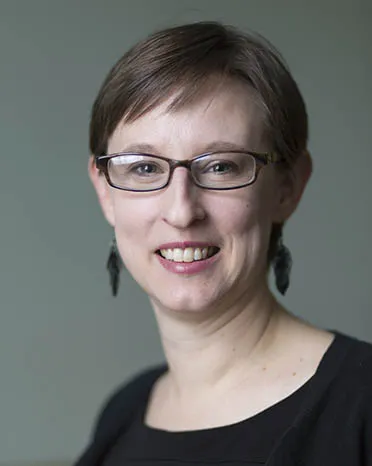
Krista Thomason is an Associate Professor of Philosophy at Swarthmore College, specializing in ethics, moral psychology, and Kantian theory. Her work bridges social/political philosophy with contemporary issues like technology ethics and mental health. She is affiliated with the American Philosophical Association, North American Kant Society, and North American Society for Social Philosophy. PhD from the University of Illinois, Urbana-Champaign (2009) BA in Philosophy and Classical Studies from the University of North Carolina at Greensboro Thomason’s research explores the role of negative emotions (shame, anger, envy) in moral life, arguing they are essential rather than obstacles. Her recent book Dancing with the Devil (Oxford, 2024) synthesizes historical and modern perspectives. She has published extensively on Kantian ethics, social media shaming, and moral responsibility. Publications span journals like Philosophy and Phenomenological Research , Kantian Review , and The Monist , addressing topics from child soldiers to digital ethics. Thomason frequently contributes to Psychology Today and has been featured in media outlets such as The Wall Street Journal and CNN .
Professor Ian Harper is Chair of Anthropology, Health, and Development at the University of Edinburgh , affiliated with the School of Social and Political Science , Global Development Academy , and Global Health Academy . His work bridges medical practice and anthropological research, focusing on South Asia , particularly Nepal, and global health policy.
Katja Lehtisaari is an Adjunct Professor (Docent) in Media and Communications at the Faculty of Social Sciences, University of Helsinki, Finland. She currently works as a Researcher in Media and Communication Studies since January 2020, following her role as University Lecturer (September 2018-December 2019). Her affiliations include the Aleksanteri Institute, Swedish School of Social Science, and the Helsinki Media Policy Research Group. Doctor of Social Sciences (University of Tampere, 2009) Basic & Intermediate University Pedagogy Studies (University of Helsinki, 2018) Her research focuses on media business models, Russian media systems, crisis communication, and media policy. She has led projects like “New business models in Nordic news media companies” and contributed to studies on digitalization's impact on media economics and epistemic rights in digital disruptions. Recent publications examine affective news consumption during pandemics and knowledge discourses in crisis information processing. Key keywords: Journalism, Digital Media, Epistemic Rights. Best paper award at ISMI 2017 conference Tiedettä suomeksi prize (2020) She has extensive experience in academic leadership, including acting as Head of International Affairs at Aleksanteri Institute and serving as editor-in-chief for Idäntutkimus and Aleksanteri Insight journals.
Professor Nicola Ansell is a faculty member in the Department of Anthropology at Brunel University, affiliated with the College of Business, Arts and Social Sciences . Her research focuses on social and cultural change among young people in the Global South, particularly southern Africa, addressing themes like HIV/AIDS impacts, education policy, food security, and generational relations. MA, University of Cambridge PhD, Keele University Her work explores geographies of youth and childhood , participatory research , and the politics of global policy agendas in education and social protection. Recent projects analyze social cash transfers in Malawi and Lesotho, education-aspiration links in rural peripheries, and ethical challenges in ethnographic research. Grants from ESRC-DFID supported her studies on Education systems in rural settings , Social cash transfers , and Youth food security . She supervises PhD students on topics spanning minority education in China, menstrual experiences in India, and cultural tourism in Nigeria. Key roles include Director of Education in the Department of Social and Political Sciences and Programme Lead for the MA in Children, Youth and Education. She contributes to editorial boards and professional associations like the Royal Geographical Society and Development Studies Association .
Prof. Dr. Sina Leipold is a leading academic in environmental politics at the Helmholtz Centre for Environmental Research − UFZ (Leipzig, Germany) and Friedrich Schiller University Jena . Her research focuses on governance narratives in sectors like forestry, bioeconomy, and packaging, integrating environmental policy with sustainability transformations. She collaborates with practitioners across private/public/civil society domains and employs methodologies such as narrative research and environmental footprint analysis .
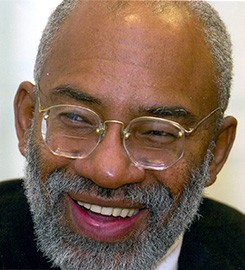
Roy L. Brooks serves as the Warren Distinguished Professor of Law at the University of San Diego School of Law, holding the prestigious rank of University Professor (awarded in 2005 and 2018). He has been a cornerstone of the law faculty since 1979, teaching foundational and specialized courses including Jurisprudence, Civil Rights Theory, International Human Rights, Reparations, and Discrimination Law & Diversity. His academic credentials include a BA from the University of Connecticut (1972) and a JD from Yale University (1975), where he edited the Yale Law Journal. Prior to academia, he clerked for federal Judge Clifford Scott Green and practiced corporate law at Cravath, Swaine & Moore in New York City. Professor Brooks' research centers on civil rights, reparations, and systemic racism, with seminal works like The Racial Glass Ceiling and Atonement and Forgiveness . His scholarship critically examines legal frameworks through the lens of racial subordination, reparative justice, and diversity in judicial systems. He consistently bridges theoretical jurisprudence with practical human rights applications, emphasizing the legacy of slavery and pathways to racial reconciliation. His publication trends (2017-2023) reveal intense focus on reparations theory, systemic racism mechanisms, and the sociolegal dimensions of apologies. Key themes include prudential reparations models, racial reconciliation frameworks, and critiques of contemporary diversity paradigms, all grounded in critical race theory and international human rights standards. Honors include: Brandeis University Library Learned Research Journal Award Gustavus Myers Outstanding Book Award (twice) Thorsnes Prize for Outstanding Legal Scholarship (four times) Thorsnes Prize for Outstanding Teaching (four times) As a mentor, Brooks has shaped generations of law students through rigorous scholarship and teaching excellence, though specific advisee names aren't documented. His influence extends through the Roy L. Brooks Distinguished Lecture Series established by USD. Professional affiliations include the American Law Institute and Authors Guild, underscoring his national impact on legal scholarship and discourse.
Filippo Valguarnera serves as Senior Lecturer in Legal History at Uppsala University's Department of Law within the Faculty of Law. He previously held associate professor positions at Örebro University (2009-2013), University of Gothenburg (2013-2020), and Stockholm University (2020-2025) before joining Uppsala. Valguarnera earned his law degree summa cum laude in 2003 and completed his doctoral thesis in comparative law at the University of Florence in 2007. His academic journey included visiting fellowships at Uppsala University and New York University, establishing foundations for his transnational legal perspective. His research centers on comparative legal history with specialized focus on property rights, collective resources (commons), public right of way, and European private law frameworks. Valguarnera examines historical legal developments in Scandinavia and Italy, addressing contemporary issues like access to nature, wilderness protection, and the evolution of legal methodologies through interdisciplinary approaches that bridge historical analysis with modern jurisprudential challenges. Recent publications (2021-2024) reveal consistent thematic engagement with property rights and commons, including analyses of Dobbs v. Jackson abortion jurisprudence, historical status of domestic animals in Swedish law, constitutional overreach, and commons management challenges. His work demonstrates a distinctive comparative methodology that contextualizes Scandinavian legal traditions within broader European and global frameworks, particularly examining how historical legal concepts inform modern resource governance and human rights discourse.
Professor Catherine Barnard is a leading scholar in European & Employment Law at the Faculty of Law, University of Cambridge . She serves as Deputy Director of the research initiative UK in a Changing Europe , focusing on the socio-legal impacts of Brexit. Her work bridges EU law, labor rights, and competition policy, with a particular emphasis on migrant worker experiences and digital economy challenges. Education: M.A., University of Cambridge LL.M., European University Institute PhD., University of Cambridge Research Themes: Barnard's scholarship critically examines the intersection of EU legal frameworks and national labor policies, especially post-Brexit. Her recent projects include analyses of low-skilled labor migration, EU Settlement Scheme implementation, and digital platform worker protections. She contributes to debates on free movement doctrine, social dumping, and regulatory autonomy in a fragmented legal landscape. Public Engagement: As a prominent voice in post-Brexit legal discourse, she leads research teams studying migrant integration, tribunal accessibility, and welfare policy continuity. Her collaborative work with EU migrant communities highlights practical legal barriers in employment, healthcare, and debt resolution.
SaID HAMDOUNI is a Lecturer in Public Law at the University of Toulouse 1 Capitole, affiliated with the Institute of Space, Territorial, Cultural and Communication Law (IDETCOM). His primary research areas include Public International Law , International Economic Law , Humanitarian Action , and International Institutions . His publications span international legal frameworks , globalization effects , cultural rights , and governance . Key works address topics like the legal regulation of sports , WTO aerospace law , and human rights in economic integration , reflecting his interdisciplinary focus on law and societal dynamics. Notable collaborations include co-edited works with Didier Guignard and Lucien Rapp . His career emphasizes the intersection of international law , economic policy , and cultural institutions , with a consistent exploration of globalization's legal implications.
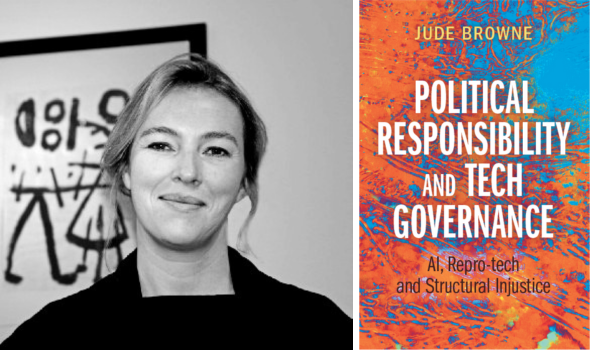
Professor Jude Browne serves as Head of the Department of Politics and International Studies (POLIS) at the University of Cambridge, while also holding the position of The Jessica and Peter Frankopan Director of the University of Cambridge Centre for Gender Studies (currently on leave from this role while serving as HoD). She is a Fellow and Director of Studies for Human, Social and Political Sciences (Part II) at King's College, Cambridge, demonstrating her deep integration within the university's academic structure. Professor Browne's research spans several interconnected areas of political theory and social justice. Her work focuses on political theories of equality , feminist theory , political responsibility , and structural injustice . She has increasingly examined the impact of technology on society , particularly how AI systems intersect with existing social inequalities. Her scholarship bridges theoretical political philosophy with practical policy concerns, addressing issues like public interest, rights frameworks, and regulatory approaches to emerging technologies. Analysis of Professor Browne's recent publications reveals a clear trajectory toward examining technology governance through feminist and structural justice lenses. Her work increasingly focuses on AI ethics, structural inequality in technological systems, and reconceptualizing political responsibility in digital contexts. She has pioneered feminist approaches to understanding who bears responsibility for ethical AI development, examining how structural factors shape technological outcomes beyond individual accountability. Her research demonstrates how algorithmic systems can perpetuate structural injustice while challenging traditional notions of responsibility in complex technological environments. Aaron Rapport Prize (inaugural winner) University of Cambridge Pilkington Prize Professor Browne has been actively engaged in public discourse on technology and society, appearing on the BBC Rethink Podcast and delivering the 2024 Alan Turing Lecture on "AI and Political Responsibility." Her research has attracted significant attention in both academic and policy circles, influencing discussions on gender equality, structural injustice, and technology governance. She has led collaborative research projects through the University of Cambridge Centre for Gender Studies and edited multiple influential volumes including "Feminist AI: Critical Perspectives on Algorithms, Data, and Intelligent Machines" (2023) and "What is Structural Injustice?" (2024).
Dr Dzavid Haveric is a Research Fellow at the Centre for Islamic Studies and Civilisation , Charles Sturt University . He holds a PhD in Humanities (Victoria University, 2009) and MA in Cultural History (Deakin University, 2004), with additional qualifications in management and journalism. Key affiliations: Institute for Community, Ethnicity and Policy Alternatives (Victoria University) Victoria Museum (Research Associate) Public and Contextual Theology Research Centre (CSU) His research spans Islamic history , Australian Muslim identities , interfaith dialogue , and multiculturalism . Recent work includes military history ( 2024 book ) and socio-historical analyses of human rights in Islamic contexts. Selected recent publication trends: 2024 : Military service and national loyalty narratives 2023 : Islamic jurisprudence in Australian diaspora 2020 : Human rights frameworks in Islamic thought 2019 : Three major books on community building, ANZAC history, and Islamic Australia 2017 : Interfaith community development in Victoria Scientific honors include: 2023 Australian Muslim Professional of the Year (AMAA) Australian Postgraduate Award (2006) Multiple Certificates of Appreciation (2001-2011) He has contributed extensively as a journalist for SBS Radio and Bosnian community newspapers, and held roles at the Parliament of the World's Religions and Victoria Museum .
Dr. Erol Saglam is a social anthropologist working across two institutions: as a Research Fellow at the Institute for Global Prosperity , University College London (UKRI Horizon Europe Postdoctoral Fellowship), and as a Lecturer in Sociology at Istanbul Medeniyet University . With a PhD in Sociology from University College London and an MA from Boğaziçi University, his work bridges political anthropology, cultural studies, and gender analysis.
Maryna Paliienko serves as Head of the Archival Science and Special Branches of History Department at Taras Shevchenko National University of Kyiv's Faculty of History since 2017, with prior appointments as Professor (2011-2017), Docent (2000-2010), and Assistant (1994-1999). Her career bridges academic leadership and specialized research in archival science, maintaining active roles in both Ukrainian and international scholarly communities. Her academic foundation includes: BA & MA in History from Taras Shevchenko National University of Kyiv (1985-1990), specializing in archival science Postgraduate studies (1991-1994) and Doctoral studies (2003-2006) at the same institution Postgraduate training at Ukrainian Free University in Munich (1995, 1996) Paliienko's research centers on theoretical and methodological development of Archival Science, Source Studies, and Historiography , with particular emphasis on Comparative Archivistics, Digital Age Archival Management, and Access to Archival Information . She investigates how archives construct collective memory, navigates socio-cultural turns in Ukrainian historiography, and addresses challenges in e-government archival systems. Her work consistently connects archival theory with practical applications for professionals, evidenced by collaborations with the State Archival Service of Ukraine. Analysis of her 2016-2020 publications reveals three dominant trends: digital transformation of archival practices (evident in 70% of recent works), international archival cooperation frameworks , and socio-cultural dimensions of archival missions . Her scholarship uniquely bridges historical analysis of Ukrainian diaspora archives with contemporary issues like data protection laws and digitization standards. As research group leader, she maintains strategic partnerships with the State Archival Service of Ukraine and International Institute for Archival Science (Triest-Maribor) , focusing on developing professional training frameworks and implementing archival management innovations. Current projects address digitization in e-government contexts, documentary value assessment methodologies, and socio-cultural impacts on historiographical development.
Dr. Orsolya Nador is an Associate Professor at the Department of Hungarian Linguistics, Institute of Hungarian Language, Literature and Cultural Studies, Faculty of Humanities and Social Sciences at Károli Gáspár Reformed University in Budapest, Hungary. With a PhD in Linguistics and Applied Linguistics from the Hungarian Academy of Sciences (1998), she has dedicated her career to the study of language policy, Hungarian as a foreign language, and the linguistic landscape of East-Central Europe. Her work bridges academic research with practical applications in language teaching and policy development across Central and Eastern European contexts. PhD in Linguistics and Applied Linguistics, Hungarian Academy of Sciences (1998) MA in Hungarian Language and Literature, Eötvös Loránd University (1983) Habilitation, University of Pécs (2001) Dr. univ. in Contemporary Hungarian Literature, Eötvös Loránd University (1988) Teacher of Hungarian-Russian Primary School, Eger Teacher Training College (1981) Dr. Nador's research focuses on language policy history, Hungarian as a foreign language (including educational policy and psycholinguistic aspects), Hungarian as a language of origin, the history of Hungarian applied linguistics, and diachronic analysis of linguistic-ethnic issues in East-Central Europe. Her interdisciplinary approach connects historical linguistics with contemporary language policy challenges, particularly regarding minority languages in the Carpathian Basin region. She has pioneered research on language identity formation and the relationship between linguistic diversity and social cohesion in multi-ethnic contexts, examining how language policies shape national identities across Central Europe. Her recent publications reveal a consistent focus on the linguistic landscape of the Carpathian Basin, with particular attention to language policy development, minority language rights, and the teaching of Hungarian as both a foreign and heritage language. Dr. Nador's scholarly work demonstrates how historical language policies continue to influence contemporary linguistic practices and identity formation across East-Central Europe. Her research increasingly addresses digital aspects of language teaching and the evolving role of Hungarian in the European multilingual context, reflecting her commitment to adapting linguistic research to contemporary educational challenges. Teacher of the Year, Károli Gáspár Reformed University (2015) Brassai Prize, Hungarian Association of Applied Linguists and Language Teachers (2023) Dr. Nador has supervised numerous doctoral students working on language policy issues across Europe, including research on Norwegian language policy, Swiss multilingualism, Hungarian language in Burgenland, and media discourse analysis. She has led international research projects including Te-Le-Hu (2008-2010) and Hungarobox (2013-2015), focusing on language teaching methodologies for Hungarian as a foreign language. Her editorial work includes serving as editor-in-chief for Modern Language Teaching journal since 2018 and previously for THL2 - Journal of Hungarian Language Teaching (2005-2018), where she shaped the discourse on Hungarian language pedagogy for over a decade. As leader of the Hungarology Research Group, Dr. Nador coordinates collaborative research on Hungarian language and culture across international borders. Her team works closely with institutions in Slovakia, Croatia, Romania, and Serbia to document and analyze the linguistic practices of Hungarian minority communities throughout the Carpathian Basin, creating a comprehensive picture of how Hungarian functions as both a majority and minority language in different national contexts.
Anna Tunlid is an Associate Professor and Researcher in the Division of History of Ideas and Sciences at Lund University's Department of Arts and Cultural Sciences, and an Affiliated Researcher at the Birgit Rausing Centre for Medical Humanities (BRCMH). Her interdisciplinary work bridges humanities, medical sciences, and historical research with a focus on ethical dimensions of medical practices in Sweden. Dr. Tunlid's research spans medical humanities, history of ideas, and science policy. Her work examines how cultural, historical, and social factors shape medical practices and policies, with particular focus on genetic counseling, medical ethics, history of prenatal diagnosis, and euthanasia debates in Sweden. She approaches these topics through careful historical analysis combined with contemporary ethical considerations. Her recent publications demonstrate strong scholarly productivity across multiple disciplines, with work appearing in journals like Environment and History and Socialmedicinsk tidskrift. Her research shows a consistent pattern of examining the intersection between medical practices and their historical, cultural contexts. Principal Investigator for 'Rätten till sin egen död? Den offentliga debatten om dödshjälp i Sverige 1950-2020' (2025-2027) Supervisor for 'Att kartlägga människans inre: Hormoner och kroppen som system, 1900–1950' (2021-present) Member of the Medical Humanities Research Node (2016-present) Co-PI for 'Empathy and Compassion' Advanced Study Group at Pufendorf IAS (2021-2022) Researcher on 'Döden på Vipeholm' investigation project (2021-2024) Dr. Tunlid actively contributes to academic discourse through conference organization, including the upcoming 29th Nordic Medical History Congress (2025), and regularly presents her research at seminars and public lectures. She teaches courses in Ethnology and History of Ideas, connecting historical perspectives with contemporary medical ethics questions.