معرفی
Professor Jude Browne serves as Head of the Department of Politics and International Studies (POLIS) at the University of Cambridge, while also holding the position of The Jessica and Peter Frankopan Director of the University of Cambridge Centre for Gender Studies (currently on leave from this role while serving as HoD). She is a Fellow and Director of Studies for Human, Social and Political Sciences (Part II) at King's College, Cambridge, demonstrating her deep integration within the university's academic structure.
Professor Browne's research spans several interconnected areas of political theory and social justice. Her work focuses on political theories of equality, feminist theory, political responsibility, and structural injustice. She has increasingly examined the impact of technology on society, particularly how AI systems intersect with existing social inequalities. Her scholarship bridges theoretical political philosophy with practical policy concerns, addressing issues like public interest, rights frameworks, and regulatory approaches to emerging technologies.
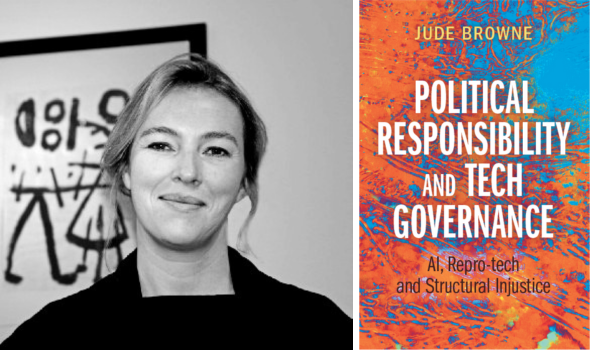
Analysis of Professor Browne's recent publications reveals a clear trajectory toward examining technology governance through feminist and structural justice lenses. Her work increasingly focuses on AI ethics, structural inequality in technological systems, and reconceptualizing political responsibility in digital contexts. She has pioneered feminist approaches to understanding who bears responsibility for ethical AI development, examining how structural factors shape technological outcomes beyond individual accountability. Her research demonstrates how algorithmic systems can perpetuate structural injustice while challenging traditional notions of responsibility in complex technological environments.
- Aaron Rapport Prize (inaugural winner)
- University of Cambridge Pilkington Prize
Professor Browne has been actively engaged in public discourse on technology and society, appearing on the BBC Rethink Podcast and delivering the 2024 Alan Turing Lecture on "AI and Political Responsibility." Her research has attracted significant attention in both academic and policy circles, influencing discussions on gender equality, structural injustice, and technology governance. She has led collaborative research projects through the University of Cambridge Centre for Gender Studies and edited multiple influential volumes including "Feminist AI: Critical Perspectives on Algorithms, Data, and Intelligent Machines" (2023) and "What is Structural Injustice?" (2024).