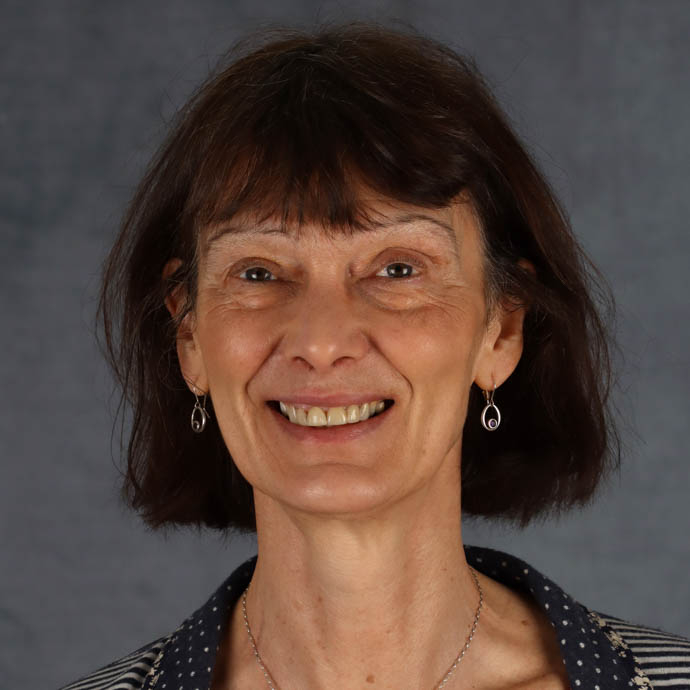
Professor Ann Parry Owen holds a Personal Chair at the Centre for Advanced Welsh and Celtic Studies (CAWCS) within the University of Wales, where she has worked since 1985. She leads the University of Wales Dictionary as Senior Editor and previously directed major research projects including the Poets of the Nobility series and the Guto’r Glyn AHRC-funded digital edition. Specializes in Medieval Welsh poetry (12th–15th century) Focuses on Welsh lexicography through historical manuscripts Co-investigator in Sacred Landscapes and Medieval Monasteries projects Her research combines Welsh language and grammar with digital edition creation , manuscript transcription, and place-name standardization . Notable contributions include editing the works of Cynddelw Brydydd Mawr and Guto’r Glyn, and leading the Guto’r Glyn website project. Scientific contributions include: AHRC grant recipient ( £900K , 2007) Fellow of the Learned Society of Wales Welsh Language Commissioner’s Place-Names Standardisation Panel member As Chief Editor of Studia Celtica and Modern Humanities Research Association (MHRA) Library board member, she bridges traditional scholarship with digital humanities , ensuring open access to Welsh cultural heritage through initiatives like Geiriadura.cymru .
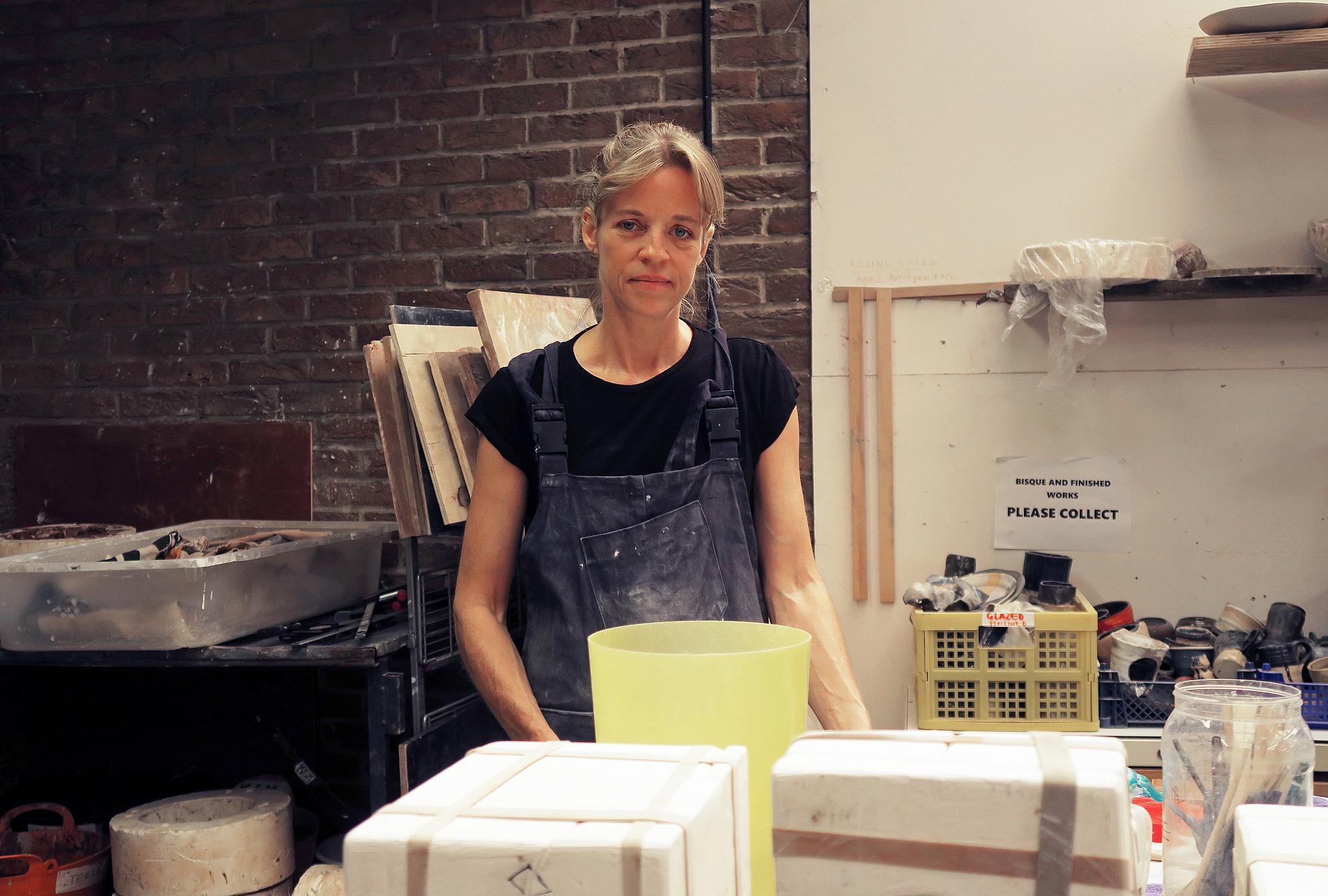
Laura White is a Reader in Fine Art at the Department of Art, Goldsmiths, University of London. She has been teaching on the Fine Art Undergraduate Programme at Goldsmiths since 2006 and has also taught at Manchester Metropolitan University, Nottingham Trent University, Loughborough University, and London Metropolitan University. She serves as an external examiner at various institutions and mentors on the MASS Correspondence Course. Her educational background includes: 2004: MA Fine Art, Goldsmiths College, London 1997: MA Fine Art, Nottingham Trent University, Nottingham 1990: BA (Hons) Fine Art: Sculpture, Loughborough University School of Art and Design Laura White's practice focuses on interactions with materials and objects, exploring ideas of value, profile, association, and meaning. She examines things both as material stuff and anthropological signifiers capable of revealing the human condition - vulnerabilities and capabilities, value systems affected by consumerism and material status, and object/human dependencies. Her works occupy a fluid space, demanding critical discourse while maintaining their own ambiguous and intuitive logic. She continually expands her knowledge through participating in skill-based courses including fish knife skills, taxidermy, baking, butchery, basket weaving, pot throwing, and fishing, reflecting her interest in the notion of 'the constant amateur.' White's recent work shows a consistent exploration of materiality across various forms - from Baroque-inspired pieces to food-based installations and earthbound works. Her practice bridges traditional fine art with conceptual explorations of everyday objects and materials, often incorporating interdisciplinary approaches that span sculpture, installation, drawing, and digital platforms like her TENDERFOOT website. Her notable recognition includes: Ampersand Foundation Fellowship (2023) Laura White has curated numerous exhibitions at prestigious venues including Tintype and Saatchi Gallery in London, Gallery Cadaqués in Spain, SPACEX in Exeter, and Marlborough Contemporary in London. Her project DIWO (Doing it with others) (2015-2017) demonstrates her collaborative approach, while her involvement in workshops like 'what it means to handle stuff - auto-pedagogy - a course in butchery' shows her commitment to hands-on learning and material engagement. She maintains an active digital presence through TENDERFOOT, an online platform for writing on materiality funded by a Goldsmiths Research Award. Her work continues to explore the complex relationships between humans and objects, challenging conventional boundaries between art forms and everyday experiences.
Julie Brefczynski-Lewis is a Research Assistant Professor at West Virginia University School of Medicine, holding positions in both the Department of Neuroscience and the Rockefeller Neuroscience Institute. She earned her PhD from the Medical College of Wisconsin and serves as the neuroimaging liaison for the Center for Advanced Imaging. West Virginia University School of Medicine Department of Neuroscience Rockefeller Neuroscience Institute Dr. Brefczynski-Lewis's primary research focuses on compassion meditation training for stress relief, particularly regarding difficult interpersonal relations. She has developed a smartphone application to facilitate daily meditation practice and examines the resulting neural, physiological, and behavioral changes. Her work spans multiple neuroimaging techniques including MRI, PET, EEG, and TMS, with applications in working memory, mindfulness, trust, neonatal cognition, pediatric sleep disorders, stroke studies, depression, and auditory processing in disordered populations. Her recent publications demonstrate a strong trajectory in advancing neuroimaging technology, particularly in developing ambulatory PET systems that allow brain imaging during natural movement. This work represents a significant departure from traditional stationary brain imaging approaches and opens new possibilities for studying brain function in real-world contexts. Neuroimaging liaison for the Center for Advanced Imaging Weekly neuroimaging group meetings at Mondays 4:00 PM Provides training in MRI, PET, EEG, and TMS techniques Assists with experimental design and IRB protocols Dr. Brefczynski-Lewis actively collaborates across disciplines, serving as a bridge between technical imaging development and clinical applications. Her work on compassion meditation represents an important integration of traditional contemplative practices with modern neuroscience methodology, while her contributions to ambulatory PET technology showcase her innovative approach to overcoming limitations in current neuroimaging paradigms.
Iza Marfisi is a Professor at the University of Le Mans where she became a University Professor in 2024 and was appointed Head of the IEIAH (Computer Environments for Human Learning) team in 2025. She works within the Claude Chappe Institute of Computer Science, focusing on developing educational technologies that empower teachers to create their own digital learning tools. Her research bridges computer science and educational theory to enhance teaching practices through accessible technology solutions, with particular emphasis on making advanced tools usable for non-technical educators. Marfisi's research spans Educational Technology, Serious Games for Education, Mobile Learning, and Extended Reality (XR), with a consistent focus on teacher-centered design. She develops "no-code" authoring tools enabling educators to create custom digital learning experiences deployable across various hardware platforms. Her work specifically targets situated learning with mobile devices, human-computer interactions for learning, and educational applications of mixed and extended reality. This approach democratizes access to advanced educational technologies by removing technical barriers for teachers. Analysis of her recent publications reveals a clear evolution from foundational mobile learning frameworks toward increasingly sophisticated integration of mixed reality and artificial intelligence in educational contexts. Her 2024-2025 work shows particular emphasis on generative AI for educational activity design, immersive pharmacology learning, and collaborative frameworks that connect multiple learning technologies. The publications consistently emphasize practical teacher needs, with many studies conducted in authentic educational settings rather than controlled laboratory environments. Marfisi actively supervises doctoral research across multiple dimensions of educational technology. Her current advisees explore artificial intelligence for mixed reality activity creation, mixed reality for professional training, free software approaches to serious games, and innovative interaction techniques for collaborative learning. Previous students have investigated mixed reality for fraction learning, educational game indexing systems, and mobile educational game design models. Her supervision portfolio demonstrates both depth in specific technical areas and breadth across the educational technology landscape. As Head of the IEIAH team at LIUM since 2025, Marfisi leads a research group focused on computer environments for human learning. She also serves on the Board of Directors for both the Serious Game Society and the IKIGAI association (Games for citizens), and was elected Deputy Director of Research at the Claude Chappe Institute of Computer Science since 2018. Her leadership extends to communications management for the IEIAH team and participation in the LIUM Laboratory Council (2022-2024), demonstrating significant institutional impact beyond her direct research contributions.
Associate Professor Marcus Jefferies is a faculty member at the University of Newcastle within the School of Architecture and Built Environment , specializing in Construction Management (Building) . He teaches courses including Contract Administration and Advanced Contract Administration.
Professor Greg Hainge is a leading scholar in Cultural Studies and French Literature at the University of Queensland , where he serves as Head of the School of Languages and Cultures. His work bridges disciplines, exploring the intersections of cinema, sound, philosophy, and contemporary cultural phenomena. Key research areas include: Sound and Noise Studies : Philosophical dimensions of noise and sonic affect. French Cinema : Focus on New Extreme Cinema (Noé, Grandrieux) and 20th-century auteurs. 20th-Century French Literature : Specializing in Louis-Ferdinand Céline and avant-garde forms. Experimental Music : Radiohead, Bjork, glitch, and musique concrète. American Independent Cinema : David Lynch and Coen Brothers’ aesthetics. Photography : Bill Henson, Alexa Wright, and digital imaging. His recent publications, such as "Terra Nullius Times Two" (2025) and "Plastic Surgery" (2025), reflect his engagement with post-cinematic ontologies and speculative realism. Earlier works like "Noise Matters" (2013) and "Philippe Grandrieux: Sonic Cinema" (2017) established his reputation in sonic and cinematic theory. Hainge’s research interrogates how cultural objects—films, music, texts—demand critical engagement, fostering societal health through understanding difference. He advocates for languages as a critical skill in the age of AI. Awards and honors include: Fellow of the Australian Academy of the Humanities (FAHA) Senior Fellow of the Higher Education Academy UWA-UQ Bilateral Research Collaboration Award (2012-2013) UQ Early Career Researcher Grant (2006) He serves as Editor-in-Chief of Culture, Theory and Critique and sits on multiple editorial boards. Despite his focus on challenging texts, Hainge actively disseminates his work to broader audiences, including articles in The Australian and exhibition essays.
Dr David Walker is a Senior Lecturer in Computer Science at the University of Exeter and a member of the Institute for Data Science and Artificial Intelligence . He also contributes to the Environmental Intelligence @Exeter research network. Education: PhD in Computer Science, University of Exeter (2008–2013) BSc (Hons) in Computer Science, University of Exeter (2004–2007) Research Interests Dr Walker’s work sits at the intersection of multi-objective optimisation , evolutionary computation , explainable AI and hyper-heuristics . He develops algorithms and visual analytics that help engineers and scientists understand complex optimisation landscapes, with recent emphasis on renewable-energy planning (especially offshore wind farms) and trustworthy AI systems. Publication Trends Between 2022 and 2025 he produced a prolific stream of articles on explainable optimisation , many-objective wind-farm design and visual analytics for evolutionary algorithms . These works combine rigorous algorithmic innovation with real-world case studies, demonstrating a clear trajectory toward transparent, human-centred AI for engineering decision-making. Scientific Awards No specific awards or fellowships are mentioned in the provided material. Advising & Funding No explicit list of PhD students, post-docs or grant awards is supplied. Laboratory & Teams Dr Walker is affiliated with the Institute for Data Science and Artificial Intelligence and the Environmental Intelligence @Exeter network, indicating collaborative, interdisciplinary research environments.
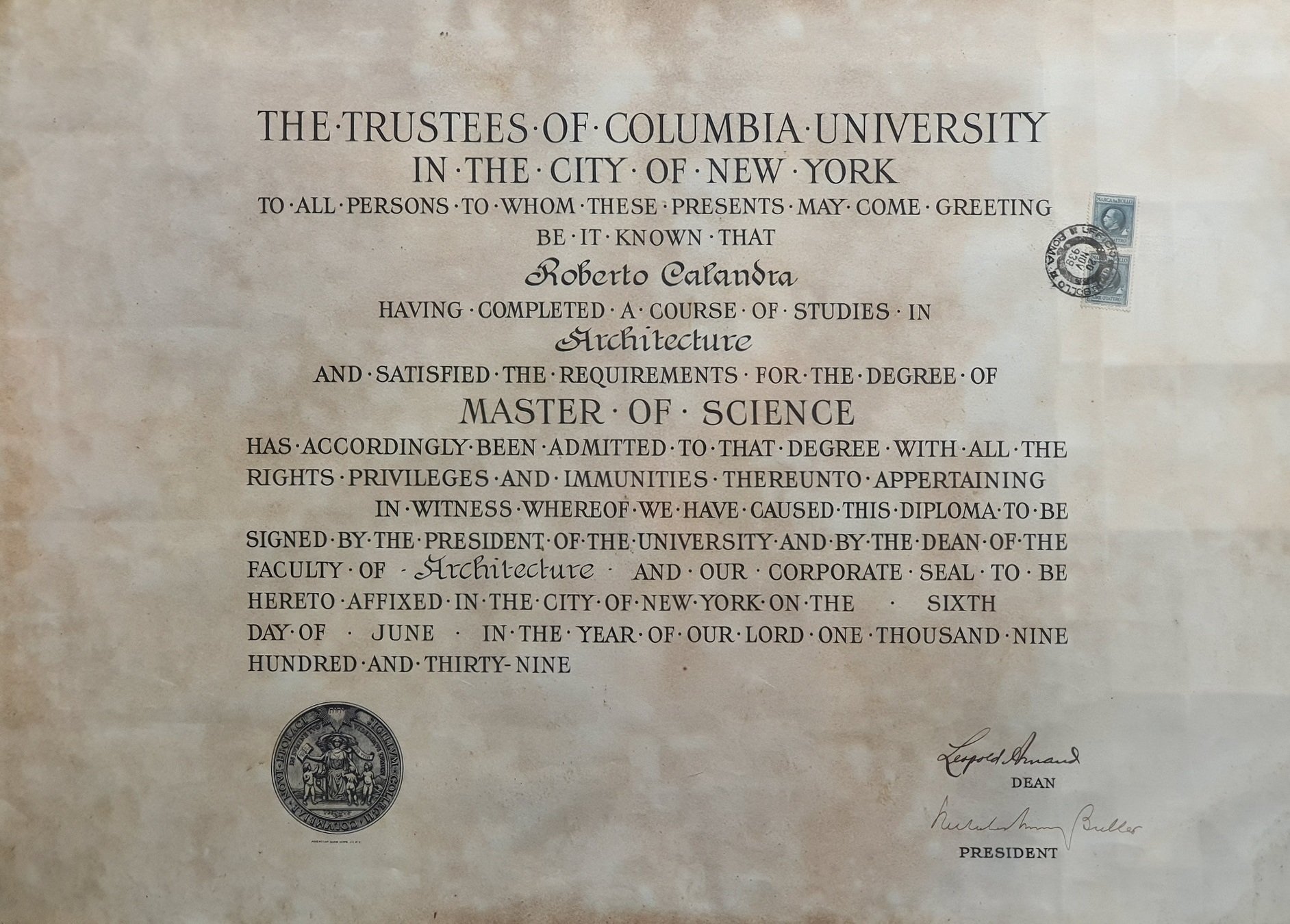
Roberto Calandra is a Full (W3) Professor at Technische Universität Dresden, where he leads the Learning, Adaptive Systems and Robotics (LASR) Lab. Previously, he served as a Research Scientist at Meta AI (formerly Facebook AI Research) and a Postdoctoral Scholar at UC Berkeley’s BAIR Lab under Sergey Levine. His academic journey includes a PhD in Robotics from TU Darmstadt, an M.Sc. in Machine Learning from Aalto University, and a B.Sc. in Computer Science from Università di Palermo. His research bridges Robotics and Machine Learning, focusing on tactile sensing, Bayesian Optimization, and model-based reinforcement learning. He pioneered the DIGIT tactile sensor , now the most widely used tactile sensor in robotics, and advocates for a computational field of Touch Processing to advance haptic understanding. His work emphasizes data-efficient learning, real-world dexterous manipulation, and multimodal perception. Recent publications highlight breakthroughs in tactile sensor design, in-hand object manipulation, and multimodal integration. He organizes workshops on robotics and machine learning (e.g., at NeurIPS, ICRA) and promotes open-source tools like PyTouch and TACTO .
Professor Tiago Moreira is a leading scholar in the Department of Sociology at Durham University, with fellowships at the Wolfson Research Institute for Health and Wellbeing and the Institute for Medical Humanities. His work bridges science and technology studies with social and cultural gerontology. Professor of Sociology Fellow of Wolfson Research Institute Fellow of Institute for Medical Humanities Research focuses on: Intersections of aging, technology, and society Knowledge organization in health care Priority setting in health innovation Social studies of medicine Recent publications explore engineered living materials, AI in aging, biological age metrics, and post-COVID frailty dynamics. Collaborations span Physics, Medical Humanities, and Environmental Sciences. Scientific roles include: Plenary speaker at BSA Medical Sociology Conference (2014) Research Professorship at Copenhagen University (2013) Editorial board memberships (Science, Technology and Human Values, Journal of Aging Studies) ESRC Inclusive Ageing Programme panel (2021) Supervises postgraduate researchers in: Jiaxi Li Katie Smith Luany Promenzio Shuman Xie Trayten Zhang Coleads SMART Soils Laboratory initiative and founded the Health and Social Theory Research Cluster, advancing responsible innovation frameworks in biotechnology and aging studies.
Jennifer Nelson is a Senior Lecturer in the Department of Earth, Atmospheric, and Planetary Sciences at Purdue University, located in West Lafayette, Indiana. Her office is situated in HAMP 4284. She is affiliated with the College of Science and maintains active research in human-virtual interaction systems. Her research focuses on understanding how humans interact with virtual environments, particularly in crowded scenarios. Key themes include analyzing avoidance behaviors in response to virtual characters, studying the effects of rendering styles on human movement, and developing frameworks to model human-crowd interactions in immersive virtual reality settings. Recent work emphasizes the impact of virtual character dynamics (speed, density, direction) on human navigation patterns, as well as perceptual factors like gesture recognition and proximity effects. Her studies often involve creating experimental frameworks to quantify behavioral responses under varying virtual conditions. No scientific awards or grants are explicitly listed in the provided materials. While no advising information is available, her publications suggest involvement in collaborative research teams focused on virtual reality applications. She contributes to Purdue's initiatives in computational behavioral studies and immersive technology development.
Teresa Vidal-Calleja is an Associate Professor and Research Director at the Robotics Institute, University of Technology Sydney (UTS). She holds a Deputy Head of School (Research) role in the School of Mechanical and Mechatronic Engineering. Her research focuses on robotics perception, alternative sensing, inertial fusion, SLAM, and applications in manufacturing, agriculture, mining, and construction. Education: B.Sc. Mechanical Engineering (UNAM, 2000), M.Sc. Electrical Engineering (CINVESTAV-IPN, 2002), Ph.D. Automatic Control (Polytechnic University of Catalonia, 2007). Postdoctoral Experience: LAAS-CNRS (France), Australian Centre for Field Robotics (Sydney). Research Interests: Teresa’s work spans robotics perception, sensor fusion, autonomous navigation, and collaborative robotics. She leads projects on next-gen infrastructure robotics (ARC Discovery Grant) and is co-lead of the Australian Cobot Centre. Her innovations target hazardous environments, infrastructure maintenance, and human-robot collaboration. Funded Research: Includes grants for robotic sensors, satellite docking systems, and multi-robot collaboration. Recent projects involve Navantia, the NSW Space Research Network, and industry partnerships. Professional Roles: IEEE Senior Member, Treasurer of the Australian Robotics and Automation Association, and Associate Editor for IEEE Transactions on Robotics and other journals. She chairs conferences like the Australasian Conference on Robotics and Automation. Labs/Teams: UTS Robotics Institute, collaborating with global institutions like ETH Zürich and DLR. Her work integrates robotics with industries such as agriculture and construction, emphasizing sustainability and safety.
Damon L. Woodard is a Professor in the Department of Electrical and Computer Engineering at the University of Florida (UF) and serves as Director of the Florida Institute for National Security (FINS) and the Applied Artificial Intelligence (AAI) Group. His research focuses on applied artificial intelligence, hardware security, and biometrics, with particular emphasis on adversarial AI, AI-enabled hardware assurance, and explainable AI (XAI). He holds IEEE and ACM Senior Member status and is a Kavli Frontiers Fellow. Education: Ph.D. in Computer Science and Engineering, University of Notre Dame M.E. in Computer Science and Engineering, Penn State University B.S. in Computer Science and Computer Information Systems, Tulane University Research Interests: Dr. Woodard explores cutting-edge areas such as AI hardware acceleration, multi-modal AI systems, and counter-AI strategies. His work bridges cognitive science and technology through projects like text stylometry and psychological analysis frameworks. Key focus areas include semiconductor reverse engineering, hardware trojan detection via SEM imaging and machine learning, and secure IoT biometric systems. Highlighted Awards: National Academy of Science Kavli Frontiers Fellow IEEE Senior Member ACM Senior Member AAAI Membership Leadership & Contributions: As FINS Director, he oversees national security initiatives integrating AI and hardware assurance. His AAI Group develops resource-efficient AI solutions for constrained environments. Notable projects include the SECURE segmentation metric for IC reverse engineering and the MaGNIFIES GAN framework for electronic system inspection. Labs & Teams: Leads the Applied Artificial Intelligence Group and collaborates across disciplines through FINS, fostering innovation in AI-driven security and semiconductor integrity.
Maria Yang is a Professor and the William E. Leonhard Professor/Interim Dean of the School of Engineering at the Massachusetts Institute of Technology (MIT), affiliated with the Department of Mechanical Engineering. Her research focuses on early stage design processes , design methods , and system-level engineering design , with applications spanning consumer products, complex systems, and sustainable technologies. Educational Background: B.Sc., MIT (1991) M.Sc., Stanford University (1994) Ph.D., Stanford University (2000) Yang's research explores the theoretical foundations of design , emphasizing sketching , prototyping , and design cognition . Her work addresses global challenges in sustainability , emerging markets , and human-computer interaction , as demonstrated by collaborations with NASA, IBM, and Ferrari. Recent publications highlight trends in design-by-analogy , 3D printing of transparent glass , and information flow in complex systems . Her research bridges mechanical engineering , bioengineering , and computational design . Scientific Awards: 2024 ASME Design Theory and Methodology Award 2024 ASME Design Theory and Methodology Best Paper Award 2017 MacVicar Faculty Fellow 2016 Bose Excellence in Teaching Award 2014 ASEE Fred Merryfield Design Award 2013 ASME Fellow Yang mentors students through courses like 2.00B Toy Product Design and 2.009 Product Engineering Processes , and leads the MIT Ideation Laboratory , which investigates transformational design strategies for global competitiveness and sustainability.
Prof. Dongheui Lee is a Full Professor at TU Wien's Institute of Computer Technology, Faculty of Electrical Engineering and Information Technology, and leads the Human-centered Assistive Robotics Group at the German Aerospace Center (DLR). She holds a PhD from the University of Tokyo (2007) and has held academic roles at Technical University of Munich (TUM), the University of Tokyo, and KIST. Her research focuses on human-robot interaction, assistive robotics, and machine learning applications in robotics. Education: PhD, Information Science and Technology, University of Tokyo, 2007 MS, Kyung Hee University, 2003 Research Interests: Her work spans human motion understanding, assistive robotics, human-robot collaboration, and control systems. Key areas include robotic balance assistance, motion imitation, and safety-aware robotics. She has pioneered methods for light touch support in human-robot interaction and developed frameworks for dynamic task execution. Recent Trends in Publications: Recent work emphasizes variable stiffness control, motion retargeting, and multimodal anomaly detection. Publications highlight advancements in assistive robotics, human motion prediction, and reinforcement learning for locomotion. Articles often integrate robotics with machine learning to improve safety and adaptability in human-robot systems. Awards: Carl von Linde Fellowship (TUM Institute for Advanced Study, 2011) Helmholtz professorship prize (2015) Best Intelligence Paper Award (2024) Projects & Grants: Leads projects like LunarAssembly (robotic assembly on the Moon) and INVERSE (interactive robots through reasoning). Funded initiatives include EU Horizon, BMBF, and industry collaborations. Coordinates teams for projects like PERSEO (service-oriented robotics) and SOLAR (body representation studies). Labs/Teams: Directs the Human-centered Assistive Robotics Group at DLR and collaborates with TU Wien's Autonomous Systems unit. Her teams focus on real-world applications in healthcare, manufacturing, and human-centered robotics.
Dr. Mel Ó Cinnéide is an Associate Professor at the School of Computer Science, University College Dublin. He holds a PhD from Trinity College Dublin (2001) and has over three decades of experience in academia and industry. His research focuses on automated refactoring, search-based software engineering, design patterns, and energy-efficient software development. He leads the Masters in Advanced Software Engineering program at UCD and has received multiple research grants and best paper awards. Prior to academia, he worked as a software engineer at Philips (Netherlands) and Motorola (Cork). Education: BSc in Computer Science, University College Cork MSc in Computer Science, University College Cork PhD in Computer Science, Trinity College Dublin Diploma in Gaeilge Fheidhmeach (Computing Irish), UCD Research interests emphasize practical applications of refactoring techniques to improve software quality and energy efficiency. He pioneers tools like Code-Imp and RefDetect for automated refactoring, integrating multi-objective optimization and interactive systems. His work bridges theoretical software engineering principles with real-world industry challenges. Awards and Grants: - Best Paper Awards in peer-reviewed conferences - Competitive research grants supporting software engineering projects Advising & Leadership: - Director of UCD's Masters in Advanced Software Engineering - Supervisor of numerous academic and industrial projects Labs & Projects: - Co-lead of the CodeImp Project (automated search-based refactoring) - Involved in international workshops on refactoring and software engineering