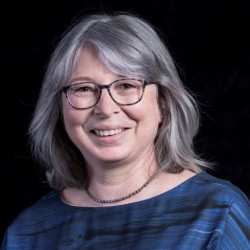
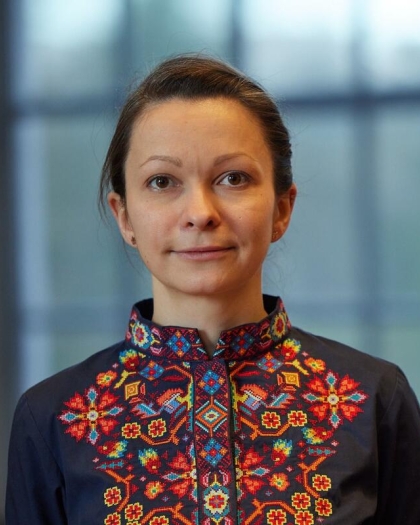
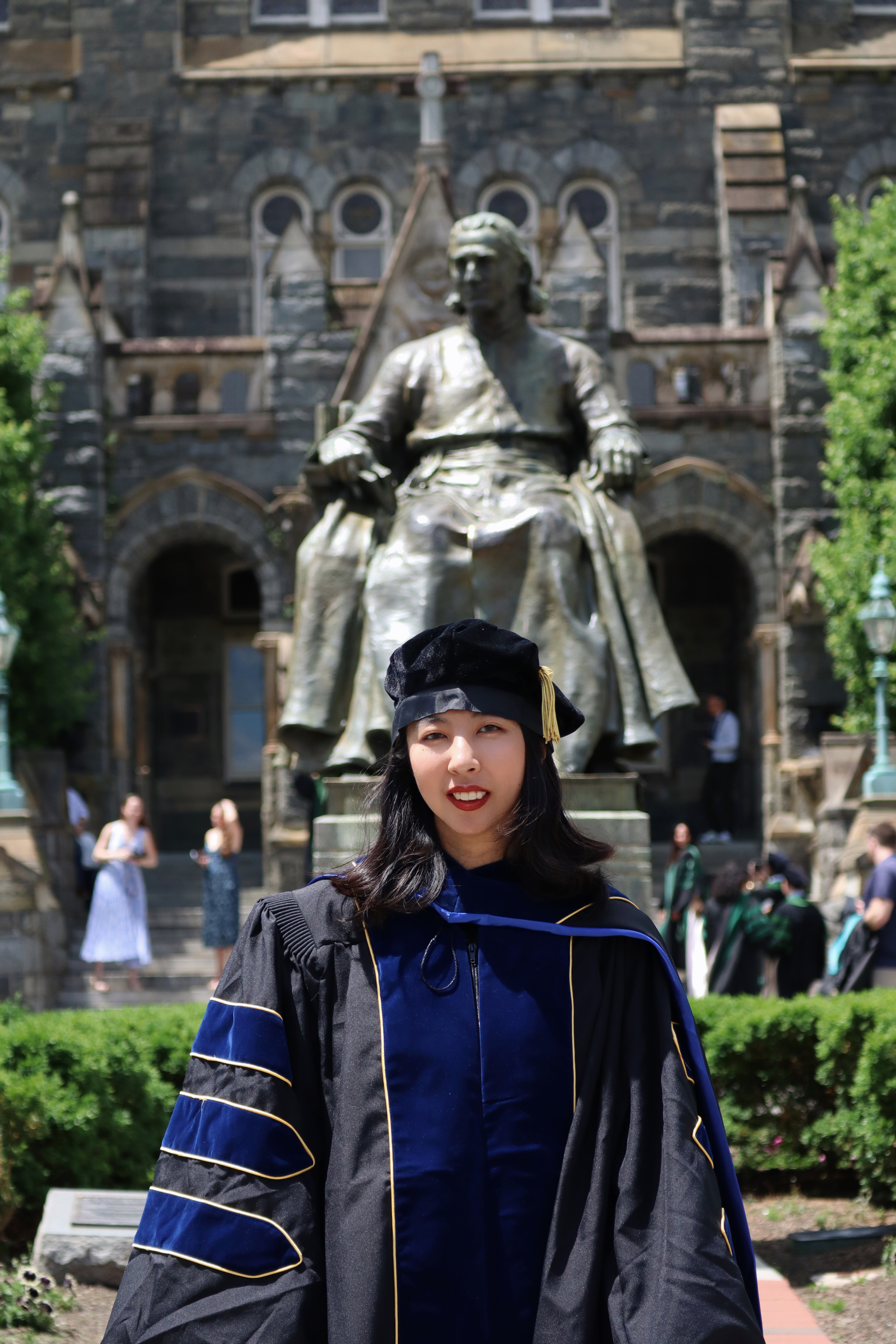
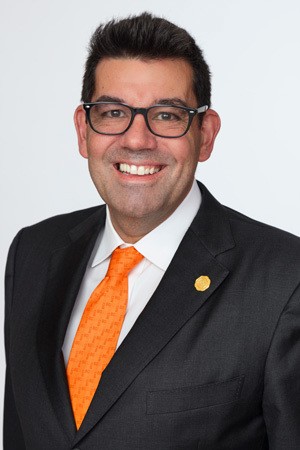
Noelani Arista (Kanaka Maoli) is Associate Professor and Canada Research Chair specializing in 19th-century Hawaiian legal history and Indigenous knowledge systems. She directs McGill's Indigenous Studies Program and authored the award-winning book The Kingdom and the Republic , which reframes colonial histories through Hawaiian-language documents. Her research examines governance, law, and epistemology prior to US annexation. Current projects explore artificial intelligence applications for Indigenous language archives and traditional knowledge organization. She founded the '365 days of aloha' initiative to share Hawaiian language and cultural knowledge through social media. Her publications frequently analyze intersections of indigenous sovereignty, archival practices, and decolonization methodologies.
Monika Harvey is a Professor of Neuropsychology and Cognitive Neuroscience at the University of Glasgow's School of Psychology & Neuroscience. She holds a BSc in Psychology from the University of Bielefeld (Germany) and a PhD in Neuropsychology from the University of St Andrews (UK). Her career includes appointments at the University of Bristol and the University of Glasgow. Her research focuses on cognitive neuroscience, particularly visual perception, hemispatial neglect, and cognitive aging. She employs techniques like EEG, non-invasive brain stimulation, virtual reality, and AI to study brain age prediction and attention mechanisms. Her work spans neurorehabilitation, aging-related cognitive changes, and clinical applications of neurotechnology. She has contributed to studies on stroke recovery, attention deficits, and driver behavior in autonomous vehicles. Her research emphasizes interdisciplinary approaches, bridging psychology, neuroscience, and technology. Publications highlight her expertise in spatial attention, neglect rehabilitation, and the neural basis of perception-action systems. She collaborates on grants exploring post-stroke insomnia, driver interfaces for autonomous cars, and neuroimaging techniques. Her lab integrates experimental and computational methods to advance understanding of brain function and disorders.
Deborah Dunn-Walters is a Professor of Immunology and Associate Dean for Research and Innovation at the University of Surrey. She leads the Department of Biochemistry and Physiology within the School of Biosciences, Faculty of Health and Medical Sciences. Her research focuses on B cell development, immunosenescence, and antibody repertoire dynamics, with particular emphasis on responses to SARS-CoV-2 and other respiratory infections. Dunn-Walters pioneered tools like BRepertoire and sciCSR for analyzing immune repertoires using single-cell and computational methods. She chairs international B cell conferences and collaborates globally. Education includes a BSc (Hons I) and PhD, details unspecified. Her work integrates systems immunology approaches to understand age-related changes in humoral immunity, aiming to improve vaccine efficacy and combat pandemic threats. Awards include Fellowship of the Academy of Medical Sciences (2025). Research interests span regulatory B cells, metabolic regulation (e.g., thioredoxin’s role), tumor-infiltrating B lymphocytes, and antibody diversity in health/disease. She leads a lab developing novel methods for immune repertoire analysis, including web tools like VCAb for antibody structure exploration. Grants and advising are central to her role as Associate Dean, though specific grants aren’t listed. She oversees research innovation strategies and supports interdisciplinary collaborations. Her lab’s work has implications for cancer immunology, autoimmune disease, and infectious disease management.
Thomas Chadefaux is a Professor of Political Science at Trinity College Dublin, The University of Dublin. He holds a Ph.D. in Political Science from the University of Michigan and an M.A. from the Graduate Institute of International Studies in Geneva. Prior to his current role, he served as a Visiting Assistant Professor at the University of Rochester and a Postdoctoral Researcher at ETH Zurich. His research focuses on the predictability of interstate conflict, leveraging advanced statistical methods, machine learning, and big data (e.g., satellite imagery, financial markets, news archives). He investigates decision-makers’ anticipation of war risks, the dynamics of conflict escalation, and the application of early warning systems. His work bridges empirical analysis with theoretical insights from game theory, contributing to top journals like the American Political Science Review and advising institutions such as the German Department of Foreign Affairs and the EU. Key achievements include awards for best paper (American Political Science Review, 2018), best conference paper (Oxford, 2012), and best visualization (Journal of Peace Research, 2014). His methodologies emphasize time-series clustering and pattern-based approaches to improve conflict forecasts. Chadefaux collaborates internationally on projects like the VIEWS Prediction Challenge and employs innovative tools such as dynamic synthetic controls for causal inference. His research underscores the interplay between public and private information in diplomatic crises, with implications for policy and international relations.
Andrea Brady is a Professor of Poetry at Queen Mary University of London, School of English and Drama. She holds a BA from Columbia University and a PhD from the University of Cambridge. Her research spans poetry and poetics, early modern literature, and contemporary avant-garde poetries, with a focus on African-American poetry and political engagement. She is the author of critical monographs like *Radical Tenderness* (2024) and *Poetry and Bondage* (2021), and poetry collections including *Desiring Machines* (2021) and *The Blue Split Compartments* (2021). Brady has performed globally, curated festivals like Globe Road Poetry, and founded initiatives like the Archive of the Now and QMUL Centre for Poetry. Her work explores themes of intimacy, political crisis, and constraint, with translations into multiple languages. Supervised PhD students include Katy Lewis-Hood and Sophie Seita. She has held fellowships at the Leverhulme Trust and National Humanities Center, and her critical essays have been widely recognized.
Professor Viktor von Wyl is an Assistant Professor with Tenure Track for Digital and Mobile Health at the University of Zurich's Faculty of Medicine. He is affiliated with the Institute for Implementation Science in Health Care and serves as a DSI professor within the Digital Society Initiative. Since October 2023, he has been a member of the Directorate of the Swiss School of Public Health. He leads the Swiss Multiple Sclerosis (MS) Registry at the Institute of Epidemiology, Biostatistics & Prevention, which combines citizen science with digital health methodologies to improve MS care. He holds a PhD in Epidemiology from ETH Zurich (2008) and a Master’s in Biology from the University of Basel (2002). His professional career includes roles as a data manager for an HIV cohort in Washington, D.C. (2002–2004), an HIV epidemiologist at University Hospital Zurich (2004–2010) and University College London (2010–2011 with SNF support), and a Senior Researcher at the CSS-Institute in Luzern (2011–2014), focusing on end-of-life care and risk adjustment. His research interests prioritize digital epidemiology methodology, including the integration of digital data and citizen science. He explores text analysis via crowdsourcing, public trust in health systems, and factors influencing health behaviors, such as adherence to preventive measures during pandemics. His work addresses challenges in chronic disease management (e.g., MS) and musculoskeletal health through practice-based research networks (PBRNs), leveraging frameworks for interdisciplinary collaboration and implementation science. Scientific Awards: SNF Fellowship (2010–2011) SNF-funded Research at CSS Institute (2011–2014) His grants include SNF support for postdoctoral and CSS research. He co-leads the MAP-U and MAP-Z studies on mental health in conflict and displacement contexts. His advisory work involves the development of frameworks for clinician-patient engagement in PBRNs and the optimization of digital health study designs. He directs the Swiss MS Registry and chairs the Swiss Chiropractic Practice-based Research Network (Swiss ChiCo), advancing musculoskeletal primary care research. Viktor’s labs include the Swiss MS Registry and collaborations within the Institute of Epidemiology, Biostatistics & Prevention. He co-founded the corona immunitas digital ecohort to study pandemic impacts and has pioneered the use of fitness trackers in neurorehabilitation studies through the BarKA-MS initiative.
Dr. Michael Burke is a Senior Lecturer and Deputy Graduate School Coordinator at the Department of Electrical and Computer Systems Engineering, Monash University. He specializes in robotics, focusing on probabilistic machine learning and computer vision for autonomous systems. His roles include research supervision, curriculum development, and fostering graduate culture. Education: PhD in Statistical Signal Processing, University of Cambridge (2012–2016) MSc in Electronic Engineering, Stellenbosch University (2009–2011) BEng in Electronic Engineering, University of Pretoria (2005–2008) Research Interests: Robot learning and control Probabilistic machine learning for robotics Interpretable robotics systems and hybrid control architectures Robot perception and visuomotor control His work bridges robotics with machine learning to develop safe, adaptive autonomous systems for applications like surgical robotics and field robotics. Awards and Recognition: Best Paper Award at AMDO 2014 Runner-Up for Best Paper at CoRL 2019 Advising & Grants: Supervising over 20 PhD and Master’s students in robotics and related fields Principal Investigator for ARC-funded projects on robotic pharmaceutical formulation and human-robot interaction (2024–2027) Labs and Teams: Past leadership of the Mobile Intelligent Autonomous Systems group at CSIR, South Africa (2009–2018) Current collaborations with researchers at the University of Edinburgh and University of Melbourne
Liliia Oprysk is a Professor at the Faculty of Law, University of Bergen. She specializes in EU Intellectual Property law, digital content regulation, data protection, and IT law. Her research also explores Ukrainian legal harmonization with EU acquis and war-related legal challenges. Affiliation: Faculty of Law, University of Bergen Research Interests: EU Copyright Law, Digital Economy Regulation, EU-Ukraine Legal Integration Her research focuses on: EU copyright harmonization Digital content distribution and consumer rights Data protection in digital markets Ukraine's legal alignment with EU standards Impact of war on legal systems AI and emerging technology regulation Publications highlight her work on: Copyright exhaustion in digital markets Legal implications of streaming services War crimes accountability Ukrainian children deportation analysis EU acquis harmonization Digital consumer contract law She teaches EU Copyright Law (JUS2314/JUS3514) and GDPR & Privacy (DIGI113/DIGI613), serving as course coordinator for JUS2314 since 2025. Her practical experience includes IT operations, digital compliance, and technology contract negotiations.
Yang Janet Liu is an Assistant Professor in the Department of Linguistics at the University of Pittsburgh. Previously, she was a Postdoctoral Researcher at the MaiNLP research lab at the Center for Information and Language Processing (CIS) at LMU Munich, where she was also affiliated with the Munich Center for Machine Learning (MCML). Dr. Liu earned her Ph.D. in Computational Linguistics from the Department of Linguistics at Georgetown University. During her doctoral studies, she was advised by Amir Zeldes and was a member of both Corpling@GU and Computational Linguistics @ Georgetown (GUCL) research groups. She was also a student research affiliate of NERT, directed by Nathan Schneider. Her research focuses on tackling text variation in NLP, studying model internals for discourse-level linguistic phenomena and generalization, and analyzing discourse-level phenomena across genres using computational, statistical, and corpus-based methods. She investigates NLP applications involving discourse structure and understanding, particularly summarization for genre-diverse texts. Dr. Liu is also deeply involved in cross-framework discourse understanding and unifying discourse resources, having co-organized the DISRPT shared task. Her work extends to multilingual annotation projects involving discourse-level phenomena. Dr. Liu's recent publications demonstrate a consistent focus on discourse analysis, multilingual capabilities, and genre diversity in NLP. Her work bridges theoretical linguistics with practical NLP applications, particularly in discourse parsing, summarization, and multilingual generalization. She has made significant contributions to creating diverse datasets for discourse analysis and understanding the limitations of current discourse parsing systems. Dr. Liu is actively involved in the academic community, having co-organized workshops such as the First Workshop on Bridging NLP and Public Opinion Research at COLM 2025. She regularly presents her work at major NLP conferences including ACL, EMNLP, and INLG. Dr. Liu maintains connections with her previous institutions and collaborators, including her postdoctoral advisor Prof. Dr. Barbara Plank at LMU Munich and her doctoral advisor Amir Zeldes at Georgetown University. Her work continues to build on the foundation established during her time at these institutions.
Jasmin Blanchette is a Professor of Theoretical Computer Science and Theorem Proving at Ludwig-Maximilians-Universität München (LMU), where he also serves as the Dean of Studies for Computer Science since January 22, 2024. He is affiliated with the Institute for Informatics and leads the Theoretische Informatik und Theorembeweisen research unit. Additionally, he is a guest researcher in the VeriDis group at Loria, Nancy. Research Interests: His research centers on strengthening proof automation for general-purpose logics and enhancing the usability of proof assistants. He combines automatic and interactive methods, bridging human and artificial intelligence in formal verification. His work spans higher-order logic, automated and interactive theorem proving, formalization of mathematical results, and foundational mechanisms for (co)datatypes and (co)recursive functions. Key projects include Sledgehammer, Nitpick, Matryoshka, Nekoka, IsaFoL, and Lean Forward. Publication Trends: His recent publications (2023–2025) show a strong focus on higher-order automated reasoning, superposition calculus, proof automation in Isabelle/HOL, and formalization of logical and mathematical concepts. There is a consistent emphasis on verification, efficiency, and integration of SAT/SMT techniques into higher-order provers. Scientific Awards: FroCoS 2023 Best Paper Award (with Visa Nummelin and Sander Dahmen) CADE 2023 Best Paper Award for 'Verified given clause procedures' (with Qi Qiu and Sophie Tourret) IPA Dissertation Award (awarded to student Petar Vukmirović) Dutch Prize for ICT Research 2022 Advising and Grants: He supervises a large team of postdocs and PhD students at LMU and co-supervises students at other institutions. His leadership in major collaborative projects like Matryoshka indicates significant grant funding and collaborative research efforts. He is editor-in-chief of the Journal of Automated Reasoning and serves on numerous steering and program committees, reflecting strong academic leadership and visibility. Labs and Teams: He leads a research group at LMU’s Institute for Informatics, focusing on theorem proving and formal methods. He is also associated with the VeriDis group at Loria, Nancy, and collaborates widely across Europe in the automated reasoning community.
Pascal Bizarro, Ph.D., is an Associate Professor in the Department of Accounting and Information Systems at Bowling Green State University (BGSU), part of the Schmidthorst College of Business. He holds a Ph.D. and M.Acc. from the University of Alabama and a B.B.A. in Commercial Engineering from HEC, Liège, Belgium. A Certified Information Systems Auditor (CISA), he specializes in IT Auditing, Accounting Information Systems, and emerging technologies like blockchain. He advises BGSU's Information System Audit and Control (ISAC) programs and serves as president of the Northwest Ohio ISACA Chapter and academic board member of the Northwest Ohio IIA Chapter. Dr. Bizarro's research focuses on cybersecurity, audit technology, data privacy, and blockchain applications in accounting. His work has been published in leading journals such as ISACA Journal , Internal Auditing , and The CPA Journal . Notable contributions include studies on phishing attacks, IoT security, AI in auditing, and XBRL implementation. He has received awards including the Schmidthorst Leadership Council Faculty Excellence Award (2015) and the Primrose Family Professorship (2013–present). His professional certifications and academic leadership roles reflect his expertise in bridging accounting practices with information systems innovation.
Srijita Das is an Assistant Professor in the Department of Computer and Information Science at the University of Michigan-Dearborn's College of Engineering and Computer Science. She holds a Ph.D. from The University of Texas at Dallas and has expertise in artificial intelligence, data mining, and machine learning. Research Focus: Artificial Intelligence, Computational Intelligence, Data Mining, Machine Learning, Optimization, Intelligent Systems Teaching Areas: Computer and Information Science, Data Science, Economics and Computation, Software Engineering Her recent publications emphasize feature elicitation , reinforcement learning architectures , and human-AI collaboration across venues like AAMAS, AAAI, and IJCAI. She received a Best Paper Honorable Mention at CODS-COMAD (2021) and the Women in Machine Learning (WiML) Travel Award (2019). Scientific Awards: Best Paper Honorable Mention at CODS-COMAD (2021) Co-organizer of NeurIPS Deep RL Workshop (2021) WiML Travel Award (2019)
Jan Pfister is a researcher at the Chair of Data Science (Informatik X) , affiliated with the Faculty of Mathematics and Computer Science at the University of Würzburg . Holding an M.Sc. in Computer Science from 2021, he contributes to the DMIR group while maintaining the BibSonomy platform. His work bridges Natural Language Processing and Deep Learning , with a focus on structured sentiment analysis and German language modeling. His research explores the integration of Large Language Models with Pointer Networks to extract fine-grained sentiment information. He has developed ModernGBERT , a German-only encoder model, and LLäMmlein , advancing NLP capabilities for the language. Pfister's recent publications highlight trends in encoder-decoder architectures, model-agnostic hallucination detection, and multi-label classification frameworks that refine LLM outputs. He has taught courses including Information Retrieval (SS '22), Text Mining (WS '23), and Selected Topics in Machine Learning (SS'21, WS '21, WS'24). His collaborative projects span medical informatics, human-AI interaction, and social media analysis, often involving interdisciplinary teams and real-world data.
Dr. Paulina Yurman is a Wellcome Research Fellow and Lecturer in Industrial Design at Central Saint Martins, University of the Arts London. She is currently leading the Wellcome-funded research project Maternal Machines: Design Speculations about Fantasies of Care (2024–2028), which explores AI and technology in maternal and infant care through speculative design and participatory workshops with diverse stakeholders. PhD, Goldsmiths, University of London (2019) MA, Royal College of Art (1996) DIC, Imperial College London (1996) Her research centers on ambivalence in human-technology relationships, particularly in family and caregiving contexts. Using speculative design, drawing, and material prototyping, she investigates how technologies shape rituals, emotions, and identities in everyday life. Her work critically engages with feminist design, material culture, and psychoanalytic perspectives. The recent publications and projects reflect a strong trajectory in speculative and critical design, especially in maternal health, bodily fluids, and AI. Themes include the defamiliarization of care technologies, entanglements between humans and machines, and non-numerical forms of bodily knowledge. Her visual and workshop-based methods emphasize collaboration and imagination in envisioning alternative technological futures. Scientific awards include: Honorable Mention Award, ACM Creativity & Cognition Conference (2021) She has advised and collaborated with researchers and practitioners across design, HCI, AI ethics, medical humanities, and maternal health. Her work has been supported by major grants, including the Wellcome Trust and EPSRC. She has led workshops and presented at institutions such as KTH, Imperial College, and the Leverhulme Centre for the Future of Intelligence. Dr. Yurman leads the Drawing Conversations initiative, a collaborative drawing practice that bridges disciplines through visual dialogue with scholars in mathematics, physics, and HCI. She also developed the Fluid Speculations method, using watercolour to explore the materiality and ambiguity of care technologies.
Adriaan Schelling is an Associate Professor in the Department of Engineering Technology and Didactics at the Technical University of Denmark (DTU), affiliated with the Center for Bachelor of Engineering Studies in Building and Civil Engineering. He also holds an external position at Copenhagen University College of Engineering, where he has served as both Part-time Lecturer and Associate Professor. His career integrates academic teaching with extensive public-sector expertise in road safety and transportation planning. M.Sc. in Civil Engineering, Technical University of Denmark (1971–1977) His research focuses on road safety, traffic planning, geometric road design, and road safety audits. He pioneered the implementation of road safety audits in Denmark starting in 1992 and has led numerous national and international projects in this domain. His work contributes to sustainable urban and rural transportation systems and aligns with UN Sustainable Development Goals related to sustainable infrastructure and education. His recent publications reflect a shift toward interdisciplinary engineering education and behavior-adaptive design in transport infrastructure. Articles such as 'Umbrella Courses at the BEng programme' highlight innovations in curriculum development, while others examine cycling behavior and traffic rule adaptation, indicating a growing interest in active mobility and user-centered design. Adriaan Schelling has authored or co-authored numerous influential manuals and guidelines, including the Manual for Road Safety Audit and contributions to Danish Road Standards. He has trained generations of road safety auditors and foreign engineers, significantly shaping national policy and practice. He is actively involved in research and teaching, currently contributing to the Green Mobility Shift project, which explores sustainable mobility solutions in Denmark and Sweden. He has supervised various educational and safety demonstration projects and continues to advise on road safety policy and training programs. He leads and participates in interdisciplinary teams focused on engineering education reform and sustainable mobility. His collaborative network includes institutions in Denmark and international partners, particularly through World Bank missions such as those in China. His work emphasizes teamwork, practical application, and interdisciplinary approaches in both research and teaching.