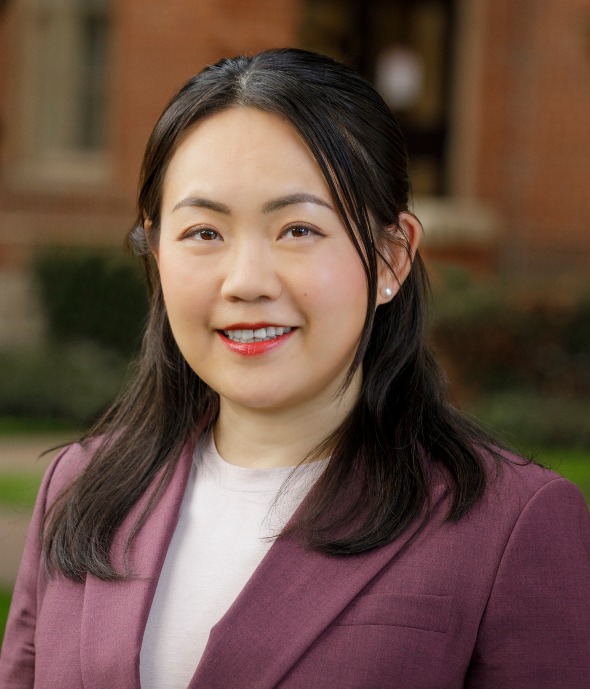
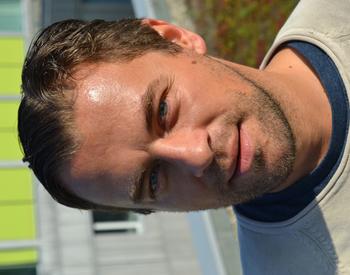
Thorin Wright is an Associate Professor in the School of Politics and Global Studies at Arizona State University, where he also serves as Academic Lead for the Security & Defence PLuS initiative. He previously held the position of Associate Director for Graduate Studies at SPGS from 2020-2023. Wright holds a Ph.D. in Political Science from the University of Illinois at Urbana-Champaign (2012), an M.S. (2007) and B.A. (2005) in Political Science from the University of North Texas. His research examines international conflict processes with emphasis on: The intersection of international conflict and domestic politics Territorial conflict participation and state repression Effectiveness of defensive alliances and peacekeeping operations Human rights reporting methodologies and impacts Wright's recent publications (2014-2025) consistently focus on conflict dynamics, state repression mechanisms, and human rights documentation, with emerging themes including gender politics in conflict zones and epidemic-related social unrest. Methodologically, his work combines quantitative analysis of conflict datasets with policy evaluation. Research Funding: US-Japan Foundation Grant for 'Micro-Foundations of US-Japan Security Relationship' (2025-2026) Security & Defence PLuS Seed Grant for 'Integrated Deterrence in Age of AUKUS' (2024-2025) National Science Foundation Award for 'Sub-National Analysis of Repression Project' ($513,434, 2016-2022) He mentors graduate researchers including Victoria Stratton and Heather M. Kopp as co-authors on publications. His teaching portfolio includes graduate and undergraduate courses on international relations, conflict processes, and human rights.
James Peter Burgess is a Professor and Chair of Geopolitics of Risk at École normale supérieure (ENS) – PSL, Paris. A philosopher and political scientist, he investigates intersections of culture, politics, and ethics in security studies, with a focus on Europe. His work spans societal security, risk analysis, and the ethical implications of security technologies. He has authored 18 books and over 100 articles, funded by the European Commission, Research Council of Norway, and Axa Research Fund. Affiliation: École normale supérieure – PSL Research areas include risk, uncertainty, societal security, and the cultural history of geopolitical concepts. Recent articles analyze posthuman security, surveillance ethics, and the role of uncertainty in modern governance. His edited collections like Surveillance, Privacy and Security (Routledge, 2017) and Socially Responsible Innovation in Security (Routledge, 2018) reflect interdisciplinary collaborations. Scientific contributions emphasize the ethical foundations of security, blending phenomenology, Lacanian theory, and critical security studies. He pioneered methodologies for integrating cultural and social values into risk management frameworks, influencing debates on direct democracy ('Gilets Jaunes'), geopolitical discourse, and the future of security in a posthuman context.
Nan Jia is Professor of Strategic Management at the USC Marshall School of Business, where she holds a prominent position in the Management and Organization Department. With a PhD from the Rotman School of Management at the University of Toronto, she has established herself as a leading researcher at the intersection of artificial intelligence, strategic management, and political economy. Professor of Strategic Management, USC Marshall School of Business Department: Management and Organization Academic Focus: AI applications in management, corporate political strategy, business-governance relationships Editorial Roles: Associate Editor, Strategic Management Journal; Editorial Board Member, multiple leading journals Her research expertise spans corporate political strategy, business-governance relationships, and the applications of Artificial Intelligence technologies in management. Professor Jia investigates how AI tools can enhance employee creativity, the dynamics of human-AI collaboration in workplace settings, and the political strategies firms employ in different regulatory environments, particularly focusing on China-US business relations. Her work demonstrates that AI and human managers can form a complementary relationship where AI provides superior analytical content while human managers with strong people skills deliver that content effectively. Professor Jia's research portfolio shows a clear trajectory toward understanding the complex interactions between emerging technologies and traditional business practices. Her recent publications focus on AI's impact on creativity, fairness in performance evaluation, and the political economy of innovation, particularly examining how trade policies and government interventions affect corporate behavior. The Strategic Management Journal has featured her field experiments demonstrating how AI assistance combined with human managerial skills creates optimal workplace outcomes. Associate Editor, Strategic Management Journal Faculty Promotion, Marshall School of Business (2024-2025) Featured Research in Financial Times, South China Morning Post, and other major media outlets Editorial Board Member for multiple leading academic journals in strategic management Professor Jia actively mentors students and collaborates with researchers across disciplines. Her work with postdoctoral researcher Yidan Yin on AI-generated responses that make people feel 'heard' has received media attention. She teaches doctoral-level strategic management courses (MOR-603) and applied product management (MOR-531), emphasizing critical thinking and creative problem-solving skills. Her research has been supported by grants examining the impact of AI on workplace dynamics, political connections in international business, and innovation patterns under different regulatory regimes. Professor Jia's work bridges academic rigor with practical business applications, particularly in the rapidly evolving landscape of AI integration in management practices.
Wladislaw Mill is a non-tenured Assistant Professor of Behavioral Economics in the Department of Economics at the University of Mannheim, Germany. His research investigates the intersection of morality and economic systems, focusing on the "dark side" of human behavior including discrimination, corruption, power abuse, tax evasion, war experiences, and spiteful economic decisions. Mill's research program spans Applied Microeconomics, Experimental and Behavioral Economics, Labor Economics, Political Economy, Public Economics, Economic Theory, and Economics of Crime. He employs a methodological toolkit combining theoretical modeling with laboratory, online, and field experiments, supplemented by big-data approaches (web-scraping) and machine learning tools (computer vision) to establish causal relationships in complex social settings. His work addresses critical questions about how discrimination shapes job networks, what drives power abuse, how war experiences affect religiosity, and how spiteful preferences manifest in economic behavior. His recent publications (2021-2025) reveal a cohesive focus on experimental investigations of destructive social dynamics, norms, and behavioral anomalies. Key thematic clusters include spite in strategic interactions (auctions, litigation), discrimination in professional contexts, the socio-psychological impacts of conflict and war, and the economic consequences of polarization. This body of work consistently bridges theoretical innovation with empirical validation through diverse experimental methodologies. Scientific Awards: No awards were mentioned in the provided text. Advising and Grants: The available documentation does not specify doctoral advisees, research grants, or funding sources. Labs and Teams: Mill is affiliated with the Collaborative Research Center TR 224 (CRC TR 224) at the University of Bonn as indicated in their member directory, while maintaining his primary appointment at the University of Mannheim. His research leverages both institutional environments for experimental and field-based investigations.
Michael Kifer is a Professor in the Department of Computer Science at Stony Brook University . His research focuses on declarative languages, logic programming, semantic web, and integration of object-oriented and deductive paradigms. He has received multiple prestigious awards including three ACM-SIGMOD 'Test of Time' awards, SUNY Chancellor's Award, and Stony Brook's Research Excellence Award. Ph.D. in Computer Science, Hebrew University of Jerusalem (1985) M.S. in Mathematics, Moscow University (1976) Dr. Kifer's research interests span over 30 years, with major contributions to databases, knowledge representation, and semantic web technologies. He co-invented F-logic, HiLog, Annotated Logic, and Transaction Logic, which are widely cited in computer science literature. His recent publications focus on hybrid logic programming, multilevel modeling (MLM), and knowledge authoring systems like Flora-2. These works bridge rule-based reasoning, controlled natural language, and semantic web technologies. Scientific Awards : Department Research Excellence Award (2014) ACM-SIGMOD 'Test of Time' Awards (1999, 2002) SUNY Chancellor's & Stony Brook President's Awards (2008) Association for Logic Programming 'Test of Time' Award (2013) Plumer Fellowship at Oxford (2006) Dr. Kifer has served on editorial boards and chaired conferences in logic programming and semantic web. He developed the Flora-2 knowledge representation system and contributed to standards like RIF (Rule Interchange Format).
Lindsey M. Yonish serves as Assistant Professor in the Management and Entrepreneurship academic area at the University of Kansas School of Business, where her research examines organizational interfaces with social environments through stakeholder, sociological, and social psychological lenses. Education: Ph.D. in Management, Texas A&M University, 2024 B.S., Northeastern University, 2019 Her scholarly work investigates organization-stakeholder relationships and systemic inequality perpetuation within corporate structures, with particular focus on contemporary phenomena like organizational cancellation, gender dynamics in leadership, and AI's societal implications. This interdisciplinary approach bridges management theory with critical social analysis to address power imbalances in organizational contexts. Recent publications reveal evolving research trajectories examining stakeholder theory applications to emerging technologies, gender diversity impacts on strategic decision-making, and social evaluation mechanisms affecting organizational legitimacy. These works collectively demonstrate methodological innovation through big data applications while maintaining strong theoretical grounding in organizational sociology.
Dr. phil. Nino Ferrin is a permanent research associate at the Didaktik Deutsch division within the Department of Education and Psychology at Free University Berlin . Holding a Marie Curie Fellowship and serving as Vice Dean for Studies and Teaching since 2018, he specializes in media education, educational anthropology, and practice theory. Freie Universität Berlin: 2011 PhD ( summa cum laude ), 2005-2008 Research Assistant, 2002-2005 Student Assistant University of Crete (2013): ERASMUS Teaching Mobility Marie Curie Alumni Association (since 2014) His research interests span media education, educational anthropology of the Anthropocene, performative learning cultures, and digital body practices. He employs reconstructive ethnography and praxeological methods to investigate how media technologies shape educational experiences. Recent publications focus on Anthropocene sustainability education, narrative spaces for possibility thinking, and digital game culture analysis. His scientific awards include Marie Curie Actions-Fellowship (2012-2016) International recognition through EU-funded DIGIT-M-ED project His teaching involves graduate seminars on primary education research (15+ semesters since 2007) and master's thesis supervision. Current projects examine Metasorge and media techniques (habilitation) 1000+ Concerts for social inclusion Visual metaphors in education
Harris R Perlman is Chief of Rheumatology in the Department of Medicine at Northwestern University Feinberg School of Medicine and holds the Mabel Greene Myers Professor of Medicine. His research focuses on macrophage biology, inflammatory arthritis, and fibrotic diseases like systemic sclerosis and pulmonary fibrosis. Affiliation: Northwestern University Academic Rank: Professor Key Institutes: Center for Human Immunobiology, NUCATS, Lurie Cancer Center Research Interests: His work explores: Macrophage heterogeneity in arthritis and fibrosis Complement pathway activation in rheumatoid arthritis Profibrotic monocyte-derived macrophages in lung disease Role of Wnt-beta catenin in macrophage pathogenesis Transcriptional profiling for precision medicine in autoimmune diseases Age-related immune dysregulation in inflammatory conditions Scientific Awards: Mentor of the Year (2022) Clinical Trials: Synovial Macrophage Transcriptional Signatures for Predicting Therapeutic Efficacy Pathogenic Wnt-beta catenin target genes in macrophages and fibrosis
Luigimaria Borruso is a Tenured Professor at the Faculty of Agricultural, Environmental and Food Sciences at the Free University of Bolzano. Their research focuses on soil and molecular ecology, microbial communities in agro-ecosystems, and environmental DNA (eDNA) applications for biodiversity conservation. University: Free University of Bolzano School: Faculty of Agricultural, Environmental and Food Sciences Email: luigimaria.borruso@unibz.it Research Interests: Soil and molecular ecology Plant-fungal/bacterial-soil interactions (Agro)-ecological networks in apple orchards and vineyards Soil quality indicators Agroecology Environmental DNA (eDNA) in soil biodiversity conservation Science education for soil literacy Recent Publications Trends: Recent works explore microplastics in soil systems, biochar-microbe partnerships for crop growth, microbial dynamics in extreme environments (volcanoes, Antarctica), and applications of metabarcoding in conservation biology (lemurs, bats). They also investigate sustainable agricultural practices, including living labs and soil enzyme analysis via machine learning. Courses Taught: General Chemistry and Biochemistry at the bachelor's level, and advanced topics like Soil Ecology, Statistical Methods for Agricultural Research, and Soil Protection in master's programs.
Professor Imogen Tyler is a leading sociologist at Lancaster University , renowned for her groundbreaking work on stigma, social abjection, and resistance . As a Fellow of the Academy of Social Sciences and recipient of the Stanford-Elsevier Top 2% Scientist ranking, Tyler's research spans social inequality, race, citizenship, and historical sociology , with a focus on neoliberalism's impact. Her influential books, Revolting Subjects (2013) and Stigma: The Machinery of Inequality (2020), have become essential texts in global sociology curricula. Key Research Themes : Stigma as structural power, anti-racist education, waste colonialism, welfare state critique, and community-aligned research methods. Recent Projects : Hard Times: Poverty and Protest in Britain and Elemental Inequalities: Struggles for Life Against State-Sanctioned Killing . Tyler's scholarly output reveals consistent engagement with neoliberal governance, racialised poverty, and creative resistance across two decades. Her scientific accolades include the Lancaster University Research Award (2014), Philip Leverhulme Prize (2015), and recognition for her Stigma Machine research (2020s). She actively collaborates with public institutions and community groups , exemplified by her work with Lancaster Black History Group and Lancaster Museums Service , which earned a Decolonizing Award (2023) runner-up distinction. Academic Leadership : Serves on the European Research Council Advisory Board (2024-), Academy of Social Sciences Council (2022-), and multiple UK research councils. Public Engagement : Developed KS2 Teaching Resources on 18th-century Black Lancastrians, produced Stigma Conversations Podcast , and created Connected Sociologies Video Lectures with 9k+ views.
Yoichi Nakao is a Professor at the School of Advanced Science and Engineering, Faculty of Science and Engineering, Waseda University, specializing in natural products chemistry, chemical biology, and functional food chemistry. His research focuses on marine natural products, stem cell differentiation, and epigenetics, with significant contributions to understanding how natural compounds affect cellular processes. Dr. Nakao earned his Doctor of Agriculture from the University of Tokyo. His educational background includes undergraduate, master's, and doctoral studies all completed at the University of Tokyo between 1985 and 1994, followed by postdoctoral research at the University of Hawai'i Department of Chemistry from 1994-1996. His research spans multiple interdisciplinary fields with a particular emphasis on identifying bioactive compounds from natural sources. Nakao's work explores how marine organisms and traditional food sources produce compounds that influence stem cell differentiation, particularly neural stem cells into astrocytes, and how these processes relate to neurodegenerative diseases and depression. His laboratory investigates epigenetic modifications induced by environmental chemicals and natural products, with implications for developmental toxicology and disease prevention. A significant portion of his recent work focuses on sustainable applications, including serum-free cell culture systems using algal extracts for cultured meat production and regenerative medicine. Analysis of Nakao's recent publications reveals a strong focus on marine natural products chemistry, with numerous discoveries of novel compounds from sponges, cyanobacteria, and other marine organisms. His research increasingly integrates chemical biology approaches with stem cell technology, particularly using induced pluripotent stem cells to study epigenetic changes. There's also a growing emphasis on sustainable biotechnology applications, especially in developing alternatives to animal serum for cell culture, which has significant implications for cultured meat production and regenerative medicine. Dr. Nakao serves in various professional capacities, including as a committee member for the Natural Products Discussion Group (2011-present), the Japanese Society of Chemical Biology (2010-present), and the Chemical Ecology Research Group (2007-present). He is an active member of numerous professional societies including the American Chemical Society, Japanese Bioinformatics Society, and Japanese Society of Chemistry. His laboratory maintains active collaborations across multiple disciplines, working with researchers in microbiology, parasitology, and biomedical engineering. Current research directions include developing chemical probes for target identification, studying microbial interactions in marine environments, and exploring the therapeutic potential of natural compounds for neurological disorders and infectious diseases.
Dima Damen is a Professor of Computer Vision at the School of Computer Science, University of Bristol , and leads the Machine Learning and Computer Vision Group . She also holds a position as Senior Research Scientist at Google DeepMind. Her research focuses on egocentric vision , video understanding , and action recognition , with significant contributions to human routine modeling , hand-object interaction analysis, and multimodal learning from real-world environments. EPSRC Early Career Fellow (2020-2025) ELLIS Society Member Active in organizing workshops and challenges (e.g., EPIC, Ego4D, EgoVis) Her recent work explores temporal discrimination in video captioning ( It's Just Another Day ), active memory representations for long egocentric videos ( AMEGO ), and hand-object interaction referral ( HOI-Ref ). She has co-authored 15+ articles in top venues like CVPR, ICCV, NeurIPS, and IJCV, with a focus on egocentric scene modeling , audio-visual binding , and cross-scenario generalization . Awards include the Best Paper at ACCV 2024 and recognition as an Outstanding Reviewer at CVPR 2020 . She has supervised numerous PhD students and postdocs , including Adriano Fragomeni, Jacob Chalk, Alexandros Stergiou, and others who now hold academic or industry roles. Her funded projects include VISUAL AI (EPSRC Programme Grant) and UMPIRE (EPSRC Early Career Fellowship), supporting innovations in egocentric dataset creation , real-time tracking , and industrial workflow assistance .
Chancellor Johnstone serves as an Adjunct Assistant Professor at the Air Force Institute of Technology (AFIT), specializing in interdisciplinary research bridging military applications with advanced analytics. His work integrates operations research, statistical modeling, and machine learning to solve complex defense-related challenges. His academic credentials include: PhD in Statistics, Iowa State University, 2020 MS in Operations Research, Air Force Institute of Technology, 2015 BS in Operations Research, United States Air Force Academy, 2013 Dr. Johnstone's research focuses on robust optimization for decision-making under uncertainty, anomaly detection in complex systems, and federated learning frameworks for distributed data environments. His methodology emphasizes conformal prediction for uncertainty quantification and physiology-based classification in human-machine systems, with direct applications to Air Force operations including pilot training, mission planning, and personnel selection. Analysis of his 2021-2024 publications reveals three dominant research trajectories: (1) military logistics optimization incorporating cyber-physical constraints; (2) physiological signal processing using graph neural networks for multi-modal data; and (3) responsible AI development addressing bias in high-stakes military personnel decisions. His work consistently demonstrates translation of theoretical advances—particularly in conformal prediction and federated learning—into operational Air Force contexts.
Núria Agell Jané is a Full Professor in the Department of Operations, Innovation and Data Science at ESADE Business School. She also serves as a researcher at the ESADE D3 - Institute for Data-Driven Decisions. With a PhD in Applied Mathematics from UPC (Universitat Politècnica de Catalunya), her academic career spans several decades with significant contributions to artificial intelligence and decision science. Her research focuses on developing Artificial Intelligence techniques for decision making under uncertainty. Specifically, she works on systems with automatic learning, qualitative and fuzzy reasoning, multi-criteria decision making, group decision systems, recommendation systems, and consensus modeling. Her methodological approach combines theoretical foundations with practical applications in business contexts, particularly in marketing and strategic decision making. Her recent publications demonstrate a strong trend toward applying hesitant fuzzy linguistic approaches to complex decision problems across diverse domains including media analysis, food waste reduction, healthcare fraud detection, and sustainable energy planning. These works consistently integrate AI methodologies with real-world business challenges, showing her commitment to bridging theoretical research with practical applications. Professor Agell has directed or co-directed 11 doctoral theses and maintains active research collaborations with institutions including The University of Edinburgh Business School. She coordinates the Research Group Judgements and Decisions in the Market Place (JUICE), which focuses on applying AI to business decision contexts. Her research has been supported by multiple projects related to AI applications in marketing and business strategy.
Patricia Anthony serves as Associate Professor at Lincoln University's School of Landscape Architecture in New Zealand, where she holds an ORCID identifier 0000-0002-4991-3340. Her academic appointments include Faculty Postgraduate Chair for the Faculty of Environment, Society and Design (2021-2024) and current affiliation with the Centre for Geospatial and Computing Technologies (2025-present). Previously, she served as Head of Department (2016-2017), Department Postgraduate Coordinator (2014-2016), and SHIFT Coordinator (2017-2020). Her educational background comprises a Ph.D. from the University of Southampton, United Kingdom; an M.Sc. from Birkbeck, University of London, United Kingdom; and a BSc (High Honors) from the State University of New York, United States. She is proficient in Malay language, with reading, writing, and speaking capabilities. Dr. Anthony's research centers on agent and multi-agent systems, utilizing artificial intelligence techniques including machine learning, evolutionary computation, and text processing as decision-making strategies for agents. She is recognized as a leading researcher applying intelligent agents across diverse domains such as online auctions, agriculture, education, and social media analysis. Her specialized work in sentiment analysis and emotion identification enables agents to detect emotional states in textual communications, with recent applications in earthquake tweet analysis. Her publication record demonstrates consistent scholarly output with over 130 publications, showing particular strength in applying multi-agent systems to practical challenges. Recent work reveals three major research streams: trust and reputation management in IoT environments (accounting for approximately 30% of recent publications), agricultural technology applications including mastitis detection and water resource management (approximately 40%), and social media analysis focusing on elderly technology adoption and cyber aggression classification (approximately 30%). Adjunct Professor, Hubei University of Technology, Wuhan, China Program Committee/Senior Program Committee member for Pacific Rim International Conferences on Artificial Intelligence (PRICAI) 2016, 2018, 2019 Co-chair for International Carnahan Conference on Security Technology (ICCST) 2014, 2016, 2018, 2020 Member of Institute of Electrical and Electronics Engineers (IEEE) Reviewer for Engineering Applications of Artificial Intelligence, Malaysian Journal of Computer Science, and Adaptive Behaviour Dr. Anthony has supervised numerous postgraduate students across multiple research areas related to multi-agent systems, with completed projects spanning cyber aggression classification, agricultural technology, IoT security, and elderly technology adoption. She serves as an examiner for advanced computing courses including Advanced Database (COMP643), Advanced Programming (COMP642), and Studio Project (COMP639), demonstrating her integration within the university's computing curriculum despite her Landscape Architecture appointment. Her research aligns with Sustainable Development Goal 11 (Sustainable Cities and Communities), reflecting her commitment to applying computational techniques to address real-world challenges in urban and community contexts. She actively collaborates across disciplines through the Centre for Geospatial and Computing Technologies, bridging computational methods with landscape architecture applications.