Mirjam Lanzer is an academic researcher specialized in autonomous vehicle-pedestrian interaction, human-machine interface design, and intercultural transportation behavior studies. Her work primarily appears in ACM/IEEE conferences and interdisciplinary journals. Key research areas: eHMI design, pedestrian compliance, VR-based automotive testing Collaborates with researchers from TU Chemnitz (M. Baumann), Ulm University (Mark Colley), and University of Ulm (Enrico Rukzio) Recent publications (2020-2024) demonstrate focus on communication strategies for automated vehicles, cross-cultural behavioral analysis, and safety optimization through pedestrian interaction systems. Research spans both technical implementation and psychological impact assessment. 2024 work on PedSUMO extends simulation capabilities 2023 studies explore augmented reality interfaces 2021 papers address trust formation and takeover transitions
Peter Sörries is a researcher at the Freie Universität Berlin within the Human-Centered Computing (HCC) Research Group . His work focuses on design research and collaborative projects at the intersection of computer science and the Cluster of Excellence Matters of Activity. Image Space Material . Contact: Königin-Luise-Str. 24/26, Room 115, 14195 Berlin | Tel: +49 30 838 71118 Education: Interaction Design, Weißensee School of Art and Design Berlin Research Interests: Human-centered design for clinical decision support systems Privacy-preserving applications of large language models in healthcare Reflective practices in human-AI collaboration User interface design for machine learning systems Collaborative projects with the Cluster of Excellence Matters of Activity Current Activities: Supervising theses projects on topics including conversational agents, patient-centered technology, and visualization literacy.
Claudia Fellner is a researcher at the Chair of Automation and Information Systems under Prof. Birgit Vogel-Heuser at the Technical University of Munich (TUM). She contributes to the chair's academic and research activities with office hours held Tuesday through Friday from 8:00 a.m. to 12:30 p.m. Her research aligns with the chair's core focus areas including Human-Machine Interaction for intuitive system interfaces, Model-based Development for engineering complex systems, Intelligent Production Systems integrating AI in manufacturing, Big Data applications in automated production environments, and Control Software Engineering for robust industrial systems. These fields address critical challenges in modern industrial automation through both theoretical and applied research. The chair maintains active research in numerous projects such as IEV4PI, advacode, AIValve, and CausAIITI, supported by facilities including the Visual Computing Laboratory and demonstrators like the Self-X Material Flow system. Claudia Fellner participates in these initiatives while supporting the chair's educational mission through teaching activities in mechatronics and automation disciplines.
Dominik Hujo is a researcher at the Chair of Automation and Information Systems at the Technical University of Munich (TUM). He holds a Master of Science degree and contributes to advanced research in industrial automation and AI integration. His research focuses on industrial cyber-physical systems , digital twins , human-machine interaction , and AI deployment in manufacturing environments . His work emphasizes real-time requirements, embedded systems, and data management for production processes. Dominik's publications from 2023-2025 demonstrate expertise in multi-agent coordination , predictive maintenance , edge-cloud architectures , and SysML modeling for mechatronic constraints . Key application areas include construction machinery, gear assembly, and logistics systems. He actively collaborates with researchers like Prof. Birgit Vogel-Heuser and Marius Krüger on projects such as KI.Fabrik (AI Factory) and OpAI4DNCS (Operator-AI Interaction for Distributed Control Systems).
Robin Tibor Schirrmeister is a researcher at the University of Freiburg's Faculty of Engineering, specializing in deep learning applications for brain-computer interfacing and neurotechnology. His work bridges engineering and medical domains through affiliations with BrainLinks-BrainTools, the Neurorobotics Lab, and the Department of Presurgical Epilepsy Diagnostics. His doctoral research (2024) focused on EEG signal decoding under advisors Frank Hutter and Tonio Ball. Key research areas include: Deep learning for EEG pathology classification Real-time brain-signal decoding systems Human-robot interaction via BCI Medical diagnostics using neural networks Publication trends since 2018 reveal consistent advancement in EEG decoding methodologies, with recent work (2024-2025) focusing on brain-age dynamics, small-data prediction models, and Riemannian geometry applications. His research demonstrates strong clinical translation potential, particularly in epilepsy diagnostics and assistive robotics. Award: 2018 Poster Prize for µECoG research Collaborative work spans multiple labs including BrainLinks-BrainTools and the Epilepsy Center, with significant contributions to clinical EEG dataset development and intracranial signal processing. Current projects focus on scaling behavior in EEG classification and brain-age modeling. Research infrastructure includes the Neurorobotics Lab for BCI-robot integration and the Epilepsy Center for clinical validation, enabling translational work from algorithm development to medical applications.
Dr. Ir. Anh Vu Doan is a Lecturer at the Technical University of Munich (TUM) under the Chair of Integrated Systems and a Senior Project Leader at Infineon in Neubiberg, Germany. With a Belgian-Vietnamese background and prior residence in Japan, he has held academic roles including postdoctoral fellowships at Keio University and TUM, as well as teaching assistant and stand-in lecturer positions at Université libre de Bruxelles (ULB) and IÉSEG School of Management. Research Interests: Embedded systems design Combinatorial optimization Problem modeling and decision aiding Approximate computing and 3D-stacking memory Machine learning reliability and safety Network-on-Chip (NoC) optimization Recent Publications focus on neuromorphic systems, power optimization for multicore processors, adversarial attacks in ML, and multi-objective design strategies using genetic algorithms. His work bridges hardware-software co-design and sustainable mobility decision frameworks. Scientific Awards: Erasmus-Mundus Grant (EASED program) JST/CREST Research Program Education: MSc in Electrical Engineering (ULB, 2009) PhD in Engineering Sciences (ULB, 2015)
Luisa Strelow is a Scientific Associate (Researcher) at the Chair of Business Informatics and Integrated Information Systems within the Faculty of Computer Science at the University of Duisburg-Essen since July 2024, focusing on innovative retail technologies with emphasis on pricing process optimization through theoretically grounded models. Education: M.Sc. in Business Information Systems (IT Management focus) from Nordakademie Graduate School (2020-2021), thesis analyzing web-crawled geodata for retail product range decisions. B.Sc. in Business Administration (IT Management focus) from Georg-August-University Göttingen (2017-2020), thesis examining machine learning applications in cyber-physical system scheduling. Her research integrates retail technology, pricing optimization, and decision support systems through data-driven modeling. She investigates how geospatial analytics and machine learning enhance retail operations, with particular focus on cyber-physical systems and human-robot interaction in brick-and-mortar environments. Her work bridges theoretical frameworks with practical industry applications, especially in optimizing pricing processes through innovative technological solutions. Publication trends reveal consistent exploration of technology adoption in retail contexts. The 2022 work analyzes AI's impact on shopping experiences, while the 2025 paper establishes a comprehensive framework for retail service robot implementation, identifying current adoption patterns in information exchange and logistics while highlighting untapped potential in anthropomorphic customer interactions. These studies demonstrate her focus on translating academic research into operational retail improvements. No scientific awards or fellowships are documented in available sources. Luisa actively supervises bachelor's and master's theses alongside seminar papers within her research domain. Her industry collaborations—evidenced by geodata analysis with a German retailer and retail robot research—suggest applied funding mechanisms though specific grants remain unmentioned. This industry-academia interface strengthens the practical relevance of her supervisory work. She operates within Prof. Dr. Reinhard Schütte's research ecosystem at the Chair of Business Informatics and Integrated Information Systems, which specializes in retail technology applications and integrated information systems development. The team maintains strong industry partnerships that facilitate real-world testing of pricing models and retail automation solutions.
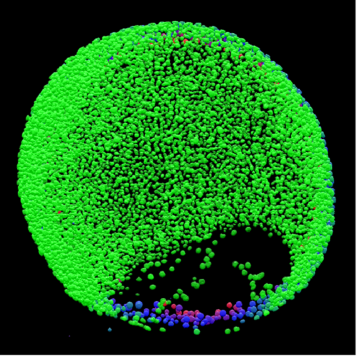
Johannes Stegmaier serves as Junior Professor for Biomedical Image Processing at the Institute of Imaging and Computer Vision at RWTH Aachen University, where he has been employed since April 2018. Previously, he held an Acting Professor (W3) position at the same institution from October 2022 to September 2024. His academic journey includes postdoctoral research at Caltech's Center for Advanced Methods in Biological Image Analysis (2016-2017) and at the Karlsruhe Institute of Technology (2015-2017). Stegmaier earned his Doctorate (Dr.-Ing.) from the Karlsruhe Institute of Technology in June 2016 with a dissertation titled 'New Methods to Improve Large-Scale Microscopy Image Analysis with Prior Knowledge and Uncertainty.' He completed his Master of Science in Bioinformatics and Systems Biology at the University of Freiburg (2009-2011) and his Bachelor of Science in Bioinformatics at the University of Tübingen (2006-2009). During his doctoral studies, he was a Short Term Scholar at the Janelia Research Campus (2014). His research focuses on developing advanced computational methods for biomedical image analysis, particularly in microscopy and medical imaging. Stegmaier's work bridges computer vision, machine learning, and biomedical applications, with significant contributions to diffusion models for image synthesis, 3D image analysis, and embryomics. His research has practical applications in cancer detection, retinal prosthetics, and developmental biology. Analysis of his recent publications reveals a strong trend toward applying diffusion models and transformer architectures to medical imaging challenges. His work spans from fundamental algorithm development to clinical applications, with particular emphasis on generating realistic medical image data, improving segmentation accuracy, and developing multimodal analysis frameworks that integrate imaging with clinical data. Stegmaier actively collaborates with researchers across multiple institutions, as evidenced by his extensive publication record in high-impact journals including Nature Neuroscience, Nature Communications, and PLOS Computational Biology. His work demonstrates a consistent focus on solving practical biomedical imaging challenges through innovative computational approaches.
Prof. Dr. rer. nat. Sven Ingebrandt is Full Professor and Chair of Micro- and Nanosystems as well as Chair of Materials for Electrical Engineering I at RWTH Aachen University, Germany. He simultaneously directs the Institute of Materials for Electrical Engineering I (IWE-1) and holds a rectorate mandate for university co-operation with Japan. His affiliations further include the Profile Area Molecular Science & Engineering (MSE) steering committee. Research interests cover micro- and nanoelectronics, bioelectronics, neural interfaces, organic electrochemical transistors, 2-D materials, metal-organic frameworks, lab-on-a-chip systems, plasmonic biosensors and thermal characterisation of thin films. The group develops wearable textile sensors, high-density microelectrode arrays, impedance-based cellular assays, ion-selective organic sensors and point-of-care diagnostic platforms. Recent publications (2022-2025) emphasise multi-modal biosensors, graphene and MOF thin films, organic transistor arrays for neurotransmitter and ion monitoring, thermal metrology of conductive polymers, plasmonic enhancement for viral protein detection, and machine-learning assisted discovery of high-performance polymers. The work is highly interdisciplinary, merging microsystems engineering, surface chemistry, semiconductor nanotechnology and biomedical sciences.
Prof. Dr. Helge Ritter is a distinguished Professor at the University of Bielefeld, holding multiple key positions across several departments and research centers. He is primarily affiliated with the Faculty of Engineering as part of the Neuroinformatics Group, and also serves as a CITEC Coordinator at the Center for Cognitive Interaction Technology. His work spans the Faculty of Psychology and Sport Science in the Department of Psychology (Unit 01 - Neurocognitive Psychology), and he contributes to the Joint Research Center on Cooperative and Cognition-enabled AI. His academic journey has positioned him at the forefront of interdisciplinary research that bridges engineering, cognitive science, and robotics. As a member of the Habilitation Committee and serving as Personal Deputy for Prof. Dr.-Ing. Ulrich Rückert on the Examination Boards for Biomechatronics (Master), he plays a significant role in academic governance and curriculum development. Research Interests Prof. Ritter's research spans the cutting-edge intersection of neuroinformatics, robotics, and artificial intelligence. His work focuses on cognitive robotics , tactile sensing systems , and human-robot interaction , with particular emphasis on how machines can perceive and interact with the physical world through touch and movement. His investigations into modular neural architectures and biologically inspired learning systems have significant implications for both theoretical neuroscience and practical robotics applications. His current research trajectory demonstrates a strong focus on transfer learning between simulation and reality , multi-fingered manipulation , and adaptive kinematic modeling . These efforts contribute to the broader Socio-Technical World research area at Bielefeld University, which 'researches capabilities and mechanisms that enable agents such as humans, robots and AI to act, communicate and learn in complex environments.' Academic Contributions Coordinator at the Center for Cognitive Interaction Technology (CITEC) Member of the Habilitation Committee in the Faculty of Engineering Personal Deputy for Examination Boards in Biomechatronics (Master) Contributor to the Joint Research Center on Cooperative and Cognition-enabled AI Prof. Ritter's work exemplifies Bielefeld University's commitment to 'Transcending Boundaries' between disciplines, people, and science and society. His research bridges theoretical neuroscience with practical robotics applications, creating innovative solutions for human-robot collaboration and cognitive systems.
Yongqi Dong is a Junior Research Group Leader at the Institute of Highway Engineering, RWTH Aachen University, and a Ph.D. Researcher at TU Delft since 2019. His research focuses on AI-driven automated mobility, traffic safety, and intelligent transportation systems. Ph.D. in Transport and Planning, TU Delft M.Sc. in Control Science and Engineering, Tsinghua University B.Eng. in Telecommunication Engineering, Beijing Jiaotong University His work emphasizes: Automated vehicle safety and socially-compliant driving Machine learning for anomaly detection in traffic Transformer models in lane detection and parking prediction Cross-cultural driving behavior analysis Human-machine interfaces for driverless systems Recent publications highlight trends in deep learning for lane detection (2023-2025), anomaly detection in mixed traffic (2025), and cyclist perception studies (2025). Key journals include Transportation Research Record and IEEE Transactions on Intelligent Transportation Systems. Scientific contributions include: Tsinghua Outstanding Master Thesis nomination Leadership in Traffic and Transportation Safety Lab (TU Delft) Presentations at TRB, ITSC, and ICTCT conferences
Rehana Omardeen is a doctoral researcher at the Department of German Philology, University of Göttingen, and a member of the Research Training Group (RTG) 2070 'Understanding Social Relationships'. Her work focuses on gestures in spoken and signed languages, sign language typology, iconicity, and the interface between sign and gesture. Bachelor’s degree in Linguistics from Swarthmore College Master’s degree in Linguistics from Radboud University, Nijmegen Her research involves comparative studies of iconicity in sign languages, co-creation methodologies in sign language technology, and documentation of Providence Island Sign Language. She has conducted fieldwork funded by the Endangered Languages Documentation Programme (ELDP) on Providence Island and in Guyana. Her work intersects linguistics, computer science, and accessibility, with a focus on inclusive technology development. Rehana collaborates with the Sign Language team and uses methodologies in human-computer interaction, avatar design, and sociolinguistic analysis. She has contributed to European sign language policy frameworks and explores the typological variation of sign languages globally.
Thomas Kosch serves as Professor at the Institute of Computer Science within the Faculty of Mathematics and Natural Sciences at Humboldt University of Berlin. His research group Human-Computer Interaction for Scientific Software develops innovative interfaces for scientific applications, with laboratory facilities at Rudower Chaussee 25, 12489 Berlin-Adlershof and administrative correspondence via Unter den Linden 6, 10099 Berlin. His research spans Human-Computer Interaction, Virtual/Augmented Reality, Artificial Intelligence, and Neurophysiological Computing. Key interests include cognitive augmentation through EEG/EMG systems, motor learning with electrical muscle stimulation, large language model integration in UX workflows, and privacy implications of tracking technologies. His work bridges theoretical HCI frameworks with empirical validation through controlled experiments involving physiological measurements and immersive environments. Analysis of his 15 most recent publications (all 2025) reveals three dominant trends: (1) Critical examination of LLM limitations through prompt-hacking and deceptive design studies, (2) Neurophysiological validation of cognitive phenomena using multimodal sensing (EEG/eye-tracking), and (3) Application-driven XR solutions for veterinary care, navigation, and motor assessment. These works consistently employ rigorous user studies with quantitative behavioral metrics. No scientific awards are documented in the provided materials, though his publication volume in top-tier venues (e.g., CHI, UIST) indicates significant field contributions. Professor Kosch actively supervises doctoral candidates, with at least one PhD defense (Michael Piechotta, Dipl.-Bio-Inf.) scheduled for September 2025. His research group likely secures competitive grants supporting equipment-intensive projects involving EEG systems, VR setups, and physiological sensors, though specific funding sources aren't detailed. The Human-Computer Interaction for Scientific Software group operates as an interdisciplinary hub combining computer science, cognitive psychology, and domain-specific applications. Current projects involve developing open-source tools like MorphoHaptics for medical imaging, MIRAGE for fall hazard detection, and Senscon for physiological sensing integration in VR controllers.
M.Sc. Fabian Lehmann is a scientific collaborator at the Humboldt University of Berlin , affiliated with the Faculty of Mathematics and Natural Sciences and the Institute of Computer Science . His research focuses on knowledge management in bioinformatics and scientific workflows, particularly in areas like resource management, workflow scheduling, and energy-efficient computing. His recent work includes: Carbon-aware execution strategies for scientific workflows (2025) Runtime prediction techniques for heterogeneous infrastructures (2024-2022) Performance prediction and resource recommendation systems (2025-2022) Community-driven workflow standardization initiatives (2024-2022) Applications in environmental data analysis and earth observation (2023-2021) Contact: fabian.lehmann@informatik.hu-berlin.de Phone: 030 2093-41285 Address: Unter den Linden 6, 10099 Berlin
Gregurec D. is a Professor at the Department of Chemistry and Pharmacy, Faculty of Natural Sciences, Friedrich-Alexander University Erlangen-Nürnberg. They lead the Chair of Aroma and Smell Research and are actively involved in teaching and supervising courses such as Neurotech: Physics and Chemistry of Neuromodulation Technologies and Biointerfaces Group Seminar , primarily in English and German. Research focuses on sensory sciences, aroma chemistry, and interdisciplinary applications in neuromodulation technologies. Their work bridges chemistry, pharmacy, and neuroscience, with an emphasis on digital tools and human-machine interfaces. Gregurec D. maintains regular office hours for student consultations at Henkestrasse 91, Erlangen, Germany (MVC building), every Thursday from 9:30-10:15 during active semesters.