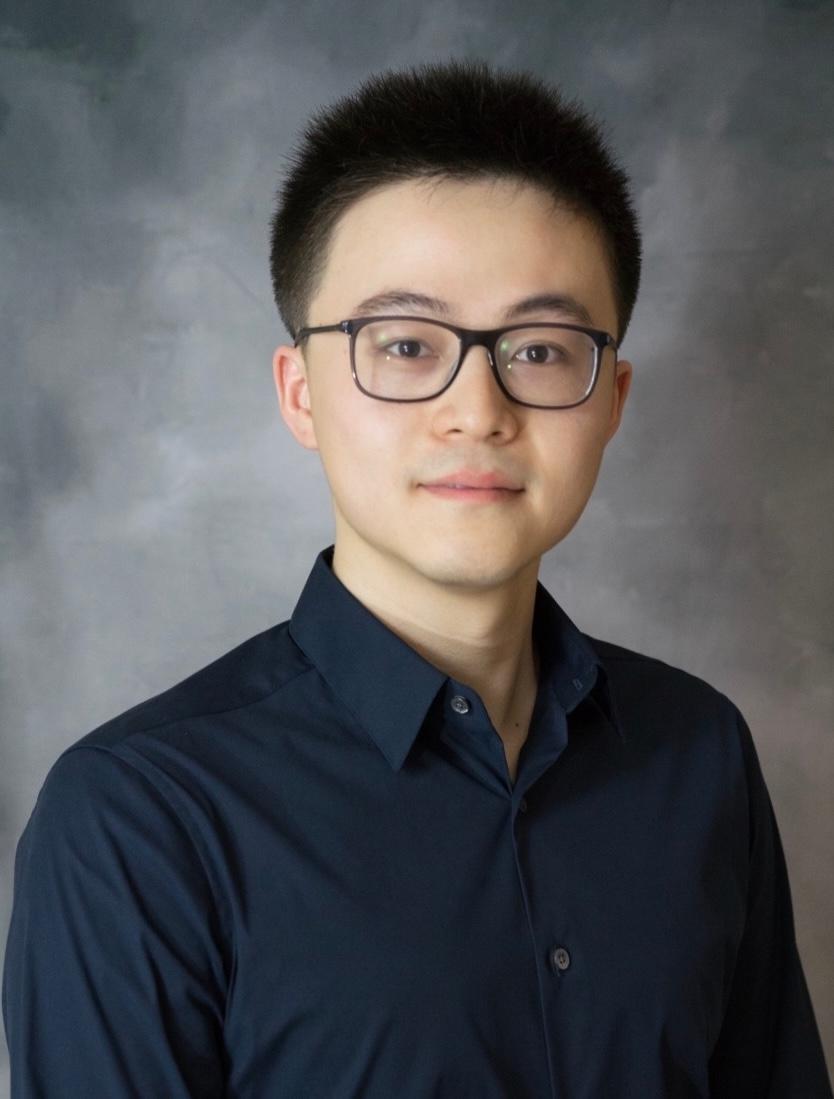
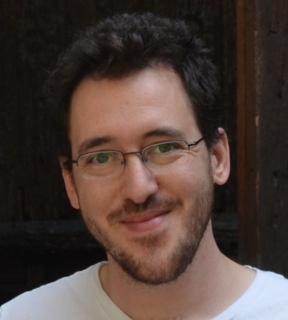
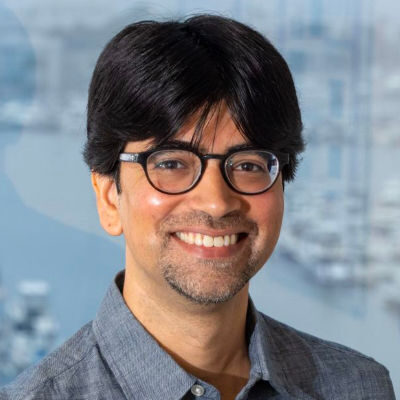
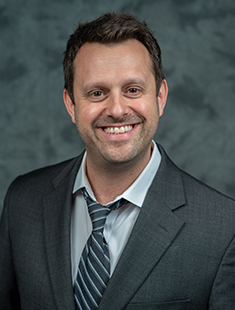
Ruohan Gao is an Assistant Professor in the Department of Computer Science at the University of Maryland, College Park , with affiliate appointments at the University of Maryland Institute for Advanced Computer Studies (UMIACS) , Maryland Robotics Center (MRC) , and Artificial Intelligence Interdisciplinary Institute at Maryland (AIM) . His research focuses on Computer Vision and Machine Learning , emphasizing Multisensory Machine Intelligence that integrates sight, sound, and touch . He aims to enable machines to perceive, understand, and interact with the world as humans do, with applications in robotic manipulation , audio-visual localization , and differentiable rendering . Article Trends : Span 2018–2025 , centering on audio-visual perception , multisensory datasets , and robotics . Recurring themes include object-centric learning , sound synthesis , and cross-modal consistency . Scientific Awards : Michael H. Granof Award (UT Austin’s Top 1 Doctoral Dissertation, 2021) Best Paper Award Runner-Up (BMVC 2021) Best Paper Award Finalist (CVPR 2019) Highlight Paper (CVPR 2023) He leads the UMD Multisensory Machine Intelligence Lab and collaborates with institutions like Stanford and The University of Texas at Austin . Contact: rhgao@umd.edu .
Norwegian University of Science and TechnologyNorway
Marta Molinas is a Professor at the Department of Engineering Cybernetics within the Faculty of Information Technology and Electrical Engineering at the Norwegian University of Science and Technology (NTNU). Her research spans multiple interdisciplinary domains with a focus on EEG technology and brain-computer interfaces. She actively supervises numerous Master's projects and maintains extensive international collaborations with institutions including Kavli Institute for Systems Neuroscience, RIKEN Center for Brain Science, University of Tsukuba, Juntendo University, and several European universities. Professor Molinas' research interests center on developing innovative EEG technologies, particularly her FlexEEG concept for reduced-channel EEG systems with brain imaging capabilities. Her work integrates signal processing, artificial intelligence, and neuroscience to create practical applications in mental health, sleep research, neurorehabilitation, and human-computer interaction. She specializes in EEG source imaging, machine learning for brain signal analysis, and the development of brain-computer interfaces for various applications including locked-in syndrome communication, ADHD treatment, and driver monitoring systems. Her publication portfolio demonstrates strong trends in interdisciplinary research combining neuroscience with electrical engineering and artificial intelligence. The work shows particular emphasis on developing practical EEG-based systems that minimize invasiveness while maintaining analytical power, with applications spanning healthcare, rehabilitation, and human augmentation. Her research bridges theoretical signal processing with real-world implementations through numerous student projects and international collaborations. Professor Molinas actively supervises a large team of Master's and PhD students across multiple projects, with each project typically requiring two students working collaboratively. Her research is supported through numerous international collaborations with institutions in Japan, India, and Europe, indicating substantial research funding and project leadership. She has developed a pipeline of student projects that build upon previous work, creating a cumulative knowledge base within her research group. She leads the EEG ITK research team at NTNU, which focuses on developing the FlexEEG headset prototype featuring flexible, wireless, dry electrodes designed to move across the scalp. This team works at the intersection of neuroscience, electrical engineering, and computer science, developing applications for sleep research, mental health monitoring, neurorehabilitation, and brain-computer interfaces. The team collaborates extensively with international partners including the Kavli Institute for Systems Neuroscience, the International Institute of Integrative Sleep Medicine at University of Tsukuba, and several engineering departments across Europe and Asia.
Ion Stoica is a Professor in the Electrical Engineering and Computer Sciences Department at the University of California, Berkeley, where he holds the Xu Bao Chancellor Chair. He serves as Director of the Sky Computing Lab and is Executive Chairman of both Databricks and Anyscale. His research spans distributed systems, cloud computing, and AI systems, with significant contributions to large-scale data processing frameworks. Stoica's research interests focus on the intersection of AI and systems, with emphasis on developing practical implementations that bridge theoretical foundations with real-world deployability. His work addresses fundamental challenges in distributed computing, resource management, and large-scale machine learning systems. Current projects include Ray (a distributed execution framework), vLLM (a high-throughput inference engine for LLMs), Chatbot Arena (an open platform for human preference evaluations), and SkyPilot (a framework for running AI workloads across clouds). His research output demonstrates a consistent trajectory toward more efficient, scalable systems for modern AI workloads, particularly focusing on optimizing inference performance, resource utilization, and cross-cloud deployment. Recent publications reflect growing interest in large language model serving, video generation optimization, and agent-based systems. ACM Fellow SIGOPS Hall of Fame Award (2015) SIGCOMM Test of Time Award (2011) ACM Doctoral Dissertation Award (2001) Member of National Academy of Engineering Honorary Member of the Romanian Academy Stoica has advised an extensive number of doctoral students who have gone on to prominent positions in academia and industry, including assistant professorships at Stanford, MIT, Carnegie Mellon, and other top institutions. He has received significant research funding through his lab activities and startup ventures. His research group has been particularly successful in translating academic research into widely adopted open-source technologies and commercial products. Stoica leads the Sky Computing Lab at UC Berkeley, which focuses on developing systems for AI workloads across multiple clouds. His research group has produced numerous influential open-source projects including Apache Spark, Apache Mesos, and Alluxio, which have become industry standards for large-scale data processing. The lab maintains strong industry partnerships while pursuing fundamental research in distributed systems and AI infrastructure.
Cristian Danescu-Niculescu-Mizil is an Associate Professor at the Department of Information Science , Cornell University . His research focuses on computational frameworks for social behavior analysis through large-scale natural language data , particularly in online communities and crisis counseling contexts. Recipient of WWW Best Paper Award (2013) and Yahoo! Key Scientific Challenges Award Co-developer of ConvoKit , a comprehensive conversational analysis toolkit Principal investigator in NLP for mental health , antisocial behavior detection , and linguistic coordination studies His work spans computational social science and human-centered AI , with recent publications in EMNLP 2025 , ACL 2025 , and CSCW 2025 focusing on conversation dynamics modeling , pivotal moment detection , and talk-time equity analysis . He has advised multiple PhD students who became faculty at Harvey Mudd , University of Michigan , and Thompson Reuters . Key scientific contributions : 2013 : WWW Best Paper - Power dynamics through linguistic coordination 2016 : IJCAI NLP & Journalism Best Paper - Gender bias quantification 2017 : ICWSM Best Paper - Trolling behavior analysis He teaches NLP and Social Interaction (INFO/CS 6742) and Language and Information (INFO/CS 4300) , with teaching resources including the Politeness Web App and ConvoWizard interactive tool featured in NPR's Weekend Edition . His work has been covered by New Scientist , NBC Today Show , and New York Times .
Massachusetts Institute of TechnologyUnited States
Yevgeni Berzak is an Assistant Professor at the Technion and a Research Affiliate at Mit BCS . He directs the Technion Language, Computation and Cognition (LaCC) Lab and leads the Cognitive Science Track in the Data Science and Engineering degree at the Technion. His academic background includes: PhD in Computer Science at Infolab, MIT CSAIL Postdoctoral research with Roger Levy at MIT CPL Lab Masters in Computational Linguistics at Universities of Saarland and Nancy Bachelors in Cognitive Science and Amirim Honors Program at Hebrew University of Jerusalem His research focuses on the intersection of Cognitive Science and Natural Language Processing (NLP) , studying human language acquisition and processing through computational modeling, linguistic theory, and neuroimaging. He develops datasets like OneStopQA and CELER , and explores how human gaze patterns can improve machine language understanding. Recent publications address topics such as: Eyetracking for language proficiency assessment Repetition effects in reading behavior Readability prediction via scrolling interactions Structured annotation schemes for reading comprehension The LaCC Lab under his leadership combines theoretical linguistics with machine learning to bridge human and artificial language processing.
Anthony A Gatti is a Postdoctoral Scholar at Stanford University's Wu Tsai Human Performance Alliance and School of Medicine. His research integrates biomechanics , medical imaging , and machine learning to advance musculoskeletal health diagnostics, particularly focusing on knee osteoarthritis and exercise physiology. Education : Ph.D. in Rehabilitation Science (McMaster University, 2021), M.Sc. in Rehabilitation Science (McMaster University, 2015), B.Sc. in Kinesiology (McMaster University, 2013) His research develops automated tools for quantifying knee anatomy and integrating anatomical data with biomechanical models . These methods analyze acute responses to exercise and long-term joint degeneration, leveraging MRI , deep learning , and statistical shape modeling . Recent publications emphasize AI-driven segmentation , exercise-induced cartilage changes , and biomechanical simulations , spanning journals like Magnetic Resonance in Medicine and Arthritis & Rheumatology . Trends include machine learning validation for clinical predictions and open-source tool development for musculoskeletal analysis. Scientific Awards : CIHR Postdoctoral Fellowship (top 1%), Mitacs Accelerate Entrepreneur, Forge Student Start-Up Competition Winner, multiple scholarships from McMaster University He founded NeuralSeg , a company commercializing deep learning-based MRI segmentation technology. Collaborations include Stanford's Digital Athlete Moonshot Project with advisors like Scott Delp and Garry Gold.
Max Planck Institute of Colloids and InterfacesGermany
Dr. Jay Pujara is a Research Associate Professor of Computer Science at the University of Southern California (USC) and Director of the Center on Knowledge Graphs. He is also a Principal Scientist at the Information Sciences Institute (ISI) and leads research teams in data science and AI. Ph.D., University of Maryland, College Park (2016) M.S. and B.S. in Computer Science, Carnegie Mellon University Research Interests include artificial intelligence, probabilistic models, knowledge graph construction, statistical relational learning, NLP, and streaming inference. His work focuses on scalable algorithms for big data and uncertainty modeling in dynamic environments. Recent Publications highlight advancements in knowledge graphs, LLM reasoning, and table understanding. Notable topics include non-verbal abstract reasoning , faithful conversational datasets , and KGQA re-ranking . Scientific Awards : SWSA Ten-Year Award (2023), Outstanding Paper (IUI 2019), Top Reviewer (NeurIPS 2018), Best Paper (SRL Workshop 2016) Advising & Grants : Mentored 12+ graduate students, including Ph.D. advisees on topics like causal modeling and neuro-symbolic tasks. Secured NSF funding for table understanding in paleoclimate studies.
Sara Hägg is a Senior Lecturer at the Karolinska Institutet , affiliated with the Department of Medical Epidemiology and Biostatistics . She is also a Docent in molecular epidemiology. PhD in Computational Biology (Linköping University, 2009) MSc in Molecular Biology (Stockholm University, 2003) BSc in Computer Science (Stockholm University, 2003) Her research focuses on human biological aging , including measurement of aging markers (telomere length, epigenetic clocks, frailty index), causal pathway analysis, and identification of geroprotectors for age-related diseases. She utilizes longitudinal twin studies (SATSA, GENDER, HARMONY), UK Biobank, and Swedish cohorts with methods like Mendelian randomization and genome-wide analyses . Recent articles demonstrate trends in epidemiological aging research , with emphasis on cardiovascular aging , neurological disease interactions , metabolic profiling , and epigenetic clocks . Her work often involves multivariable modeling and cross-cohort validation . Leadership roles include Director of LifeGene Core Facility (2024-) and Founding Board Member of the Nordic Aging Society (2023-). She serves on expert groups for the Swedish Twin Registry and Strategic Research Area in Epidemiology and Biostatistics .
David De Roure is Professor of e-Research at the University of Oxford and Academic Director of both the Digital Scholarship initiative and the Laboratory for AI Security Research. He is also an Honorary Research Professor at the Royal Northern College of Music (RNCM), where he serves as Technical Director of the Centre for Practice & Research in Science & Music (PRiSM). His work bridges computer science, digital humanities, cybersecurity, and music through his distinctive interdisciplinary approach. De Roure received his PhD in 1990 supervised by David W Barron and Peter Henderson, with research in Lisp and distributed systems. Prior to joining Oxford in 2010, he was Professor of Computer Science at the University of Southampton and Director of the Centre for Pervasive Computing in the Environment. His career spans multiple institutions and research domains, reflecting his commitment to interdisciplinary work. De Roure's research focuses on new methods of digital scholarship, innovation in knowledge infrastructure, cybersecurity, and computational approaches to music. His work uniquely combines humanities (digital musicology), social sciences (social machines and web science), engineering (Internet of Things), and computer science (distributed systems, AI). A key theme is empowering human creativity through technology rather than replacing humans with AI. He emphasizes co-creation between humans and machines, particularly in music composition where he explores how algorithms can generate fragments for human assembly. His recent publications reveal a strong focus on AI security in IoT systems, digital scholarship methods, and the intersection of music with computational approaches. There's a clear trajectory from foundational work in social machines and web science toward current applications in cybersecurity and music-AI co-creation. His publications consistently bridge technical domains with humanistic inquiry, demonstrating his commitment to interdisciplinary scholarship that addresses real-world challenges. Fellow of the British Computer Society (FBCS) Fellow of the Institute of Mathematics and its Applications (FIMA) Fellow of the Royal Society of Arts (FRSA) Chartered IT Professional (CITP) Turing Fellow at The Alan Turing Institute (2018-2024) De Roure has co-founded three major interdisciplinary initiatives: PETRAS National Centre of Excellence for IoT Systems Cybersecurity (the world's largest socio-technical research center focused on IoT security), the Software Sustainability Institute (dedicated to improving research software), and PRiSM at RNCM. He was Director of the Oxford e-Research Centre from 2012-17 and has led numerous research projects including SOCIAM (The Theory and Practice of Social Machines), FAST (Fusing Audio and Semantic Technologies), and Transforming Musicology. The Laboratory for AI Security Research, which he directs, took its first PhD students in 2024. At Oxford, De Roure chairs the Digital Research Cluster at Wolfson College and oversees the Laboratory for AI Security Research. The PRiSM team at RNCM has produced numerous musical works and performances, including six premieres in New York in 2024. He has been involved in designing gesture recognition software used in many performances and has collaborated on public engagement projects including the Science Together project which released a Hip Hop album. His current work includes exploring Chladni Plates for new musical instrument design and developing algorithmically enhanced instruments.
Adam de la Zerda is an Associate Professor at Stanford University's Department of Structural Biology (School of Medicine) and Electrical Engineering (by courtesy). He develops advanced optical molecular imaging technologies combining nanoparticle contrast agents and adaptive OCT systems for cancer and ophthalmic disease research. Technion-Israel Institute of Technology (BSc, 2005) Stanford University (PhD, 2011) UC Berkeley (Postdoctoral Fellowship) Research Themes : Virtual biopsy using machine learning-enhanced OCT Gold nanorod-based molecular contrast agents Speckle noise reduction for cellular resolution Needle beam optical coherence tomography angiography His 15 most recent publications demonstrate technical innovations in: Metasurface optics for extended depth-of-field Spectral deconvolution of multiple contrast agents Speckle modulation for improved diagnostic clarity Noninvasive lymphatic system mapping Scientific Honors : Pew-Stewart Scholar for Cancer Research AFOSR Young Investigator NIH Early Independence Award Forbes 30 Under 30 (x2) Chan Zuckerberg BioHub Investigator His lab team has developed clinical prototypes including OcuBell Inc. 's ophthalmic imaging systems and Visby Medical 's diagnostic platforms. Current research spans from in vivo glycoprotein imaging to de novo biosensor development for real-time disease monitoring in awake animal models.
Jan Borchers is a full professor of computer science and head of the Media Computing Group, an endowed Chair in the Computer Science Department at RWTH Aachen University. He serves as deputy member of the Faculty Council for Mathematics, Computer Science and Natural Sciences (2024-2026) and previously headed the Computer Science Department's Examination Board from 2015 until February 2025. Borchers established his research group in 2003, pioneering modern HCI academic research and teaching in Germany, and opened Germany's first Fab Lab in 2009. Borchers received his PhD 'summa cum laude' in computer science from Darmstadt University of Technology in 2000. Before joining RWTH Aachen, he held faculty positions at Stanford University and ETH Zurich. His PhD thesis, 'A Pattern Approach to Interaction Design,' became the first book to bring design patterns to HCI. His research focuses on Human-Computer Interaction with particular interest in new user interfaces for soft robotics, textile user interfaces, 3D printing and personal fabrication, augmented reality, wearable and tangible computing, interfaces for software development, deceptive patterns, and interactive guides and exhibits. He is a member of ACM, SIGCHI, SIGCHI Germany, and GI, and introduced the Interactivity format to the CHI conference in 2005. Recent publications reveal a strong emphasis on deceptive patterns/dark patterns in UI design, textile interfaces, and the impact of generative AI on creative teamwork. His work spans from fundamental research in interaction techniques to practical applications in smart homes, accessibility, and children's interfaces, with a consistent focus on usability and user-centered design. IDC 2025 Best Work in Progress: 'If They Have No Choice, They'll Accept!' CHI'25 Student Games Competition Winner: 'The Deceptive Dungeon' RWTH-Wissenschaftsnacht 2024 Best Science Slam: 'Usability: 4 Prinzipien guter User Interfaces' Multiple CHI/UIST Honorable Mentions and Best Paper awards spanning two decades Author of influential books including 'A Pattern Approach to Interaction Design' and 'Arduino In A Nutshell' Borchers has provided extensive consulting, training, and user interface design services to major clients including AirBus, Apple, ARD, Bayer, Children's Museum Boston, Daimler, Handelsblatt, OTIS, Scout24, TEDx, and Deutsche Telekom. He actively organizes the Computer Science Department's weekly Faculty Lunch since 2003 and coordinates the department's public relations and web presence since 2010. He leads the Media Computing Group, which has become a leading German lab in terms of archival publications at CHI, the top international conference in HCI. Since March 2025, he serves as faculty patron for TechLabs Aachen, a student initiative providing practical digital skills training.
Matthew Lee Smith is a Professor at the Texas A&M School of Public Health , part of Texas A&M University . He is a core faculty member of the Center for Community Health and Aging (CCHA) and the Center for Health Equity and Evaluation Research (CHEER) , and serves as the Director of the Texas Research, Analytics, Innovations, and Research Lab (TRAIL) . Education: Post-Doctoral Fellowship, Health Science Center, Texas A&M University (2010) PhD in Health Education, Texas A&M University (2008) MPH, Indiana University Bloomington (2004) BS in Public Health Education, Indiana University Bloomington (2002) Research Interests: Dr. Smith’s research focuses on aging , chronic disease management , and evidence-based public health interventions . He is particularly interested in health behavior change , health risk assessment , and survey research methodology . His translational work bridges research and practice across healthcare, aging services, and public health systems. He has a strong focus on social determinants of health , including social isolation , caregiving , diabetes self-management , and fall prevention among older adults. His work often targets underserved populations, particularly Black/African American men and rural communities . Scientific Awards: Immunization Neighborhood Champion Award (2024) Responsible Research in Management Award (2023) J. Mayhew Derryberry Award (2022) Consumer Education Program Award (Silver) (2022) Bluebonnet Award (2021) Innovators in Aging Award (2019) Redefining American Healthcare Award (2019) Community ConnecTivity Award (2019) Phillip G. Weiler Award for Leadership in Aging and Public Health (2018) Leadership & Mentorship: Dr. Smith holds leadership roles in several national and state-level initiatives. He is the Co-Director of the Advancing Gerontology through Exceptional Scholarship (AGES) Program and serves on the Steering Committees of the Texas Falls Prevention Coalition , Texas Alzheimer’s Research and Care Consortium , and Texas Social Isolation and Loneliness Coalition . He is also the Director of the Research Scholars & Mentorship Program (RSMP) at the American Academy of Health Behavior. Labs & Centers: He leads the Texas Research, Analytics, Innovations, and Research Lab (TRAIL) , which focuses on developing and evaluating community-based interventions. He is also affiliated with: Center for Community Health and Aging (CCHA) Center for Health Equity and Evaluation Research (CHEER)
Desmond Elliott is an Associate Professor in the Natural Language Processing section at the Department of Computer Science, University of Copenhagen (UCPH). His research focuses on multimodal and multilingual models with specific emphasis on vision-language integration and tokenization-free NLP approaches. He teaches Bachelor and Master's level courses including Advanced Topics in Natural Language Processing (since 2019), Grundlæggende Data Science (since 2023), and previously Data Science (2021-2023). His research interests center on building and understanding multimodal and multilingual models , particularly exploring vision and language interactions through billion-parameter systems. Current work investigates cultural representation disparities in vision-language models, parameter-efficient captioning, and multimodal distributional semantics across diverse domains including food culture and medical imaging. His methodology emphasizes real-world applicability in non-English contexts and ethical considerations in multimodal systems. Elliott's recent publications (2025) demonstrate leadership in multimodal NLP, with significant contributions to vision-language pretraining, multilingual evaluation frameworks, and clinical NLP applications. His work spans theoretical advancements in model architectures and practical implementations addressing challenges in low-resource languages and domain adaptation. Best Long Paper Award at EMNLP 2021 Best Poster Award at COLING 2019 As an active educator, Elliott contributes to courses on Fair and Transparent Machine Learning and previously taught Information Retrieval. His research collaborations span international institutions with particular focus on European and non-English language contexts, reflecting UCPH's recognition as Europe's #1 institution for HCI research over the past decade.
Yael Feldman Maggor is a Postdoctoral Fellow at KTH Royal Institute of Technology, affiliated with the Media Technology & Interaction Design Division and the Digital Futures research center. Her work bridges educational technologies, artificial intelligence, and science education, with a focus on enhancing pedagogy through innovative tools. Research Themes: Generative AI in education, self-regulated learning, learning analytics, chemistry education, and ethical considerations in AI integration. Key Projects: Contributions to the International Journal of Science Education, development of AI-driven evaluation frameworks, and pandemic-era online teaching analysis. Methodologies: Expertise in quantitative and qualitative research, educational data mining, and design of interactive learning platforms. Recent publications emphasize cross-cultural trust in AI, generative AI applications in chemistry education, and explainable AI for teacher professional development. She co-authored studies on nanotechnology courses for educators and self-regulation strategies in online learning environments.
Yiming Yang is a Professor at the Language Technologies Institute and Machine Learning Department within the School of Computer Science at Carnegie Mellon University , where he has held faculty positions since 2003. His research spans foundational and applied aspects of machine learning , artificial intelligence , and scientific computing . Professor, Carnegie Mellon University (2003–Present) Associate Professor, Carnegie Mellon University (1996–2003) Yang's research focuses on LLM-based problem-solving agents , combinatorial optimization , and scalable oversight frameworks . His work explores diffusion models, Langevin dynamics, and Fourier neural operators for NP-hard problems, while advancing reinforcement learning techniques for self-play supervision and principle-driven fine-tuning of large language models. Recent publications highlight his contributions to code synthesis , PDE solving , and multi-agent reinforcement learning . Key methodologies include demonstration-guided control, retrieval-augmented reasoning, and test-time scaling laws. His team has developed frameworks like FEEDER for efficient in-context learning and μTransfer-FNO for zero-shot hyperparameter transfer in PDE solvers. Notable scientific achievements include: Best Student Paper Runner Up (2013) Best Theoretical Paper Award (1994) Best Theoretical Paper Award (1993) Yang has mentored over 20 PhD students and postdocs, including Shengyu Feng , Zhiqing Sun , and Aman Madaan , across domains like graph learning , extreme multi-label classification , and language model alignment .