Daniel Vallero is an Adjunct Professor in the Department of Civil and Environmental Engineering at Duke University . He holds a Ph.D. from Duke (2000) , an M.S. from the University of Kansas (1996) , and a B.A. from Southern Illinois University (1974) . His career spans environmental engineering, exposure assessment, and climate change adaptation, with affiliations including North Carolina Central University (2012-2013) as Associate Professor. Education B.A., Southern Illinois University, 1974 M.S., University of Kansas, 1996 Ph.D., Duke University, 2000 Key Research Areas Environmental systems science Air pollution modeling and control Hazardous waste bioremediation Climate change governance Exposure-based chemical prioritization Biogeochemical cycling under climate stress Publication Trends Focus on PFAS exposure pathways , climate adaptation strategies , and pollutant fate in ecosystems Recent work includes high-throughput exposure models and environmental justice in global warming Scientific Awards Federal Honor Awards (2025) from the U.S. EPA Jeffrey B. Taub Award (1999) at Duke University Notable Contributions Authored Air Pollution Calculations and Environmental Systems Science Developed exposure prioritization tools like Ex Priori Post-9/11 environmental contamination studies in New York City
Dr. Olga Oleinikova is an Associate Professor and Director of the Social Impact Technologies and Democracy Research Hub (SITADHub) within the School of Communication at the University of Technology Sydney (UTS), Australia. Internationally recognized for her contributions to research and social impact, she has been named among Forbes Top 40 Global Ukrainians and Forbes 30 Under 30 Asia. She was also a finalist for the Australian Council of Humanities, Arts and Social Sciences (CHASS) Future Leader Award. Her educational background includes a PhD in Sociology from the University of Sydney (2016), with prestigious research fellowships at Oxford University's European Studies Centre (2018-2019), Charles University in Prague (2023-2024), and the WZB Berlin Social Science Center (2015). Dr. Oleinikova's research focuses on migration studies (particularly Eastern European migration to Australia), democracy studies, diaspora politics, and social impact technologies. Her work examines life strategies of migrants navigating displacement, democratic performance in Ukraine and Europe, and the intersection of technology and democracy. She has developed a theoretical framework distinguishing between 'achievement life strategies' and 'survival life strategies' among migrants from crisis regimes. Her publication portfolio includes several acclaimed works, with her most recent book 'New Eastern European Migration to Australia: From Ukraine, Czech Republic and Hungary' (Palgrave, 2023) examining new migration patterns. Her research demonstrates consistent focus on Eastern European migration, diaspora politics, and democratic development, with increasing attention to technology's role in democratic processes. Forbes Top 40 Global Ukrainians Forbes 30 Under 30 Asia CHASS Future Leader Award Finalist Visa People's Choice Award Anthill 30 Under 30 Winner Dr. Oleinikova has secured over $3 million in funding for social and commercial initiatives. She serves on several nonprofit boards, acts as an advisor to the Australia-Ukraine Chamber of Commerce, and mentors through the 1991 Open Data Incubator and Future Schools Australia. She founded the SITAD Visiting Fellowship Program, supporting Ukrainian early-career researchers and postgraduate students. Her media reach is substantial, with expert commentary featured in BBC News, Bloomberg, ABC News, CNA, The Conversation, Politico, SBS, and KyivPost, reaching an estimated 9.1 million people. She has delivered more than 30 keynote and invited talks at leading institutions worldwide. SITADHub, which she founded and directs, is a dynamic networked research center with 170 associates across 16 countries actively researching democracy, human-computer interaction, and global mobility, with a focus on Ukraine and broader Eastern Europe. The hub conducts unique research and maintains university partnerships throughout Europe and the Asia Pacific, including with WZB Berlin Social Science Research Centre, University of Oxford, and University of Sydney.
Dawn Laux serves as Assistant Dean of Academic Programs and Professor of Practice in the School of Applied and Creative Computing at Purdue Polytechnic Institute, Purdue University. She concurrently holds the position of Division Head for Military Science and Technology and chairs the Purdue University Teaching Academy. With over 15 years of service since 2007, Dr. Laux teaches undergraduate information governance courses and has earned recognition including the Charles B. Murphy Award for Outstanding Undergraduate Teaching (2019) and induction into Purdue's Book of Great Teachers (2023). Her educational background includes: PhD in Human Computer Interaction, Iowa State University (2014) MS in Management Information Systems, Iowa State University (2007) BS in Business Education and Office Administration, Ball State University (1994) Dr. Laux's research centers on data governance, computer-supported collaborative learning, and student persistence in technology education. She investigates technology acceptance, recruitment of women and minorities into IT, database management, and information governance frameworks. Her work bridges educational theory with practical applications to enhance student engagement and diversity in computing fields. Analysis of her publications (2011-2016) reveals consistent focus on educational technology interventions, particularly examining virtual communities for student persistence, diversity initiatives in computing, and classroom technology adoption. Her research demonstrates interdisciplinary integration of information systems, educational psychology, and social computing principles with practical applications in higher education settings. Her distinguished recognition includes: Book of Great Teachers, Purdue University (2023) Academic Leadership Program Fellow, Big Ten Academic Alliance (2022-2023) Teaching Academy Member, Purdue University (2019) Charles B. Murphy Award for Outstanding Undergraduate Teaching (2019) College of Technology Exceptional Early Career Teaching Award (2014-2015) Teaching for Tomorrow Fellowship Award (2013-2014) Bringing 10 years of pre-academic industry experience from Purdue Employees Federal Credit Union and Insight Communications, Dr. Laux integrates practical IT expertise into her teaching and leadership. Her administrative roles encompass academic program oversight and military technology education initiatives, supported by her active participation in the National Center for Women and Information Technology Academic Alliance since 2011. As Division Head of Military Science and Technology, Dr. Laux leads specialized technology education programs while chairing the university-wide Teaching Academy to advance pedagogical excellence across Purdue's academic units.
Christophe Danjou is an Associate Professor in the Department of Mathematical and Industrial Engineering at Polytechnique Montréal . He joined as a professor in January 2018 and serves as Scientific Director of the Poly-Industries 4.0 Laboratory since June 2021. His expertise spans Industrial Engineering , Industry 4.0/5.0 , Manufacturing Systems , and Blockchain . His research focuses on solving interoperability challenges in digital transformation through ontological approaches (OntoSTEP-NC) and blockchain technology. Key themes include strategic positioning frameworks for Industry 4.0/5.0, knowledge management , and smart manufacturing . Recent work explores digital twins for system-of-systems resilience , data integrity in IoT , and AI-driven food processing optimization . He teaches courses like Industry 4.0 and Manufacturing Processes . Under his supervision, 7 PhD and 6 Master’s students are advancing research in areas such as blockchain-based smart maintenance , distributed manufacturing , and carbon emission traceability . He is affiliated with institutions including IVADO (Member), CIRRELT (Member), and Data Intelligence Lab (Member). His publications highlight contributions to digital transformation across construction, agri-food, and SMEs, with 83 total publications (15+ recent articles shown).
Barry Babin is the Phil B. Hardin Professor of Marketing and Chair of the Department of Marketing, Analytics and Professional Sales at the University of Mississippi (Ole Miss) School of Business Administration. He also serves as Executive Director of the Academy of Marketing Science®. Education: B.S. in Industrial Engineering, Louisiana State University (1982) M.B.A. in Business, University of Central Florida (1987) Ph.D. in Business Administration, Louisiana State University (1991) Barry's research focuses on customer experience design , wine marketing , value creation , and marketing analytics . He has published over 200 works, including books like Multivariate Data Analysis and CB: A Consumer Value Framework , with an h-index of 88. His meta-analyses and sensory marketing studies have significantly influenced service and retail marketing practices. Recent publications highlight trends in augmented reality marketing , robotic shopping assistants , and sustainable packaging . His work spans consumer behavior , salesforce management , and digital innovation . Awards: AMS Harold W. Berkman Distinguished Service Award Barry has directed over 20 dissertations/theses and consults on graduate program structures. He is a sought-after speaker in France and globally on marketing research topics.
Felix Gille is a researcher at the University of Zurich , affiliated with the Institute for Implementation Science in Health Care under the Faculty of Medicine. He leads the DSI-funded project "Data handling, security and protection: reaching conceptual equivalence for the concept of public trust in national electronic health records in Switzerland and neighboring countries," collaborating with Prof. von Wyl (IfIS/DSI, UZH) and Prof. Thouvenin (Faculty of Law, UZH). His work bridges health system and policy research, digital health, data law, and data security. Education: BSc in European Public Health, Maastricht University MMedSc in Health Economics, Policy and Management, Karolinska Institute PhD in Public Trust in Healthcare Systems, London School of Hygiene and Tropical Medicine Research Focus: Gille specializes in public trust dynamics within healthcare systems, particularly examining data governance, health policy, and ethical dimensions of digital health innovations. His projects analyze cross-national trust frameworks, biobanking ethics, AI in healthcare, and pandemic data sharing mechanisms. Scientific Contributions: His publications address critical issues such as GDPR impacts on research, trustworthiness of mHealth apps, and interdisciplinary approaches to health data policy. Articles span 2015–2025, emphasizing conceptual trust models, policy harmonization, and stakeholder engagement in health data systems. Awards & Roles: Fellow of the Swiss School of Public Health Associate Editor for Public Health Reviews
Liane Colonna is an Assistant Professor in Law and Information Technology at the Department of Law, Stockholm University , where she investigates ethical and legal challenges arising from AI-driven practices in higher education. She also engages in methodologically oriented research at the intersection of AI and Law, contributing to the Wallenberg AI, Autonomous Systems and Software Program – Humanities and Society. Additionally, Liane serves as the director of the Swedish Law and Informatics Research Institute (IRI) and is a member of the New York Bar since 2008. Primary Affiliation: Department of Law, Stockholm University Institute Leadership: Director, Swedish Law and Informatics Research Institute (IRI) Professional Status: Member of the New York Bar Research Interests: Ethical and legal challenges of AI in higher education Methodological approaches in AI and Law Data protection and privacy by design Regulatory frameworks for AI and emerging technologies Privacy implications of lifelogging and health IoT International data governance and surveillance law Publications demonstrate expertise in AI regulation, GDPR compliance, and privacy-preserving technologies, particularly for assisted living and educational contexts. Her work bridges technical implementation with legal accountability, emphasizing human oversight and ethical design.
Patrick M. Tarwater is a Professor in the Department of Epidemiology & Biostatistics at Texas A&M University, with research spanning infectious disease epidemiology, traumatic brain injury rehabilitation, sleep science, biostatistical methods, and environmental health impacts on child development. His work integrates clinical, laboratory, and computational approaches to address complex public health challenges. His educational foundation includes: PhD in Biometry from University of Texas Health Science Center at Houston (1999) MS in Mathematics from Texas Tech University (1992) BA in Mathematics from Texas Tech University (1990) Tarwater's research in Infectious Disease Epidemiology features extensive work on HIV/SIV pathogenesis using non-human primate models, SARS-CoV-2 variant dynamics, and microbial risk assessment in environmental settings. His Traumatic Brain Injury and Sleep research includes innovative interventions like the OSABI sleep hygiene protocol and objective sleep monitoring methodologies for rehabilitation patients. The Environmental Health focus centers on the ECHO program's investigation of maternal nutrition and child health outcomes, alongside risk assessments for oil spill contaminants and recreational water safety. Analysis of his 2018-2024 publications reveals three dominant trajectories: (1) viral pathogenesis mechanisms using advanced animal models, (2) neuroimmunological consequences of infections and injuries, and (3) environmental exposure risk modeling. His work consistently employs sophisticated biostatistical techniques and translational approaches bridging laboratory findings to clinical applications. While no specific awards are documented in the source material, Tarwater's prolific publication record in high-impact journals demonstrates significant scholarly contributions. His teaching portfolio includes foundational courses in epidemiology and biostatistics, plus advanced instruction in cohort analysis and epidemiologic inference.
Pernille Bjørn is a Professor in Computer Supported Cooperative Work (CSCW) at the Department of Computer Science , University of Copenhagen (DIKU), where she has been since May 2015. Her research investigates collaborative work practices to design cooperative technologies, focusing on domains like healthcare, global software development, startup companies, and digital fabrication. Faculty of Science, University of Copenhagen Human-Centred Computing Section Research Interests : Bjørn’s work spans CSCW , Human-Computer Interaction , and Digital Fabrication , with applications in healthcare systems, cross-cultural software development, and inclusive technology design. She explores collaborative virtual reality training, FemTech, and crisis computing. ACM Distinguished Member (2024) Publications : Published in top venues like ACM Transactions on Computer-Human Interaction , CSCW , and CHI , her recent work examines hybrid work asymmetry, neurodiverse accessibility, and art-driven collaborative research.
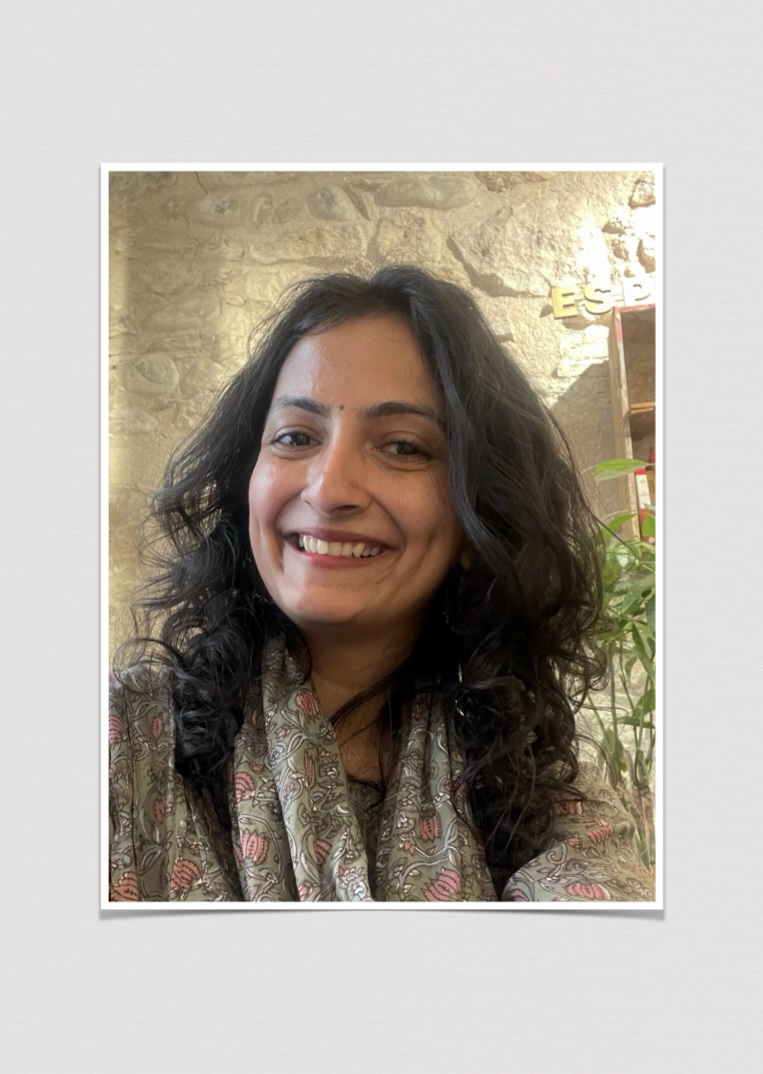
Anupriya Tuli is a Postdoctoral Research Fellow at the KTH Royal Institute of Technology , affiliated with the Division of Media Technology and Interaction Design . She collaborates with Madeline Balaam and Airi Lampinen to examine ethics in data collection for intimate topics and designs interactions fostering trust and collective care in reproductive/menstrual journeys. Research Focus : Intersection of Human-Computer Interaction (HCI), global health, taboo, marginality, and activism Expertise : Qualitative research, feminist design, health equity Education : PhD in Human-Centered Design from IIIT-Delhi, India Their work emphasizes technology as a tool for equity and empowerment , particularly for marginalized communities. Recent publications explore themes like intimate technologies, post-growth HCI, and menstrual mobilities. Awards include fellowships from the Indian Government, Google, and the MARFATIA AWARD (2018). Scientific Awards Fellowship from the Indian Government (for doctoral research) Google Fellowship (for doctoral research) MARFATIA AWARD (2018)
Lianne Lefsrud serves as Associate Professor and Risk, Innovation, and Sustainability Chair (RISC) in the Department of Chemical and Materials Engineering at the University of Alberta's Faculty of Engineering. Her interdisciplinary research bridges engineering, social sciences, and policy to transform risk management practices across energy, mining, construction, and railroading industries, directly influencing regulations, building codes, and industry operations for sustainable development. Her academic credentials include: BSc in Civil Engineering (Cooperative Program), University of Alberta (1994) MSc in Interdisciplinary Civil & Environmental Engineering and Sociology, University of Alberta (1996) PhD in Strategic Management and Organization, Alberta School of Business (2014) Dr. Lefsrud's research centers on risk management frameworks for sustainability challenges. She examines hazard identification, social license to operate, and technology adoption drivers in high-hazard industries, with emphasis on prospective risk assessment (e.g., hydrogen infrastructure design) and retrospective analysis (e.g., microplastic pollution impacts). Her work integrates circular economy principles into energy systems while addressing unintended consequences across UN Sustainable Development Goals. Recent publications (2024-2025) demonstrate heavy focus on machine learning applications for rail and construction safety, hydrogen infrastructure risk analysis, and science denial mitigation. Key patterns show cross-industry adaptation of AI for incident prediction, regulatory gap analysis for emerging energy systems, and socio-technical approaches to reconcile sustainability goals with operational realities. Scientific recognition includes: Erb Post-Doctoral Fellowship (University of Michigan) Dow Sustainability Research Fellowship (Ross School of Business) Dr. Lefsrud mentors graduate students through industry-integrated projects like her Sustainable Design course where teams generated patents and city solutions. Her research secures Alberta Innovates funding with 1:4 industrial-to-federal matching, collaborating with Suncor, Transport Canada, and Canadian Standards Association. Grants target practical implementations including railcar inspection systems and hydrogen safety protocols. She co-founded Insight Risk Systems and leads the Lefsrud Lab, prioritizing inclusive teams with under-represented groups (women, Indigenous, LGBTQ2S+, neurodiverse) to tackle 'wicked problems' in sustainability. The lab leverages interdisciplinary partnerships across engineering, computer science, psychology, and environmental sociology for real-world risk management solutions.
Professor Kenneth M. Anderson is Chair of the Department of Computer Science and holds the Palmer Endowed Chair at the University of Colorado Boulder's College of Engineering & Applied Science. He co-directs Project EPIC, a $4M NSF-funded initiative on social media use during mass emergencies, and serves as Co-Director of the Center for Software and Society. Ph.D. in Computer Science, University of California, Irvine (1997) Joined CU Boulder in 1998; tenured in 2005 Former Associate Dean for Education (2016-2019) Former Associate Chair (2010-2013) His research bridges software engineering, crisis informatics, and human-computer interaction. Current projects focus on large-scale social media analytics, crisis response systems, and software architecture for data-intensive environments. Recent publications explore multilingual social media analysis (ML-EPIC), bug fix patterns in software development (FIXR), and collaborative big data platforms. Themes include disaster risk communication, data modeling challenges, and asynchronous analysis tools. ATLAS Fellow (2010) As department chair, he spearheaded initiatives for inclusivity, including creating a Bachelor of Arts in Computer Science and establishing the NSF Broadening Participation in Computing plan. He oversees major academic reforms and departmental operations.
Masooda N Bashir is an Associate Professor at the University of Illinois, affiliated with the School of Information Sciences, Informatics, Information Trust Institute, Industrial and Enterprise Systems Engineering, Coordinated Science Lab, Health Care Engineering Systems Center, and European Union Center. Her work focuses on privacy protection, cybersecurity, and ethical use of technology in health and AI systems. She explores user privacy in mobile apps, trust in autonomous systems, and compliance with privacy standards. Research interests include privacy policy analysis, human-robot trust dynamics, and cross-cultural privacy norms. Her recent work examines privacy risks in health apps, AI governance challenges, and cloud security certifications. Collaborations span cybersecurity ethics, human factors in automation, and societal impacts of emerging technologies. Her articles highlight trends in privacy engineering, trust mechanisms in autonomous systems, and compliance strategies beyond legal minimums. She emphasizes user-centric privacy design and interdisciplinary approaches to bridging technical and managerial challenges in privacy implementation. Affiliated with multiple interdisciplinary centers, her work integrates engineering, policy, and social science perspectives. She contributes to public discourse on privacy through media engagement and academic outreach.
Matthew Grizzard is an Associate Professor in the School of Communication at The Ohio State University. His research focuses on media psychology and mass communication, particularly exploring how audiences form moral judgments when engaging with media narratives. He investigates character evaluation, narrative context's role in shaping perceptions, and applications to real-world phenomena like polarization and Schadenfreude. Grizzard holds a PhD from Michigan State University and serves as an Associate Editor for the Journal of Media Psychology , alongside editorial roles in other journals. His work bridges media effects and moral psychology, with recent studies addressing character depth measurement, affective disposition theory, and the impact of video games on guilt. He has explored narrative dynamics across films, social media, and interactive media, emphasizing audience cognition and emotional engagement. Grizzard has held leadership positions within the National Communication Association's Communication and Social Cognition Division. Grizzard's research trends highlight interdisciplinary approaches to media's moral influence, with a focus on theoretical frameworks like disposition theory and their validation through empirical experiments. His articles consistently address narrative structures, character development, and the psychological mechanisms underlying audience responses to media content.
Dr. TAN Wee Kek is an Associate Professor (Educator Track) in the Department of Information Systems and Analytics at the National University of Singapore's School of Computing. He served as Assistant Dean in the School's Office of Student Life from 2019 to 2024 and has been a Fellow of the NUS Teaching Academy since 2017. He holds a Doctor of Philosophy in Information Systems and Bachelor of Computing in Information Systems (First Class Honours) from NUS, and previously earned a Diploma in Computer Information Systems from Singapore Polytechnic. His research focuses on Technology-Enhanced Learning (TEL), particularly artificial intelligence applications in education, and consumer-based information technology including online decision aids, social computing, virtual worlds, and consumer cloud services. His methodological approach primarily employs design science paradigms. Publication analysis reveals his scholarly work spans educational technology, e-commerce systems, human-computer interaction, and information systems pedagogy, with recent emphasis on learning analytics and AI-enhanced educational frameworks. Major Honors: Commendation Medal from Singapore's President (2017) Multiple Annual Teaching Excellence Awards (2009-2024) Crystal Service Award, WorldSkills Singapore Council (2018) Lee Kuan Yew Award for Mathematics and Science (2001)