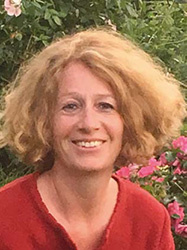
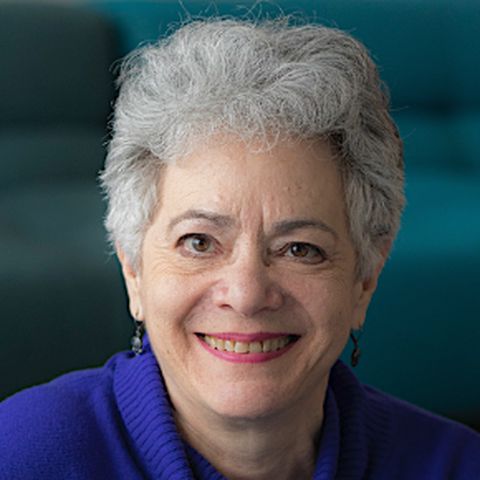
Peter Knight is a Professor of American Studies at the University of Manchester , affiliated with the School of Arts, Languages and Cultures (English, American Studies & Creative Writing). He focuses on conspiracy theories and cultural approaches to finance , with over two decades of research grants and leadership in major interdisciplinary projects. UN Sustainable Development Goals (SDG151: United States) Co-editor of Routledge Handbook of Conspiracy Theories His research reconfigures conspiracy theory analysis through cultural lenses, challenging psychological dismissals. Key projects include Everything Is Connected (AHRC, 2016-20) and REDACT (EU CHANSE, 2022-25). Publications span Routledge, Edinburgh UP, and Cambridge UP. Recent work with Clare Birchall and Michael Butter explores coronavirus pandemic conspiracies , while his Reading the Market (2016) examines Gilded Age financial narratives. He co-curated the Show Me the Money exhibition (2014-16), visualizing financial history. Scientific Awards BAAS Book Prize (2017) Peter supervises projects on topics like 19th-20th century American literature , digital conspiracy theories , and financial epistemology . His media commentary (The Conversation, BBC) addresses public understanding of economic and conspiratorial discourse.
Chris Till is a Senior Lecturer in Sociology at Leeds Beckett University, specializing in the intersection of digital technologies, health practices, and social theory. His academic work critically examines how digital health technologies mediate contemporary social relations and subject formations within capitalist structures. Dr. Till's educational background includes studies at Nottingham Trent University and the University of Leeds. His research primarily focuses on self-tracking devices, corporate wellness programs, and the sociological implications of digital health technologies within contemporary capitalism. His scholarly work reveals consistent themes around digital labor, biopolitical control through health technologies, and the transformation of exercise and wellness practices into forms of labor under financialized capitalism. Till's research demonstrates how seemingly personal health tracking practices become integrated into broader systems of capital accumulation and social control. His publications show a clear trajectory examining the sociological dimensions of digital health, with particular attention to how corporate wellness initiatives transform individual health behaviors into productive labor for capital. The recurring themes across his work include the examination of self-tracking as a form of digital labor, the commercialization of bodies through wellness technologies, and the construction of new subjectivities within digital capitalism. As an educator, Till has developed academic writing tools to support student development, demonstrating his commitment to pedagogical innovation alongside his research interests in digital practices.
Dr. Brent Fogel is a Professor in the Departments of Neurology and Human Genetics at the David Geffen School of Medicine, UCLA. He directs the Neurogenetics Clinic and the UCLA Clinical Neurogenomics Research Center , focusing on diagnosing and managing genetic neurological disorders such as cerebellar ataxia , ataxia with oculomotor apraxia , spastic paraplegia , and leukodystrophies . His research integrates genomics , bioinformatics , and neuroimaging to improve precision medicine in prenatal counseling and rare disease diagnosis. Education: MD, PhD from Medical College of Wisconsin (2003) PhD in Genetics (2001) Internship in Internal Medicine (Northwestern University, 2004) Residency in Neurology (UCLA, 2007) Fellowship in Neurogenetics (UCLA, 2009) Board Certified in Neurology (2009) Research Focus: Dr. Fogel’s work spans neurogenetics , spinocerebellar ataxia , leukodystrophy , and genomic technologies . He has pioneered gene discovery in hereditary ataxias, developed transcriptional biomarkers , and contributed to diagnostic guidelines for rare disorders. His studies on lysosomal genes in Parkinson’s disease and exome sequencing disparities address critical gaps in neurogenetic research. Key Collaborations: He leads multicenter studies with the Ataxia Global Initiative , Undiagnosed Diseases Network , and Genomics England Research Consortium . His lab ( FogelLab ) develops tools like multiWGCNA for gene network analysis.
Dr. Michael Gyensare is a Lecturer in the Department of Leadership and Management at the University of Kent. His research focuses on entrepreneurship, organizational behavior, and leadership dynamics, with particular emphasis on expatriate thriving, psychological contracts, and sustainable HRM practices in both global and African contexts. His scholarly work spans topics like entrepreneurial phronesis, cultural intelligence in international assignments, and polychronicity in venture performance. Recent publications examine green HRM strategies, frugal innovation in emerging markets, and the impact of chronic health challenges on entrepreneurial outcomes. His 2025-2024 publications reveal trends in entrepreneurial cognition, cross-cultural management, and resilience-building in volatile environments. Awards: No specific honors identified in the provided text.
Dorothea Schulz is a Professor of Anthropology at the Institute of Ethnology, University of Münster, where she has been serving since March 2018. She is a Principal Investigator in the Cluster of Excellence, a member of the Board of Directors, and a member of the General Assembly. Her research focuses on religious diversity and legal-political unity, with particular emphasis on Muslim communities in Africa. She leads two major projects: B3-48 on 'The role of social identities in interreligious arrangements' and B3-20 on 'Testing and contesting religious pluralism in Uganda'. Professor Schulz received her academic training at several prestigious institutions: 2005: Postdoctoral Degree (Habilitation), Institute of Social and Cultural Anthropology, Freie Universität Berlin 1991-1996: PhD in Anthropology, Yale University 1984-1990: Study of Anthropology, Sociology and Biology, Johannes Gutenberg-Universität Mainz 1990: Master of Arts in Anthropology, Sociology and Biology, Johannes Gutenberg-Universität Mainz 1982-1983: Study of Art History, Université Paul-Valéry, Montpellier Dorothea Schulz's research spans several interconnected fields within anthropology and religious studies. Her work primarily examines the dynamics of religious diversity, particularly focusing on Muslim communities in Africa. She investigates how religious identities intersect with political structures, social formations, and media technologies. Her anthropological approach emphasizes the lived experiences of Muslim communities, especially regarding gender relations, youth aspirations, and educational systems. Professor Schulz has made significant contributions to understanding how religious pluralism functions in contemporary African contexts, with particular attention to Uganda and Mali. Her research on media and religion explores how digital technologies reshape religious practice and authority in African Muslim communities. Professor Schulz has received numerous recognitions for her scholarly work: 2016: Fellow, Center for African Studies – Harvard University 2010: Teaching Prize – Faculty of Arts and Humanities, University of Cologne 2005: Fellow – Society for the Humanities, Cornell University 2000: Visiting Scholar – Department of Anthropology, University of Chicago 1996: Frobenius Society's Research Award – Johann Wolfgang Goethe-Universität, Frankfurt am Main Throughout her career, Professor Schulz has been actively involved in mentoring students and securing research funding for her projects. She has served on numerous academic committees and editorial boards, contributing significantly to the development of her field. Her leadership as Academic Director of the Research and Teaching Unit 'Media, Culture and Society' at the University of Cologne (2008-2018) demonstrates her commitment to interdisciplinary research collaboration. She currently oversees major research projects examining religious pluralism in African contexts, which involve international teams of researchers and provide opportunities for doctoral students. Professor Schulz co-leads research initiatives within the Cluster of Excellence, working with interdisciplinary teams to investigate religious diversity and legal-political unity. Her projects B3-48 and B3-20 bring together scholars from anthropology, religious studies, political science, and African studies to examine how social identities shape interreligious arrangements and how religious pluralism is tested and contested in specific African contexts, particularly Uganda.
Lynn Wu is an Associate Professor at the Wharton School of the University of Pennsylvania, focusing on the intersection of artificial intelligence, analytics, and innovation. She teaches MBA, undergraduate, and doctoral courses on emerging technologies' transformative impact on business and society. Education: B.S. in Finance and Computer Science, MIT M.S. in Computer Science, MIT Ph.D. in Management Science, MIT Sloan Her research explores how AI and digital platforms reshape productivity, workforce dynamics, and innovation strategies, with applications in antitrust policy and startup ecosystems. Key trends in her publications include AI's role in post-IPO innovation, robotics' impact on managerial roles, and social media's ability to mitigate funding disparities. Scientific Awards: Kauffman Best Paper Award (2019) Sandy Slaughter Early Career Award (2019) AIS Early Career Award (2018) ISR Best Published Paper (2014) Best Paper Awards at ICIS (2009), HICSS (2013), etc. She has collaborated with IBM, Google, Meta, and advised the U.S. Department of Justice and World Bank, with her work cited by The New York Times , The Economist , and Harvard Business Review .
Barbara J. Grosz serves as Higgins Research Professor of Natural Sciences in Harvard University's School of Engineering and Applied Sciences, renowned for foundational contributions to Artificial Intelligence through pioneering work in dialogue processing and multi-agent collaboration theories applied to human-computer interaction, healthcare coordination, and science education. Her research spans Artificial Intelligence, Natural Language Processing, Multi-agent Systems, and Computational Ethics, with recent focus on improving computer system design for healthcare and education. She co-founded Harvard's Embedded Ethics program, which integrates ethical reasoning into core computer science curricula, reflecting her commitment to responsible AI development. Professor Grosz has earned exceptional recognition including: ACM/AAAI Allen Newell Award (2009) IJCAI Award for Research Excellence (2015) ACL Lifetime Achievement Award (2017) Election to the National Academy of Engineering Membership in the American Philosophical Society Her leadership extends to establishing interdisciplinary research institutions and advancing women in science, demonstrating sustained impact across academia and societal applications of AI.
Professor George Buchanan is a leading researcher in human-computer interaction and digital libraries at RMIT University . His work bridges information science, digital humanities, and health informatics, focusing on usability in sensitive contexts like healthcare and misinformation. Deputy Dean, Research at RMIT University Former Director, University of Melbourne iSchool Research Interests: Digital information interaction Health and aging informatics Disinformation analysis Mobile interface design Digital library systems Key Contributions: Developed mobile web usability benchmarks, spatial hypertext tools, and thermal feedback interfaces. Currently seeking PhD students for 2025 projects on digital browsing and view change dynamics. Awards: Over twenty best paper awards and Honorary Life Fellow of the Royal Society of Arts. Advising: Accepting Masters/PhD supervision in information interaction and digital health domains.
Dr. Michelle Townsend is a Senior Research Fellow at the University of Wollongong's School of Psychology and a Senior Lecturer in the Public Health Discipline within the School of Health and Society. With over two decades of expertise in responding to adverse childhood experiences, her research bridges psychology and public health, focusing on child maltreatment, mental health disorders, self-harm, suicide prevention, and improving outcomes for vulnerable children and families. Her work emphasizes collaboration with clinicians, educators, government agencies, and communities to develop impactful interventions and policies. Notable contributions include the Project Air Strategy for Schools and research on child-to-parent violence, caregiver experiences, and e-therapy for adolescents with borderline personality disorder. Dr. Townsend holds dual roles, combining research leadership with teaching in public health and psychology, and actively supervises PhD students in areas like narrative therapy and suicide risk assessment. Her funding includes grants from NSW Department of Education and the Mental Health Commission of NSW, supporting initiatives such as early intervention in schools and peer support programs for personality disorders. She also contributes to editorial roles and peer review for journals like BMC Psychology and Clinical Psychologist. Through co-design approaches, her research prioritizes ethical principles and community impact, addressing critical societal challenges in mental health and child welfare.
Jana Kainerstorfer is a Professor of Biomedical Engineering at Carnegie Mellon University (CMU), with courtesy appointments in the Neuroscience Institute and Electrical & Computer Engineering. She serves as Associate Department Head for Faculty and Graduate Affairs within the College of Engineering. Her research focuses on developing non-invasive optical imaging methods for disease detection and treatment monitoring, particularly in diffuse optical imaging. Key areas include cerebral hemodynamic monitoring in traumatic brain injury and handheld devices for breast cancer imaging. Dr. Kainerstorfer holds senior membership in the Optical Society of America and has received prestigious awards such as the NIH Trailblazer Award and AHA Scientist Development Grant. She leads the Biophotonics Lab, which bridges engineering and clinical applications, emphasizing translational research. Education: PhD from University of Vienna/NIH (2010), Postdoc at Tufts University Research Interests Her work revolves around biomedical optics , neurophotonics , and medical device innovation . Current projects include: Non-invasive cerebral hemodynamic monitoring Transabdominal fetal pulse oximetry Optical imaging in extreme environments (e.g., freediving physiology) Her lab develops tools like wearable NIRS for marine mammals and self-calibrating pulse oximetry algorithms. Research spans clinical translation and physiological mechanism discovery , with emphasis on microvascular imaging. Awards & Recognition NIH Trailblazer Award (2020) AHA Scientist Development Grant SPIE Fellow (2022) George Tallman Ladd Award (CMU) Lab & Collaborations The Biophotonics Lab collaborates with neurosurgery, oncology, and marine biology teams. Projects address clinical needs in neurocritical care and fetal monitoring, leveraging optical technologies for real-time diagnostics. Ongoing work includes: Optical assessment of cerebral metabolic rates Non-invasive intracranial pressure estimation Multi-modal EEG-NIRS fusion for neural source localization
Professor Terry Flew (BEc (Hons), MEc (Sydney), MBA (QUT), PhD (Griffith)) is a leading academic at the University of Sydney , holding the Professor of Digital Communication & Culture position within the Faculty of Arts and Social Sciences . As an Australian Research Council Laureate Fellow (2024-2029), he leads the Centre for AI, Trust & Governance , a flagship initiative involving multiple faculties. His international appointments include Research Fellow at the UK Creative Industries Policy & Evidence Centre and Honorary Professor at the University of Nottingham Ningbo China. Co-Director, Centre for AI Trust and Governance Member, SSSHARC research center International collaborations with Carleton University (Canada), Communications University of China, University of Glasgow (UK) Research Focus : Specializing in platform governance , digital policy , and mediated trust , Professor Flew bridges media economics , AI ethics , and creative industries . His work examines digital platform regulation , news media sustainability , and global internet governance , with recent projects analyzing trust mechanisms in AI systems and digital content regulation . The 2024-2028 Laureate Fellowship on "Mediated Trust" integrates these themes. Publications & Grants : With 16 authored/edited books and 129 journal articles , he has secured $11 million in research funding (including $9.9 million from ARC). Key grants include ARC Discovery projects on digital platform governance and Linkage projects on citizen journalism. Professional Leadership : Served as ICA President (2019-2020), ANZCA President (2009-10), and Lead Commissioner for the Australian Law Reform Commission. Currently sits on editorial boards of Journal of Communication , Global Media and Communication , and Media International Australia .
Professor Hilary Bambrick is a distinguished environmental epidemiologist and anthropologist at the Australian National University (ANU), leading the National Centre for Epidemiology and Population Health. She specializes in climate change and health, focusing on adaptation strategies, vector-borne diseases, and urban resilience. Her work bridges research, policy, and practice, with significant contributions to global health initiatives like the WHO and UNDP. Bambrick has over 180 publications and $11M in research funding, addressing climate impacts on vulnerable populations, including First Nations communities and Pacific Island nations. She serves on the Climate Council of Australia and the Australia Institute, advocating for evidence-based climate policies. Her research integrates epidemiology, anthropology, and environmental science to enhance health resilience in changing climates. Education: PhD (ANU, 2003), BA (Hons), BSc, Grad Cert Higher Ed. Key Research Focus: Climate change health impacts, adaptation strategies, vector-borne diseases, urban design, and health equity. She leads interdisciplinary projects on climate litigation, heatwaves, and infectious disease forecasting. Grants & Funding: Over $11 million in research grants, including projects on bushfire preparedness, dengue transmission modeling, and climate-sensitive disease surveillance. Labs/Teams: National Centre for Epidemiology and Population Health (ANU), collaborating with global networks like the Lancet Countdown and MJA-Lancet Countdown.
Cornelia Schneider is a Professor and Head of the Institute of Computer Science at the University of Applied Sciences Wiener Neustadt. She leads research in digital health and care technologies, focusing on applications like Augmented Reality, sensor data analysis, and social robotics for vulnerable populations. Her work emphasizes user-centered design and has been supported by projects funded by FFG and the Active Assisted Living Programme. Her research spans telemedicine infrastructure, elderly care robotics, and health monitoring systems. Notable projects include 24/7-Digital (2023-2026), Care about Care (2021-2023), and AgeWell (2019-2022). She has pioneered solutions like CARU cares and DigiCare training programs. Dr. Schneider has been recognized with the AAL Award (2014) and the tecnet | accent Innovation Award (2021). She coordinates interdisciplinary teams and actively participates in conferences like Health Informatics Meets Digital Health. Her lab collaborations include FOTEC and Salzburg Research, where she previously led the e-Health Competence Center until 2019.
Professor Moses Acquaah is a Professor and Department Head of Management at the Bryan School of Business and Economics, University of North Carolina at Greensboro (UNCG). He serves as Director of the PhD Program in Business Administration. His research focuses on strategic management, emerging economies, family businesses, and sustainability in Africa. He holds a Ph.D. in Strategic Management from the University of Wisconsin-Milwaukee and multiple advanced degrees from institutions like Simon Fraser University and the University of Cambridge. Education: Ph.D. in Strategic Management and International Management, University of Wisconsin-Milwaukee M.B.A. in Accounting & Policy Analysis, Simon Fraser University M.A. in Economics (Monetary and International Economics), Simon Fraser University Graduate Diploma in Development Studies, University of Cambridge B.A. (Honors) in Social Sciences, University of Science and Technology, Ghana Research Interests: Social capital and networking in emerging economies Competitive strategy in sub-Saharan Africa Family business management and entrepreneurship Sustainability and green supply chain practices Leadership in Africa and the diaspora Global strategic alliances and institutional pressures His recent work examines pandemic impacts on African businesses, innovation strategy combinations, and leadership effectiveness. He has published extensively in journals like Journal of Cleaner Production , International Business Review , and Africa Journal of Management . Key Contributions: Pioneered studies on family businesses in sub-Saharan Africa Developed the Leadership Effectiveness in Africa and the Diaspora (LEAD) scale Edited special issues on pandemic management and sustainable development in Africa
Dr. Laura Pacheco is an Assistant Professor at the School of Social Work at Memorial University. She holds a BSW and MSW from McGill University and a PhD in Rehabilitation Medicine from the University of Alberta. Her research focuses on reproductive justice, intellectual disability and parenting, structural violence against women with disabilities, neurodiversity in aging, and social justice within health and social service systems. She has conducted post-doctoral work on support needs for parents with intellectual disabilities and has been a clinician, advocate, and program coordinator in parenting services for over 14 years. She teaches courses emphasizing critical social work practice, anti-oppression, and disability studies. Her funded research includes studies on neurodiverse aging (2020–2023) and service pathways for parents with intellectual impairments (2018–2021). She is an executive member of the International Association on the Scientific Study of Intellectual Disability (IASSIDD) and has contributed to international workshops and conferences. Her work bridges academic research with community engagement, advocating for systemic equity and inclusive policies.