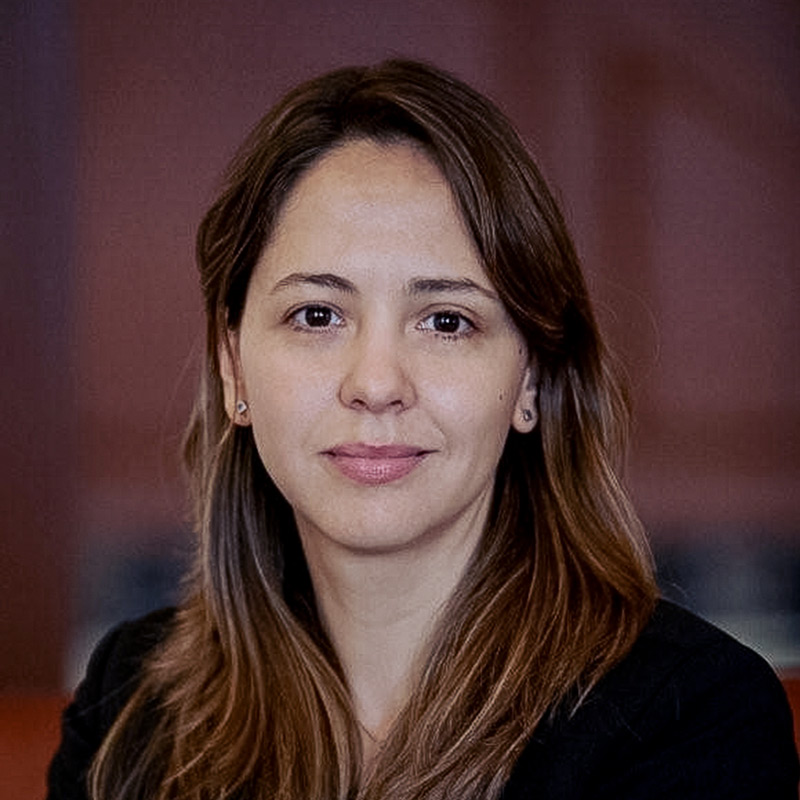
Dr. Chris Harley is a Professor in the Department of Zoology at the University of British Columbia's Faculty of Science. His research focuses on climate change impacts on rocky intertidal ecosystems, particularly how climatic factors (temperature, CO₂, pH) and biological interactions (predation, facilitation) shape ecological patterns. He leads studies on species distribution limits, ocean acidification effects, and the consequences of extreme thermal events like the 2021 Pacific Northwest heatwave. Harley's work integrates field experiments, oceanographic data, and community ecology principles. He collaborates with the Biodiversity Research Centre and emphasizes interdisciplinary approaches to address environmental change challenges. Though no formal awards are listed, his contributions to marine climate change research are widely recognized in ecological circles. Recent studies highlight his focus on temperature-driven shifts in species interactions, the role of salinity in structuring intertidal communities, and the cascading effects of environmental stressors on ecosystem resilience. His publications often bridge ecological theory with applied conservation science, informing marine management strategies.
Haibo Li is a Full Professor of Media Technology at KTH Royal Institute of Technology, affiliated with the School of Electrical Engineering and Computer Science and Digital Futures Faculty. His roles include leading the Media Lab in MID, directing Master’s programs in Media Technology, and teaching courses like Generative AI for Media Technology and Video Technology. He holds a Technical Doctorate from Linköping University (1993) and received the Nordic Best PhD Thesis Award (1994) and Docent title in Image Coding (1997). Research focuses on digital media technologies, including image/video compression, human-computer interaction, and AI-driven media systems. He pioneered the Digital Media Lab at Umeå University and co-founded UCIT. His work spans blind image deblurring, thermal comfort sensing, and multimodal emotion recognition. Over 250 publications and six patents highlight contributions to multimedia, AI, and signal processing. Key projects include developing contactless thermal measurement systems for smart buildings, real-time gesture recognition for wearable devices, and advanced neural networks for image restoration. Awards include the Nordic Best Thesis and leadership in EU projects. He chairs conferences and actively participates in MPEG standardization efforts.
Thelma K. Thomas is an Associate Professor of Fine Arts at New York University's Institute of Fine Arts. She holds a B.A. from Bryn Mawr College (1980), M.A. (1982), and Ph.D. (1990) from NYU. Her research focuses on Late Antique, Byzantine, and Eastern Christian art, emphasizing material culture, historiography, and textile studies. She has curated major exhibitions like Designing Identity: The Power of Textiles in Late Antiquity (2016) and authored seminal works such as Late Antique Egyptian Funerary Sculpture (2000) and Designing Identity (2016). Her work bridges art history with digital humanities, including online databases and Scalar publications. Her research interests include cross-cultural interactions, trade networks (e.g., Silk Road), and the role of textiles in identity formation. She has held fellowships from institutions like Dumbarton Oaks and the Metropolitan Museum of Art. Thomas serves on editorial boards for journals like The Art Bulletin and has advised students globally on Late Antique and Byzantine studies. She advocates for digital scholarship and critical engagement with historical narratives, as evidenced by her response to the Charlottesville events in 2017. Her exhibitions and publications address themes like monastic portraiture, luxury arts, and the social functions of textiles. Key awards include grants from the Kevorkian Foundation and the Alliance for Networking Visual Culture. She teaches courses on Late Antique and Byzantine art, emphasizing interdisciplinary methods and global connections.
Dmitriy Babichenko is a Clinical Professor in the Department of Informatics and Networked Systems (DINS) at the University of Pittsburgh's School of Computing and Information (SCI). With 16 years of industry experience in IT and educational software, he specializes in game design, user experience engineering, and medical education technology. He co-founded SCI’s Learning Technologies Laboratory in 2015, focusing on serious games and immersive media for healthcare and education. His research interests include serious games for healthcare interventions, immersive media applications in cultural preservation (e.g., HeritageRoots project), and AR/VR in surgical training. He teaches courses in programming, data mining, and database management. His work bridges educational technology and clinical medicine, with notable projects like the Dr. Zoo game for pediatric anxiety reduction and SterileAR for sterile compounding training. Publications span medical informatics, IBD biomarker research, and educational game design. Key contributions include studies on dietary impacts on IBD severity, AR surgical tools, and community-engaged serious game development. His lab explores both technological and pedagogical innovations, emphasizing practical applications in healthcare and STEM education.
Jana Vamosi is a Professor in the Department of Biological Sciences at the University of Calgary and Assistant Director of the Herbarium. She holds a B.S. in Biological Sciences from Simon Fraser University (1996) and a Ph.D. in Ecology and Evolution from the University of British Columbia (2001). Her research focuses on biodiversity conservation, particularly Canada’s plant species, with an emphasis on identifying extinction hotspots and understanding climate change impacts. She leads initiatives integrating macroevolutionary and community ecology perspectives to study plant-insect interactions and phylogenetic risks of extinction. Her teaching includes courses such as PLBI 541 Taxonomy of Seed Plants and PLBI 327 Systematics and Diversity of Plants . Her work bridges ecological and evolutionary scales, addressing topics like pollination networks, plant reproductive strategies, and the role of herbarium data in conservation. Recent studies highlight pollinator dependency, climate-driven phenology shifts, and polyploid resilience to environmental changes. Her lab collaborates on projects like the iNaturalist database and explores global pollen limitation patterns. She emphasizes interdisciplinary approaches, combining field studies with phylogenetic analyses to inform conservation strategies for threatened species.
Celia Lopez Ongil is an Associate Professor in the Department of Electronic Technology at the University Carlos III of Madrid. She also serves as Acting Director of the University Institute of Gender Studies, Deputy Director of the Institute of Gender Studies, and Deputy Vice-Rector for Internationalization. Her research focuses on wearable technologies with a gender perspective, affective computing for social impact, and embedded systems design. Key projects include the EMPATÍA-CM initiative addressing gender-based violence through multimodal affective computing and the WEMAC dataset for emotion recognition. She leads the Microelectronic Design and Applications (DMA) research group and has contributed to interdisciplinary fields like biomedical sensors, radiation-hardened electronics, and hardware-software co-design. Education: Ph.D. in Electronics (university unspecified), with a strong background in both technical and gender studies disciplines. Research interests span wearable electronics, gender-inclusive technology development, and ethical AI applications. Her work integrates hardware innovation with social science to address societal challenges, particularly in health monitoring and violence prevention. Publications emphasize cross-disciplinary methodologies, with over 50 articles in journals like Sensors and IEEE Transactions. Notable contributions include adaptive emotion recognition systems and fault-tolerant embedded architectures. She actively participates in international conferences on technology ethics and gender studies in STEM. Labs/Teams: Microelectronic Design and Applications (DMA) group, Institute of Gender Studies, and collaborations with OPTOS CubeSat space instrumentation projects.
Yasmine Elglaly is an Associate Professor of Computer Science at Western Washington University (WWU). She directs the KIND (Komputing for INclusion and Disability) lab, focusing on human-centered research in accessibility and disability inclusion within technology and education. Her work emphasizes integrating accessibility into core computer science topics, developing pedagogical tools for inclusive education, and advancing assistive technologies for marginalized communities. Research Interests: Her research spans accessibility in computing education, assistive technologies, machine learning fairness, and inclusive design. She collaborates with students on projects addressing challenges faced by autistic individuals in computing, digital accessibility in academia and workplaces, and fostering disability awareness in software engineering. Publications Trends: Her recent articles highlight efforts to embed accessibility across the computer science curriculum, design inclusive communication systems for deaf and hearing users, and create datasets addressing disability discourse. She also explores practical teaching strategies, such as hands-on accessibility training for educators and frameworks for fair machine learning education. Advising & Grants: Yasmine mentors students in the KIND lab, though no specific grant details are provided. Her work has been recognized through collaborations with industry and academic partners, though no named awards are mentioned in the text. Labs/Teams: The KIND lab serves as a hub for interdisciplinary projects, emphasizing experiential learning and real-world impact in accessibility solutions.
Jeff Offutt is a Professor and Chair of the Department of Computer Science at the University at Albany, part of the College of Nanotechnology, Software, & Engineering. Previously, he was a Full Professor with Tenure in Software Engineering at George Mason University, where he led the MS in Software Engineering program and developed numerous courses in software testing, web engineering, and software analysis. His research has significantly influenced both academia and industry in software testing and engineering education. His research interests span software testing, mutation testing, model-based testing, automatic test data generation, web application testing, and software engineering education. He has pioneered techniques such as bypass testing and model-based testing, with applications embedded in tools like Selenium. His work emphasizes practical, impactful research—what he calls "science fiction"—with a clear path to real-world use by software engineers. His recent publications reflect a strong trend in cost-effective mutation testing, model-based testing strategies, educational innovations like self-paced learning models (e.g., SPARC), and security aspects of web applications. The keywords across his work include software testing, empirical studies, automation, and education, with subfields such as fault localization, test oracles, input partitioning, and scalable pedagogy. John Toups Presidential Medal for Excellence in Teaching (2020) George Mason University Faculty Member of the Year (2020) Virginia Outstanding Faculty Award (2019) George Mason Teaching Excellence Award (2013) 10-year Most Influential Paper Award, MODELS 2020 Best Paper Award, ICST 2021 Most Influential Paper, ISSRE (2019) Jeff Offutt has advised numerous students and collaborated internationally, including at Swedish universities. He has led major educational initiatives such as the NSF-funded SPARC project, aimed at improving scalability and diversity in introductory CS courses. He has also been actively involved in curriculum development, including co-authoring IEEE/ACM guidelines for software engineering programs. His leadership extends to founding and chairing major conferences like IEEE ICST and serving as Editor-in-Chief of Software Testing, Verification and Reliability . He leads research projects on smart test automation, minimal mutation, and K–5 computer science integration. His work has resulted in widely used tools including muJava, Mothra, and SpecTest. He frequently gives keynote talks on testing, education, and research methodology, and is known for his popular talk "How to Get Your Paper Rejected."
Andrea Mari Lluch is an Associate Professor at the Faculty of Management, University of the Andes, Colombia, and a researcher at the National Scientific and Technical Research Council of Argentina (CONICET). She is also a Full Professor at the National University of La Pampa, Argentina (currently on leave), and affiliated with Harvard University as a non-resident researcher at the David Rockefeller Center and associate of the Creating Emerging Markets Project at Harvard Business School. PhD in History, National University of the Center of the Province of Buenos Aires (2004) Bachelor of History, National University of La Pampa (1996) Her research focuses on the business and economic history of Latin America, especially Argentina, with emphasis on family businesses, multinational corporations, management education, and corporate networks in the 20th century. She explores the evolution of capitalism, entrepreneurial strategies, and the role of women and diasporas in business development. Her recent publications analyze climate change adaptation in the wine industry, trademark registration as a property rights strategy, and the transnational influences on management training in Argentina. Her recent scholarly output reveals a strong thematic focus on the historical development of Latin American capitalism, the interplay between foreign and domestic business actors, and the institutionalization of management knowledge. She frequently collaborates with international scholars and contributes to major edited volumes and high-impact journals in business history. Mérito al Valor Científico, Honorable Senate of Argentina (2018) Corresponding Member, Argentine National Historical Academy (2022) Lluch has advised doctoral students and leads the History and Entrepreneurship Research Group (GHE) at the University of the Andes. She has received research grants from Fulbright, CONICET, the National Agency for Scientific and Technological Promotion (Argentina), the Latin American Studies Association, and Harvard Business School. She co-founded the Business History Research Network and co-created the Foreign Companies in Argentina Database (FCAD). Her academic leadership includes former presidencies of the Argentine Association of Economic History (2017–2021) and the Business History Conference, USA (2021–2022).
Anders Bonde is an Associate Professor at Aalborg University's Department of Communication and Psychology, within The Faculty of Social Sciences and Humanities. His research focuses on music analysis, sound branding, media psychology, and the interplay between music and audiovisual media. He employs both qualitative and quantitative methods, integrating diverse data into aesthetically informed frameworks. His work bridges musicology, media studies, semiotics, aesthetics, affective computing, and data visualization. Teaching responsibilities include courses in music theory, voice leading, sound branding, and epistemology across programs in Music, Communication, and Media Studies. He leads the Study Board for Art, Health, and Technology, overseeing programs in Music Therapy, Art and Technology, and Nordic master's programs in Visual Studies and Media Arts. Research projects include investigations into sound branding, audiovisual interaction effects, and multimodal meaning-making. Notable outputs include works on the aesthetics of ambiguity in 20th-century music, sensory atmospheres in retail contexts, and the effectiveness of non-musical sound branding. His work spans theoretical frameworks, empirical studies, and interdisciplinary collaborations. Recent articles explore interactive music visualization, sound branding conceptualizations, and the role of music in advertising. Media engagement includes commentary on sound branding strategies and its psychological impacts. Grants and collaborations reflect his commitment to bridging theoretical and applied research.
Anna Ferrari is a Researcher at the Research Institute for Statistics and Information Science, University of Geneva. She holds a Ph.D. from the University of Milano-Bicocca and specializes in human activity recognition through sensor-based systems, particularly using inertial data and deep learning techniques. Her work focuses on model personalization and the development of adaptive classification systems for diverse datasets. Her research interests include machine learning applications in sensor technology, data science methodologies for human activity analysis, and the integration of wearable devices. She has contributed to frameworks for collecting and unifying inertial signals to improve activity recognition accuracy. Anna Ferrari's publications span trends in smartphone-based activity recognition, personalized deep learning models, and sensor data homogenization. She actively maintains professional profiles on ResearchGate, LinkedIn, and Google Scholar, reflecting her commitment to academic collaboration and innovation.
Ying Zhang, PhD, is an Assistant Professor in the Department of Pathology at the University of California, Irvine (UCI) School of Medicine. Her research focuses on digital libraries, usability evaluation, metadata frameworks, and information systems. She has contributed to studies on digital humanities integration, search algorithm optimization, and user interaction design in digital environments. Her work frequently addresses challenges in library systems, search functionality, and metadata standards for moving image collections. Key areas of interest include improving digital library interfaces, analyzing user behavior in web searches, and developing holistic evaluation models for digital infrastructure. Her research spans topics like neural network applications for clickthrough prediction and the impact of field weights on search performance. She has also explored cultural aspects of librarianship, such as technologies in Chinese librarianship and cross-cultural digital resource management. Dr. Zhang's publications reflect a focus on bridging technical systems with user-centric needs, emphasizing both theoretical models and practical applications in digital information management. She has consistently engaged with issues of usability, metadata efficacy, and the evolving role of libraries in the digital age.
Prof. Dan Cristea is a faculty member at the Faculty of Computer Science, Alexandru Ioan Cuza University (UAIC), specializing in Artificial Intelligence and Natural Language Processing. He holds a PhD and is a corresponding member of the Romanian Academy. His research focuses on computational linguistics, knowledge representation, and historical document deciphering, with notable projects like DeLORo for old Cyrillic texts and EUROLAN Summer Schools. He has supervised numerous students in AI and NLP projects, including systems for question-answering, sentiment analysis, and agent-based models. His work bridges theoretical linguistics with practical applications in digital heritage preservation and multilingual technologies. Education: PhD (not explicitly stated in text), but his academic rank implies doctoral qualifications. Research Interests: AI applications in NLP, discourse analysis, computational linguistics, and cultural heritage digitization. Projects include MappingBooks for geographical text navigation, CoBiLiRo for bimodal corpora, and Sentimatrix for sentiment analysis. He collaborates internationally on corpora like EuReCo and has developed tools for dependency parsing and semantic annotation. Key Achievements: Corresponding member of the Romanian Academy Lead developer of the Corpus of Contemporary Romanian Language (CoRoLa) Pioneered AI-driven historical document transcription systems Grants and Collaborations: Involved in EU-funded projects like i-Librarian and i-Publisher. Collaborates with institutions globally on NLP and corpus linguistics. Labs/Teams: Director of the NLP-Group@UAIC-FII and heads the DeLORo project team.
Ulrich Huttner is a Professor of Ancient History at the University of Siegen, Faculty I (Arts and Humanities), where he has held a full professorship since April 2014. His research focuses on the cultural, religious, and political history of the Greco-Roman world, with a particular emphasis on early Christianity, epigraphy, and urban life in antiquity. He is actively engaged in digital humanities through the Inscriptiones Christianae Graecae database project. Professor of Ancient History, University of Siegen (2014–present) Research Associate, Humboldt University of Berlin, Cluster of Excellence 'Topoi' (2008–2014) Lecturer, University of Dortmund (2002–2007) Senior Assistant, University of Leipzig (1994–2002) Research Assistant, German Archaeological Institute, Munich (1992–1994) His research interests span Ancient History, Epigraphy, Early Christianity, Roman Antiquity, and Cultural Transfer in Late Antiquity. He specializes in analyzing inscriptions, numismatics, and textual sources to understand religious identities, urban development, and the transformation of the Roman Empire. His work bridges philology, archaeology, and social history. The most recent publications show a strong trend in late antique Christian studies, particularly on inscriptions, religious identity, and textual analysis of the New Testament, especially the Book of Revelation. His scholarship integrates epigraphic evidence with literary and historical analysis, contributing to interdisciplinary debates on early Christian communities in Asia Minor. Notable scholarly contributions include: Co-editor and contributor to the Inscriptiones Christianae Graecae digital corpus Author of authoritative encyclopedia entries in Reallexikon für Antike und Christentum and Scientific Bible Encyclopedia Monographs on Heracles in Greek rule, women's medicine, and early Christianity in Anatolia Huttner has supervised numerous academic projects and publications, particularly in epigraphy and early Christian history. He has been involved in major research clusters such as 'Topoi' at HU Berlin and contributes regularly to international scholarly volumes. His work is supported by sustained engagement with academic networks and collaborative research initiatives. He leads research on ancient inscriptions and digital epigraphy at Siegen and collaborates with international teams on projects related to early Christian identity, religious communities, and cultural continuity in the Roman East.
Linda Zampol D'Ortia is a Researcher at the Department of Asian and North African Studies, Ca' Foscari University of Venice. Her work focuses on early modern Jesuit missions in Japan and Asia, particularly examining religious conversion, emotions, martyrdom, salvation, and intercultural encounters between Christianity and Asian religions. She earned her PhD in Religious Studies and History from the University of Otago (New Zealand) in 2017, with a dissertation titled “The Cape of the Devil: Salvation in the Japanese Jesuit Mission Under Francisco Cabral (1570-1579)”. She also holds a Master's Degree in Religious Studies (Asia) from the University of Padua and Ca'Foscari University of Venice (2010), and a Bachelor's Degree in East Asian Languages and Cultures (Japan) from Ca'Foscari University of Venice (2007). Her research centers on the emotional, sensory, and theological dimensions of early modern Catholic missions in Japan. Key themes include Jesuit identity formation, martyrdom practices, gender and religion, religious garments, and the cultural negotiation of Christian doctrines in Japanese contexts. She employs interdisciplinary methods drawing from religious history, gender studies, emotion theory, and material culture analysis. Her recent publications span journal articles, book chapters, and monographs, with a clear chronological and thematic focus on Jesuit missions in Japan from the 16th to 17th centuries. The articles reflect a strong engagement with emotions as practice, salvation theology, missionary failure, and the sensory aspects of evangelization. She frequently analyzes primary sources from Jesuit missionaries, contributing to a deeper understanding of cross-cultural religious encounters. Marie Skłodowska-Curie Global Fellowship (2021–present) Vittorio Branca Scholarship (2019) Visiting Research Fellowship at Käte Hamburger Kolleg, Ruhr-Universität Bochum (2018) Harold S. Williams Fellowship, National Library of Australia (2018) Research Assistant, CHAM – Centre for the Humanities, Universidade Nova de Lisboa (2015) She has taught courses such as "History of Philosophy and Religions of Ancient Japan" at Ca'Foscari University and served as a lecturer and tutor in theology and religion at the University of Otago. Her academic service includes invited presentations at international conferences on lived religion, missionary sources, and Jesuit distinctiveness. While no formal lab or research team is named, she has collaborated on major research projects, including "Interactions Between Rivals: The Christian Mission and Buddhist Sects in Japan" and her current Marie Curie project on emotions in Jesuit missions.