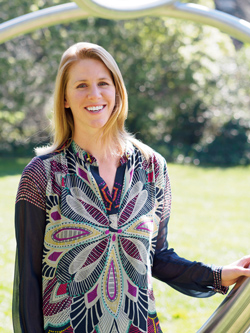
Laura Anne DeNardo is an Associate Professor and Department Vice Chair in Physiology at the University of California, Los Angeles (UCLA) School of Medicine. She holds secondary appointments as an Associate Professor in Neurobiology and is actively engaged in research related to neuroscience, neurobiology, and physiological mechanisms underlying brain function. Primary Affiliation: Department of Physiology, UCLA School of Medicine Secondary Affiliation: Department of Neurobiology, UCLA School of Medicine Her research focuses on the neurobiological basis of memory formation, threat avoidance learning, and circuit development in the brain. Key areas include prefrontal cortex function, synaptic regulation by microglia, and the role of neuromodulators like dopamine in behavioral adaptation. She employs advanced genetic tools and behavioral models to study these processes in both humans and animals. Recent publications highlight her work on prefrontal ensemble transformations in threat avoidance, microglia-mediated synaptic development, and hypothalamic circuits for aggression. Her research spans topics like neural pathways in anxiety, time-dependent memory mechanisms, and neuroimmune interactions in brain function. Articles are distributed across neuroscience, neurology, biology, and cell biology disciplines.
Dr. Martin M. Monti is a Professor at the University of California, Los Angeles, with appointments in Psychology, Neurosurgery, and Psychiatry and Biobehavioral Sciences. He is affiliated with the College of Letters and Science and contributes to interdisciplinary research in cognitive neuroscience, neurology, and neuromodulation. PhD, Princeton University (2007) - Psychology & Neuroscience MA, Princeton University (2006) - Psychology & Neuroscience BA, Università Commerciale L. Bocconi (2002) - Economics Dr. Monti's research focuses on disorders of consciousness, traumatic brain injury, and neural mechanisms of cognition. His work employs advanced neuroimaging techniques to investigate brain connectivity, consciousness recovery, and neuromodulation therapies like transcranial focused ultrasound. Key publication trends include studies on disorders of consciousness biomarkers, brain network dynamics, and clinical applications of neuromodulation. His 2025 work explores subcortical sleep quality correlates, while 2024 studies examine AI-driven consciousness models, thalamic stimulation effects, and accelerated aging post-TBI. 2019 Italian National Scientific Habilitation 2018 Sciacca Foundation International Prize for Medical Research 2020 & 2014 UCLA Life Science Faculty Awards 2019 & 2015 UCLA Psychology Department Distinguished Teaching Awards 2013 Association for Psychological Science (APS) Rising Star Dr. Monti leads clinical trials evaluating neuromodulation in consciousness disorders and contributes to the ENIGMA-Neuromodulation working group. His research bridges computational neuroscience, neuroimaging, and clinical neurology to advance coma recovery understanding.
Bennett G. Novitch is a Professor in the Department of Neurobiology at the David Geffen School of Medicine, UCLA. His research focuses on neurodevelopmental mechanisms in health and disease, particularly through brain organoid models of neuropsychiatric disorders and neurodevelopmental pathologies. Education : PhD in Biological Chemistry (Harvard), MMSc in Medical Sciences (Harvard Medical School), BS in Biological Sciences (University of Vermont), Postdoc in Biochemistry/Neurobiology (Columbia University) His research spans neural progenitor regulation , spinal cord development , motor neuron specification , organoid modeling , and Hedgehog/Notch signaling . Current projects include NIH-funded initiatives on neurodevelopmental disorders and HIV-associated neurocognitive impairment. Key publication trends show organoid modeling (15+ papers), neural progenitor regulation (12+ papers), spinal cord patterning (10+ papers), Hedgehog signaling (8+ papers), and transcriptional control (7+ papers). Notable collaborations include work with Samantha Butler, Ranmal Samarasinghe, and Kathrin Plath. He holds multiple NIH grants including: R01NS089817 (2015-2021): Cortical Growth Regulation R01NS085227 (2015-2021): Respiratory Motor Neuron Development R01DA051897 (2020-2025): HIV-Associated Neurocognitive Disorders R01MH130061 (2022-2026): Brain Organoid Neurodevelopment R01MH132651 (2023-2028): High-Throughput Neuropsychiatric Phenotyping His lab investigates neural development mechanisms using human stem cell models, with particular emphasis on motor neuron specification , radial glia dynamics , and transcriptional regulators like Foxp1 and Prdm16.
Damien A Fair is a Professor at the University of Minnesota with dual appointments in the Institute of Child Development (College of Education and Human Development) and Clinical Behavioral Neuroscience within the Medical School's Department of Pediatrics. He serves as Leader of the Masonic Institute for the Developing Brain and is affiliated with the Consortium on Law and Values in Health, Environment, and the Life Sciences. Dr. Fair's research focuses on functional connectivity neuroscience, particularly using functional magnetic resonance imaging to study brain development in children. His work examines how brain networks form and function during development, with special attention to attention deficit hyperactivity disorder and autism spectrum disorder. He has pioneered methods for analyzing resting-state functional connectivity and has contributed significantly to understanding typical and atypical brain development patterns. His recent publications demonstrate a strong emphasis on advanced neuroimaging techniques, developmental neuroscience, and the application of these methods to understand neurodevelopmental disorders. Notable work includes developing robust preprocessing pipelines like XCP-D and NiBabies, and contributing to large-scale studies such as the Adolescent Brain Cognitive Development (ABCD) study and the Healthy Brain and Child Development National Consortium. Dr. Fair is a recipient of the prestigious MacArthur Fellowship (2020), often referred to as the 'genius grant,' recognizing his innovative contributions to neuroscience. His work has been widely covered in media outlets, with significant attention following his MacArthur award. As Principal Investigator, he leads multiple major research initiatives including the Healthy Brain and Child Development National Consortium Data Coordinating Center and the ABCD-USA Consortium: Data Analysis, Informatics and Resource Center, with substantial funding from the National Institutes of Health and other organizations. His research portfolio spans over 248 publications and 40 research projects and grants. Dr. Fair directs research teams focused on developing and applying advanced neuroimaging methodologies to understand brain development, with particular emphasis on creating tools that improve the precision and reliability of functional imaging in developmental populations.
Minghong Ma is a Professor of Neuroscience at the Perelman School of Medicine, University of Pennsylvania . Her research focuses on the neural mechanisms of olfactory processing and its connections to cognition, emotion, and disease states. Ph.D. in Neuroscience, Columbia University (1997) MS in Biophysics, Chinese Academy of Sciences (1991) BS in Biophysics, Peking University (1988) Research interests include Network connections between olfactory system and non-olfactory brain regions (prefrontal cortex, amygdala) Mind-body interactions via respiration and behavioral states Sniffing's role in sensory salience coding Neural bases of interbrain synchrony in social mice Olfactory dysfunction in neuropsychiatric disorders Technical approaches integrate ex vivo/in vivo electrophysiology, optogenetics, chemogenetics, fiber photometry, neural circuit tracing , and machine learning for behavioral classification. Recent publications examine depression-related striatal circuits, olfactory-cognitive interactions, neuroimmune impacts on olfaction, and respiratory-behavioral correlations using multi-omics and computational approaches.
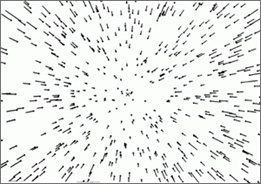
J. Vernon Odom, Ph.D., FARVO is Professor of Ophthalmology at West Virginia University School of Medicine with joint appointments in the Department of Neuroscience and the Rockefeller Neuroscience Institute. He heads the West Virginia Lions Visual Function Laboratory and has established himself as a leading researcher in visual function assessment using electrophysiology and psychophysics in both normal and abnormal vision conditions. Dr. Odom received his Ph.D. from the University of North Carolina at Greensboro. His postgraduate training included studies at Case Western Reserve University's Psychology Department, the University of California at Berkeley's School of Optometry, and the University of Florida's Ophthalmology Department. Dr. Odom's research focuses on higher order visual perception in older patients with low vision, with particular emphasis on optic flow as a means of controlling locomotion and navigation in patients with reduced visual abilities. His laboratory actively investigates strategies to assess quality of life in patients with reduced vision and develops non-invasive methods to assess traumatic brain injury, systemic diseases and toxic exposures. His work bridges clinical ophthalmology with neuroscience to address real-world vision challenges affecting mobility and independence. Analysis of Dr. Odom's publication record reveals a strong focus on visual electrophysiology, particularly visual evoked potentials (VEPs), with applications spanning from basic retinal physiology to clinical standards development. His work increasingly addresses the challenges faced by older adults with visual impairments, including mobility issues and social implications of vision loss. The International Society for Clinical Electrophysiology of Vision has adopted his standards for clinical visual evoked potentials, demonstrating the field-wide impact of his research. Dr. Odom has received numerous prestigious awards throughout his career: 1989: Visiting Fellow, The Netherlands Ophthalmic Research Institute 1996: Foreign Interuniversity Francqui Chair in Biomedical Sciences 1996: Visiting Scientist Award from Région Nord-Pas de Calais and INSERM 2010: Gold Fellow, Association for Research in Vision and Ophthalmology 2011: Board of Directors, Smith-Kettlewell Eye Research Institute 2012: Selection Committee, Pisart Award Dr. Odom's research has been supported by multiple grants from the National Institutes of Health, Department of Defense, National Science Foundation, Center for Medicare and Medicaid Services, and Social Security Administration. His NIH-funded projects include 'Normal and Abnormal Development of Binocularity' (1981-1985) and 'Higher Order Visual Perception: Effects of Low Vision in Elderly Patients' (2003-2008). He has served as Co-Investigator on projects related to functional brain imaging of human amblyopia and has mentored numerous students through his laboratory work. Dr. Odom heads the West Virginia Lions Visual Function Laboratory, where his team employs electrophysiology (electroretinography and visually evoked potentials), psychophysics, and questionnaire-based assessments to evaluate visual function in clinical populations. Current research focuses on understanding how visual impairment affects mobility and activities of daily living, with particular attention to the role of optic flow information in navigation. His laboratory work has important implications for developing more effective rehabilitation strategies for patients with low vision.
Helen Bateup is an Associate Professor at the University of California, Berkeley , affiliated with the Department of Molecular Therapeutics. Her research focuses on understanding the molecular mechanisms of neuronal excitability and synaptic modulation , particularly in the context of neurodevelopmental disorders like autism and epilepsy . Using mouse models and human brain organoids , her lab investigates how genetic mutations in mTOR pathway regulators (TSC1/TSC2) impact neural development and circuit function. Education: Postdoctoral training at Harvard Medical School with Bernardo Sabatini PhD at Rockefeller University under Paul Greengard Undergraduate research with Douglas Granger at Penn State Research Interests span neurogenetics, synaptic plasticity, and neural circuit dysfunction . Her work bridges molecular biology and behavioral neuroscience , emphasizing the role of mTOR signaling in maintaining neuronal balance and its disruption in diseases. Recent projects include basal ganglia dysfunction in autism, human neuron models of TSC, and astrocyte contributions to epilepsy . Publications highlight her expertise in mTOR pathway analysis, neurodevelopmental modeling, and synaptic regulation , with key contributions to disease mechanisms in autism and epilepsy . Her lab employs multi-omics, electrophysiology, and behavioral assays to dissect these processes. Scientific Awards: UC Berkeley Distinguished Teaching Award Students and Collaborators include MCB and Neuroscience graduate researchers and alumni who have transitioned to roles at institutions like Harvard, UCSF, and the Allen Brain Institute. Her lab is funded by National Institute of Neurological Disorders and Stroke, CIRM, and private foundations .
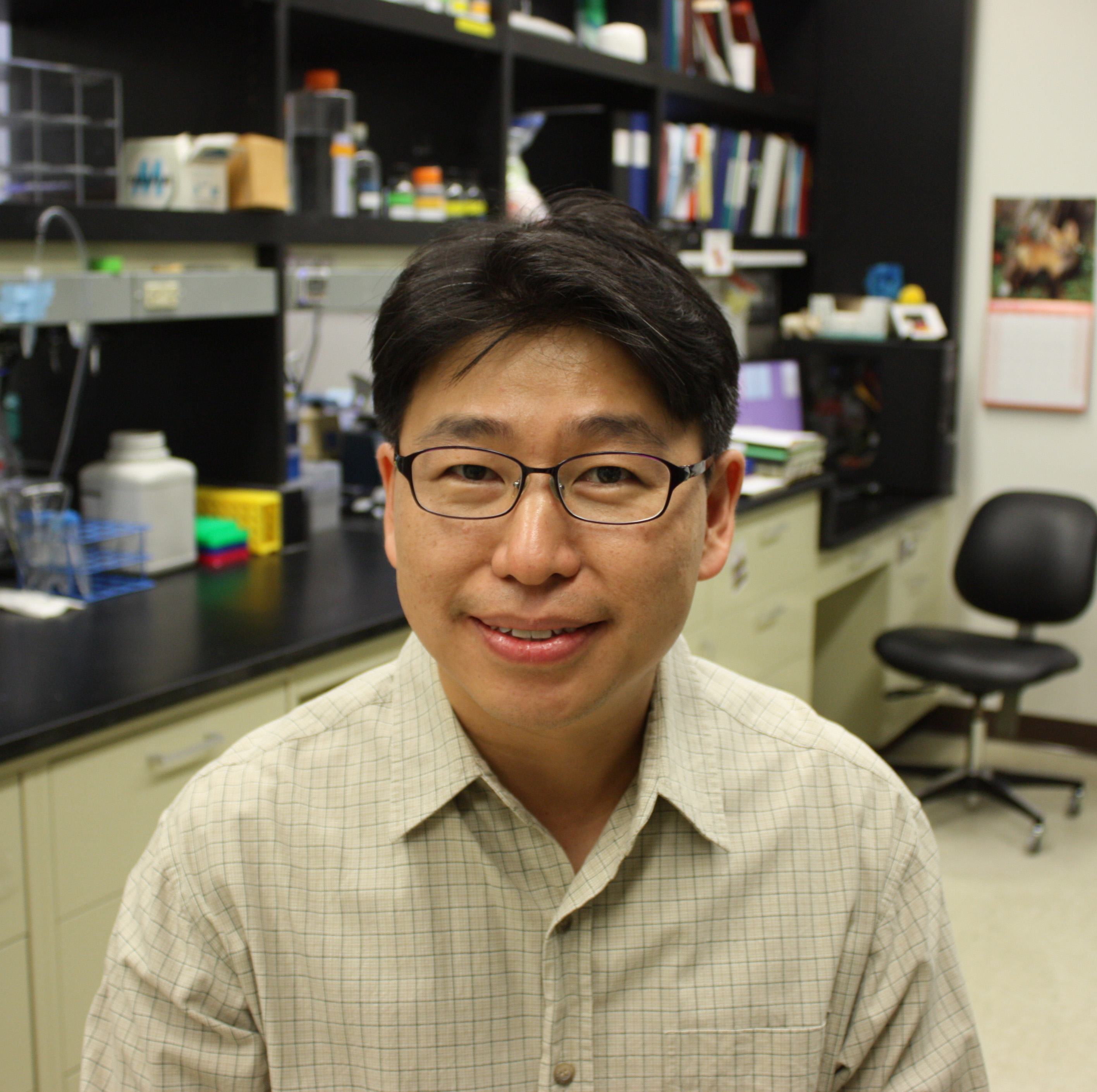
Sungjin Park is an Associate Professor at the University of Utah in the Department of Neurobiology . His research focuses on cell signaling, neuron-glial interactions, and the role of GPI-anchored proteins in nervous system development. B.S. from Seoul National University Ph.D. from Johns Hopkins University Research interests include: ECM organization in synaptic development Regulated release of GPI-anchored proteins Bi-directional neuron-astrocyte communication Mechanisms of neurodevelopmental disorders High-throughput neuronal activity assays Recent publications highlight: Key roles of GPI-anchored proteins in ECM assembly Novel pathways for synaptogenic factor release Development of live-cell neuronal activity reporters Genetic models for studying protein cleavage mechanisms Implications in autism and schizophrenia Current work involves in vivo analysis using knock-in mouse models and advanced imaging techniques.
Professor Håkan Olausson at Linköping University's Department of Biomedical and Clinical Sciences leads pioneering research in human somatosensory systems. His groundbreaking work at the Center for Social and Affective Neuroscience (CSAN) has revealed ultrafast pain signaling mechanisms and the role of C-tactile afferents in affective touch. Faculty of Medicine, Linköping University Center for Social and Affective Neuroscience (CSAN) Research Focus: Ultrafast pain signaling systems in humans Differentiation between self-touch and social touch Neurophysiological basis of chronic pain Mapping tactile and nociceptive pathways Interdisciplinary applications for pain treatment Scientific Recognition: First recipient of Onkel Adams Prize (2020) Wallenberg Clinical Scholar (2020) Multiple grants from VR and Wallenberg Foundation His recent publications demonstrate cross-disciplinary impacts in pain neuroscience, social touch processing, and sensory system classification through advanced neuroimaging and microneurography techniques.
Ervin Dervishaj is a PhD Fellow at the Machine Learning Section of the Department of Computer Science, University of Copenhagen. His research spans theoretical and applied machine learning, with a focus on recommendation systems, medical imaging, and computational modeling. The Machine Learning Section engages in interdisciplinary work across Information retrieval Medical data analysis Remote sensing Sustainability Biological data modeling Recent publications highlight expertise in Recommendation system interpretability (2025) GAN-based collaborative filtering (2022) Linguistic typology through language embeddings (2018) Medical imaging applications in osteoarthritis and neurodegenerative diseases (2016-2018) Optimization algorithms for adversarial learning (2016-2017) He contributes to projects involving the SCIENCE AI Centre and the TreeSense Centre for remote sensing applications.
Prof. Matthew Larkum is a faculty member at Charité University Medicine Berlin ( Charité - Universitätsmedizin Berlin ), where he leads the Larkum Lab focusing on cortical dendritic processing. His research explores how active dendritic properties contribute to cortical computation, particularly in feedforward/feedback circuits and consciousness mechanisms. Institution: Charité Cross Over - Campus Mitte, Berlin Contact: matthew.larkum@hu-berlin.de Key research themes include: Dendritic spikes and synaptic integration Interhemispheric inhibition mechanisms Anesthetic effects on single-neuron computation Optical approaches for cortical activity mapping Fear memory engram plasticity Recent publications (2022-2024) emphasize cortical layer 6b dynamics, thalamocortical interactions, and artificial consciousness feasibility. His lab develops advanced neurotechnologies like F-SHARP microscopy while maintaining collaborations with institutions like Max Planck Institute. Current affiliations include: Spokesperson for SFB1315 collaborative research Functional Imaging and Multimodal Behavior Unit leadership Human Brain Project partner
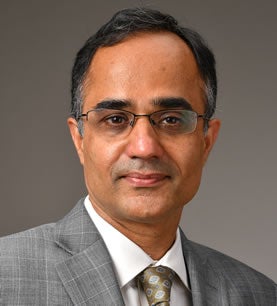
Nitin Tandon is a Professor at the Vivian L. Smith Department of Neurosurgery, UTHealth , and serves as Director of the Epilepsy Surgery Program at Memorial Hermann Texas Medical Center. He is also Co-Director of the Texas Comprehensive Epilepsy Program and the Texas Institute for Restorative Neurotechnologies . Education : MD from Armed Forces Medical College, Pune; Neurosurgery residency at UT Health Science Center San Antonio Research : Focuses on epilepsy surgery , brain mapping , language processing , memory mechanisms , and neuro-oncology Scientific Contributions include 15+ years of peer-reviewed publications in journals like Neuron , Human Brain Mapping , and Brain , emphasizing functional MRI , diffusion tensor imaging , and intracranial EEG for mapping language and motor networks. His work bridges clinical neurosurgery and cognitive neuroscience , particularly in epileptogenic network identification and minimally invasive epilepsy therapies . Awards : Recipient of the AANS/CNS Joint Section Resident Award and CNS Resident Award Leadership : Vice President of Strategy and Development for UTHealth Houston Neurosciences; active roles in organizations like the American Epilepsy Society and Society for Neuroscience
Pierre-Yves Jonin is a neuropsychologist affiliated with the Rennes University Hospital , where he works in the Neurology Department and the Memory, Resources and Research Center. He joined the Empenn research team in 2014 during his doctorate. His research focuses on: Cognitive and neural mechanisms of declarative memory Interactions between prior knowledge and memory encoding Neocortical networks supporting memory learning Applications to Alzheimer's disease prognosis Non-invasive diagnostics for memory disorders Neuroimaging of hippocampal and cortical systems Key trends in his publications include: Medical imaging standardization for neurodegenerative diseases Machine learning applications in lesion segmentation Human-centered design in medical robotics Reproducibility in neuroimaging studies Stroke rehabilitation techniques His work has contributed to: Consensus guidelines for multi-analyst studies Development of open-source datasets for multiple sclerosis research Advancements in functional MRI pipelines He is part of the Empenn team at Inria Rennes - Bretagne Atlantique, specializing in biomedical image analysis.
Noelle Dwyer is an Associate Professor in the Department of Cell Biology at the University of Virginia School of Medicine , focusing on neural development and genetic mechanisms underlying brain structure. BA in Biochemistry from Rice University PhD in Neuroscience from University of California, San Francisco Postdoctoral training in neurodevelopment at The Salk Institute and neurogenetics at Beth Israel Hospital, Boston Her research investigates: Neural Stem Cell Division : Regulation of abscission timing and midbody remnants in cortical development Axon Guidance : Cytoskeletal dynamics in neuronal connectivity Genetic Links to Disease : How abscission defects cause microcephaly and relate to cancer biology Publications highlight her work on kinesin proteins (KIF20B/Kif20b), abscission regulation, and p53-dependent apoptosis in neural development, spanning disciplines like neuroscience, genetics, and cell biology. Her lab employs mouse genetics, cell biology, and genomic approaches to study: Cytokinetic defects in cortical stem cells Microtubule cross-linking proteins in neuron morphogenesis Evolutionary conservation of abscission mechanisms
James P. Morris is a Professor of Psychology at the University of Virginia and serves as the Associate Dean for the Sciences. His research explores the neural mechanisms underlying human social behavior, focusing on facial expressions, eye-gaze direction, body posture, and biological motion perception. Research Focus Investigates developmental trajectories of social perceptual systems Links epigenetic regulation to individual variability in social cognition Examines neural correlates of typical and atypical social behaviors Methodologies Employs multimodal techniques including fMRI , EEG/ERP , eyetracking , molecular genetics , and behavioral experiments . Integrates life-span perspectives to study age-related changes in social neural systems. Publications & Trends Recent works (2023-2025) emphasize epigenetic aging , OXTR methylation , and white matter degeneration in social cognition. Earlier studies (2018-2017) explore oxytocin's role in anxiety, social attention, and autism spectrum disorders. Labs & Collaborations Leads the Social Neuroscience Laboratory, focusing on cortical and subcortical contributions to social perception and connectivity patterns in neurotypical and atypical populations.