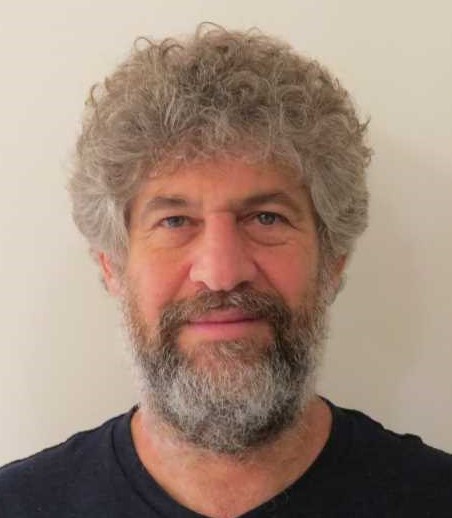
Lihi Zelnik-Manor is a Professor at the Faculty of Electrical and Computer Engineering at the Technion - Israel Institute of Technology . Her research focuses on digitizing the sense of touch, integrating Haptics , Robotics , and Computer Vision to create digital representations of physical properties and develop haptic feedback devices for virtual interactions. Executive Vice President for Innovation and Industry Relations (2023-2026) Vice Dean for Graduate Studies (2022-2023) General Chair: CVPR’21, ECCV’22 Her work spans Neural Architecture Search (NAS) , 3D Reconstruction , and Image Processing , with recent publications on haptic devices (2025), diffusion models (2025), and soft-tissue simulation (2024). She actively contributes to academic leadership through roles in top conferences and community initiatives like the Schmidt Postdoctoral Award steering committee.
Omri Abend is an Associate Professor at The Hebrew University of Jerusalem, affiliated with the School of Computer Science and Engineering and serving as Chair of the Department of Cognitive and Brain Sciences. His research lies at the intersection of Computational Linguistics, Natural Language Processing, and Cognitive Science, with a focus on semantic representation and language acquisition modeling. His primary research interests include: Computational modeling of child language acquisition Semantic representation frameworks, particularly Universal Conceptual Cognitive Annotation (UCCA) Statistical learning and machine translation Unsupervised grammar learning and lexical relation induction Cross-lingual and cross-domain alignment in language models Evaluation methodologies for NLP systems His recent publications demonstrate a strong trend toward analyzing large language models (LLMs), exploring human-like patterns in AI, improving evaluation metrics, and applying NLP to humanitarian domains such as Holocaust testimony analysis. His work combines theoretical linguistic insights with practical machine learning applications. Scientific awards include: Outstanding Paper Award at ACL 2017 Area Chair Award for Best Paper in the Track at ACL 2023 He has supervised and collaborated with numerous researchers and students across projects in semantic parsing, machine translation, and cognitive modeling. His work has been supported by community-wide initiatives such as the MRP shared tasks, which he co-organized. He also leads research on ethical AI, open human feedback, and the computational analysis of historical narratives. Omri Abend leads several research teams focused on: The development and application of the UCCA framework for semantic annotation Cross-lingual and cross-domain knowledge representation in LLMs Computational modeling of language acquisition Evaluation and improvement of NLP systems Application of NLP to digital humanities and historical testimony analysis
Ido Dagan is a Professor at the Department of Computer Science at Bar-Ilan University , Israel, and founder of the Natural Language Processing (NLP) Lab . He is a Fellow of the Association for Computational Linguistics and served as ACL President (2010) and Executive Committee member (2008–2011), leading the establishment of Transactions of the Association for Computational Linguistics . Dagan’s research focuses on applied semantic processing , including textual entailment , natural semantic representation , multi-text information consolidation , and interactive text summarization . His recent work addresses attributable text generation , summary-source alignment , and cross-sentence argument detection , with applications to fact verification and hallucination detection. Key trends in his publications include cross-document coreference resolution , question-answering systems , semantic parsing , and interactive summarization . Notable collaborative projects involve UI trajectory analysis and long-context QA with Arman Cohan and Jacob Goldberger. Scientific Awards Fellow, Association for Computational Linguistics (ACL) President, ACL (2010) Executive Committee, ACL (2008–2011) Advising & Collaborations Dagan has supervised numerous PhD, MSc, and postdoctoral students since 1997, including Shachar Mirkin and Shmuel Amar . He collaborates with researchers like Ori Ernst , Avi Caciularu , and Aviv Slobodkin , with grants from institutions like IBM Haifa Scientific Center and AT&T Bell Laboratories .
Hila Peleg is an Assistant Professor in the Department of Computer Science at the Technion – Israel Institute of Technology, where she co-leads the TecSE lab with Prof. Shachar Itzhaky. Her research lies at the intersection of Programming Languages, Software Engineering, and Human-Computer Interaction, focusing on program synthesis and interactive developer tools. Her research interests center on creating intelligent, theory-driven tools that enhance programmer productivity and correctness. She explores interaction models that integrate formal methods like separation logic into practical synthesis systems, enabling more versatile and reliable code generation. Her work spans both foundational models and real-world applications, from web layout synthesis to computational crafting. The trend in her recent publications shows a strong focus on interactive and practical program synthesis, blending formal verification with user-centered design. She investigates how synthesis can be made more usable through live programming, best-effort results, co-design of tools and languages, and integration with developer workflows. Her work increasingly emphasizes the human aspect of programming tools. Distinguished Paper Award, PLDI 2021 Distinguished Artifact Award, SPLASH 2020 Hila Peleg advises multiple graduate students, including PhD and MSc candidates, and leads the ERC-funded EXPLOSYN project, which supports advanced research in program synthesis. She has taught advanced courses such as User-Centered Programming Tools and seminars in programming languages, and is actively involved in the academic community through conference service and organization. She is a core member of the TecSE lab, which focuses on advancing software engineering through programming language theory and interactive systems. The lab fosters interdisciplinary research at the boundary of formal methods and human-centered tool design.
Dr. Oren Kolodny is a Professor in the Department of Ecology, Evolution & Behavior at the Hebrew University's Silberman Institute for Life Sciences. His research focuses on modeling ecological and evolutionary dynamics, with emphasis on microbiome-host interactions, human prehistory, and conservation biology. He leads a lab exploring topics like species dynamics in fragmented landscapes, cultural evolution, and disease ecology. Key research themes include the role of microbiomes in host adaptation, the ecological mechanisms behind Neanderthal replacement by modern humans, and the application of computational models to microbiome diversity and disease transmission. His work integrates theoretical frameworks with empirical data, addressing both basic science and conservation challenges. Dr. Kolodny's recent publications emphasize interdisciplinary approaches, combining epidemiological modeling (SIR+ models) with evolutionary perspectives on cultural innovation and invasive species dynamics. He collaborates widely, bridging fields such as anthropology, microbiology, and computational biology. His lab actively engages in citizen science initiatives, e.g., amphibian conservation programs in Mediterranean urban areas. Despite no listed awards here, his impactful contributions are evident through prolific publication and cross-disciplinary research activity.
Eran Yahav is a Professor in the Computer Science Department at the Technion, Israel Institute of Technology, and serves as CTO at Tabnine. His research bridges programming languages, software engineering, program analysis, and machine learning, focusing on program synthesis, verification, and code intelligence. Research Interests: His work spans program synthesis , abstract interpretation , verification of concurrent systems , binary analysis , and AI for code . He leads the PRIME project, which uses machine learning and static analysis to enable programming with millions of examples, improving code completion, search, and prediction. The recent publications reflect a strong trend toward integrating neural models with program analysis—using structured representations of code (e.g., AST paths) for property prediction, generating sequences from code (code2seq), learning distributed representations (code2vec), and interpreting neural networks via automata extraction. His work consistently appears in top-tier venues such as POPL, PLDI, ICSE, OOPSLA, and ICLR. Scientific Awards: Best paper award at ISSTA'07 Best paper award at ISSTA'06 Advising and Grants: He has advised numerous PhD and Master’s students, many of whom have published in premier conferences and now hold academic or industry positions. While specific grants are not mentioned, his sustained high-impact research and leadership in major projects (e.g., PRIME, Fender, SAFE) imply significant funding support. He has served on program committees for PLDI, POPL, CAV, OOPSLA, and VMCAI, reflecting his standing in the programming languages and verification communities. Labs and Teams: He leads a research group focused on program analysis and synthesis, with strong collaborations, particularly with Martin Vechev and others, on concurrency, synthesis, and machine learning for code. The group has developed influential tools such as PRIME, code2seq, code2vec, TRACY, and SAFE.
Dr. Gili Greenbaum is an Assistant Professor at The Hebrew University of Jerusalem's Department of Ecology, Evolution and Behavior. His research focuses on computational population genomics, addressing eco-evolutionary processes through genomic data analysis and mathematical modeling. Key areas include conservation genomics, gene drive technology, and human evolution under disease pressures. He leads a lab with interdisciplinary collaborations, advising students across biology, mathematics, and computer science disciplines. Research emphasizes genomic approaches for endangered species conservation, particularly fragmentation impacts on population genetics. Projects also explore gene drive deployment risks and ecological modeling of ancient human interactions with Neanderthals. His lab develops tools like DORA for ancient DNA visualization and modelRxiv for model sharing. Current projects include predicting conservation risks using machine learning, studying immune-related genomic signatures in human populations, and modeling social evolution dynamics. The lab collaborates with institutions globally and offers training opportunities for graduate students and postdocs in computational biology and theoretical ecology.
Prof. Alex Bronstein is a Professor at the Henry and Marilyn Taub Department of Computer Science, Technion – Israel Institute of Technology, where he holds the Dan Broida Academic Chair and heads the VISTA Lab and the Center for Intelligent Systems. He concurrently serves as a Visiting Professor at the Austrian Institute of Science and Technology. His research spans computer vision, machine learning, computational geometry, signal processing, and bioinformatics, with a focus on geometric data analysis and AI applications in science. He has held significant industry roles including Principal Engineer at Intel Corporation, co-founding startups such as Invision (acquired by Intel), VideoCites, and Sibylla. His work bridges academia and industry, emphasizing practical applications of theoretical insights. Research interests include foundational AI models for molecular biology, robust machine learning systems, and interdisciplinary applications in healthcare and robotics. Notable projects include protein structure prediction using AlphaFold integration, adversarial robustness frameworks, and medical imaging innovations like T1-PILOT for MRI acceleration. He actively collaborates with global institutions, maintaining labs in Haifa, Vienna, and Sardinia. Recent publications highlight advancements in quantum computing simulations, wearable health monitoring systems, and AI-driven biomedical solutions. While no explicit awards are listed, his leadership roles and industry impact underscore significant contributions to computational science. He mentors graduate students in his VISTA Lab, focusing on cutting-edge projects in AI, computer vision, and computational chemistry.
Dr. Tamar Berenblum serves as Research Director of the Federmann Cyber Security Research Center – Cyber Law Program at the Hebrew University of Jerusalem's Faculty of Law. She concurrently holds Post-Doctoral Research Fellow positions at the Netherlands Institute for the Study of Crime and Law Enforcement (NSCR), the Rachel and Selim Benin School of Computer Science and Engineering (Hebrew University), and the Center for Cyber Law & Policy at Haifa University (CCLP). Her research expertise spans victimology , sociology of knowledge , cybercrime , online social control , and digital rights , rooted in her doctoral thesis The Internet as a Sphere of Social Control which examines cyberspace as both a domain and tool for social control over deviant activities. Current projects investigate deterrence mechanisms, online-shaming phenomena, language accessibility in legal proceedings, and juvenile cyber-delinquency. Analysis of her publications reveals consistent focus on human-centered cybersecurity challenges, with recurring themes in ransomware mitigation ( Security Vaccination ), hacking network topology ( Hackers Topology Matter Geography ), and digital justice dynamics ( Viral Justice and E-shaming ). Her methodological approach blends criminological theory with computational analysis of real-world cyber incidents. Beyond research, Berenblum serves as a public representative in Parole Committees of the Court Administration and contributes to policy discussions through the Cyber Law Program's regulatory work on computer crime prevention and IoT security standards.
Noam Nisan is a Full Professor at the School of Computer Science and Engineering at the Hebrew University of Jerusalem, Israel. He is a member of the Center for the Study of Rationality and the Israeli Academy of Sciences and Humanities. He also serves on the Board of Directors of the National Library of Israel and chairs its Digital Strategy Subcommittee. Additionally, he is a Principal Researcher at Starkware, focusing on blockchain technologies. His research bridges Computer Science, Game Theory, and Economics, particularly in algorithmic game theory and electronic markets. Education: Ph.D. in Computer Science, University of California, Berkeley (1988), advised by Richard Karp B.Sc. summa cum laude in Mathematics and Computer Science, Hebrew University (1984) Research Interests: Algorithmic Game Theory, Economics and Computation, Electronic Markets, Auction Design, and Mechanism Design . His work explores strategic interactions in computational systems, including market equilibria, fair division, and decentralized resource allocation. Key Contributions: Co-authored foundational texts like Algorithmic Game Theory and Elements of Computing Systems Pioneered work on pseudorandom generators, communication complexity, and secure multi-party computation Grants & Awards: Holder of major grants (e.g., ERC, Binational Science Foundation) and honors including the Gödel Prize (2012), Knuth Award (2015), and STOC Test of Time Award (2022). Service: Extensive editorial roles (e.g., Games and Economic Behavior ), program committee leadership (EC, FOCS), and academic governance (Dean of School of Computer Science, 2018-2021). Co-founded the Algorithmic Game Theory Blog (Turing’s Invisible Hand). Labs/Teams: Active in Starkware’s research on zero-knowledge proofs and blockchain scalability, and collaborates with the Center for Rationality on behavioral algorithmic mechanisms.
Prof. Aya Meltzer-Asscher is an Associate Professor at the Department of Linguistics and the Sagol School of Neuroscience at Tel Aviv University. Her research focuses on real-time sentence processing, integrating behavioral and electrophysiological methods to study how humans process lexical-semantic and syntactic aspects of language, with a particular emphasis on Hebrew. She leads the Sentence Processing Lab, investigating how grammar shapes processing strategies and employs tools like ERP and fMRI. Education: Ph.D. in Linguistics, Tel Aviv University (2005–2010), supervised by Prof. Tal Siloni and Prof. Julia Horvath. M.A. in Linguistics, Tel Aviv University (2003–2004). B.A. in Computer Science and Linguistics, Tel Aviv University (1999–2002). Research Interests: Sentence processing, psycholinguistics, neurolinguistics, syntax-semantics interface, Hebrew syntax, aphasia, and neurocognitive mechanisms of language. Her work bridges theoretical linguistics with experimental and clinical approaches, exploring how grammatical structures influence real-time comprehension and production. Publications: Over 20 peer-reviewed articles in journals like Language, Cognition and Neuroscience , Journal of Cognitive Neuroscience , and Brain & Language . Her research highlights topics such as predictive processing, working memory in syntax, and neuroimaging of argument structure. Labs & Affiliations: Director of the Sentence Processing Lab , affiliated with the Sagol School of Neuroscience. Collaborates internationally on projects involving electrophysiology and neuroimaging.
Prof. Yonatan Loewenstein is a Professor in the Department of Neurobiology at the Hebrew University of Jerusalem. His research focuses on computational neuroscience and cognition, particularly the neural mechanisms underlying decision-making, reinforcement learning, and sensory processing. He leads an interdisciplinary laboratory exploring how learning principles govern behaviors in both biological and artificial systems. Key contributions include studies on somatosensory cortex organization, neuronal homeostasis, and human-machine synergy in decision-making. He co-authored the book Computational Models in Cognition , blending theoretical frameworks with empirical findings. Education details are not explicitly provided in the text, but his affiliations suggest advanced training in neurobiology and computational sciences. Research interests span decision-making biases, reinforcement learning dynamics, and the interplay between brain structure and function. His recent work addresses topics like idiosyncratic choice stability, value modulation in impulsivity, and abstract reasoning in neural networks. Publications highlight collaborations in fields ranging from cognitive dissonance to schizophrenia diagnostics. While no specific awards are listed, his involvement in high-impact journals and interdisciplinary projects underscores his academic contributions. The lab’s work is housed in the Goodman Faculty building, with active group members and experimental facilities.
Prof. Sagiv Shifman is a Full Professor at the Department of Genetics , Alexander Silberman Institute of Life Sciences , The Hebrew University of Jerusalem . His research focuses on the genetics of neurodevelopmental and psychiatric disorders , particularly autism spectrum disorders and schizophrenia , utilizing genomic data analysis , mouse models , and CRISPR screening to uncover chromatin regulators , gene expression variation , and sex-specific genetic mechanisms . Academic Leadership : Served as department head (2017-2021), previously leading genetics teaching programs. Research Themes : Mapping genetic variants in brain disorders via computational/experimental methods. Studying gene networks and chromatin regulation in neurodevelopment. Investigating essential genes in stem cells and cancer via CRISPR libraries . Elucidating sex chromosome influences on gene essentiality and disease. Scientific Contributions : 2013 Krill Prize recipient for excellence in Life Sciences. Key discoveries in POGZ deficiency , AUTS2 isoforms , and ASD/Schizophrenia gene overlap . Collaborative Impact : Advancing neurogenetic databases and CRISPR-based disease modeling . Developing tools like ImReP and ROP for immunoglobulin repertoire analysis and RNA-seq read origin detection .